
The global beverage market is evolving rapidly as consumer expectations shift toward healthier ingredients, innovative flavors, and premium branding. For many beverage companies, launching new juice products in-house can be expensive, time-consuming, and operationally complex. Infrastructure investment, ingredient sourcing, regulatory compliance, and production management all require specialized expertise. As a result, more brands are turning to Juice OEM Manufacturing as a strategic solution.
OEM manufacturing allows beverage companies to outsource product development and production to experienced partners who already possess advanced facilities, technical teams, and supply chain networks. This model enables brands to focus on marketing, distribution, and brand positioning while maintaining high product standards. Whether a company is entering a new market or expanding an existing product line, OEM manufacturing offers scalability, efficiency, and reduced financial risk. Understanding how this process works can help brands make informed decisions and build stronger product strategies in competitive global markets.
1. What Is Juice OEM Manufacturing and Why It Matters
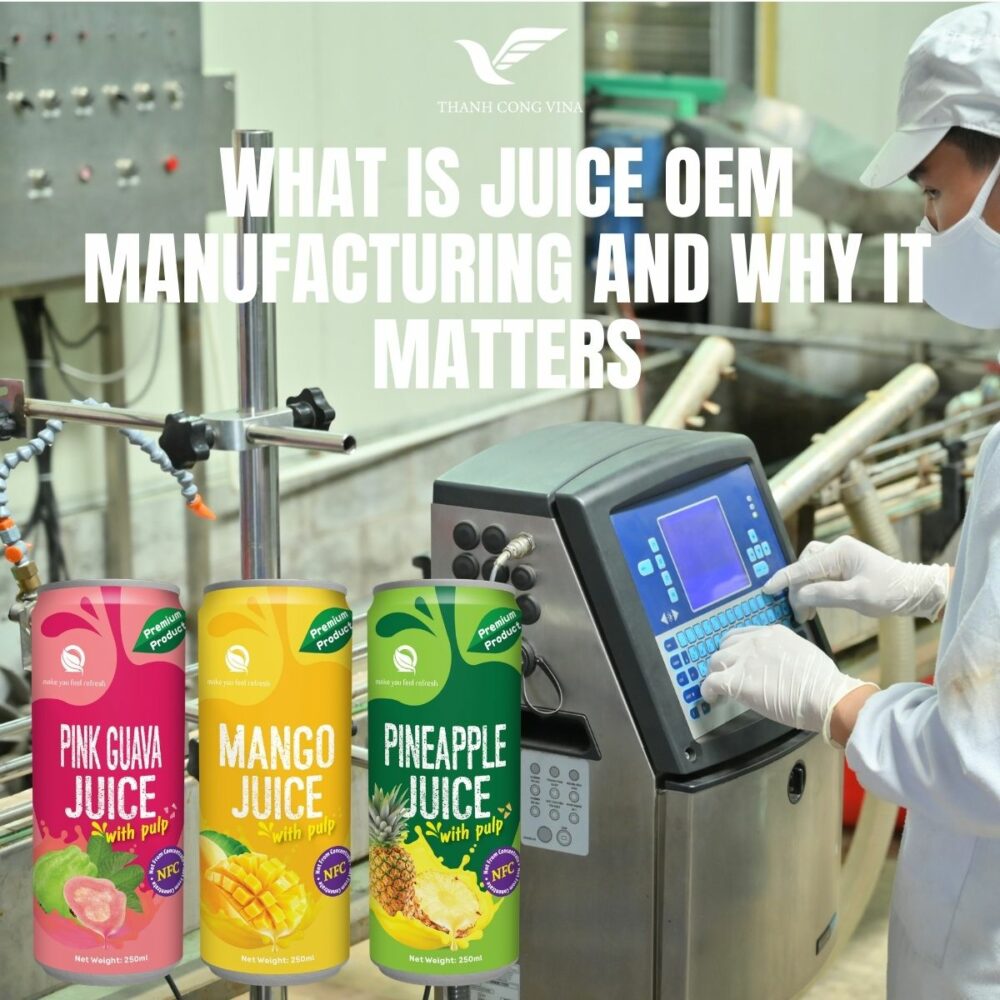
What Is Juice OEM Manufacturing and Why It Matters
Defining the OEM Production Model
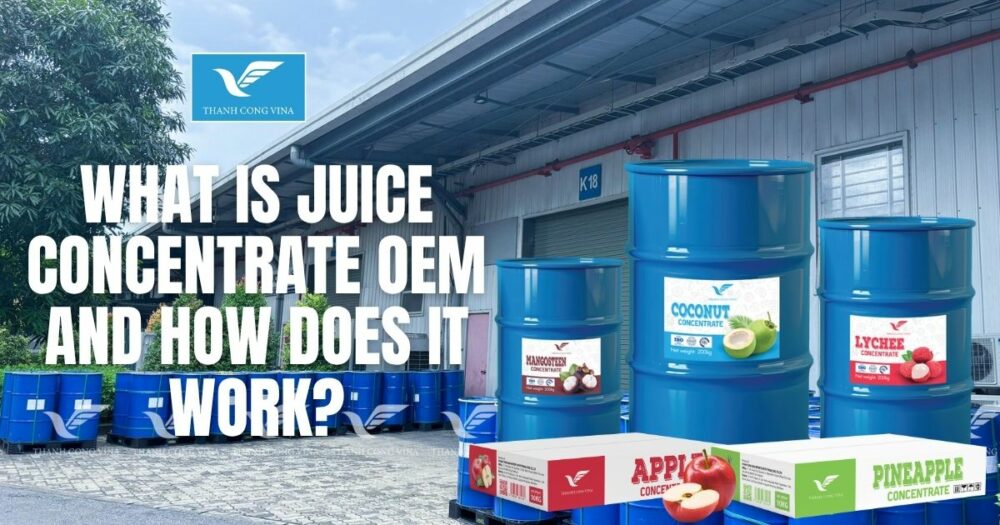
Juice OEM Manufacturing refers to the process in which a specialized manufacturer produces juice products according to a brand’s specifications. The brand owns the formula, branding, and distribution strategy, while the manufacturer handles production, quality control, and packaging.
This arrangement allows beverage companies to enter markets quickly without investing in factories or processing equipment. OEM partners provide expertise in formulation, ingredient selection, and industrial-scale production, ensuring products meet safety and quality standards.
Strategic Advantages for Beverage Brands
Outsourcing manufacturing reduces capital expenditure and operational risk. Instead of building facilities, brands can allocate resources to marketing, research, and expansion strategies. OEM manufacturers also help companies respond faster to changing consumer trends by enabling rapid product development and flexible production volumes.
In addition, working with experienced manufacturers ensures compliance with international food safety regulations, making it easier to export products to global markets. For many beverage companies, OEM manufacturing transforms production from a logistical challenge into a strategic growth driver.
2. Product Development and Formulation Process
Translating Brand Vision into Technical Specifications
The product development process begins with a clear product brief. Brands outline their target market, pricing strategy, flavor profile, and packaging concept. Based on this information, OEM specialists design formulations that align with both technical feasibility and commercial positioning.
This collaborative stage ensures that the final product reflects the brand’s identity while remaining efficient to manufacture.
Laboratory Testing and Flavor Optimization
OEM manufacturers conduct laboratory trials to refine taste, texture, and stability. Multiple prototypes are created to test sweetness levels, acidity balance, aroma retention, and color consistency. Shelf-life simulations are also performed to ensure the product maintains quality during storage and transport.
Through iterative testing and feedback, the formulation is optimized for both consumer appeal and industrial production efficiency. This process ensures that the final juice product performs reliably at scale.
3. Raw Material Sourcing and Supply Chain Management
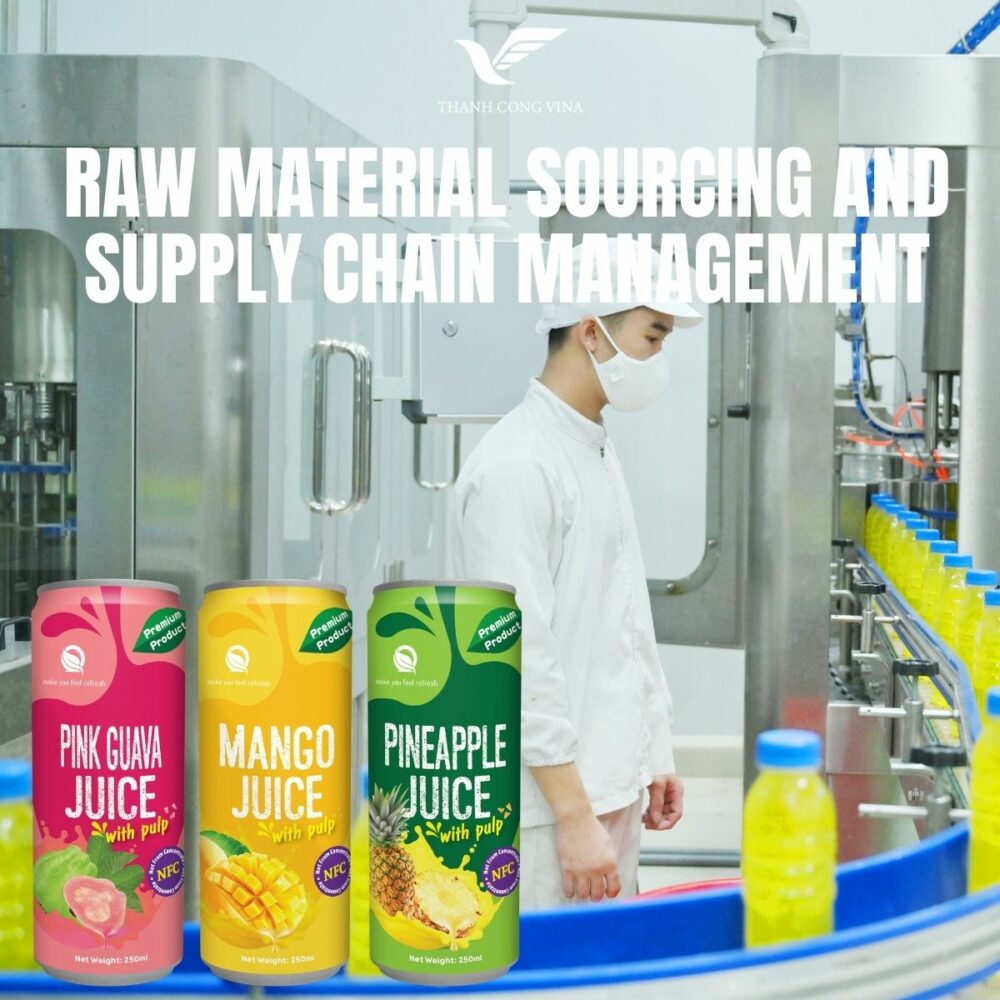
Raw Material Sourcing and Supply Chain Management
Selecting High-Quality Fruit Inputs
Ingredient quality directly impacts the final beverage. OEM manufacturers often maintain relationships with global fruit suppliers, enabling access to consistent raw materials year-round. They help brands choose between fresh juice, concentrates, or purees depending on cost, flavor intensity, and shelf-life requirements.
Strategic sourcing ensures stable pricing and consistent product quality, which is critical for maintaining brand reputation.
Ensuring Traceability and Food Safety
Modern consumers demand transparency in food production. OEM manufacturers implement traceability systems that track ingredients from farm to finished product. These systems help verify authenticity, monitor safety, and meet regulatory requirements.
Strong supply chain management not only improves product consistency but also protects brands from disruptions caused by seasonal shortages or logistical delays.
4. Manufacturing Technologies and Processing Methods
Preserving Flavor and Nutritional Value
Advanced processing technologies play a major role in maintaining juice quality. Techniques such as pasteurization, aseptic filling, and controlled temperature processing help preserve flavor, color, and nutrients while ensuring microbial safety.
OEM facilities typically invest in high-precision equipment that optimizes efficiency and minimizes waste. These systems ensure consistent production results across large batches.
Scaling Production Efficiently
One of the key advantages of OEM manufacturing is scalability. Manufacturers can adjust production volumes based on market demand, allowing brands to start with small batches and expand gradually.
This flexibility reduces financial risk while supporting rapid growth. Brands can test new products in limited markets before committing to large-scale distribution.
5. Juice OEM Manufacturing for Global Market Expansion
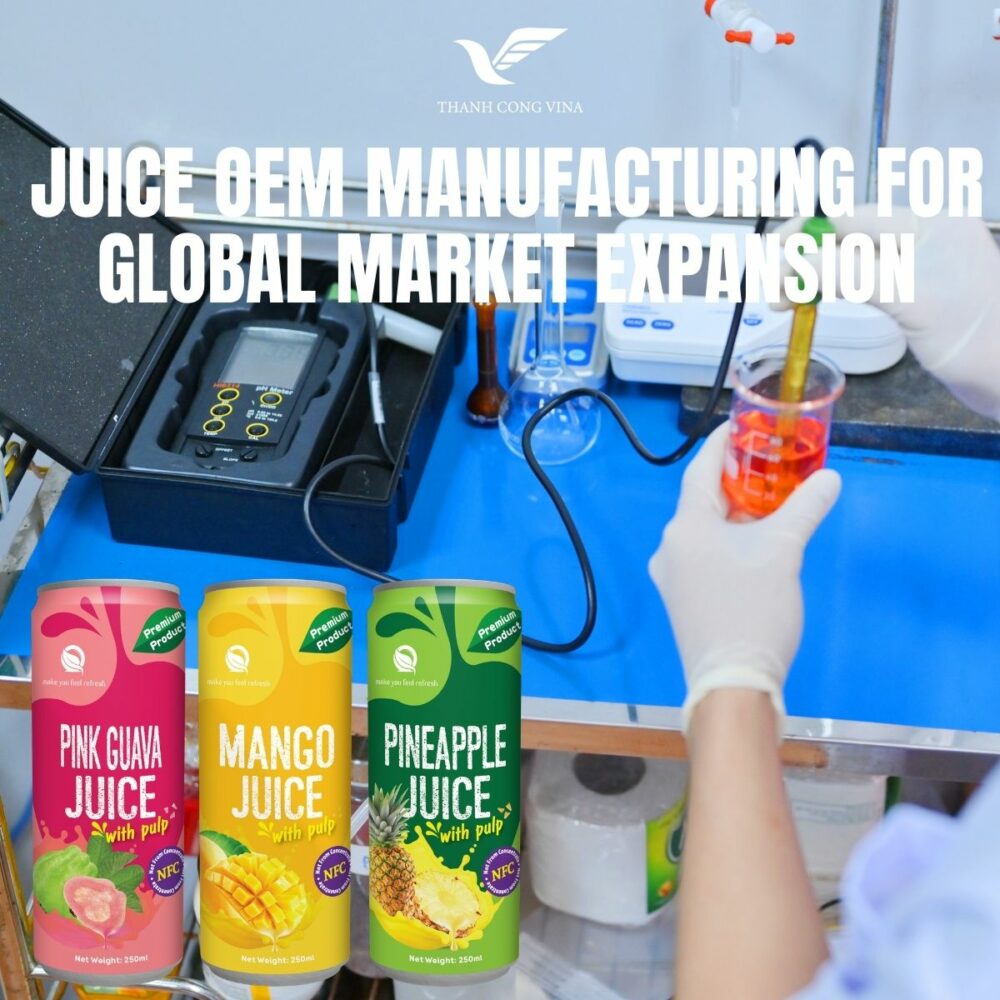
Juice OEM Manufacturing for Global Market Expansion
Adapting Products to Regional Preferences
Different markets have distinct flavor expectations and regulatory requirements. OEM manufacturers often possess international experience and can adapt formulations to meet regional standards.
For example, sugar levels, acidity, and packaging formats may need adjustment depending on the target country. OEM partners guide brands through these modifications, ensuring products meet both consumer expectations and compliance rules.
Supporting Export Logistics and Documentation
Exporting beverages requires detailed documentation, including ingredient declarations, certifications, and labeling compliance. OEM manufacturers often assist with these requirements, helping brands avoid delays at customs or regulatory checkpoints.
By managing these complexities, OEM partners enable brands to expand internationally with greater confidence and operational efficiency.
6. Packaging Solutions and Branding Integration
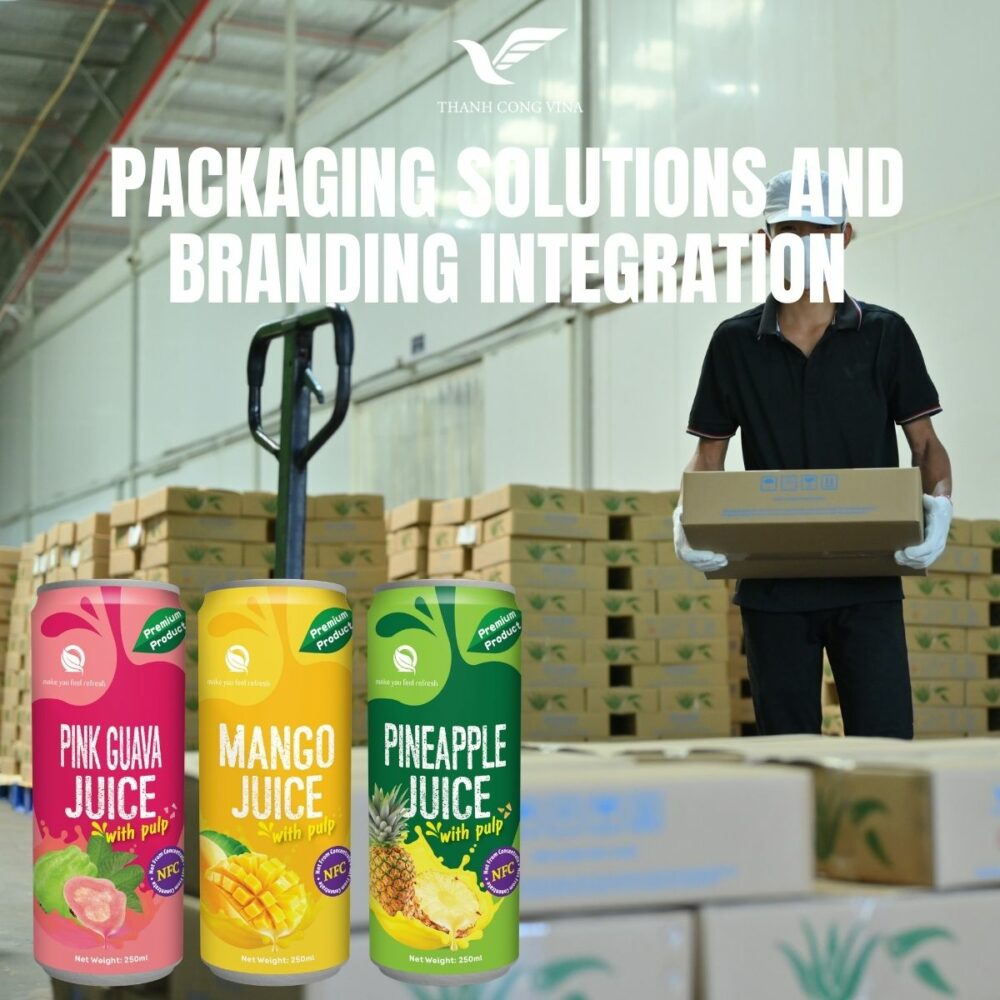
Packaging Solutions and Branding Integration
Choosing the Right Packaging Format
Packaging plays a critical role in both product protection and brand perception. OEM manufacturers help brands select packaging options that align with their positioning and distribution channels. Options include bottles, cans, cartons, and flexible packaging formats.
Each packaging type offers different advantages in terms of cost, shelf life, and environmental impact. Selecting the right format ensures the product maintains quality while supporting marketing goals.
Aligning Packaging with Brand Identity
OEM partners also assist with packaging integration, ensuring labels, colors, and design elements align with the brand’s visual identity. They coordinate printing, labeling, and compliance verification to ensure consistency across production runs.
This integrated approach helps brands present a professional image while maintaining operational efficiency.
7. Building Long-Term OEM Partnerships for Innovation
Establishing Collaborative Development Cycles
Successful OEM relationships extend beyond individual product launches. Brands that maintain long-term partnerships benefit from faster development cycles and improved communication. Manufacturers gain deeper understanding of the brand’s goals, enabling more efficient innovation.
Regular feedback sessions, data sharing, and performance reviews strengthen collaboration and ensure continuous improvement.
Supporting Continuous Product Evolution
As consumer preferences evolve, brands must continuously update their product lines. OEM partners help identify emerging trends, suggest ingredient innovations, and develop new formulations that align with market demand.
This ongoing collaboration turns OEM manufacturing into a strategic engine for product innovation rather than just a production service.
Conclusion
Juice production today requires more than basic manufacturing capacity. It demands technical expertise, reliable sourcing networks, advanced processing systems, and strong regulatory knowledge. Juice OEM Manufacturing provides beverage brands with a practical pathway to meet these demands while maintaining flexibility and cost efficiency. By partnering with experienced manufacturers, companies can focus on brand building and market expansion while ensuring product quality and consistency.
A trusted partner such as Thanh Cong Vina offers comprehensive OEM support, from formulation development to export-ready production. With modern facilities, international certifications, and a strong commitment to quality, Thanh Cong Vina helps beverage brands transform ideas into scalable products ready for global distribution. Choosing Thanh Cong Vina Beverage for Juice OEM Manufacturing allows businesses to accelerate innovation, reduce operational complexity, and build sustainable long-term growth in competitive beverage markets.