
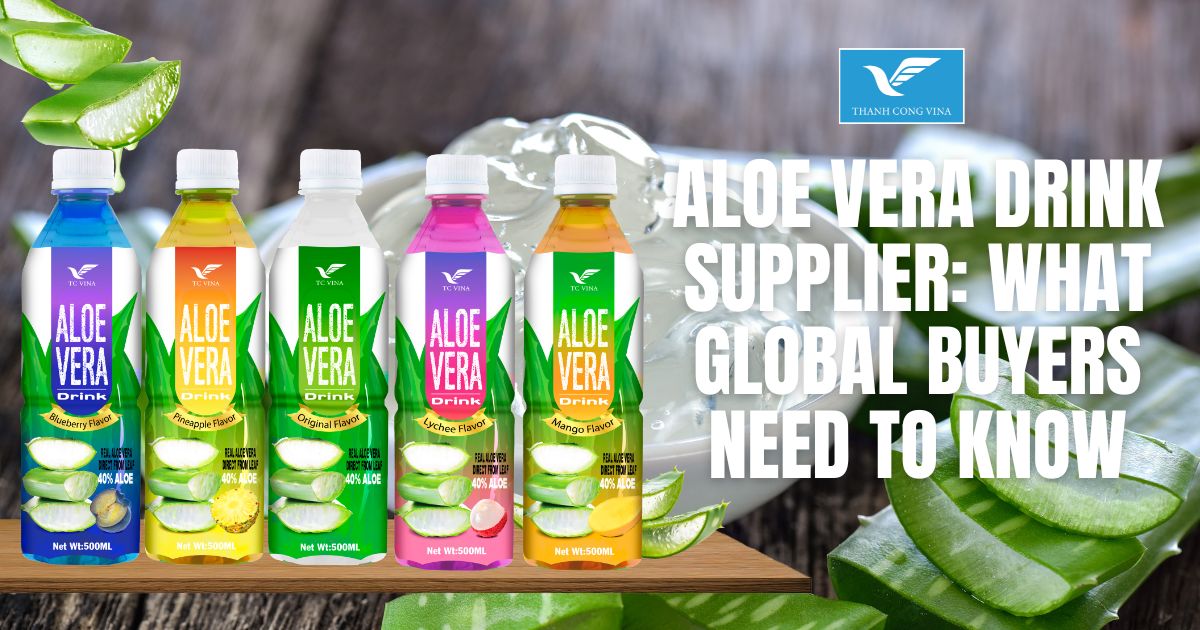
Finding a reliable Aloe Vera Drink Supplier is an important consideration for global buyers seeking to expand their beverage portfolios and establish a competitive position in international markets. As consumer preferences evolve, aloe vera beverages offer importers, distributors, retailers, and private label brands another product category to complement traditional fruit juices, bottled water, and ready-to-drink beverages. However, successful sourcing requires more than finding an attractive product at a competitive price.
International buyers must understand how manufacturers manage ingredient sourcing, product formulation, processing, packaging, quality assurance, and export documentation. They must also determine whether a supplier can meet the technical specifications, regulatory requirements, and commercial expectations of their target markets.
Vietnam is an option worth exploring for businesses seeking beverage manufacturing partners in Southeast Asia. By understanding the key factors involved in supplier evaluation, global buyers can make better sourcing decisions, reduce operational uncertainty, and build long-term partnerships that support sustainable business growth.
1. Why Global Buyers Are Sourcing Aloe Vera Drinks
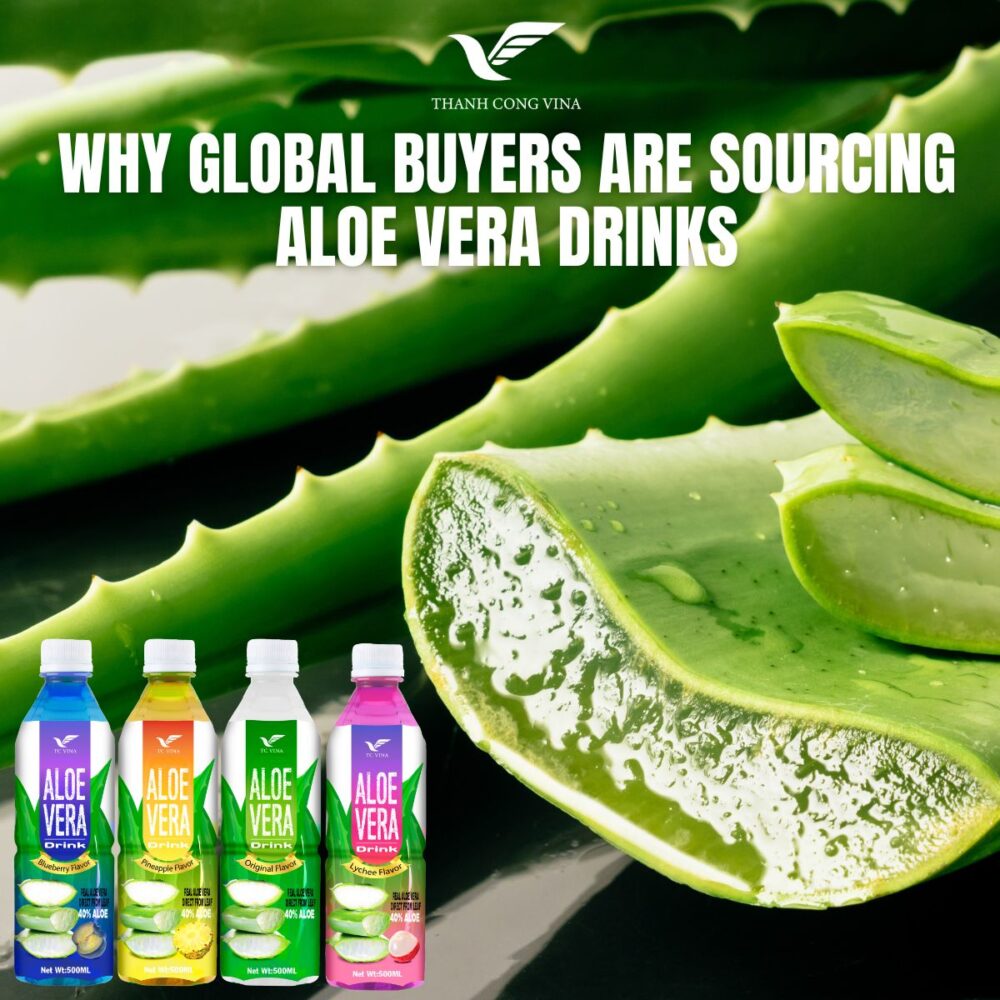
Why Global Buyers Are Sourcing Aloe Vera Drink Supplier
Aloe vera beverages can help importers and distributors diversify their product portfolios and respond to different consumer preferences. Their commercial potential depends on product formulation, local demand, brand positioning, distribution strategy, and the competitive environment in each market.
Diversifying Beverage Product Portfolios
Businesses that already distribute fruit juices, coconut water, flavored drinks, or bottled beverages may consider aloe vera drinks as an additional product category. A broader portfolio can provide more opportunities to serve different retail channels and customer segments.
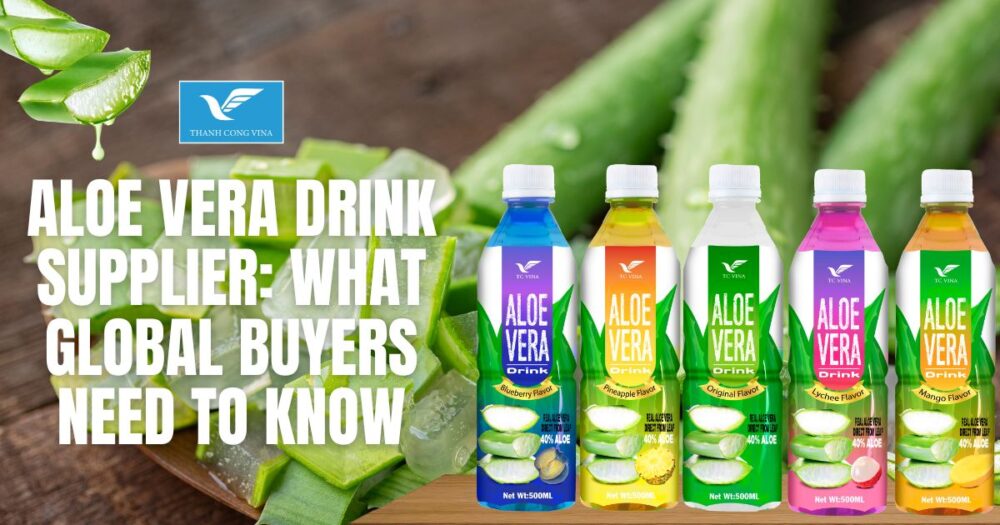
For example, a beverage distributor may offer original aloe vera drinks alongside mango, lychee, peach, and blueberry varieties. This approach creates opportunities to test different flavor preferences while maintaining a recognizable product category.
Before selecting products, buyers should evaluate competing brands, retail prices, packaging formats, and consumer expectations in their target market. Market research can help determine whether a standard formula or a differentiated private label product is more suitable.
Understanding Regional Market Requirements
Global beverage markets do not share identical purchasing preferences or regulatory requirements. Some buyers prioritize affordable everyday drinks, while others focus on distinctive flavors, premium packaging, or products designed for specific retail channels.
An international buyer should identify the characteristics that matter most to local customers before approaching an Aloe Vera Drink Supplier. These may include sweetness, beverage texture, serving size, ingredient declarations, labeling language, and packaging design.
A product that performs well in one market may require adjustments before entering another. Early evaluation helps buyers avoid unnecessary development expenses and improves the alignment between the finished beverage and the intended market.
2. How to Assess an Aloe Vera Drink Supplier Manufacturing Capabilities
A supplier’s manufacturing capabilities determine whether it can produce the required beverage consistently, meet commercial order volumes, and support future business expansion. Global buyers should assess both technical competence and the ability to coordinate production efficiently.
Production Facilities and Processing Capabilities
Buyers should understand the manufacturer’s experience with aloe vera beverages and the processes used for the specific product being considered. Relevant factors may include ingredient preparation, blending, processing, filling, sealing, packaging, and finished-product inspection.
The appropriate production process depends on the formulation, packaging format, and required product characteristics. Buyers should ask how the manufacturer controls relevant processing parameters and verifies that the finished beverage meets its specifications.
It is also important to distinguish between a supplier that manufactures products directly and a trading company that sources finished beverages from another facility. Both business models may serve commercial needs, but buyers should understand who is responsible for production, quality control, traceability, and corrective actions.
Production Capacity and Order Flexibility
Production capacity matters because a supplier must be able to support the buyer’s current requirements and potential future growth. However, the largest factory is not automatically the best choice for every business.
Small and medium-sized importers may need flexible ordering arrangements, while established distributors may require larger production volumes and coordinated deliveries. Buyers should confirm available production capacity, minimum order quantities, production lead times, and the conditions for repeat orders.
Packaging materials, customized labels, and specialized ingredients may affect minimum order quantities. A clear discussion at the quotation stage helps buyers plan purchasing budgets and avoid unexpected production constraints.
Technical Communication and Product Documentation
A capable manufacturing partner should provide clear answers to questions about formulas, ingredients, packaging, shelf life, storage, and quality requirements.
The supplier should also be able to share relevant product specifications and explain how changes to a formula or packaging format may affect production. This is particularly important for international buyers who must obtain internal approval before introducing a new beverage.
Clear documentation creates a common reference for both parties and reduces the risk of differences between the approved sample and the commercial product.
3. Ingredient Quality, Product Specifications, and Consistency
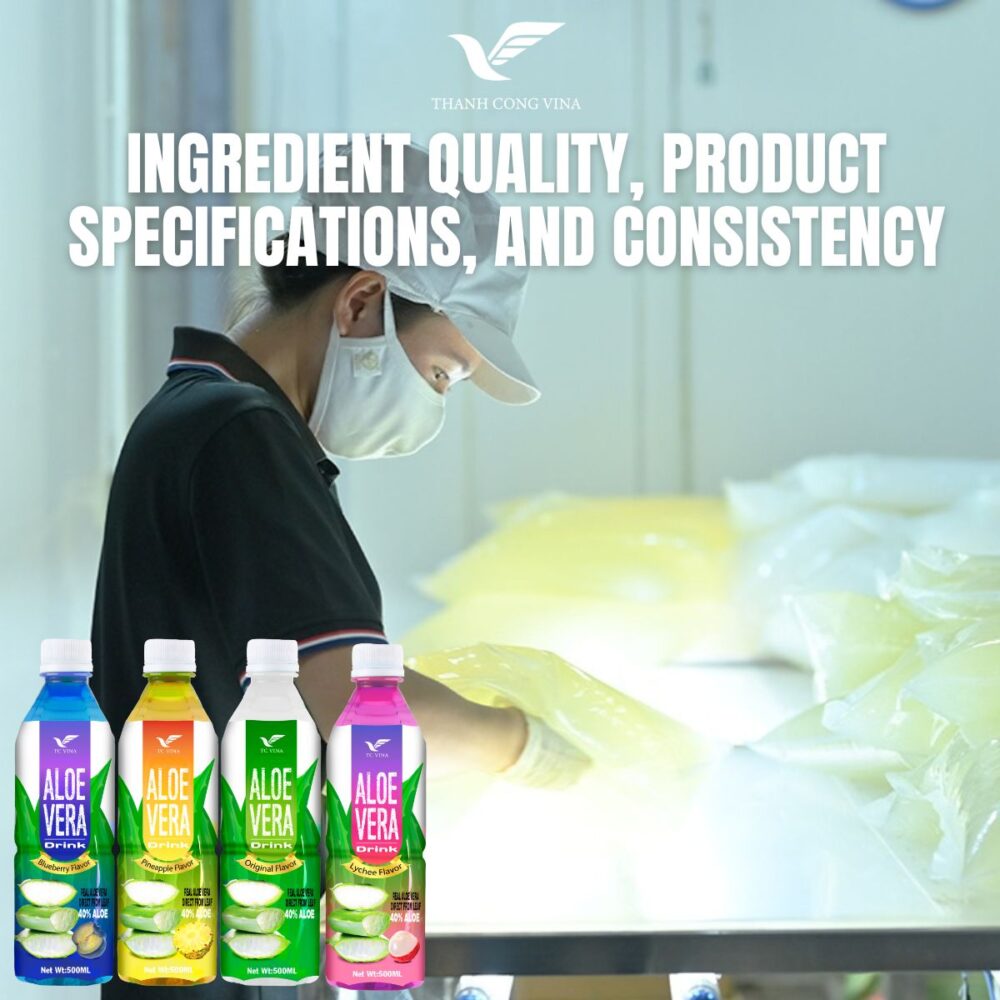
Ingredient Quality, Product Specifications, and Consistency
The quality of an aloe vera beverage depends on more than its appearance or flavor. Global buyers need reliable information about ingredients, product characteristics, and manufacturing controls before confirming a commercial order.
Reviewing Aloe Vera Ingredients
An Aloe Vera Drink Supplier should be able to explain the ingredients used in the beverage and provide an appropriate ingredient declaration.
Depending on the product, the formulation may include aloe vera ingredients, water, sweeteners, acidity regulators, flavors, and other permitted components. The exact composition should be confirmed through the manufacturer’s technical documentation.
Buyers should not assume that all products marketed as aloe vera drinks contain the same proportion or form of aloe vera ingredients. Ingredient details, product specifications, and applicable labeling requirements should be reviewed before purchasing.
Where relevant, buyers can request information concerning raw material specifications, supplier approval procedures, traceability, and testing arrangements.
Evaluating Flavor and Texture
Flavor and texture can influence whether a beverage meets the expectations of its intended customers. Aloe vera drinks may differ in sweetness, acidity, aroma, viscosity, and the texture of any aloe vera pieces included in the product.
A sample evaluation should examine the complete sensory profile rather than focusing only on flavor. Buyers should also consider appearance, consistency, packaging usability, and the overall suitability of the product for the intended retail price and consumer segment.
If formula customization is required, the buyer and manufacturer should document the approved flavor profile and technical specifications. This provides a reference for production and quality assessment.
Shelf Life and Product Stability
Shelf life affects shipping schedules, warehouse management, inventory turnover, and the risk of unsold stock. Buyers should request documented information about the declared shelf life, storage conditions, date marking, and relevant product stability data.
Shelf life varies according to formulation, processing method, packaging, and storage conditions. It should therefore be confirmed for the specific product rather than assumed from the general beverage category.
Importers should also consider the total time required for manufacturing, international transportation, customs clearance, and distribution. Adequate planning helps ensure that products reach their destination with sufficient remaining shelf life.
4. Food Safety Standards and International Compliance
Food safety is a central consideration when purchasing beverages across borders. A qualified Aloe Vera Drink Supplier should have appropriate procedures for controlling raw materials, production conditions, packaging, traceability, and finished-product quality.
Evaluating Quality Management Systems
Global buyers should review the manufacturer’s quality management procedures and request evidence of relevant certifications where applicable.
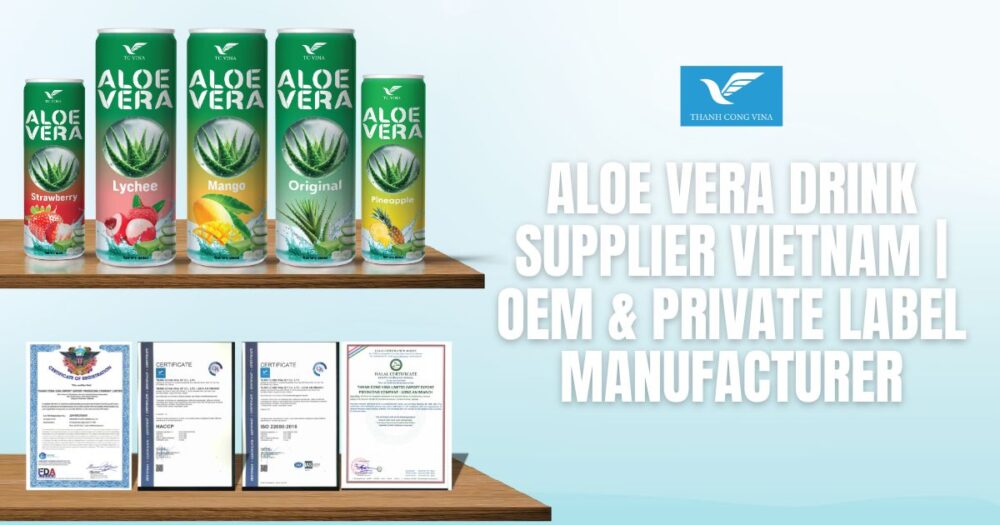
Depending on the facility and business requirements, relevant systems or certifications may include HACCP, ISO standards, HALAL certification, and other applicable food safety programs. Buyers should verify certificate validity, issuing organizations, certification scope, and whether the documents cover the relevant manufacturing site and activities.
A certificate should not replace a broader evaluation of the supplier’s actual controls. Buyers should also ask how the factory manages nonconforming products, customer complaints, corrective actions, and product traceability.
These procedures can help buyers understand how potential quality problems are identified and managed.
Meeting Destination-Market Regulations
Import requirements vary by country and may cover ingredients, permitted additives, labeling, nutrition declarations, product registration, and import documentation.
Before placing an order, buyers should determine which requirements apply to their product and destination market. Labels may need to include the product name, ingredient list, net quantity, nutrition information, manufacturer details, country of origin, date marking, and storage instructions, depending on local regulations.
Product claims also require careful review. Any health-related or functional claims must comply with applicable rules and be supported by appropriate evidence.
Manufacturers can provide available technical documents and export support, but importers should verify the legal requirements governing their own markets.
5. OEM, ODM, and Private Label Opportunities
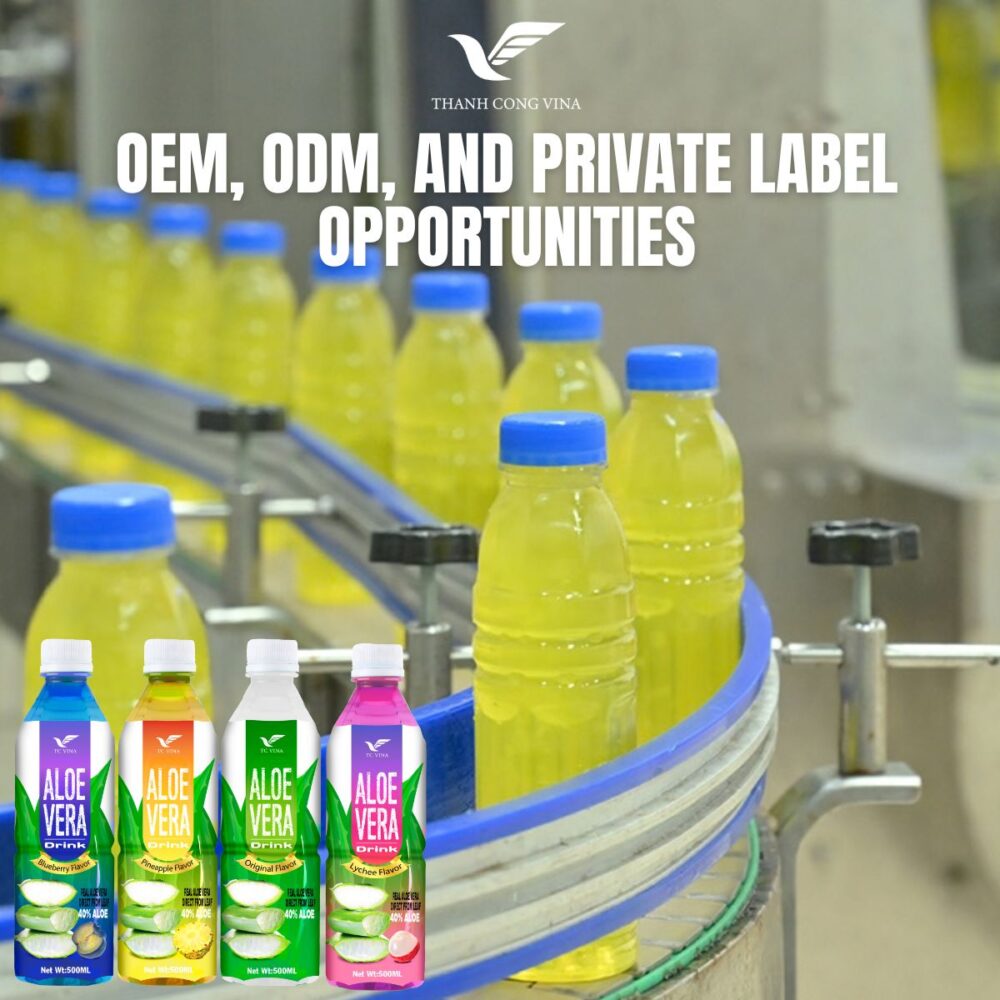
OEM, ODM, and Private Label Opportunities
For businesses seeking to develop their own beverage brands, OEM, ODM, and private label manufacturing can provide alternatives to investing in dedicated production facilities.
OEM Manufacturing for Established Brands
OEM production may suit buyers who have defined product specifications, an established formula, or clear technical requirements. The manufacturer produces the beverage according to the agreed specifications and manufacturing arrangements.
This model can be appropriate for established brands, importers, and distributors that already understand their target customers and want to scale production through an external manufacturing partner.
Before production begins, both parties should agree on the formula, product specifications, packaging, quality requirements, order quantity, and approval procedures.
ODM and Product Development Support
ODM services may offer more support during product development, depending on the manufacturer’s capabilities. Buyers may discuss product concepts, flavor preferences, packaging options, and intended market positioning.
For example, a brand may want to develop a mango-flavored aloe vera drink in a convenient bottle format. The development process may involve reviewing available formulas, evaluating samples, confirming packaging compatibility, and documenting the final specifications.
The scope of ODM services differs between manufacturers, so buyers should confirm exactly which development activities are available and which require additional costs or time.
Building a Private Label Aloe Vera Range
Private label production enables retailers, distributors, and brand owners to sell beverages under their own branding.
A private label project may involve product selection, flavor planning, label design, packaging specifications, production scheduling, and shipment preparation. Some buyers begin with a limited selection of flavors and expand the range after evaluating sales performance.
An effective approach is to establish a clear product brief before requesting quotations. The brief should identify the target market, expected price positioning, preferred packaging, approximate order volume, and any required certifications or documentation.
This helps the manufacturer provide a more relevant proposal and allows the buyer to compare options more accurately.
6. Packaging, Logistics, and Export Readiness
A successful international beverage order depends on more than manufacturing. Packaging must protect the product, logistics must align with shelf-life requirements, and export documentation must meet the needs of the transaction and destination market.
Choosing Suitable Packaging Formats
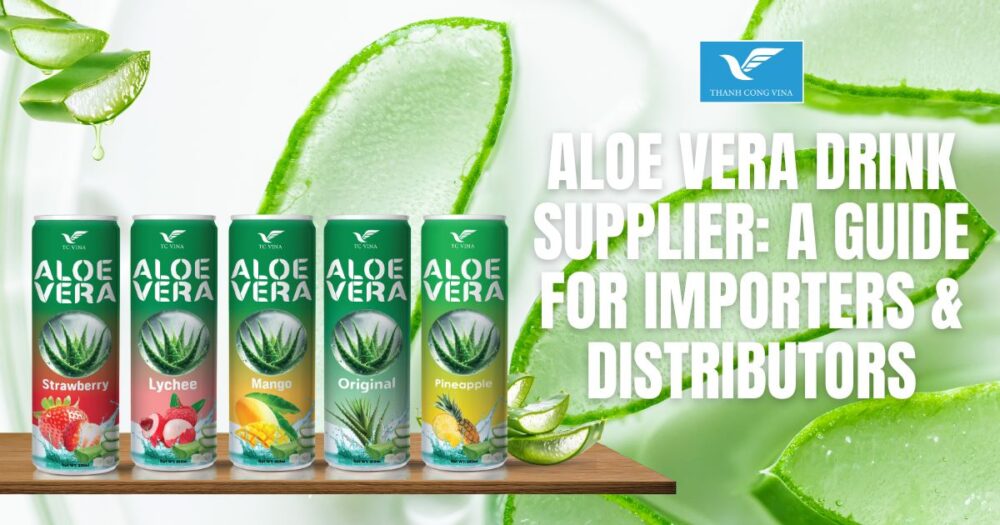
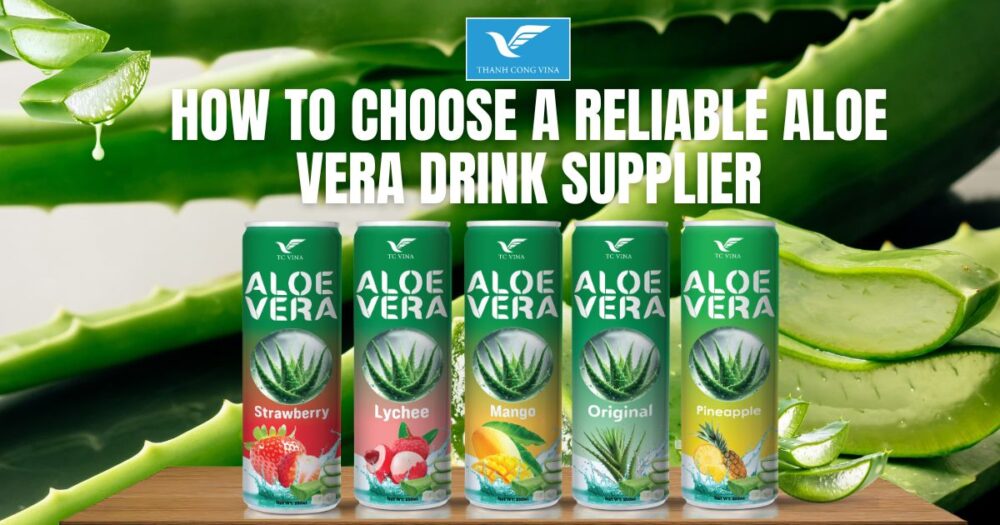
Depending on the product and manufacturing capabilities, aloe vera beverages may be available in PET bottles, cans, or other suitable beverage containers.
Packaging selection should consider retail presentation, consumer convenience, transportation durability, storage conditions, and the intended distribution channel.
Buyers should confirm available sizes, closure types, label specifications, carton configuration, and packaging material details. Any customized artwork should be reviewed and approved before mass production.
Packaging changes can affect production planning and minimum order quantities, so they should be discussed early in the project.
Export Documentation and Shipment Preparation
International shipments may require commercial invoices, packing lists, certificates of origin, product specifications, certificates of analysis, and other documents depending on the transaction and destination market.
The buyer should confirm which documents are available from the manufacturer and which must be arranged by the importer, freight forwarder, or another authorized party.
Clear responsibilities help prevent delays caused by incomplete or inconsistent documentation.
Planning Freight and Inventory
Importers should evaluate the total landed cost rather than comparing factory prices alone. Relevant costs may include product manufacturing, packaging, freight, insurance where applicable, duties, taxes, customs clearance, and local distribution.
Production lead time and transportation time should also be included in inventory planning. Buyers should coordinate purchase orders with warehouse capacity, expected sales, and replenishment schedules.
A supplier that communicates production progress and shipment readiness clearly can make it easier to coordinate these activities and maintain a more predictable supply chain.
7. Why Choose Thanh Cong Vina as a Beverage Manufacturing Partner?
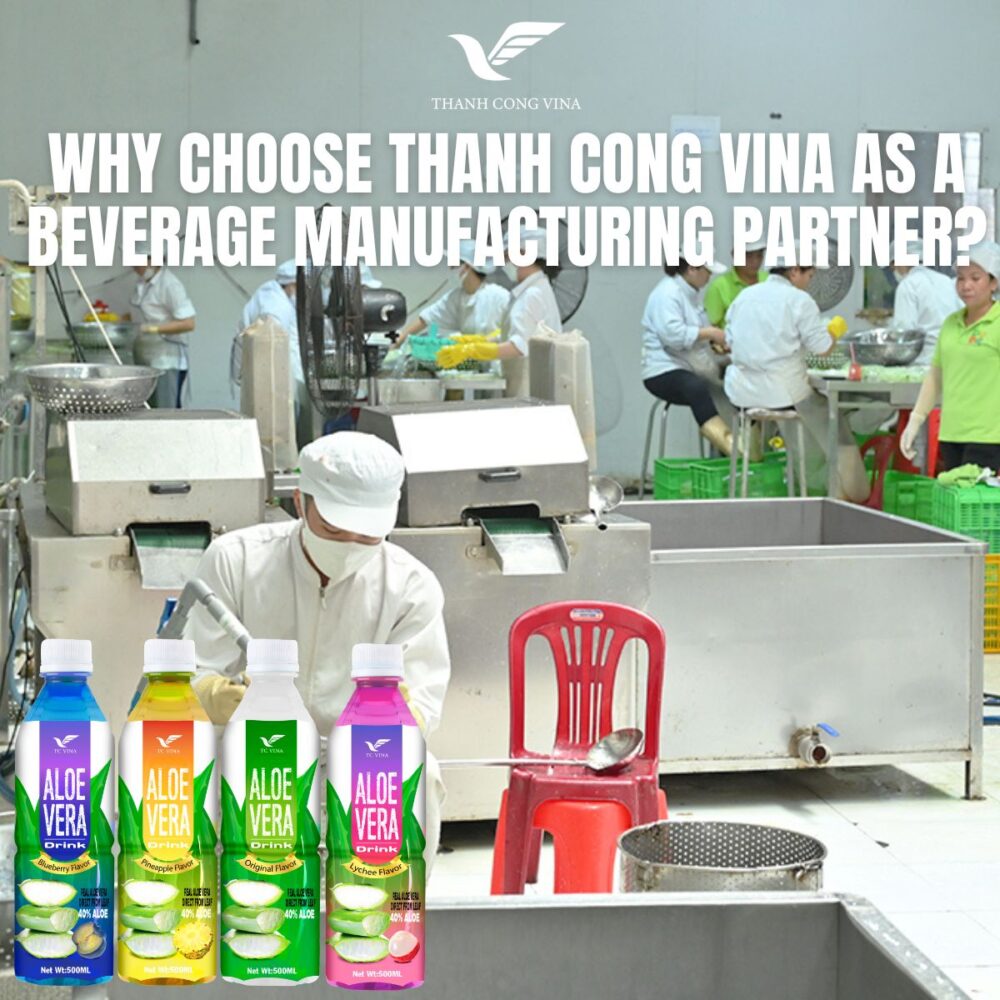
Why Choose Thanh Cong Vina as a Beverage Manufacturing Partner?
Thanh Cong Vina provides beverage manufacturing solutions for businesses exploring products from Vietnam. Its portfolio includes fruit juice drinks, coconut water, coconut water with fruit juice, aloe vera beverages, nata de coco drinks, ready-to-drink coffee, isotonic beverages, energy drinks, concentrates, and other beverage categories.
For international buyers, a broad portfolio can create opportunities to develop complementary products through one manufacturing relationship. However, product availability, technical specifications, order quantities, and export arrangements should be confirmed for each project.
Supporting Different Business Models
Importers may be looking for established beverage products, while brand owners may need private label options or customized product development. A suitable manufacturing discussion should begin with the buyer’s target market, preferred product type, packaging format, order volume, and quality requirements.
Thanh Cong Vina can discuss these requirements with prospective customers to identify suitable manufacturing options and clarify the next steps for sampling, specification review, production planning, and export preparation.
Developing Long-Term Business Relationships
Long-term sourcing requires consistent communication, documented product requirements, reliable production planning, and a clear process for managing changes.
Buyers should establish expectations for product approval, quality documentation, order confirmation, shipment scheduling, and repeat production. These practices help both parties manage commercial risks and prepare for future growth.
For companies evaluating a Vietnamese beverage manufacturer, a detailed discussion of project requirements is a practical first step toward determining whether the partnership fits their business objectives.
Conclusion
Choosing the right Aloe Vera Drink Supplier requires a comprehensive assessment of manufacturing capability, ingredient quality, product consistency, food safety systems, customization options, packaging, and export readiness. Global buyers should also evaluate minimum order quantities, total landed cost, production lead times, and the supplier’s ability to maintain consistent specifications across repeat orders.
A structured sourcing process can help importers and distributors reduce uncertainty and select products that meet the commercial and regulatory requirements of their target markets. Reviewing samples, confirming documentation, and agreeing on technical specifications before production are essential steps toward a successful purchasing relationship.
Thanh Cong Vina offers beverage manufacturing solutions for businesses seeking to develop and source products from Vietnam. By discussing product requirements, packaging preferences, and export needs in advance, buyers can assess suitable options for their portfolios. For companies looking for an Aloe Vera Drink Supplier, Thanh Cong Vina is a potential manufacturing partner to consider when developing private label beverages and building long-term international supply relationships.