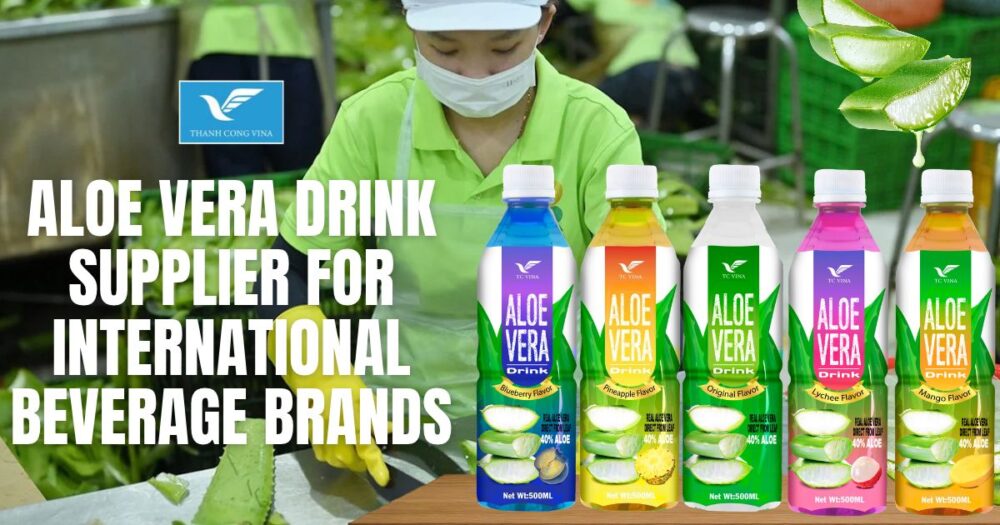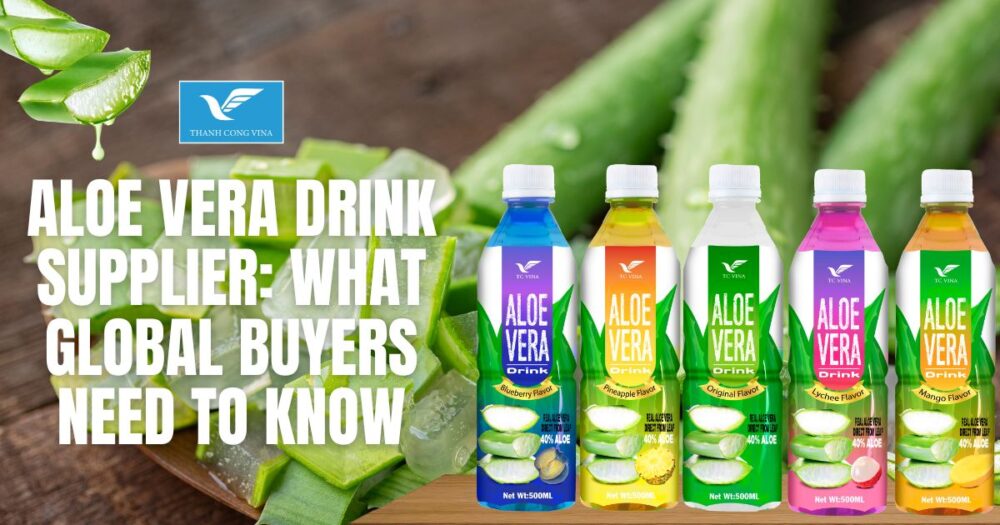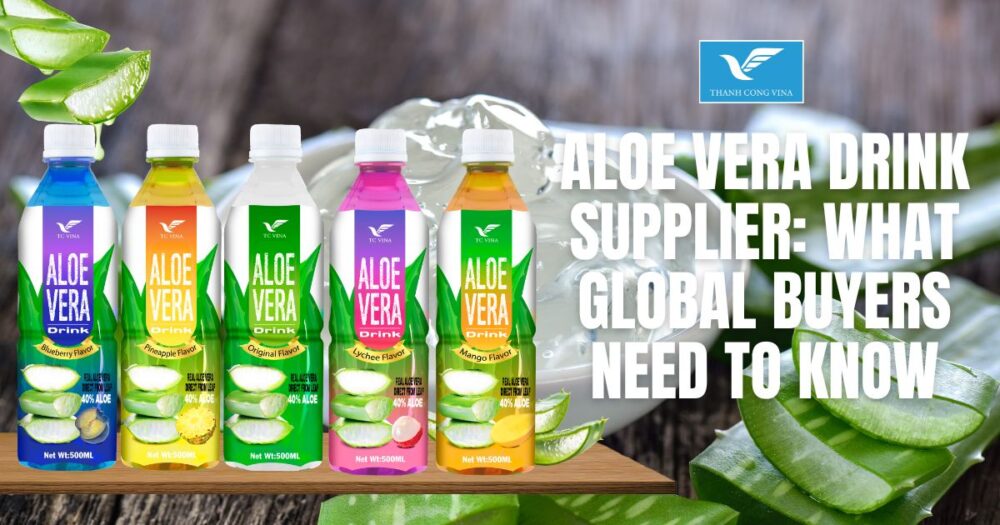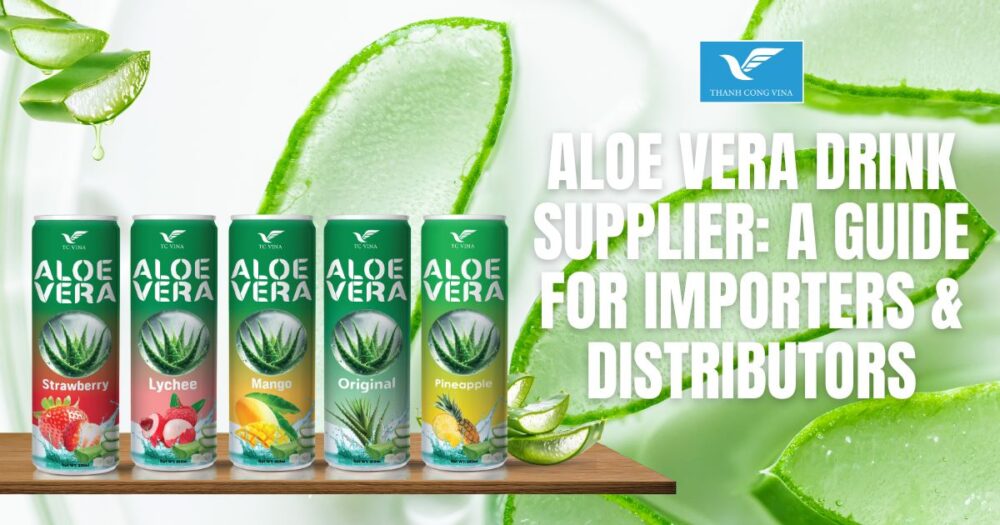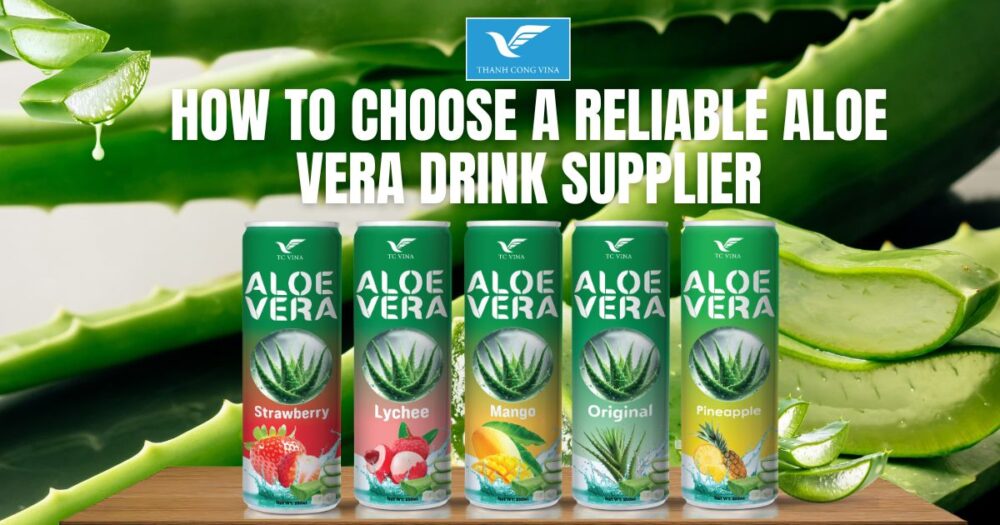

Aloe vera drink supplier beverages have become an interesting product category for beverage brands seeking to expand their portfolios with refreshing drinks, distinctive textures, and fruit-inspired flavors. However, producing a consistent aloe vera beverage involves much more than combining ingredients and filling bottles. Every stage, from raw material selection and aloe vera processing to formulation, quality control, packaging, and export preparation, contributes to the final product. For importers, distributors, and private-label businesses, choosing a capable Aloe Vera Drink Supplier is essential to maintaining product quality and meeting commercial requirements.
Understanding the manufacturing process helps buyers evaluate suppliers more effectively, identify potential quality risks, and establish realistic product specifications. It also supports better decisions regarding flavor development, packaging formats, shelf life, and order planning. By working with an experienced beverage manufacturing partner, international businesses can explore suitable product configurations while aligning production requirements with their brand positioning. This guide explains the key stages involved in producing aloe vera drinks and the considerations buyers should review before moving from product concept to finished goods.
1. Understanding Aloe Vera Drink Manufacturing from Raw Materials to Finished Products
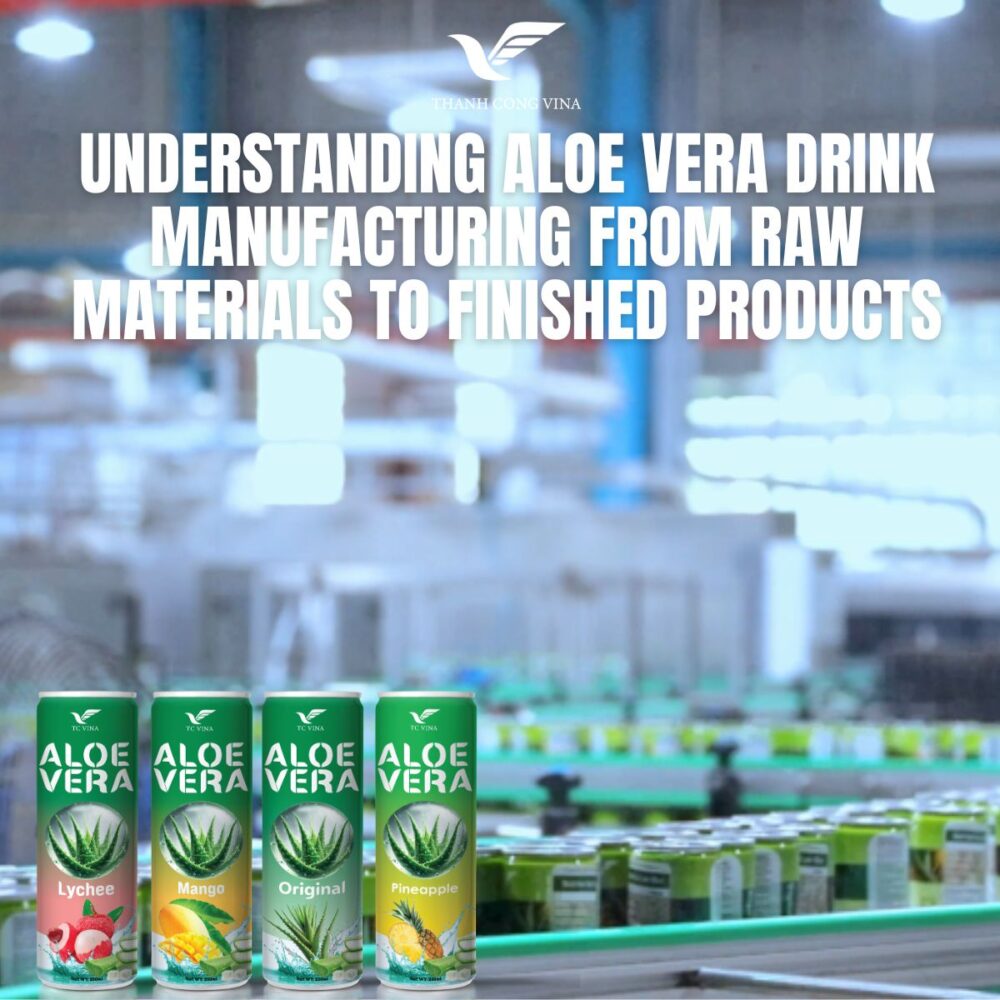
Understanding Aloe Vera Drink Supplier from Raw Materials to Finished Products
The production of an aloe vera beverage involves a sequence of interconnected operations. Although the precise process varies according to the formulation, aloe vera ingredient format, processing technology, and packaging system, the objective remains consistent: to manufacture a safe, stable product that meets the approved specification.
Raw Material Selection and Incoming Inspection
Raw material quality is the foundation of a reliable aloe vera beverage. Manufacturers must assess the suitability of aloe vera ingredients and other formulation components before they enter production. Depending on the product design, these materials may include processed aloe vera gel or pulp, water, sweeteners, permitted food additives, and flavoring ingredients.
Incoming inspection may involve reviewing supplier documentation, ingredient specifications, lot identification, packaging integrity, and relevant quality records. The exact tests depend on the ingredient, associated risks, and the manufacturer’s quality plan.
For international brands, traceability is particularly important. Ingredient records should make it possible to identify the source and batch of materials used in a finished product. Buyers should ask how suppliers approve incoming ingredients, manage nonconforming materials, and maintain documentation throughout production.
Preparing Aloe Vera for Beverage Production
Aloe vera requires appropriate preparation before it can be incorporated into a beverage. Depending on the sourcing model, the manufacturer may receive an already processed ingredient or use a process involving additional preparation steps.
Where fresh plant material is handled, processing may include washing, removal of unsuitable outer material, separation of the desired inner portion, cutting, and further treatment according to the product specification. Proper handling is important because the condition of the raw material and the effectiveness of processing controls can influence the quality of the final ingredient.
Not every aloe vera beverage uses the same raw material format. Some products contain defined aloe vera pieces, while others may use different processed aloe ingredients. Buyers should confirm the exact ingredient type and its permitted use rather than relying solely on general product descriptions.
The supplier should also explain how it controls ingredient handling and verifies that the prepared material meets the relevant specifications.
2. How an Aloe Vera Drink Supplier Controls Processing and Formulation
The transition from prepared aloe vera ingredients to a finished beverage requires careful coordination between formulation, processing conditions, and quality assurance. A qualified Aloe Vera Drink Supplier should be able to explain the key production stages relevant to the specific product rather than providing only a general description of its manufacturing capabilities.
Formulation and Ingredient Blending
Formulation determines the beverage’s overall flavor, sweetness, acidity, appearance, and texture. Aloe vera ingredients may be combined with a liquid base and other permitted ingredients to achieve the intended product profile.
During development, manufacturers assess how the ingredients interact and whether the proposed formulation can be produced consistently at commercial scale. The process may involve adjusting ingredient proportions, evaluating flavor balance, and reviewing the physical characteristics of aloe vera pieces.
International brands should provide a clear product brief that identifies the intended flavor, target consumer, preferred sweetness level, ingredient requirements, and any restrictions related to the destination market.
A sample should be evaluated against defined criteria rather than personal preference alone. Buyers may assess appearance, aroma, flavor, texture, and packaging compatibility before approving a formulation for production.
Mixing, Process Control, and Product Consistency
Once the formulation has been approved, ingredients are prepared and mixed according to the manufacturer’s documented procedures. Relevant controls may include ingredient quantities, mixing conditions, product uniformity, and specified physical or chemical parameters.
For beverages containing aloe vera pieces, the distribution and consistency of those pieces can be important product attributes. Buyers should establish acceptable specifications during development and confirm how the manufacturer monitors them during production.
Process parameters must be suitable for the actual formulation and validated processing system. There is no single processing method or set of operating conditions that applies to every aloe vera beverage. The selected approach must account for the product’s characteristics, packaging, food safety requirements, and intended shelf life.
Manufacturers should maintain production records and investigate deviations from approved requirements. Documented controls help reduce the risk of differences between approved samples and commercial batches.
3. Food Safety and Quality Assurance Throughout Production
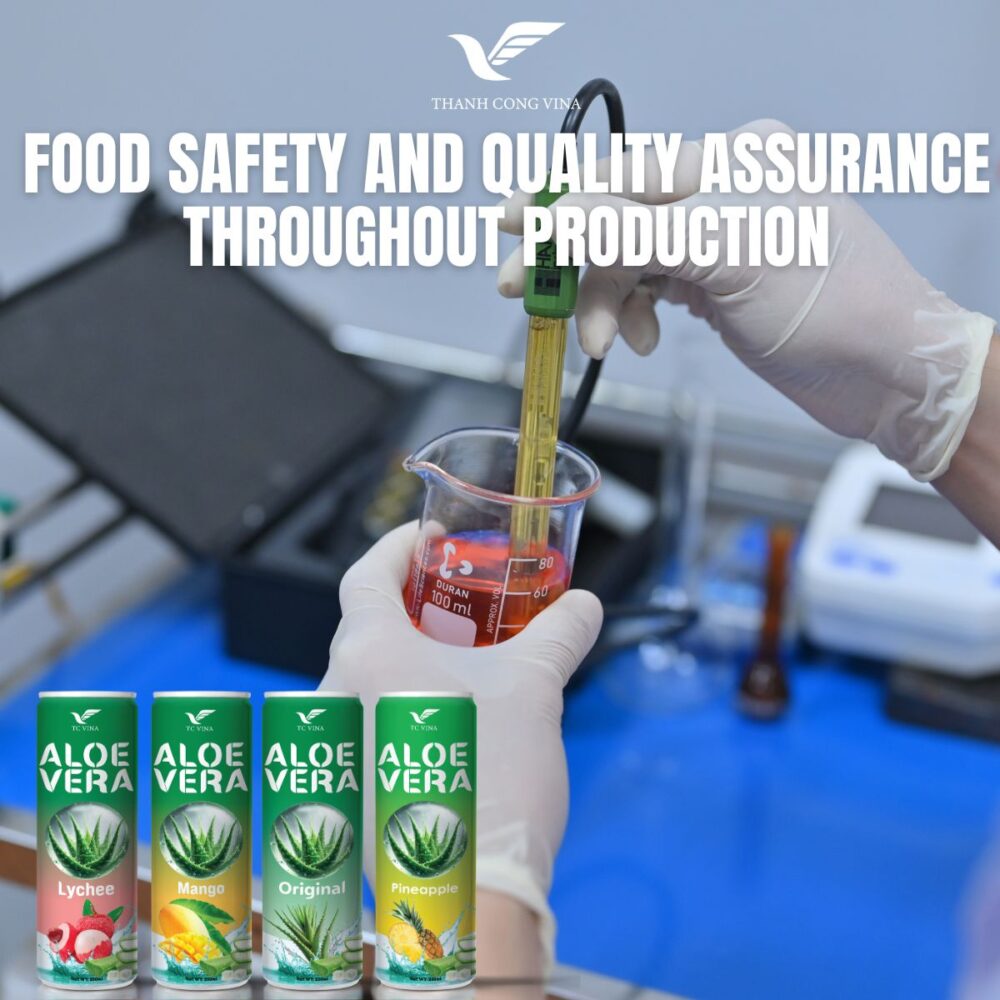
Food Safety and Quality Assurance Throughout Production
Food safety must be integrated into the manufacturing process, from ingredient receipt through processing, filling, storage, and dispatch. For international buyers, the presence of a documented quality system is an important factor when assessing whether a supplier can support commercial distribution.
Hygiene, Hazard Management, and Manufacturing Controls
Beverage production requires suitable hygiene practices, equipment maintenance, personnel training, and controls designed around the risks associated with the product and process.
Depending on the manufacturing operation, controls may address water quality, ingredient handling, cleaning procedures, environmental conditions, equipment sanitation, and prevention of cross-contamination. The manufacturer should be able to explain how these controls are established, monitored, and documented.
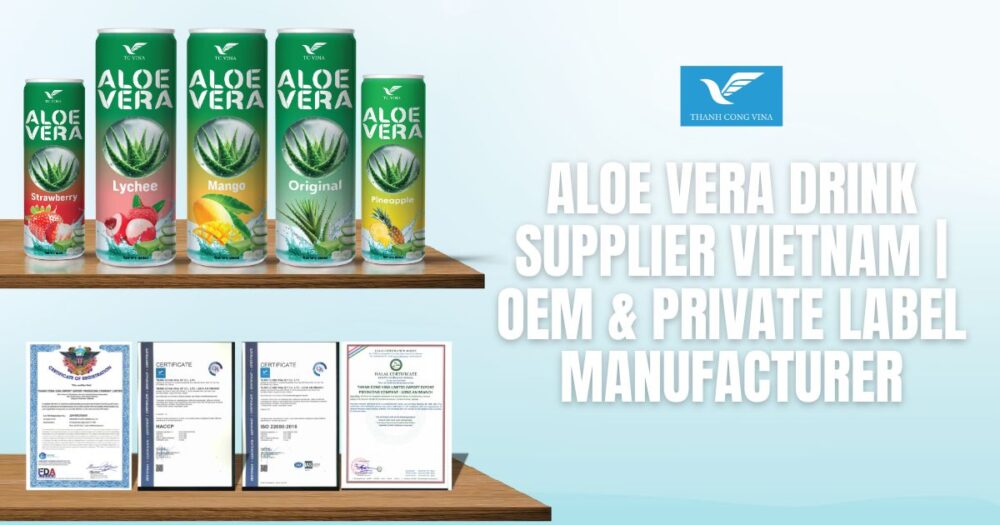
Buyers should request information about the supplier’s food safety management system and review relevant certifications where applicable. Certification scope, validity, issuing body, and the covered production site should be verified. A certification logo alone does not establish that every product or manufacturing activity is covered.
For products destined for regulated markets, buyers may also need supporting information concerning ingredient compliance, product testing, and applicable manufacturing standards.
Finished-Product Inspection and Batch Traceability
Quality assurance continues after processing. Finished-product checks should be based on the agreed product specification and risk assessment. Depending on the product, these may include appearance, flavor, fill quantity, packaging integrity, labeling accuracy, and relevant laboratory testing.
The manufacturer should establish criteria for determining whether a batch meets release requirements. Products that do not meet the approved specification should be handled through a documented nonconformance process.
Traceability links ingredients, production records, packaging materials, and finished-product batches. This information is valuable when investigating complaints, identifying the source of a quality issue, or managing a recall if required.
Before placing an order, international buyers should ask what quality documents will be provided and how product complaints are investigated. Clear procedures help both parties respond more efficiently when issues arise.
4. Filling, Packaging, and Shelf-Life Considerations
Packaging is not simply the final presentation of an aloe vera beverage. It must be compatible with the formulation and processing method, protect the product during distribution, and meet the practical requirements of the target market.
Selecting Suitable Packaging Formats
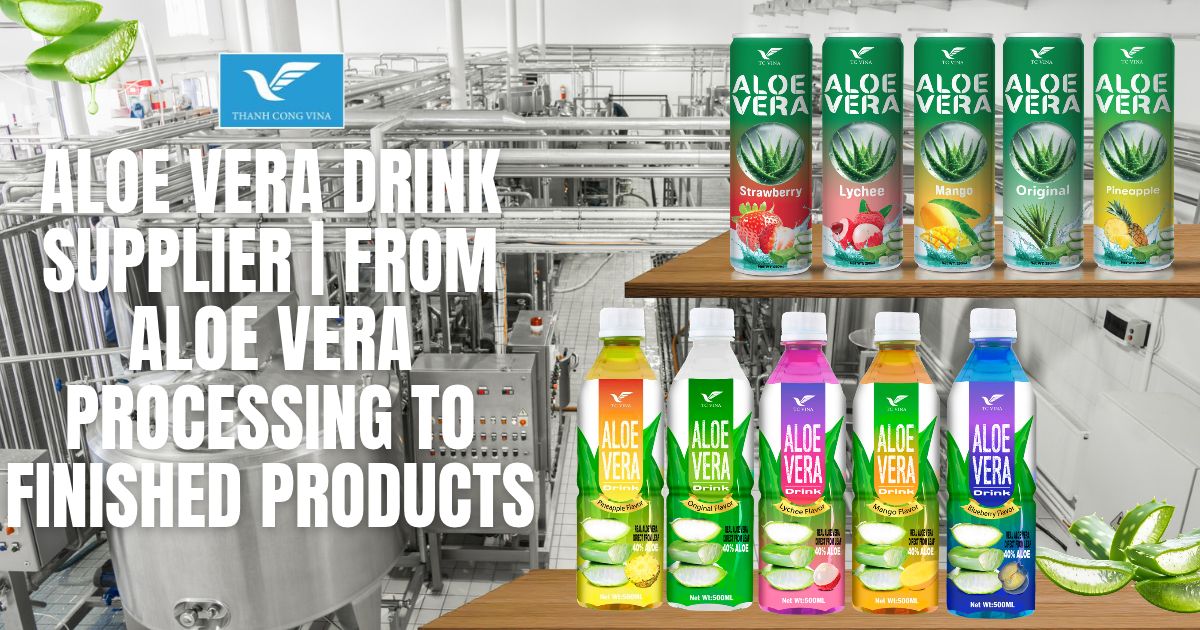
Depending on the manufacturer’s available capabilities, aloe vera drinks may be offered in formats such as PET bottles, glass bottles, or cans. The appropriate choice depends on product requirements, brand positioning, transport conditions, retail expectations, and the intended price point.
Bottle size is another commercial consideration. Smaller formats may suit convenience retail and individual consumption, while larger formats may be appropriate for other distribution channels. However, format decisions should be based on consumer research, retailer requirements, and realistic sales forecasts.
Packaging development also includes closure selection, label dimensions, artwork preparation, and compatibility between the container and the beverage. Buyers should confirm the minimum order quantity for each packaging component, as customized materials may require separate purchasing commitments.
Filling, Sealing, and Packaging Inspection
The filling process must follow the requirements of the approved product and validated manufacturing system. Depending on the formulation and packaging technology, the production process may require specific controls for filling conditions, sealing integrity, and product handling.
Finished packages should be checked against defined acceptance criteria. Relevant checks may include fill quantity, closure integrity, label placement, date coding, batch identification, and visible packaging defects.
These checks are important because packaging issues can affect product protection, traceability, and retail acceptance. Buyers should agree on packaging specifications and inspection expectations before production begins.
Establishing and Verifying Shelf Life
Shelf life should be supported by appropriate validation for the actual formulation, processing method, and packaging system. It should not be assumed that two aloe vera drinks have identical shelf lives simply because they use similar ingredients.
Buyers should request documented information about storage conditions, product stability, and the basis for the stated shelf life. They should also confirm whether any special handling conditions apply during transportation or storage.
For export orders, the available shelf life upon arrival matters as much as the stated shelf life at the production date. Shipping duration, customs clearance, warehouse handling, and distribution timelines should therefore be considered during supply planning.
5. OEM and Private Label Aloe Vera Drink Development
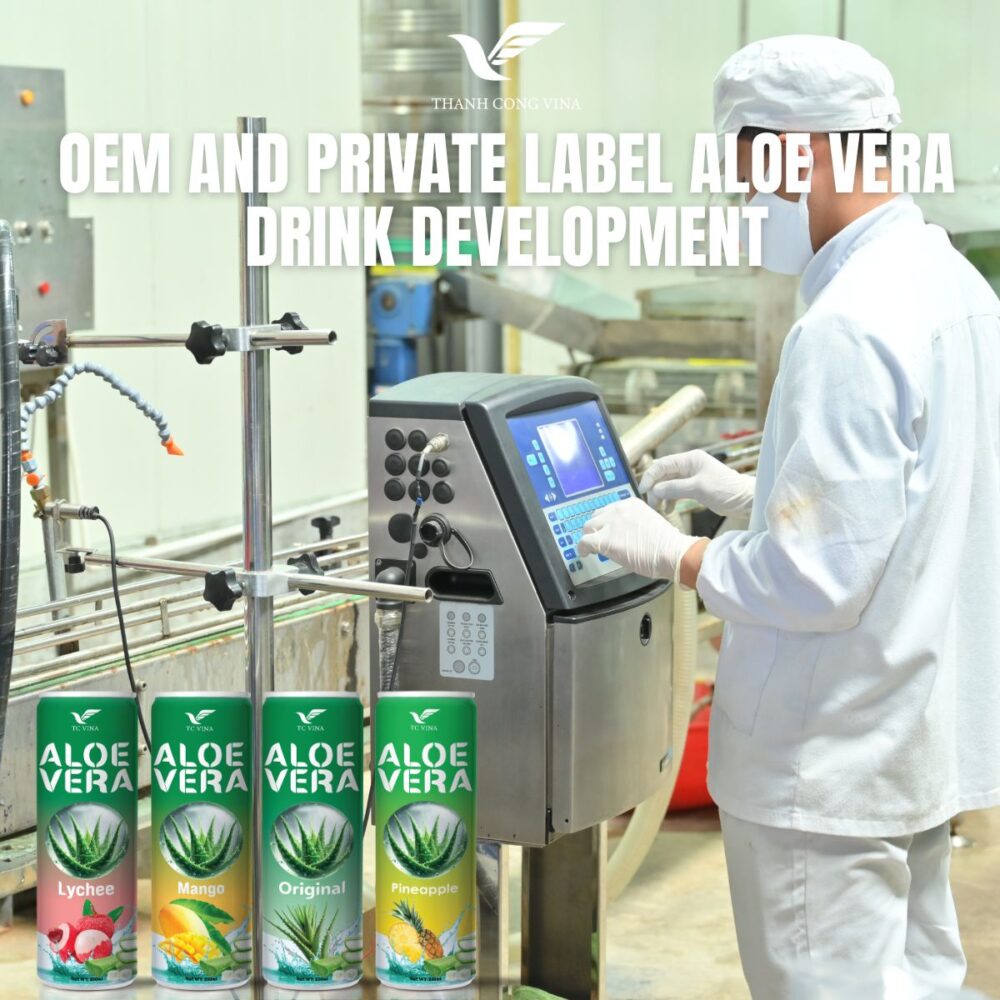
OEM and Private Label Aloe Vera Drink Development
OEM and private-label manufacturing offer businesses a way to introduce aloe vera beverages under their own brands without establishing an independent beverage production facility. The scope of support varies between manufacturers, so buyers should clarify which development and production services are available.
From Product Concept to Approved Sample
A structured development process begins with a product brief. This document should describe the target market, preferred flavor, ingredient expectations, packaging format, expected order quantity, target launch date, and relevant regulatory requirements.
The manufacturer can then assess feasibility and identify information that needs to be confirmed. If a formulation already exists, the discussion may focus on production compatibility and specification review. If the product is still at the concept stage, additional work may be needed to develop and evaluate samples.
The sample approval process should be documented, with agreed criteria for flavor, texture, appearance, and packaging. Buyers should also clarify how many development rounds are included, whether sample costs apply, and how approved specifications will be controlled during production.
Customization, Minimum Order Quantities, and Cost Planning
Private-label projects may involve choices about flavor variations, packaging size, label design, and product presentation. Each option can affect purchasing commitments, lead times, and production costs.
Minimum order quantities may differ according to the formulation, container type, printed packaging requirements, and manufacturing schedule. Buyers should request a clear breakdown of these factors instead of comparing suppliers on unit price alone.
A realistic cost assessment should consider product price, packaging, artwork, sampling, testing, freight, insurance where applicable, duties, and other destination-related expenses. Payment terms and lead times should also be reviewed before a commercial commitment is made.
Starting with a manageable order may help a brand evaluate market demand, provided that the quantity meets the supplier’s production and packaging requirements. Future orders can then be planned using sales performance and inventory data.
6. Export Preparation and Building a Reliable Supply Chain
A finished beverage is ready for international business only when manufacturing, documentation, packaging, and logistics requirements are aligned. Buyers should discuss export preparation early, particularly when importing into a market with specific food regulations or documentation procedures.
Destination-Market Compliance and Shipping Documents
The buyer and supplier should identify the documentation required for the product and destination. Depending on the shipment and applicable rules, this may include a commercial invoice, packing list, transport document, certificate of origin where relevant, product specifications, ingredient information, or other required certificates.
Labeling should also be reviewed before mass production. Requirements can vary by jurisdiction and may cover product naming, ingredient declarations, nutrition information, language, date marking, and permitted claims.
Responsibility for each document should be agreed in advance. The buyer should confirm which records the manufacturer can provide and which documents must be arranged by the importer or another service provider.
Production Scheduling and Shipment Coordination
Export supply chains require coordination between raw material availability, packaging procurement, production scheduling, quality release, and freight booking. A delay in one stage may affect the entire shipment.
Buyers should request a realistic schedule with clear milestones and agree on how changes will be communicated. Forecasts and reorder plans can help the supplier prepare for repeat orders while reducing the risk of last-minute production pressure.
Inventory planning is particularly important for new products. Ordering too much can tie up working capital, while ordering too little can result in stockouts and additional logistics costs. A phased launch, supported by market feedback and reliable demand forecasting, can help brands balance these risks.
A strong supply chain depends on clear specifications, accurate documentation, realistic lead times, and regular communication between the buyer and manufacturing partner.
7. Why Choose Thanh Cong Vina for Aloe Vera Beverage Manufacturing?
Why Choose Thanh Cong Vina for Aloe Vera Beverage Manufacturing?
Selecting a manufacturing partner requires more than evaluating a single product sample or quotation. International brands need to understand whether a supplier’s product portfolio, technical capabilities, documentation practices, and commercial arrangements match the needs of their business.
Thanh Cong Vina works in the beverage manufacturing sector, including fruit-based drinks and aloe vera beverage products. Businesses exploring OEM, ODM, or private-label opportunities can discuss their product concepts, flavor preferences, packaging requirements, target markets, and estimated order volumes to assess project suitability.
Preparing for a Product Inquiry
To make the initial discussion more productive, buyers should provide the key information required to evaluate their project. This includes the intended aloe vera beverage format, flavor options, packaging size, destination country, expected quantity, launch schedule, and any known regulatory requirements.
It is also useful to explain whether the product will follow an existing specification or require development support. Buyers should request relevant product documentation and verify manufacturing capabilities, quality systems, certification scope, minimum order quantities, and lead times before confirming an order.
The most effective partnership is built on transparent communication and written agreement. Specifications, sample approvals, pricing, production schedules, packaging details, and responsibilities for export documents should all be clear before manufacturing begins.
By evaluating these factors systematically, brands can make better sourcing decisions and establish a practical foundation for developing aloe vera beverages for international distribution.
Conclusion
From raw material selection and aloe vera processing to formulation, quality assurance, filling, packaging, and export preparation, every manufacturing stage contributes to the performance of a finished beverage. International buyers should assess ingredient specifications, process controls, batch traceability, packaging compatibility, validated shelf life, and destination-market compliance before choosing an Aloe Vera Drink Supplier. A clear product brief and documented approval process can help minimize misunderstandings while supporting consistent production and reliable delivery.
Thanh Cong Vina Beverage offers international beverage businesses an opportunity to discuss aloe vera drink manufacturing and potential OEM or private-label projects based on their commercial requirements. Buyers should confirm product specifications, available packaging options, relevant quality documentation, and order conditions before proceeding. By establishing clear expectations from the beginning, brands can build a more dependable sourcing process and prepare their products for competitive markets. Thanh Cong Vina welcomes discussions with businesses seeking a suitable beverage manufacturing partner and a structured approach to bringing aloe vera beverage concepts from development to finished products.