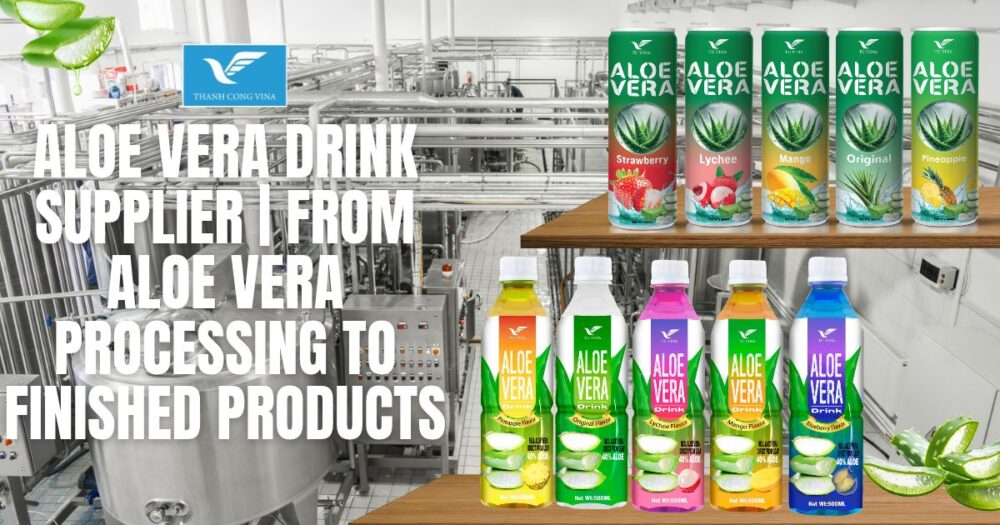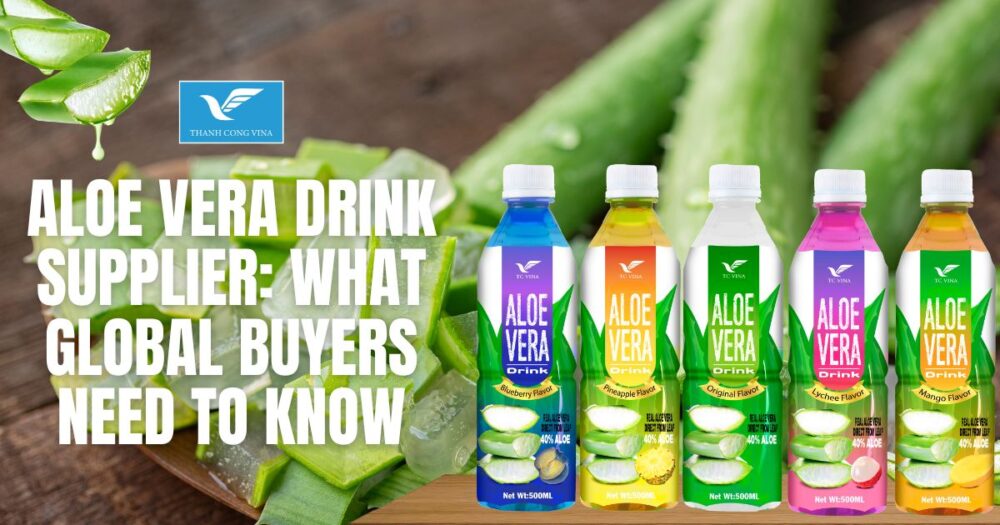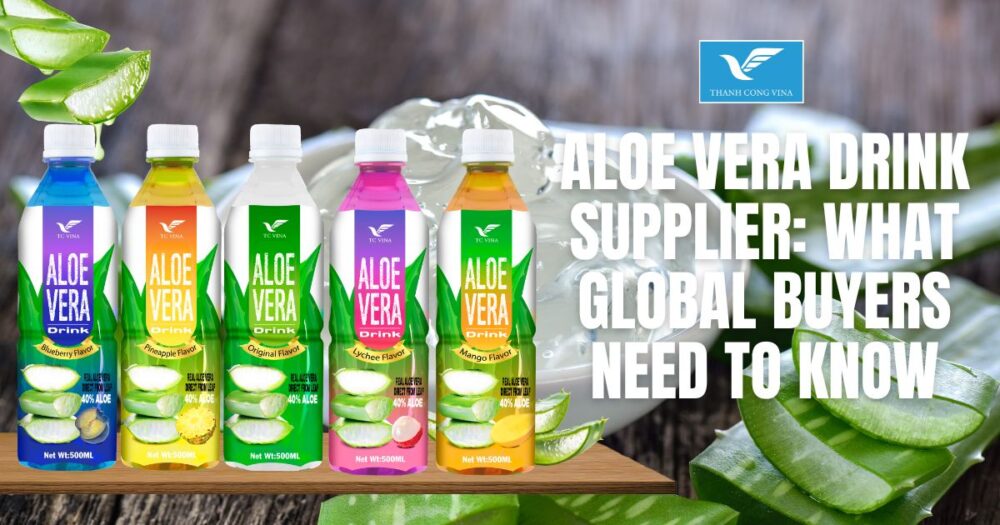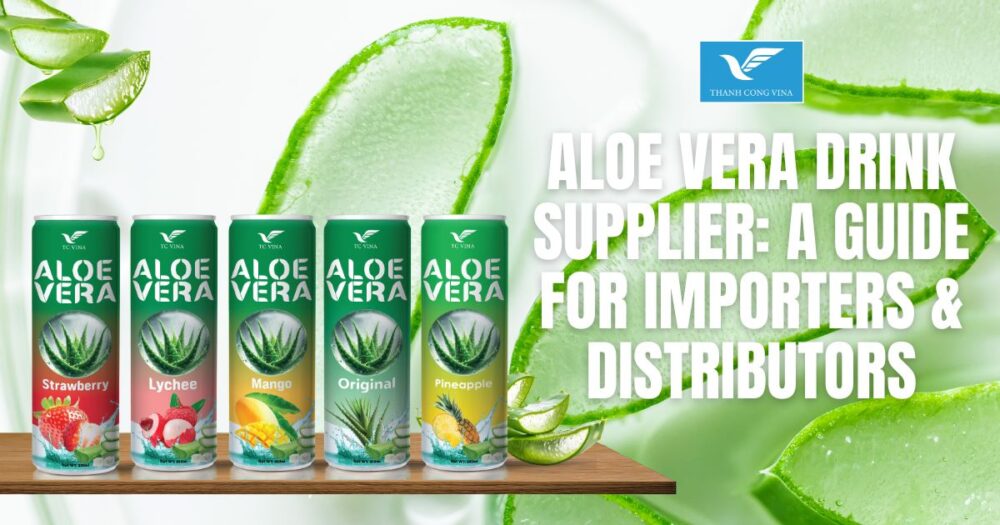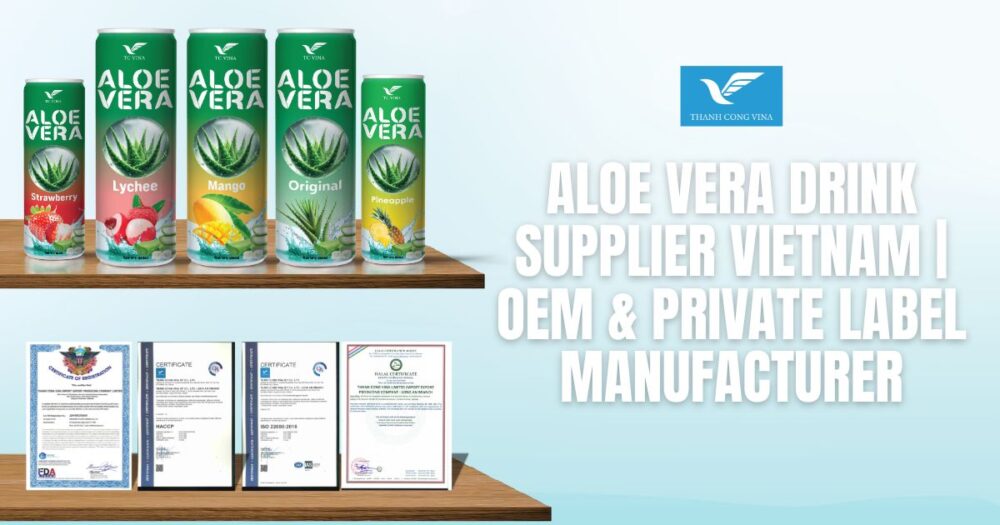

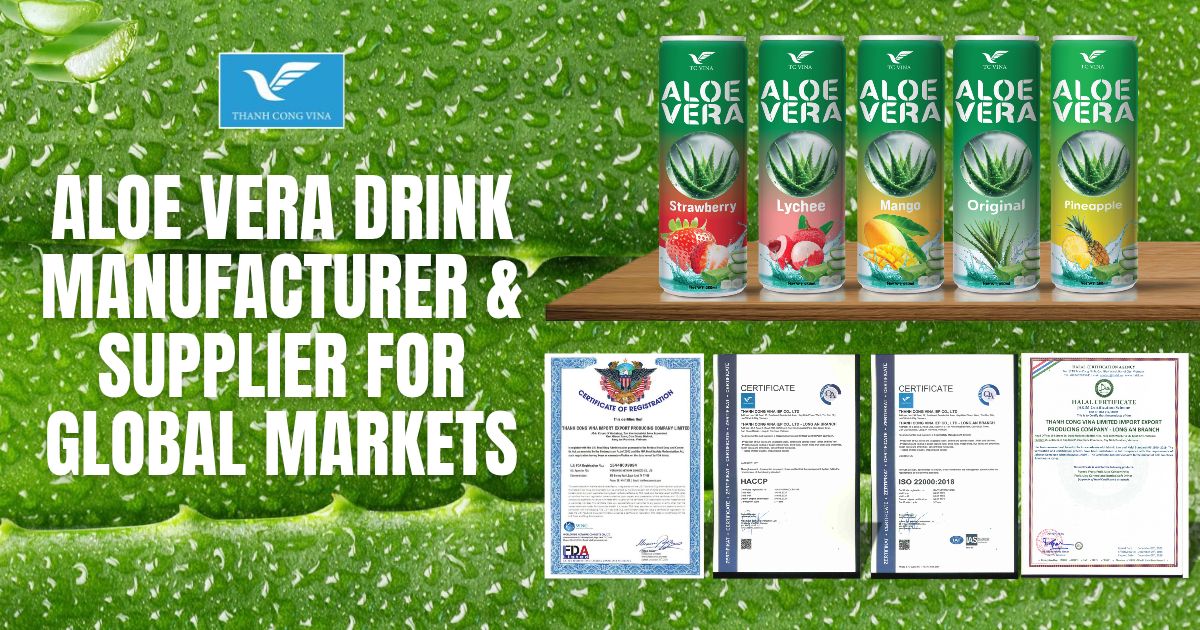
For importers, distributors, retailers, and private-label businesses, choosing the right Aloe Vera Drink Manufacturer is an important step toward developing a competitive product range and building a dependable supply chain. Successful beverage sourcing requires more than finding a factory that can fill bottles or cans. Buyers must consider ingredient specifications, formulation consistency, production controls, packaging compatibility, food safety documentation, and export coordination. These factors influence product quality, commercial costs, and the ability to supply multiple markets reliably. An experienced manufacturing partner can help buyers assess product requirements and determine whether a proposed beverage is suitable for their target market. This article explores the essential considerations for sourcing aloe vera drinks internationally, from manufacturing capabilities and product development to quality assurance, private-label solutions, and long-term supply planning.
1. Why Global Beverage Brands Invest in Aloe Vera Drink Products
Why Global Beverage Brands Invest in Aloe Vera Drink Products
Aloe vera beverages give brands an opportunity to introduce a product with a distinctive appearance and drinking experience. Depending on the formulation, these beverages may contain aloe vera pieces or other processed aloe ingredients combined with a liquid base and selected flavors. This flexibility allows businesses to develop products for different consumer segments and retail channels.
For brands competing in crowded beverage categories, differentiation can influence how products are positioned and marketed. An aloe vera beverage may complement an existing portfolio of fruit juices, flavored drinks, coconut water, or other ready-to-drink products.
Expanding Flavor and Product Options
Aloe vera beverages can be developed in a variety of flavor profiles, including original, mango, peach, lychee, and blueberry. The best selection depends on consumer preferences, local competition, pricing, and the brand’s positioning.
For example, a distributor targeting tropical beverage consumers may evaluate mango or peach variants, while another business may prefer a lighter flavor profile. Offering several options can help brands test different segments, but each additional variant may increase complexity in purchasing, packaging, forecasting, and inventory management.
Market research and product sampling are therefore valuable before committing to a broad product range. Retailer feedback, competitor analysis, and trial sales can help determine which flavors deserve priority.
Building a Recognizable Product Identity
Product identity extends beyond flavor. Aloe vera content, texture, sweetness, color, package design, and serving size all contribute to the consumer experience.
Brands should define the characteristics that distinguish their products from competing beverages. If the physical texture of aloe vera pieces is important, the specification should explain the expected size, appearance, and consistency. If a product is positioned as a refreshing everyday beverage, its flavor balance and packaging convenience may deserve greater attention.
A clear product concept makes it easier for the manufacturing partner to understand the intended result and develop appropriate specifications before commercial production begins.
2. What to Look for in an Aloe Vera Drink Manufacturer
Selecting a manufacturing partner requires a practical evaluation of technical capability, production planning, documentation, and commercial reliability. An Aloe Vera Drink Manufacturer should be able to explain how its capabilities match the buyer’s product requirements and identify any limitations before a project moves into production.
Review Manufacturing Capabilities
Buyers should examine the manufacturer’s existing beverage portfolio, available packaging formats, product development process, and production arrangements. It is important to distinguish between capabilities that are already available and options that require new formulation work, additional equipment, or external service providers.
Questions worth asking include:
- Can the manufacturer produce the requested aloe vera beverage formulation?
- Which aloe vera ingredient formats and flavor options are available?
- What packaging types and sizes can be supported?
- How are samples developed, evaluated, and approved?
- What are the minimum order quantities for products and packaging?
- What documentation can be supplied for international customers?
Answers should be supported by relevant product information and clear explanations of the manufacturing process. A broad product catalog does not automatically mean that every requested formulation or package is feasible.
Assess Production Planning and Scalability
A supplier must be able to accommodate the buyer’s anticipated order volume and delivery schedule. Businesses launching a new beverage may require a manageable initial order, while established distributors may need larger recurring shipments.
Buyers should discuss production capacity, packaging procurement, scheduling, quality release, and lead times. The timeline should account for all major stages rather than focusing only on the time required to manufacture the beverage.
Scalability also depends on ingredient availability and the ability to maintain consistent specifications as volumes increase. Buyers should ask how repeat orders are planned and how the supplier communicates changes that could affect production or delivery.
A suitable manufacturing partner is one whose operational arrangements match the brand’s current needs while providing a realistic path for future growth.
3. From Ingredient Selection to Finished Beverage Formulation
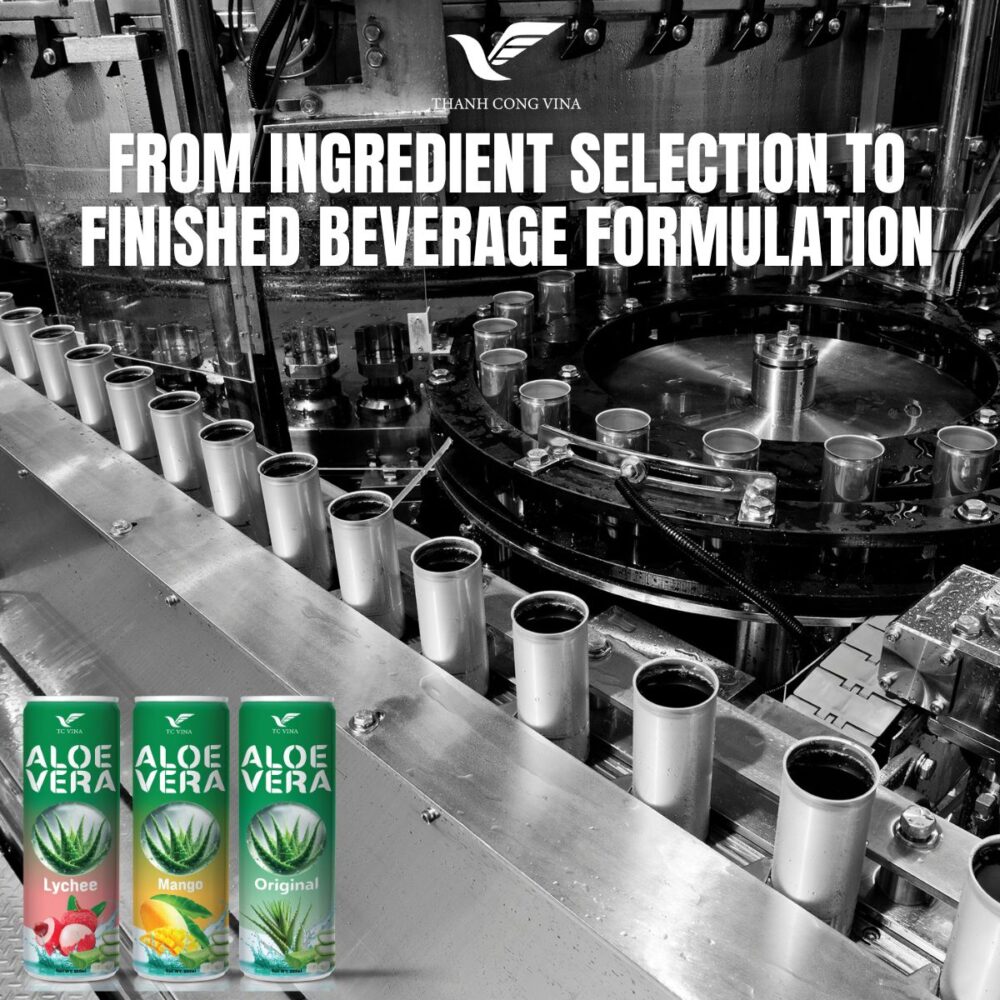
From Ingredient Selection to Finished Beverage Formulation
The quality of an aloe vera drink depends on the ingredients used, how they are handled, and how the formulation performs under the selected processing and packaging conditions. Buyers should review the technical aspects of the product before approving a sample for commercial production.
Evaluate Aloe Vera Ingredients and Supporting Components
Depending on the product design, aloe vera beverages may use processed aloe vera gel, pulp, pieces, or other permitted ingredient forms. These materials should be clearly identified in the product specification.
Other ingredients may include water, sweeteners, permitted additives, and flavoring components. Buyers should request relevant ingredient documentation and confirm that the proposed formulation meets the requirements of the destination market.
Ingredient descriptions and product labeling must accurately reflect the actual formulation. Terms suggesting a particular juice content or ingredient type should not be used without confirming their suitability under applicable regulations.
Brands should also establish a process for reviewing ingredient substitutions. Changes to ingredient sources or formulation components can affect flavor, appearance, texture, labeling, and product stability. Any material change should be assessed and approved before implementation.
Establish Product Specifications and Sample Approval
A detailed product specification creates a shared reference for the buyer and manufacturer. Depending on the product, it may define ingredient composition, aloe vera content, flavor profile, sweetness, acidity, color, texture, packaging, and other measurable quality attributes.
Samples should be evaluated against these agreed criteria. A buyer may assess aroma and taste while also checking the physical characteristics of the aloe vera ingredients, package appearance, and overall suitability for the intended market.
Once the sample is approved, the approval should be documented and linked to the relevant product specification. Both parties should understand how changes are controlled and what happens if a commercial batch does not meet the agreed requirements.
The objective is to make the approved sample a practical reference for repeatable manufacturing rather than a one-time demonstration.
4. Quality Assurance, Food Safety, and Regulatory Readiness
International beverage brands must consider food safety throughout the manufacturing process. The supplier’s quality systems should address ingredient acceptance, hygiene, processing controls, finished-product inspection, traceability, and the management of nonconforming products.
Verify Quality Systems and Relevant Certifications
Buyers should request information about the manufacturer’s food safety management system and the procedures used to monitor production. Depending on the facility and product, these may cover ingredient inspection, sanitation, equipment maintenance, process monitoring, and finished-product testing.
Where certifications are relevant, verify the certificate’s validity, issuing organization, scope, and covered production site. A certification should not be assumed to apply to every product or operation simply because it appears in a marketing presentation.
Buyers should also ask how quality complaints are investigated, how corrective actions are documented, and how potentially affected batches can be identified.
These questions provide a more complete picture of the supplier’s quality practices than a general claim of compliance.
Confirm Product Compliance for Each Destination Market
Regulatory requirements can differ across countries and regions. Depending on the destination, aloe vera beverages may be subject to rules covering ingredient permissions, food additives, labeling, nutrition information, product naming, packaging materials, and permitted marketing claims.
Brands should identify these requirements before approving the formulation and artwork. Claims involving health or therapeutic benefits require particular caution and must be supported and permitted under the applicable rules.
The manufacturer may provide product specifications and ingredient information, but the importer or brand owner should confirm the requirements that apply to its market.
A clear compliance process helps prevent costly changes after packaging has been printed or commercial production has started.
5. OEM, ODM, and Private Label Aloe Vera Beverage Solutions
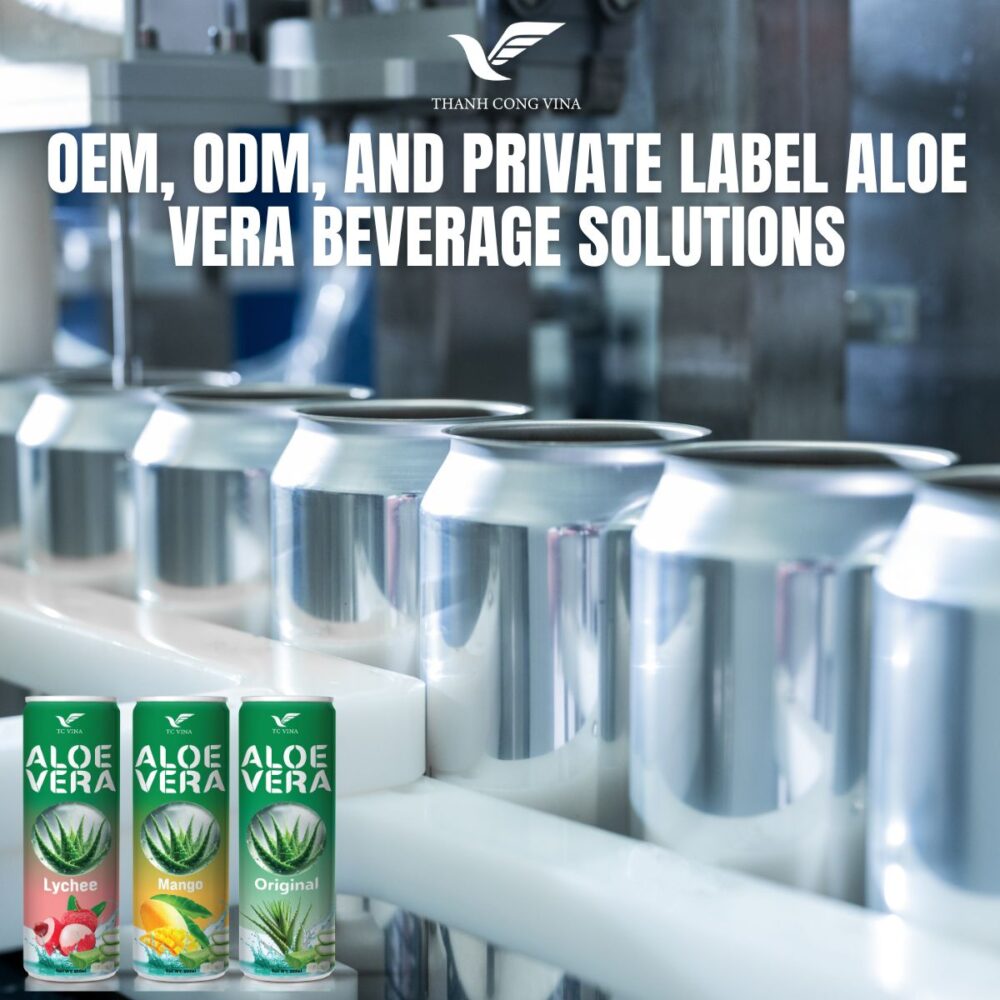
OEM, ODM, and Private Label Aloe Vera Drink Manufacturer Beverage Solutions
OEM, ODM, and private-label manufacturing provide different routes for businesses seeking to introduce aloe vera beverages under their own brands. The precise scope of each arrangement depends on the manufacturer’s services and the terms agreed by both parties.
OEM Manufacturing for Established Product Concepts
OEM production may suit businesses that already have a defined formulation, product specification, and packaging concept. In this arrangement, the buyer provides the relevant requirements and the manufacturer assesses whether they can be produced using its available processes and equipment.
Before production, both parties should agree on the approved formulation, quality criteria, packaging specifications, order quantity, and delivery schedule.
If the buyer owns a proprietary formulation, the contract should clearly address ownership, confidentiality, permitted use, and the handling of technical information. These issues are especially important when a product has been developed specifically for one brand.
Private Label Development and Packaging Customization
Private-label projects allow businesses to sell products under their own brand identities using an agreed manufacturing solution. Depending on the available services, customization may involve flavor selection, product configuration, package size, label artwork, and other presentation elements.
Buyers should confirm minimum order quantities for both the beverage and customized packaging components. Printed labels, cans, cartons, and closures may involve separate procurement schedules and purchasing commitments.
Artwork should be reviewed carefully before printing. Required product information, language, nutrition declarations, and other label elements should comply with the destination market’s rules.
A well-organized development process includes a clear brief, sample evaluation, written approval, and confirmation of final packaging specifications. These steps help reduce misunderstandings and avoid preventable production delays.
6. Packaging, Shelf Life, and Global Distribution
Packaging affects product protection, transportation efficiency, retail presentation, and overall cost. It should be selected according to the beverage formulation, processing method, target consumer, and intended distribution environment.
Choose Packaging for Product and Market Requirements
Depending on the manufacturer’s capabilities, aloe vera beverages may be packed in PET bottles, glass bottles, cans, or other suitable formats. Each option has different implications for weight, handling, presentation, storage, and purchasing cost.
Serving size should also reflect the intended channel. Convenience retail, supermarkets, foodservice, and online distribution may have different requirements for packaging and product presentation.
Buyers should confirm container availability, closure compatibility, label specifications, artwork lead times, and minimum purchasing quantities before approving the final design.
Packaging should be evaluated as part of the overall product system rather than as a separate visual decision.
Validate Shelf Life and Storage Conditions
Shelf life should be supported by appropriate validation for the actual formulation, processing system, and packaging. Buyers should request information about the stated shelf life, recommended storage conditions, and the documentation supporting these specifications.
The shelf life of one aloe vera beverage should not automatically be applied to another product with a different formulation or packaging system.
For international distribution, buyers should also consider transportation duration, customs clearance, warehouse handling, and the time required to reach retailers. The remaining shelf life at arrival can influence inventory planning and the commercial viability of a shipment.
Manufacturers and buyers should agree on how storage requirements will be communicated and how product quality concerns during distribution will be handled.
7. Commercial Planning and Choosing a Long-Term Supply Partner
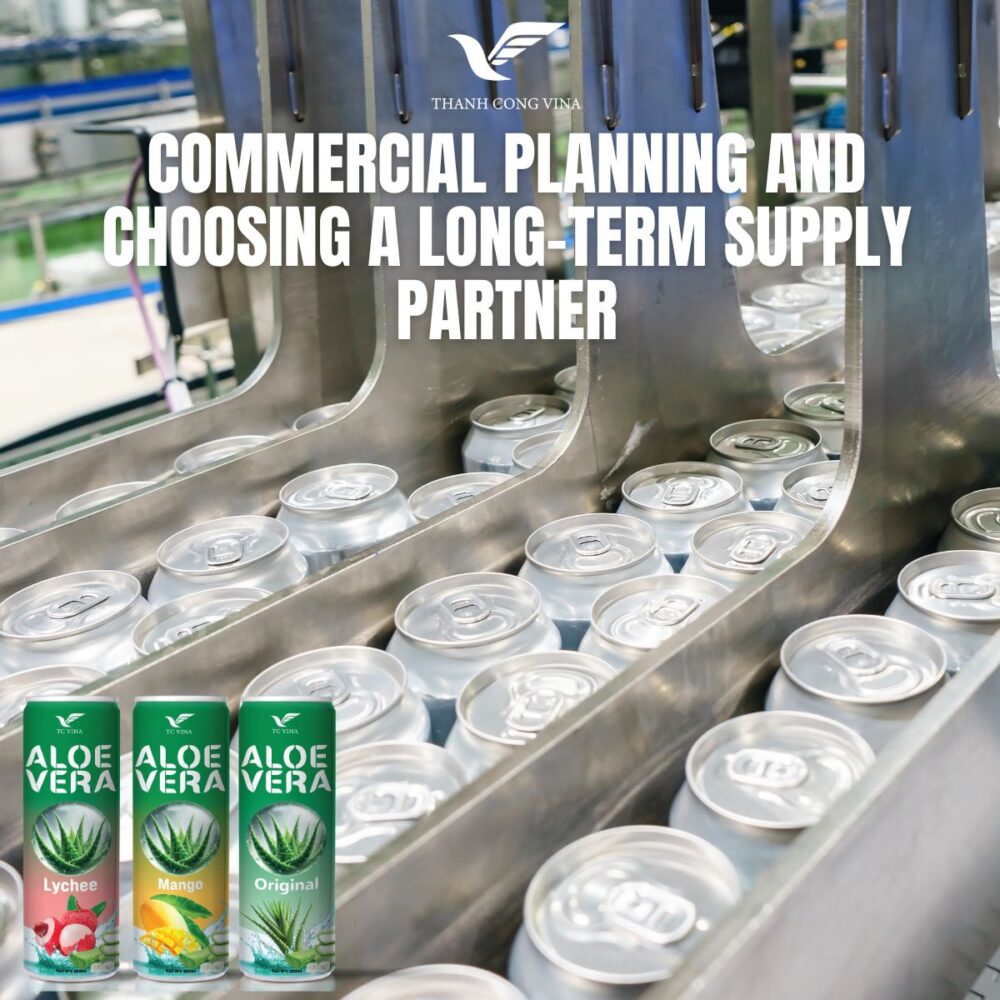
Commercial Planning and Choosing a Long-Term Supply Partner
A competitive product must also be commercially viable. International buyers should compare the total cost of sourcing and consider how the manufacturing arrangement affects working capital, inventory, and future expansion.
Compare Total Landed Cost Instead of Unit Price Alone
The total landed cost may include product manufacturing, product development, samples, packaging, testing, freight, insurance where applicable, duties, customs clearance, and local distribution expenses.
Buyers should ensure that quotations are based on equivalent product specifications, order quantities, packaging formats, and delivery terms. Otherwise, apparent price differences may reflect different scopes of supply.
Payment conditions, currency exposure, and the timing of packaging purchases may also affect the financial risk of an order.
A structured cost comparison should therefore consider both the initial price and the reliability of the proposed supply arrangement.
Build a Practical Long-Term Relationship
A strong manufacturing relationship depends on transparent communication, documented decisions, and consistent performance. Buyers should establish clear procedures for order confirmation, sample approval, specification changes, production updates, shipment documentation, and quality complaints.
For repeat orders, demand forecasting can help both parties plan ingredient procurement and production schedules. Regular performance reviews can identify recurring delays, quality concerns, or opportunities to improve efficiency.
Thanh Cong Vina operates in the beverage manufacturing sector, including fruit-based drinks and aloe vera beverages. Businesses considering a potential project can discuss their product concepts, packaging requirements, target markets, and estimated order volumes to determine whether the proposed manufacturing arrangement fits their needs.
Before committing, buyers should verify the available product options, relevant documentation, production conditions, minimum order quantities, and commercial terms. This process supports realistic expectations and helps establish a more reliable sourcing relationship.
Conclusion
Selecting an Aloe Vera Drink Manufacturer for global markets requires a balanced assessment of product development, ingredient quality, production controls, packaging, regulatory compliance, and export planning. International buyers should define their product specifications, evaluate samples systematically, verify relevant documentation, and compare total landed costs before placing an order. OEM and private-label projects also require clear agreements covering formulation approval, artwork, minimum order quantities, lead times, and responsibilities for compliance. These preparations help reduce sourcing risks and support consistent product delivery across different markets.
Thanh Cong Vina provides an opportunity for international beverage businesses to discuss aloe vera drink manufacturing and potential private-label projects based on their commercial requirements. Buyers should communicate their target flavors, packaging preferences, destination countries, and forecast volumes to assess project suitability. By confirming manufacturing capabilities, quality documentation, and commercial conditions before production, businesses can make more informed sourcing decisions. Thanh Cong Vina welcomes discussions with potential partners seeking a structured approach to developing beverage products for international distribution.