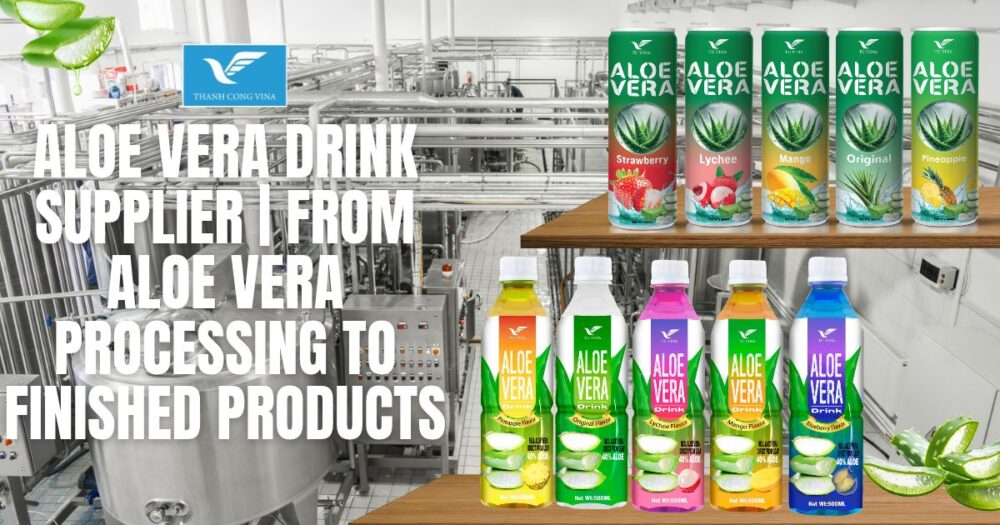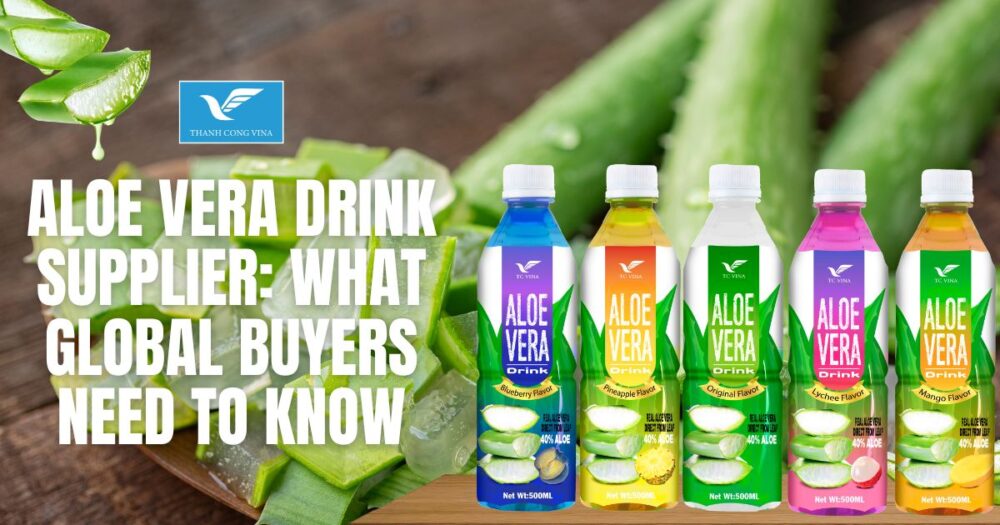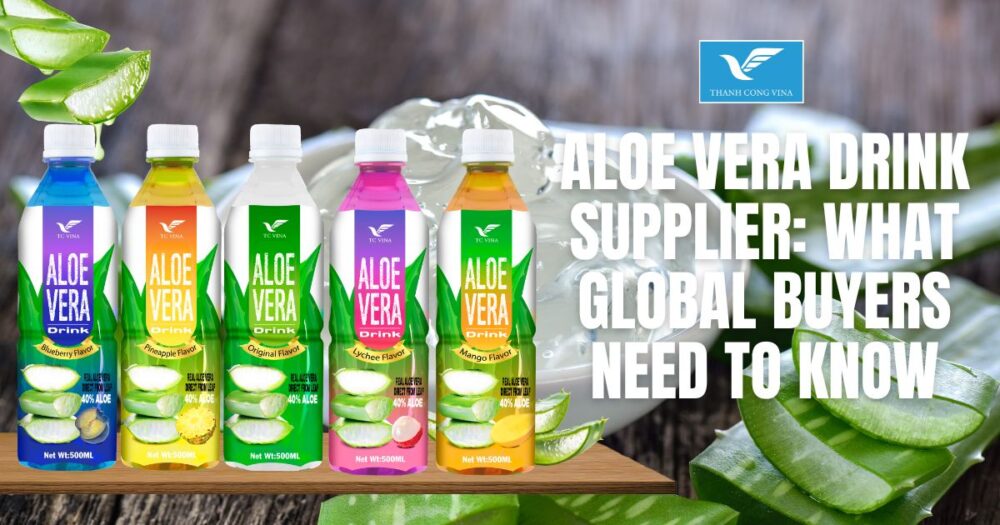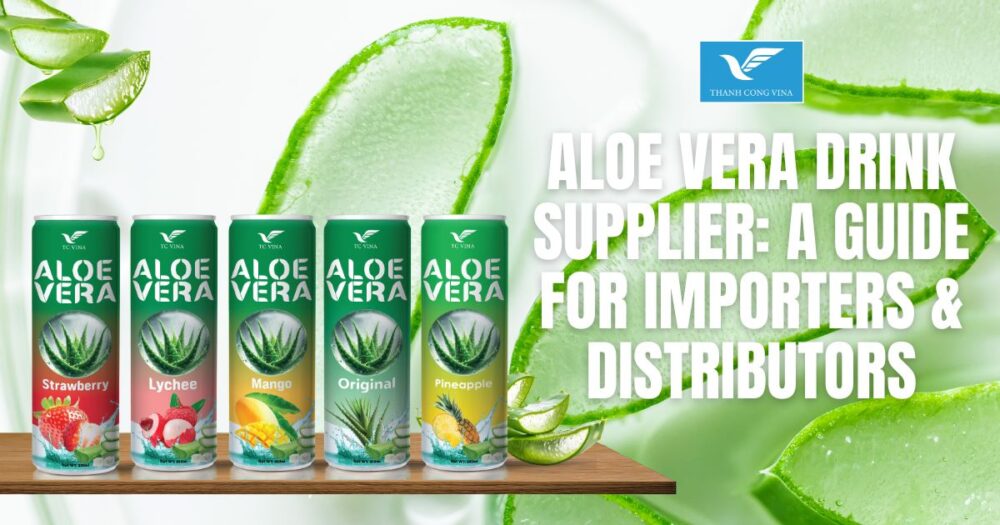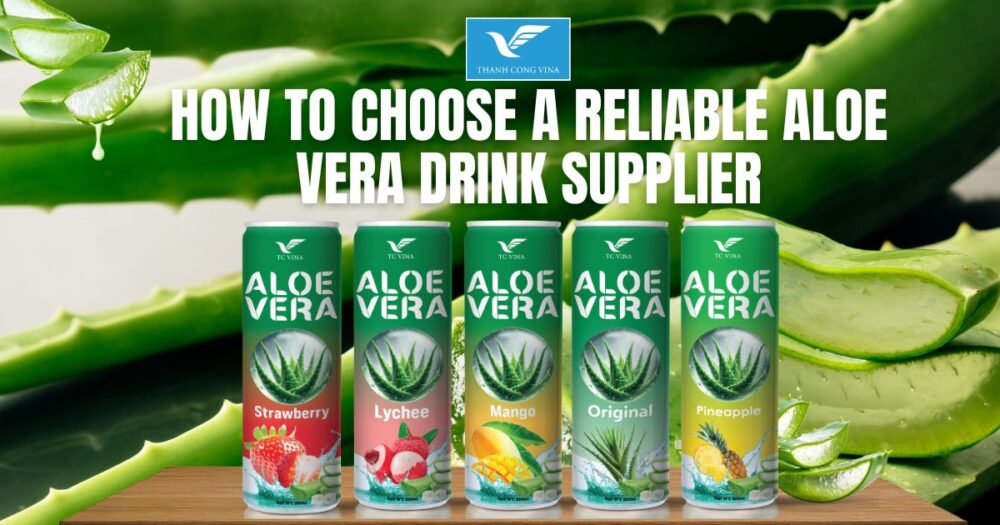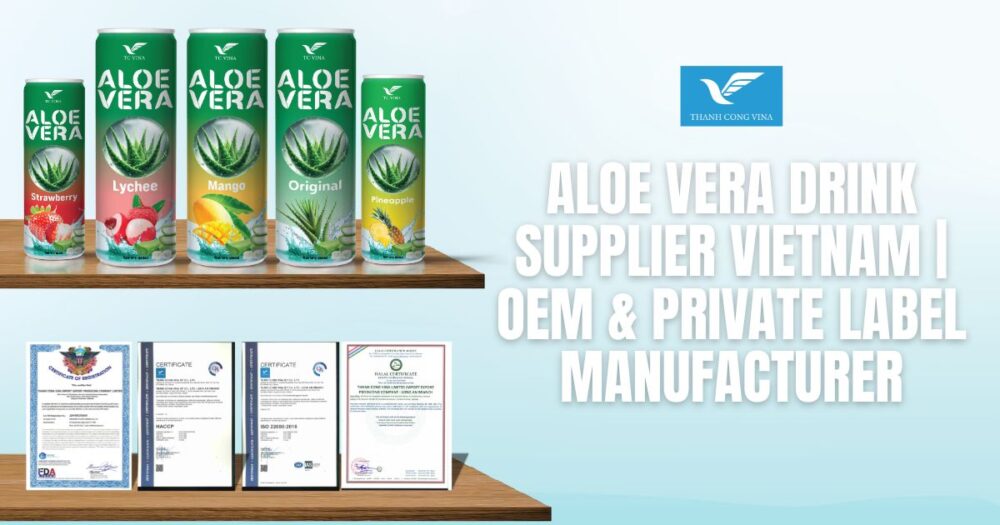

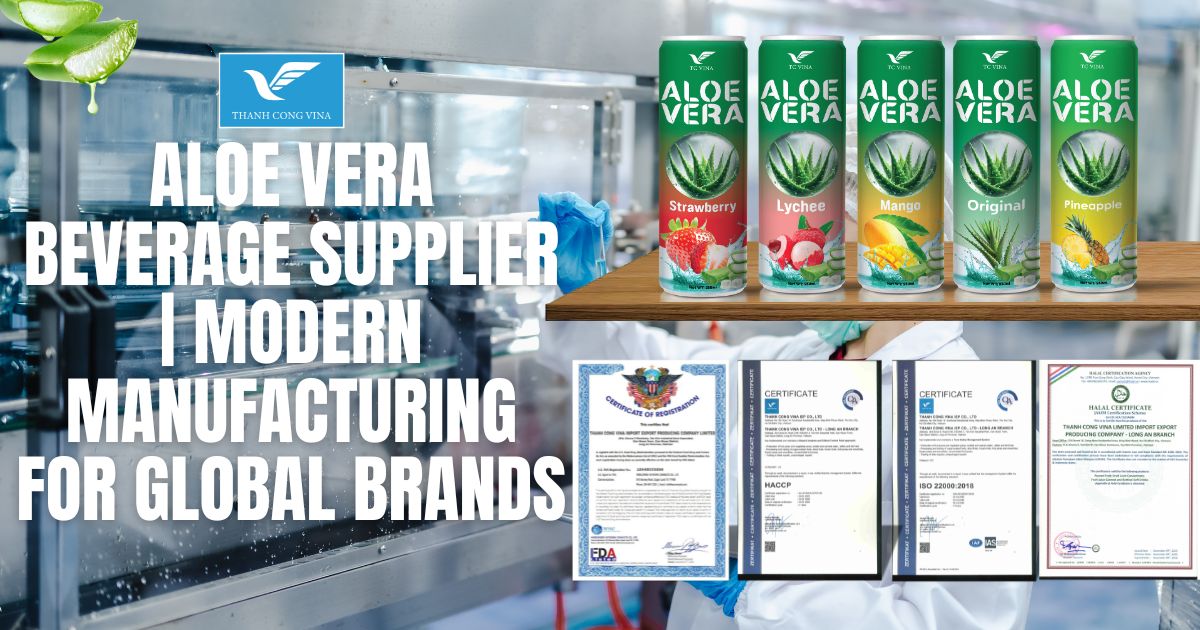
Aloe vera beverage Supplier offer an opportunity to diversify product portfolios with distinctive textures, refreshing flavors, and flexible formulation options. For importers, distributors, retailers, and private-label businesses, selecting a reliable Aloe Vera Beverage Supplier is an important step toward developing products that meet market expectations and support long-term growth.
Modern beverage manufacturing involves more than mixing ingredients and filling containers. It requires coordinated production planning, suitable processing technology, documented quality controls, packaging compatibility, and effective communication between manufacturers and buyers. These factors become particularly important when products must travel across borders and comply with different market requirements. By understanding how a manufacturing partner manages these responsibilities, global brands can evaluate potential suppliers more effectively. This article explores the role of modern manufacturing in aloe vera beverage production, from process control and product customization to quality assurance, packaging, and export planning for international markets.
1. Modern Aloe Vera Beverage Manufacturing and Its Role in Global Markets
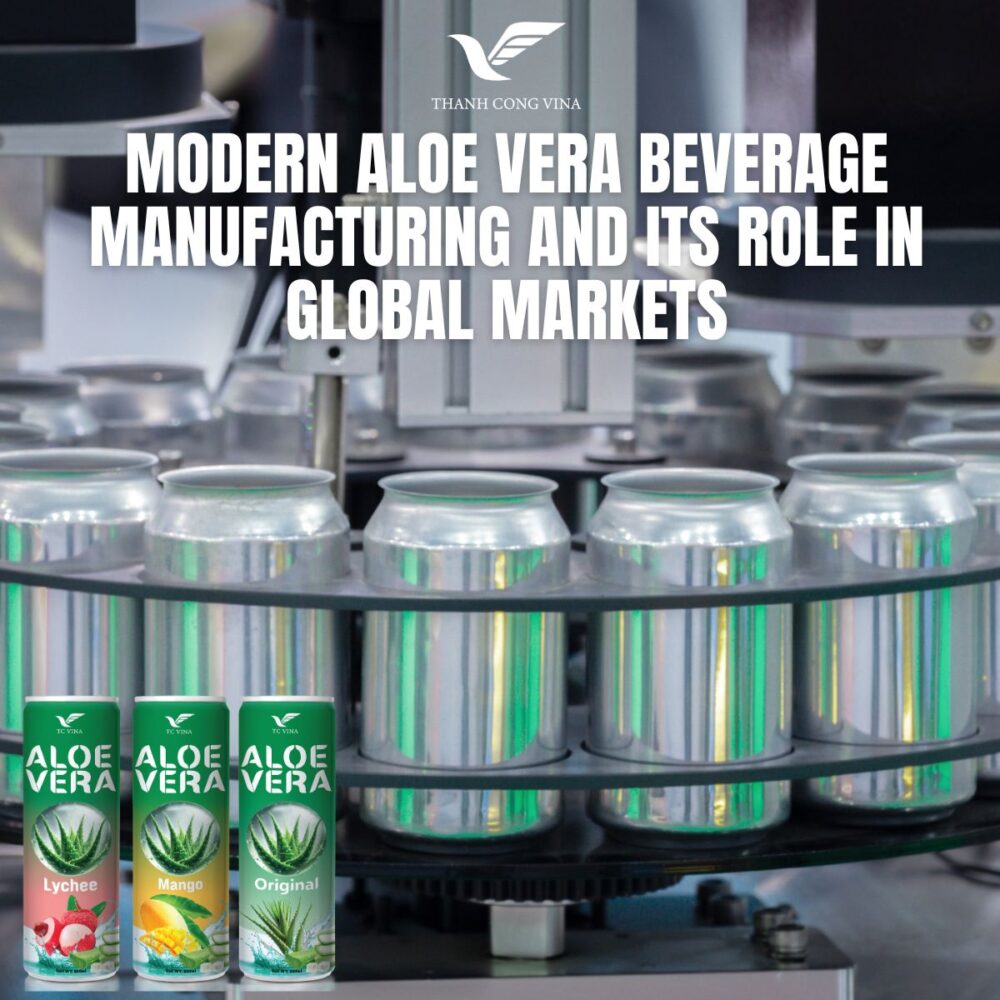
Modern Aloe Vera Beverage Manufacturing and Its Role in Global Markets
Modern manufacturing provides a structured approach to producing beverages at commercial scale while maintaining defined product specifications. For aloe vera drinks, production requirements depend on the formulation, ingredient format, processing system, packaging, and intended shelf life.
A suitable manufacturing partner should be able to explain how these elements work together and how production decisions affect the final product.
Integrating Production Stages for Better Consistency
Aloe vera beverage production may involve incoming ingredient inspection, ingredient preparation, formulation, mixing, processing, filling, packaging, and finished-product checks. The precise sequence varies according to the product and the manufacturing technology used.
Coordinating these stages helps establish clear responsibilities and reduces the likelihood of inconsistencies between production batches. Documented procedures also make it easier to identify where a deviation occurred and what corrective action may be required.
For international buyers, understanding the production flow provides insight into the supplier’s ability to meet product specifications. Buyers should ask which activities take place at the manufacturing facility, whether any operations are outsourced, and how quality responsibility is managed across the process.
The objective is not simply to identify a factory with modern equipment, but to verify that its production system is appropriate for the specific beverage being developed.
Supporting International Demand Through Production Planning
Global brands may require different order volumes, packaging formats, and delivery schedules depending on their distribution networks. Production planning helps manufacturers coordinate ingredients, packaging materials, available capacity, and order priorities.
A supplier should provide realistic lead times and explain how it handles changes in demand or delays in material procurement. These details are particularly important when a buyer operates across multiple retail channels or manages seasonal promotions.
Manufacturing plans should also account for quality release and shipment preparation rather than treating production completion as the final milestone.
Clear planning gives buyers a better basis for forecasting inventory, scheduling promotions, and coordinating deliveries with distributors and retailers.
2. How an Aloe Vera Beverage Supplier Uses Process Control to Maintain Quality
Process control is essential for producing beverages that consistently match approved specifications. A reliable Aloe Vera Beverage Supplier should be able to explain the relevant controls used throughout manufacturing and provide appropriate records to support its quality claims.
Ingredient Handling and Preparation
The quality of an aloe vera beverage begins with the ingredients used in its formulation. Depending on the product, the manufacturer may work with processed aloe vera gel, pulp, pieces, or other suitable ingredient formats.
Incoming checks may involve reviewing ingredient specifications, supplier documentation, batch identification, packaging condition, and other criteria established by the quality management system.
If aloe vera pieces are part of the product, their physical characteristics may influence the beverage’s appearance and texture. These characteristics should be defined in the product specification, including any relevant expectations for size, consistency, or distribution.
Ingredient substitutions should be controlled because changes in source or composition may affect flavor, texture, labeling, or regulatory compliance. Buyers should clarify how such changes are communicated and approved before commercial production.
Formulation, Mixing, and Production Monitoring
Formulation determines the relationship between aloe vera ingredients, the liquid base, sweeteners, flavoring components, and other permitted ingredients. The final balance affects taste, appearance, and the overall consumer experience.
During product development, manufacturers may evaluate different formulations and assess whether the selected option can be reproduced consistently at commercial scale. Once approved, the formulation should be documented and linked to appropriate production controls.
Monitoring requirements depend on the actual beverage and processing system. They may include ingredient quantities, mixing conditions, specified product parameters, and other controls identified through the manufacturer’s procedures and risk assessment.
For buyers, the important consideration is whether the supplier can demonstrate that the approved product specification is translated into a controlled manufacturing process.
3. Automation, Equipment, and Operational Efficiency
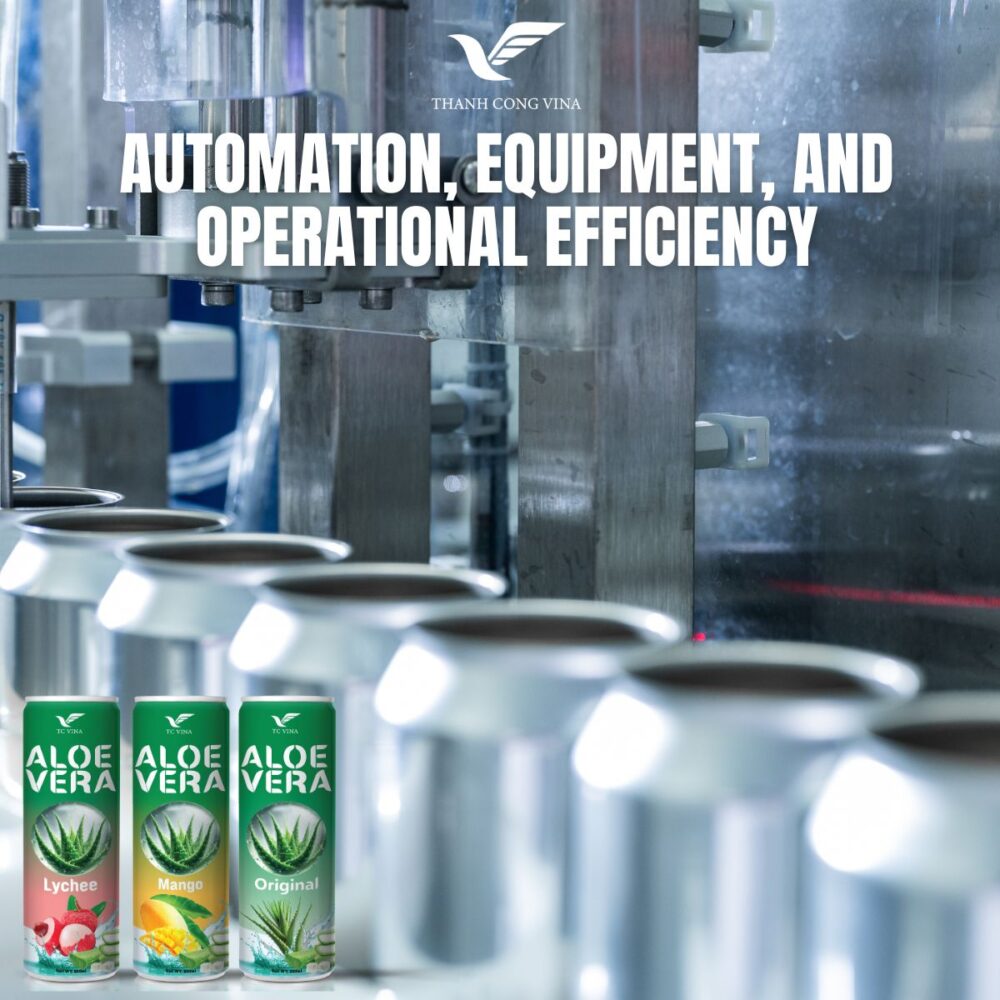
Automation, Equipment, and Operational Efficiency
Automation can help beverage manufacturers standardize selected production activities, improve process repeatability, and coordinate higher-volume operations. However, automation should be evaluated in relation to the product requirements rather than treated as a guarantee of quality.
The Role of Equipment in Beverage Production
Depending on the facility and product, manufacturing equipment may support ingredient preparation, mixing, processing, filling, sealing, labeling, and packaging. Each stage must be appropriate for the formulation and the chosen container.
Buyers should understand which production stages are automated, which require manual intervention, and how equipment is maintained. These details help explain how the manufacturer manages operational consistency and responds to production issues.
For beverages containing aloe vera pieces, equipment selection and process design may also affect the handling and distribution of the solid ingredients. The manufacturer should establish suitable controls for the specific product rather than assuming that one configuration is appropriate for every formulation.
A technical discussion or factory assessment can help buyers understand whether the available equipment and process flow are suitable for their project.
Improving Scheduling and Reducing Avoidable Delays
Operational efficiency depends on more than production speed. Manufacturers must coordinate raw material availability, packaging procurement, equipment scheduling, cleaning procedures, quality checks, and order priorities.
A production line may have substantial capacity, but customized packaging or a new formulation can still affect the overall lead time. Buyers should therefore request a timeline that includes development, material preparation, manufacturing, quality release, and shipment documentation.
Clear communication about bottlenecks and dependencies helps both parties make realistic commitments.
Rather than focusing solely on how quickly a factory can manufacture a product, international brands should evaluate its ability to deliver the right specification, in the required quantity, according to an agreed schedule.
4. Product Development and Customization for International Brands
Global beverage brands often need products that reflect their own market positioning rather than a standard formulation. A manufacturing partner should have a clear process for evaluating customization requests and determining whether they can be supported commercially and technically.
Developing Flavors for Different Consumer Preferences
Aloe vera beverages can be developed in flavor profiles such as original, mango, peach, lychee, and blueberry, subject to the manufacturer’s available ingredients and formulation capabilities.
Flavor selection should be based on target-market research, competitor positioning, expected retail pricing, and consumer feedback. A flavor that performs well in one market may not have the same appeal elsewhere.
Brands should define the desired flavor profile, sweetness level, texture, and other important product characteristics in a written brief. The manufacturer can then assess feasibility and prepare samples for evaluation.
Sampling should follow an agreed process. Buyers should document feedback, specify requested changes, and approve the final formulation before production begins.
OEM, ODM, and Private Label Manufacturing
OEM projects may involve producing a beverage according to the buyer’s established formulation and specifications. ODM projects may include a greater level of product development support, depending on the manufacturer’s services. Private-label manufacturing enables businesses to sell an agreed product under their own brand identity.
The scope of each arrangement should be clearly defined. Buyers should establish ownership of formulations and artwork, confidentiality obligations, product approval procedures, and the responsibilities of each party.
Customization may include flavor variations, packaging size, label design, and other presentation elements. Each option can affect minimum order quantities, purchasing commitments, and lead times.
A clear development process helps ensure that product design, packaging, regulatory review, and manufacturing requirements are aligned before commercial production.
5. Quality Assurance, Food Safety, and Product Traceability
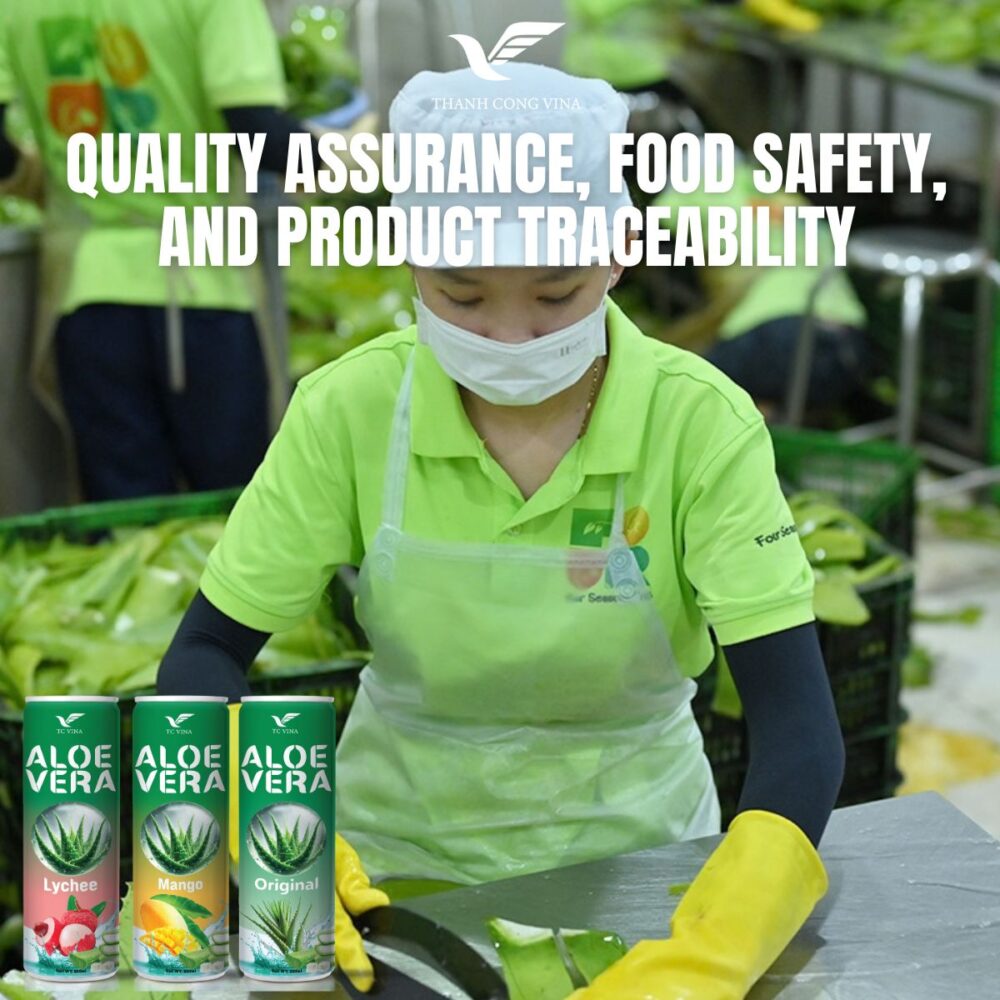
Quality Assurance, Food Safety, and Product Traceability
A modern production environment must be supported by a documented quality system. Equipment alone cannot ensure that a beverage meets its intended specification or the food safety requirements of the destination market.
Managing Food Safety Risks
Food safety controls should address the risks associated with ingredients, processing, personnel, equipment, packaging, and storage. Depending on the product and facility, relevant procedures may include ingredient acceptance, sanitation, equipment maintenance, process monitoring, and finished-product inspection.
Buyers should ask the manufacturer to explain its quality management system and provide relevant supporting documentation.
Where certifications are presented, verify their validity, scope, issuing organization, and covered production site. A certificate should not be assumed to apply to every product or manufacturing activity.
Brands should also clarify how the manufacturer manages nonconforming products, investigates complaints, records corrective actions, and responds to potential product safety issues.
Traceability and Finished-Product Verification
Traceability connects incoming ingredients and packaging materials with production records and finished-product batches. This information helps manufacturers investigate quality concerns and identify affected products when necessary.
Finished-product verification should follow the agreed specification and applicable risk controls. Depending on the beverage, checks may cover appearance, flavor, fill quantity, packaging integrity, label information, date coding, and relevant laboratory parameters.
Buyers should agree on which quality records will be provided and whether any specific testing or release documentation is required for each shipment.
A transparent quality process helps international brands make better purchasing decisions and supports more effective communication if a product concern arises after delivery.
6. Packaging Innovation, Shelf Life, and Export Readiness
Packaging influences product protection, retail presentation, transportation costs, and consumer convenience. For international distribution, the packaging system must also be compatible with the beverage and its validated processing method.
Selecting Packaging for Different Markets
Depending on the manufacturer’s capabilities, aloe vera beverages may be supplied in PET bottles, glass bottles, cans, or other suitable formats. Selection should consider product characteristics, retail expectations, shipping conditions, handling requirements, and cost.
Serving size and label design also influence market suitability. A package intended for convenience retail may have different requirements from one developed for supermarkets, foodservice, or online sales.
Buyers should confirm minimum order quantities for customized packaging, artwork specifications, printing lead times, and the approval process for final labels.
All packaging and labeling decisions should be reviewed against the requirements of the destination market before production.
Validating Shelf Life and Storage Conditions
Shelf life should be established using appropriate validation for the specific formulation, processing system, and packaging. It should not be assumed that all aloe vera beverages share the same storage requirements or shelf-life duration.
Buyers should request documented information about storage conditions and the basis for the stated shelf life. For export orders, the remaining shelf life expected upon arrival should be considered alongside transit time, customs clearance, warehousing, and retail distribution.
These factors affect inventory rotation and the time available to sell the product.
Coordinating Export Documentation
Export readiness includes preparing the documents required for the transaction and destination. Depending on the shipment, these may include commercial invoices, packing lists, transport documents, certificates of origin where applicable, product specifications, and other required records.
The buyer and supplier should agree on who prepares each document and how the information will be checked for consistency.
Clear responsibilities reduce the risk of documentation discrepancies, avoidable customs delays, and unexpected costs.
7. Building a Reliable Long-Term Manufacturing Partnership
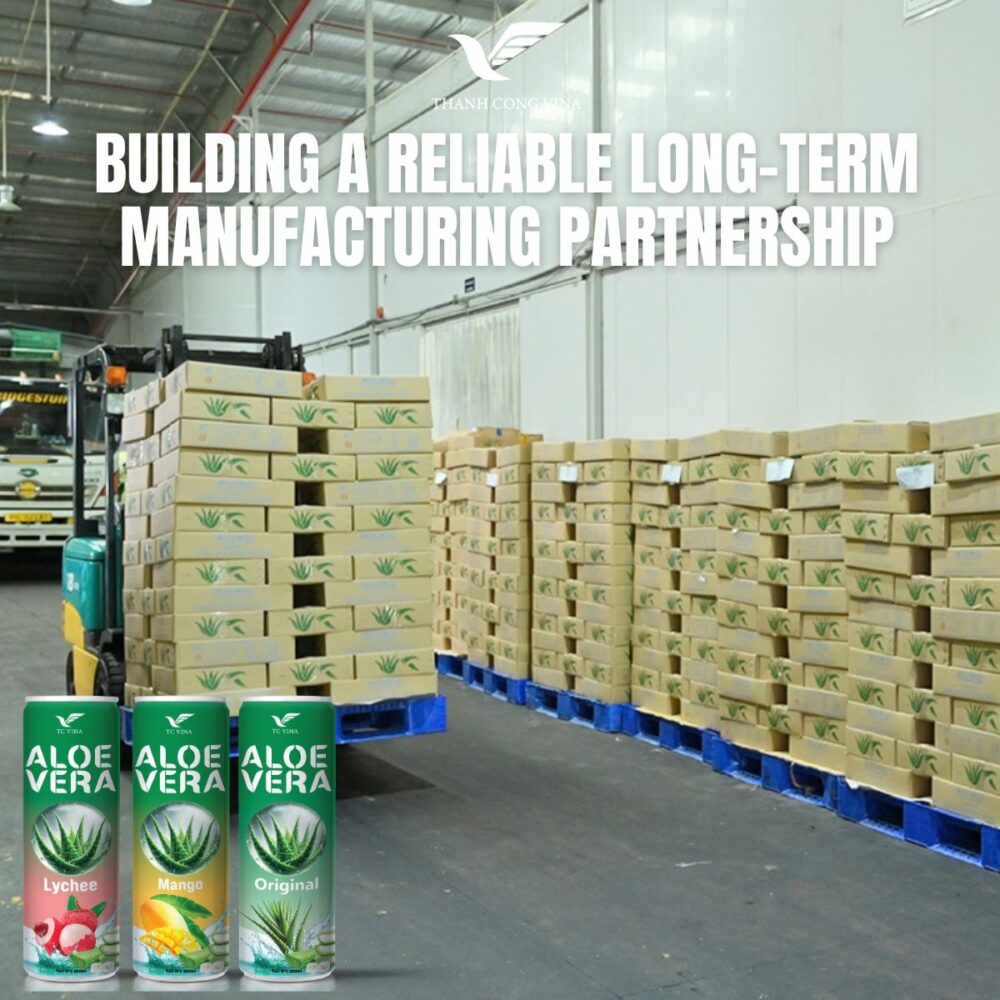
Building a Reliable Long-Term Manufacturing Partnership
A successful sourcing relationship depends on more than an individual shipment. International brands need a manufacturing partner that communicates clearly, understands product requirements, and can support repeat orders through documented processes and realistic planning.
Evaluate Commercial Terms and Total Cost
Buyers should compare quotations using equivalent product specifications, packaging formats, quantities, and delivery terms. The total cost may include product development, samples, packaging, testing, freight, insurance where applicable, duties, and local distribution.
Minimum order quantities and payment terms should also be reviewed in relation to the brand’s cash flow and sales forecast.
The lowest unit price may not provide the best commercial outcome if the proposed arrangement creates additional costs, delays, or quality risks. A balanced evaluation should consider product suitability, documentation, schedule reliability, and the supplier’s ability to meet agreed requirements.
Work with Thanh Cong Vina on Beverage Projects
Thanh Cong Vina operates in the beverage manufacturing sector, including fruit-based drinks and aloe vera beverages. Businesses exploring OEM, ODM, or private-label projects can discuss their intended product specifications, flavor preferences, packaging formats, target markets, and projected order quantities to assess suitability.
To support an efficient evaluation, buyers should provide a clear product brief and identify any relevant destination-market requirements. They should also request the documentation needed to assess product specifications, manufacturing capabilities, quality systems, lead times, and commercial conditions.
Before confirming an order, both parties should document the approved formulation, packaging details, production schedule, quality expectations, and export responsibilities.
This structured approach helps establish realistic expectations and creates a clearer basis for long-term cooperation.
Conclusion
Choosing a modern Aloe Vera Beverage Supplier requires an assessment of manufacturing processes, process control, product development, food safety, packaging, and export coordination. For global brands, a reliable production partner should be able to translate approved specifications into consistent commercial batches while providing clear documentation and realistic delivery commitments. Buyers should verify relevant capabilities, review samples, confirm destination-market requirements, and evaluate total sourcing costs before placing an order. These steps support better risk management and help brands develop aloe vera beverages suited to their target customers.
Thanh Cong Vina Beverage provides an opportunity for international businesses to discuss aloe vera beverage manufacturing and potential OEM or private-label projects based on their requirements. Buyers can share their preferred flavors, packaging formats, estimated volumes, and target markets to begin assessing project suitability. By confirming product specifications, relevant quality documentation, production arrangements, and commercial terms, brands can make informed sourcing decisions. Thanh Cong Vina welcomes discussions with businesses seeking a structured manufacturing relationship to support their beverage portfolios and international distribution objectives.