
The global beverage industry is highly competitive, with new juice brands emerging every year to meet the growing consumer demand for healthy and convenient drinks. From fruit juices and functional beverages to sparkling fruit drinks and organic juice blends, the variety of products available on the market continues to expand. For many beverage companies, partnering with an OEM Juice Manufacturer has become the most efficient way to bring products to market without investing heavily in production infrastructure.
Original Equipment Manufacturing (OEM) allows brands to outsource the entire production process to specialized manufacturers that already have the equipment, facilities, and expertise required to produce high-quality juice beverages. This partnership enables companies to focus on brand development, marketing strategies, and global distribution while leaving technical manufacturing operations to experienced professionals.
However, selecting the right OEM partner is a critical decision that can directly impact product quality, brand reputation, and long-term business success. Many companies rush into partnerships without conducting thorough research or understanding the manufacturing capabilities of their chosen partner. These mistakes can lead to inconsistent product quality, supply chain disruptions, regulatory issues, and financial losses.
This article explores the most common mistakes businesses make when selecting an OEM juice manufacturer and provides guidance on how to choose a reliable manufacturing partner that supports sustainable growth and product excellence.
1. Lack of Thorough Research on the OEM Juice Manufacturer
Lack of Thorough Research on the OEM Juice Manufacturer
Evaluating Industry Experience
One of the most common mistakes businesses make when selecting an OEM Juice Manufacturer partner is failing to thoroughly evaluate the manufacturer’s industry experience. Not all beverage manufacturers possess the same level of expertise, particularly when it comes to juice processing and formulation.
An experienced OEM Juice Manufacturer understands the complexities of fruit juice production, including ingredient sourcing, flavor balancing, preservation techniques, and shelf-life stability. Manufacturers with years of experience are more likely to have encountered and solved various production challenges, allowing them to deliver reliable results.
Companies should examine the manufacturer’s production history, client portfolio, and specialization in juice products. A manufacturer that primarily produces soft drinks or dairy beverages may not have the same level of expertise in fruit juice processing.
Reviewing Production Capabilities
Another important aspect of research involves understanding the manufacturer’s production capabilities. Beverage production requires specialized equipment for fruit extraction, pasteurization, blending, filling, and packaging.
Businesses should verify whether the manufacturer has the necessary facilities to produce the specific type of juice product they intend to launch. For example, certain beverages may require cold-press technology, aseptic processing, or specialized packaging lines.
Without proper research, companies risk partnering with manufacturers that lack the equipment needed to meet their product specifications.
2. Ignoring Quality Control and Food Safety Standards
Importance of Quality Assurance Systems
Food safety and product quality are fundamental in the beverage industry. Unfortunately, some companies overlook the importance of quality assurance when selecting an OEM partner.
A reliable OEM juice manufacturer must operate under strict quality control systems that monitor every stage of the production process. These systems ensure that raw materials, processing methods, and final products meet established safety and quality standards.
Manufacturers should conduct regular inspections, laboratory testing, and production monitoring to maintain consistent product quality.
Certification and Compliance Requirements
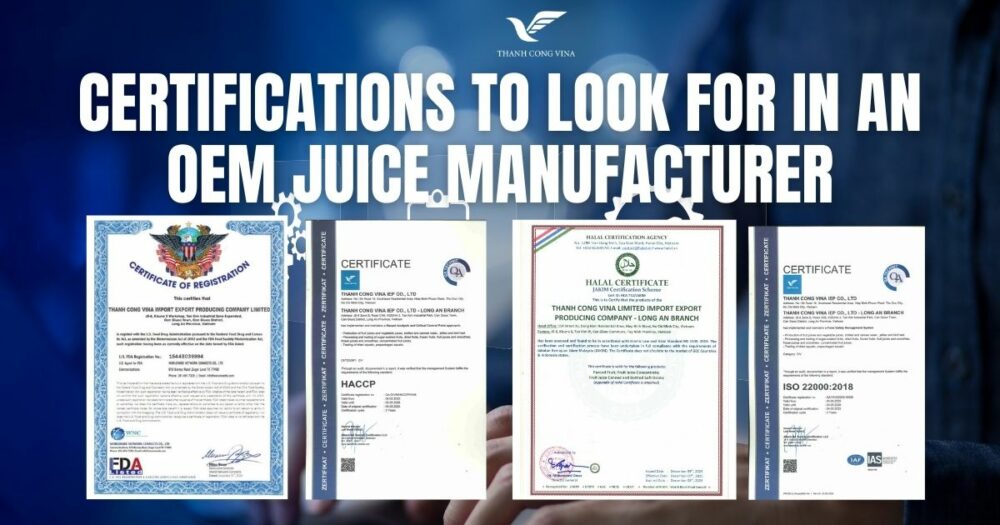
Another common mistake is neglecting to verify the manufacturer’s certifications and compliance with international food safety regulations. Beverage products distributed in global markets must meet strict regulatory standards.
Key certifications often include:
-
HACCP (Hazard Analysis and Critical Control Points)
-
ISO quality management standards
-
GMP (Good Manufacturing Practices)
-
International food safety certifications required for export
Companies that partner with manufacturers lacking these certifications may face difficulties entering certain markets or risk product recalls due to safety concerns.
3. Overlooking Ingredient Sourcing and Raw Material Quality
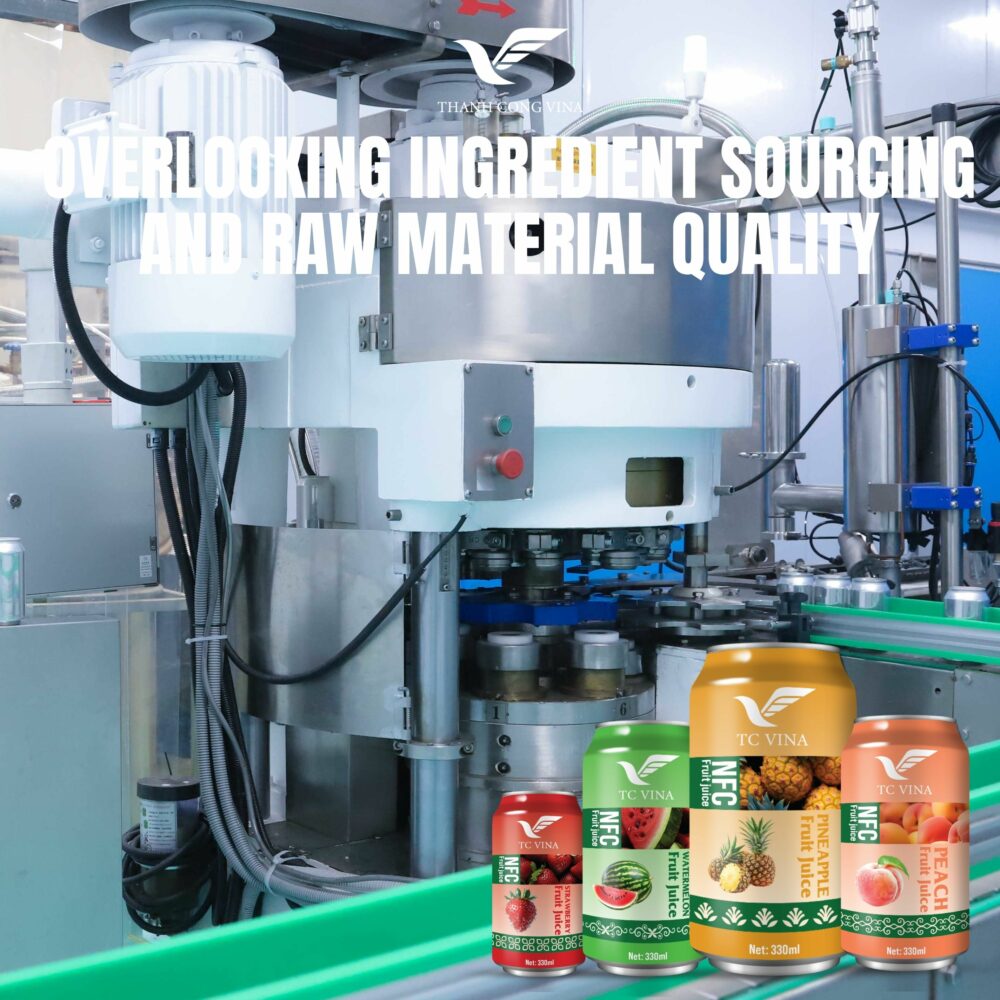
Overlooking Ingredient Sourcing and Raw Material Quality
The Role of Raw Materials in Juice Production
The quality of fruit juice products depends heavily on the quality of the raw ingredients used during production. Fruits, concentrates, sweeteners, and additives must meet strict quality standards to ensure consistent flavor and nutritional value.
Some businesses focus primarily on production costs and fail to investigate how their OEM partner sources raw materials. This can lead to inconsistencies in taste, color, and aroma across different production batches.
A reputable OEM Juice Manufacturer maintains strong relationships with trusted agricultural suppliers and conducts quality inspections on all incoming ingredients.
Transparency in Ingredient Procurement
Transparency is essential in modern food manufacturing. Brands should ensure that their manufacturing partner provides clear information about ingredient sourcing, production methods, and quality verification procedures.
Traceability systems allow manufacturers to track ingredients from farm to final product. This level of transparency helps brands maintain consumer trust and comply with food safety regulations.
Without clear sourcing policies, businesses risk compromising product integrity and brand reputation.
4. Failing to Understand Production Capacity and MOQ Requirements
Production Volume Considerations
Another frequent mistake when selecting an OEM partner is failing to understand the manufacturer’s production capacity. Different manufacturers operate at different scales, and their facilities may not always align with the brand’s growth plans.
If a manufacturer lacks sufficient capacity, they may struggle to meet large orders during periods of high demand. On the other hand, manufacturers with extremely large production lines may impose high minimum order quantities that are difficult for smaller brands to manage.
Companies must carefully evaluate whether the manufacturer’s production capabilities align with their current and future sales forecasts.
Minimum Order Quantities and Cost Planning
Minimum order quantities (MOQ) are a standard aspect of beverage manufacturing. However, some companies fail to factor MOQ requirements into their financial planning.
High MOQs can result in excess inventory if product demand is overestimated. Conversely, small orders may lead to higher per-unit production costs.
Businesses should discuss MOQ terms clearly with potential OEM partners and develop production strategies that balance cost efficiency with realistic market demand.
5. Neglecting Communication and Collaboration
Neglecting Communication and Collaboration
Importance of Clear Communication
Successful OEM partnerships rely on effective communication between the brand owner and the manufacturer. Unfortunately, some companies overlook this aspect when selecting a manufacturing partner.
Clear communication ensures that both parties understand product specifications, production timelines, packaging requirements, and quality expectations. Miscommunication can lead to production delays, formulation errors, or packaging inconsistencies.
Manufacturers that maintain transparent communication channels are better equipped to address issues quickly and maintain smooth production operations.
Collaborative Product Development
Many successful beverage products result from close collaboration between brand owners and manufacturing experts. OEM Juice Manufacturer often have valuable insights into formulation, ingredient combinations, and processing techniques.
Companies that fail to involve their manufacturing partner in product development may miss opportunities to improve flavor, shelf stability, or production efficiency.
Collaborative relationships encourage innovation and help brands create more competitive products.
6. Choosing Price Over Long-Term Value
The Risk of Cost-Driven Decisions
While cost is an important factor in manufacturing decisions, selecting an OEM partner solely based on price can lead to serious problems.
Low-cost manufacturers may compromise on ingredient quality, production standards, or quality control procedures. These compromises can result in inconsistent products that damage the brand’s reputation.
Businesses should evaluate the overall value offered by a manufacturer rather than focusing exclusively on pricing.
Investing in Reliable Manufacturing Partnerships
Reliable OEM Juice Manufacturer invest heavily in advanced production technology, skilled workforce training, and quality assurance systems. These investments ensure consistent product quality and efficient production processes.
Although working with reputable manufacturers may involve slightly higher production costs, the long-term benefits often outweigh the initial investment.
Strong manufacturing partnerships contribute to brand credibility and long-term market success.
7. Lack of Long-Term Strategic Planning
Lack of Long-Term Strategic Planning
Considering Future Business Growth
Many companies select OEM partners based solely on their immediate production needs without considering long-term business growth. However, as beverage brands expand, their production requirements often increase significantly.
A manufacturer that cannot support future growth may limit the brand’s ability to scale operations efficiently.
Companies should choose manufacturing partners with the infrastructure and capacity to accommodate future expansion.
Building Sustainable Manufacturing Relationships
Long-term partnerships between brands and manufacturers create stability in the supply chain. Over time, both parties gain a deeper understanding of production processes, quality expectations, and market requirements.
These long-term relationships also facilitate continuous product improvement and innovation.
By viewing OEM Juice Manufacturer as a strategic partnership rather than a simple service provider relationship, businesses can build stronger foundations for long-term success.
Conclusion
Selecting the right OEM Juice Manufacturer is one of the most important decisions a beverage brand can make. The manufacturing partner directly influences product quality, production efficiency, and the brand’s reputation in the marketplace. Unfortunately, many businesses make avoidable mistakes such as neglecting research, ignoring quality standards, overlooking ingredient sourcing, or focusing solely on cost.
To avoid these challenges, companies should carefully evaluate potential OEM partners based on experience, certifications, production capacity, and communication practices. Establishing a collaborative relationship with a reliable manufacturer ensures consistent product quality and supports long-term business growth.
For beverage brands seeking a dependable production partner, Thanh Cong Vina offers comprehensive OEM manufacturing solutions supported by advanced facilities, strict quality management systems, and extensive industry expertise. By working with Thanh Cong Vina as a trusted OEM Juice Manufacturer, businesses can confidently develop and distribute high-quality juice products that meet international standards while strengthening their presence in global beverage markets.