
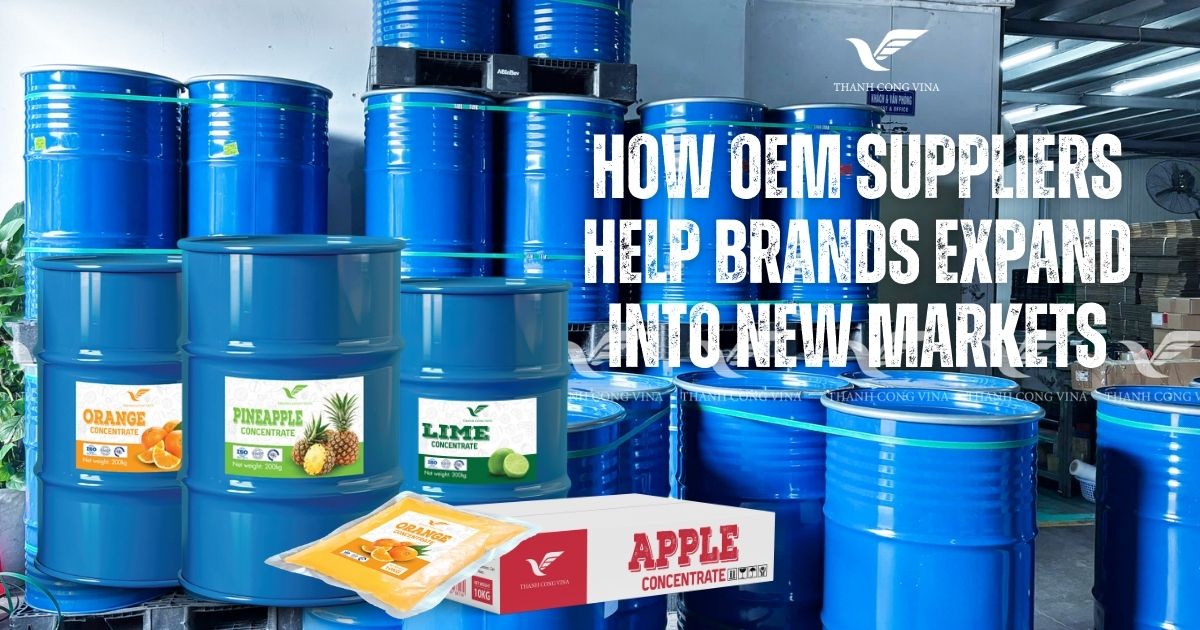
Expanding into new markets is a major milestone for any beverage brand. Whether entering a new country, region, or consumer segment, growth brings exciting opportunities—but also significant challenges. Brands must navigate unfamiliar regulations, adapt to local tastes, manage logistics, and maintain consistent product quality at scale. For many companies, these complexities can slow down or even block international expansion.
This is where OEM Suppliers play a critical role. By providing professional manufacturing, regulatory support, and scalable production capacity, OEM Suppliers help brands overcome market entry barriers efficiently. Instead of investing heavily in new facilities or struggling with compliance issues, brands can rely on experienced OEM partners to handle production and technical requirements.
In this guide, we explore how OEM Suppliers support market expansion, reduce risks, and enable beverage brands to grow confidently in competitive global markets.
1. Market-Ready Manufacturing Infrastructure
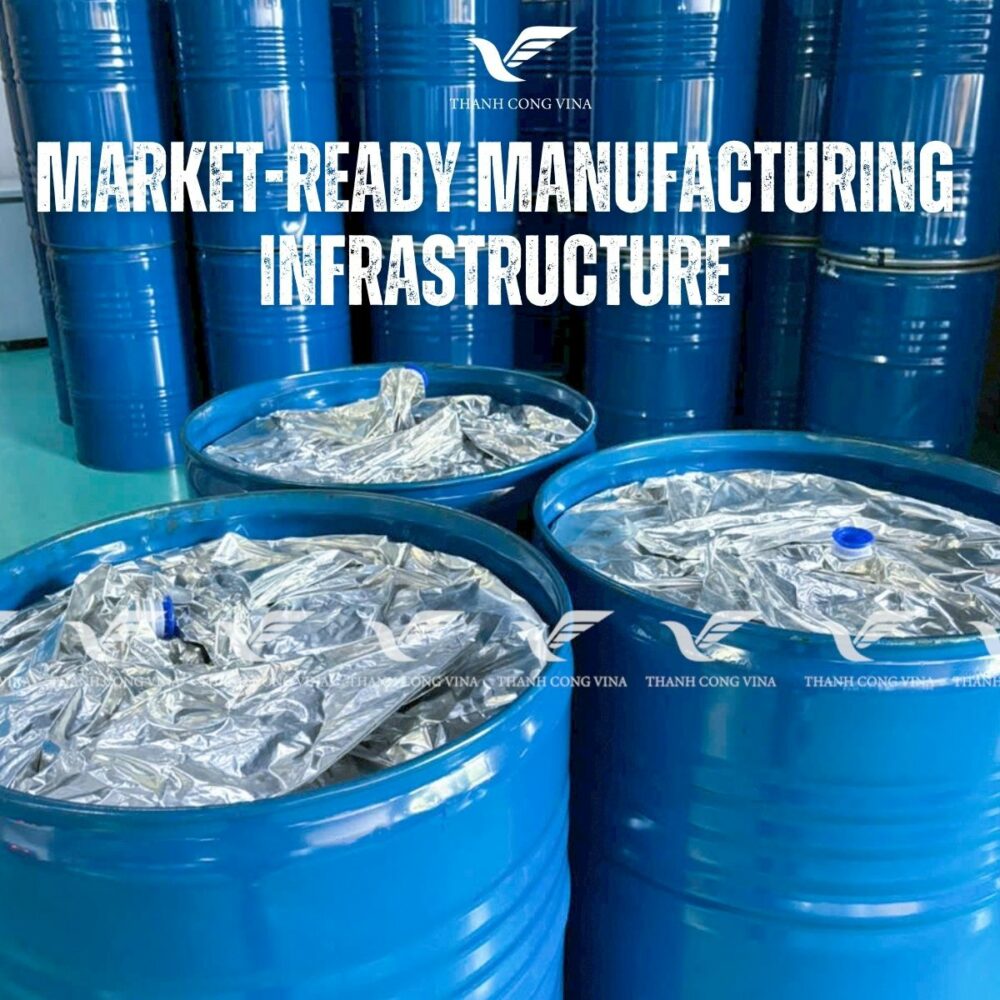
Market-Ready Manufacturing Infrastructure
Advanced Production Facilities
One of the biggest advantages of working with OEM Suppliers is immediate access to modern manufacturing infrastructure. These factories are equipped with automated production lines, quality control systems, and hygienic processing environments that meet international food safety standards.
For brands entering new markets, this eliminates the need to build local production facilities from scratch. OEM Suppliers already have the capacity to handle large-scale production, ensuring consistent product quality across different regions.
Multi-Product Capabilities
Experienced OEM partners can produce a wide range of beverages, including fruit juices, functional drinks, teas, energy drinks, and plant-based beverages. This flexibility allows brands to adapt their product portfolio for different market preferences without changing manufacturing partners.
By leveraging existing infrastructure, brands can launch faster and compete more effectively in new markets.
2. Regulatory Compliance and Market Entry Support
Understanding Local Regulations
Each market has its own food safety laws, labeling requirements, and ingredient restrictions. Navigating these regulations can be complex and time-consuming. Reliable OEM Suppliers understand local and international compliance standards and ensure that products meet all legal requirements.
This includes nutritional labeling, allergen declarations, ingredient approvals, and packaging regulations.
Reducing Legal Risks
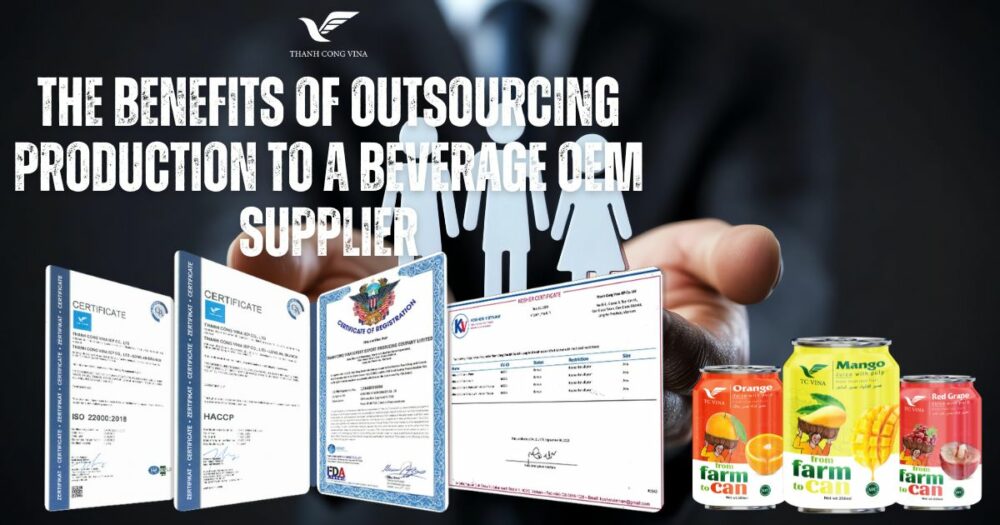
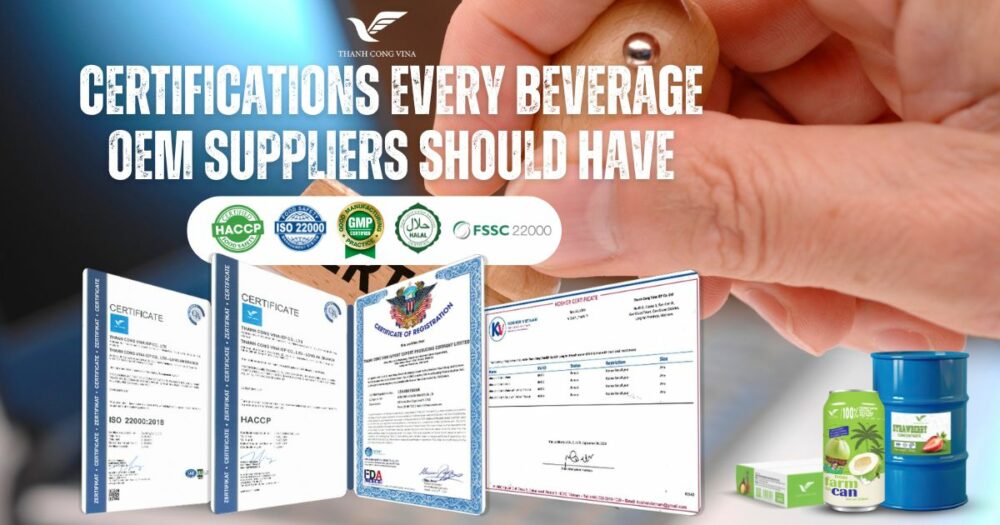
By working with OEM partners who are experienced in regulatory compliance, brands minimize the risk of product recalls, fines, or market entry delays. OEM Suppliers provide documentation such as Certificates of Analysis, Health Certificates, and product specifications to support smooth customs clearance.
This regulatory expertise makes global expansion safer and more efficient.
3. Scalable Production for Growing Demand
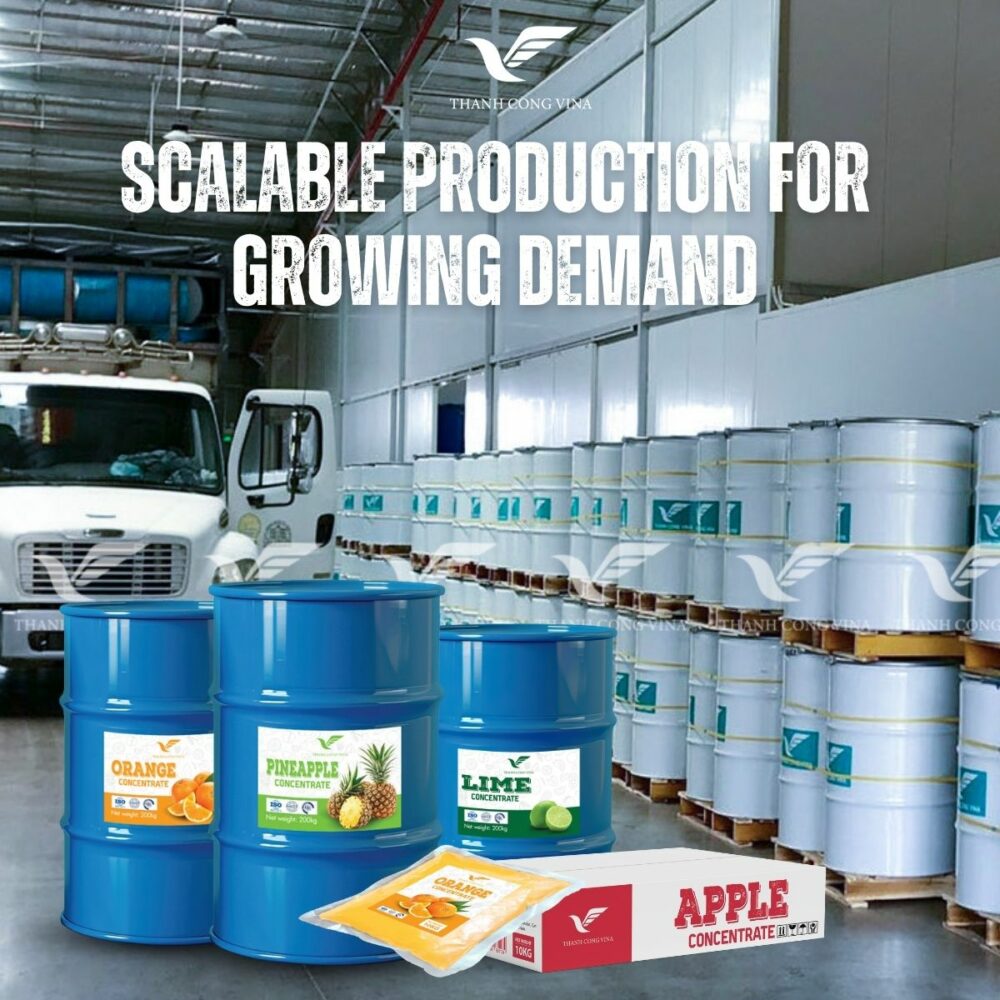
Scalable Production for Growing Demand
Flexible Production Volumes
Market expansion often comes with unpredictable demand. Some regions may respond quickly, while others grow gradually. OEM Suppliers offer flexible production volumes, allowing brands to start with smaller batches and scale up as demand increases.
This reduces financial risk while supporting controlled growth.
Rapid Capacity Expansion
When demand surges, OEM Suppliers can increase output without compromising quality. Their large-scale facilities and optimized workflows ensure stable supply, helping brands meet market expectations.
Scalable production is essential for sustaining momentum in new markets.
4. Cost Efficiency in Market Expansion
Lower Capital Investment
Building production facilities in new markets requires significant capital for equipment, staffing, and certifications. OEM Suppliers eliminate these costs by offering ready-to-use manufacturing services.
Brands can allocate more resources to marketing, distribution, and brand development instead of infrastructure.
Optimized Production Costs
OEM partners benefit from economies of scale, purchasing raw materials in bulk and optimizing production efficiency. These savings help brands maintain competitive pricing in new markets.
Cost efficiency improves profitability and market competitiveness.
5. Localized Product Adaptation
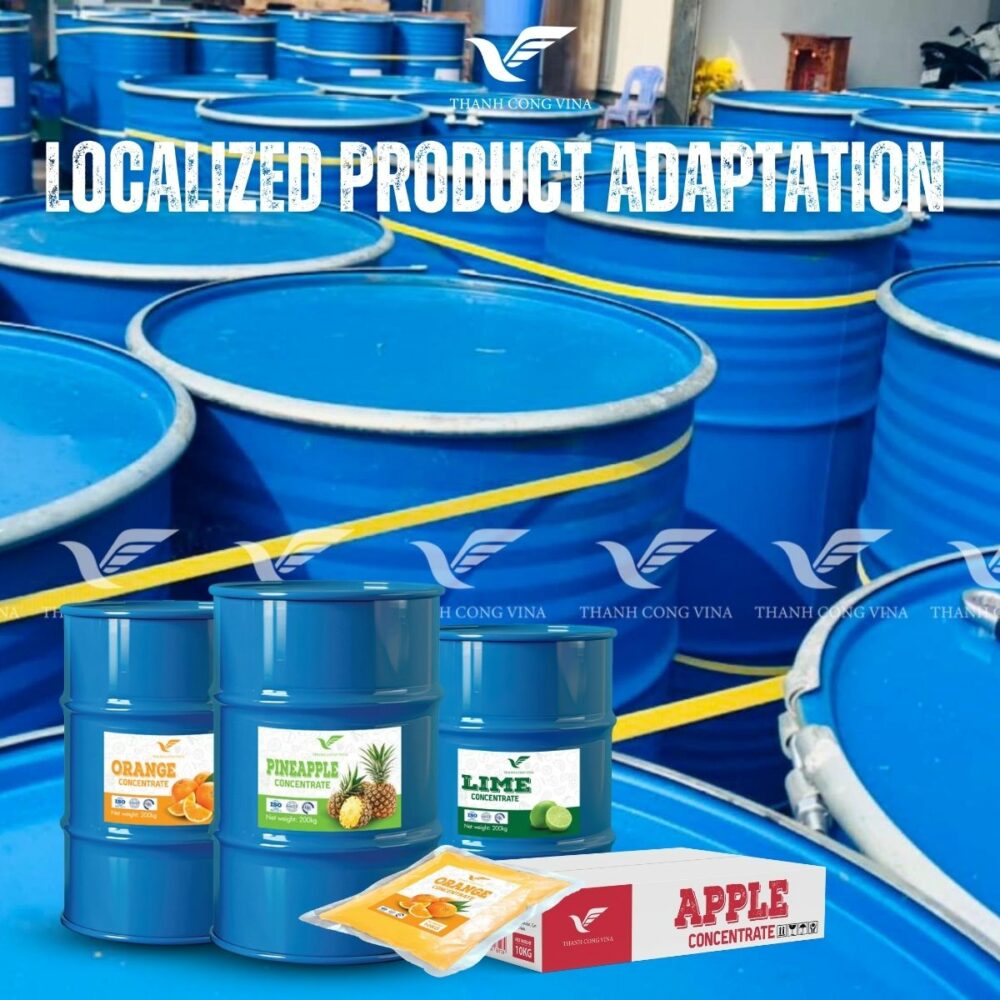
Localized Product Adaptation
Adapting to Consumer Preferences
Different markets have different taste preferences, sugar levels, packaging sizes, and ingredient expectations. OEM Suppliers support product customization to match local consumer demand.
This includes adjusting flavors, sweetness, functional ingredients, and packaging formats.
Cultural and Market Fit
A product that succeeds in one market may need modifications in another. OEM partners help brands refine formulations and packaging to ensure cultural relevance and market acceptance.
Localization increases the chances of successful market penetration.
6. Supply Chain and Logistics Support
Reliable Raw Material Sourcing
OEM Suppliers work with established supplier networks to ensure consistent access to high-quality raw materials. This stability supports uninterrupted production, even during global supply chain disruptions.
Reliable sourcing is crucial for maintaining product consistency across markets.
Efficient Distribution Readiness
Many OEM partners support export logistics by providing proper packaging, documentation, and shelf-life optimization. This ensures that products remain safe and high-quality throughout transportation.
Strong logistics support simplifies international distribution.
7. OEM Suppliers – Innovation for Competitive Market Entry
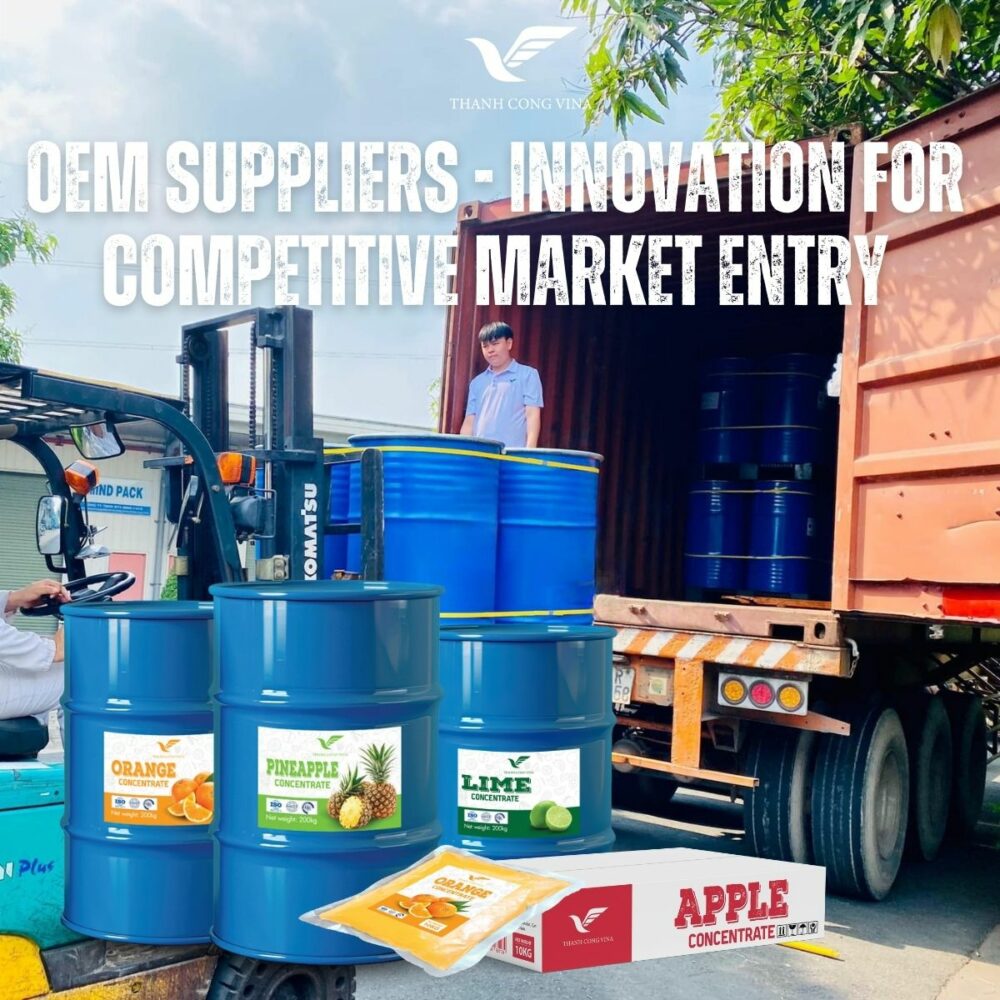
OEM Suppliers – Innovation for Competitive Market Entry
Developing Market-Specific Products
OEM Suppliers often provide R&D support to help brands create innovative beverages tailored to new markets. This includes functional drinks, low-sugar options, and health-focused products.
Innovation helps brands stand out in competitive environments.
Testing and Optimization
Before launching in a new market, OEM partners conduct product testing to ensure stability, taste consistency, and regulatory compliance. This reduces the risk of market rejection.
Professional testing improves launch success rates.
8. Building Long-Term Global Partnerships
Strategic Collaboration
OEM Suppliers are more than manufacturers—they are strategic partners. Long-term collaboration leads to better communication, smoother production planning, and continuous product improvement.
Strong partnerships support sustainable global growth.
Supporting Brand Expansion
With reliable OEM support, brands can focus on building distribution networks, marketing strategies, and customer relationships in new markets.
This allows for faster and more confident international expansion.
Conclusion
Expanding into new markets requires more than ambition—it demands reliable production, regulatory expertise, and scalable operations. OEM Suppliers provide the foundation that helps brands grow beyond their home markets with confidence. From certified manufacturing facilities and compliance support to cost efficiency and localized product development, OEM Suppliers remove many of the barriers to international expansion.
Thanh Cong Vina Beverage is a trusted partner among OEM Suppliers, offering advanced production capabilities, strict quality standards, and strong export experience. As one of the leading OEM Suppliers in the beverage industry, Thanh Cong Vina supports brands with flexible manufacturing, regulatory assistance, and customized solutions for global markets. By partnering with Thanh Cong Vina, beverage brands gain a dependable OEM partner dedicated to helping them expand successfully into new markets with high-quality, market-ready products.