
In today’s highly competitive beverage market, brands are under constant pressure to innovate faster, reduce costs, and maintain consistent quality while scaling across multiple markets. One of the most important strategic decisions a beverage brand must make is choosing the right manufacturing model. Two of the most commonly discussed options are Private Label and OEM Juice Manufacturer partnerships. Although these terms are often used interchangeably, they represent fundamentally different approaches to product development, ownership, and long-term brand growth.
Understanding the key differences between private label production and working with an OEM juice manufacturer can significantly impact your supply chain flexibility, product differentiation, regulatory compliance, and overall profitability. This article provides a comprehensive breakdown of how each model works, their advantages and limitations, and why many established and emerging beverage brands increasingly prefer OEM juice manufacturing for sustainable growth.
1. Understanding Private Label Beverage Manufacturing
Understanding Private Label Beverage Manufacturing
What Is Private Label Juice Production?
Private label juice manufacturing refers to a production model where manufacturers create standardized juice products that are sold under a retailer’s or distributor’s brand name. In this arrangement, the manufacturer owns the formula, processing methods, and product specifications, while the buyer primarily focuses on branding, packaging design, and distribution. Supermarkets, convenience store chains, and large retailers often rely on private label products to quickly expand their beverage portfolios.
Private label juice products are typically developed to meet broad market preferences rather than specific brand identities. This allows manufacturers to produce large volumes efficiently, offering competitive pricing to buyers who prioritize speed and cost over product uniqueness.
Limitations of the Private Label Model
While private label manufacturing offers convenience, it also comes with limitations that can restrict long-term brand growth. Since formulas are shared across multiple buyers, product differentiation is minimal. Brands using private label juices often struggle to establish a strong identity or premium positioning because similar products may appear under competing labels in the same market.
Additionally, private label buyers have limited control over ingredient sourcing, nutritional customization, or product innovation. Any changes usually require approval from the manufacturer and may involve minimum order constraints. For brands aiming to build unique formulations, target niche consumer segments, or expand into international markets, private label production can become a strategic bottleneck.
2. What Is an OEM Juice Manufacturer?
Definition and Core Responsibilities
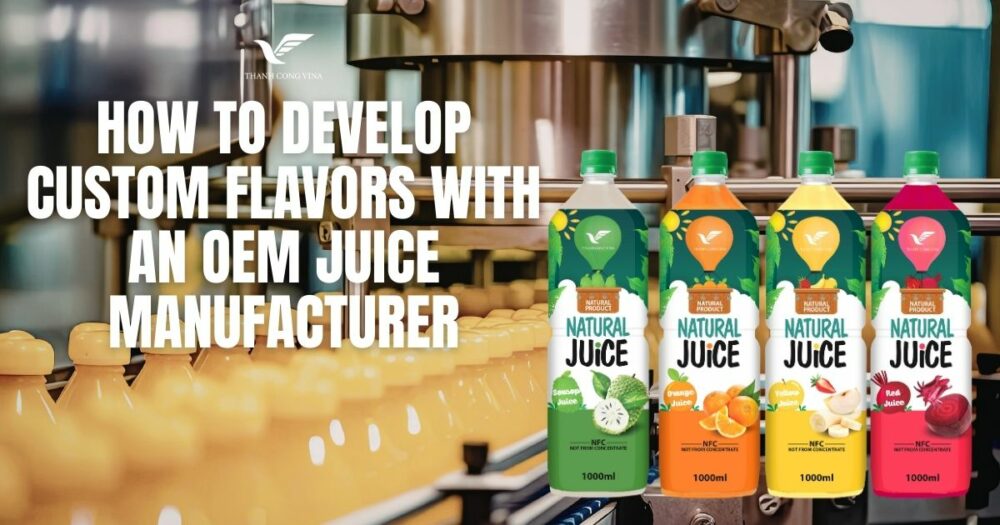
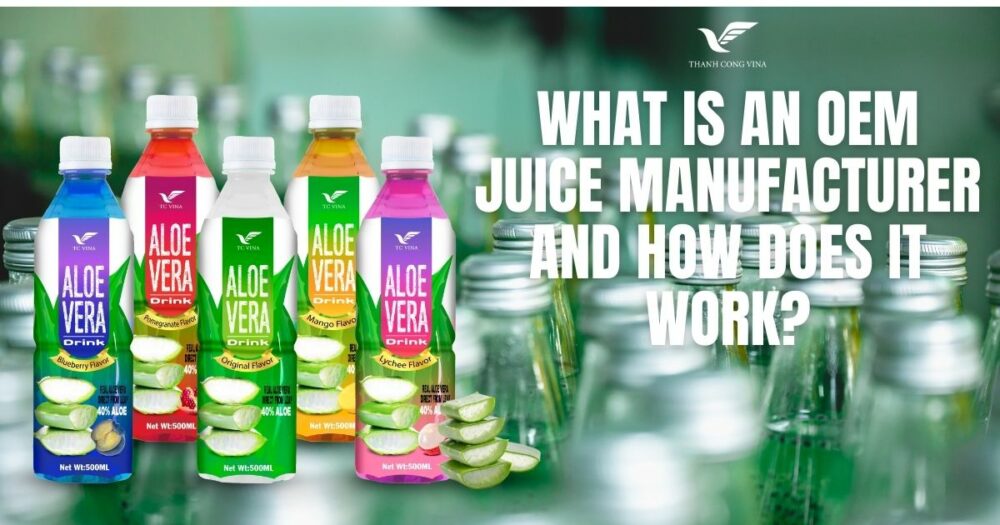
An OEM juice manufacturer operates under a fundamentally different framework. OEM, or Original Equipment Manufacturer, refers to a partnership where the manufacturer produces beverages based entirely on the brand owner’s specifications. The brand retains ownership of the formula, concept, and market positioning, while the OEM juice manufacturer handles sourcing, processing, quality control, packaging, and regulatory compliance.
This model enables brands to transform a product concept into a fully commercialized beverage without investing in manufacturing infrastructure. OEM juice manufacturers act as long-term production partners rather than simple suppliers, aligning their operations with the brand’s growth strategy.
Why OEM Juice Manufacturing Enables Brand Control
Unlike private label production, OEM juice manufacturing allows brands to control every aspect of the product, from fruit selection and sweetness levels to shelf life and packaging formats. Brands can request clean-label formulations, functional ingredients, organic certifications, or region-specific taste profiles. This flexibility is especially valuable for premium juice brands, functional beverages, and export-oriented companies that must meet diverse market regulations.
Because the brand owns the intellectual property, OEM partnerships support long-term differentiation and protect brand equity as the business scales.
3. Key Differences in Product Ownership and Intellectual Property
Key Differences in Product Ownership and Intellectual Property
Formula Ownership and Exclusivity
One of the most critical differences between private label and OEM juice manufacturing lies in formula ownership. In private label arrangements, the manufacturer retains full ownership of the product formulation. This means the same juice recipe can be sold to multiple buyers with only minor label variations.
In contrast, an OEM juice manufacturer produces beverages based on proprietary formulas owned by the brand. These formulas are protected by confidentiality agreements, ensuring exclusivity in the market. This exclusivity allows brands to build strong product identities without fear of direct imitation.
Long-Term Strategic Value
Owning the formula provides brands with long-term strategic advantages. It enables consistent product storytelling, easier line extensions, and stronger negotiating power as volumes grow. Brands can switch OEM partners if needed without losing control of their core products. Private label buyers, however, are often locked into specific manufacturers, making it difficult to adapt or innovate independently.
4. Flexibility in Customization and Innovation
Product Development Capabilities
OEM juice manufacturers are designed to support product innovation. They typically offer in-house R&D teams, pilot production lines, and sensory testing capabilities. Brands can experiment with new fruit blends, reduced sugar formulations, or functional ingredients such as vitamins, collagen, or probiotics.
Private label manufacturers focus primarily on standardized production, leaving little room for experimentation. Any innovation is usually driven by the manufacturer’s own product roadmap rather than the brand’s vision.
Speed to Market with Custom Products
Although private label products can be launched quickly, OEM juice manufacturing provides a balance between customization and efficiency. Once a formula is finalized, OEM manufacturers can scale production rapidly while maintaining consistent quality. This allows brands to respond to market trends without sacrificing differentiation.
5. Quality Control and Regulatory Compliance
Quality Control and Regulatory Compliance
Manufacturing Standards and Certifications
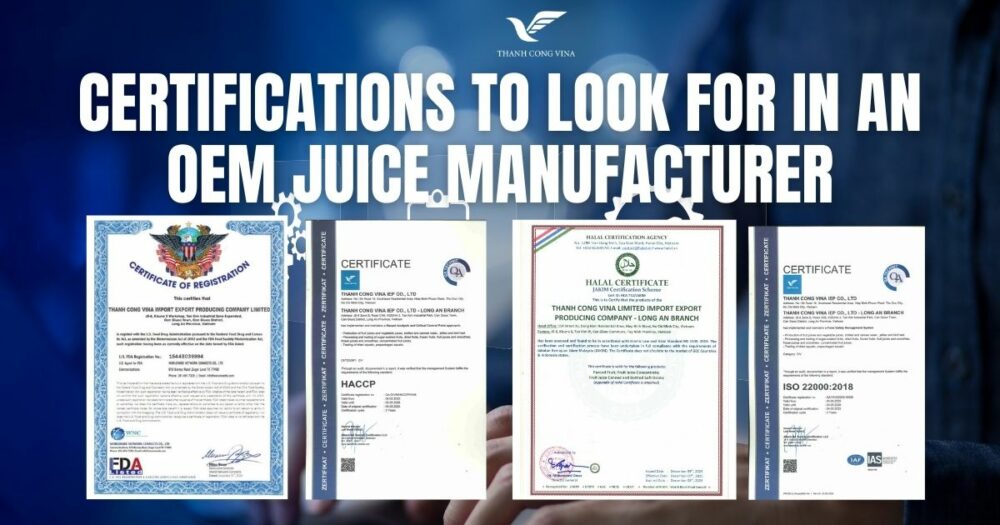
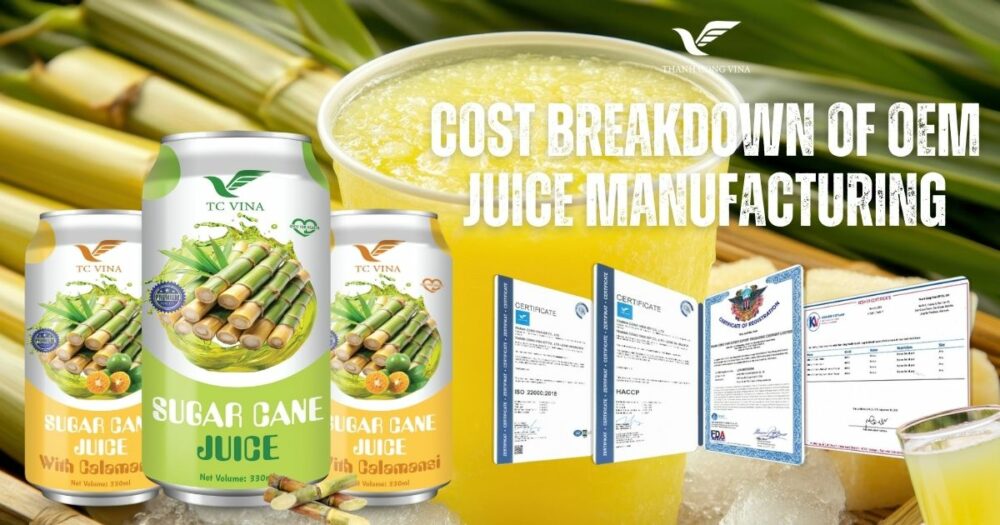
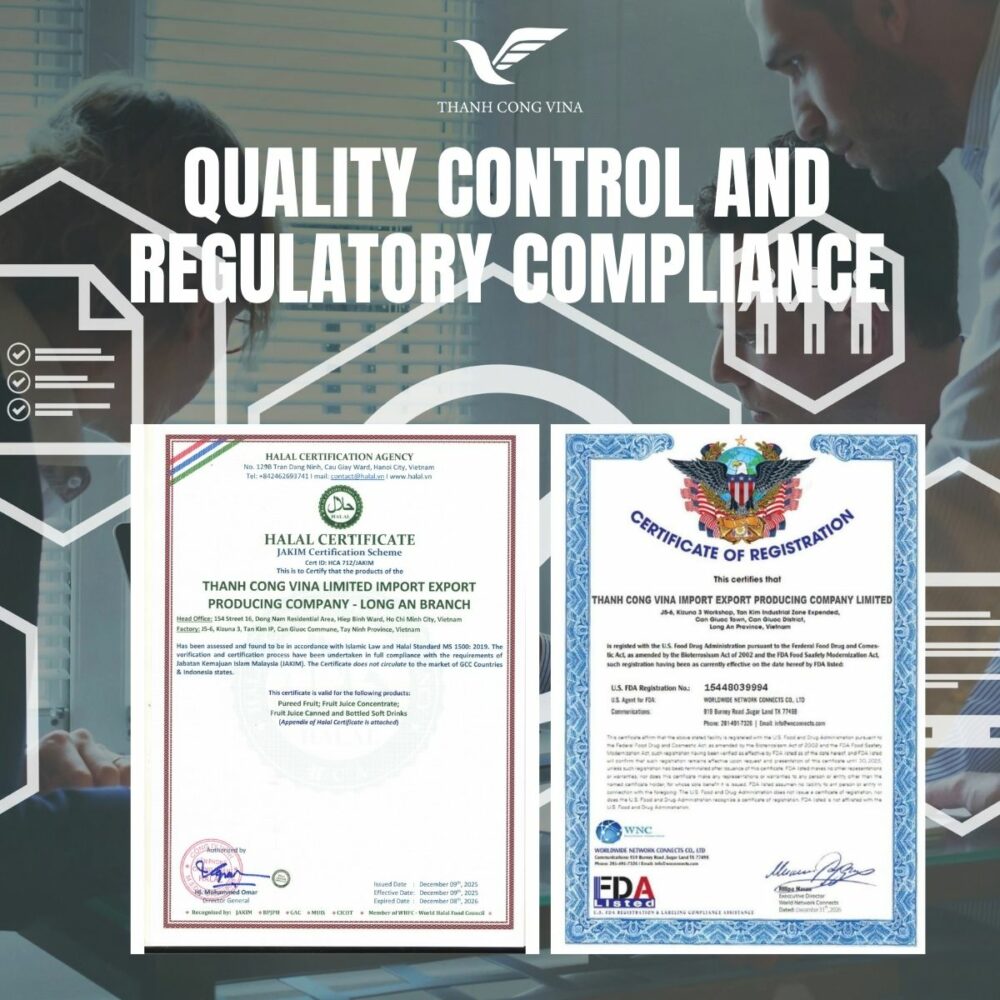
OEM juice manufacturers typically operate under internationally recognized certifications such as ISO, HACCP, FDA, and HALAL. These certifications are essential for brands targeting export markets or working with large distributors. OEM partners ensure that every batch meets predefined quality standards and regulatory requirements.
Private label manufacturers also maintain certifications, but buyers often have limited visibility into production processes. OEM partnerships, on the other hand, offer greater transparency, enabling brands to audit facilities and verify compliance directly.
Consistency Across Markets
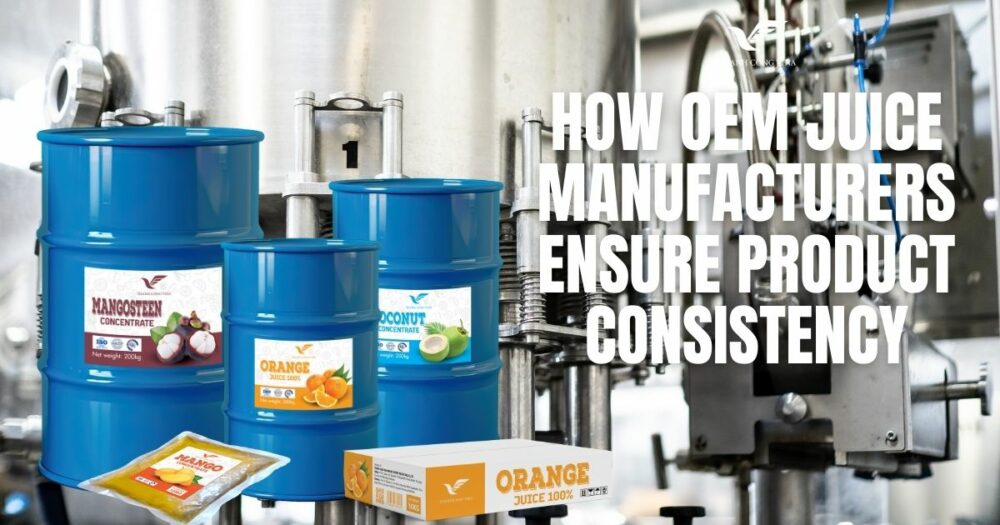
For brands expanding into multiple countries, product consistency is critical. OEM juice manufacturers implement standardized quality control systems that ensure flavor, color, and nutritional content remain consistent across production runs. This consistency strengthens brand trust and simplifies international distribution.
6. Cost Structure and Long-Term Profitability
Initial Investment vs Long-Term Value
Private label production often appears more cost-effective initially because it eliminates development costs. However, margins can be thinner due to limited pricing flexibility and intense competition. Brands using private label products compete primarily on price rather than value.
OEM juice manufacturing may require higher upfront investment in product development, but it delivers stronger long-term profitability. Custom formulations allow brands to command premium pricing, improve customer loyalty, and reduce direct competition.
Scalability and Supply Chain Efficiency
OEM juice manufacturers are built for scalability. As demand grows, production volumes can be increased without compromising quality. This scalability supports sustainable growth and simplifies supply chain management, especially for export-focused brands.
7. OEM Juice Manufacturer Advantages
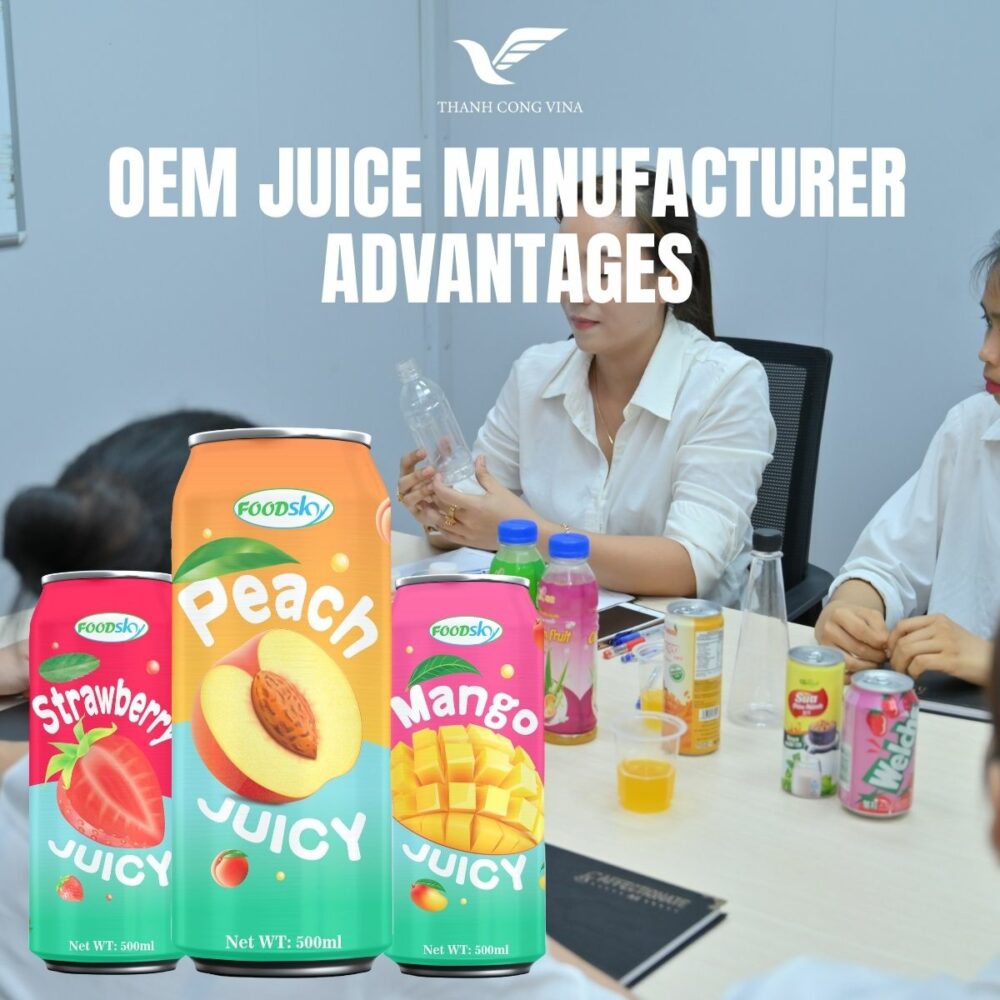
OEM Juice Manufacturer Advantages
Strategic Control and Brand Growth
Choosing an OEM juice manufacturer empowers brands with full strategic control over their products. From formulation and packaging to compliance and distribution, OEM partnerships align manufacturing capabilities with brand vision. This alignment is essential for companies aiming to build long-term value rather than short-term sales.
Brands that work with OEM juice manufacturers can adapt faster to consumer trends, enter new markets with confidence, and protect their intellectual property. These advantages make OEM manufacturing the preferred choice for brands focused on sustainable expansion and premium positioning.
Conclusion
Selecting between private label production and OEM manufacturing is not simply a sourcing decision; it is a strategic choice that shapes a brand’s future. While private label offers speed and simplicity, it often limits differentiation and long-term growth. OEM juice manufacturing provides the flexibility, control, and scalability required to build a resilient beverage brand in today’s competitive landscape.
For brands seeking a reliable, experienced partner, Thanh Cong Vina Beverage offers comprehensive OEM solutions tailored to global market demands. With advanced manufacturing capabilities, strict quality standards, and a commitment to customization, Thanh Cong Vina supports beverage brands from concept development to large-scale production. By partnering with Thanh Cong Vina, brands gain a trusted OEM partner dedicated to quality, consistency, and sustainable growth in the international beverage industry.