
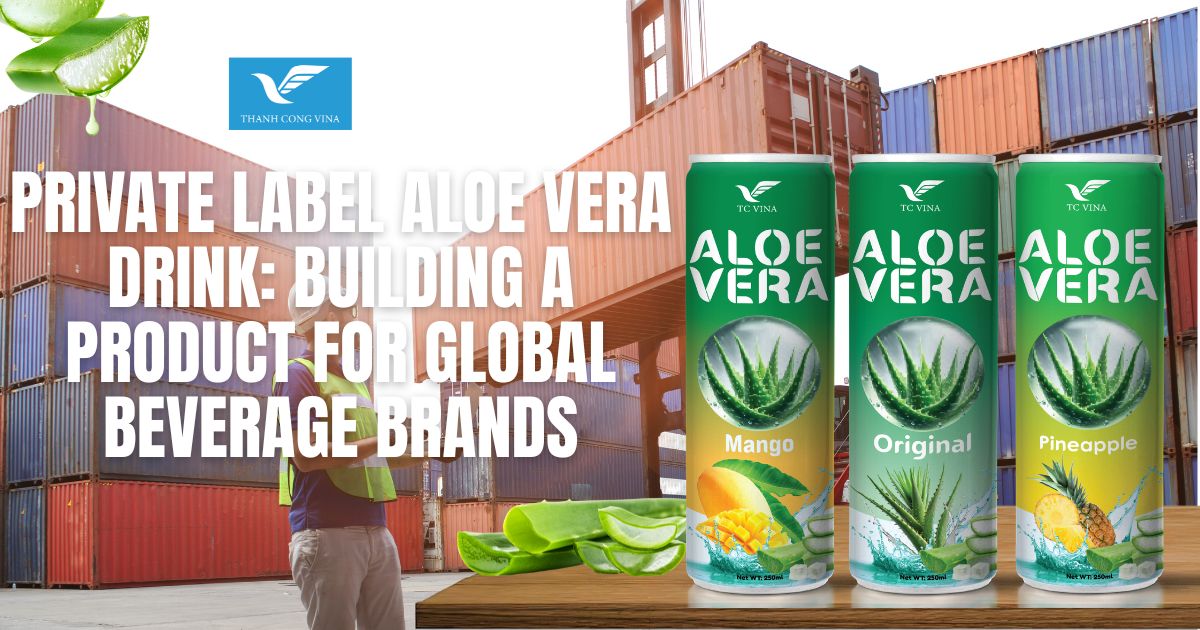
Developing a Private Label Aloe Vera Drink can help beverage companies expand their portfolios with a product that combines a recognizable ingredient, refreshing flavor profiles, and flexible branding opportunities. However, launching a successful private label beverage requires more than placing a logo on an existing product. It involves selecting a suitable manufacturing partner, defining product specifications, developing the right formulation, coordinating packaging, and establishing quality requirements that support international distribution.
For importers, distributors, retailers, and established beverage companies, private label manufacturing offers a practical approach to building brand identity while working with a specialized production partner. The process can support different market positions, from accessible everyday beverages to more differentiated product concepts. Understanding how private label aloe vera drinks are developed and commercialized helps businesses make informed decisions before investing in product development and inventory. This article explores the key considerations for creating a private label aloe vera beverage for global markets.
1. Private Label Aloe Vera Drink: Building a Product for Global Beverage Brands
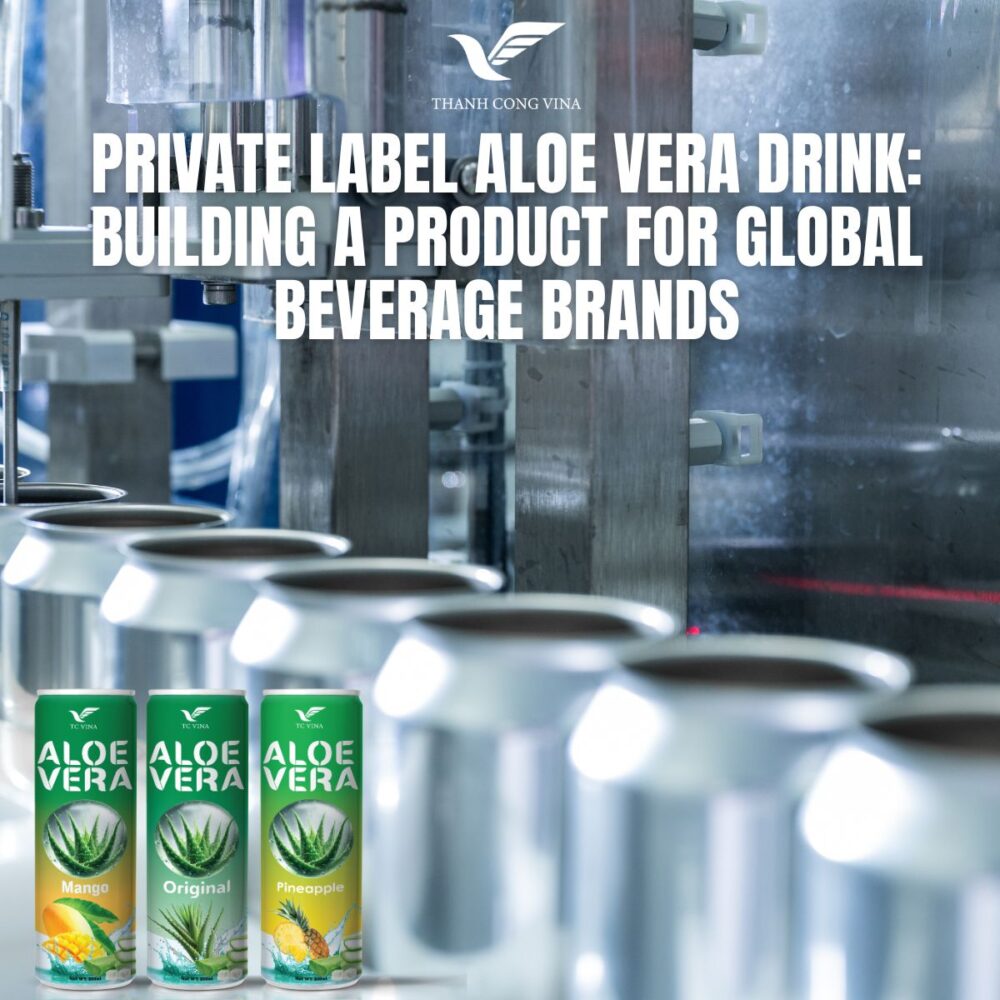
Private Label Aloe Vera Drink: Building a Product for Global Beverage Brands
Private label beverage development allows businesses to market products under their own brand while collaborating with a manufacturer for agreed production services. The brand owner can focus on market positioning, sales channels, and customer relationships while coordinating product development and manufacturing with its supplier.
Understanding the Private Label Business Model
In a private label arrangement, the product is sold under the buyer’s brand according to an agreed manufacturing and commercial framework. Depending on the project, the manufacturer may provide an existing formulation, support customization, produce approved packaging, or offer a broader product development service.
The exact scope varies by supplier. Some projects involve a standardized beverage with customized branding, while others require changes to flavor, sweetness, texture, ingredient composition, or packaging. Buyers should confirm the available options before assuming that every product attribute can be customized.
A clear agreement should define responsibilities for product specifications, artwork, ingredient sourcing, quality documentation, regulatory review, and order management. It should also clarify which party approves product changes and how the final product is released for shipment.
Identifying the Right Market Opportunity
Before choosing a formulation, brands should identify the customers they intend to reach. A product designed for supermarkets may require a different price point and packaging strategy from one developed for convenience stores, specialty retailers, or foodservice distribution.
Market research can help businesses understand competitor offerings, preferred serving sizes, flavor expectations, and retail positioning. Buyers should also consider whether their aloe vera drink will serve as an entry-level beverage, a premium product, or part of a broader tropical beverage portfolio.
These decisions influence ingredient selection, packaging, production volumes, and marketing communication. Defining the market opportunity early helps the brand and manufacturer work toward a product concept that is both practical to produce and commercially relevant.
Establishing a Clear Product Brief
A product brief translates the brand’s objectives into manufacturing requirements. It should describe the intended market, product category, flavor profile, preferred texture, packaging format, target price range, and expected order volume.
Where possible, buyers should provide reference products or samples to communicate their expectations. The manufacturer can then evaluate feasibility, identify outstanding questions, and recommend suitable development steps.
A detailed brief creates a shared reference for product development and helps reduce unnecessary revisions during sampling, quotation, and production planning.
2. Formulation and Flavor Customization for Aloe Vera Beverages
The formulation is central to the product’s identity. For private label brands, the objective is to develop a beverage that meets the intended sensory profile while remaining suitable for manufacturing, packaging, storage, and the target market’s regulatory requirements.
Selecting Flavors for Different Consumer Preferences
Aloe vera beverages can be developed in a range of flavor profiles, depending on the manufacturer’s available formulations and ingredient capabilities. Potential options include original aloe vera, mango, peach, lychee, blueberry, and other fruit-inspired variations.
Brands should select flavors based on their target audience, sales channels, and competitive positioning rather than relying on assumptions about universal consumer preferences. A distributor entering a new market may prefer a focused range of familiar flavors, while an established brand may explore more differentiated combinations.
Launching a manageable selection of products can also make initial inventory planning easier. Businesses can evaluate market response before introducing additional flavors or package sizes.
Balancing Taste, Sweetness, and Texture
Flavor customization involves more than choosing a fruit name. Sweetness, acidity, aroma, color, and mouthfeel all contribute to the finished beverage’s sensory profile.
Texture is particularly relevant to aloe vera drinks. Some products emphasize a smooth consistency, while others contain aloe vera pieces that create a distinctive drinking experience. The intended texture should be discussed during product development because it may affect ingredient preparation, formulation, processing, and packaging considerations.
Buyers should evaluate the beverage as a complete product. A formulation that performs well in one market may require adjustments for another audience, but changes should always be assessed for technical feasibility and regulatory compliance.
Confirming Ingredients and Product Declarations
The ingredient composition must match the approved formulation and the information presented on the label. Depending on the product, the beverage may contain aloe vera ingredients, water, fruit ingredients, sweeteners, acidity regulators, stabilizers, or other permitted components.
Buyers should clarify the aloe vera ingredient format, intended product composition, and any specific ingredient requirements. They should also review how the product will be described in the destination market to ensure that the product name and ingredient declaration are accurate.
Any nutritional or health-related claim must be permitted and supported by appropriate evidence. Clear communication between the brand owner and manufacturer helps prevent inconsistencies between the formulation, label, and marketing materials.
3. Brand Identity and Packaging for Private Label Products
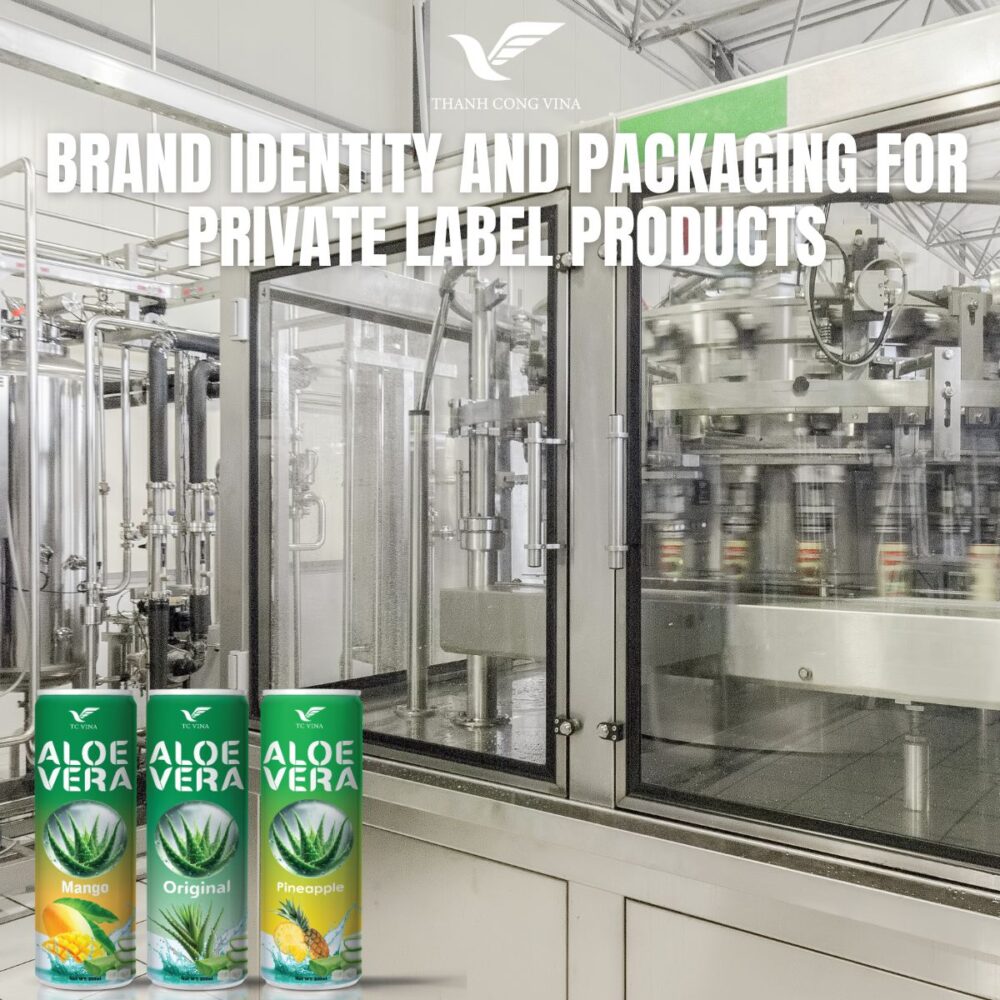
Brand Identity and Packaging for Private Label Products
Packaging is one of the most visible elements of a private label beverage. It communicates the brand’s identity, helps consumers distinguish flavors, and influences how the product is presented across retail and distribution channels.
Choosing the Right Packaging Format
Depending on the manufacturer’s available capabilities and the product requirements, aloe vera beverages may be supplied in PET bottles, cans, glass bottles, or other suitable formats. Serving sizes such as 250 ml, 330 ml, and 500 ml may be considered where available.
The appropriate format depends on the target market, intended consumption occasion, retail channel, transportation requirements, and price positioning. Convenience retail may favor portable formats, while other channels may have different preferences for serving size and packaging material.
Buyers should confirm packaging availability, minimum order quantities, closure systems, printing options, material specifications, and lead times before finalizing the product design.
The selected package must also be compatible with the formulation and the intended processing and storage conditions. Packaging decisions should therefore involve both brand and technical considerations.
Creating a Distinctive Brand Presentation
Private label packaging allows a business to establish its own visual identity. Brand colors, typography, product naming, flavor indicators, and label layout should work together to make the beverage easy to recognize.
Design decisions should reflect the brand’s market position. A product targeting a broad retail audience may require straightforward flavor communication and strong shelf visibility, while a premium concept may emphasize a more refined visual presentation.
Artwork should be prepared according to the final packaging dimensions and printing requirements. Buyers should confirm whether the manufacturer provides artwork templates, technical guidance, or packaging coordination as part of the agreed service.
Reviewing Labels Before Printing
Label requirements differ by country and product category. Depending on the destination market, packaging may need to include the product name, ingredient list, net quantity, nutrition information, date marking, storage instructions, country of origin, and responsible business details.
The brand owner and manufacturer should agree on the artwork review process and clarify who is responsible for checking mandatory information. Importers may also need to review requirements specific to their local market.
Final approval should take place before printing begins. This helps reduce the risk of incorrect information, costly packaging changes, or delays that affect the planned launch date.
4. Manufacturing Quality and Product Consistency
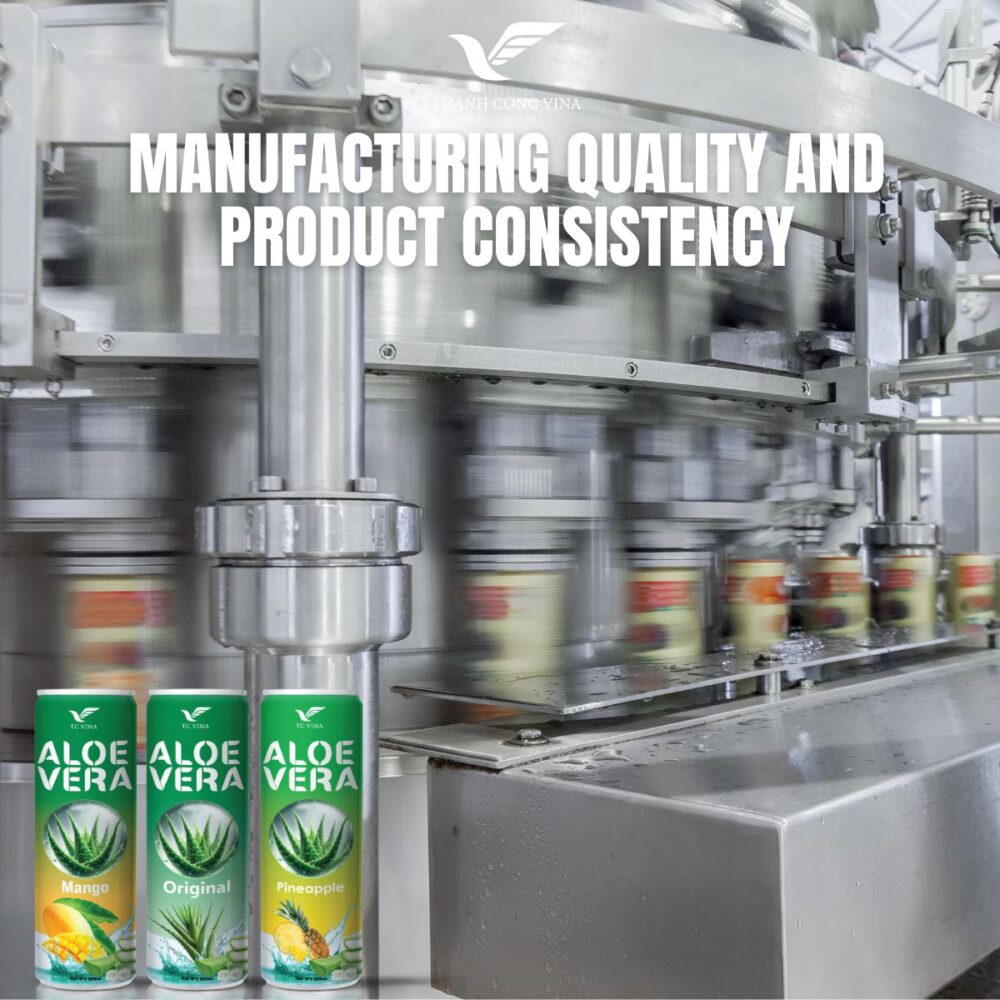
Manufacturing Quality and Product Consistency
A successful private label beverage must meet agreed specifications consistently. Quality management should be integrated into the manufacturing process, supported by appropriate controls and documentation.
Establishing Product Specifications
A product specification defines the expected characteristics of the finished beverage. Depending on the formulation, it may cover ingredients, sensory attributes, pH, soluble solids, appearance, fill volume, packaging integrity, and relevant microbiological criteria.
The specification should reflect the approved sample and applicable regulatory requirements. It provides a shared reference for the manufacturer and buyer when reviewing production batches and evaluating whether a product meets the agreed standards.
Acceptance criteria should be sufficiently clear to support consistent decisions. General statements about premium quality are less useful than documented requirements that can be assessed through appropriate inspection or testing.
Applying Appropriate Processing Controls
Aloe vera beverages require processing methods appropriate to the formulation, packaging system, and intended storage conditions. Depending on the product, manufacturing may include ingredient preparation, blending, preservation treatment, filling, sealing, and finished-product inspection.
Processing parameters should be established and validated for the specific product and production system. A process suitable for one beverage should not automatically be assumed suitable for another because ingredient composition and food safety risks may differ.
Hygienic handling, equipment sanitation, personnel practices, and monitoring procedures are also important. Buyers should ask how the manufacturer manages these activities and what documentation is available to support the product’s quality requirements.
Reviewing Certifications and Supporting Documentation
International buyers may require evidence of the manufacturer’s food safety management arrangements, product testing, or traceability procedures. Depending on the project, relevant documents may include product specifications, ingredient information, test reports, and batch records.
If certifications are required, buyers should verify their validity, issuing organization, covered facility, and scope. A certificate should not be assumed to cover every product or production site operated by a business.
Clear documentation helps buyers evaluate the supplier and prepare for customer reviews, internal approval procedures, or destination-market requirements.
5. Minimum Order Quantities, Cost Planning, and Commercial Flexibility
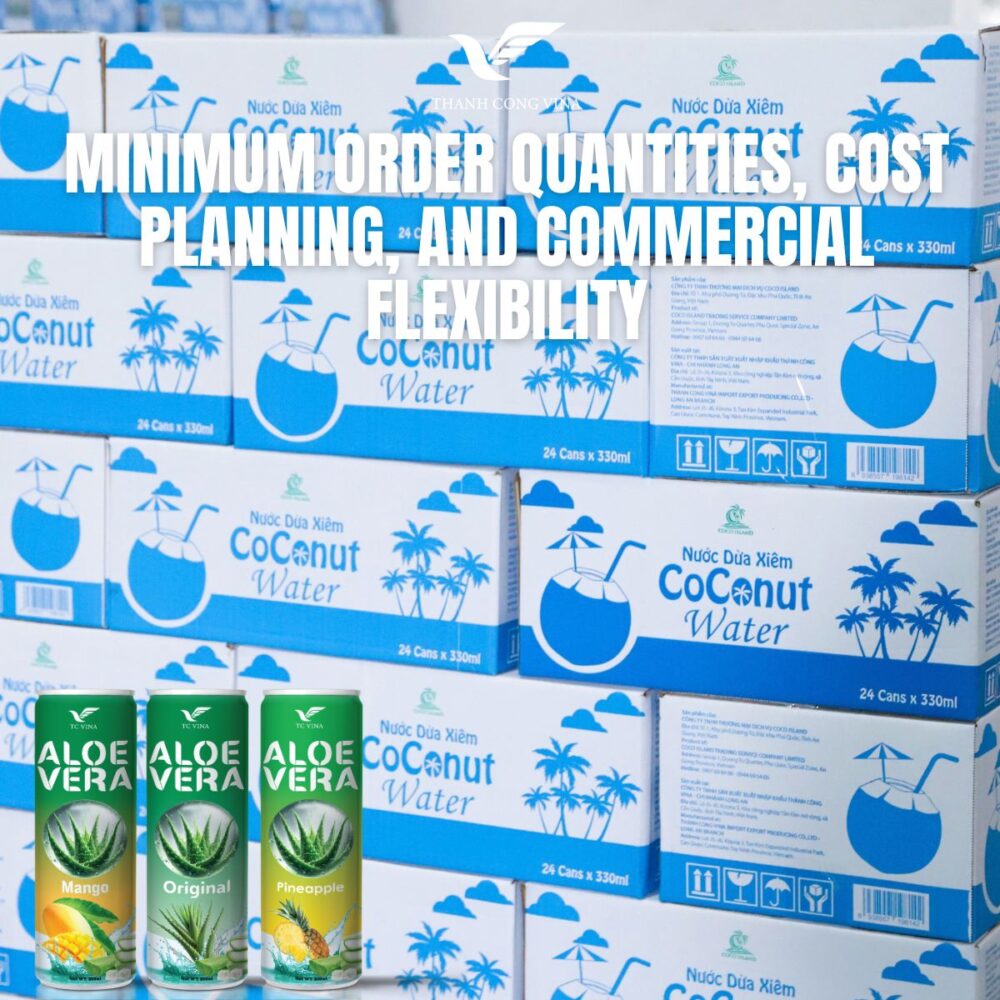
Minimum Order Quantities, Cost Planning, and Commercial Flexibility
Private label projects require careful cost planning because the final quotation may depend on more than the beverage itself. Packaging, customization, order volume, and development requirements can all affect the overall investment.
Understanding Minimum Order Quantities
Minimum order quantities may be influenced by production arrangements, ingredient procurement, packaging purchases, and printing requirements. Customized containers or printed labels may require larger commitments than standard packaging options.
Before placing an order, buyers should ask whether minimum quantities apply to each flavor, packaging format, or complete shipment. They should also clarify whether different products can be combined within one order and what conditions apply.
For a new brand, it may be practical to begin with a focused product range and realistic order quantities. This approach can help limit inventory exposure while providing an opportunity to assess demand.
Evaluating the Total Cost of Ownership
The unit price is only one component of the total project cost. Depending on the arrangement, other expenses may include formulation development, samples, laboratory testing, packaging materials, artwork preparation, freight, insurance, and import-related charges.
Buyers should compare quotations using the same product specifications, packaging format, order quantity, and service scope. Otherwise, a lower quotation may reflect a different formulation or exclude services included in another offer.
It is also important to confirm payment terms, quotation validity, additional charges, and the financial implications of changes made after approval. Transparent commercial terms help both parties plan more accurately.
Balancing Customization and Budget
Customization can strengthen brand differentiation, but each additional requirement may affect development time, costs, or minimum order quantities.
Buyers should prioritize the product attributes that matter most to their target customers. Flavor, packaging, label design, and ingredient specifications should be evaluated together so that the final concept remains commercially realistic.
A phased development strategy can help. Brands may begin with a manageable selection of flavors and standard packaging formats, then introduce more specialized options as demand and sales performance become clearer.
6. Export Preparation and Long-Term Private Label Cooperation
International private label projects involve coordination between product development, manufacturing, documentation, and distribution. A suitable supplier should be able to discuss the requirements relevant to the specific product and destination market.
Preparing for International Distribution
Export documentation depends on the destination country, product category, importer responsibilities, and agreed trade terms. Depending on the shipment, documents may include commercial invoices, packing lists, certificates of origin where applicable, product specifications, test reports, and other required records.
Buyers should identify destination-market requirements before commercial production begins. They should also agree on who is responsible for preparing, reviewing, and supplying each document.
Packaging, storage conditions, transportation, and remaining shelf life at arrival should be considered during shipment planning. These factors can affect inventory management and the timing of a product launch.
Coordinating Forecasts and Production Schedules
Reliable planning requires realistic forecasts and timely communication. Ingredient procurement, packaging production, sample approval, manufacturing, quality checks, and shipment arrangements all contribute to the overall lead time.
Buyers should confirm production schedules and identify which decisions must be completed before manufacturing can begin. Changes to artwork, formulations, or packaging after approval may affect delivery dates.
Sharing demand forecasts can help the supplier plan materials and production activities. Although forecasts may change, early communication gives both parties more time to assess the impact on inventory and delivery commitments.
Building a Sustainable Manufacturing Partnership
A long-term relationship should be based on transparent communication, documented requirements, and consistent management of orders and quality issues. Both parties should agree on how changes, complaints, corrective actions, and future product development will be handled.
Regular reviews can help identify opportunities to improve forecasting, documentation, packaging efficiency, and product range planning.
Thanh Cong Vina operates in Vietnam’s beverage manufacturing and export sector and may be considered by businesses exploring private label beverage projects. Buyers should verify the company’s current aloe vera product options, customization services, packaging availability, manufacturing capabilities, and relevant documentation before confirming an order.
Conclusion
Developing a private label aloe vera beverage requires coordination between brand strategy, formulation, packaging, quality management, and international distribution. Businesses that define their target market, approve clear product specifications, and understand their manufacturing responsibilities are better positioned to manage development and commercial risks. A successful project also depends on realistic cost planning, accurate labeling, suitable documentation, and communication throughout the order cycle.
For global beverage brands, choosing a Private Label Aloe Vera Drink manufacturing partner should involve more than comparing quotations. Buyers should confirm the available customization options, verify relevant quality documentation, and ensure that production and packaging capabilities match their requirements. Thanh Cong Vina can be considered as a potential partner for businesses exploring beverage manufacturing and export opportunities in Vietnam. Through clear specifications, realistic planning, and transparent cooperation, buyers and Thanh Cong Vina can establish a foundation for developing differentiated aloe vera products and building long-term relationships in international beverage markets.