
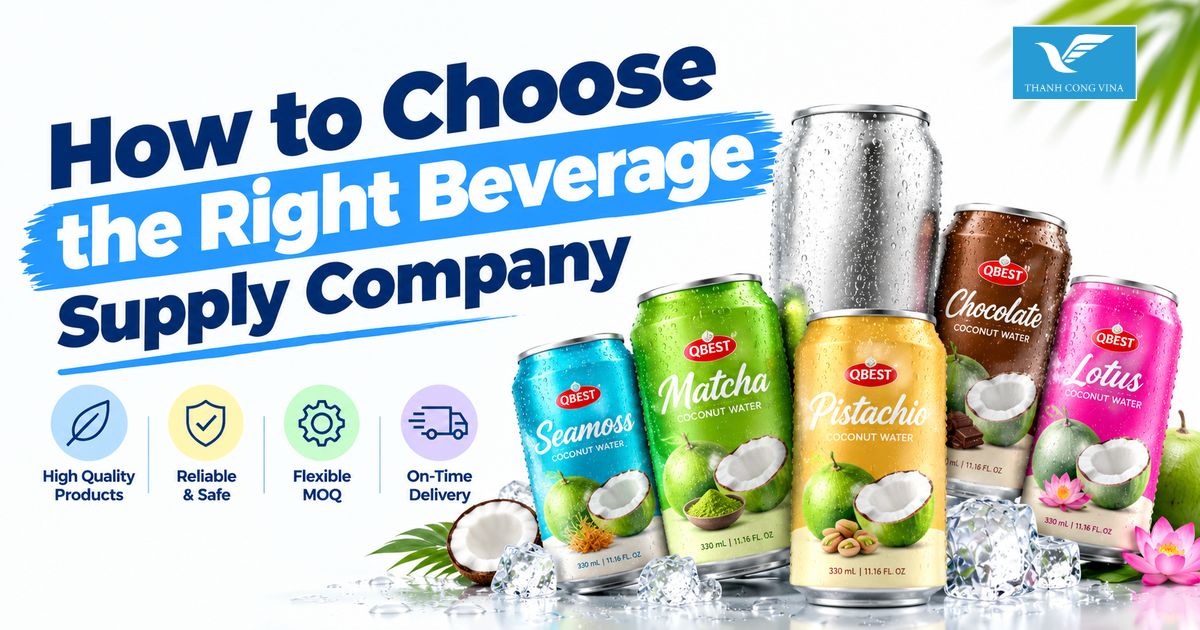
Finding the right Beverage supply company is an important step for businesses looking to enter the beverage market, expand their product portfolio, or develop a private-label brand. The right partner can help streamline sourcing, maintain product quality, optimize production costs, and support long-term business growth.
However, not every supplier offers the same capabilities. Some businesses specialize in distributing ready-made drinks, while others provide manufacturing, product customization, packaging, and OEM/ODM services. Understanding these differences allows buyers to make informed sourcing decisions.
At Thành Công Vina, we understand the importance of selecting a beverage partner that aligns with your business objectives. This guide outlines the key factors to consider when evaluating a Beverage supply company for your next project.
1. Identify the Right Supplier Model for Your Business
Identify the Right Supplier Model for Your Business
Before contacting a Beverage supply company, define your sourcing requirements. Your business model, target customers, and sales channels will determine which type of supplier is most suitable.
Common supplier models include:
- Wholesale distributors: Suitable for businesses purchasing existing beverage products for resale.
- Beverage manufacturers: Ideal for companies requiring production at scale and consistent product specifications.
- OEM/ODM manufacturers: Appropriate for brands seeking customized beverages, private-label products, or support with product development.
- Contract manufacturers: Useful for businesses that want to outsource production while focusing on branding, sales, and distribution.
If your goal is to establish your own beverage brand, working with a manufacturing partner may offer greater flexibility than purchasing finished products from a distributor.
A professional Beverage supply company should clearly explain its production capabilities, service scope, order requirements, and customization options before you commit to a partnership.
2. Evaluate Product Range and Customization Capabilities
A diverse product portfolio allows businesses to respond to different consumer preferences and market opportunities. When comparing suppliers, review their beverage categories, available flavors, packaging formats, and ability to accommodate product development requests.
Depending on your target market, relevant categories may include:
- Fruit juice and fruit-flavored beverages
- Coconut water and plant-based drinks
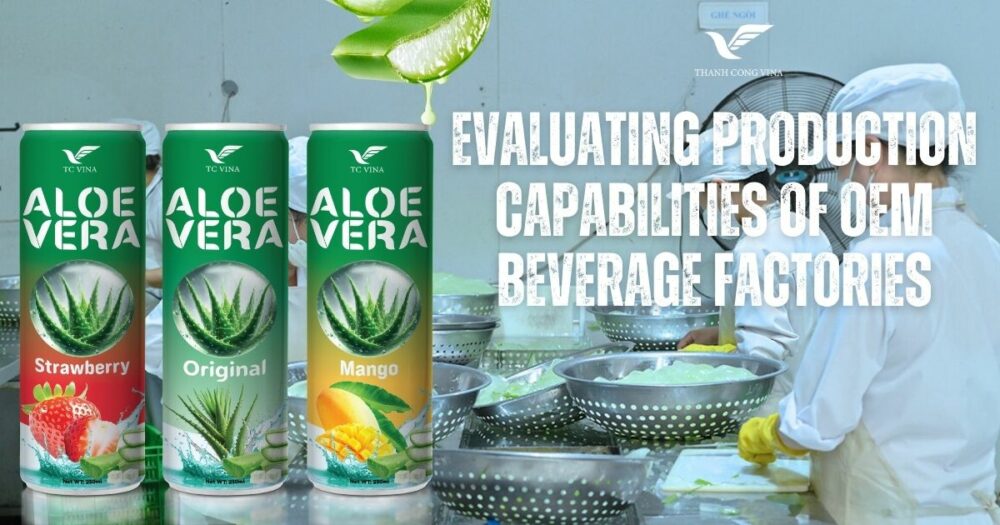
- Aloe vera beverages
- Carbonated soft drinks and sparkling beverages
- Energy drinks and functional beverages
- Ready-to-drink tea and coffee
- Other customized beverage concepts
Beyond the product catalog, ask whether the supplier can support formulation adjustments, flavor development, ingredient selection, sample preparation, and packaging customization.
An experienced Beverage supply company should communicate which options are currently available and which require additional development. This helps you understand project feasibility before investing in production.
For private-label projects, discuss brand positioning, target consumers, preferred ingredients, shelf-life expectations, and packaging requirements at the beginning of the process.
3. Prioritize Beverage Quality and Food Safety
Prioritize Beverage Quality and Food Safety
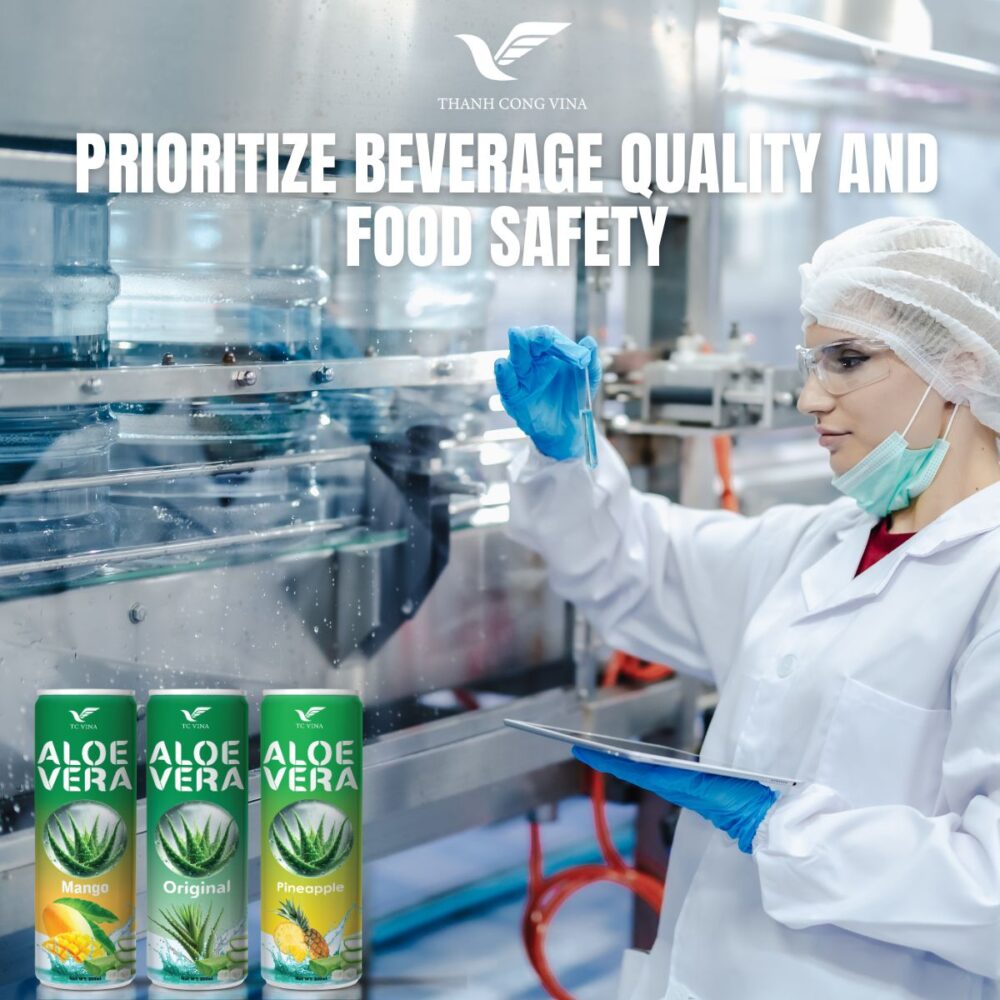
Product quality directly influences customer satisfaction, brand reputation, and the potential for repeat purchases. Therefore, quality assurance should be a central consideration when selecting a Beverage supply company.
Before placing an order, request relevant technical documents and ask how the supplier manages product consistency throughout production.
Important items to review include:
- Product specifications and ingredient information
- Allergen declarations, where applicable
- Batch identification and traceability procedures
- Shelf-life and storage recommendations
- Quality inspection and testing procedures
- Certificates of analysis, when applicable
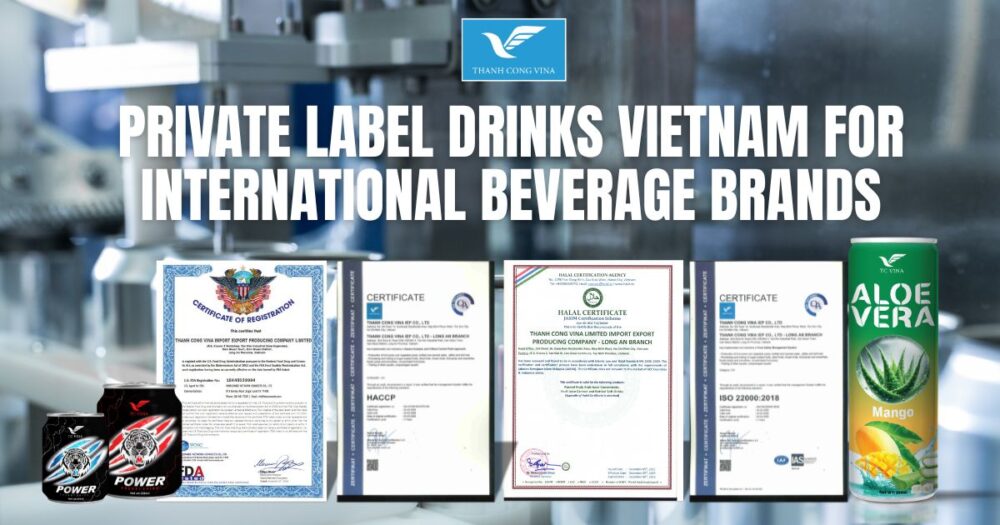
- Relevant food safety certifications and their validity
Buyers should verify that certifications apply to the actual manufacturing facility, product category, and activities involved in their project.
For international distribution, it is also important to confirm the food safety, labeling, ingredient, and registration requirements of the destination market. Requirements may differ between countries, so importers should obtain appropriate regulatory guidance before production begins.
A dependable Beverage supply company should be transparent about its quality management processes and provide the documentation needed for your business to conduct due diligence.
4. Choose Packaging That Fits Your Target Market
Packaging is more than a visual element. It affects product protection, transportation efficiency, storage, retail presentation, and consumer convenience.
When evaluating a Beverage supply company, ask which packaging formats are available and whether they are compatible with your product and distribution strategy.
Common options include:
- Aluminum cans
- PET plastic bottles
- Glass bottles
- Other suitable beverage packaging formats
Consider the intended serving size, packaging material, closure system, carton configuration, and requirements for transportation and storage.
For private-label beverages, discuss artwork preparation, label specifications, printing methods, and packaging approval procedures. Confirm which design files and technical details must be provided by your team.
If you plan to export, review the destination market’s labeling rules, including ingredient declarations, nutritional information, language requirements, and other applicable information.
A Beverage supply company that understands your packaging needs can help you coordinate product presentation with manufacturing and distribution requirements.
5. Compare Pricing, MOQ, and Total Project Costs
Compare Pricing, MOQ, and Total Project Costs
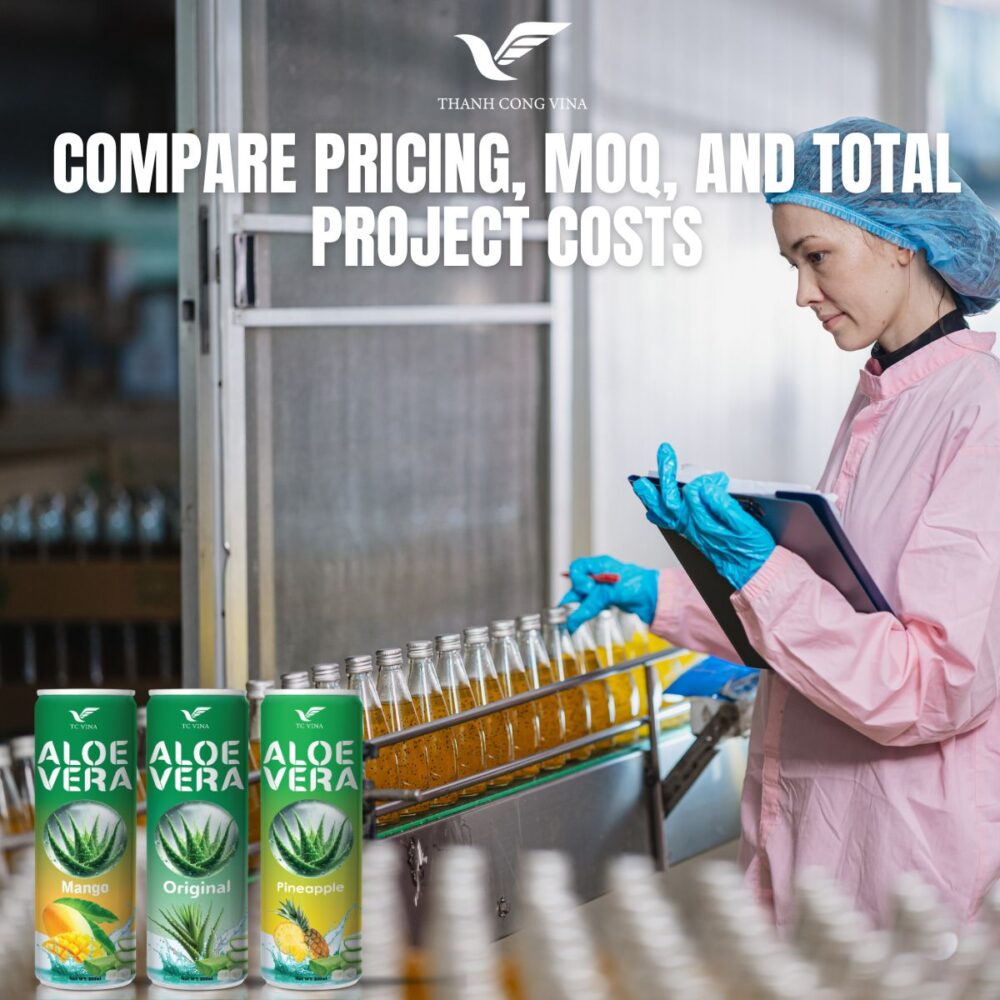
Price is an important purchasing factor, but choosing the lowest quotation does not necessarily deliver the best commercial result.
When comparing a Beverage supply company with other potential partners, request quotations based on the same product specifications, order quantities, packaging format, and delivery destination.
Your cost assessment should cover the following areas:
Minimum Order Quantity (MOQ)
Determine the minimum order required for each product, flavor, and packaging format. A manageable MOQ may help new brands test demand before committing to larger production volumes.
Unit Production Cost
Clarify the quoted price per unit, applicable volume tiers, quotation validity, and the items included in the price.
Product Development Costs
Ask whether sampling, formulation development, packaging design, molds, or other setup services involve additional charges.
Shipping and Import Expenses
Consider freight, insurance, customs duties, handling fees, and other destination-related costs where applicable.
Payment Terms
Confirm the deposit, remaining balance, payment schedule, accepted payment methods, and contractual conditions.
Comparing the total landed cost provides a more realistic picture of your investment than comparing unit prices alone.
Before selecting a Beverage supply company, ensure that all important commercial terms, exclusions, and assumptions are documented in writing.
6. Confirm Production Capacity and Delivery Timelines
Reliable production planning is essential for maintaining inventory, coordinating product launches, and meeting customer commitments.
Ask each Beverage supply company to explain its production workflow and estimated timeline. For customized products, the process may include:
- Initial project consultation and product brief
- Sample development and evaluation
- Formula and specification approval
- Packaging preparation and material procurement
- Production scheduling and manufacturing
- Quality inspection and product release
- Shipment preparation and dispatch
The actual timeline depends on product complexity, material availability, order quantity, packaging requirements, and approval procedures.
You should also ask how the supplier manages repeat orders, production forecasts, material shortages, and unexpected delays.
When reviewing manufacturing capacity, request information relevant to your specific project rather than relying solely on general capacity claims.
A suitable Beverage supply company should communicate realistic lead times, identify potential bottlenecks, and establish clear milestones before confirming an order.
7. Assess Export Experience and Business Communication
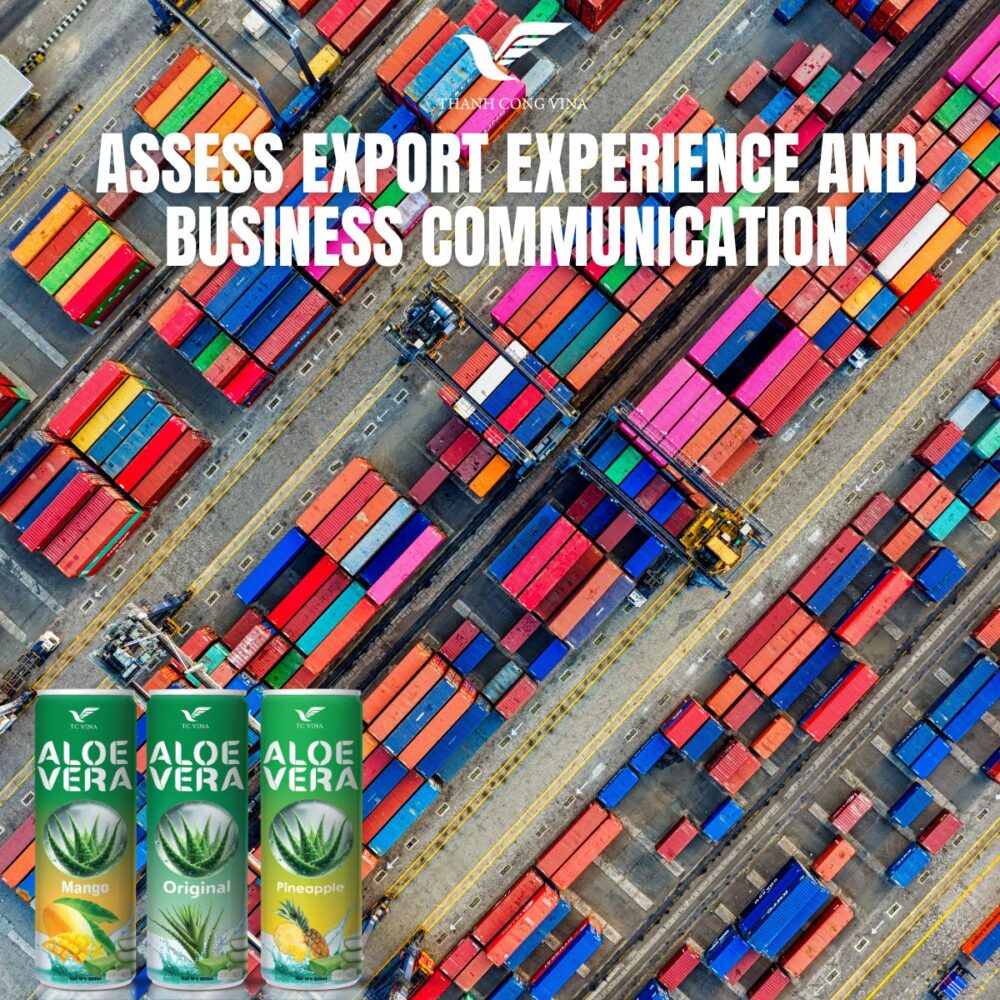
Assess Export Experience and Business Communication
For importers and international distributors, supplier selection involves more than manufacturing. Export coordination, documentation, and communication can also affect the efficiency of the entire supply chain.
When reviewing a Beverage supply company, consider whether it understands your destination market and has experience handling the product types and shipment arrangements relevant to your business.
Discuss the following questions:
- Which export markets has the supplier served?
- What product and shipment documents can it provide?
- Which party is responsible for export clearance and import procedures?
- How are shipping schedules and order updates communicated?
- Who will handle technical questions and production follow-ups?
- How are product complaints or delivery issues addressed?
Clarify responsibilities under the agreed shipping terms and confirm the documents required by your customs broker or importing authority.
Clear communication is equally important during product development and repeat purchasing. A supplier that provides timely updates and practical answers can make it easier to coordinate different business functions.
The right Beverage supply company should operate as a dependable business partner, helping you manage sourcing decisions with greater clarity and confidence.
8. Use a Practical Checklist Before Making Your Decision
Before finalizing your supplier shortlist, compare each candidate against consistent criteria.
| Evaluation Criteria | Questions to Ask |
|---|---|
| Product portfolio | Does the supplier offer the beverage categories and formats you need? |
| Customization | Can it support OEM, ODM, or private-label requirements? |
| Quality assurance | Are relevant specifications, test records, and certifications available? |
| Packaging | Are suitable materials, sizes, and customization options offered? |
| MOQ and pricing | Are the minimum quantities and total costs commercially viable? |
| Production | Can the supplier accommodate your forecast and required schedule? |
| Export support | Can it provide the documentation required for your shipment? |
| Communication | Are responsibilities, timelines, and commercial terms clearly explained? |
| Long-term cooperation | Can the supplier support repeat orders and future product expansion? |
Use the same criteria for every candidate to make comparisons more objective. You may also request samples, conduct facility assessments where appropriate, and review contractual terms before committing to a large order.
The best Beverage supply company is not necessarily the one offering the lowest price. It is the partner whose capabilities, quality standards, commercial terms, and service model align with your business requirements.
Why Work with Thành Công Vina?
Choosing a beverage sourcing partner is a strategic decision that can influence your brand’s development and long-term competitiveness.
Thành Công Vina Beverage aims to support business customers seeking suitable beverage sourcing and manufacturing solutions. For companies exploring a new product concept or expanding an existing portfolio, the first step is to define the target market, product specifications, packaging preferences, and expected order volume.
When evaluating potential cooperation with Thành Công Vina, discuss your specific requirements to determine the appropriate product options, production arrangements, quality documentation, and commercial terms for your project.
Our approach focuses on understanding business needs and establishing clear expectations from the initial inquiry through order coordination.
Whether you are a beverage brand owner, importer, distributor, or retail business, careful supplier evaluation can help reduce sourcing risks and create a stronger foundation for sustainable growth.
Frequently Asked Questions
What does a Beverage supply company do?
A Beverage supply company may distribute finished drinks, supply products in bulk, or provide manufacturing services. Depending on its capabilities, it may also offer product development, OEM/ODM production, private labeling, packaging coordination, and export support.
How do I choose a reliable beverage supplier?
Compare product suitability, quality management, documentation, packaging options, MOQ, total cost, production timelines, export capabilities, and communication. Request relevant evidence and confirm commercial terms before placing an order.
What is the difference between a beverage distributor and a manufacturer?
A distributor generally sources and resells finished products, while a manufacturer produces beverages. Some manufacturers also provide OEM/ODM services, enabling customers to develop customized products or sell beverages under their own brands.
What should I prepare before requesting a quotation?
Prepare your target market, beverage category, flavor preferences, packaging format, estimated order quantity, labeling requirements, and expected delivery destination. Providing clear specifications helps suppliers assess feasibility and prepare more relevant quotations.
Can a beverage supplier support private-label products?
Some suppliers offer private-label services, allowing businesses to sell products under their own brand names. Available customization, minimum order quantities, development costs, and packaging options vary by supplier and product.
Contact Thành Công Vina to Discuss Your Beverage Requirements
Looking for a Beverage supply company that fits your business objectives? Start by sharing your product concept, target market, packaging preferences, and estimated order volume.
Contact Thành Công Vina to discuss your requirements, clarify available options, and explore a suitable sourcing or manufacturing solution for your business.
Build your next beverage project on clear specifications, informed supplier selection, and a well-planned sourcing strategy.