
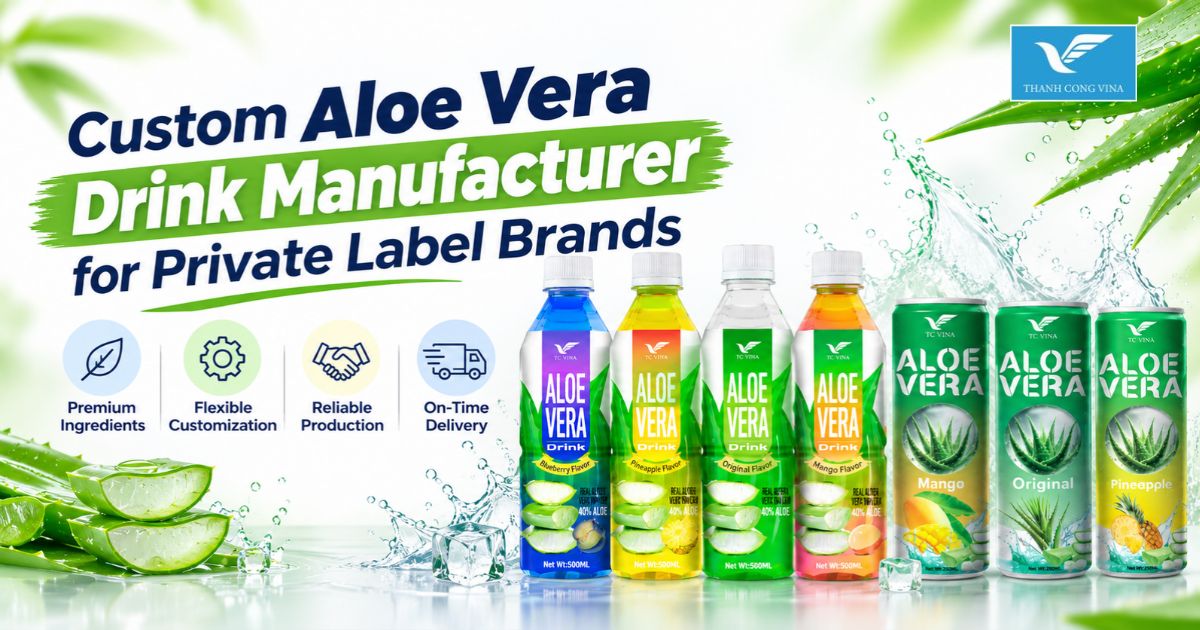
The global beverage market is becoming increasingly competitive as brands look for distinctive products that respond to changing consumer preferences. Aloe vera beverages have gained attention as an alternative to conventional fruit drinks, offering a recognizable ingredient, refreshing taste, and opportunities for product differentiation. For businesses planning to enter this category, working with a reliable Aloe Vera Drink Manufacturer is an important step toward developing products that match their brand identity and target market requirements.
Private label development involves more than placing a company logo on an existing beverage. Brands must consider flavor profiles, aloe vera content, ingredient combinations, packaging design, product positioning, and regulatory requirements. Each decision influences how the finished beverage is presented and received by consumers.
A professional manufacturing partnership can help coordinate these requirements from initial concept discussions to commercial production. By defining product specifications and brand objectives early, businesses can build a more consistent product strategy and prepare for long-term market development. Thanh Cong Vina supports beverage manufacturing and export cooperation, with project discussions based on individual product and commercial requirements.
1. Why Choose an Aloe Vera Drink Manufacturer for Private Label Development?
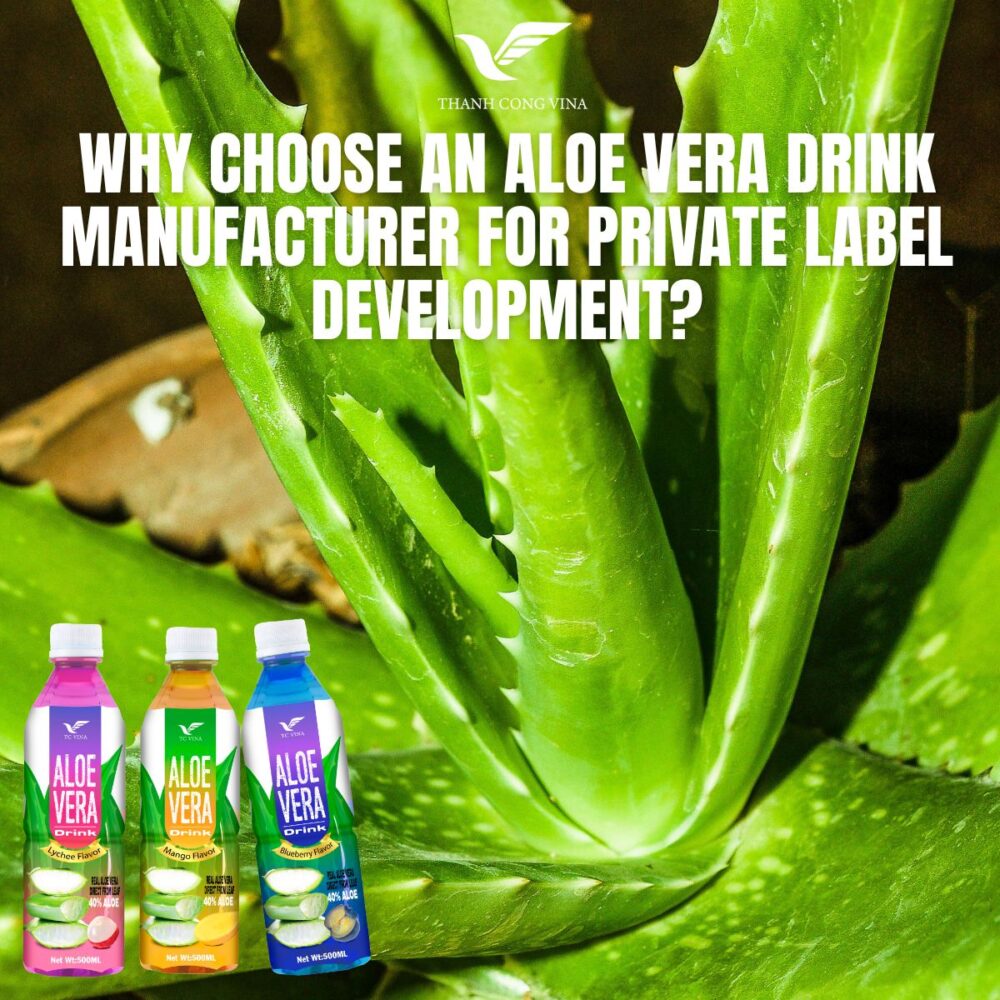
Why Choose an Aloe Vera Drink Manufacturer for Private Label Development?
Private label brands need products that are commercially relevant, technically suitable, and consistent with their market positioning. Selecting an experienced manufacturing partner can help businesses organize product development, coordinate packaging decisions, and establish clear production expectations.
Create a Distinctive Product Identity
Aloe vera drinks offer opportunities to develop a beverage range with different flavor directions and consumer positioning. Rather than competing only through price, private label brands can build differentiation through flavor combinations, product appearance, packaging, and a clear brand concept.
For example, a brand may position its aloe vera beverage as a refreshing everyday drink, a tropical fruit-inspired product, or part of a broader range of fruit-based beverages. Potential flavor directions may include mango, lychee, blueberry, peach, or original aloe vera, depending on formulation feasibility and the manufacturer’s available capabilities.
A distinctive product identity should be established before finalizing the formulation. This allows the brand owner and manufacturer to evaluate whether the proposed taste, color, ingredient profile, and packaging support the intended market positioning.
Develop Products Around Target Consumer Preferences
Consumer preferences can vary considerably between countries and sales channels. Some markets may favor sweeter beverages, while others may prefer lighter flavor profiles or combinations featuring recognizable fruit ingredients.
Private label businesses should therefore define their target consumers before requesting product samples. Relevant considerations include preferred sweetness, acidity, aroma, beverage texture, serving occasion, and expected retail price.
A clear target profile helps the manufacturing team understand the product concept and assess suitable formulation directions. It also creates a more objective basis for sample evaluation and reduces the likelihood of repeated revisions caused by unclear expectations.
Build a Scalable Beverage Portfolio
A private label brand may begin with one aloe vera drink before expanding into several flavors or related beverage categories. A structured product strategy makes it easier to identify opportunities for future development without losing consistency in brand positioning.
For example, businesses may consider launching an original flavor alongside two fruit-based variations. Once the initial range has been evaluated commercially, additional flavors or package formats can be explored according to sales performance and market feedback.
The ability to plan a product portfolio in stages can help brands manage development costs, inventory commitments, and promotional activities more effectively.
2. Custom Product Development with an Aloe Vera Drink Manufacturer
Custom manufacturing begins with translating a commercial idea into a product specification. The brand owner provides the intended market positioning and product expectations, while the manufacturer evaluates formulation possibilities and technical requirements.
Defining Aloe Vera Content and Ingredient Composition
The ingredient composition is one of the most important aspects of aloe vera beverage development. Depending on the product concept, formulations may include aloe vera components, fruit juice or fruit ingredients, water, sweeteners, acidity regulators, and other permitted ingredients.
Buyers should clarify the expected aloe vera content and the form in which it will be incorporated into the beverage. These details can influence the product’s texture, appearance, taste, and processing requirements.
Ingredient declarations should accurately reflect the final formulation. Brands should avoid making assumptions about ingredient percentages or product descriptions before receiving confirmation from the manufacturer and reviewing the applicable labeling regulations.
A detailed product brief can include:
- Target aloe vera content or ingredient specification.
- Preferred fruit ingredients and flavor combinations.
- Sweetness and acidity expectations.
- Desired color, aroma, and texture.
- Ingredient restrictions or market-specific requirements.
- Intended retail price and product positioning.
This information gives the development team a clearer starting point and supports more productive technical discussions.
Balancing Flavor, Texture, and Sensory Experience
A successful aloe vera beverage needs a balanced sensory profile. The taste should match the brand’s concept, while the texture and overall drinking experience should remain suitable for the intended consumer group.
Aloe vera ingredients can influence the mouthfeel and visual characteristics of a beverage. Fruit ingredients may contribute sweetness, acidity, aroma, and color. The formulation process therefore requires consideration of how individual components interact rather than evaluating each ingredient separately.
Sample development provides an opportunity to assess these characteristics. Buyers can review samples based on agreed criteria, including flavor intensity, sweetness, aftertaste, appearance, and texture.
Feedback should be specific and documented. Instead of simply describing a sample as too sweet or too light, buyers can explain the desired direction and compare it with the approved reference sample. This makes formulation adjustments easier to communicate.
Sample Approval and Specification Management
Sample approval is a critical milestone before commercial production. It establishes the reference product against which subsequent manufacturing discussions can be evaluated.
The approved sample should be accompanied by relevant product specifications, including formulation information where appropriate, sensory requirements, packaging details, and other agreed parameters. Both parties should understand how changes will be reviewed and approved.
If an ingredient or packaging component becomes unavailable, the manufacturer should communicate the proposed alternative before implementation. Any replacement should be evaluated for its potential impact on product quality, labeling, regulatory compliance, and consumer expectations.
Documented approval procedures help private label brands maintain control over their products as order quantities and distribution activities grow.
3. Private Label Branding and Packaging Strategies for Aloe Vera Beverages
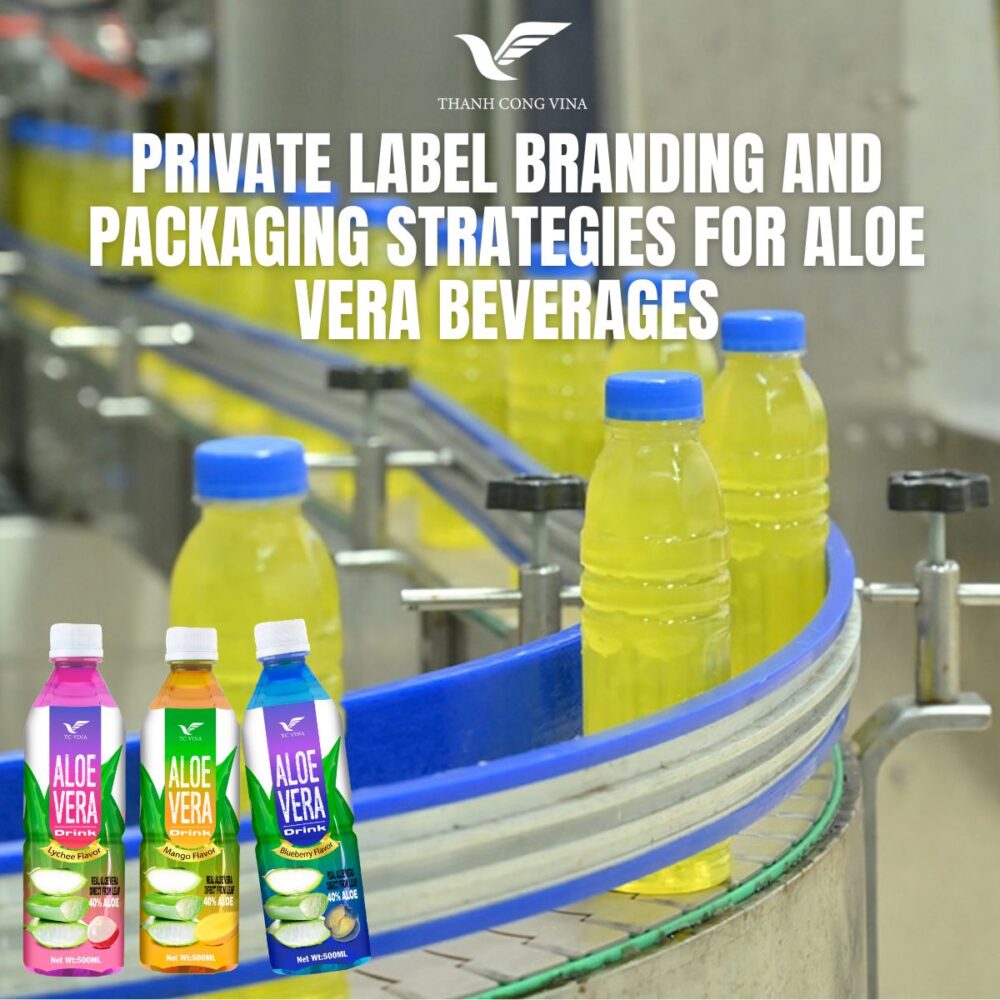
Private Label Branding and Packaging Strategies for Aloe Vera Beverages
Packaging is an important part of private label product development because it connects product functionality with brand recognition. A well-planned package should support the beverage’s technical requirements while communicating the intended positioning to consumers.
Choosing Suitable Packaging Formats
The appropriate packaging format depends on the formulation, processing method, target market, distribution conditions, and available manufacturing capabilities.
Common beverage packaging formats may include:
- PET bottles: A practical option for many everyday ready-to-drink beverages, subject to product and processing compatibility.
- Aluminum cans: Suitable for certain beverage concepts and retail environments where compact packaging is preferred.
- Glass bottles: An option for brands seeking a particular presentation or serving experience.
The actual availability of each format should be confirmed with the selected manufacturer. Buyers should also review available filling volumes, closure types, carton configurations, and minimum order quantities.
Packaging decisions should be made early enough to account for material procurement, printing, artwork approval, and production scheduling. Customized packaging components may require additional preparation time.
Designing Labels That Reflect Brand Positioning
A private label beverage needs a clear and recognizable visual identity. Label design should communicate the product category, flavor, brand personality, and relevant product information without making unsupported claims.
For aloe vera beverages, visual elements may include ingredient illustrations, fruit imagery, color systems, and typography that reflect the intended market segment. A premium product may use a more restrained design, while an everyday refreshment range may prioritize clear flavor identification and strong shelf visibility.
However, visual appeal must be balanced with regulatory requirements. Depending on the destination market, labels may need to include product names, ingredient lists, allergen information where applicable, net quantity, nutrition information, storage instructions, date marking, country of origin, and importer details.
Brand owners should have their label artwork reviewed before printing. This helps reduce the risk of costly revisions after packaging materials have been produced.
Aligning Packaging with Distribution Channels
Different sales channels have different packaging priorities. Supermarkets may prioritize shelf presentation and efficient case handling, while convenience stores may favor practical single-serving formats.
Foodservice distributors may require packaging configurations that suit their storage and handling processes. E-commerce businesses may need to consider shipping protection and the risk of damage during individual parcel delivery.
Private label brands should therefore evaluate packaging based on the complete distribution journey, not only its appearance on a retail shelf. The manufacturer and buyer can discuss available options according to product specifications, order size, and market requirements.
4. Quality Management and Regulatory Considerations for Private Label Brands
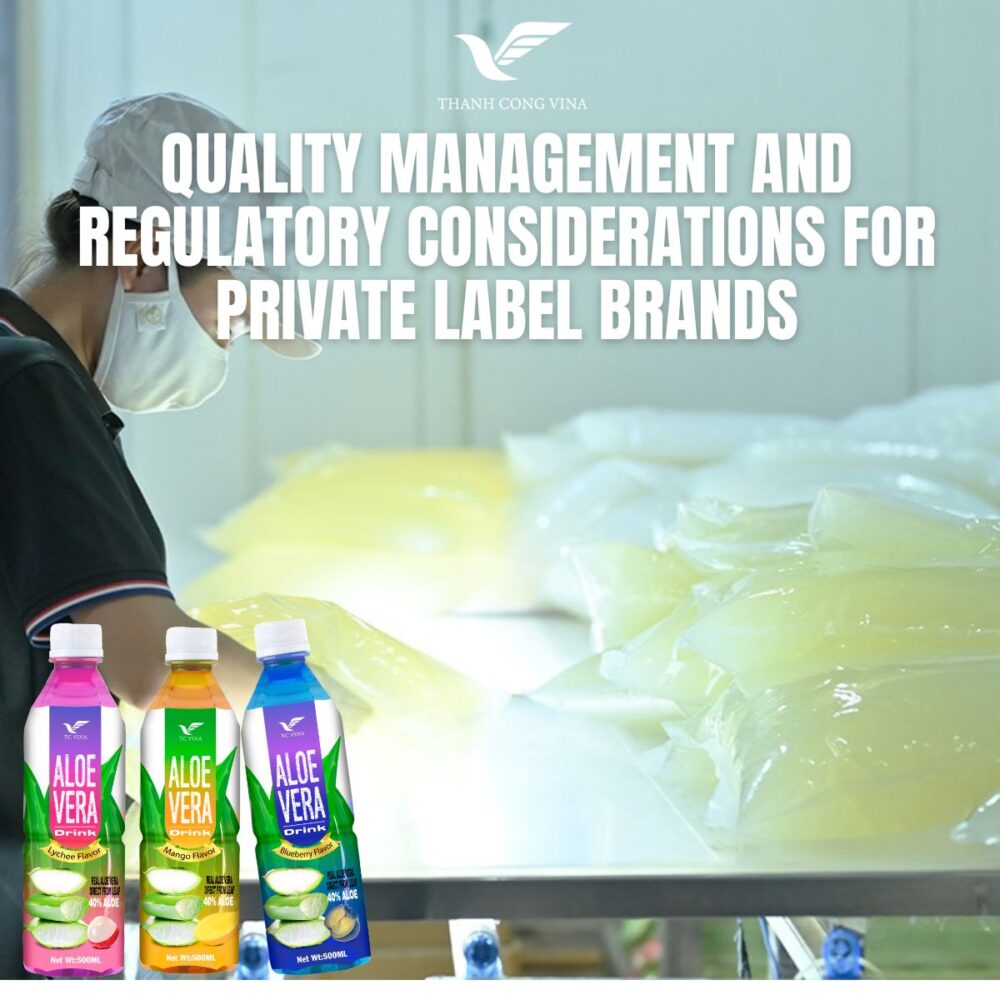
Quality Management and Regulatory Considerations for Private Label Brands
Quality management is central to the relationship between a brand owner and an Aloe Vera Drink Manufacturer. The finished beverage must meet agreed product specifications and applicable food safety requirements in the intended market.
Establishing Quality Standards Before Production
Before placing a commercial order, buyers should identify the quality parameters that matter most to their product. These may include ingredient composition, sensory characteristics, physicochemical properties, net content, packaging integrity, and labeling accuracy.
The manufacturer and buyer should agree on the applicable specifications and determine how conformity will be evaluated. Where testing is required, the parties should clarify the parameters, testing methods, frequency, and responsible organization.
A documented quality framework creates a shared reference for evaluating production results. It also helps reduce uncertainty when a brand moves from initial samples to repeat orders.
Food Safety and Certification Verification
Private label buyers should assess the manufacturer’s food safety management arrangements and request relevant supporting documentation. Depending on the project, this may include information about quality procedures, product testing, ingredient controls, traceability, and applicable certifications.
Certifications should be checked carefully. Buyers should verify the issuing organization, covered facility, certification scope, and validity period. A certificate held by one facility or covering one activity should not automatically be assumed to apply to every product or manufacturing location.
Importers must also identify the regulations applicable to their destination market. Requirements may differ depending on the product category, ingredients, labeling claims, and import procedures.
Early regulatory review can help prevent avoidable changes to the formulation, label, or packaging after the project has advanced.
Shelf-Life Evaluation and Storage Conditions
Shelf life is an important commercial consideration for beverages distributed across international markets. It affects inventory planning, shipping schedules, warehousing, and the time available for retail sales.
The appropriate shelf life should be supported by relevant technical evaluation based on the formulation, processing method, packaging system, and intended storage conditions. Buyers should request available supporting information and confirm the recommended storage instructions.
Importers should also consider the time required for transportation, customs clearance, distribution, and retail inventory turnover. A product may meet its initial specification but still create commercial challenges if the supply chain is not planned around its storage requirements.
5. Production Planning, MOQ, and Cost Considerations
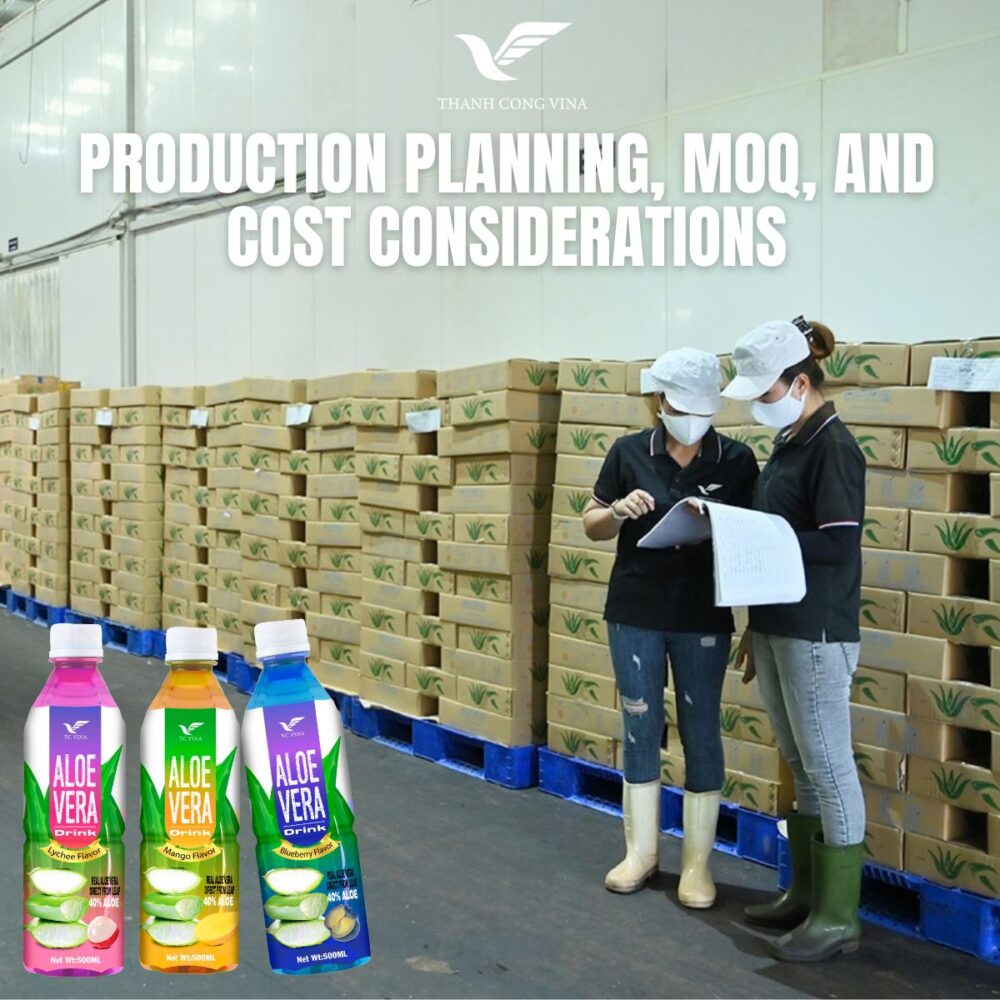
Production Planning, MOQ, and Cost Considerations
Custom beverage manufacturing involves commercial decisions that influence both project feasibility and long-term profitability. Private label brands should evaluate the relationship between order quantity, product complexity, packaging choices, and total sourcing costs.
Understanding Minimum Order Quantities
Minimum order quantities can vary according to product formulation, packaging materials, production arrangements, and the manufacturer’s operating requirements. Customized labels, printed cans, or special packaging components may involve separate minimum purchasing conditions.
Buyers entering the aloe vera beverage category should request a clear explanation of the applicable MOQ. It is useful to distinguish the minimum quantity for production from the minimum quantity for packaging procurement, as these may not always be identical.
Starting with a manageable order can help a brand evaluate consumer response before committing to a larger inventory position. However, the final order quantity should also be assessed against unit cost, storage capacity, and expected sales volume.
Evaluating the Total Project Cost
The quoted product price is only one component of the overall project budget. A private label beverage project may involve formulation development, sampling, ingredients, processing, packaging, printing, testing, documentation, freight, insurance where applicable, and import-related expenses.
Buyers should request quotations with clear assumptions about product specifications, order volume, packaging configuration, included services, and delivery terms.
Comparing suppliers on an equivalent basis makes commercial evaluation more meaningful. A lower unit price may not represent better value if it excludes important services or requires additional expenses elsewhere in the supply chain.
Planning for Repeat Orders and Future Expansion
A private label launch should be considered the beginning of a product development process rather than a one-time transaction. After launch, brands can review customer feedback, sales performance, flavor preferences, and distribution requirements to identify potential improvements.
Repeat-order planning should take into account ingredient availability, packaging procurement, production lead times, and inventory forecasts. Sharing demand projections with the manufacturer can support more effective planning, although forecasts should be clearly distinguished from confirmed purchase orders.
As the brand grows, additional flavors, package sizes, or related beverage categories may become commercially attractive. These opportunities should be evaluated against market demand and technical feasibility before new products are introduced.
6. How to Build a Successful Partnership with a Custom Aloe Vera Beverage Manufacturer
A successful private label project depends on cooperation between the brand owner and the manufacturing partner. Both parties need a clear understanding of the product concept, technical requirements, responsibilities, and commercial expectations.
Prepare a Detailed Product Brief
A well-prepared brief helps the manufacturer evaluate a project more efficiently. It should describe the intended consumer group, target market, preferred flavor, product positioning, packaging expectations, estimated order quantity, and any relevant regulatory requirements.
Buyers should also provide reference products or sensory descriptions when available. These references help communicate expectations more precisely than broad terms such as refreshing, natural, or premium.
The brief does not need to contain every technical detail at the beginning. However, it should provide enough information for an initial feasibility discussion and quotation assessment.
Evaluate Communication and Project Management
Product development often involves several rounds of discussion and approval. Buyers should evaluate whether a potential supplier responds clearly to questions, provides realistic timelines, and explains technical limitations.
A structured communication process can include agreed milestones for sample development, specification review, packaging artwork, purchase order confirmation, production, and shipment preparation.
Both parties should maintain records of approved samples, artwork versions, commercial terms, and changes to product requirements. This approach supports continuity when a project moves from development into repeat production.
Select a Partner with a Long-Term Perspective
A suitable manufacturer should be evaluated not only on the ability to fulfill an initial order but also on the potential to support the brand’s future requirements. This includes transparent communication, consistent documentation, realistic production planning, and a willingness to discuss product improvements.
Thanh Cong Vina works with business customers exploring beverage manufacturing and export opportunities. By sharing product concepts, target markets, preferred packaging, and estimated order quantities, potential partners can begin a practical discussion about project requirements and suitability.
Conclusion: Custom Aloe Vera Beverage Solutions for Private Label Growth
Developing a successful private label beverage requires a clear product concept, careful formulation, suitable packaging, quality management, and realistic production planning. Choosing the right Aloe Vera Drink Manufacturer helps brand owners coordinate these elements and create products that align with their target consumers and commercial objectives.
From ingredient composition and flavor development to label approval and export preparation, every stage should be supported by documented specifications and effective communication. Businesses should also evaluate minimum order quantities, total project costs, regulatory requirements, and future supply needs before confirming a manufacturing partnership.
Thanh Cong Vina welcomes opportunities to discuss beverage manufacturing and export projects with importers, distributors, retailers, and private label brands. With clearly defined requirements and a structured development process, Thanh Cong Vina aims to support business customers in exploring suitable aloe vera beverage solutions and building sustainable product portfolios for their target markets.