
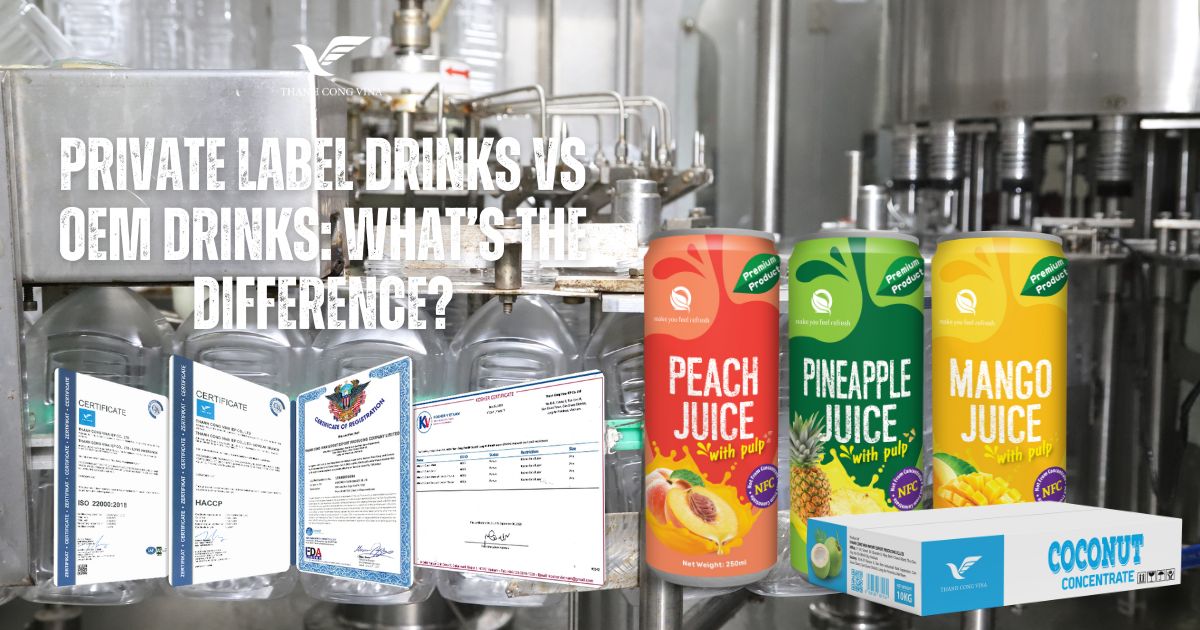
In the rapidly evolving beverage industry, brands are constantly searching for ways to scale fast while minimizing production risks and upfront investment. Two of the most popular business models supporting this growth are Private Label drinks and OEM Drink manufacturing. Although these terms are often used interchangeably, they represent two very different approaches that can significantly impact product quality, customization options, brand identity, and long-term profitability.
Understanding these differences is essential for beverage startups, retailers, distributors, and D2C brands who aim to launch competitive products without operating their own factories.
This article provides a deep and structured comparison between Private Label Drinks vs OEM Drinks, explaining how each model works, what benefits they offer, and how companies can choose the best solution based on their budget, goals, and market strategy. With insights from industry standards and real manufacturing practices, this comprehensive guide will help beverage brands make smarter and more profitable decisions.
1. What Are Private Label Drinks? (Definition, Model, and Use Cases)

What Are Private Label Drinks?
Private label drinks are pre-developed beverage products manufactured by a producer but sold under another company’s brand name. Retailers, distributors, and startups commonly use this model because it eliminates the need for product formulation or R&D. Instead, the manufacturer provides ready-made recipes—such as aloe vera drinks, juices, sparkling drinks, coffees, teas, or energy drinks—that can be packaged with the buyer’s logo and branding.
Private label beverages are especially popular among businesses seeking rapid market entry without investing heavily in research, regulatory approvals, or long production cycles. Since the recipes and ingredients are standardized, the manufacturer can guarantee consistency across batches, making quality control more manageable and cost efficient. Retail chains around the world use this model to offer affordable alternatives to major branded beverages while maintaining healthy profit margins.
Private label also supports smaller distributors who want to test market demand before committing to more complex manufacturing arrangements. This approach significantly reduces risk for new entrants.
Key Characteristics of Private Label Drinks
Private label drinks are defined by a few clear characteristics:
-
Pre-formulated beverages where recipes cannot be changed.
-
Lower minimum order quantities (MOQs) compared to OEM Drink production.
-
Faster turnaround time, ideal for quick product launches.
-
More affordable costs since R&D is already completed by the manufacturer.
-
Limited customization, usually restricted to packaging, labeling, and branding.
This model is optimal for businesses that prioritize speed, simplicity, and budget-friendly solutions rather than full product uniqueness.
2. What Are OEM Drinks? (Customization, R&D, and Full Manufacturing Control)

What Are OEM Drinks?
OEM Drink manufacturing (Original Equipment Manufacturer) is a more advanced and customizable model in which a manufacturer develops beverage products based on the customer’s specifications. Unlike private label drinks, OEM solutions allow brands to create unique recipes, choose functional ingredients, determine sweetness levels, customize flavor intensity, and even build entirely new beverage categories.
This model is ideal for companies that want differentiation in a crowded market or require strict nutritional profiles. OEM Drink production includes full R&D services, stability testing, shelf-life studies, ingredient sourcing, and compliance documentation. Although the process requires more time and investment, the end result is a highly distinctive beverage that strengthens brand identity and supports long-term growth.
OEM is often used by established brands, international distributors, and health-focused companies looking to provide specialized beverages such as keto drinks, vitamin waters, collagen drinks, energy drinks, herbal tonics, or premium aloe vera drinks.
Key Characteristics of OEM Drink Manufacturing
-
Full recipe customization from flavor to nutritional content.
-
Higher MOQs due to batch-size requirements.
-
Longer development timeline, including formulation and testing phases.
-
Greater uniqueness, enabling brands to stand out.
-
Higher production cost, but better long-term differentiation.
OEM Drink manufacturing provides unmatched flexibility, making it the preferred option for premium brands.
3. Comparing Private Label Drinks vs OEM Drinks: Key Differences
While both models support beverage production, they operate under fundamentally different manufacturing philosophies. Private label beverages emphasize speed and affordability, whereas OEM Drinks focus on customization and product uniqueness.
The primary differences include cost, customization, timeline, MOQs, flavor development, branding opportunities, and target market segments. Understanding these distinctions helps businesses choose the right model depending on their goals.
For example, retailers who simply want more SKUs with minimal investment prefer private label. Meanwhile, startups focused on clean-label drinks, functional beverages, or premium formulations usually require OEM Drink production to build a competitive identity.
Below is an in-depth comparison of major factors:
Comparison Breakdown
| Factor | Private Label | OEM Drinks |
|---|---|---|
| Recipe Customization | None | Full customization |
| Product Uniqueness | Low | Very High |
| Development Time | Very fast | Moderate to long |
| MOQ Requirements | Low | Higher |
| Cost | More affordable | Higher initial investment |
| Brand Differentiation | Limited | Strong |
| Ideal For | Retail chains, distributors | Health brands, premium brands |
4. Advantages of Private Label Drinks (Why Brands Choose It)
Advantages of Private Label Drinks
Private label beverages offer a collection of advantages, especially for businesses that want to enter the market quickly or operate with limited resources. The biggest benefit is speed: brands can launch a new product line within weeks instead of months thanks to pre-developed formulas.
The low MOQs also make private label suitable for smaller companies who want to test the market or build trust with retailers. Production becomes predictable and consistent, reducing financial risk and preventing inventory waste.
Private label drinks also offer strong profit margins because manufacturers control ingredient costs at scale, while brands benefit from competitive wholesale pricing.
Retailers often add private label drinks to complement their existing product offerings, ensuring better category control in supermarkets or convenience stores.
When Private Label Is the Best Choice
-
Launching a beverage quickly with minimal investment.
-
Expanding product categories (juices, teas, coffees, aloe drinks, etc.).
-
Building a house brand for retail chains.
-
Offering budget-friendly alternatives to big brands.
-
Testing markets before committing to OEM Drink production.
Private label drinks offer reliability, affordability, and excellent speed-to-market.
5. Advantages of OEM Drinks (Why Brands Invest in Custom Formulation)
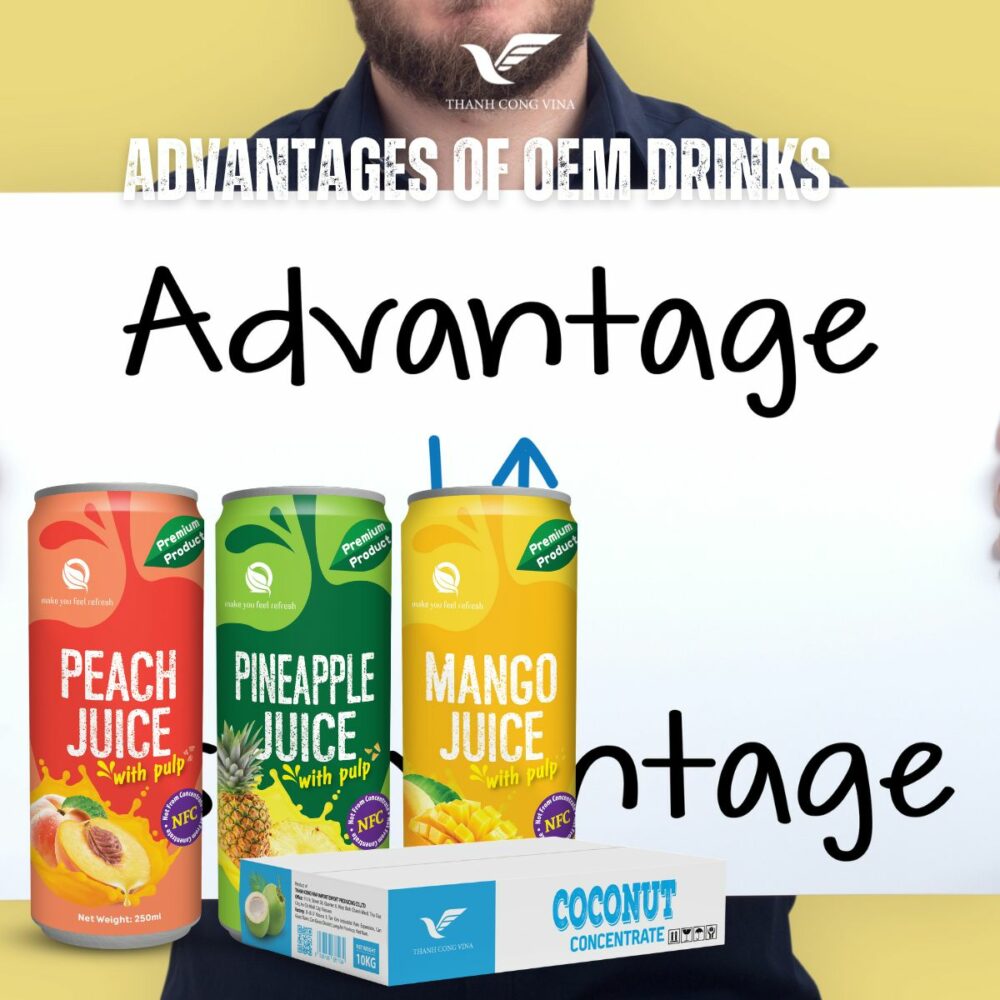
Advantages of OEM Drinks
OEM Drink manufacturing provides unparalleled customization capabilities. Brands can develop tailored beverages that align with specific consumer trends: low-sugar drinks, vitamin-enhanced beverages, collagen-infused waters, superfruit blends, or herbal tonics with functional benefits.
OEM Drinks also give businesses full decision-making power over packaging, flavors, ingredients, viscosity, sweetness levels, and even pH balance. This level of control enhances brand authenticity and supports premium positioning.
For long-term brand building, OEM Drink solutions are far superior because customers associate the beverage’s unique taste and quality with the brand—not the manufacturer. This builds loyalty, boosts repeat purchases, and supports international expansion.
When OEM Is the Better Option
-
Creating premium or functional beverages.
-
Entering competitive international markets.
-
Building a strong brand identity.
-
Developing healthier, cleaner-label, or natural ingredient products.
-
Requiring specialized formulas like sports drinks or botanical extracts.
OEM Drink production is ideal for serious brands focused on long-term differentiation.
6. Choosing Between Private Label and OEM Drinks: Which Is Better for Your Brand?
The right choice depends on your business goals, budget, and timeline. Private label beverages are perfect for businesses that need speed and simplicity. Meanwhile, OEM Drinks are best for brands seeking uniqueness and premium positioning.
Companies often start with private label to test markets, then move to OEM once they understand customer preferences. This hybrid strategy reduces risk and increases long-term stability.
Understanding your target audience is crucial. If your customers value affordability and accessibility, private label works well. But if your audience demands functional benefits, specific nutritional profiles, or innovative flavors, OEM Drink manufacturing offers the necessary flexibility.
Key Questions to Help You Decide
-
Do you need a unique recipe?
-
What is your available budget?
-
How fast do you need to launch?
-
What are your long-term branding goals?
-
Are you targeting premium or budget-conscious consumers?
Answering these questions will help you determine whether private label or OEM Drink manufacturing is the right path.
Conclusion
Both private label drinks and OEM Drinks manufacturing offer significant advantages depending on your brand’s strategy, budget, and growth goals. Private label beverages deliver speed and cost efficiency, making them ideal for businesses entering the market quickly or expanding product categories with low risk. In contrast, OEM Drink production empowers brands to build unique, functional, and premium beverages that stand out in competitive markets.
Whether you prefer fast launches or deeply customized formulations, working with an experienced beverage manufacturer is essential. Thanh Cong Vina IEP CO., LTD offers both private label and OEM Drink solutions, supported by advanced production technology, strict quality control, and global export standards. Companies seeking long-term brand success can rely on TCVina as a trusted partner to develop innovative beverage products tailored to international market demands.