
In the global beverage and food manufacturing industry, controlling ingredient costs is essential for maintaining healthy profit margins and long-term competitiveness. Among the many ingredients used in juices, smoothies, dairy products, desserts, and functional beverages, fruit juice concentrate remains one of the most efficient and versatile options. As international buyers seek sourcing destinations that offer both quality and affordability, Juice Concentrate Vietnam has become an increasingly attractive choice.
Vietnam combines abundant tropical fruit resources, cost-effective manufacturing, and a rapidly developing export infrastructure. This unique combination allows suppliers to offer premium juice concentrate products at highly competitive prices compared with many other global markets. For importers, distributors, beverage brands, and OEM manufacturers, sourcing from Vietnam can reduce total production costs while ensuring consistent quality and supply reliability.
This article explores the key cost advantages of buying Juice Concentrate Vietnam, examining how the country’s agricultural strengths, labor efficiency, logistics capabilities, and scalable manufacturing ecosystem create substantial economic benefits for international buyers.
1. Vietnam’s Agricultural Abundance Reduces Raw Material Costs
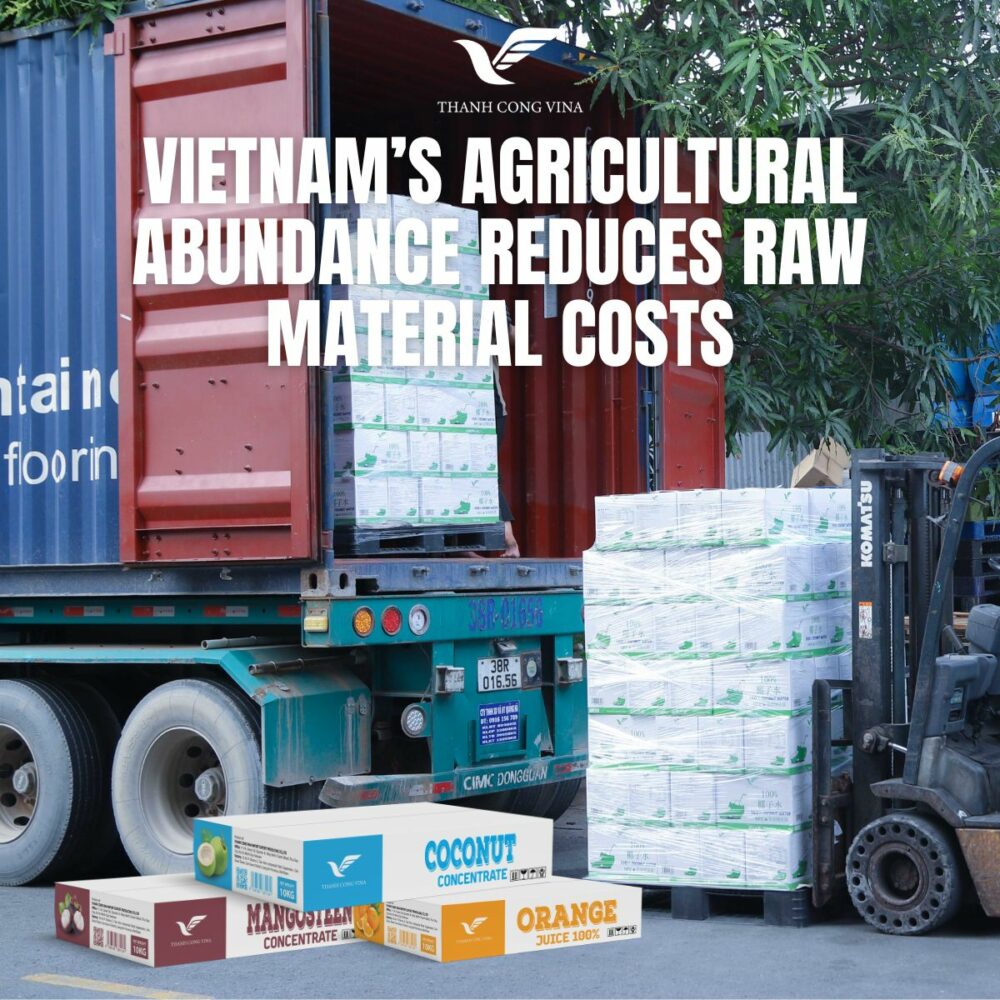
Vietnam’s Agricultural Abundance Reduces Raw Material Costs
One of the most significant reasons Vietnam can offer competitive pricing is its strong agricultural foundation. The country’s natural conditions support large-scale fruit cultivation, which lowers the cost of sourcing raw materials for concentrate production.
Year-Round Tropical Fruit Harvests
Vietnam’s tropical climate enables continuous production of fruits such as mango, pineapple, passion fruit, guava, orange, coconut, and dragon fruit. Multiple harvest cycles across different regions ensure a stable supply of fresh fruit throughout the year.
This consistent availability reduces seasonal shortages and helps manufacturers maintain predictable production costs. When raw materials are abundant, price fluctuations are less severe, allowing suppliers to offer more stable quotations to buyers.
Reduced Transportation from Farm to Factory
Many processing plants are located close to agricultural zones, minimizing transportation expenses and reducing fruit handling time. This proximity helps preserve product quality while lowering operational costs associated with logistics and storage.
Shorter distances also decrease post-harvest losses, improving raw material utilization and production efficiency.
Economies of Agricultural Scale
Vietnam’s extensive fruit-growing regions support high-volume harvesting, enabling manufacturers to secure raw materials in large quantities. This scale lowers procurement costs and contributes directly to the competitive pricing of Juice Concentrate Vietnam.
2. Juice Concentrate Vietnam and Competitive Manufacturing Economics
Beyond agricultural advantages, Vietnam offers an efficient manufacturing environment that significantly reduces production expenses.
Juice Concentrate Vietnam as a Cost-Efficient Production Solution
Vietnam’s industrial sector benefits from affordable labor, improving automation, and efficient energy utilization. These factors allow manufacturers to process fruit into concentrate at lower costs than many competing markets.
For global buyers, this translates into a stronger cost-to-quality ratio and greater flexibility in product pricing.
Affordable Skilled Labor
Vietnam has a large and increasingly experienced workforce in food processing and export manufacturing. Labor costs remain competitive compared with many developed countries and some regional alternatives, while technical capabilities continue to improve.
This combination allows manufacturers to maintain operational efficiency without compromising quality standards.
Modern Processing and Higher Yield Efficiency
Advanced technologies such as evaporation, pasteurization, and aseptic filling help maximize extraction yields and reduce waste. Improved productivity lowers the cost per unit and strengthens manufacturers’ ability to offer attractive pricing.
Lower Overhead and Operating Expenses
Land, utilities, and general operating costs in Vietnam remain competitive, contributing to lower manufacturing overhead. These structural advantages help keep product costs manageable even as production volumes increase.
3. Lower Shipping and Storage Costs with Concentrated Products
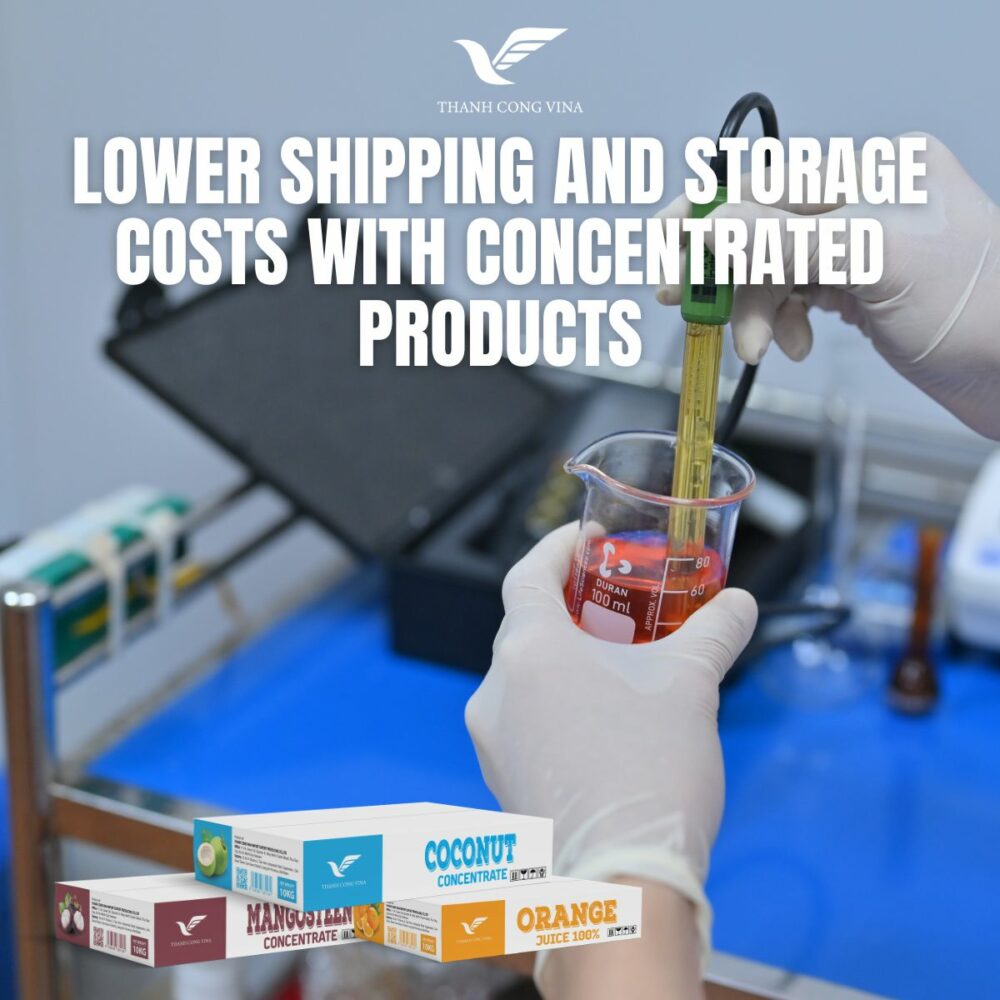
Lower Shipping and Storage Costs with Concentrated Products
The economic advantages of juice concentrate are amplified when combined with Vietnam’s export capabilities.
Reduced Weight and Volume
Juice concentrate contains significantly less water than ready-to-drink juice, which reduces shipping weight and container space requirements. Buyers can import larger quantities more efficiently, lowering transportation costs per unit of finished beverage.
This format also improves warehouse utilization and inventory management.
Extended Shelf Life and Lower Waste
Concentrated products have longer shelf lives when properly processed and packaged. This reduces spoilage risk and allows buyers to purchase in larger quantities without sacrificing product stability.
Longer shelf life improves planning flexibility and lowers the financial impact of expired inventory.
Efficient Packaging Formats
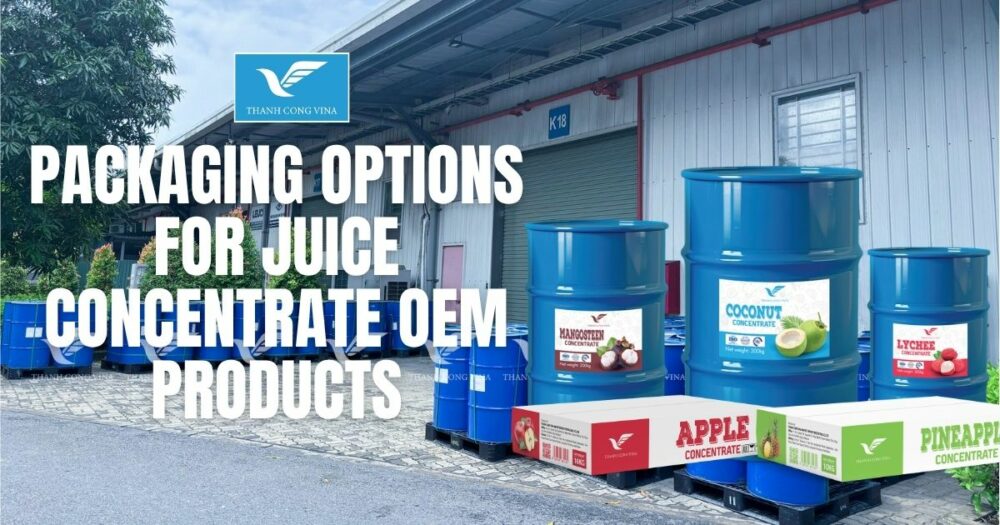
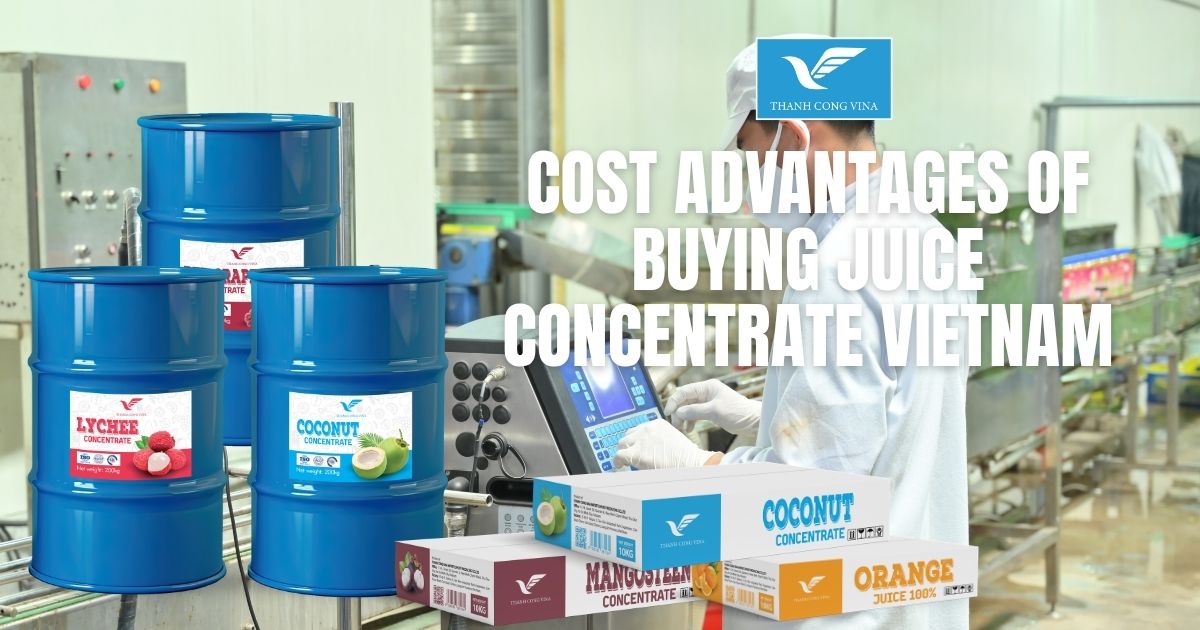
Vietnamese suppliers commonly use aseptic bags, drums, and bulk packaging designed for international transportation. These formats protect product quality while optimizing handling and storage costs.
4. Trade Agreements and Export Incentives Supporting Competitive Pricing
Vietnam’s integration into global trade networks creates additional cost benefits for importers.
Access to Preferential Tariffs
Vietnam participates in numerous free trade agreements that can reduce import duties in key markets. Lower tariffs directly improve landed costs and enhance product competitiveness.
For importers, these savings can have a substantial impact on overall profitability.
Streamlined Export Procedures
Experienced exporters in Vietnam are familiar with international documentation and customs requirements. Efficient administrative processes reduce delays, demurrage costs, and unexpected expenses associated with cross-border trade.
Government Support for Export-Oriented Industries
Vietnam continues to encourage investment in value-added food processing and export sectors. This supportive environment strengthens manufacturing capacity and contributes to long-term price competitiveness.
5. Economies of Scale and Flexible Production Capacity
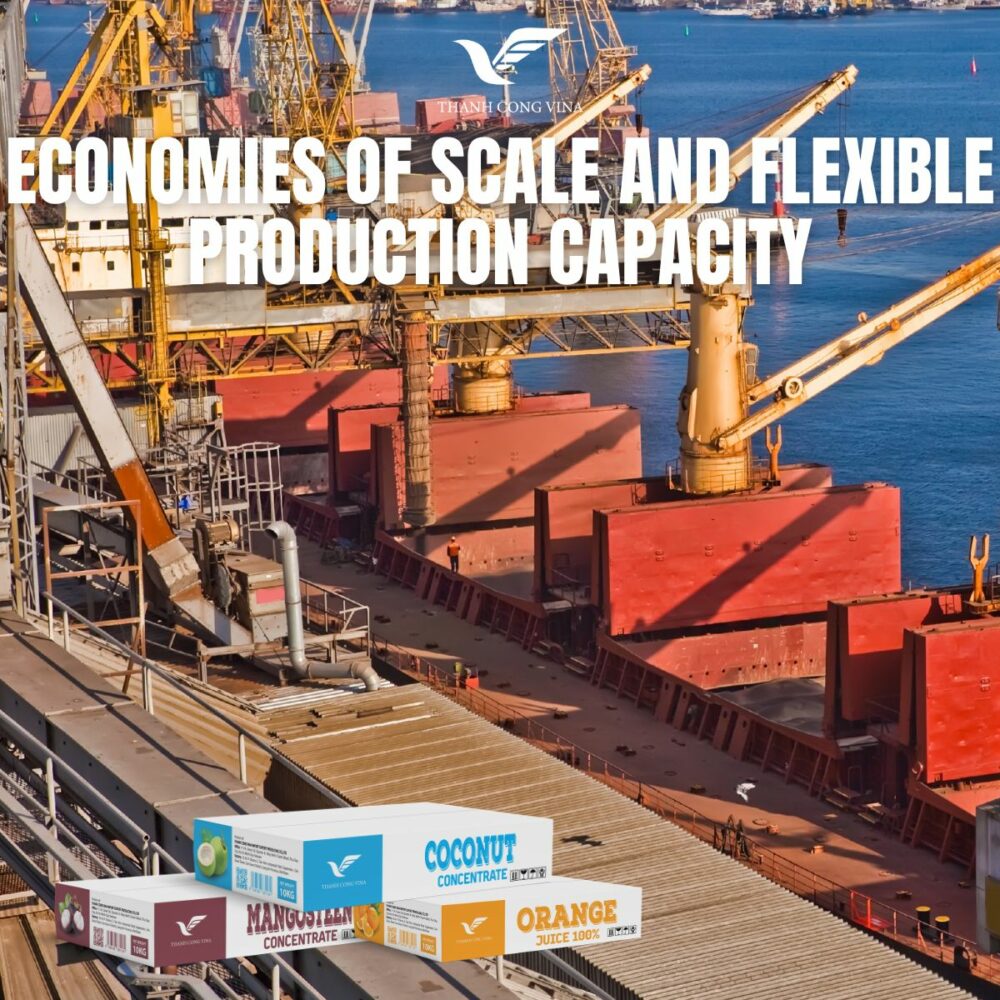
Economies of Scale and Flexible Production Capacity
A major advantage of sourcing from Vietnam is the ability to scale purchases efficiently as business needs grow.
High-Volume Production Capability
Many manufacturers operate facilities capable of serving both medium and large-scale buyers. As order volumes increase, suppliers can spread fixed costs over larger production runs, often improving pricing.
This scalability is especially valuable for rapidly growing beverage brands.
Consolidated Multi-Product Sourcing
Importers can source multiple tropical fruit concentrates from one country, and often from one supplier. Consolidating purchases reduces administrative costs, simplifies logistics, and strengthens negotiating leverage.
OEM and Private Label Opportunities
Vietnamese manufacturers frequently provide OEM and private label services, enabling buyers to develop customized products without investing in their own production facilities. This lowers capital requirements and accelerates market entry.
6. Hidden Financial Benefits Beyond the Purchase Price
The true cost advantage of Juice Concentrate Vietnam extends beyond the quoted price per kilogram.
Improved Profit Margins
Competitive ingredient costs allow manufacturers and distributors to achieve healthier margins or offer more aggressive pricing in competitive markets.
Reduced Supply Chain Risk
Reliable raw material access and expanding industrial capacity help minimize disruptions that can lead to costly production delays or emergency sourcing.
Faster Time-to-Market
Working with experienced Vietnamese suppliers can shorten product development and export timelines, enabling companies to capitalize on market opportunities more quickly.
7. Long-Term Strategic Value for Global Buyers

Long-Term Strategic Value for Global Buyers
Sourcing decisions should consider not only immediate savings but also long-term strategic benefits.
Building Cost-Stable Partnerships
Long-term relationships with reputable suppliers often lead to better pricing consistency, priority production scheduling, and collaborative innovation.
Supporting Business Expansion
As companies grow, Vietnam’s scalable manufacturing ecosystem can support increasing volumes and broader product portfolios without major sourcing changes.
Strengthening Competitive Position
By lowering ingredient and logistics costs while maintaining quality, buyers can invest more in branding, distribution, and product development.
Conclusion
Vietnam offers one of the most compelling cost structures in the global fruit ingredient market. Abundant tropical fruit resources, competitive manufacturing economics, efficient export logistics, and expanding trade advantages all contribute to the strong financial appeal of Juice Concentrate Vietnam. For importers and beverage brands, these advantages translate into lower landed costs, improved margins, and greater operational flexibility.
Beyond simple affordability, Vietnam provides strategic value through scalable production, product customization, and dependable long-term supply. Companies that source from Vietnam can strengthen both profitability and resilience in increasingly competitive international markets.
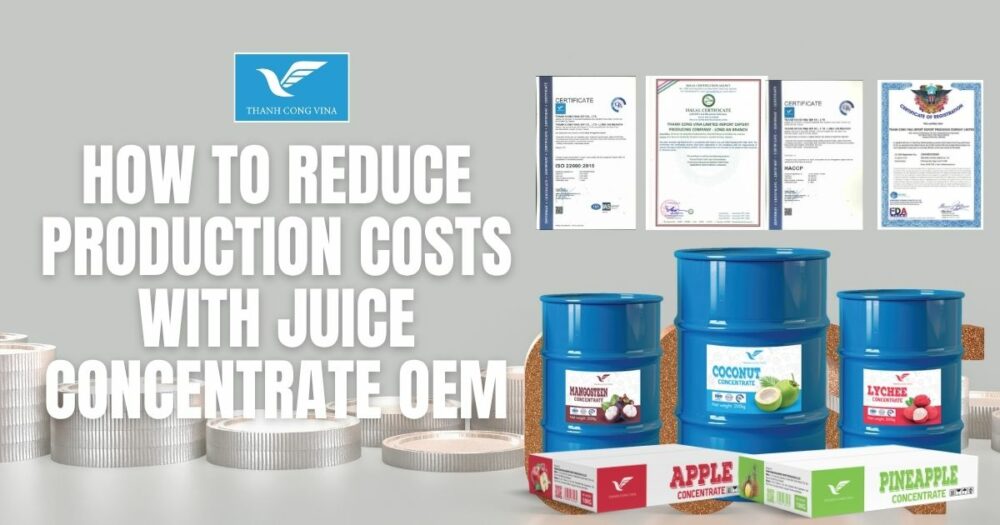
Thanh Cong Vina is committed to delivering premium Juice Concentrate Vietnam solutions that combine excellent quality with outstanding cost efficiency. Through reliable manufacturing, flexible OEM services, and dedicated export support, Thanh Cong Vina continues to help global partners reduce costs, enhance competitiveness, and achieve sustainable growth.