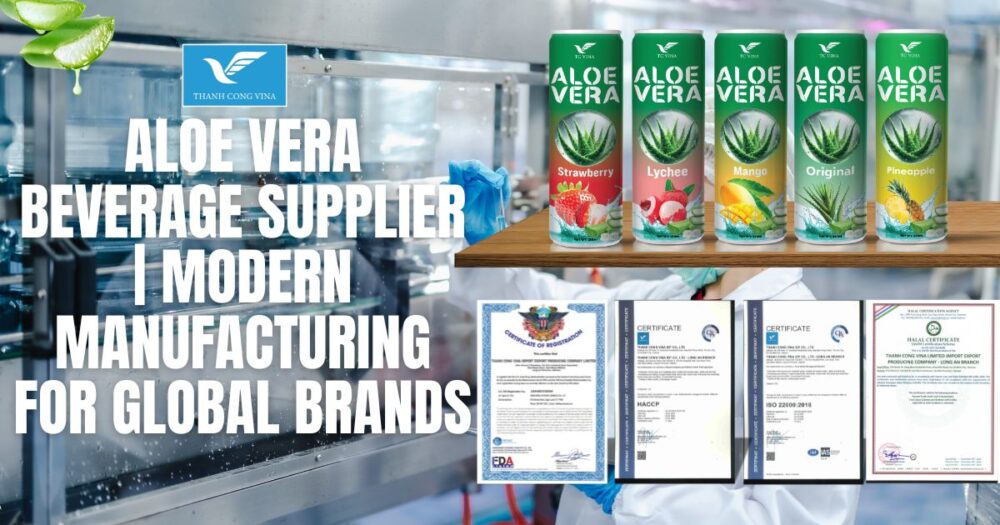

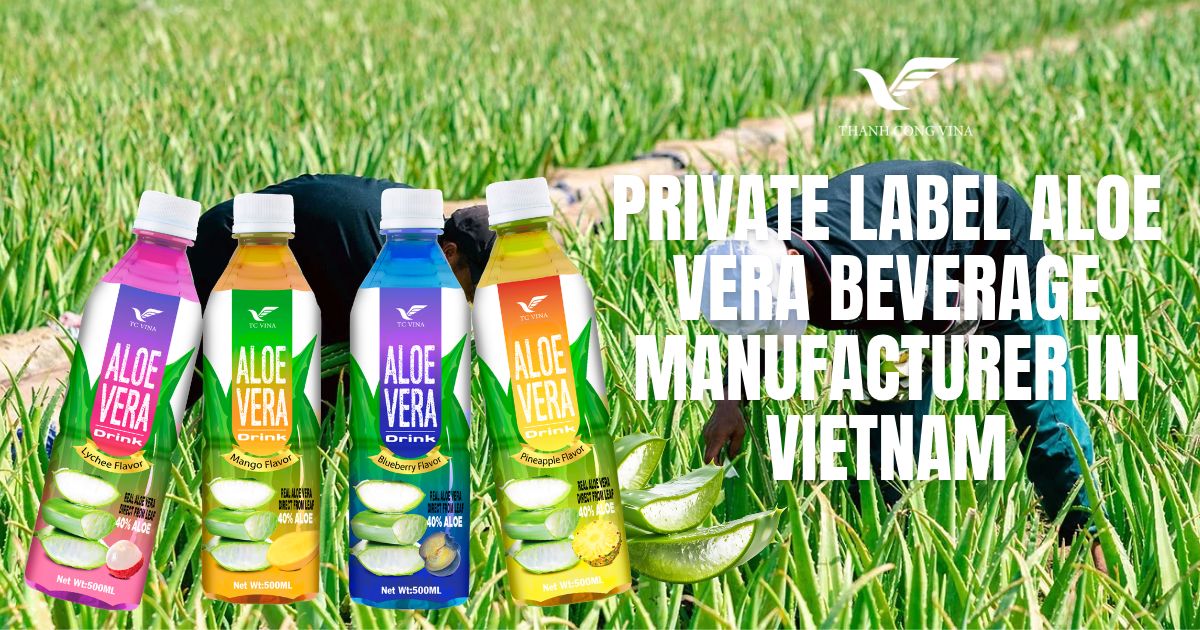
Choosing the right Aloe Vera Beverage Manufacturer in Vietnam is an important step in transforming a product concept into a commercially viable offering. Buyers need to consider more than the beverage itself. Product positioning, ingredient specifications, packaging design, minimum order quantities, quality requirements, and destination market regulations all influence the success of a private label project. A well-organized manufacturing partnership helps connect these elements through a structured development and production process. For international buyers, understanding how private label manufacturing works can make supplier evaluation more effective, improve cost planning, and establish a stronger foundation for launching aloe vera beverages under their own brands.
1. Aloe Vera Beverage Manufacturer in Vietnam for Private Label Brands
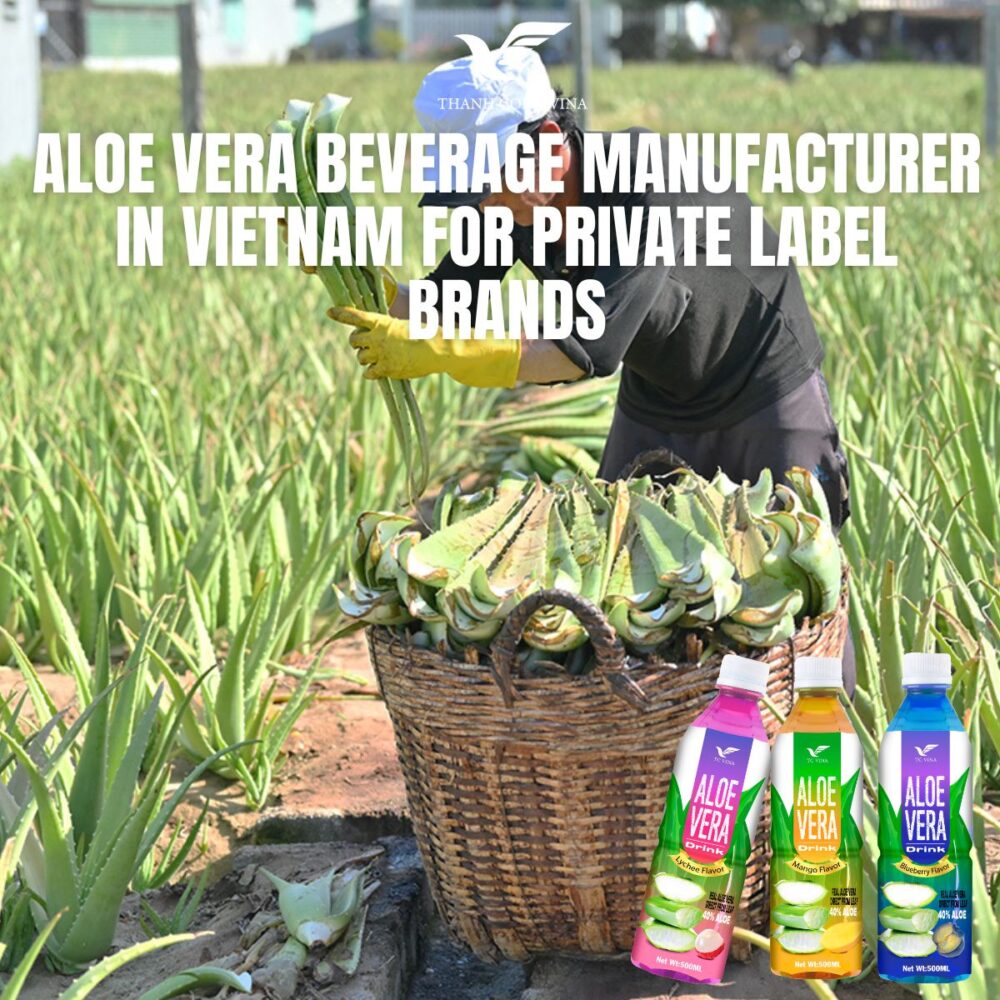
Aloe Vera Beverage Manufacturer in Vietnam for Private Label Brands
Private label manufacturing allows businesses to sell beverages under their own brand while working with a manufacturing partner to produce the finished products. This model can be particularly relevant for retailers, importers, distributors, and entrepreneurs seeking to establish a recognizable beverage portfolio without operating their own production facilities.
Vietnam is a potential sourcing destination for businesses exploring beverage manufacturing partnerships in Southeast Asia. However, buyers should evaluate each manufacturer’s actual capabilities, product suitability, documentation, and commercial terms before selecting a supplier.
Understanding the Private Label Business Model
In a private label arrangement, the buyer typically owns or controls the market-facing brand, while the manufacturer produces the beverage according to agreed specifications and contractual responsibilities.
The scope of customization depends on the supplier and the project. Some manufacturers may offer existing product concepts that can be adapted for a buyer’s brand, while other projects may involve more extensive formulation development and packaging customization.
A private label aloe vera beverage project may include:
- Selection of the intended aloe vera drink category.
- Review of ingredient and formulation requirements.
- Evaluation and approval of product samples.
- Selection of bottle or can formats and sizes.
- Development of brand-specific packaging artwork.
- Agreement on production quantities and delivery schedules.
- Preparation of relevant quality and shipping documentation.
These activities should be defined before commercial production begins. Buyers should also clarify ownership of formulations, artwork, trademarks, and other intellectual property in the manufacturing agreement.
Why Private Label Aloe Vera Drinks Can Suit Different Buyers
Retail chains may use private label products to expand their beverage selection and establish a distinct offering. Importers and distributors may create branded products tailored to their local customers, while emerging beverage businesses can use contract manufacturing to enter the market without building their own factories.
The appropriate strategy depends on the buyer’s distribution network, target audience, pricing objectives, and available resources.
Private label manufacturing does not automatically guarantee lower costs or faster market entry. Development expenses, packaging minimums, product testing, regulatory review, and initial order quantities must all be considered.
A practical assessment of these factors helps buyers determine whether a private label model fits their business objectives.
2. Building a Distinctive Aloe Vera Beverage Product Portfolio
A strong private label strategy begins with a clear product concept. Rather than selecting a beverage solely because it is available, buyers should identify how the product will fit their existing portfolio, target customers, and distribution channels.
Product differentiation can come from flavor selection, ingredient positioning, packaging, serving size, or the overall brand experience.
Selecting Aloe Vera Beverage Variations
Aloe vera beverages can be developed in different styles depending on the intended formulation and the manufacturer’s capabilities. Potential options include original aloe vera drinks and fruit-flavored variations such as mango, peach, lychee, or other combinations suitable for the target market.
Each variation should have a defined purpose within the product portfolio. For example, a familiar fruit flavor may help a new brand reach mainstream consumers, while a broader flavor range can give established distributors additional options for retail placement.
Buyers should specify the desired beverage characteristics, including sweetness, flavor intensity, texture, aloe vera content, and any restrictions on particular ingredients.
The product category must also be clearly defined. Aloe vera drinks, fruit juice drinks, and other beverage categories may have different compositional and labeling requirements. Product names and descriptions should accurately reflect the formulation and comply with the regulations of the destination market.
Matching Products to Target Consumers
The ideal product portfolio depends on where and how the beverage will be sold. Supermarkets, convenience stores, hospitality businesses, online retailers, and specialty distributors may have different expectations regarding packaging, price, and product presentation.
Before finalizing the range, buyers should research competing products, customer preferences, expected retail prices, and the characteristics that distinguish their proposed beverage.
It is also useful to define a clear role for each product. A core flavor may support repeat purchases, while additional variations can provide assortment depth and attract different consumer segments.
Instead of launching an unnecessarily large portfolio, some businesses may prefer to begin with a focused range and expand after evaluating sales performance.
Establishing Clear Product Specifications
Every product variation should have its own documented specification where its composition or relevant characteristics differ.
Specifications may cover ingredients, formulation parameters, sensory attributes, packaging, storage conditions, and applicable quality requirements. The level of detail should reflect the product and the manufacturing arrangement.
Documented specifications help ensure that both the buyer and manufacturer share the same understanding of the approved product.
They also provide a reference for evaluating samples, reviewing production batches, and managing future changes. This is particularly important when a private label brand plans to reorder the same beverage over an extended period.
3. Custom Formulation and Product Development
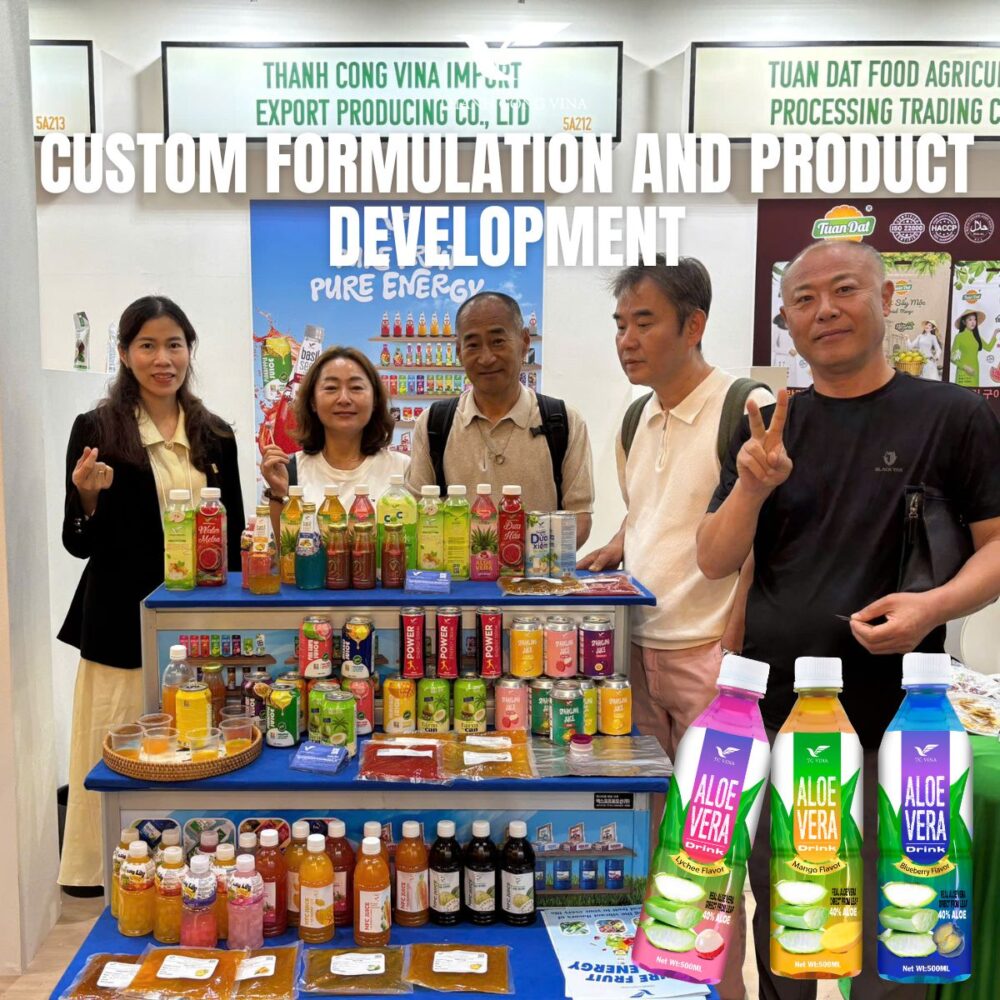
Custom Formulation and Product Development
Formulation development connects the brand’s product concept with the technical requirements of manufacturing. For a private label aloe vera drink, the process should consider taste, ingredient composition, texture, processing compatibility, product stability, and regulatory expectations.
A structured development process reduces uncertainty before the buyer commits to commercial production.
Defining Ingredient Requirements
Buyers should communicate their expectations regarding aloe vera ingredients and other formulation components at the beginning of the project.
Relevant considerations may include the type of aloe vera ingredient, desired content, fruit ingredients, sweeteners, acidity, flavor components, and any ingredient restrictions. Requirements relating to allergens, dietary preferences, or specific labeling claims should also be discussed where relevant.
The manufacturer can then assess whether the proposed formulation is technically feasible and compatible with its available production processes.
Ingredient availability and sourcing arrangements may affect cost and lead time. If a proposed ingredient is unavailable or unsuitable, any alternative should be reviewed and approved before being incorporated into the final product.
The goal is to create a clear formulation brief that balances the buyer’s expectations with production feasibility and applicable regulations.
Reviewing Samples and Refining Flavor Profiles
Sample evaluation gives buyers an opportunity to assess whether the beverage aligns with the intended brand positioning.
The review should consider more than overall taste. Depending on the product, relevant characteristics may include aroma, sweetness, acidity, appearance, texture, and the consistency of aloe vera pieces if the formulation includes them.
Specific feedback helps the development team understand what needs to change. Buyers may request adjustments to flavor balance or texture, but the feasibility of each revision should be assessed against the formulation and processing requirements.
The number of sample rounds, associated costs, and approval timelines should be agreed upon in advance.
Once the buyer approves a sample, the final formulation and relevant product specifications should be documented. The approved sample should serve as a reference rather than a substitute for formal quality requirements.
Evaluating Product Stability and Shelf Life
Shelf life is an important consideration for beverages intended for wholesale distribution or international shipping. The expected shelf life depends on the formulation, processing method, packaging system, storage conditions, and other product-specific factors.
Buyers should discuss these factors with the manufacturer before confirming commercial requirements.
Product stability should be assessed through appropriate testing and validation. Initial appearance or taste alone cannot establish whether a beverage will remain suitable throughout its intended shelf life.
For export-oriented private label projects, buyers should also consider transportation duration, warehouse conditions, and the expected time between manufacturing and retail sale.
These considerations help establish realistic product specifications and reduce the risk of mismatched expectations after delivery.
4. Private Label Packaging, Label Design, and Brand Identity
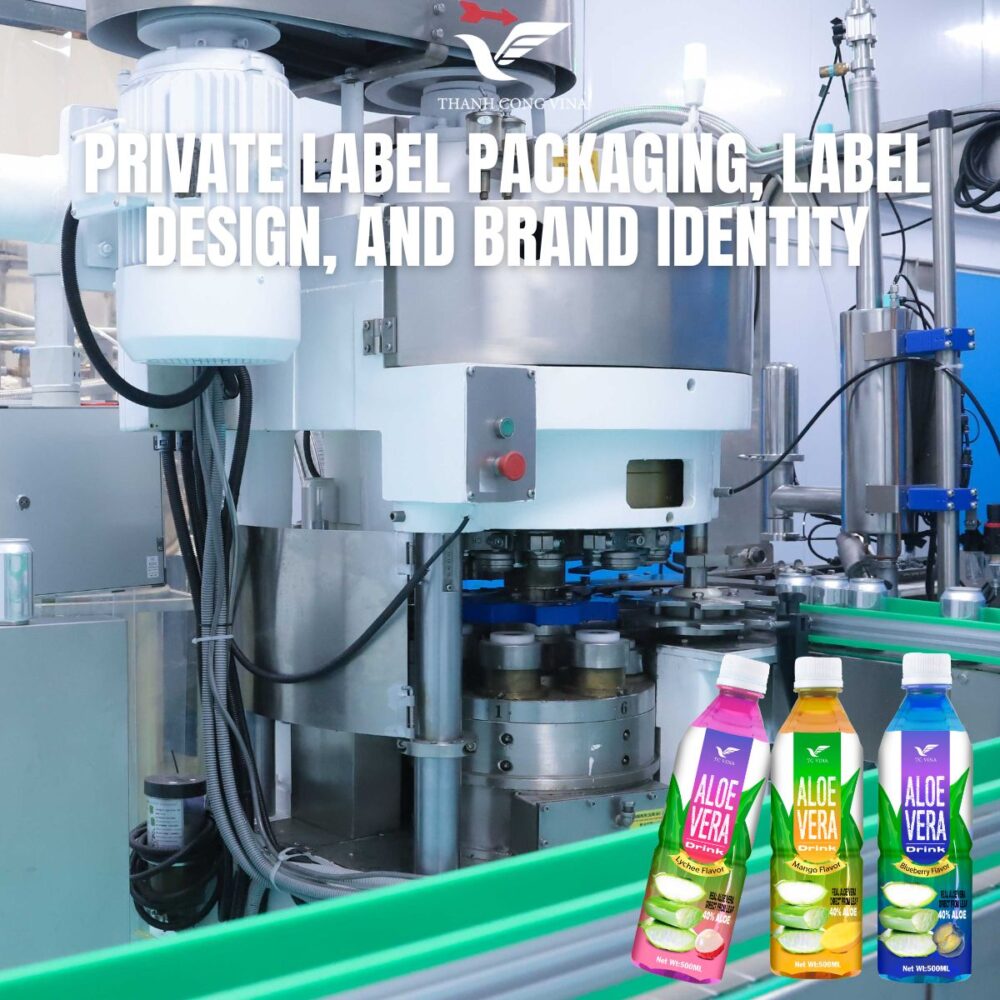
Private Label Packaging, Label Design, and Brand Identity
Packaging is a key element of private label product development because it communicates the brand’s identity while protecting and presenting the beverage. A suitable design should balance visual differentiation, practical handling, manufacturing compatibility, and total cost.
Packaging decisions should be made early enough to accommodate procurement, artwork review, and production planning.
Selecting the Right Container and Size
Depending on the manufacturer’s capabilities and the product requirements, aloe vera beverages may be offered in PET bottles, cans, or other suitable packaging formats.
Each format has different considerations. PET bottles may offer practical handling and flexible sizing, while cans may suit selected convenience retail applications. The appropriate choice depends on the beverage, processing method, target customers, distribution environment, and intended price positioning.
Container size also affects the product’s presentation and unit economics. Smaller formats may suit individual consumption, while larger sizes may serve other retail or foodservice needs.
Buyers should confirm packaging compatibility with the actual product and manufacturing process before approving a design. They should also review container availability, minimum purchasing quantities, and lead times.
Creating Brand-Specific Packaging Artwork
Private label packaging provides an opportunity to develop a consistent visual identity across the product range.
Brand owners should define the product name, logo placement, color palette, typography, label hierarchy, and other visual elements before artwork is finalized. Packaging should help customers identify the beverage category and understand its relevant characteristics.
The design should remain consistent with the wider brand while allowing individual flavors to be distinguished clearly.
Artwork approval should include a review of dimensions, legibility, language, ingredient information, and required declarations. Depending on the destination market, labels may need to include nutrition information, net quantity, storage instructions, manufacturer details, and other mandatory content.
Claims concerning health, nutrition, or functional benefits should be reviewed carefully to ensure they are permitted and properly supported.
Managing Packaging Costs and Inventory
Customized labels, printed containers, special closures, and other packaging components can affect the initial investment for a private label project.
Buyers should request a clear breakdown of packaging costs and identify any minimum order requirements that apply separately from the finished beverage order.
The agreement should also clarify who owns the artwork, who purchases the packaging materials, and how unused inventory will be handled if a design changes.
For a new product, balancing visual differentiation with manageable packaging commitments can help protect working capital while allowing the brand to establish its market presence.
5. Quality Management and Regulatory Readiness
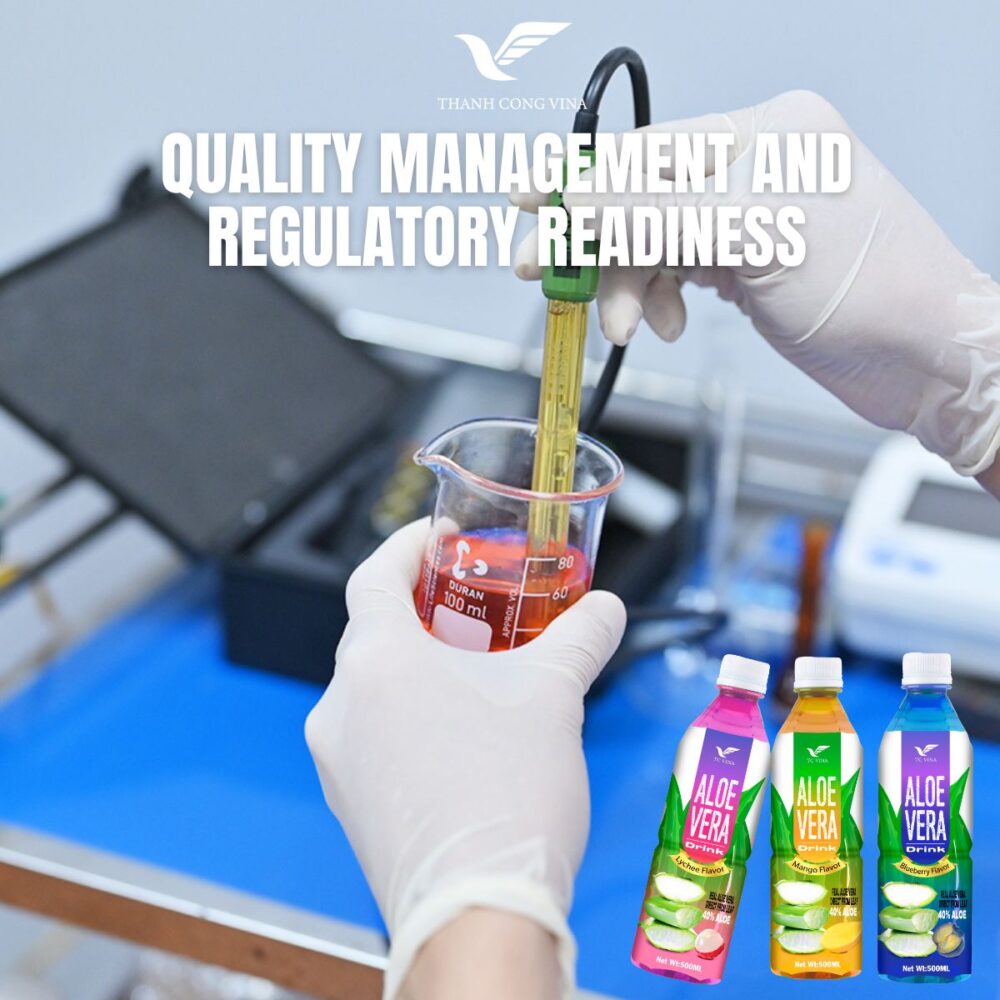
Quality Management and Regulatory Readiness
Private label brands depend on their manufacturers to produce beverages that meet agreed specifications. Quality management should therefore be a central part of supplier evaluation rather than a final checkpoint before shipment.
Buyers should understand the manufacturer’s relevant controls, documentation, and responsibilities for handling product deviations.
Defining Quality Requirements Before Production
The product specification should establish the characteristics the finished beverage must meet. Depending on the formulation, this may include ingredient composition, sensory characteristics, relevant analytical parameters, microbiological criteria, packaging details, and storage conditions.
Buyers should ask how the manufacturer evaluates ingredients, monitors production, assesses finished products, and maintains relevant records.
The specific testing plan should be appropriate to the product and applicable regulations. Quality requirements should be agreed upon before production so that both parties can assess compliance against the same criteria.
If a product does not meet the approved specification, the parties should follow a documented procedure for investigation, corrective action, and disposition.
Reviewing Certifications and Product Documentation
Certifications and supporting documents can help buyers evaluate a supplier’s quality management practices, but their relevance should be verified.
Buyers should confirm the issuing organization, validity period, facility covered, and scope of each certification. A certificate should not be assumed to apply to every product or manufacturing operation.
Depending on the project, relevant documents may include product specifications, ingredient declarations, certificates of analysis, test reports, traceability records, and other supporting information.
The parties should agree on which documents are required, who is responsible for preparing them, and when they must be available.
Clear documentation supports more effective communication between the brand owner, manufacturer, importer, and other parties involved in the supply chain.
Preparing for Destination Market Requirements
A beverage that is suitable for one market may require adjustments before entering another. Import requirements can differ according to the product classification, ingredients, labeling, packaging, and intended claims.
Buyers should identify applicable requirements early and obtain appropriate regulatory advice where necessary.
Responsibilities for label review, product registration, import documentation, and other compliance activities should be clarified before production begins.
This preparation helps reduce the risk of avoidable delays, artwork revisions, or difficulties during customs clearance.
6. Cost Planning and Long-Term Private Label Growth
A private label project should be evaluated according to its complete cost structure and its potential to support the buyer’s commercial objectives. The initial unit price is only one component of the investment required to bring a product to market.
A clear financial plan helps businesses compare suppliers and determine an appropriate launch strategy.
Understanding the Total Project Cost
The cost of a private label aloe vera beverage may include formulation development, ingredients, manufacturing, packaging, testing, artwork preparation, and other agreed services.
International buyers should also account for freight, insurance, import duties, taxes, warehousing, and local distribution costs when calculating the landed cost.
Quotations should be compared on an equivalent basis. A lower price may exclude services, materials, or documentation that another supplier includes.
Buyers should also confirm payment terms, minimum order quantities, packaging commitments, and potential fees for sample revisions or specification changes.
This broader assessment provides a more realistic view of product profitability and helps avoid unexpected expenses.
Planning Minimum Order Quantities and Initial Launches
Minimum order quantities can vary according to the beverage, production setup, packaging format, ingredient requirements, and manufacturing arrangements.
Customized packaging may have its own minimum purchasing requirements, meaning the initial investment may be influenced by both finished-product quantities and packaging commitments.
Businesses launching a new brand should compare the cost of an initial market test with the potential benefits of larger production volumes.
The decision should consider demand forecasts, storage capacity, cash flow, expected sales velocity, and the consequences of unsold inventory.
Production schedules should be confirmed only after specifications, samples, artwork, and required materials are sufficiently finalized.
Building a Scalable Supplier Relationship
A private label relationship can develop as the brand gains customers and expands its distribution network.
Future opportunities may include new flavors, alternative packaging sizes, additional beverage categories, or entry into new markets. Each expansion should be evaluated against market demand, manufacturing capabilities, cost, and regulatory requirements.
Regular communication and performance reviews can help the buyer and manufacturer improve order planning, address quality concerns, and maintain consistent product expectations.
A strong relationship depends on transparent agreements, documented specifications, realistic forecasts, and a shared understanding of responsibilities.
By establishing these foundations early, businesses can make future product launches and repeat orders easier to coordinate.
Conclusion: Choosing an Aloe Vera Beverage Manufacturer in Vietnam
Selecting the right Aloe Vera Beverage Manufacturer is an important step for retailers, importers, distributors, and beverage brands seeking to build a private label product portfolio. Successful projects require coordinated decisions about formulation, ingredient specifications, packaging, quality management, regulatory requirements, and total cost. Buyers should assess a manufacturer’s actual capabilities, verify relevant documentation, and establish clear responsibilities before approving commercial production. A well-defined process helps reduce avoidable risks while supporting consistent products and more effective supply planning.
Thanh Cong Vina operates in Vietnam’s beverage manufacturing and export sector and can be considered by businesses evaluating potential partners for customized beverage projects. By aligning product specifications with market demand and maintaining transparent communication, brands can build a practical foundation for long-term growth. For companies seeking an Aloe Vera Beverage Manufacturer, Thanh Cong Vina offers a starting point for discussing private label requirements, manufacturing arrangements, and potential cooperation for beverage products intended for domestic or international markets.