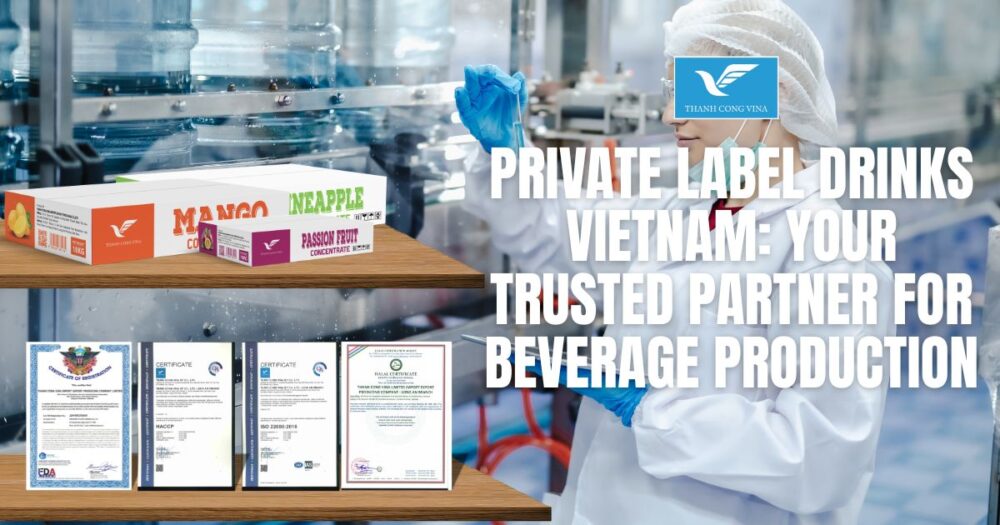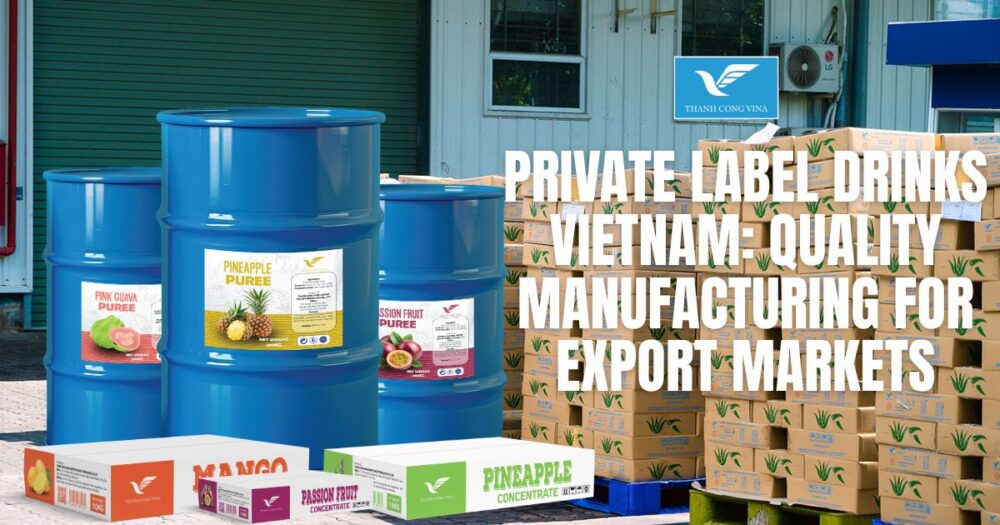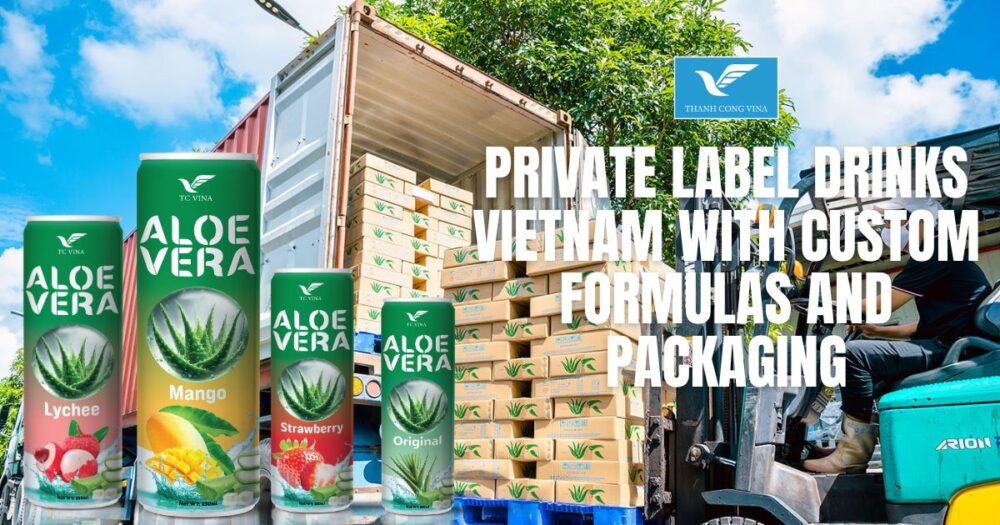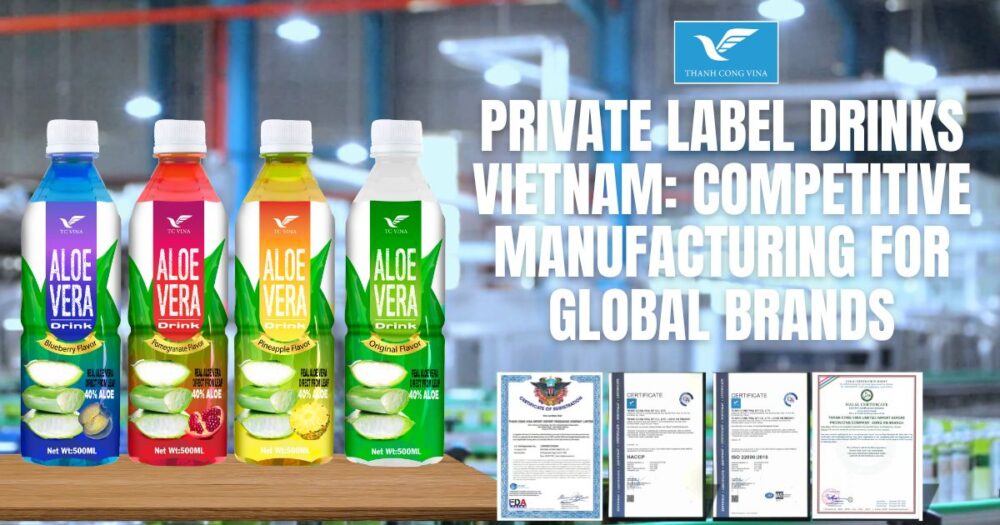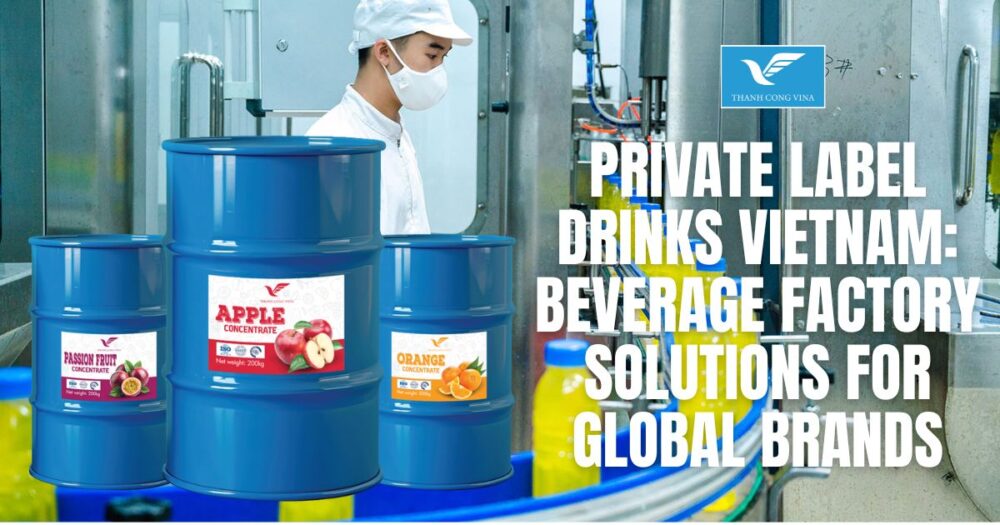

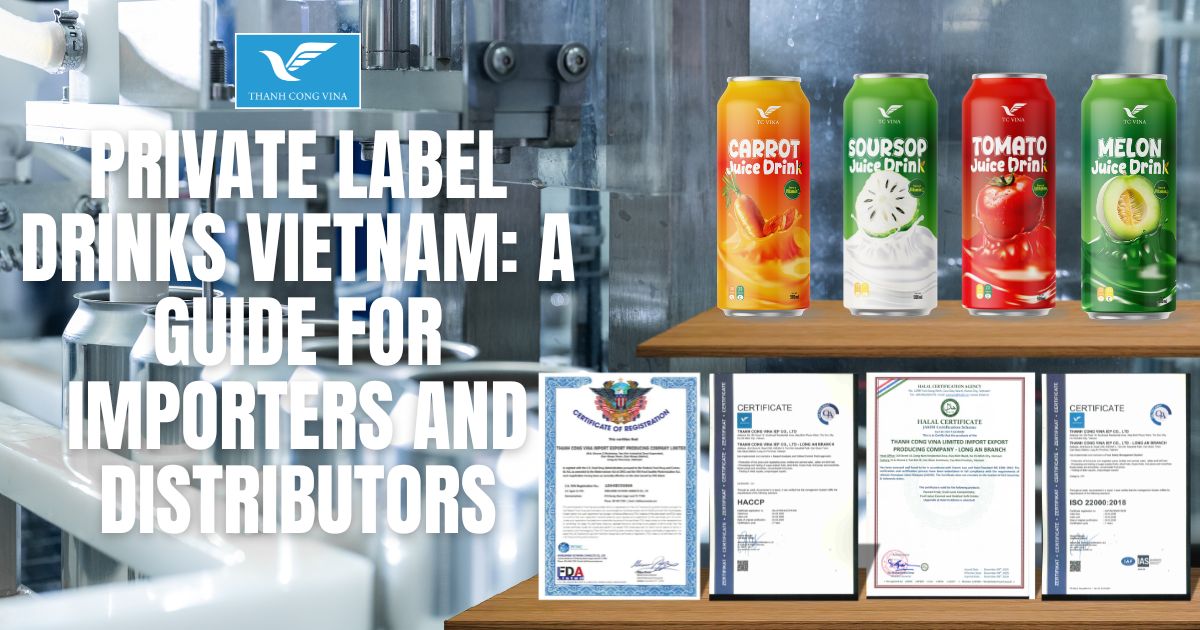
Private Label Drinks Vietnam provides importers and distributors with an opportunity to build their own beverage brands without investing in manufacturing infrastructure. Instead of operating a factory, businesses can work with an experienced OEM or ODM manufacturer to develop products according to their target market, pricing strategy, packaging requirements, and brand positioning.
From fruit juice and coconut water to aloe vera beverages, ready-to-drink coffee, and customized formulations, Vietnamese manufacturers can support a broad product portfolio. However, successful sourcing requires more than finding a competitive quotation. Buyers should understand product development, MOQ, quality control, packaging, certifications, production capacity, logistics, and export documentation before selecting a long-term manufacturing partner.
1. Why Private Label Drinks Vietnam Is Attractive for Importers and Distributors
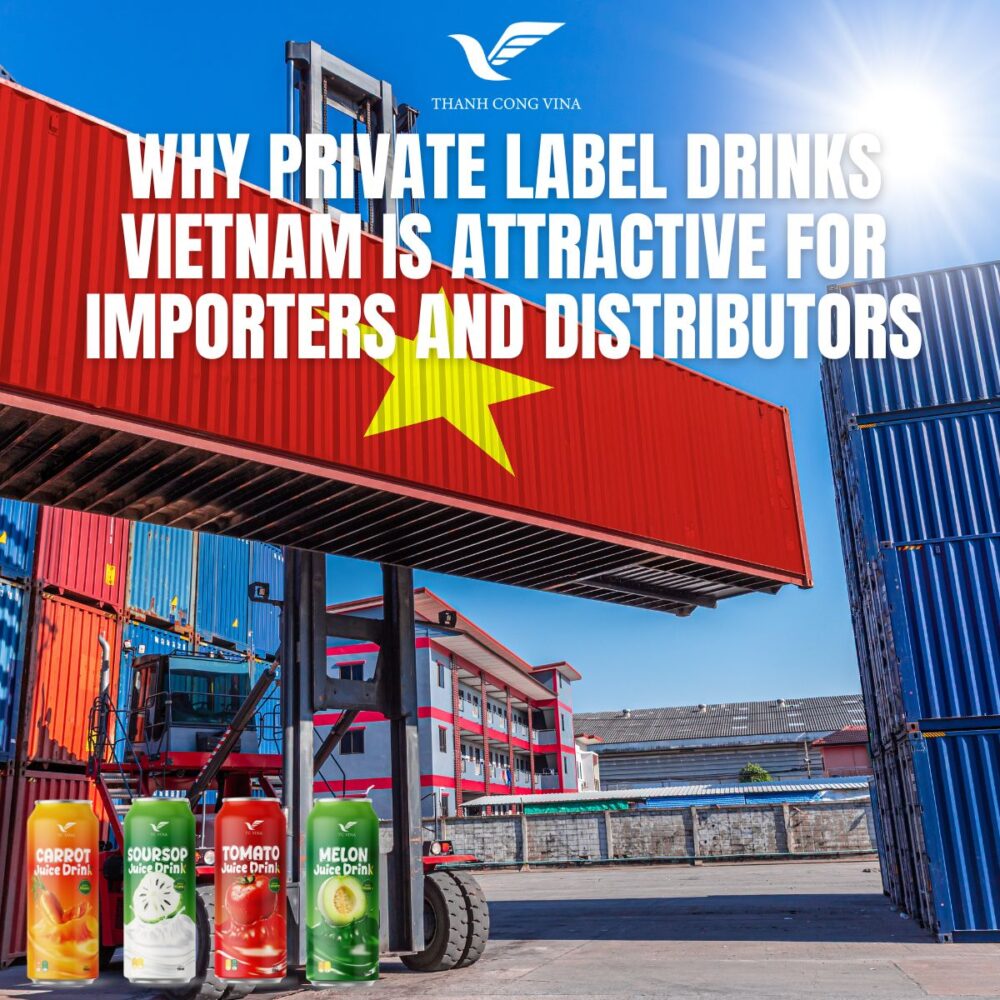
Why Private Label Drinks Vietnam Is Attractive for Importers and Distributors
Importers and distributors constantly need products that can provide competitive pricing, reliable supply, and sufficient differentiation in the market. Vietnam offers a combination of these factors while providing access to a broad range of beverage ingredients.
Competitive Manufacturing Opportunities
Developing beverages through a private label model allows businesses to outsource manufacturing instead of establishing their own production facilities.
For an importer or distributor, this can significantly simplify market entry. Rather than investing in processing equipment, filling systems, laboratories, warehouses, production personnel, and factory management, the business can concentrate on sales and distribution.
The manufacturer manages the production process while the brand owner controls the commercial strategy.
This structure is particularly attractive for distributors that already have established relationships with supermarkets, convenience stores, wholesalers, restaurants, hotels, or foodservice companies.
Access to Tropical Ingredients
Vietnam has a diverse agricultural sector that supports the development of fruit-based beverages.
Potential ingredients include:
- Coconut water
- Mango
- Pineapple
- Passion fruit
- Guava
- Lychee
- Dragon fruit
- Aloe vera
- Other tropical fruits
These ingredients allow importers to create beverages with distinctive flavor profiles and strong regional positioning.
For international distributors, Vietnamese-origin tropical beverages can also complement existing product portfolios and provide opportunities to introduce new categories to consumers.
Flexible Product Development
One of the major advantages of Private Label Drinks Vietnam is the ability to customize products instead of purchasing only standardized beverages.
Depending on the manufacturer’s capabilities, buyers may request adjustments to flavor, sweetness, fruit content, packaging volume, ingredients, and product positioning.
This flexibility is valuable because consumer preferences vary from one market to another.
2. How Importers Should Select a Vietnamese Beverage Manufacturer
Choosing the right supplier is one of the most important steps in developing a successful beverage business. Price should be considered, but it should not be the only deciding factor.
Evaluate OEM and ODM Experience
An experienced OEM and ODM manufacturer should understand the difference between producing a standard product and developing a beverage specifically for another brand.
Importers should ask whether the manufacturer can support:
- Product concept development
- Formula customization
- Sample preparation
- Ingredient sourcing
- Packaging development
- Label requirements
- Commercial production
- Quality testing
- Export documentation
A manufacturer that can provide several of these services under one system can reduce communication between multiple suppliers.
Examine Production Infrastructure
The factory’s manufacturing infrastructure directly influences production consistency and scalability.
Importers should evaluate areas such as processing technology, filling equipment, storage facilities, quality-control laboratories, production capacity, and production scheduling.
It is also useful to understand whether the factory can support both initial orders and future volume increases.
A supplier may be suitable for a small launch but become a bottleneck if demand grows rapidly. Therefore, scalability should be considered before establishing a long-term partnership.
Check Certifications and Food Safety Systems
International beverage buyers should carefully review the manufacturer’s food safety management systems.
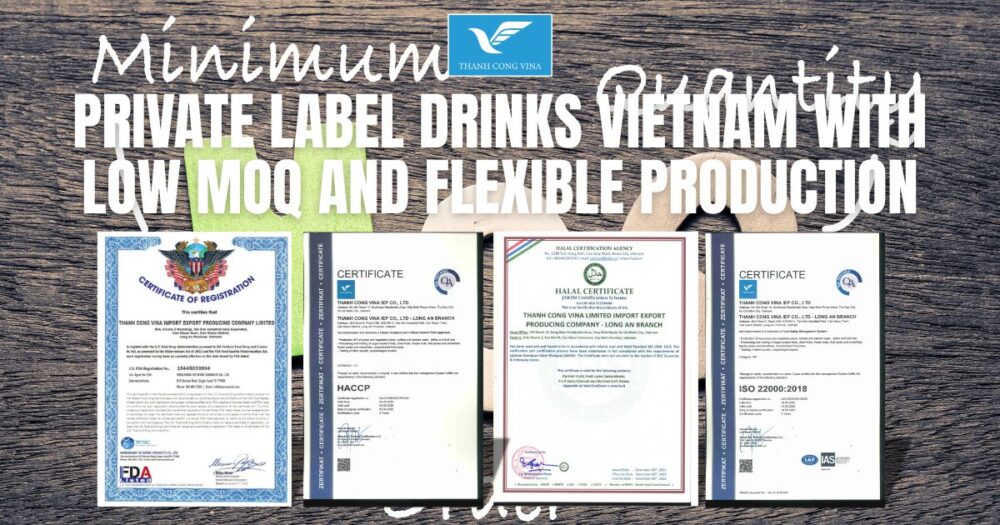
Depending on the target market and product category, certifications and standards such as HACCP, ISO, GMP, HALAL, FSSC 22000, and other applicable requirements may be relevant.
However, buyers should always verify which certifications are applicable to their specific product and destination country.
Quality systems should cover the entire manufacturing process, including raw materials, processing, packaging, storage, and finished products.
3. Developing the Right Beverage Product for Your Market
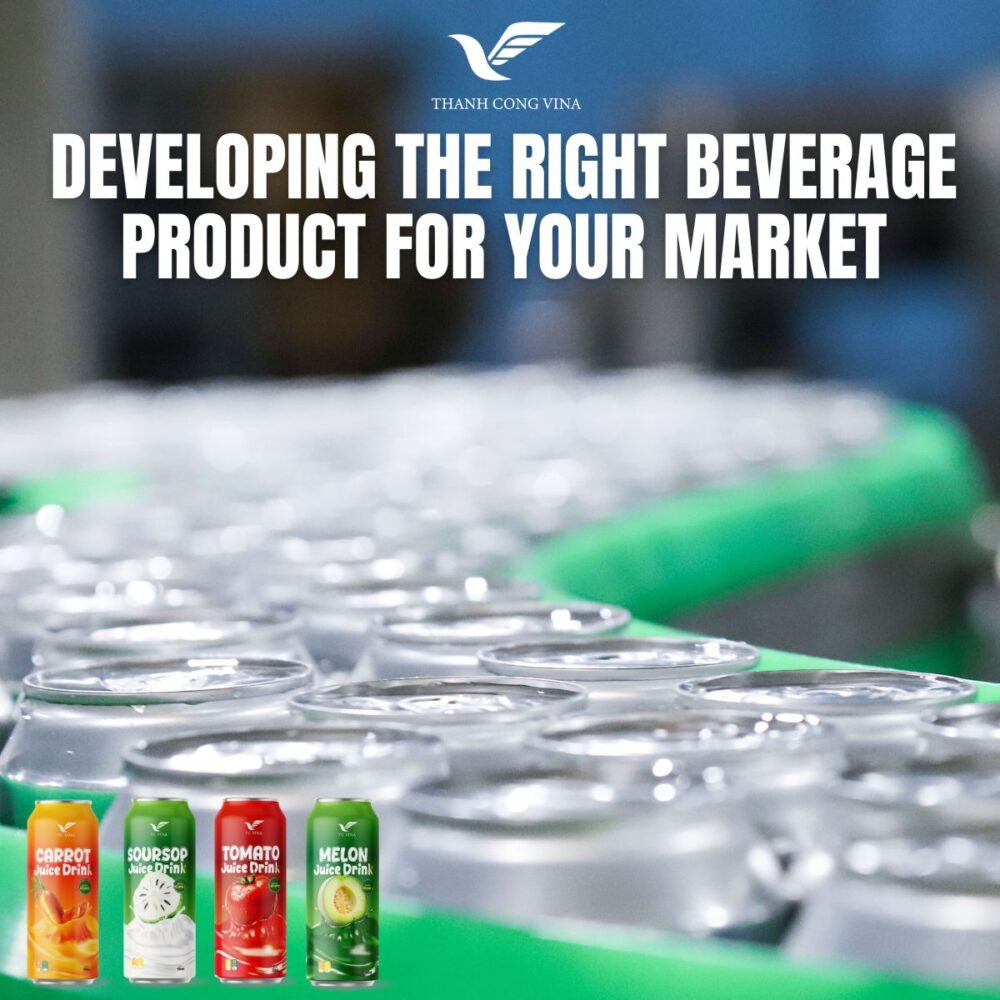
Developing the Right Beverage Product for Your Market
A strong product concept is essential for successful distribution. Importers should not simply select a beverage because it is inexpensive to manufacture. The product needs to match local consumer preferences and market positioning.
Define the Target Consumer
Before requesting a quotation, distributors should clearly define their target customer.
Important questions include:
- Who will purchase the beverage?
- Where will it be consumed?
- What price range is appropriate?
- Which flavors are popular?
- Which package size is preferred?
- What retail channels will sell the product?
- Is the product positioned as mainstream or premium?
A beverage designed for convenience stores may require a different format from a product intended for supermarkets, restaurants, hotels, or specialty retailers.
Choose the Right Beverage Category
Importers can explore multiple categories depending on their distribution network.
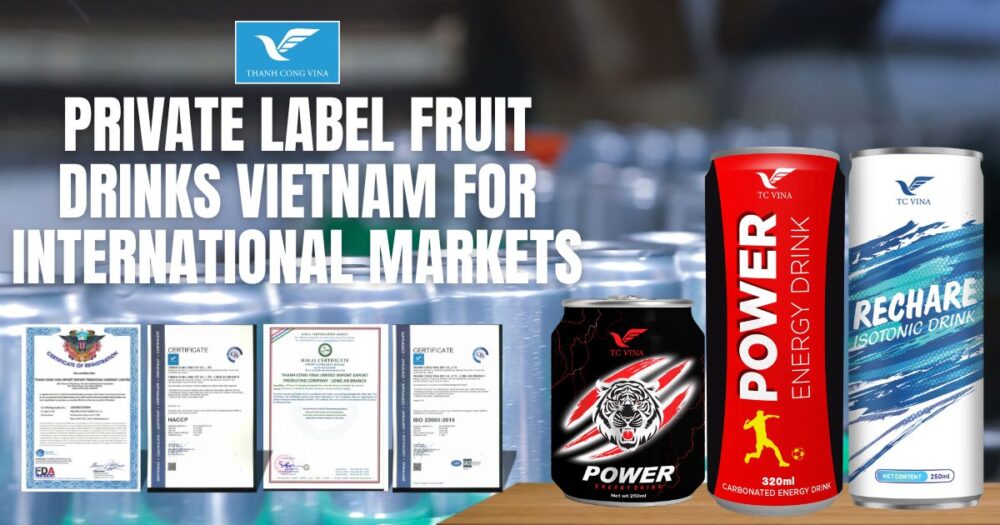
Fruit juice drinks are suitable for consumers seeking refreshing fruit flavors, while coconut water can target natural and tropical beverage segments.
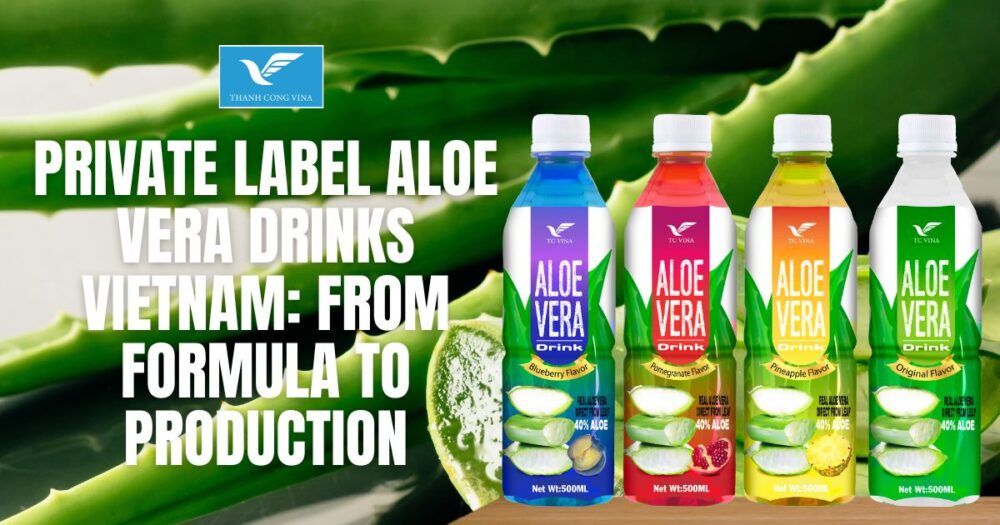
Aloe vera drinks can provide another differentiated option, while ready-to-drink coffee can serve consumers looking for convenient coffee products.
Other opportunities include juice concentrates and fruit-based beverage formulations for businesses that require ingredients for further processing.
Conduct Product Sampling
Sampling is an essential part of the development process.
Before placing a commercial order, importers should evaluate the beverage’s taste, aroma, appearance, sweetness, acidity, texture, and overall consumer appeal.
For customized products, several rounds of samples may be required.
The goal is to establish a final formula that satisfies the buyer’s commercial expectations while remaining technically suitable for large-scale production.
4. Packaging, Branding, and Market Positioning
A beverage’s packaging can influence how consumers perceive the product before they even taste it. For importers and distributors, packaging should therefore be treated as an important part of the overall brand strategy.
Select the Appropriate Packaging Format
Depending on the product, buyers may consider PET bottles, cans, cartons, glass bottles, or other packaging formats.
The decision should take into account:
- Product characteristics
- Retail environment
- Consumer convenience
- Transportation requirements
- Shelf-life expectations
- Production technology
- Target price
Packaging also affects shipping costs, warehouse requirements, and container utilization.
Therefore, the most attractive package is not necessarily the most commercially efficient option.
Develop Export-Ready Artwork
International beverage packaging needs to communicate product information clearly.
Artwork may include:
- Brand name
- Product name
- Flavor
- Net volume
- Ingredient declaration
- Nutrition information
- Manufacturer information
- Country of origin
- Barcode
- Storage instructions
- Date coding
- Applicable certifications
Importers should check destination-market labeling requirements before approving final artwork.
Making corrections after packaging materials have already been printed can increase costs and delay production.
Build a Consistent Brand Portfolio
Importers planning multiple products should create a consistent visual identity.
For example, different flavors can use the same packaging structure while incorporating distinctive flavor cues.
This approach makes the portfolio easier to recognize and can strengthen shelf presence when several products are displayed together.
5. Private Label Drinks Vietnam: MOQ, Pricing, and Supply Chain Planning
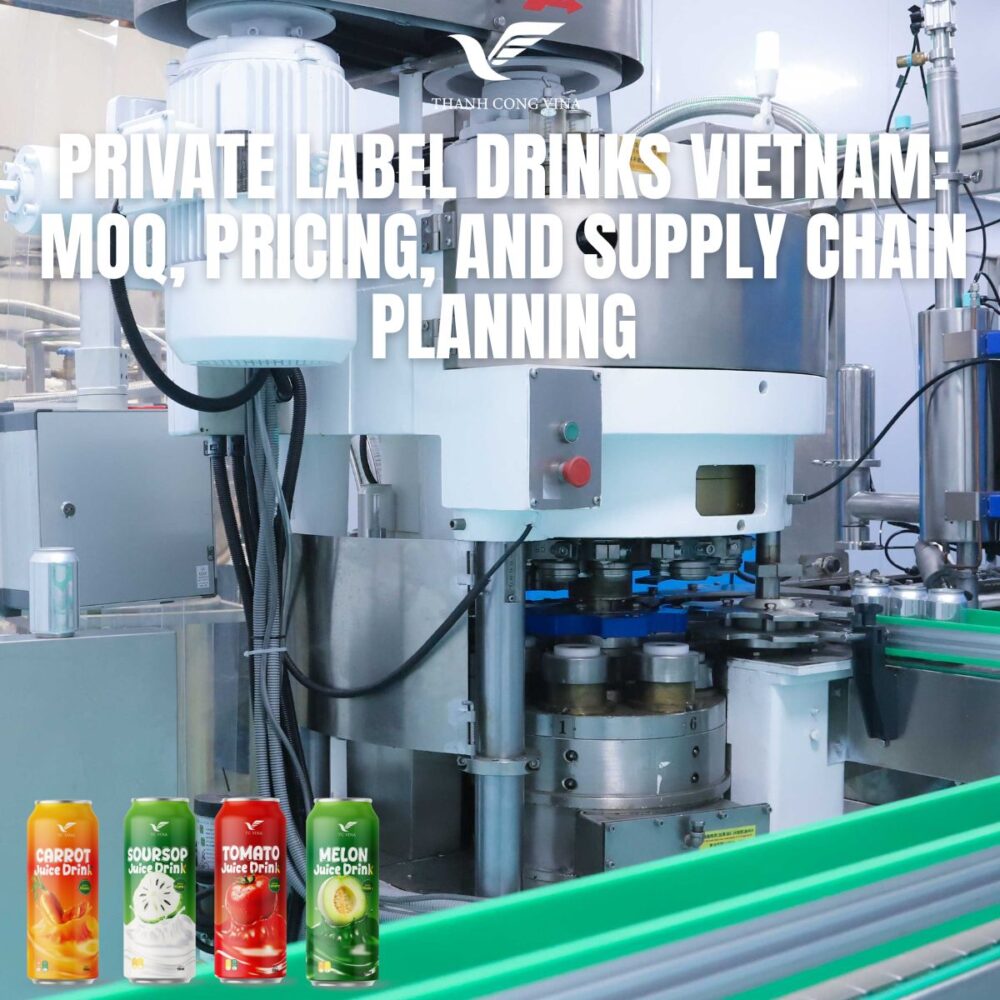
Private Label Drinks Vietnam: MOQ, Pricing, and Supply Chain Planning
Understanding the commercial side of manufacturing is essential for importers and distributors. A product can have excellent market potential but still fail if the order structure does not support healthy margins.
Understanding MOQ
Minimum order quantity depends on several factors, including beverage category, packaging format, ingredients, printing requirements, and production technology.
Importers should confirm MOQ before finalizing the product concept.
For new brands, starting with a focused portfolio may help control inventory risk.
Instead of ordering many flavors simultaneously, distributors can launch a smaller number of products, monitor market response, and gradually expand.
Calculate Total Landed Cost
The factory quotation is only one part of the final cost.
Importers should consider:
- Product manufacturing cost
- Packaging
- Labels
- Cartons
- Testing
- Documentation
- Palletization
- Inland transportation
- Ocean freight
- Insurance where applicable
- Import duties and local charges
Calculating the landed cost provides a more realistic basis for determining wholesale and retail pricing.
Manage Production Lead Time
Lead time may vary according to formula approval, packaging availability, raw material sourcing, order volume, and production scheduling.
Importers should communicate expected shipment dates early and establish a realistic production plan.
This is particularly important when beverages are being launched alongside marketing campaigns, retail promotions, seasonal sales, or trade events.
6. Export Requirements for International Beverage Buyers
Sourcing beverages internationally requires coordination between manufacturing, documentation, logistics, and destination-market regulations.
Product Documentation
Depending on the destination, buyers may require documentation such as:
- Product specifications
- Ingredient declarations
- Certificate of Analysis
- Certificate of Origin
- Commercial invoice
- Packing list
- Food safety documents
- Other certificates required by the importing country
Importers should establish documentation requirements before production rather than waiting until shipment preparation.
Customs and Import Considerations
Each market has its own import procedures.
The importer is generally responsible for ensuring that the product satisfies applicable local requirements, while the manufacturer can provide technical information and export documents within its scope.
Clear communication between the importer, manufacturer, freight forwarder, customs broker, and relevant authorities can help minimize avoidable delays.
Container Loading and Transportation
Beverages are often shipped in significant volumes, making container utilization an important cost factor.
Carton dimensions, units per carton, pallet configuration, product weight, and loading arrangements should be reviewed before confirming the final packaging specification.
Efficient logistics planning can improve the economics of Private Label Drinks Vietnam and support more competitive pricing in the destination market.
7. Building a Long-Term Distribution Business with Vietnamese Beverage Manufacturing
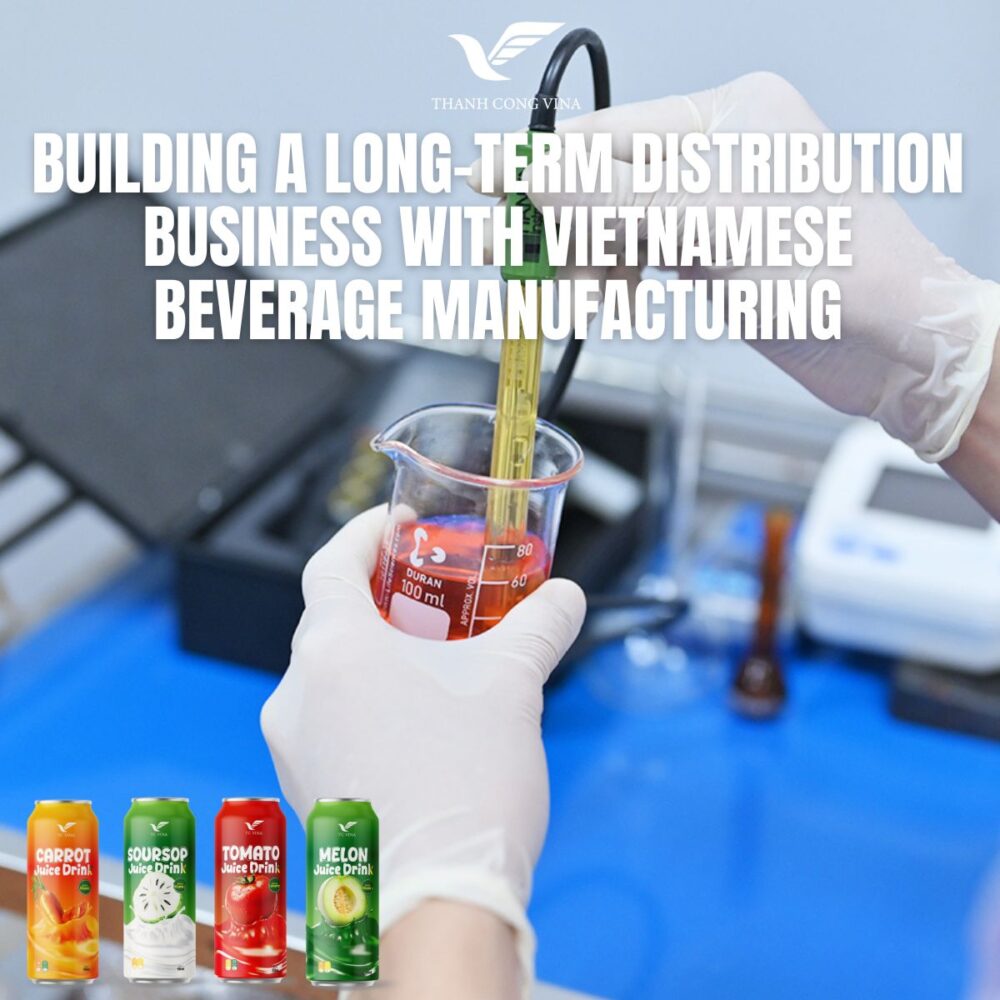
Building a Long-Term Distribution Business with Vietnamese Beverage Manufacturing
For importers and distributors, the goal should not always be a single successful shipment. A stronger strategy is to build a repeatable supply chain capable of supporting long-term brand development.
Expand Your Product Range
Once a beverage gains traction, distributors can introduce additional flavors, sizes, or related categories.
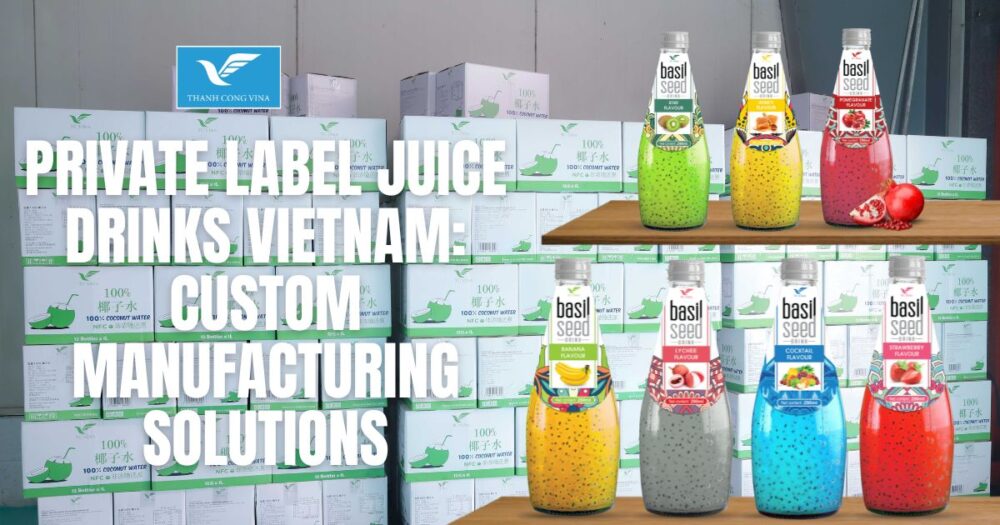
For example, a coconut water range may expand into coconut water with mango, strawberry, calamansi, or kiwi. A fruit juice portfolio can also be expanded with different tropical fruit combinations.
This approach creates opportunities to increase shelf presence while serving different consumer preferences.
Maintain Product Consistency
Consistency is essential for repeat purchases.
Customers expect the same taste, appearance, packaging quality, and product performance each time they purchase a beverage.
The manufacturing partner should therefore maintain documented specifications and controlled production procedures.
Establish Reliable Communication
International sourcing requires clear communication.
Importers should maintain regular communication with the manufacturer regarding forecasts, purchase orders, packaging requirements, production schedules, quality issues, and shipment planning.
A transparent relationship can help both parties identify potential problems before they affect commercial operations.
Plan for Business Growth
As sales increase, production requirements may also change.
A distributor may move from an initial trial order to regular container shipments and eventually require multiple products.
Selecting a manufacturer with sufficient production capacity and a broad product portfolio can make this transition easier.
8. Why Choose Thanh Cong Vina for Private Label Beverage Manufacturing?
Thanh Cong Vina provides OEM and ODM beverage manufacturing solutions for international buyers seeking customized products from Vietnam.
Diverse Beverage Portfolio
The company supports various beverage categories, including fruit juice drinks, coconut water, coconut water combined with real fruit juice, aloe vera beverages, ready-to-drink coffee, juice concentrates, and other customized beverage concepts.
This diversity gives importers and distributors the opportunity to develop multiple products through one manufacturing relationship.
Customized Manufacturing Solutions
Different markets require different product specifications. Thanh Cong Vina can work with buyers on formulation, flavor, packaging size, product concept, and other manufacturing requirements.
This customized approach allows distributors to develop beverages aligned with their own brand strategy rather than relying exclusively on standard products.
Support from Development to Export
A successful beverage sourcing project involves multiple stages, including product development, sampling, packaging, production, quality control, documentation, and shipment preparation.
Thanh Cong Vina is positioned to support these stages as part of an integrated manufacturing process.
For importers and distributors, this can simplify supplier management and create a more organized path from the initial product idea to commercial distribution.
Conclusion
For importers and distributors seeking new beverage opportunities, Private Label Drinks Vietnam offers a practical route to developing customized products without establishing an independent manufacturing facility. Vietnam provides access to tropical agricultural ingredients, competitive production capabilities, diverse beverage categories, and an increasingly export-oriented food manufacturing industry. However, successful sourcing depends on choosing a manufacturer that can provide more than an attractive price. Buyers should evaluate formulation expertise, product quality, certifications, packaging capabilities, MOQ, production capacity, lead time, documentation, and communication before making a long-term decision. A reliable manufacturing relationship can help distributors launch new products, maintain consistent quality, expand their portfolios, and respond more effectively to changing market demand. Thanh Cong Vina offers OEM and ODM beverage manufacturing solutions for international customers seeking customized products from Vietnam. With Thanh Cong Vina, importers and distributors can develop beverages around their target market, brand identity, and commercial strategy while building a scalable supply chain for long-term growth.