
Choosing the right Private Label Drinks Manufacturer is one of the most important decisions for beverage importers, distributors, retailers, and international brands. A capable manufacturing partner does more than produce beverages according to an existing formula. The right supplier can support product development, customized formulation, packaging, quality control, certifications, production planning, and export preparation from the initial concept to finished products.
Vietnam has become an attractive destination for beverage sourcing thanks to its tropical agricultural resources, growing food-processing industry, competitive manufacturing environment, and strategic location in Southeast Asia. International buyers can develop fruit juices, coconut water, aloe vera beverages, nata de coco drinks, ready-to-drink coffee, and other beverage concepts through OEM, ODM, and private label models.
However, not every factory offers the same level of technical capability, quality management, customization, or export support. Buyers therefore need a structured approach when evaluating potential suppliers. This guide explains the most important criteria to consider when selecting a Private Label Drinks Manufacturer in Vietnam, helping businesses reduce sourcing risks and build a reliable long-term beverage supply chain.
1. What Is a Private Label Drinks Manufacturer?
What Is a Private Label Drinks Manufacturer?
A private label beverage manufacturer produces drinks for another company’s brand. Instead of investing in its own production facility, the brand works with a specialized manufacturer that manages the technical and manufacturing side of the project.
How Private Label Beverage Manufacturing Works
A typical project can involve several stages:
- Product concept development
- Ingredient and formula consultation
- Sample development
- Product testing and approval
- Packaging development
- Commercial production
- Quality inspection
- Export documentation
- International shipment
The brand remains responsible for its market positioning and commercial strategy, while the manufacturing partner manages production according to the approved specifications.
This model is particularly useful for importers, retailers, distributors, startups, and established beverage companies that want to introduce new products without building their own factory.
Private Label, OEM and ODM
Although these terms are sometimes used interchangeably, they can represent different levels of customization.
Private label manufacturing generally means producing a beverage under the customer’s own brand.
OEM beverage manufacturing focuses on producing according to specifications supplied by the customer.
ODM beverage manufacturing can involve greater support from the manufacturer in product development, formulation, and technical solutions.
An experienced Private Label Drinks Manufacturer may offer a combination of these models depending on the customer’s requirements.
2. Why Choose a Private Label Drinks Manufacturer in Vietnam?
Vietnam provides several advantages for international beverage buyers.
Abundant Tropical Ingredients
Vietnam has a strong agricultural sector with access to a wide variety of tropical fruits.
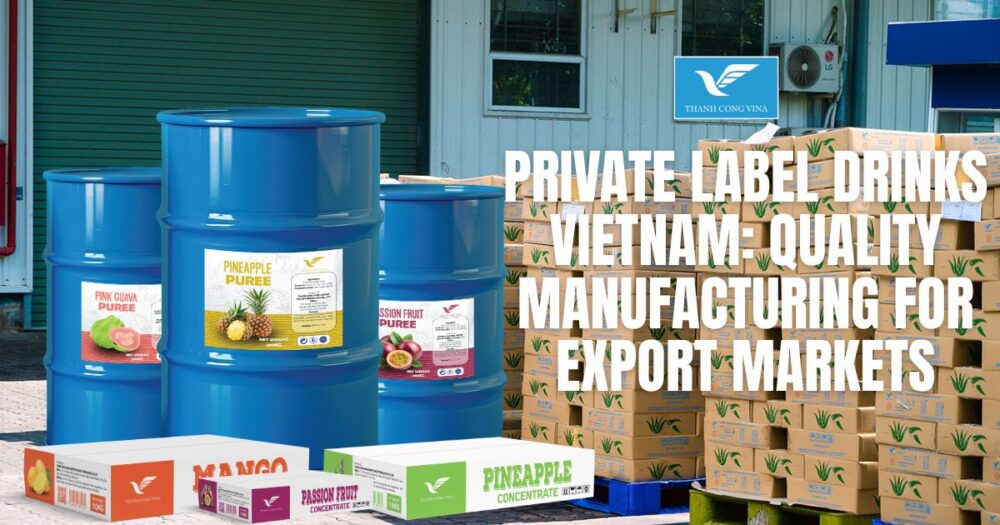
Potential beverage ingredients include:
- Mango
- Passion fruit
- Pineapple
- Orange
- Pink guava
- Peach
- Lychee
- Soursop
- Coconut
- Dragon fruit
These ingredients can be used to develop fruit juices, fruit drinks, juice concentrates, coconut water, and other tropical beverage concepts.
For international brands seeking distinctive flavors, working with a Vietnamese manufacturer can provide opportunities to develop products based on locally available agricultural resources.
Established Beverage Manufacturing Infrastructure
Vietnam’s food and beverage industry has developed considerably, with manufacturers investing in processing, filling, packaging, and quality-control capabilities.
A professional Private Label Drinks Manufacturer can provide access to existing infrastructure such as:
- Beverage processing equipment
- Mixing systems
- Filling lines
- Packaging machinery
- Quality laboratories
- Warehousing facilities
- Production teams
This allows brands to focus on marketing and distribution rather than managing manufacturing infrastructure themselves.
Export-Friendly Location
Vietnam’s geographical position makes it strategically relevant for international sourcing.
Products manufactured in Vietnam can potentially serve customers across:
- Asia
- Europe
- North America
- The Middle East
- Africa
- Oceania
Shipping time and cost vary according to destination, order volume, shipping method, port, and commercial terms, but Vietnam’s established export infrastructure provides a strong foundation for international beverage supply chains.
3. How to Evaluate a Private Label Drinks Manufacturer
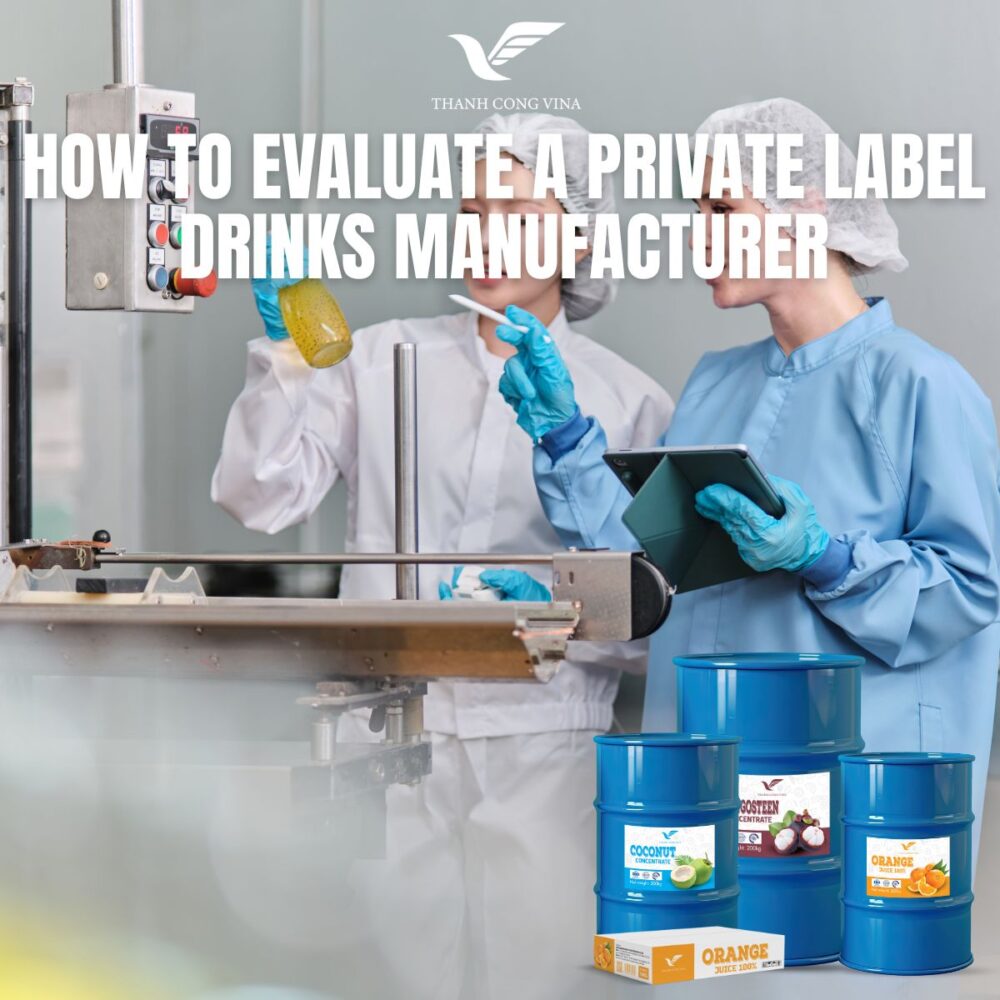
How to Evaluate a Private Label Drinks Manufacturer
Selecting a manufacturer requires more than comparing unit prices. Buyers should assess technical, operational, commercial, and quality capabilities.
1. Check Manufacturing Capabilities
Start by reviewing the manufacturer’s production capabilities.
Important questions include:
- What beverage categories can the factory produce?
- What packaging formats are available?
- What production capacities are available?
- Can the factory handle customized products?
- Can it support commercial-scale production?
- Can production increase as demand grows?
A supplier that can support multiple beverage categories may provide greater flexibility as the brand expands.
2. Evaluate Product Development and R&D
Product development is especially important for private label projects.
A capable R&D team should be able to support:
- Product specifications
- Ingredient selection
- Formula development
- Sample production
- Sensory evaluation
- Formula adjustments
- Commercial scaling
The goal is not simply to create a sample that tastes good. The final formulation should also be practical for commercial manufacturing and consistent across production batches.
3. Review Customization Options
Different brands have different market requirements.
A manufacturer may need to customize:
- Fruit content
- Sweetness
- Acidity
- Flavor intensity
- Aroma
- Texture
- Product size
- Packaging
- Label design
For example, a beverage designed for one market may require a different sweetness profile from a product targeting another region.
Customization capability therefore allows brands to create products that better match their target consumers.
4. Product Categories Offered by a Private Label Drinks Manufacturer
A diverse product portfolio can make a manufacturer more valuable as a long-term partner.
Fruit Juice and Fruit Beverages
Fruit beverages are among the most flexible categories for private label development.
Possible products include:
- Mango juice
- Passion fruit juice
- Pineapple juice
- Orange juice
- Pink guava juice
- Peach juice
- Lychee drinks
- Soursop beverages
Products can be developed according to different fruit profiles, packaging requirements, and market positioning.
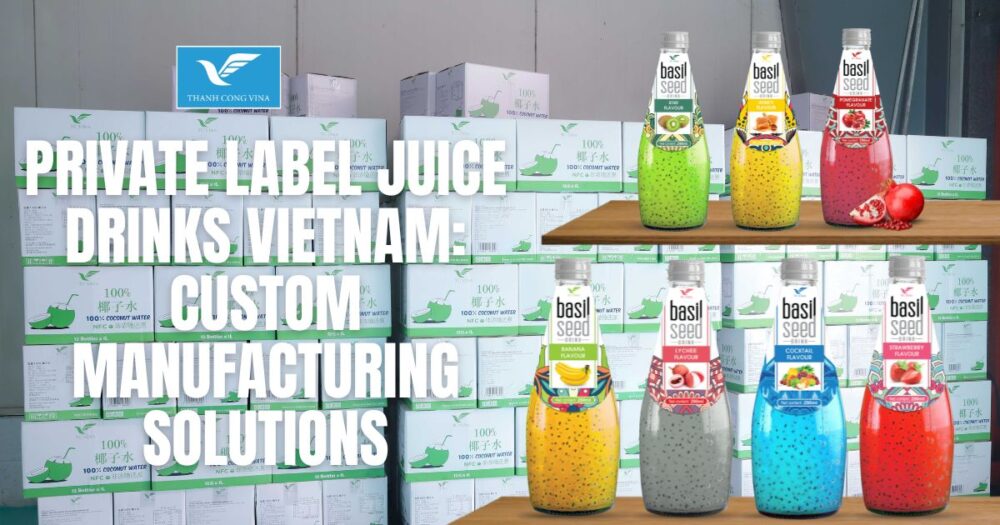
Coconut Water
Coconut water has strong potential for brands seeking tropical beverage concepts.
It can be produced in different formats depending on the target market, such as cans, bottles, or cartons.
Packaging size can also be adapted for convenience retail, supermarkets, foodservice, or on-the-go consumption.
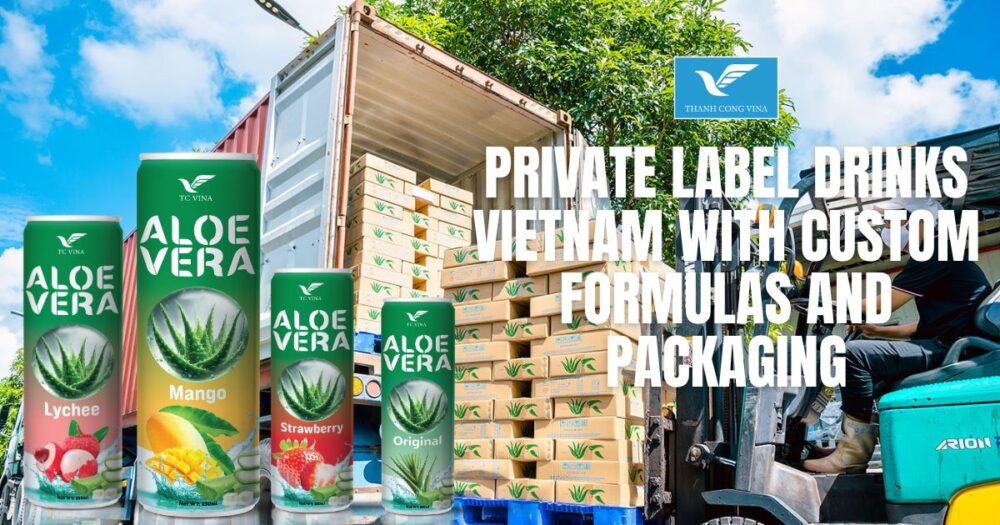
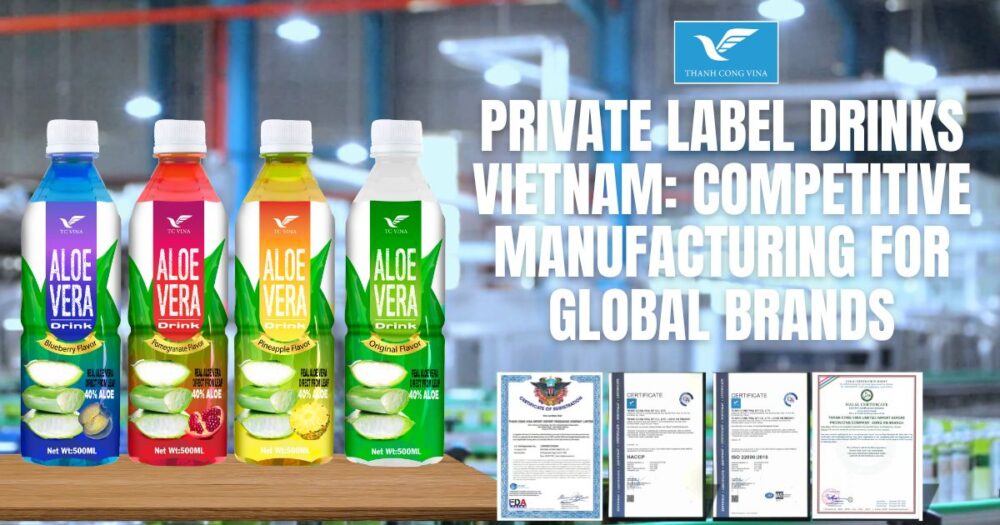
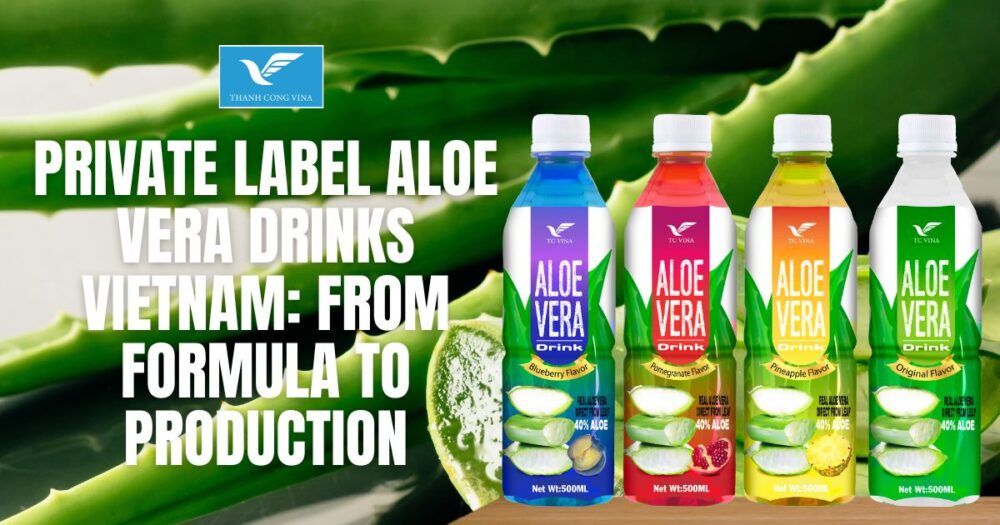
Aloe Vera and Nata de Coco Drinks
Aloe vera beverages and nata de coco drinks can provide additional differentiation for beverage portfolios.
Aloe vera products can be developed in different fruit flavors, while nata de coco adds a distinctive chewy texture that can appeal to consumers looking for a different beverage experience.
Ready-to-Drink Coffee
A manufacturer with broader beverage capabilities may also support ready-to-drink coffee products.
Potential concepts include:
- Black coffee
- Milk coffee
- Latte
- Cappuccino
- Vietnamese-style coffee
This allows distributors and retailers to develop multiple beverage categories through a single supplier relationship.
5. Packaging and Private Label Product Development
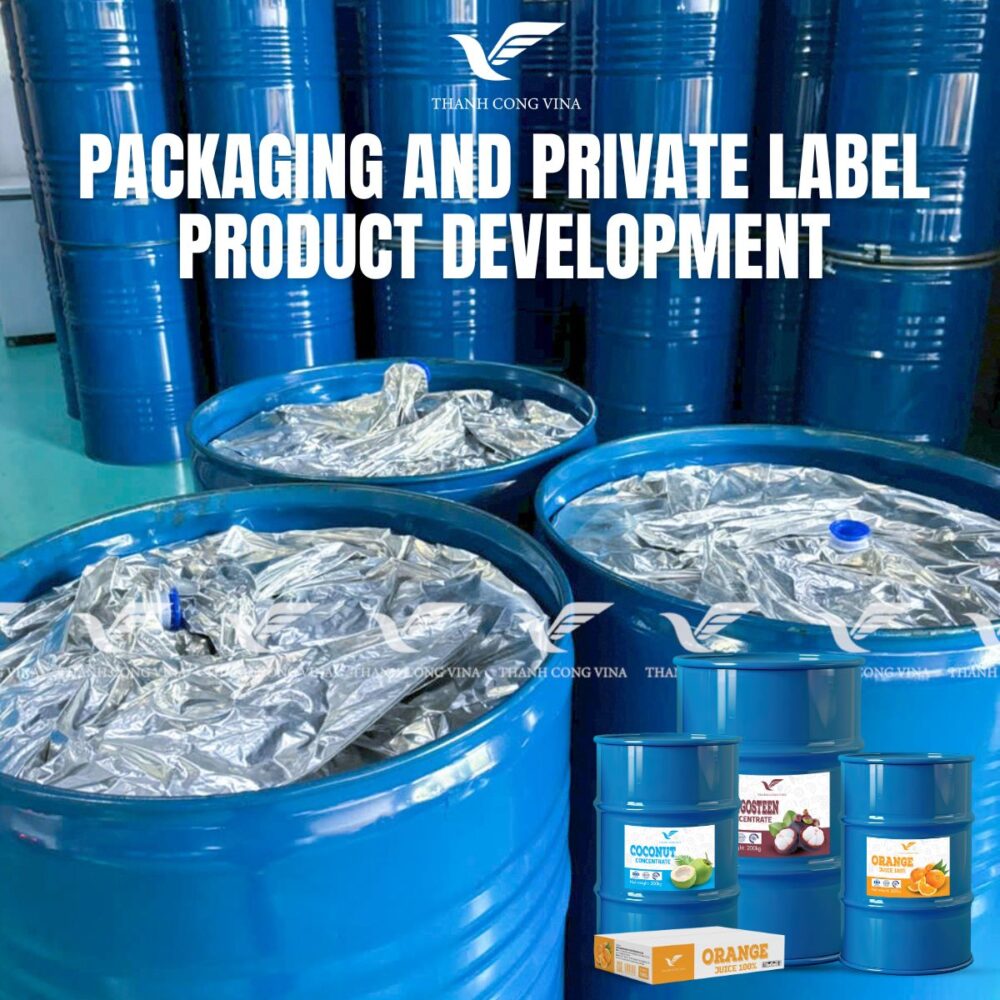
Packaging and Private Label Product Development
Packaging is an essential part of private label manufacturing because it combines brand identity, product protection, consumer convenience, and logistics.
Packaging Formats
Depending on the product and production line, beverage packaging can include:
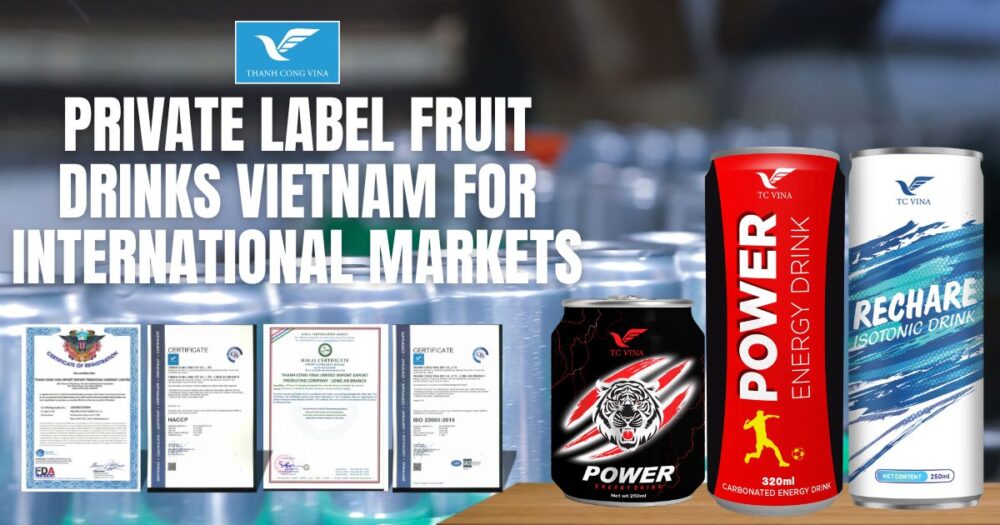
- Aluminum cans
- Slim cans
- PET bottles
- Glass bottles
- Cartons
Potential product sizes include:
- 250ml
- 320ml
- 330ml
- 500ml
The appropriate format depends on the beverage category, target consumers, distribution channel, and retail strategy.
Customized Label and Artwork
A private label product should communicate the customer’s brand identity clearly.
Packaging artwork may contain:
- Brand logo
- Product name
- Flavor
- Fruit imagery
- Ingredients
- Nutrition information
- Barcode
- Product claims
- Manufacturer information
International buyers should ensure that the artwork complies with the labeling requirements of the destination market before mass printing.
Packaging for International Shipping
Export beverages may be transported by sea over long distances.
Packaging should therefore be considered in relation to:
- Carton strength
- Stacking
- Container loading
- Product protection
- Warehouse handling
- Transportation conditions
Efficient packaging design can also improve container utilization and help control logistics costs.
6. Quality Control and Certifications
Quality should be one of the highest priorities when selecting a Private Label Drinks Manufacturer.
The finished product carries the customer’s brand, meaning inconsistent quality can directly affect consumer trust and market reputation.
Raw Material Quality Control
Quality management begins with incoming ingredients.
Depending on the product, raw materials may be evaluated according to:
- Appearance
- Color
- Aroma
- Taste
- Physical characteristics
- Microbiological specifications
- Supplier documentation
Packaging materials should also be checked before entering production.
Production Quality Control
Quality monitoring should continue throughout manufacturing.
Typical stages include:
- Ingredient preparation
- Weighing
- Mixing
- Processing
- Filling
- Sealing
- Labeling
- Carton packing
Production parameters should be controlled according to the approved product specifications.
Finished Product Inspection
Finished beverages can be checked for relevant quality characteristics before shipment.
These may include:
- Appearance
- Flavor
- Aroma
- Product characteristics
- Packaging integrity
- Microbiological parameters
- Label accuracy
A consistent quality-control system helps minimize variations between production batches.
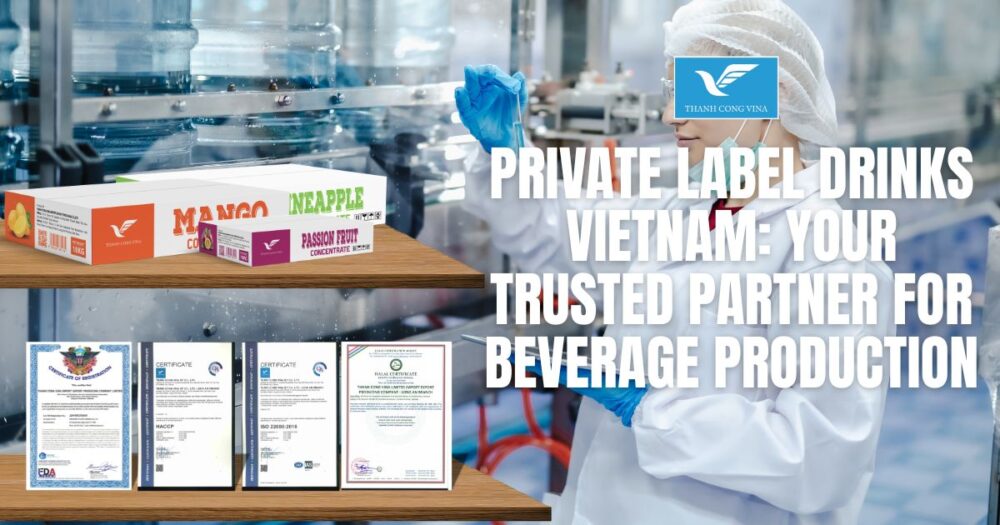
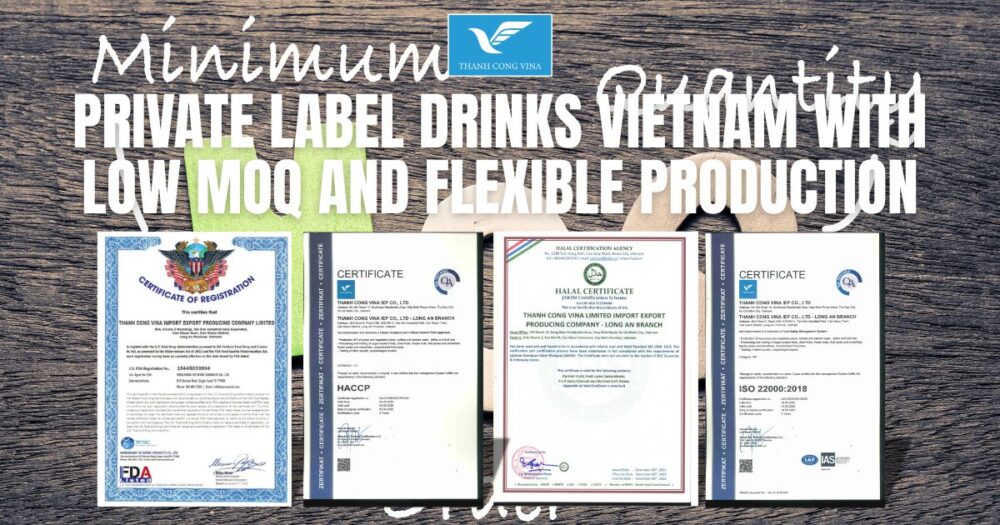
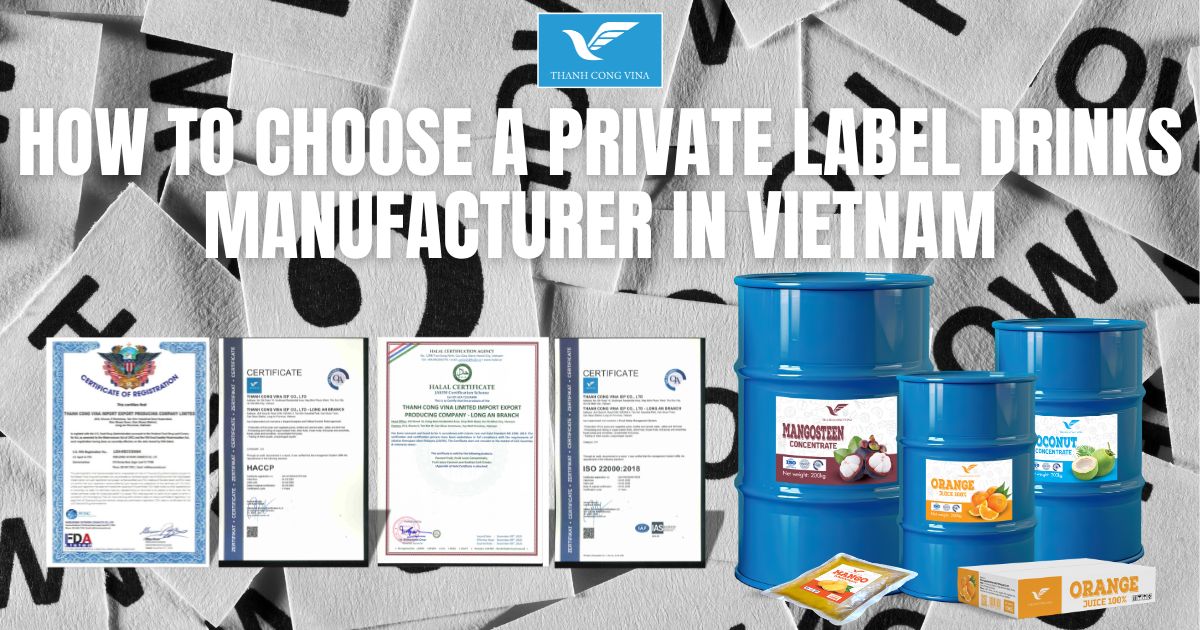
Food Safety Certifications
International buyers may require certifications or standards depending on the target market and product.
Common examples include:
- HACCP
- ISO
- HALAL
- FDA-related requirements
Certification requirements vary by country and product category. Buyers should verify the manufacturer’s current certification scope and ensure that it meets their specific market requirements.
7. Why Choose Thanh Cong Vina as Your Private Label Drinks Manufacturer?
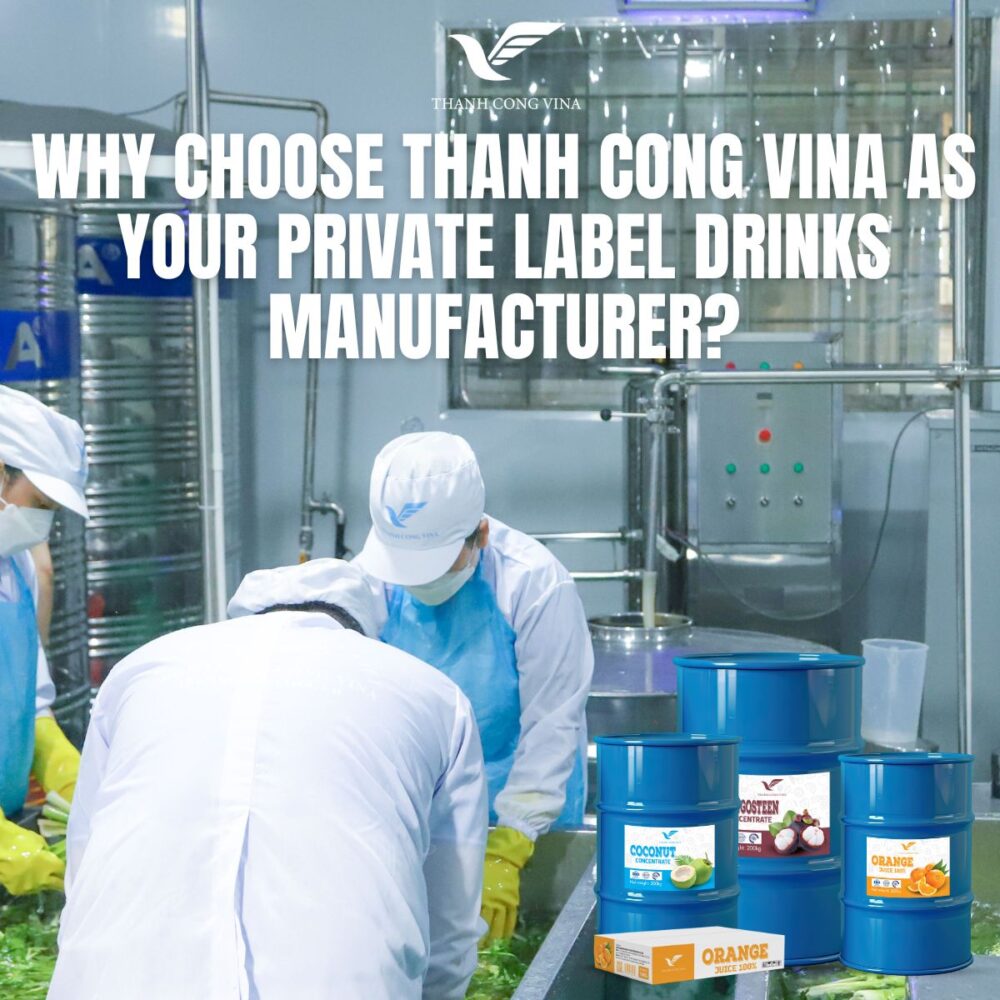
Why Choose Thanh Cong Vina as Your Private Label Drinks Manufacturer?
For companies searching for a reliable Private Label Drinks Manufacturer in Vietnam, Thanh Cong Vina provides OEM, ODM, and private label beverage manufacturing solutions for international B2B customers.
End-to-End Beverage Manufacturing
Thanh Cong Vina can support customers across the product development and manufacturing process, including:
- Product consultation
- Formula development
- Sample production
- Packaging
- Commercial manufacturing
- Quality control
- Export preparation
This integrated approach helps customers manage their beverage projects through one manufacturing partner.
Diverse Beverage Portfolio
Thanh Cong Vina supports multiple beverage categories, including:
- Fruit juices
- Fruit drinks
- Coconut water
- Aloe vera beverages
- Nata de coco drinks
- Ready-to-drink coffee
- Fruit juice concentrates
This diversity allows international buyers to develop multiple products and expand their beverage portfolio over time.
Focus on International B2B Customers
Global beverage buyers require more than production capacity. They need clear communication, consistent product specifications, quality management, suitable packaging, production planning, and export support.
Thanh Cong Vina focuses on customized beverage manufacturing for international customers, helping brands turn product concepts into commercially ready beverages.
Conclusion
Choosing a Private Label Drinks Manufacturer should be based on the complete manufacturing capability rather than price alone. International beverage buyers should evaluate R&D expertise, formulation flexibility, ingredient sourcing, packaging capabilities, quality-control systems, certifications, MOQ, production lead times, scalability, documentation, and export experience.
Vietnam offers an attractive environment for private label beverage manufacturing because of its tropical agricultural resources, growing food and beverage industry, competitive production environment, and strategic location. These advantages create opportunities for international brands to develop fruit juices, coconut water, aloe vera beverages, nata de coco drinks, ready-to-drink coffee, and other customized products.
Thanh Cong Vina Beverage provides OEM, ODM, and private label beverage manufacturing services designed for importers, distributors, retailers, startups, and established international beverage brands. Thanh Cong Vina supports customers from product concept and formulation through sample development, packaging, commercial production, quality control, and export preparation. This end-to-end approach helps simplify sourcing while giving customers greater control over product specifications, packaging, quality requirements, and market positioning. With a diverse beverage portfolio and an export-oriented B2B approach, Thanh Cong Vina aims to build reliable long-term manufacturing relationships with customers worldwide. For businesses seeking a dependable Private Label Drinks Manufacturer in Vietnam, Thanh Cong Vina offers the manufacturing capabilities, product development support, quality focus, and international supply-chain expertise needed to transform beverage ideas into market-ready products.