
This is why Private Label Drinks Vietnam has become an increasingly attractive option for companies seeking reliable beverage manufacturing solutions in Asia.Vietnam has developed a strong food and beverage manufacturing industry supported by abundant agricultural resources, competitive production capabilities, modern processing technology, and access to international markets. For global buyers, working with a Vietnamese beverage manufacturer can provide opportunities to develop customized drinks while maintaining control over branding, packaging, specifications, and target-market requirements.
From product formulation and ingredient selection to packaging, quality control, and export preparation, understanding how private label beverage manufacturing works in Vietnam helps buyers make better sourcing decisions and build stronger beverage brands.
1. Why Private Label Drinks Vietnam Is Attractive to Global Buyers
Why Private Label Drinks Vietnam Is Attractive to Global Buyers
Vietnam offers several advantages for companies looking to develop and manufacture beverages under their own brands. The country’s established agricultural sector provides access to a wide range of tropical fruits and natural ingredients, while its manufacturing industry has increasingly adopted international food safety and production standards.
Competitive Beverage Manufacturing Capabilities
One of the key reasons international buyers consider Vietnam is the balance between manufacturing capability and production cost. Vietnamese beverage factories can support different production volumes and product categories, allowing brands to develop products according to their commercial strategies.
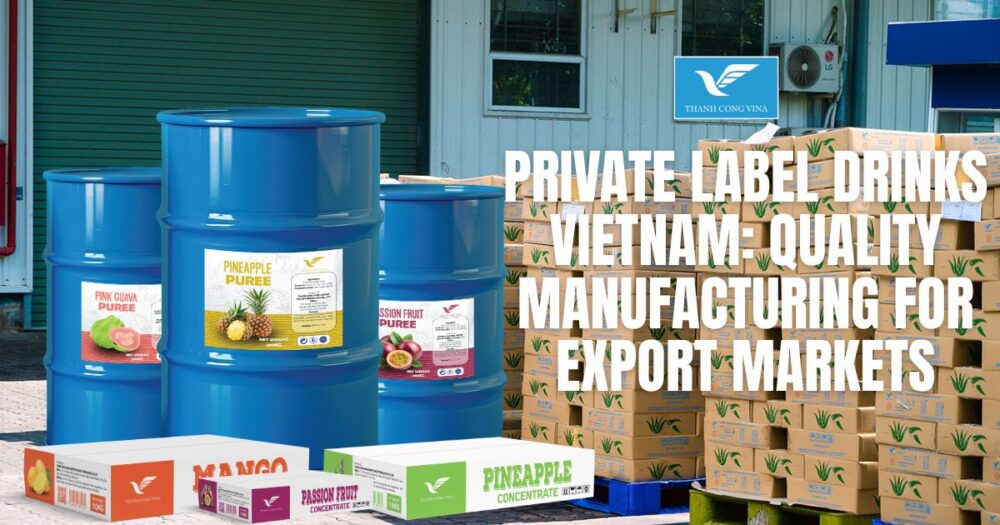
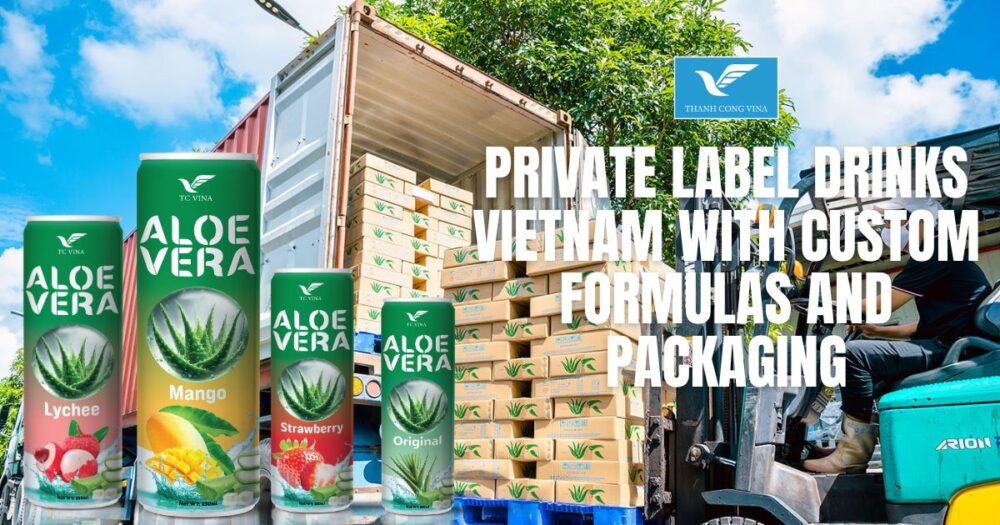
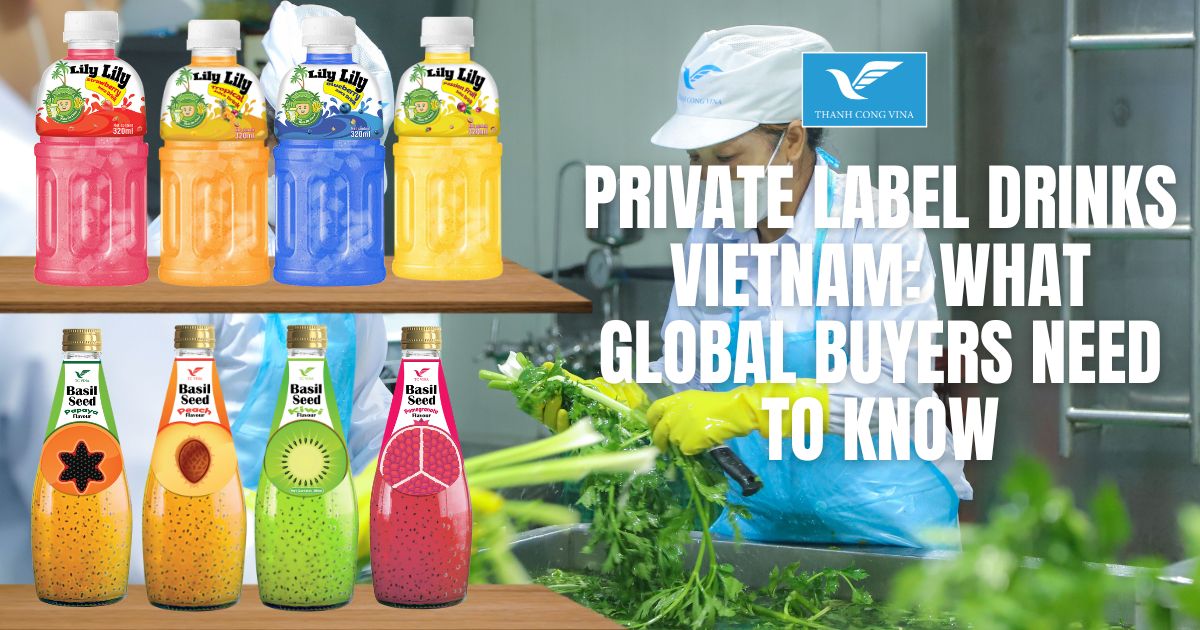
Depending on the project, buyers may source fruit juice drinks, coconut water, aloe vera beverages, ready-to-drink coffee, fruit-based drinks, juice concentrates, and other customized beverage products.
This flexibility allows startups, distributors, supermarket chains, and established beverage companies to explore new product concepts without necessarily investing in their own production facilities.
Access to Tropical Ingredients
Vietnam is well known for its agricultural resources and tropical fruit production. Ingredients such as coconut, mango, pineapple, passion fruit, dragon fruit, guava, lychee, and other fruits can become important components of beverage formulations.
For global brands, local ingredient sourcing can create opportunities to develop products with distinctive flavor profiles while supporting a more efficient supply chain.
Strategic Export Location
Vietnam’s location in Southeast Asia also provides convenient access to major Asian markets and international shipping routes. For importers, this can be an important consideration when developing a long-term beverage sourcing strategy.
A capable Vietnamese manufacturer can coordinate production, packaging, quality inspection, documentation, and export preparation, helping simplify the purchasing process for overseas buyers.
2. What Global Buyers Should Look for in a Private Label Beverage Manufacturer
Choosing a supplier involves much more than comparing product prices. A successful private label beverage project requires a manufacturer that can understand the buyer’s product concept and translate it into a commercially viable product.
Product Development and Custom Formulation
A reliable manufacturer should be able to support product development from the early concept stage.
Global buyers may have specific requirements related to:
- Flavor profile
- Fruit content
- Sweetness level
- Ingredient specifications
- Nutrition targets
- Functional ingredients
- Product texture
- Shelf life
- Serving size
- Target consumer
- Destination-market regulations
The manufacturer should have technical capabilities to evaluate these requirements and develop a formulation suitable for commercial production.
For example, a distributor targeting the Asian market may prefer a sweeter tropical fruit beverage, while a European brand may require a different nutritional profile and labeling format.
Flexible Packaging Solutions
Packaging is another important part of private label manufacturing. The same beverage can be positioned very differently depending on its packaging format.
Common options may include PET bottles, cans, cartons, glass bottles, and other formats depending on the product and production line.
Buyers should discuss packaging specifications at the beginning of the project, including:
- Packaging material
- Product volume
- Bottle or can design
- Label requirements
- Printing specifications
- Carton configuration
- Palletization
- Shipping requirements
A manufacturer capable of coordinating product and packaging development can reduce communication gaps and make the production process more efficient.
3. From Product Concept to Finished Private Label Beverage
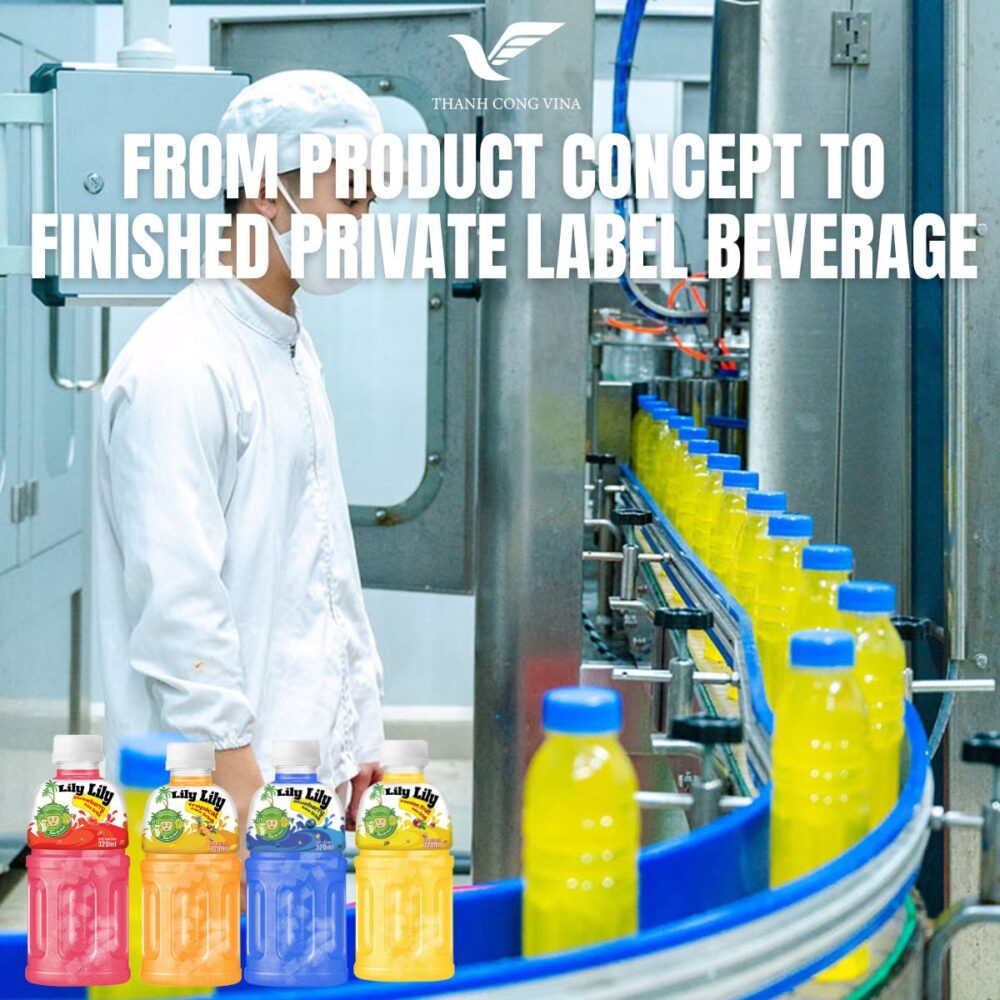
From Product Concept to Finished Private Label Beverage
A professional private label project normally involves multiple stages. Understanding this process allows buyers to estimate timelines, costs, and technical requirements more accurately.
Step 1: Product Brief and Market Requirements
The first stage is defining the product concept. Buyers should provide information about the intended market, target consumers, desired flavor, packaging size, expected price positioning, and regulatory requirements.
A detailed product brief helps the manufacturer understand the commercial objective behind the project.
Step 2: Formula Development and Sampling
After receiving the product brief, the manufacturer can develop initial formulations and samples.
Sampling is essential because it gives buyers an opportunity to evaluate flavor, appearance, aroma, texture, sweetness, acidity, and overall product performance before moving toward mass production.
Several rounds of sampling may be required for customized products. This is normal for private label projects because the final product needs to meet both technical specifications and consumer expectations.
Step 3: Packaging and Artwork Approval
Once the formula is approved, packaging development can move forward. Buyers typically provide brand guidelines, artwork, logo files, and mandatory labeling information.
The manufacturer can then coordinate packaging specifications and production requirements.
International buyers should carefully check the final artwork before mass production because labeling regulations can differ between countries.
Step 4: Commercial Production
After formula, packaging, and specifications are approved, the product enters commercial production.
A professional production process should include raw material inspection, controlled processing, filling, packaging, quality checks, and finished-product inspection.
Production planning is particularly important for export orders because delays at the manufacturing stage can affect shipping schedules and downstream distribution.
4. Quality Control and International Compliance
Quality assurance is one of the most important factors global buyers should evaluate when selecting a private label beverage supplier.
Food Safety Management
Beverage production involves multiple quality-control stages. These may include incoming raw material inspection, water quality monitoring, production-line controls, packaging inspection, microbiological testing, and finished-product evaluation.
Manufacturers working with international buyers should maintain documented procedures that support consistent product quality from batch to batch.
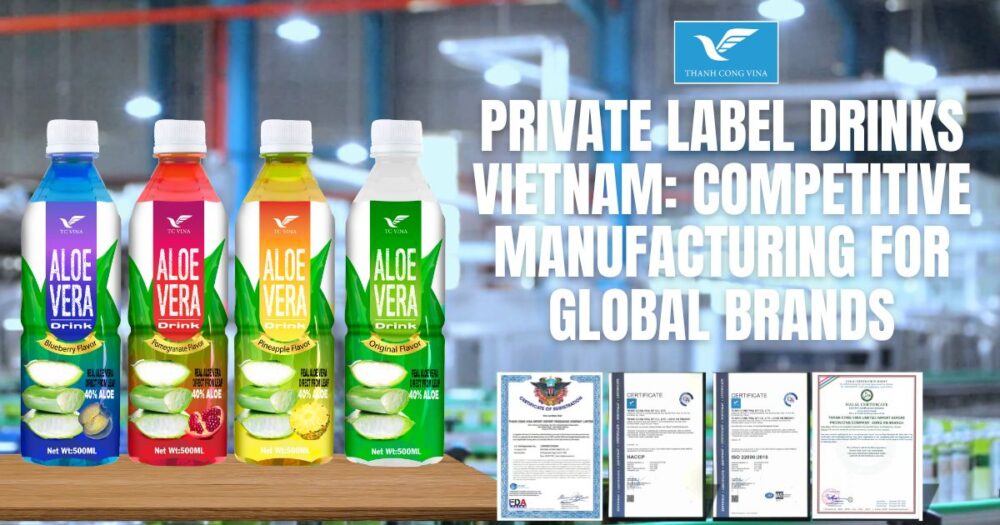
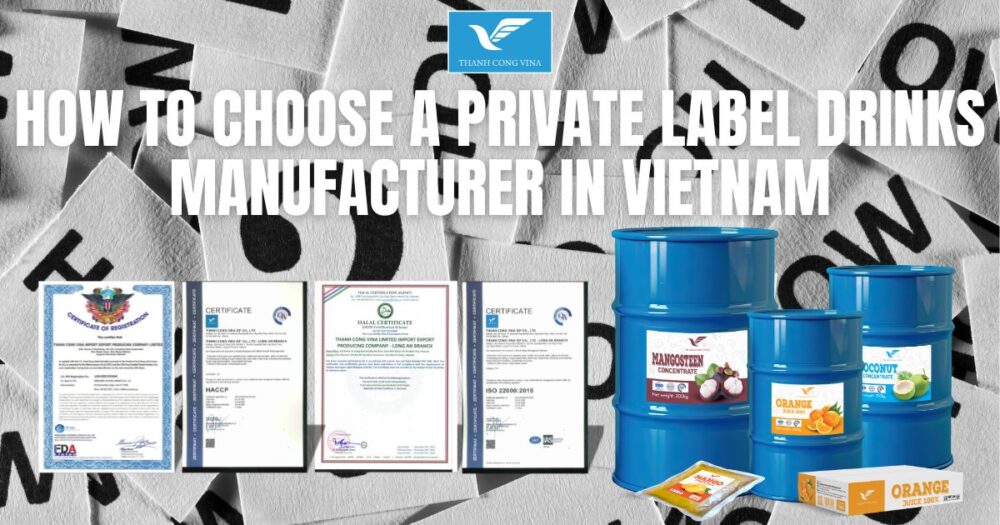
Certifications and food safety systems such as HACCP, ISO, HALAL, GMP, FSSC 22000, and other applicable standards can also be important depending on the product and destination market.
Export Documentation and Regulatory Requirements
Global buyers should confirm whether the manufacturer has experience preparing products for international markets.
Depending on the destination, documentation may include product specifications, certificates of analysis, ingredient information, health or sanitary documentation, certificates of origin, packaging details, and other export-related documents.
A manufacturer experienced in international trade can help buyers identify the documentation required before production and shipment.
This is particularly valuable for companies entering a new market because incomplete documentation can create unnecessary delays during customs clearance.
5. Cost, MOQ, Lead Time, and Supply Chain Considerations
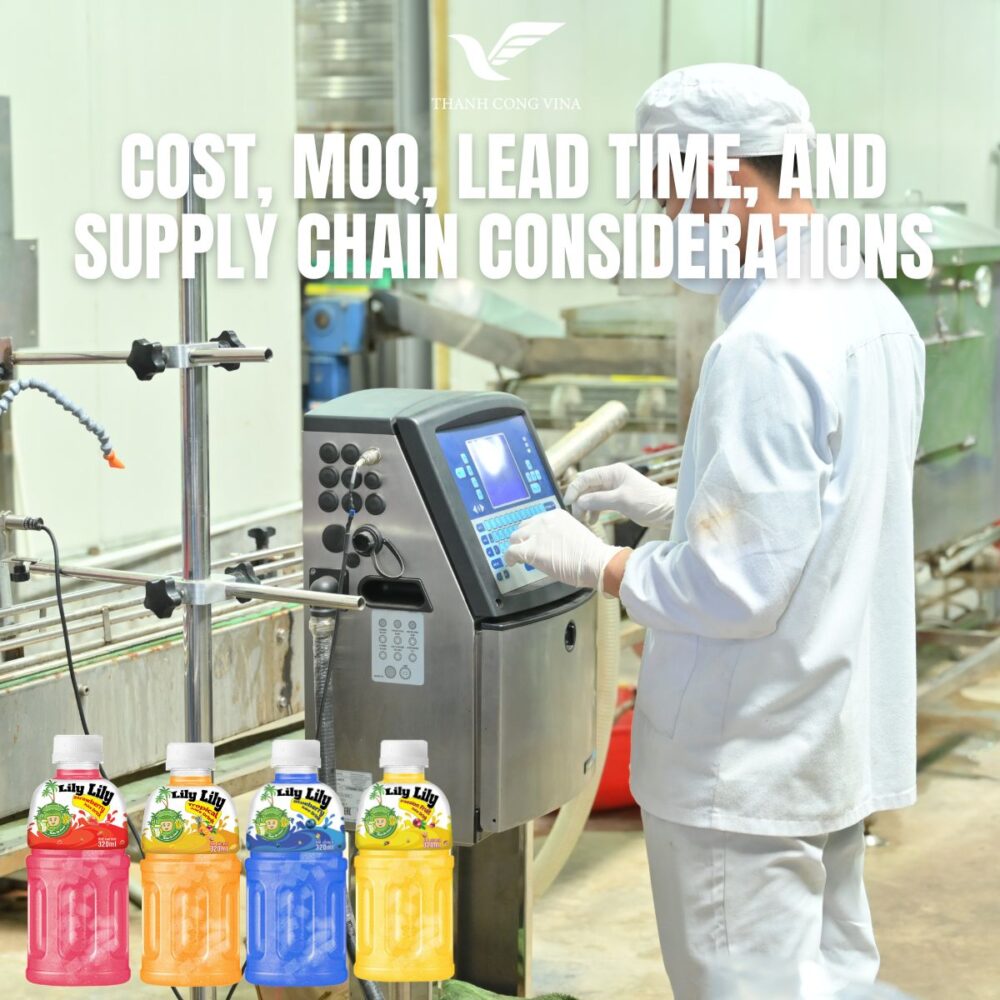
Cost, MOQ, Lead Time, and Supply Chain Considerations
Price is naturally an important consideration for global buyers, but the lowest quotation does not always represent the best overall value.
Understanding MOQ and Production Economics
Minimum order quantity, or MOQ, can vary according to the product, packaging format, ingredients, production line, and customization level.
For private label projects, buyers should evaluate the total production economics rather than looking only at the unit price.
A quotation should ideally clarify key elements such as:
- Product specification
- Packaging format
- Packaging quantity
- MOQ
- Production cost
- Packaging cost
- Testing requirements
- Shipping terms
- Payment conditions
- Estimated production lead time
Having these details clearly defined helps buyers compare suppliers more accurately.
Lead Time and Production Planning
Lead time can depend on formula approval, packaging availability, raw material sourcing, artwork approval, production scheduling, and order quantity.
Buyers should communicate their expected launch date early and work with the manufacturer to establish a realistic production timeline.
For recurring orders, demand forecasting can further improve supply-chain planning. Instead of placing orders only when inventory is nearly exhausted, distributors can coordinate production schedules according to expected market demand.
6. How to Build a Long-Term Partnership with a Vietnam Beverage Manufacturer
Private label manufacturing works best when the relationship goes beyond a single purchase order. A long-term manufacturing partnership can provide greater consistency and make future product development more efficient.
Consistent Product Quality
Once a product formula has been approved, maintaining consistency between production batches becomes essential.
The manufacturer should follow established product specifications and quality-control procedures so that buyers can deliver the same consumer experience across different shipments.
Product Portfolio Expansion
A successful private label beverage can become the starting point for a broader product portfolio.
For example, a brand that begins with one coconut beverage may later develop additional fruit flavors, different packaging sizes, juice products, or functional beverages.
Working with one experienced manufacturer can make this expansion easier because the supplier already understands the brand’s quality expectations and packaging requirements.
Communication and Technical Support
Clear communication is particularly important in international manufacturing.
Global buyers may need support with formulation adjustments, ingredient specifications, packaging development, labeling requirements, production schedules, quality documentation, and logistics coordination.
A responsive manufacturer can help identify potential problems early and reduce unnecessary revisions during the development process.
7. Why Choose Thanh Cong Vina for Private Label Beverage Manufacturing?
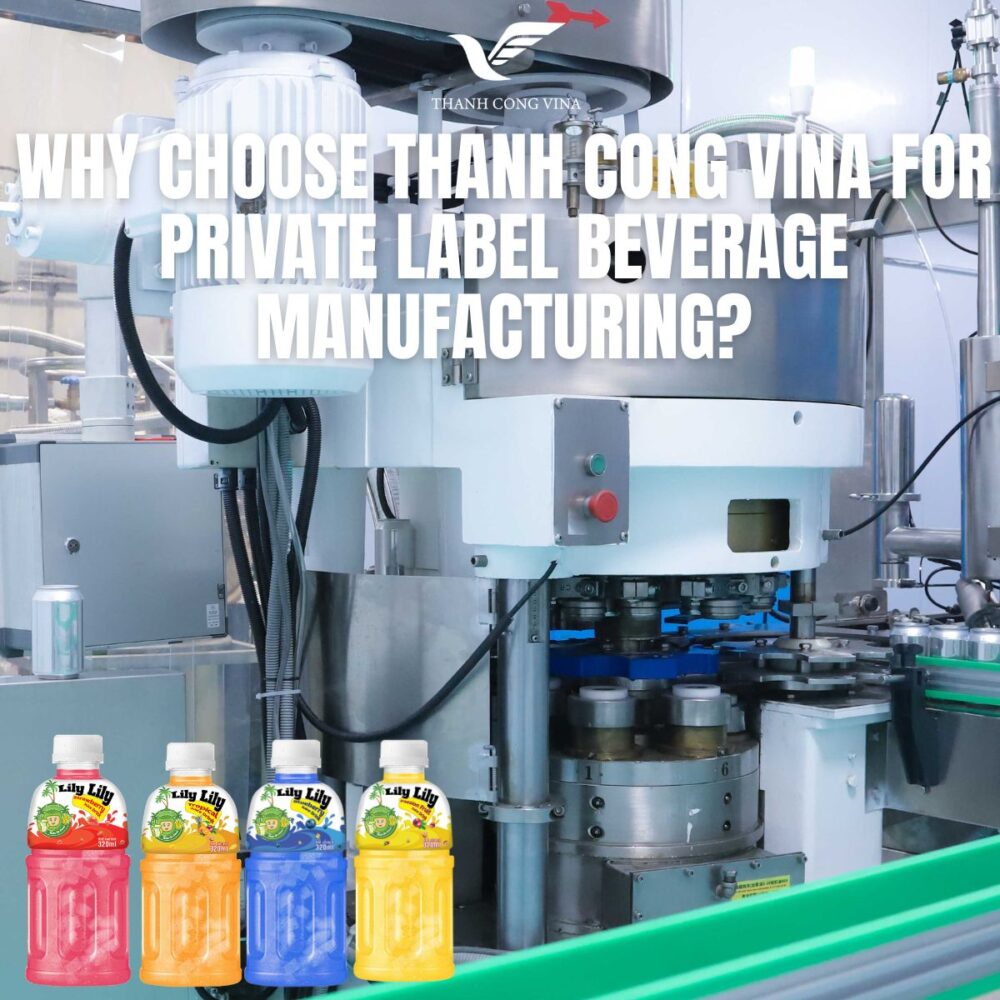
Why Choose Thanh Cong Vina for Private Label Beverage Manufacturing?
Thanh Cong Vina provides beverage manufacturing solutions designed for international buyers seeking customized products from Vietnam. With experience across multiple beverage categories, the company can support projects from product development through manufacturing and export preparation.
Diverse Beverage Product Capabilities
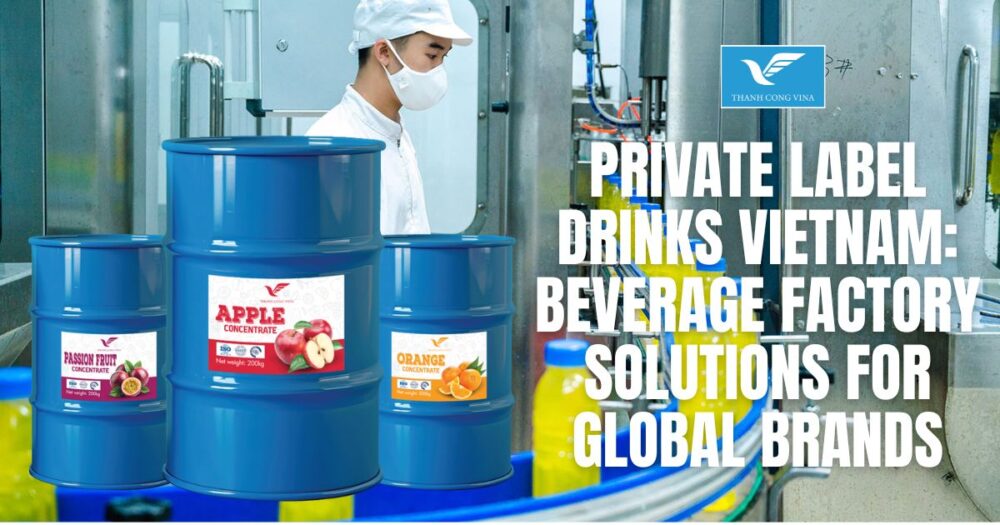
The company can develop and manufacture different beverage categories, including fruit juice drinks, coconut water, coconut water blended with real fruit juice, aloe vera beverages, ready-to-drink coffee, juice concentrates, and other customized beverage concepts.
This product diversity gives buyers greater flexibility when developing a private label portfolio.
Customized OEM and ODM Solutions
Every brand has different market requirements. Thanh Cong Vina can work with buyers on customized formulations, product specifications, packaging formats, and branding requirements.
This approach allows importers and distributors to create products that are better aligned with their target consumers rather than simply selecting standard products from an existing catalog.
Quality-Focused Manufacturing
Quality control is integrated into the production process, from raw material selection to finished-product inspection. For international buyers, this creates a stronger foundation for developing reliable products for retail and distribution channels.
By combining Vietnamese agricultural resources with structured manufacturing processes, Thanh Cong Vina supports companies looking for a practical and scalable beverage manufacturing partner.
Conclusion
The growing demand for customized beverages has created new opportunities for international brands, distributors, importers, and retailers. Private Label Drinks Vietnam offers a practical sourcing model for companies seeking flexible product development, competitive manufacturing, tropical ingredients, customized packaging, and export-oriented production capabilities. However, selecting the right manufacturer requires careful evaluation of formulation expertise, quality systems, certifications, MOQ, lead times, packaging capabilities, documentation, and communication. A strong supplier should be able to support the entire journey from initial concept and sampling to commercial production and international shipment. For businesses looking to develop a differentiated beverage portfolio, Thanh Cong Vina Beverage provides customized OEM and ODM manufacturing solutions across a broad range of beverage categories. With Thanh Cong Vina, global buyers can build private label beverage products designed around their brand identity, market requirements, and long-term growth strategy.