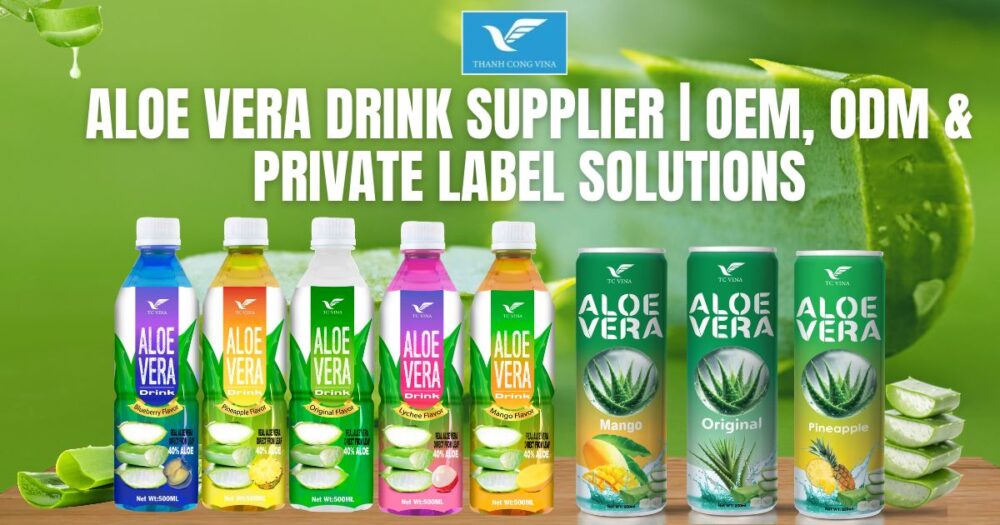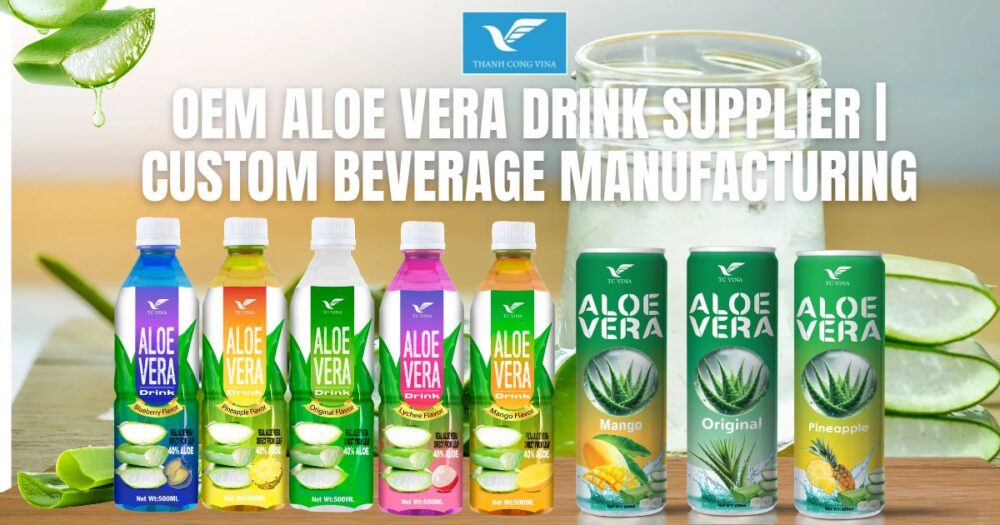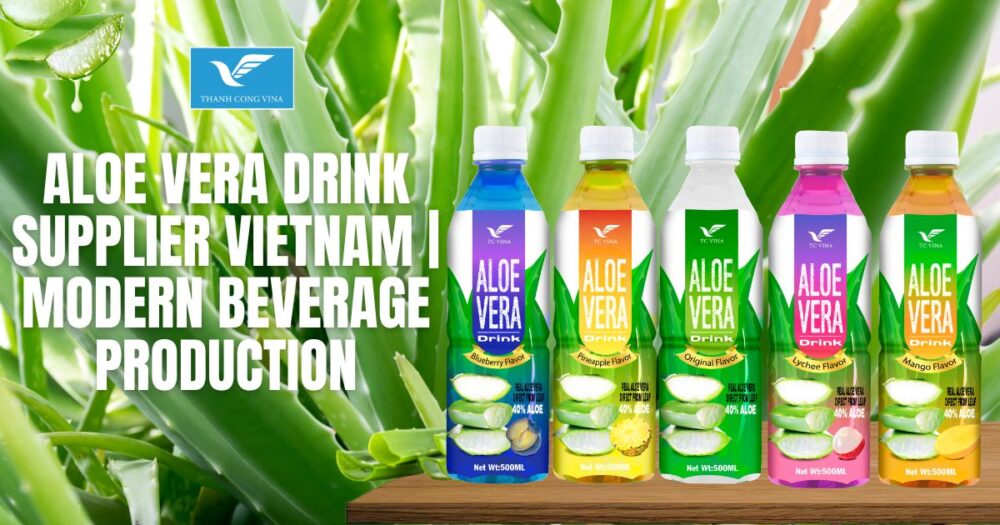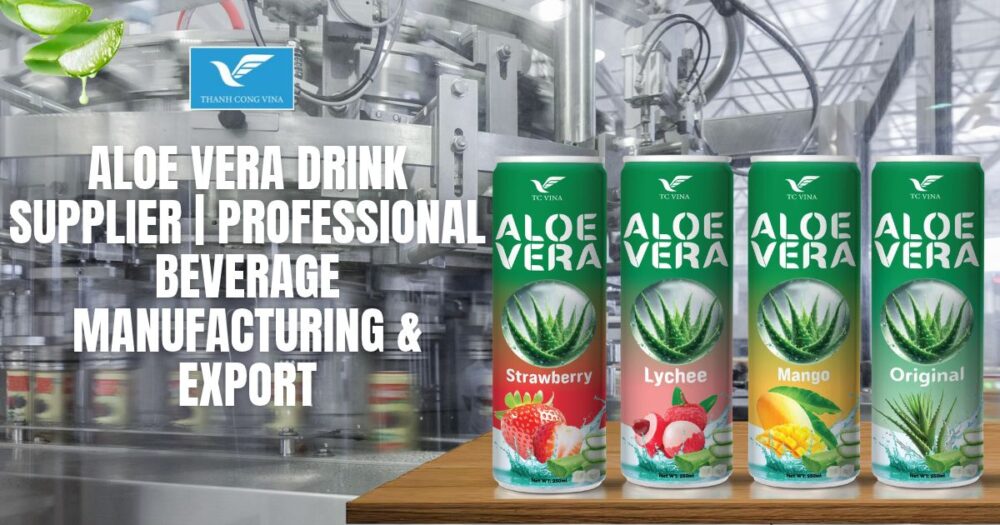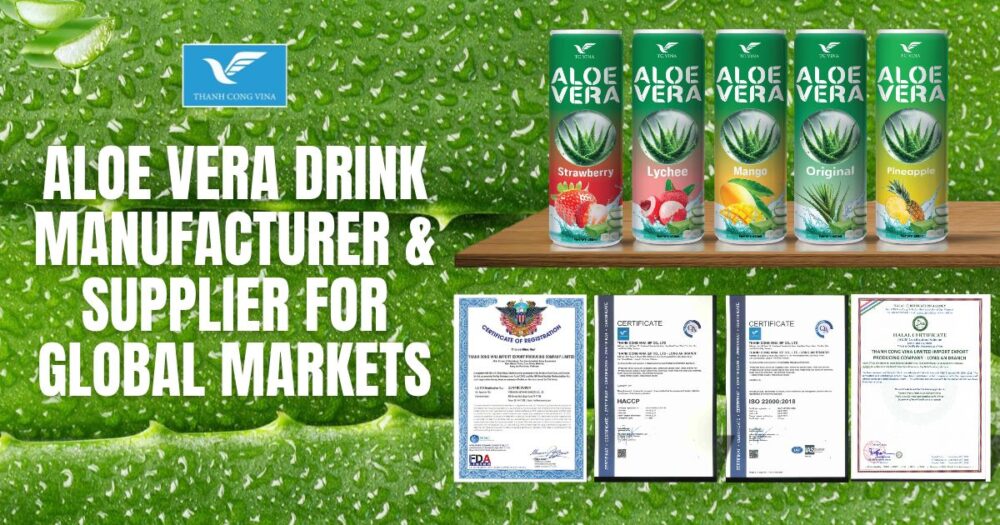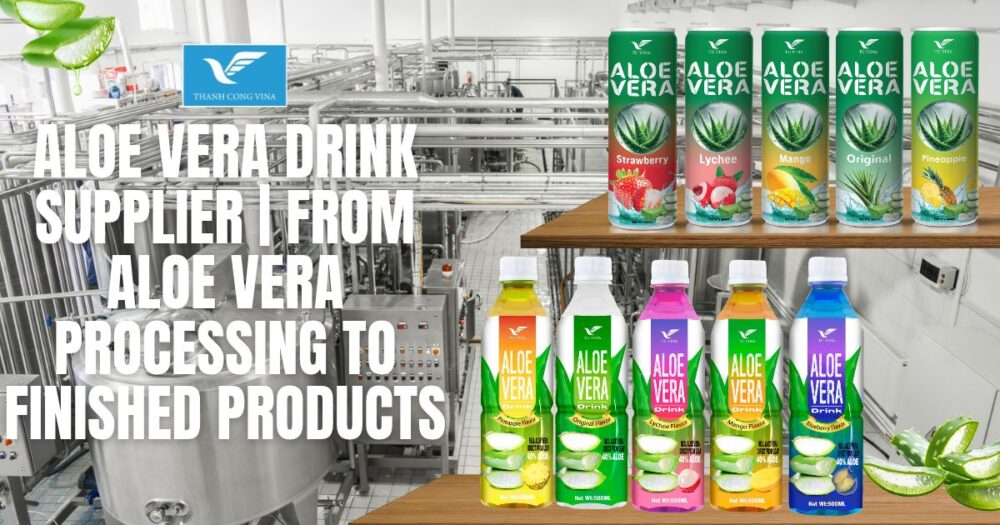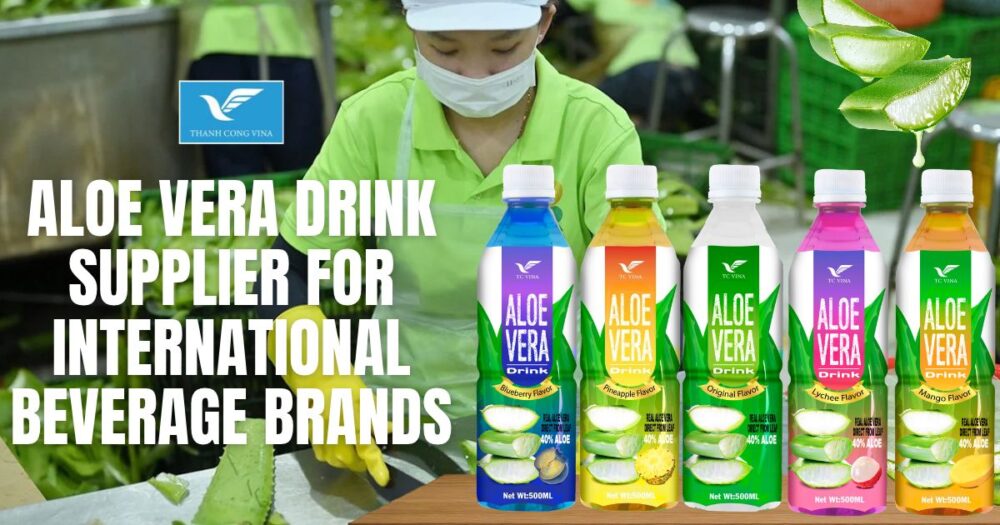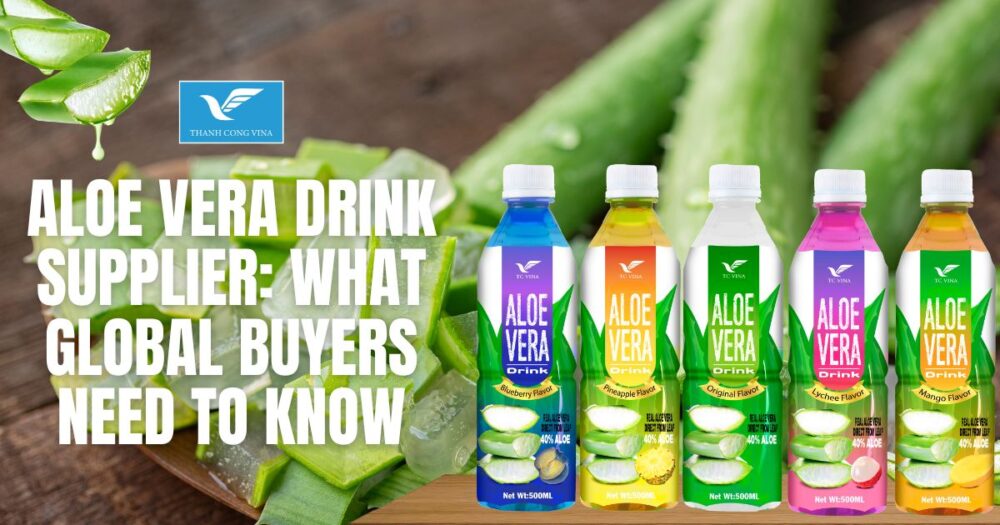

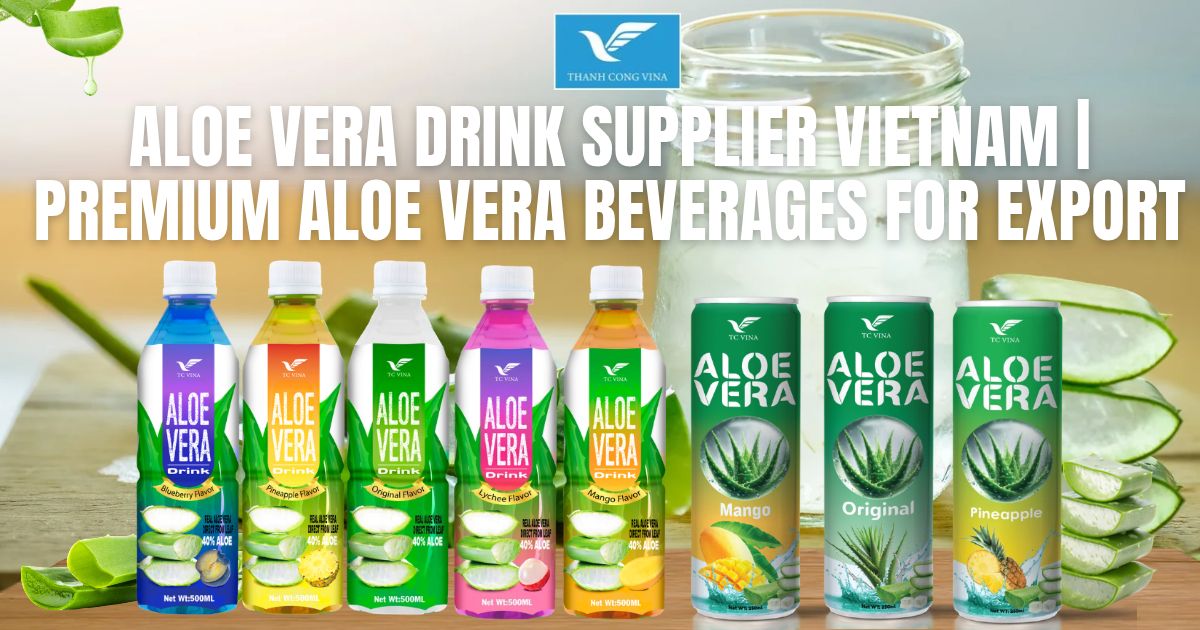
For international importers, distributors, and private label brands, finding a dependable Aloe Vera Drink Supplier Vietnam is an important step toward accessing products that meet commercial expectations and destination-market requirements. Vietnam offers an interesting sourcing environment for tropical fruit-based beverages, supported by its food processing sector and export-oriented business activities.
However, successful sourcing involves more than selecting an attractive product. Buyers need to evaluate ingredient specifications, sensory quality, production controls, packaging performance, and export documentation. This article explores the key factors that define premium aloe vera beverages and explains what international businesses should consider when choosing a Vietnamese supplier for long-term cooperation.
1. The Growing Export Potential of Aloe Vera Beverages from Vietnam
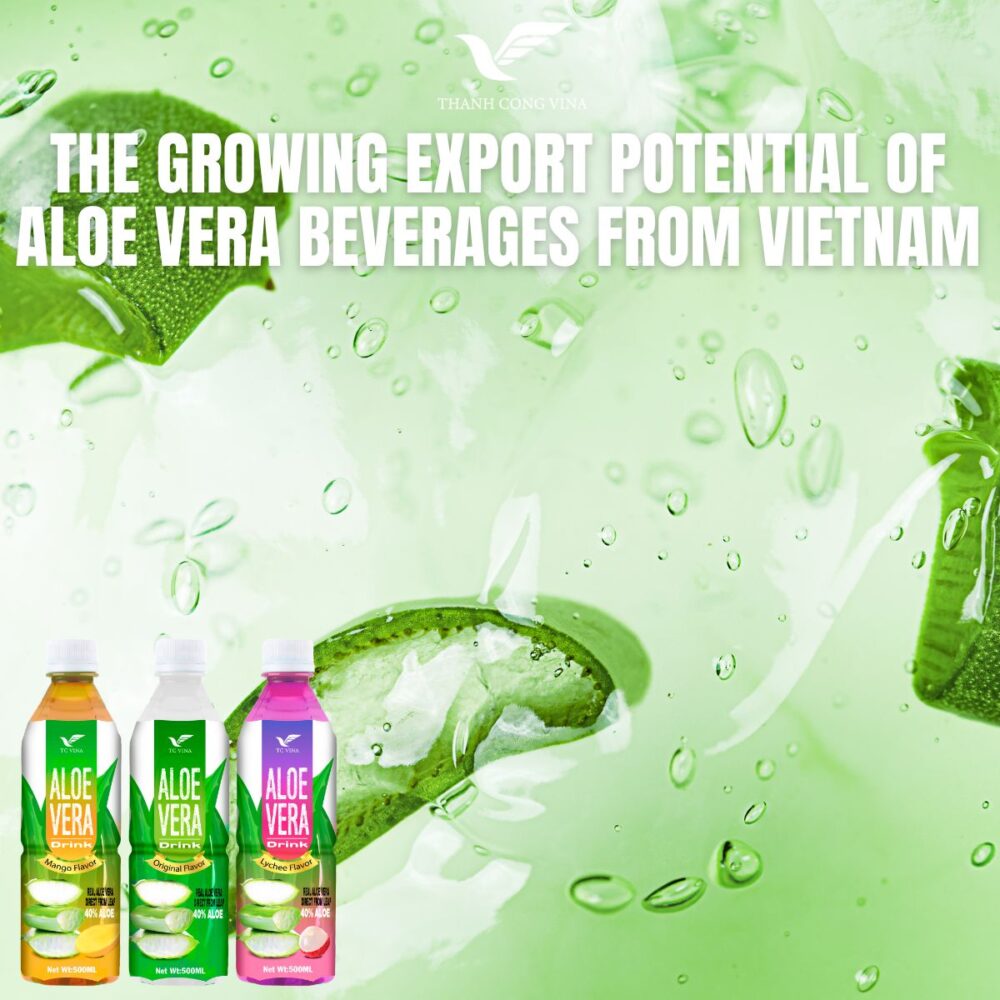
The Growing Export Potential of Aloe Vera Drink Supplier Vietnam
Aloe vera beverages occupy a distinctive position in the ready-to-drink category. Unlike conventional fruit juice drinks, they combine a liquid beverage base with aloe vera ingredients that contribute a recognizable texture and visual appearance.
A Distinctive Beverage Concept for International Consumers
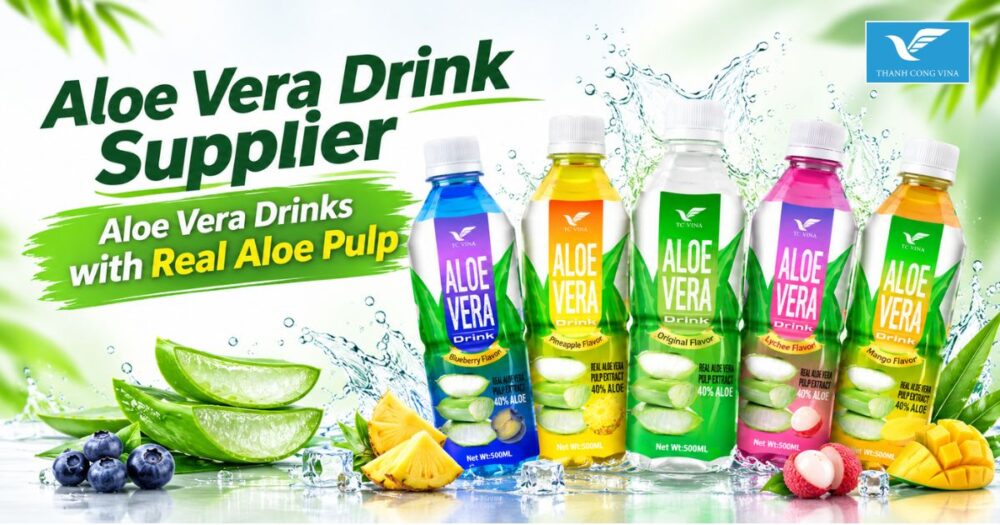
One of the main characteristics of aloe vera drinks is the presence of aloe vera pulp or pieces. These translucent ingredients provide a soft texture that differentiates the product from ordinary flavored water and traditional fruit beverages.
This combination creates opportunities for brands to develop products with a distinctive identity. Consumers who enjoy textured beverages may find aloe vera drinks an interesting alternative to conventional ready-to-drink options.
For importers, this characteristic provides a product story that can be communicated through packaging, retail presentation, and product descriptions. However, all marketing messages should accurately reflect the actual ingredients and characteristics of the finished beverage.
Vietnam as a Source of Tropical Beverage Products
Vietnam has an established agricultural sector and a developing food and beverage processing industry. Its tropical fruit resources and manufacturing environment create opportunities for businesses seeking different fruit-based beverage categories.
International buyers exploring Vietnamese suppliers may consider aloe vera drinks alongside coconut water, mango beverages, pineapple juice, passion fruit drinks, and other tropical products.
A diversified product portfolio can help importers evaluate opportunities across several beverage categories. Nevertheless, buyers should verify each manufacturer’s actual production capabilities, product availability, and raw material sourcing arrangements before entering a commercial agreement.
Opportunities for Export-Oriented Beverage Brands
Aloe vera beverages can be positioned across different retail and distribution channels, including supermarkets, convenience stores, wholesalers, and specialty beverage retailers.
Their market potential depends on several factors:
- Consumer familiarity with aloe vera beverages.
- Preferred flavor profiles and sweetness levels.
- Product composition and ingredient transparency.
- Packaging format and retail pricing.
- Destination-market regulations.
- Distribution and storage conditions.
A clear understanding of these factors helps importers identify suitable products and develop a realistic market-entry strategy.
2. Aloe Vera Drink Supplier Vietnam: What Defines a Premium Export Product?
Selecting an Aloe Vera Drink Supplier Vietnam requires more than comparing prices or reviewing product photographs. A premium export beverage should demonstrate consistency in its ingredients, sensory characteristics, packaging, and supporting documentation.
Ingredient Quality and Aloe Vera Pulp Characteristics
Aloe vera is the central ingredient that gives this beverage category its distinctive identity. The quality and characteristics of aloe vera pulp can influence the finished product’s appearance, texture, and overall drinking experience.
Important considerations include:
- Pulp size and distribution.
- Texture and consistency.
- Visual appearance.
- Ingredient specifications.
- Raw material handling and processing controls.
Buyers should request detailed product information and samples to evaluate whether the aloe vera pieces meet their expectations.
The product specification should clearly describe the relevant characteristics so that the manufacturer and buyer share the same quality expectations.
Flavor Balance and Sensory Performance
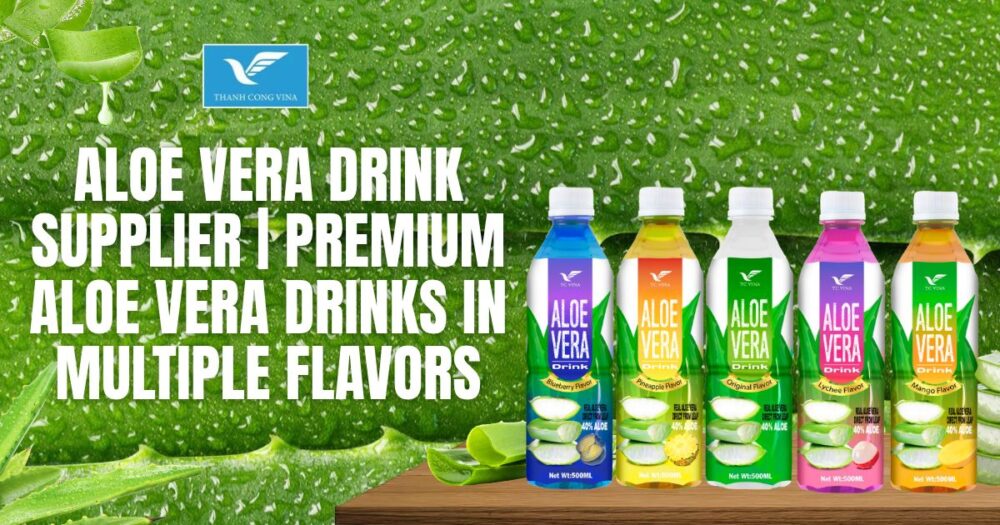
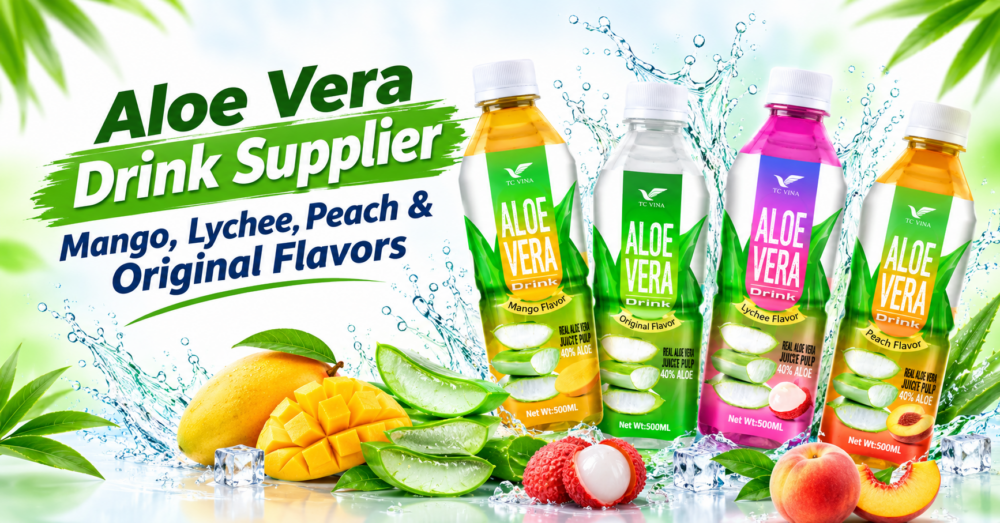
Aloe vera has a relatively mild flavor profile, allowing it to work with different fruit-inspired formulations. Popular options may include mango, lychee, peach, and original aloe vera.
Each flavor creates a different sensory direction. Mango offers a recognizable tropical fruit profile, lychee contributes a delicate aroma, peach provides a smooth fruit character, while Original emphasizes a simpler aloe vera beverage experience.
For export products, flavor consistency is especially important. A beverage should maintain its agreed taste, aroma, sweetness, and texture across production batches.
Buyers should evaluate samples based on the intended market and establish clear sensory specifications before confirming a commercial order.
Product Appearance and Consumer Experience
Visual appearance can influence purchasing decisions, particularly when the beverage contains visible aloe vera pieces.
The liquid color, pulp distribution, and overall presentation should match the product’s intended positioning. If transparent packaging is used and technically suitable, it may help communicate the product’s distinctive texture.
Product appearance should also remain consistent with the approved sample and agreed specifications. Importers can discuss acceptable variations and relevant quality criteria with the manufacturer before production.
3. Product Development and Formulation for Different Export Markets
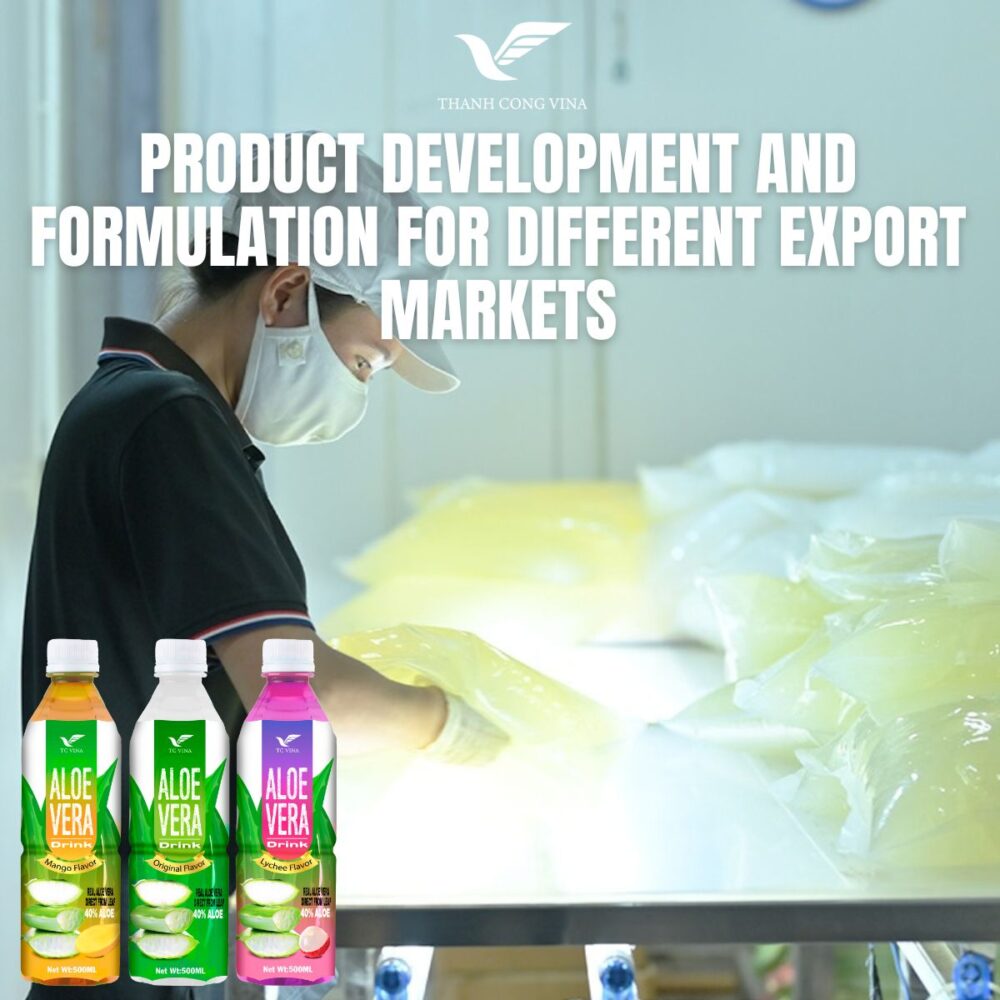
Product Development and Formulation for Different Export Markets
A premium aloe vera beverage should be developed with a clear understanding of its target consumers and intended market. Flavor selection, ingredient composition, sweetness, and product presentation may require different approaches depending on regional preferences.
Creating a Balanced Flavor Portfolio
A diversified aloe vera beverage range can help brands address different consumer preferences without moving away from the core product concept.
Common flavor options include:
Mango Aloe Vera Drink
Mango is a familiar tropical fruit flavor with a recognizable aroma and sweet profile. It can be considered for consumers who enjoy tropical beverages and prefer a more pronounced fruit character.
Lychee Aloe Vera Drink
Lychee offers a delicate sweetness and floral aroma. It provides an alternative to stronger tropical flavors and can support a lighter product positioning.
Peach Aloe Vera Drink
Peach contributes a smooth and approachable fruit profile. It can appeal to consumers who prefer a mild fruit aroma and balanced sweetness.
Original Aloe Vera Drink
Original provides a simpler option that places greater emphasis on the aloe vera beverage experience rather than a dominant fruit flavor.
The final flavor selection should be based on product availability, market research, and the manufacturer’s formulation capabilities.
Adapting Sweetness and Flavor Intensity
Consumer preferences vary between markets. Some customers may prefer sweeter beverages, while others may favor lighter sweetness and a more refreshing taste.
Importers should communicate their target consumer profile and provide clear feedback during product evaluation.
Relevant formulation considerations include:
- Sweetness level.
- Acidity and flavor balance.
- Aroma intensity.
- Aloe vera pulp characteristics.
- Overall mouthfeel.
- Aftertaste.
Any requested formulation changes should be assessed for technical feasibility, regulatory compliance, and commercial practicality.
Building Products Around Market Requirements
A beverage intended for a supermarket chain may have different specifications from one developed for a specialty retailer or foodservice distributor.
Before finalizing the formulation, brands should identify the product’s intended sales channel, retail positioning, price range, and destination-market requirements.
This approach helps avoid developing products that may be technically suitable but commercially misaligned with the intended market.
4. Quality Management and Food Safety in Aloe Vera Beverage Manufacturing
Quality management is a fundamental consideration when sourcing beverages for international distribution. Buyers need confidence that the product meets agreed specifications and that appropriate manufacturing controls are applied.
Raw Material Management and Traceability
Ingredient management begins before production. Manufacturers should establish appropriate procedures for receiving, identifying, and evaluating raw materials used in aloe vera beverages.
Relevant information may include ingredient specifications, supplier documentation, batch identification, and incoming material checks.
Traceability supports the ability to identify the origin and movement of ingredients through the supply chain. It can also help businesses investigate quality concerns and respond to documentation requests.
Importers should ask what traceability information is available for the specific product and whether it meets their internal purchasing requirements.
Production Controls and Finished Product Evaluation
Manufacturing controls help ensure that products meet established specifications.
Depending on the formulation and production process, relevant controls may cover ingredient preparation, processing conditions, filling operations, packaging integrity, and finished-product inspection.
Finished-product evaluation may include parameters such as:
- Appearance and color.
- Flavor and aroma.
- pH and other relevant physicochemical parameters.
- Microbiological specifications.
- Aloe vera pulp characteristics.
- Packaging condition and closure integrity.
The specific testing requirements should be determined according to the product category, manufacturing process, and applicable regulations.
Certifications and Supporting Documentation
International buyers may request documentation to assess a manufacturer’s quality management systems and regulatory readiness.
Potential documents may include product specifications, ingredient declarations, laboratory test reports, and applicable food safety certificates.
Any certificate should be checked for its issuing organization, facility, scope, and validity period. Buyers should not assume that a general company certificate automatically covers every product or manufacturing site.
Clear documentation helps importers evaluate product suitability and prepare for the requirements of their destination markets.
5. Packaging and Export Readiness for Premium Aloe Vera Drinks
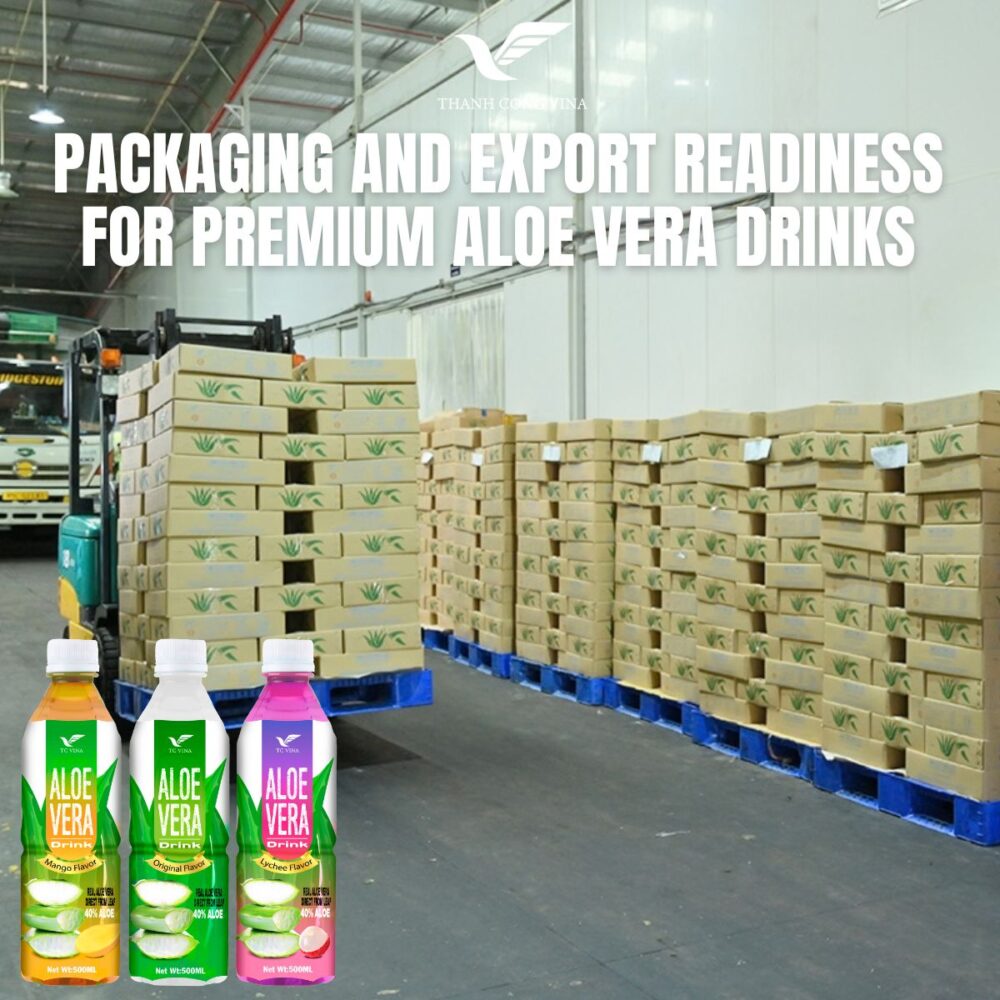
Packaging and Export Readiness for Premium Aloe Vera Drink Supplier Vietnam
Packaging is a critical part of international beverage distribution. It protects the product, communicates its identity, and influences transportation and retail performance.
Choosing Packaging That Matches the Product
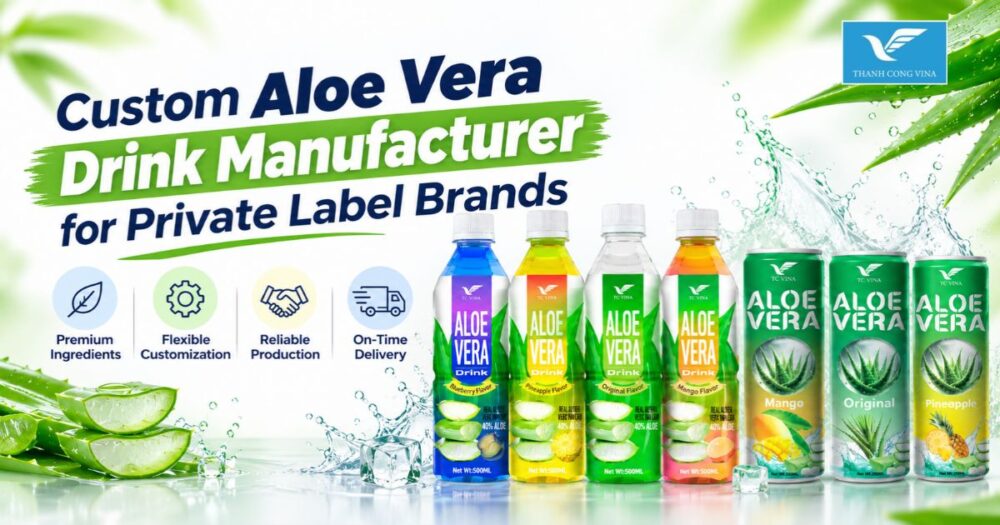
Aloe vera beverages may be considered in different packaging formats depending on the product specification and available manufacturing capabilities.
Common beverage packaging formats include:
- PET bottles: Lightweight and practical for many ready-to-drink applications.
- Aluminum cans: Suitable for selected beverage concepts and retail environments.
- Glass bottles: May support premium product positioning.
- Carton packaging: Used for various packaged beverage categories.
Each format has different requirements for filling, sealing, storage, transportation, and product compatibility.
Buyers should confirm which options are available for their selected formulation rather than assuming that every packaging format can be used for every product.
Designing Packaging for International Retail
Premium packaging should communicate the beverage’s identity while providing clear product information.
For Aloe Vera Drink Supplier Vietnam, the design may highlight the aloe vera ingredient, flavor variant, net volume, and brand identity. Consistent visual elements across different flavors can help create a recognizable product family.
Label requirements vary by destination market. Depending on local regulations, packaging may need to include:
- Product name and category.
- Ingredient declaration.
- Nutrition information.
- Net volume.
- Manufacturer and responsible business details.
- Country of origin, where required.
- Date marking and storage instructions.
- Required allergen or regulatory statements.
All information should be reviewed before mass production to reduce the risk of labeling errors.
Planning International Transportation and Storage
Export shipments may involve long transportation distances and multiple handling stages. Packaging must therefore be suitable for the intended distribution process.
Importers should discuss carton specifications, packing configuration, palletization, container loading, and storage recommendations with the supplier.
They should also confirm the declared shelf-life and storage conditions for the specific product.
A well-planned packaging and logistics arrangement can help reduce product damage, support efficient shipping, and protect the commercial value of each shipment.
6. How International Buyers Can Evaluate a Vietnamese Aloe Vera Beverage Supplier
Choosing a supplier is a strategic decision that can influence product consistency, purchasing costs, and the reliability of future orders.
Review Manufacturing Capabilities and Product Availability
Buyers should begin by confirming whether the supplier offers the specific aloe vera beverage category they require.
Important questions include:
- Which flavors are currently available?
- What packaging formats and sizes can be considered?
- What are the minimum order quantities?
- Are formulation adjustments possible?
- What are the expected production lead times?
- Which product specifications and documents are available?
These questions help importers understand whether the supplier’s actual capabilities match their commercial needs.
Request Samples and Compare Product Specifications
Product samples provide an opportunity to evaluate the beverage before placing a commercial order.
Buyers should compare the sample with the supplier’s technical information, paying attention to flavor, sweetness, pulp texture, appearance, and packaging.
If the product is intended for a specific market, the evaluation should also consider local consumer preferences and applicable regulatory requirements.
Once the product is approved, the agreed specifications should be documented to provide a reference for future orders.
Assess Commercial Communication and Long-Term Reliability
A supplier relationship requires clear communication and practical planning.
Importers should discuss pricing, payment terms, minimum order quantities, production schedules, shipment arrangements, and procedures for managing quality concerns.
It is also useful to understand how the supplier communicates production updates and handles changes to agreed specifications.
A transparent business process helps both parties establish realistic expectations and evaluate opportunities for repeat orders.
7. Exploring Premium Aloe Vera Beverage Opportunities with Thanh Cong Vina
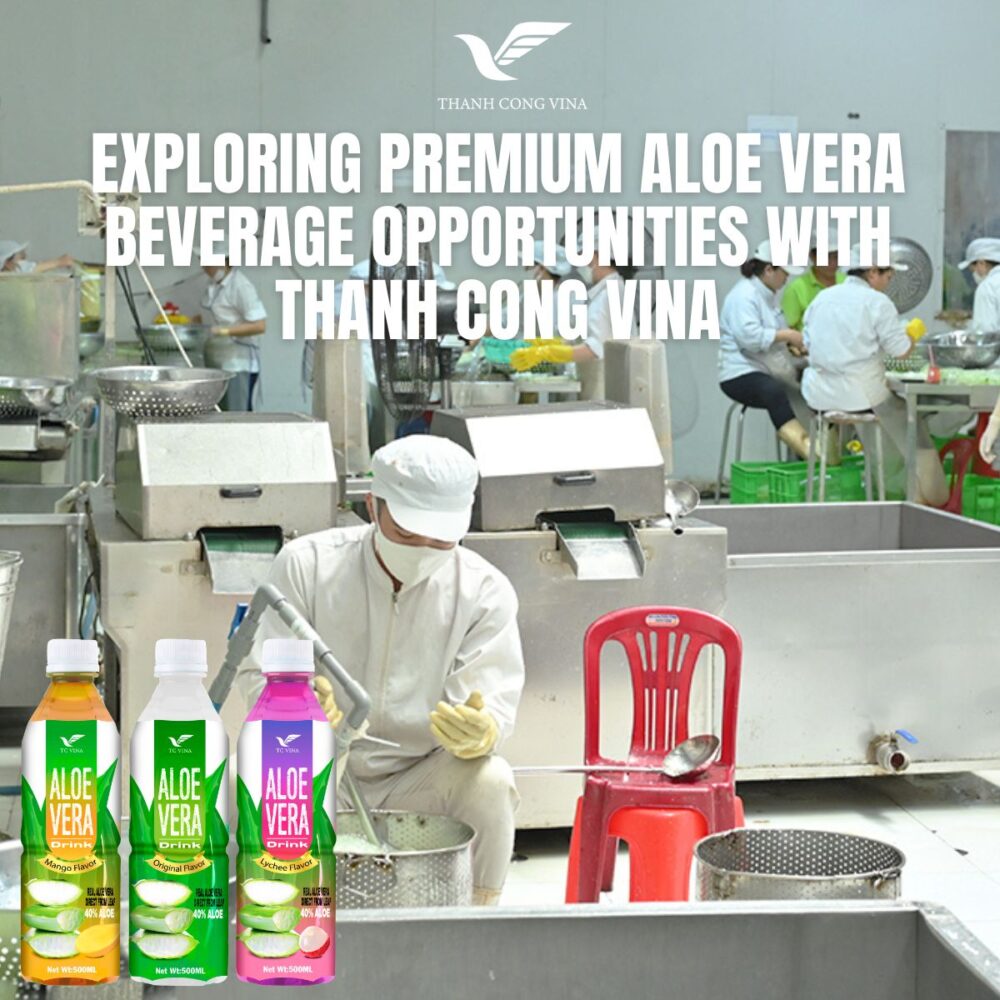
Exploring Premium Aloe Vera Beverage Opportunities with Thanh Cong Vina
For international businesses seeking tropical beverage products from Vietnam, Thanh Cong Vina is a company worth contacting when exploring aloe vera drinks and related beverage categories.
Exploring Aloe Vera Drink Flavors
Aloe vera beverages can be developed in several flavor directions to serve different market preferences.
Mango, Lychee, Peach, and Original are options that offer different sensory profiles while maintaining the recognizable aloe vera beverage concept.
Importers and distributors can discuss the available product range, formulation details, and packaging options directly with the company to identify suitable products for their target markets.
Aligning Product Specifications with Export Requirements
International buyers may have specific requirements concerning ingredients, pulp characteristics, sweetness, packaging, shelf-life, and product documentation.
Providing these requirements at the beginning of the sourcing process can help both parties evaluate product suitability more effectively.
Buyers should also identify their destination market and review applicable food safety, labeling, and import regulations before confirming an order.
Developing Long-Term Business Cooperation
A successful export partnership depends on more than product availability. Consistent communication, clear specifications, realistic production planning, and reliable documentation all contribute to long-term cooperation.
By discussing commercial expectations and product requirements in advance, importers and suppliers can establish a practical foundation for future business opportunities.
Conclusion
Premium aloe vera beverages offer international brands an opportunity to diversify their ready-to-drink portfolios with distinctive texture, flexible flavor options, and tropical product positioning. However, successful export sourcing requires careful evaluation of ingredient quality, aloe vera pulp characteristics, formulation consistency, manufacturing controls, packaging performance, and destination-market compliance. Importers should request samples, review technical documentation, and establish clear product specifications before confirming commercial orders.
For businesses searching for an Aloe Vera Drink Supplier Vietnam, Thanh Cong Vina Beverage is worth contacting to explore aloe vera beverages and other tropical drink opportunities from Vietnam. By discussing product requirements, flavor options, packaging specifications, and export expectations with Thanh Cong Vina, international buyers can evaluate suitable products for their distribution strategies. A structured sourcing approach can support consistent product quality, stronger market positioning, and sustainable business relationships across global beverage markets.