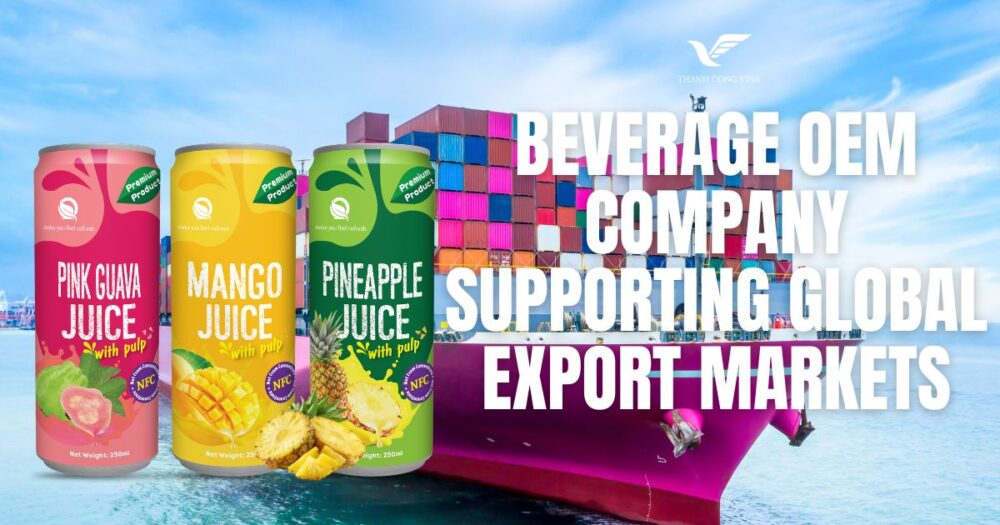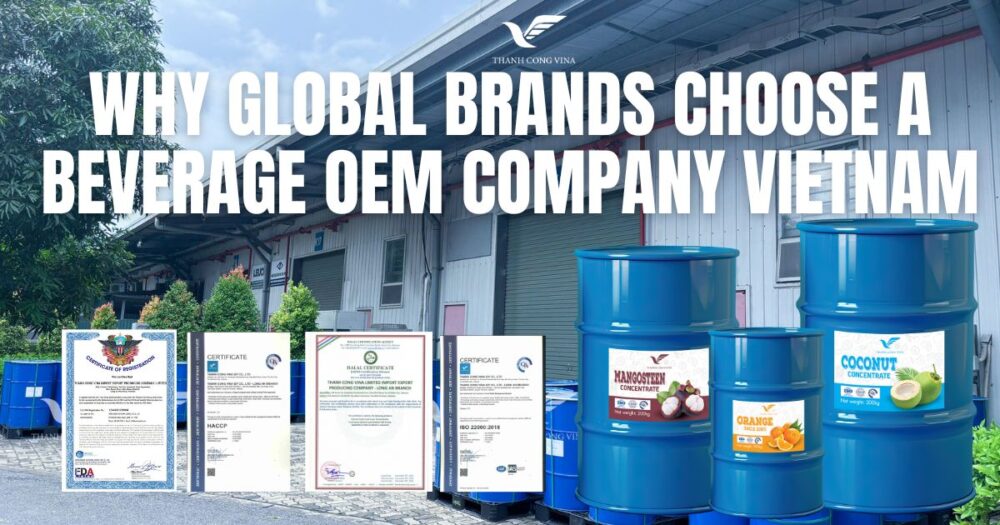

Finding a reliable Beverage OEM Company is essential for brands that want to develop customized drinks, launch private-label products, or expand their beverage portfolio without building their own manufacturing facility. As global beverage markets become increasingly competitive, businesses need more than basic production capacity. They require a manufacturing partner with strong research and development capabilities, flexible formulation, consistent quality control, modern production systems, and the ability to meet international market requirements.
OEM and ODM manufacturing provide practical solutions for importers, distributors, retailers, startups, foodservice companies, and established beverage brands. Instead of managing every technical aspect internally, companies can collaborate with an experienced manufacturer that supports product development from concept and formulation through production, packaging, quality assurance, and export preparation.
A trusted Beverage OEM Company can also help brands respond more quickly to consumer trends. Whether the product is a tropical fruit drink, coconut water, aloe vera beverage, ready-to-drink coffee, functional drink, or customized private-label beverage, an experienced OEM and ODM manufacturer can turn a product idea into a scalable commercial solution.
1. What Is an OEM and ODM Beverage Manufacturer?
What is an OEM and ODM Beverage Manufactuer
OEM and ODM are two common manufacturing models used by beverage brands worldwide. Understanding the difference helps businesses choose the right production strategy.
OEM Beverage Manufacturing
OEM stands for Original Equipment Manufacturer.
In an OEM model, the customer generally provides detailed product specifications or an existing formula, while the manufacturer handles the production process.
The customer may define:
- Product formula
- Ingredients
- Flavor profile
- Fruit content
- Packaging format
- Product specifications
- Quality requirements
The manufacturer then produces the beverage according to the approved specifications.
OEM manufacturing is particularly suitable for companies that already have a developed product concept and need a reliable factory capable of producing it consistently.
ODM Beverage Manufacturing
ODM stands for Original Design Manufacturer.
With ODM manufacturing, the factory typically provides greater support during product development. The manufacturer may contribute its own technical expertise, formulas, ingredient recommendations, and product concepts.
This model is ideal for businesses that have a market opportunity but do not have a finalized beverage formula.
An ODM partner can help with:
- Product concept development
- Formula creation
- Ingredient selection
- Flavor development
- Sample production
- Product optimization
- Packaging recommendations
The customer can then customize the product to align with its brand and market requirements.
OEM vs. ODM: Which Is Better?
Neither model is universally better.
OEM is often appropriate when a buyer has a specific formula and technical specification. ODM is more suitable when the buyer wants technical assistance in creating a new beverage.
A professional Beverage OEM Company may offer both approaches, allowing customers to choose the manufacturing model that best matches their internal capabilities.
2. Beverage OEM Company for Customized Beverage Development
Customization is one of the biggest advantages of working with an experienced Beverage OEM Company.
Today’s consumers increasingly seek beverages that offer distinctive flavors, convenient formats, and differentiated product benefits. Standardized products may not always provide enough flexibility for brands targeting specific market segments.
Beverage Formula Development
R&D teams can develop formulas based on the buyer’s requirements.
Customization can involve:
- Flavor intensity
- Sweetness
- Acidity
- Fruit percentage
- Ingredients
- Nutritional composition
- Texture
- Aroma
- Functional components
For example, a brand may want to develop a mango beverage with a specific fruit percentage and reduced sweetness for a particular export market.
The manufacturer can adjust the formula through multiple sample stages until the desired sensory characteristics are achieved.
Ingredient Selection
Ingredient selection can significantly affect beverage quality.
An experienced manufacturer can recommend suitable ingredients based on:
- Product category
- Target market
- Cost requirements
- Flavor objectives
- Processing conditions
- Shelf-life expectations
For tropical fruit beverages, Vietnam provides access to a broad range of locally available ingredients.
Potential fruit ingredients include:
- Mango
- Passion fruit
- Pineapple
- Orange
- Pink guava
- Peach
- Lychee
- Soursop
- Dragon fruit
- Melon
This creates opportunities for brands to develop products with distinctive tropical profiles.
Sample Development
Before commercial production, customers can evaluate product samples.
A typical process includes:
- Initial product brief
- Formula development
- Laboratory testing
- Sample production
- Customer evaluation
- Formula adjustment
- Final approval
This process helps ensure that the final product matches the buyer’s expectations before large-scale manufacturing begins.
3. Beverage Product Categories Supported by OEM and ODM Manufacturing
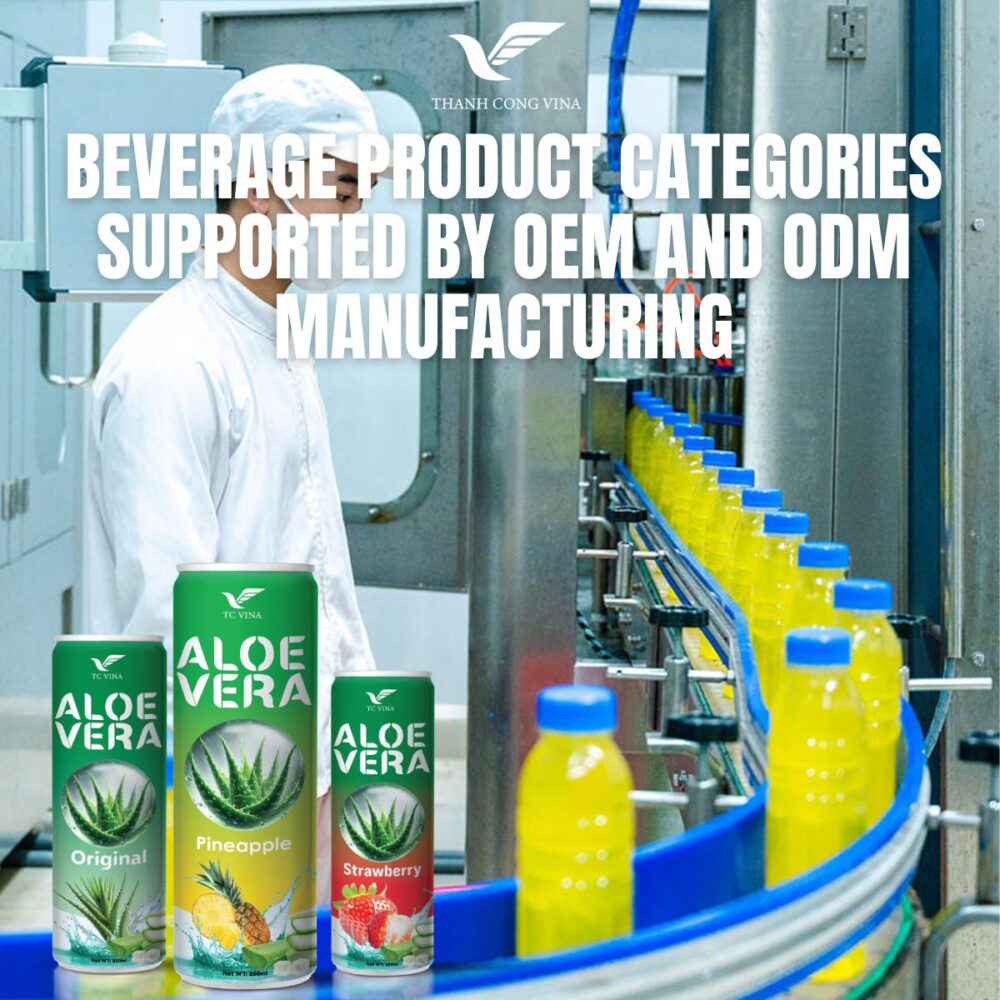
Beverage Product Categories Supported by OEM and ODM Manufacturing
A versatile Beverage OEM Company should support multiple categories, enabling customers to build diverse product portfolios.
Fruit Juice and Tropical Beverages
Fruit juice drinks are among the most popular categories for customized beverage manufacturing.
Products can be developed using tropical ingredients such as mango, passion fruit, pineapple, guava, peach, lychee, orange, and soursop.
Brands can customize:
- Fruit content
- Flavor combinations
- Sweetness
- Acidity
- Packaging
- Serving size
These beverages are suitable for retail, foodservice, hospitality, and international distribution.
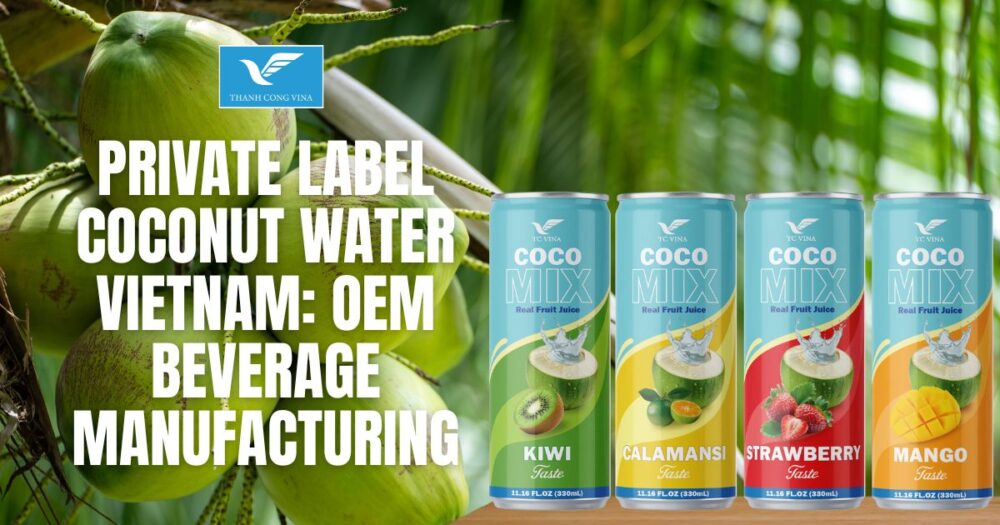
Coconut Water
Coconut water is another important beverage category.
Vietnam’s coconut-producing regions provide access to suitable raw materials for coconut-based beverages.
Depending on the product concept, coconut beverages can be developed in different formats and packaging sizes for international markets.
Coconut water products can be positioned for supermarkets, convenience stores, health-oriented channels, foodservice, and export distribution.
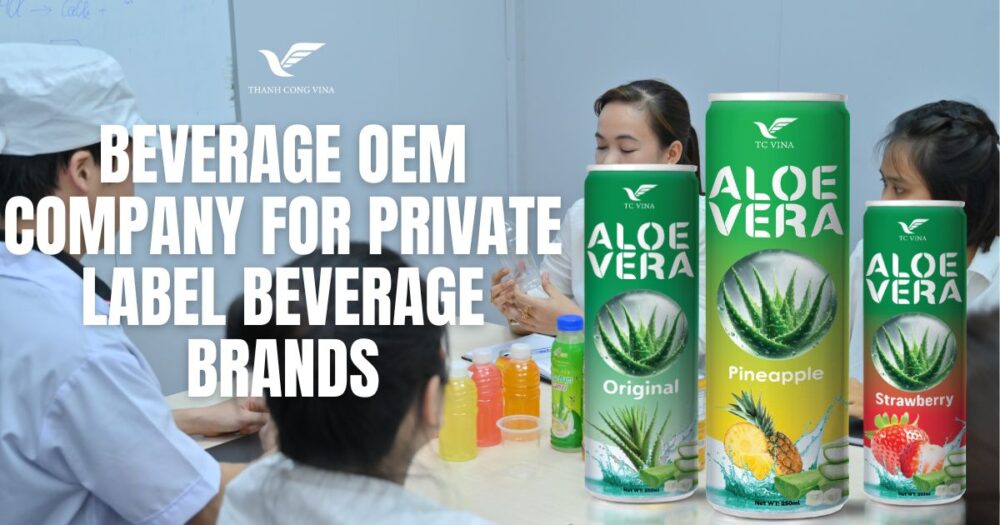
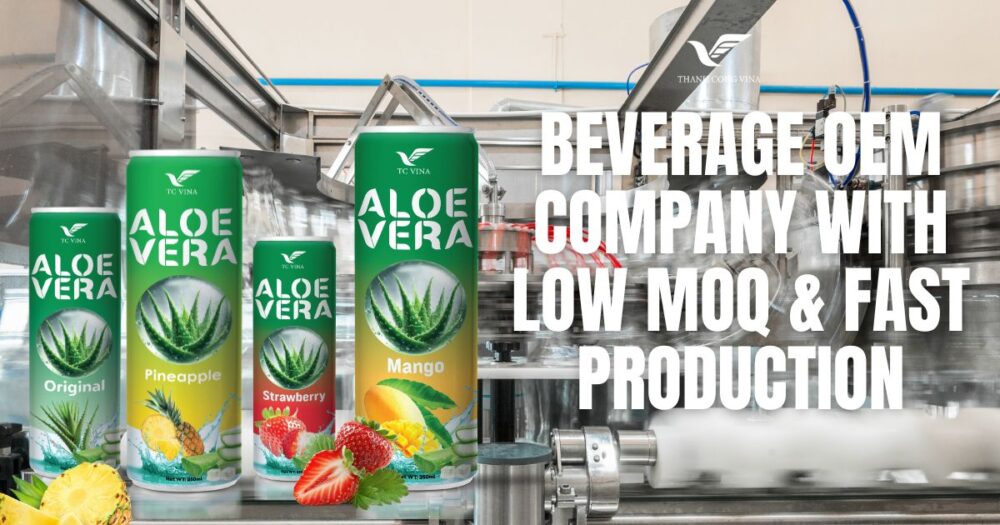
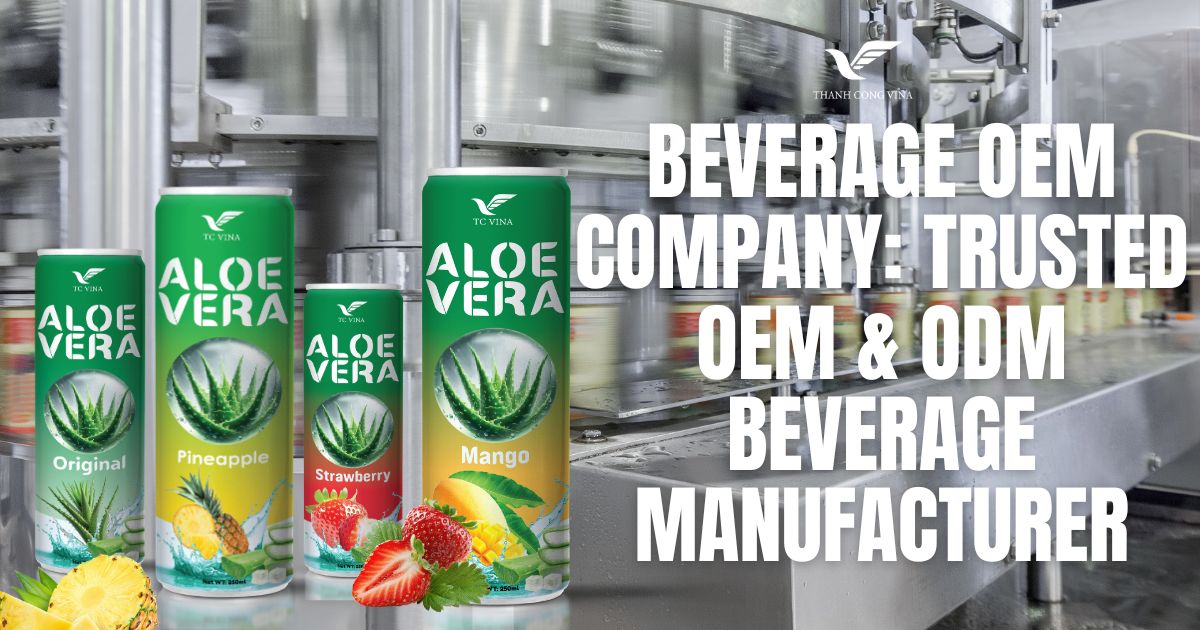
Aloe Vera and Nata de Coco Drinks
Aloe vera beverages can combine refreshing flavors with aloe vera pieces or juice.
Potential combinations include:
- Aloe Vera Original
- Mango Aloe Vera
- Lychee Aloe Vera
- Peach Aloe Vera
- Mixed Fruit Aloe Vera
Nata de coco can also be incorporated into beverages to create a distinctive texture.
These products can help private-label brands differentiate their beverage portfolios.
Ready-to-Drink Coffee
Vietnam’s strong coffee industry provides a solid foundation for ready-to-drink coffee manufacturing.
OEM and ODM coffee products can include:
- Black Coffee
- Milk Coffee
- Latte
- Cappuccino
- Flavored Coffee
These beverages can be packaged in convenient cans suitable for retail, vending, convenience stores, foodservice, and export markets.
4. Quality Control and International Manufacturing Standards
For international beverage brands, quality consistency is a fundamental requirement. A product must deliver the same sensory and technical characteristics across every production batch.
A trusted Beverage OEM Company should therefore maintain strict quality control from raw material sourcing through final packaging.
Raw Material Quality Management
The quality process begins before production.
Ingredients should be inspected according to defined specifications.
Potential checks include:
- Appearance
- Color
- Aroma
- Taste
- Physical properties
- Microbiological parameters
- Supplier documentation
Reliable raw material sourcing helps reduce variations in finished products.
Manufacturing Process Control
During production, quality teams monitor critical processing parameters.
These may include:
- Ingredient measurement
- Mixing
- Processing temperature
- Filling
- Sealing
- Packaging
- Finished product characteristics
Consistent process control helps manufacturers maintain the approved product specification.
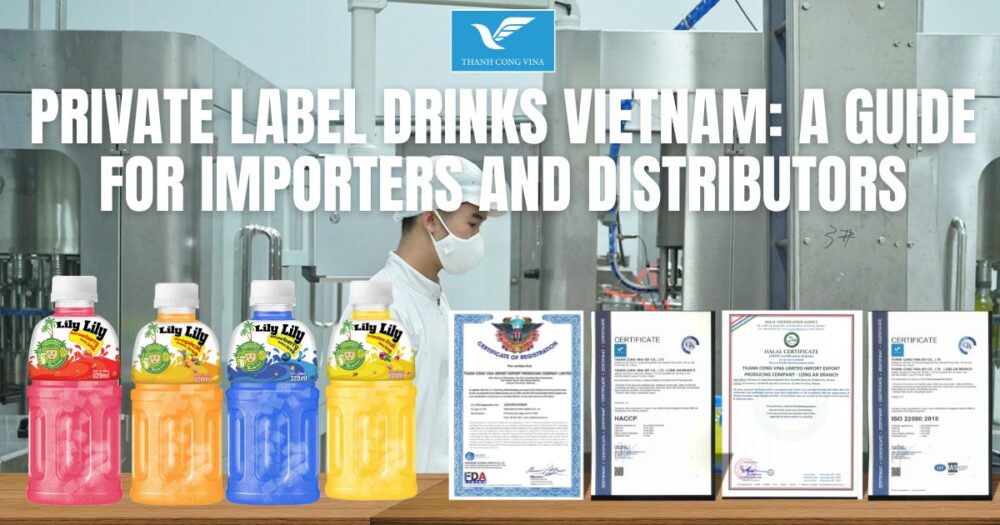
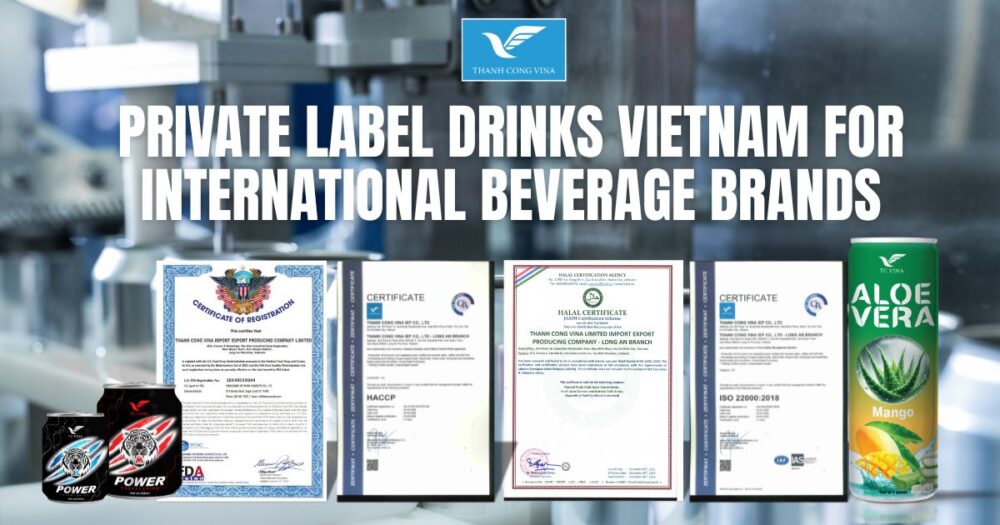
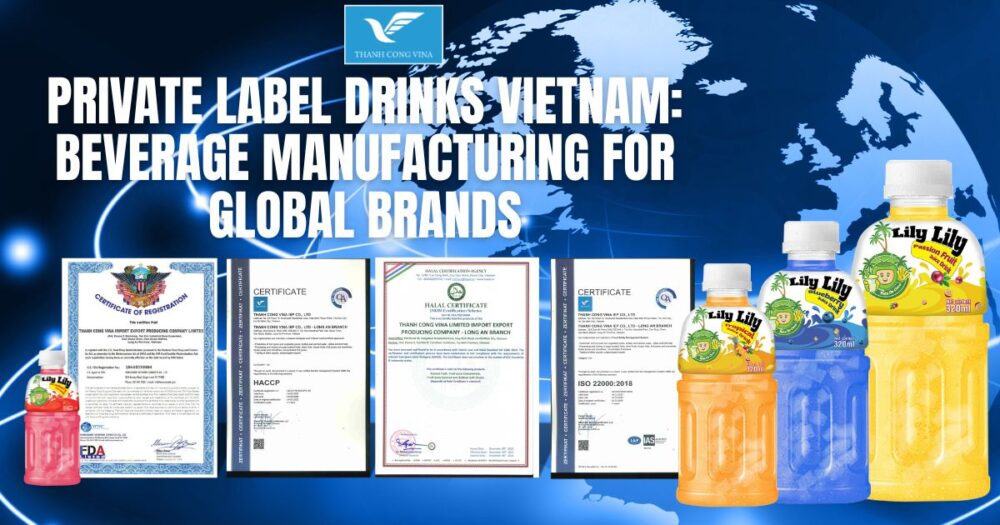
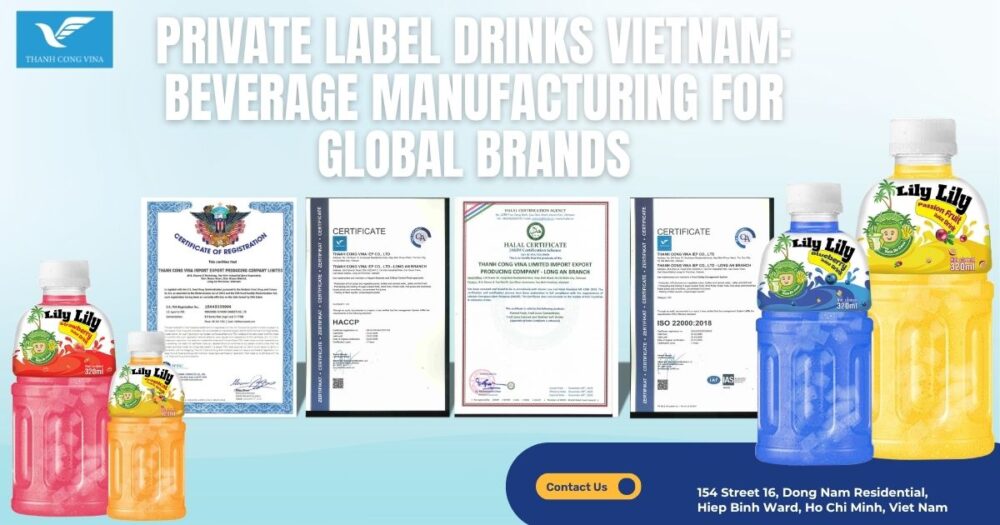
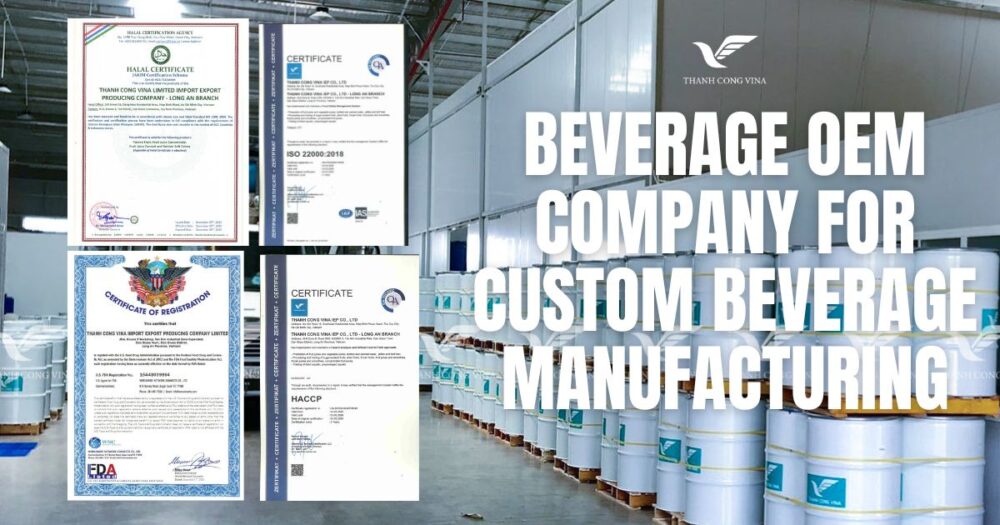
Food Safety Certifications
International buyers often consider food safety certifications when evaluating manufacturers.
Depending on the factory and target market, certifications or systems may include:
- HACCP
- ISO 22000
- FSSC 22000
- HALAL
- FDA-related requirements
The exact requirements depend on the product and destination market.
A professional manufacturer should also be able to provide appropriate technical documentation for buyer evaluation.
5. Packaging, Private Label and Brand Customization
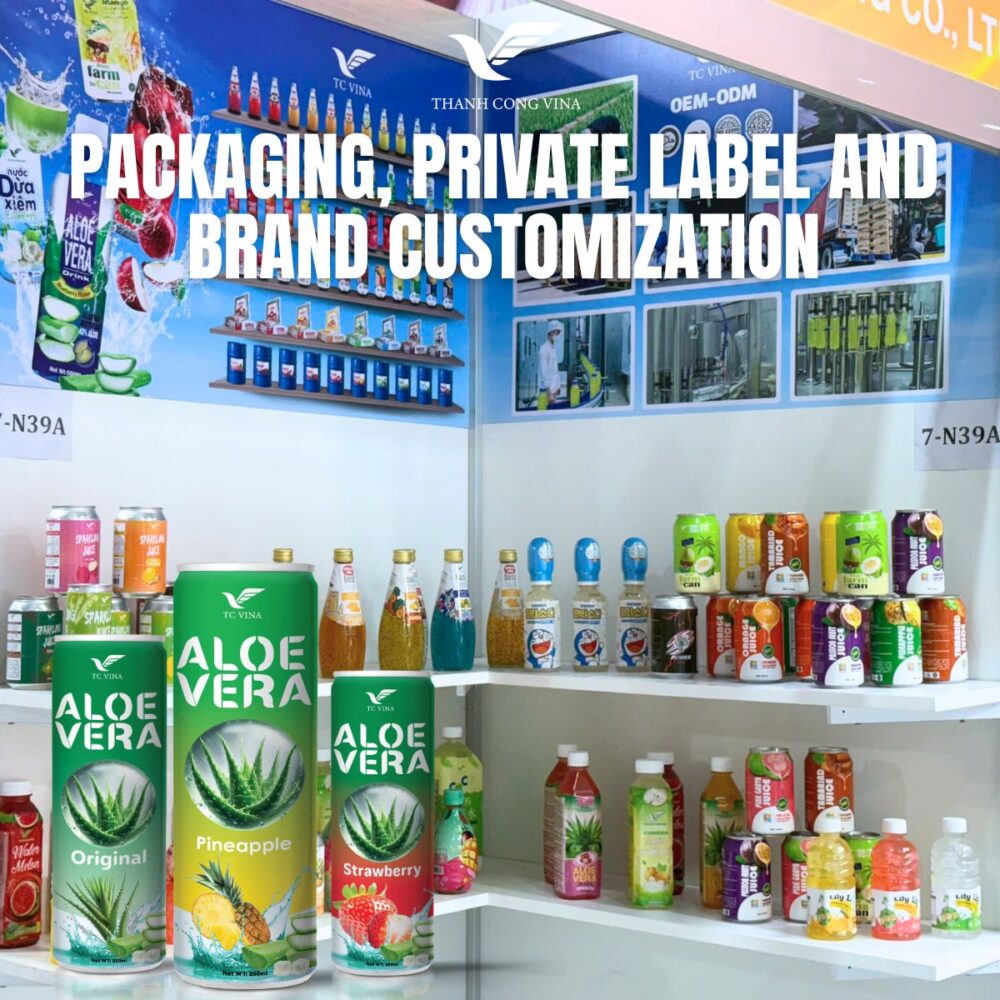
Packaging, Private Label and Brand Customization
A beverage’s packaging has both functional and commercial importance. It protects the product while communicating the brand’s identity.
Flexible Packaging Options
A professional Beverage OEM Company can support different packaging formats, including:
- Aluminum cans
- PET bottles
- Glass bottles
- Cartons
- Slim cans
Typical beverage sizes can include:
- 250ml
- 320ml
- 330ml
- 500ml
- 1 Liter
The appropriate format depends on product characteristics, market positioning, distribution channels, and transportation requirements.
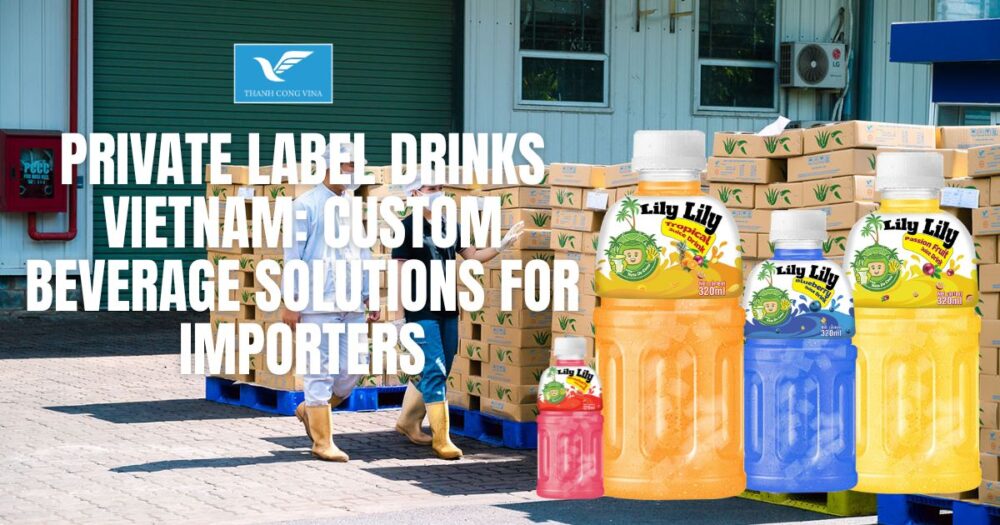
Private Label Branding
Private label manufacturing allows customers to sell products under their own brand names.
Customization can cover:
- Brand logo
- Label artwork
- Product name
- Product description
- Nutrition information
- Barcode
- Packaging design
- Carton artwork
This allows businesses to develop distinctive products without investing in their own production facilities.
Export-Ready Packaging
International beverages may travel long distances before reaching consumers.
Packaging should therefore be selected according to shipping, handling, stacking, storage, and environmental conditions.
A manufacturer with export experience can help buyers identify suitable packaging configurations and secondary cartons.
6. Why Choose a Trusted OEM and ODM Beverage Manufacturer?
Working with a professional Beverage OEM Company provides strategic advantages beyond simple production outsourcing.
Reduced Capital Investment
Building a beverage manufacturing facility requires significant investment in:
- Processing equipment
- Filling lines
- Packaging machinery
- Laboratories
- Warehouses
- Technical personnel
- Quality systems
OEM and ODM manufacturing allow businesses to access existing production infrastructure without making the same level of capital investment.
This lets brands focus more resources on:
- Marketing
- Sales
- Distribution
- Brand development
- Market research
Faster Product Development
An experienced OEM and ODM manufacturer already has technical teams, ingredient networks, and established production procedures.
This can accelerate the process from product concept to commercial launch.
Faster development helps brands respond to:
- Consumer trends
- Seasonal demand
- Retail opportunities
- New market openings
- Product portfolio expansion
Scalable Production
A successful beverage business may begin with one product but eventually require multiple SKUs and larger production volumes.
A capable manufacturer should support this growth through:
- Additional flavors
- New product categories
- Larger production quantities
- Different packaging formats
- New export markets
Scalability is especially important for brands seeking long-term international growth.
7. How to Select the Right Beverage OEM Company
How to Select the Right Beverage OEM Company
Choosing a manufacturing partner requires a comprehensive evaluation.
Manufacturing and R&D Capabilities
Buyers should review:
- Factory infrastructure
- Production capacity
- Product categories
- R&D capabilities
- Packaging options
- Quality control systems
- Warehouse facilities
The manufacturer should have the technical resources required for the specific beverage being developed.
Quality and Certification
Request information regarding relevant certifications and food safety systems.
It is also important to understand how the factory manages:
- Raw material inspection
- Production control
- Finished product testing
- Traceability
- Quality complaints
- Product recalls
These systems demonstrate the manufacturer’s commitment to consistent quality.
Communication and Export Experience
Clear communication is essential for international OEM projects.
The manufacturer should be able to provide transparent information about:
- MOQ
- Product development timelines
- Sample procedures
- Production lead times
- Packaging
- Documentation
- Shipping preparation
Export experience can also simplify international transactions and reduce communication gaps.
Conclusion
A trusted Beverage OEM Company can provide the technical expertise, manufacturing infrastructure, product development capabilities, and quality management required to turn beverage concepts into commercially successful products. OEM and ODM manufacturing give importers, distributors, retailers, startups, and established brands the flexibility to develop customized beverages without building their own factories.
From fruit juice and coconut water to aloe vera drinks, nata de coco beverages, and ready-to-drink coffee, the right manufacturing partner can support a diverse range of products while providing customized formulas, packaging, private labeling, quality control, and export assistance. More importantly, a strong OEM and ODM relationship creates a foundation for continuous product innovation and scalable international growth.
Thanh Cong Vina provides customized OEM and ODM beverage manufacturing solutions for international customers seeking reliable quality, flexible product development, and export-ready production. With capabilities across fruit beverages, coconut water, aloe vera drinks, ready-to-drink coffee, and other customized beverage categories, Thanh Cong Vina combines R&D expertise, manufacturing capabilities, quality management, packaging customization, and international support. For businesses searching for a dependable Beverage OEM Company, choosing an experienced partner can provide the technical foundation and production flexibility needed to build differentiated beverage brands and expand successfully across global markets.