
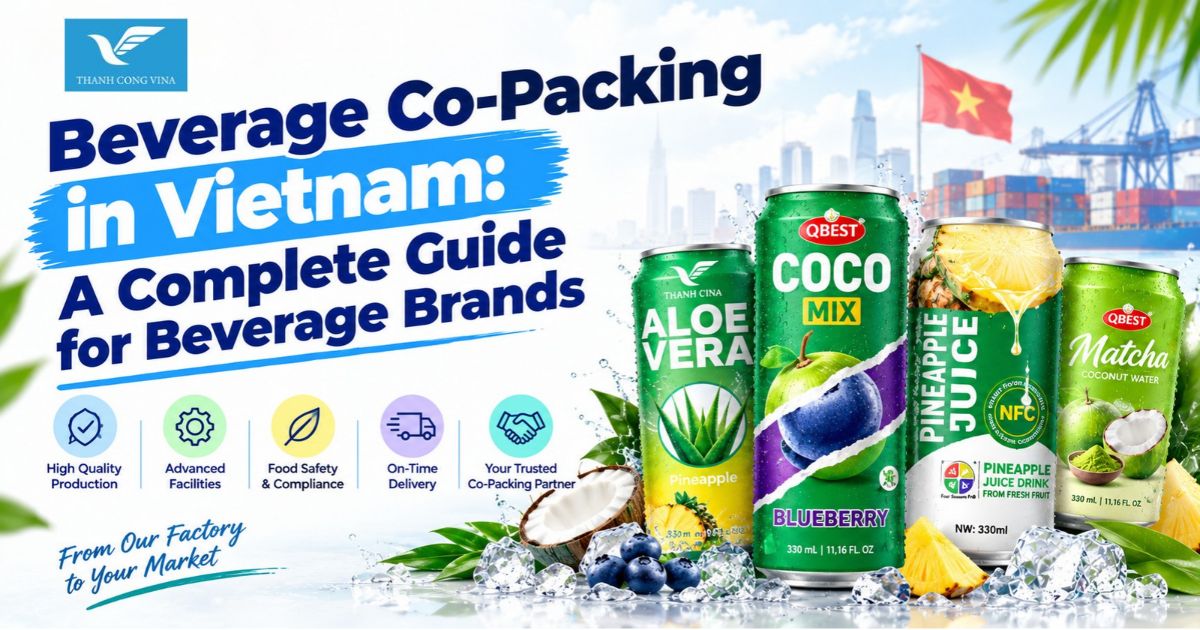
Beverage co-packing in Vietnam offers businesses an opportunity to work with experienced beverage manufacturers while accessing a diverse range of tropical ingredients and export-oriented production capabilities. Vietnam has become an attractive sourcing destination for beverage companies looking to develop fruit juice drinks, coconut water, aloe vera beverages, tea-based drinks, and other ready-to-drink products. By partnering with a professional beverage co-packer, brands can access established production facilities, packaging solutions, and manufacturing expertise without investing in their own factories.
For importers, distributors, retailers, and private label businesses, understanding how beverage co-packing works can help simplify supplier selection and create a more efficient product launch strategy.
1. What Is Beverage Co-Packing?
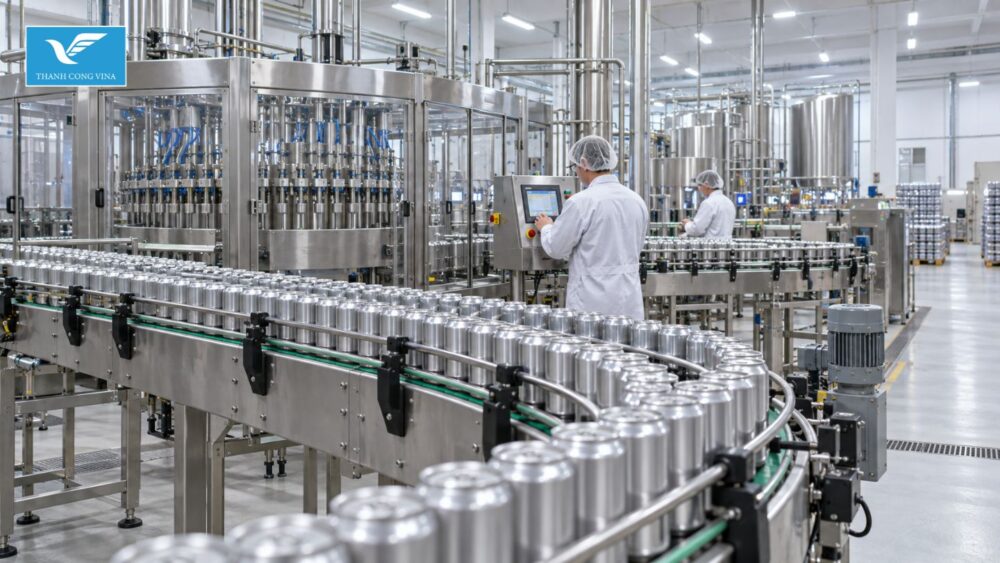
What Is Beverage Co-Packing in Vietnam?
Beverage co-packing is a manufacturing arrangement in which a beverage brand partners with a third-party manufacturer to produce, fill, seal, and package drinks under an agreed brand identity and product specification.
Instead of building a production facility, purchasing industrial equipment, and managing an entire manufacturing operation, businesses can use an existing manufacturer’s infrastructure and technical capabilities.
Depending on the agreement, a beverage co-packer may provide services such as:
- Beverage blending and processing.
- Ingredient sourcing and preparation.
- Filling and sealing.
- Bottle, can, or other packaging solutions.
- Label application and product coding.
- Quality control throughout production.
- Carton packing and shipment preparation.
The exact scope depends on the manufacturer’s equipment, product capabilities, and commercial agreement.
Beverage Co-Packing vs. Contract Manufacturing
Although beverage co-packing and contract manufacturing are closely related, they may involve different levels of responsibility.
Co-packing typically emphasizes filling, packaging, and production according to an established product specification. Contract manufacturing may cover a broader range of activities, including ingredient procurement, formulation, processing, and finished-product production.
For businesses entering a new beverage category, the right manufacturing model depends on whether they already have a finalized formula or require additional product development support.
Working with a manufacturer that offers flexible production services can help brands select an arrangement that matches their operational needs, budget, and long-term growth plans.
2. Why Choose Beverage Co-Packing in Vietnam?
Vietnam offers several advantages for international beverage businesses seeking manufacturing partners in Southeast Asia.
Access to Tropical Ingredients
Vietnam’s agricultural sector provides access to a variety of tropical fruits and plant-based ingredients used in beverage production. Depending on availability and product specifications, manufacturers may work with coconut, mango, pineapple, passion fruit, citrus fruits, and other ingredients suitable for different beverage applications.
These ingredients support the development of fruit juice drinks, coconut water, blended beverages, and other products designed for domestic and international markets.
Sourcing ingredients closer to production can also help businesses evaluate supply options and coordinate manufacturing more efficiently.
Flexible Beverage Manufacturing Solutions
Different markets have different preferences regarding flavor, packaging, serving size, and product positioning. A beverage designed for a supermarket in Europe may require a different formulation or package from one intended for a distributor in Southeast Asia or the Middle East.
A suitable beverage co-packing partner should understand these differences and assess whether its production capabilities match the brand’s requirements.
Depending on the facility and production line, businesses may explore canned beverages, bottled drinks, and other ready-to-drink formats.
Opportunities for International Distribution
Vietnam’s position in regional and international trade makes it an important sourcing option for businesses developing cross-border beverage supply chains.
However, export opportunities depend on the destination market, applicable regulations, product classification, rules of origin, and required documentation. Brands should confirm these requirements before finalizing product specifications and commercial agreements.
By selecting a manufacturer with relevant export experience, businesses can better coordinate production planning, packaging preparation, and shipment documentation.
3. What Beverage Products Can Be Co-Packed?
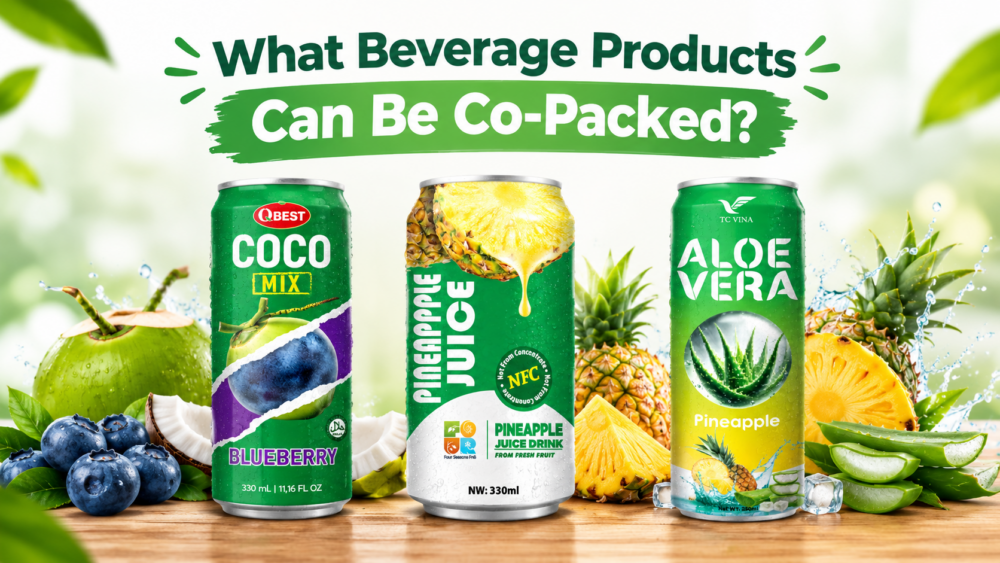
What Beverage Products Can Be Co-Packed?
The range of products available for co-packing depends on the manufacturer’s equipment, processing technology, and quality management capabilities.
Thanh Cong Vina focuses on beverage manufacturing solutions for business customers seeking products for retail, distribution, food service, and international markets.
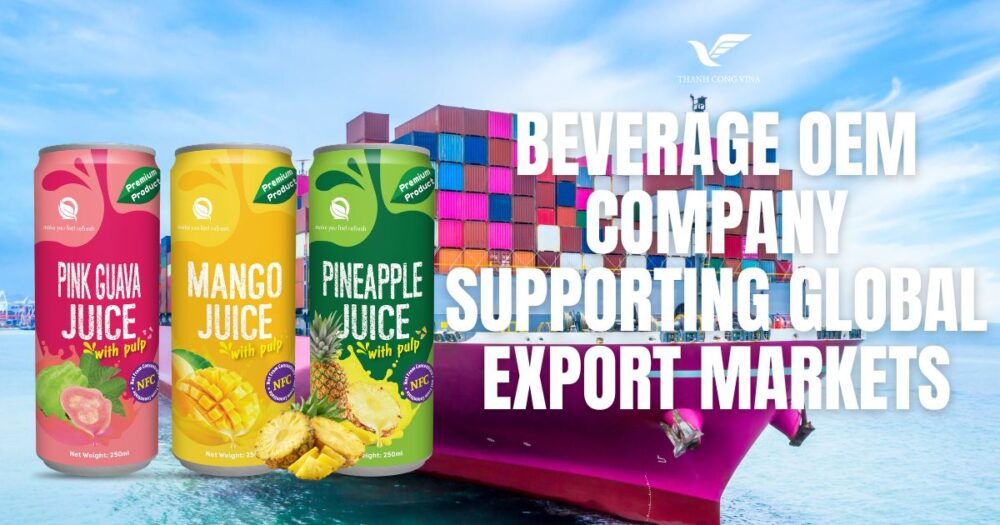
Fruit Juice and Fruit-Based Drinks
Fruit-based beverages remain an important category for brands targeting consumers who value refreshing flavors and convenient consumption.
Depending on the product specification and manufacturing capabilities, businesses can explore juice drinks featuring mango, pineapple, orange, passion fruit, and other fruit varieties.
Manufacturers may also support different product concepts, including blended fruit beverages and drinks formulated for specific market preferences.
Coconut Water and Coconut-Based Beverages
Coconut water is widely used in beverage portfolios targeting consumers interested in tropical refreshment.
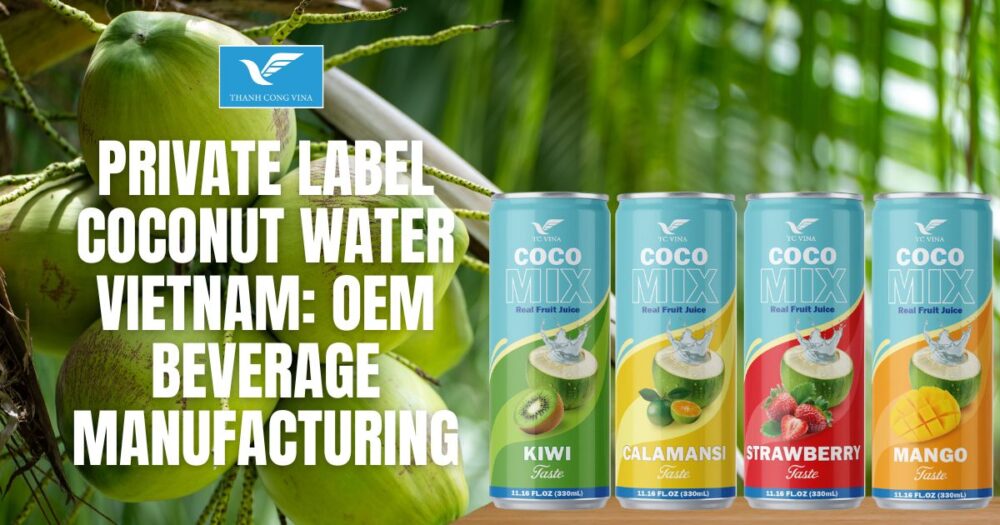
Brands can explore different coconut-based product concepts, including pure coconut water and beverages combining coconut water with fruit flavors or other ingredients.
Product specifications, processing requirements, and packaging options should be evaluated together to ensure that the selected manufacturing process is appropriate for the intended beverage.
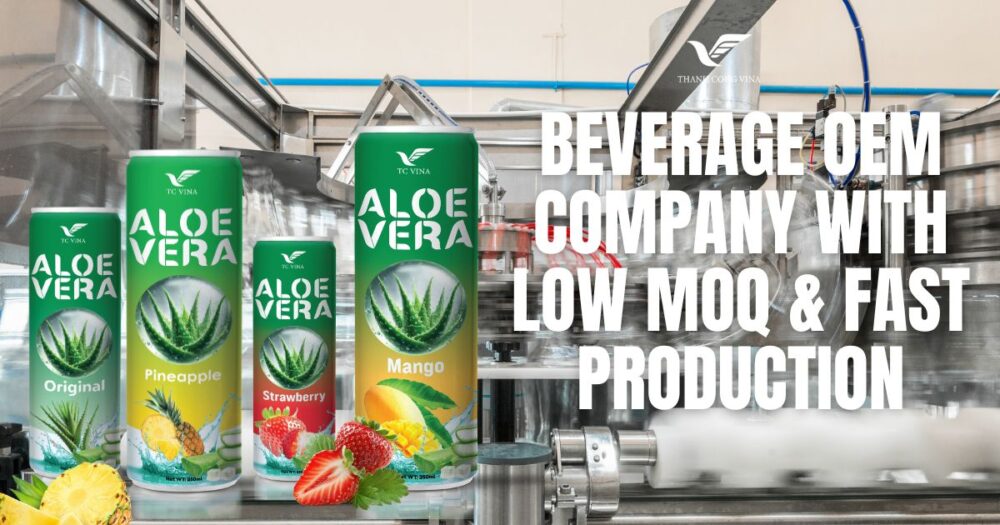
Aloe Vera Drinks and Functional-Style Beverages
Aloe vera beverages provide another product development opportunity for brands seeking variety beyond conventional fruit drinks.
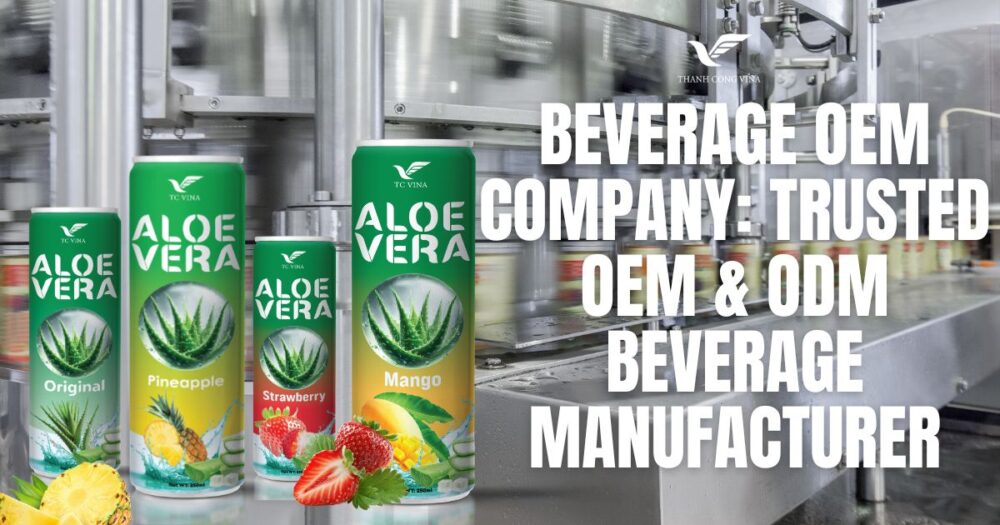
Depending on the formula, these beverages may incorporate aloe vera pieces, fruit flavors, or other ingredients to create distinctive textures and drinking experiences.
Other potential categories include tea-based beverages, nata de coco drinks, and coffee beverages. Each product requires an assessment of ingredient compatibility, processing conditions, stability, and applicable labeling requirements.
4. Beverage Packaging Options for Different Markets
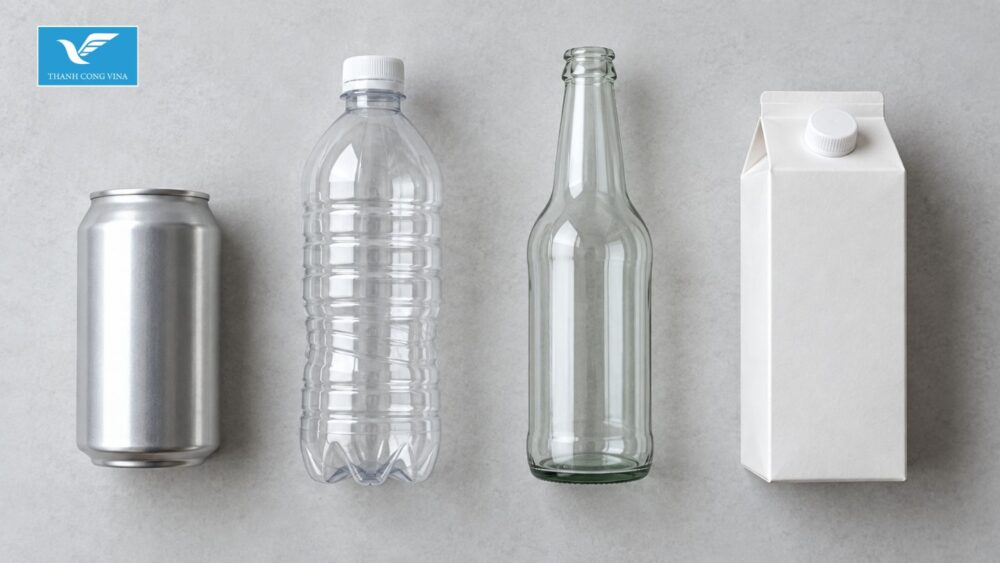
Beverage Packaging Options for Different Markets
Packaging influences product protection, transportation costs, shelf presentation, and consumer convenience. When planning beverage co-packing in Vietnam, brands should select a format that aligns with the product characteristics and target distribution channel.
Aluminum Cans
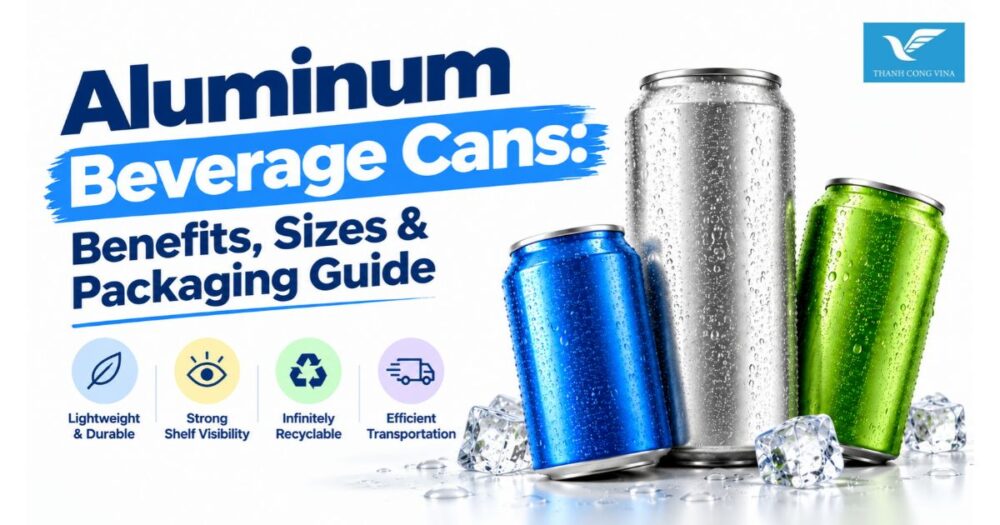
Aluminum cans are commonly used for ready-to-drink beverages because they are convenient, stackable, and suitable for a range of retail applications.
They can be considered for selected fruit drinks, coconut-based beverages, tea drinks, and other products, subject to formulation compatibility and the available processing technology.
Brands should confirm can specifications, filling requirements, decoration options, and minimum production quantities before placing an order.
PET Bottles
PET bottles offer flexibility in size, shape, and product presentation. They are commonly considered for juice drinks, aloe vera beverages, and other ready-to-drink products.
The appropriate bottle material and closure system depend on the beverage’s processing conditions, storage requirements, and distribution environment.
Glass Bottles and Other Formats
Glass bottles may suit premium beverage positioning, while carton packaging can be appropriate for certain juice products requiring compatible aseptic processing.
Not every manufacturing facility supports every packaging format. Therefore, businesses should confirm available production lines and technical compatibility before selecting a package.
5. How to Start a Beverage Co-Packing Project
A structured manufacturing process helps reduce uncertainty and supports more efficient product development.
Step 1: Define Your Beverage Requirements
Begin by identifying the product category, target consumer, intended market, and expected retail positioning.
Prepare the available formulation, ingredient specifications, flavor profile, desired serving size, and packaging preferences. If the formula is proprietary, consider establishing appropriate confidentiality arrangements before sharing sensitive technical information.
Step 2: Evaluate Manufacturing Feasibility
The manufacturer reviews the product requirements against its production capabilities.
This assessment may cover ingredient compatibility, processing technology, packaging formats, production capacity, and quality requirements.
If the product requires formulation development or technical adjustments, clarify the scope of those services before proceeding.
Step 3: Request a Quotation
A useful quotation should reflect the product specification, packaging format, order quantity, material sourcing responsibilities, and agreed service scope.
Brands should also ask about minimum order quantities, sample costs, production lead times, payment terms, and any additional charges associated with artwork, packaging setup, testing, or documentation.
Comparing quotations on an equivalent basis helps businesses understand the total cost rather than focusing exclusively on the unit manufacturing price.
Step 4: Approve Samples and Packaging
Before commercial production, evaluate product samples against the intended flavor, appearance, texture, and other agreed requirements.
Packaging artwork should also be reviewed for accuracy, legibility, and compliance with the intended market’s labeling rules.
Where necessary, conduct production trials to verify that the beverage and packaging perform as expected under actual manufacturing conditions.
Step 5: Confirm Quality Requirements and Production
Before placing a commercial order, establish written quality specifications and product acceptance criteria.
Depending on the beverage, these may include pH, soluble solids, fill volume, sensory characteristics, microbiological requirements, packaging integrity, and shelf-life validation.
Once the relevant specifications, packaging, and documentation are approved, production can be scheduled according to the agreed timeline.
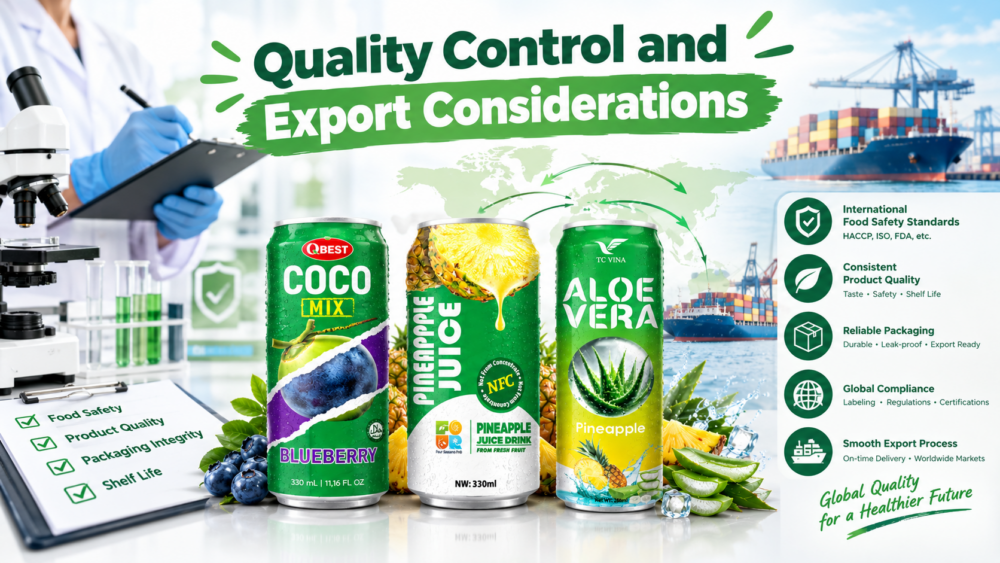
6. Quality Control and Export Considerations
Quality Control and Export Considerations
Quality assurance is a fundamental part of successful beverage manufacturing. Consistent products help brands maintain customer confidence, manage distributor relationships, and protect their reputation across different markets.
When evaluating a beverage co-packing partner, businesses should review the manufacturer’s quality management system, production controls, traceability procedures, and applicable certifications.
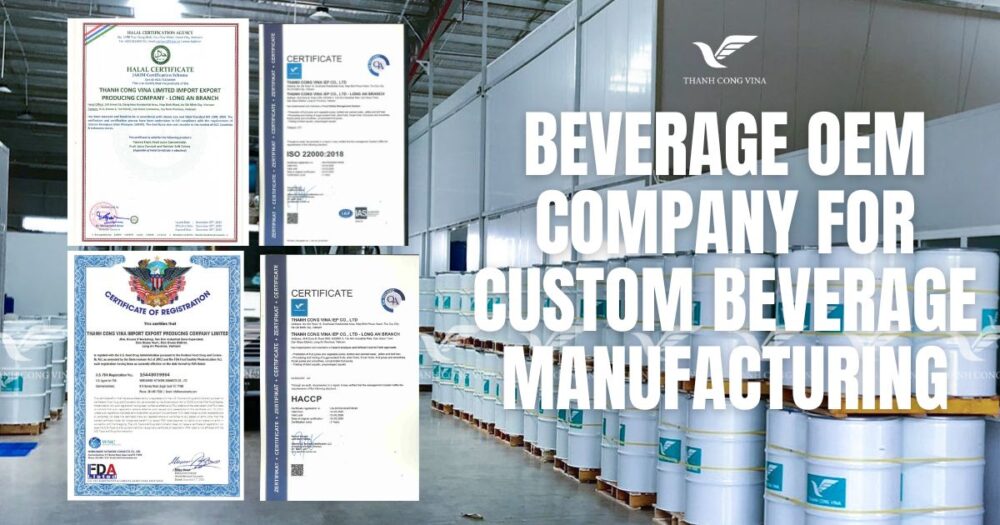
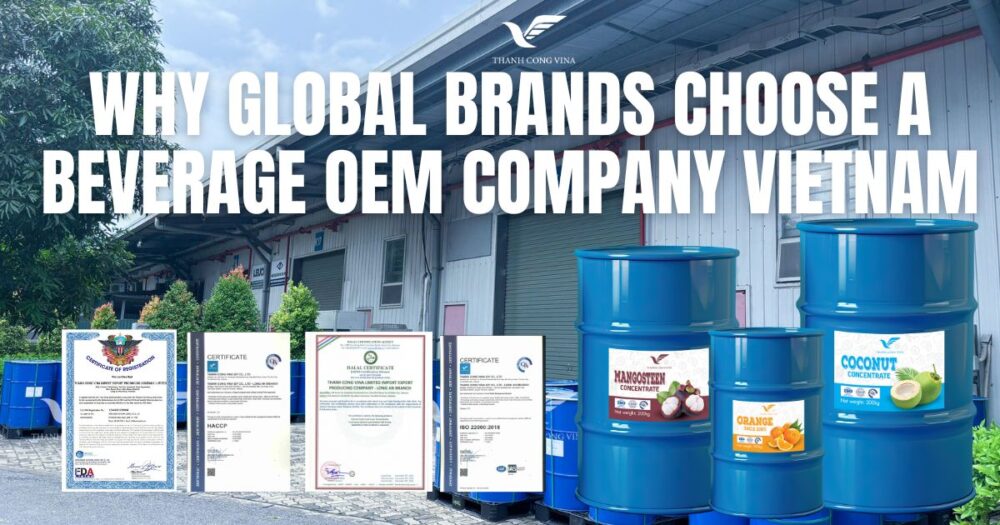
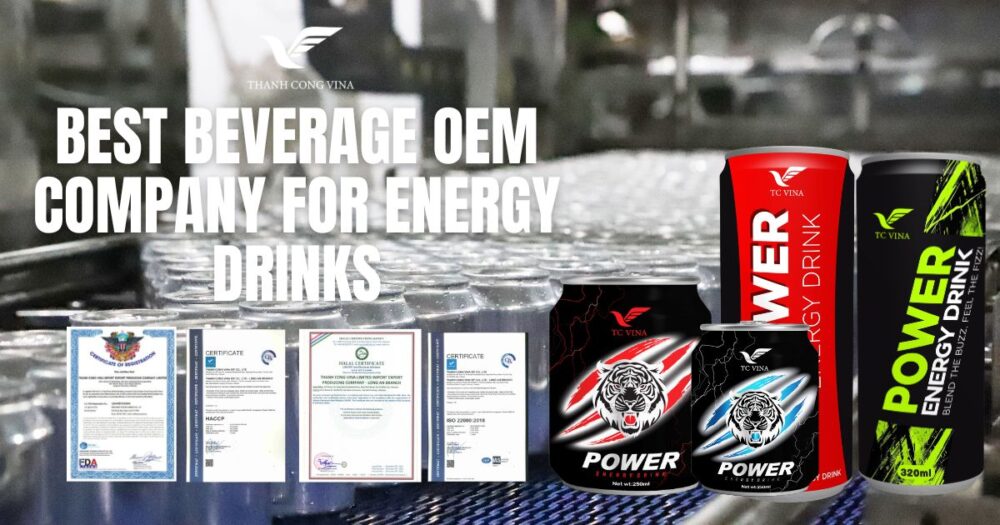
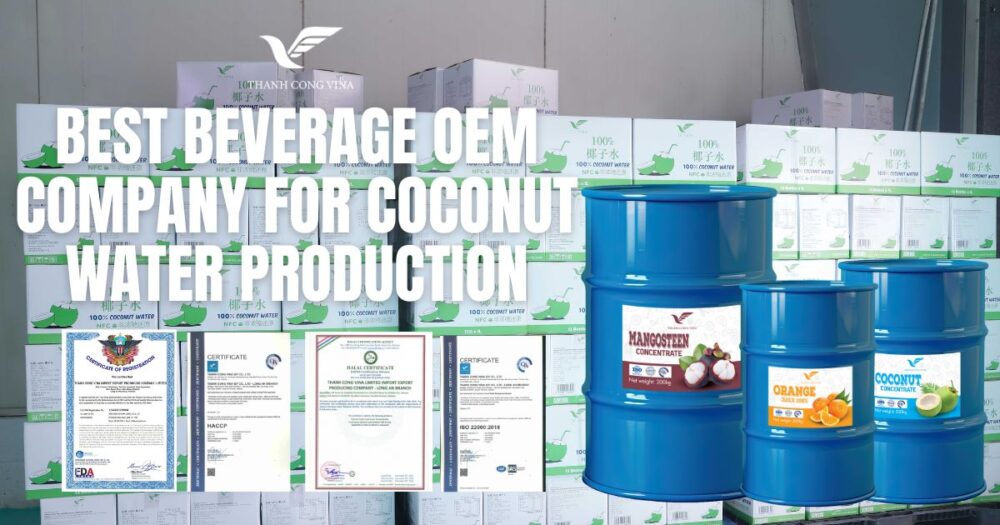
Thanh Cong Vina works with quality and compliance frameworks associated with HACCP, ISO, HALAL, and FDA requirements. Buyers should confirm the specific certification scope, validity, and applicable regulatory status relevant to their products and destination markets.
Export documentation also requires careful planning. Depending on the destination, businesses may need product specifications, ingredient declarations, compliant labels, certificates, testing records, and other supporting documents.
Import requirements differ between countries, so the brand and manufacturer should establish their respective responsibilities before production begins.
7. Why Partner with Thanh Cong Vina?
Selecting a beverage manufacturing partner is a strategic decision that affects product quality, supply reliability, and future business expansion.
Thanh Cong Vina supports B2B customers seeking beverage manufacturing solutions for international distribution. Its product portfolio includes fruit juice drinks, coconut water, aloe vera beverages, nata de coco drinks, coffee beverages, and other ready-to-drink products.
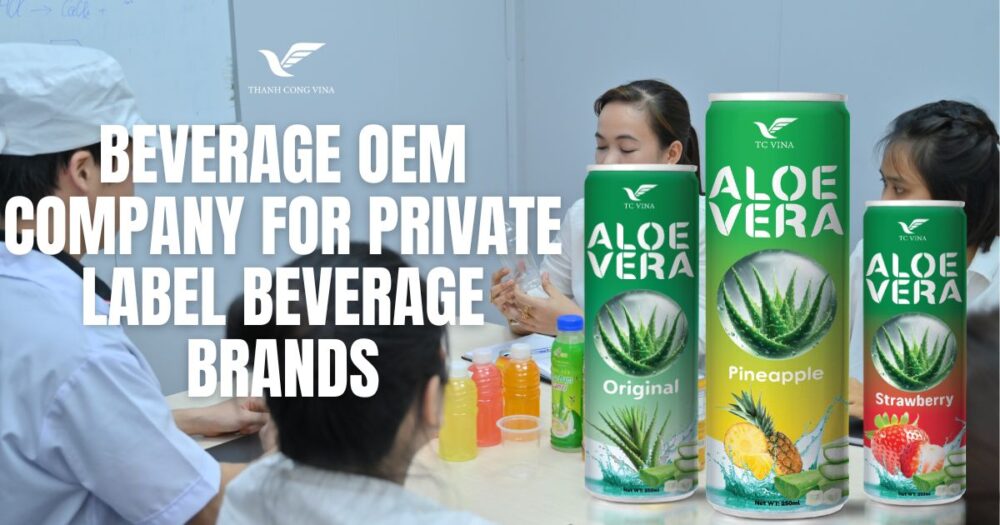
For importers, distributors, retailers, and private label businesses, working with a beverage manufacturer can provide access to established production capabilities while allowing the brand to concentrate on marketing, distribution, and customer development.
Before starting a project, businesses should share their product concept, packaging requirements, target market, and estimated order volume. This information helps determine manufacturing feasibility and identify the most suitable production approach.
A clear agreement covering product specifications, quality responsibilities, pricing, intellectual property, lead times, and order acceptance can also establish a stronger foundation for a long-term partnership.
Conclusion
Beverage co-packing in Vietnam offers international brands an opportunity to work with established beverage manufacturers, explore tropical beverage categories, and develop products for diverse distribution channels without establishing their own production facilities.
Success depends on selecting a suitable manufacturing partner, defining product requirements clearly, choosing compatible packaging, and confirming quality and regulatory expectations before commercial production.
For businesses looking to expand their beverage portfolios, Thanh Cong Vina IEP Co,.LTD provides beverage manufacturing solutions designed for B2B customers and international markets.
Contact Thanh Cong Vina Beverage to discuss your beverage concept, packaging preferences, production requirements, and potential manufacturing opportunities.