
The global food and beverage industry is experiencing a massive paradigm shift, with manufacturers looking for reliable, high-quality, and cost-effective raw materials to satisfy shifting consumer preferences. At the epicenter of this transformation is Southeast Asia, where Vietnam has rapidly climbed the ranks to become a dominant global force in agricultural processing. In particular, the country has carved out a specialized niche in Juice Concentrate Production, leveraging its rich agricultural heritage and combining it with aggressive technological modernization. For global beverage brands, blenders, and food manufacturers, Vietnam is no longer just an emerging market; it is a vital supply chain anchor. This article explores the structural, technological, and geographical factors that have transformed Vietnam into an indispensable manufacturing hub, offering an in-depth look at how the nation ensures a steady, high-quality stream of tropical and subtropical juice concentrates for the international market through specialized Juice Concentrate Production networks.
1. The Natural Advantages Powering Juice Concentrate Production
The Natural Advantages Powering Juice Concentrate Production
Vietnam’s ascent in the international beverage ingredient sector is rooted fundamentally in its geography. Extending over fifteen degrees of latitude, the country encompasses a diverse range of topographies and microclimates, from temperate northern highlands to the intensely tropical southern lowlands. This vast ecological diversity allows for the cultivation of a stunning array of fruits, ranging from classic citrus fruits and pineapples to exotic varieties like pink dragon fruit, passion fruit, and soursop. All these fruits serve as the perfect foundational biomass for regional Juice Concentrate Production plants.
Unlike many competing export nations that are restricted by narrow, seasonal harvest windows, Vietnam benefits from staggered growing seasons across its different regions. This geographical distribution ensures a continuous, year-round influx of fresh raw materials into facilities specializing in Juice Concentrate Production. By mitigating the supply cliffs that commonly trigger price volatility in the global commodities market, Vietnam offers international buyers an enviable level of budgetary and logistical predictability, cementing its status as an elite provider of industrial Juice Concentrate Production.
Rich Soils and Optimal Hydro-Meteorological Conditions
The agricultural foundation of Vietnam is anchored by two massive, nutrient-dense river deltas: the Red River Delta in the north and the Mekong Delta in the south. The Mekong Delta alone features millions of hectares of highly fertile alluvial soil, continuously replenished by seasonal river flows. Combined with high annual rainfall and consistent sunlight hours, these regions possess the perfect hydro-meteorological blueprint for cultivating fruits with exceptionally dense sugar profiles, optimal acidity balances, and vibrant natural pigmentations—the exact chemical characteristics required for high-yield extraction in professional Juice Concentrate Production.
Regional Agronomic Specialization
To maximize these natural gifts, the Vietnamese agricultural sector has shifted toward strict regional specialization, which directly supports nationwide Juice Concentrate Production. The cooler, volcanic plateaus of provinces like Lam Dong and Gia Lai have become highly specialized centers for passion fruit and avocado cultivation. Simultaneously, the coastal plains of Binh Thuan dominate global dragon fruit yields, and the western provinces of the Mekong Delta focus heavily on premium mango, calamansi, and pineapple varieties. This clustering allows plants engaged in Juice Concentrate Production to establish operations directly adjacent to specialized farming hubs, drastically reducing domestic transport times and preserving the structural integrity of the fruit post-harvest.
2. Strategic Economic Policies and Free Trade Infrastructure
While natural abundance provides the raw potential, it is Vietnam’s proactive macroeconomic policy framework that has converted this potential into a global competitive advantage for Juice Concentrate Production. Over the past two decades, the Vietnamese government has systematically designated agricultural processing and industrial food manufacturing as high-priority sectors for national export growth. This strategic focus has materialized in the form of substantial fiscal incentives, including corporate income tax exemptions, import duty waivers on advanced machinery, and subsidized land leases within specialized industrial zones located near major deep-water ports, driving rapid growth in Juice Concentrate Production.
These domestic economic catalysts are complemented by Vietnam’s aggressive integration into the global trade ecosystem, which provides a massive boost to international Juice Concentrate Production orders. The country has successfully negotiated and ratified over fifteen bilateral and multilateral Free Trade Agreements (FTAs), establishing itself as one of the most economically interconnected nations in the Asia-Pacific region. These treaties pave a frictionless pathway for shipping products generated via modern Juice Concentrate Production.
Maximizing Tariff Advantages via High-Impact FTAs
For international procurement officers, the financial incentives of choosing Vietnam for Juice Concentrate Production are significantly enhanced by these trade agreements. Key treaties include:
-
The EVFTA (EU-Vietnam Free Trade Agreement): This landmark agreement systematically eliminates up to 99% of tariff lines on processed agricultural products, allowing products from Vietnamese Juice Concentrate Production to enter the European market with a definitive price advantage over non-FTA competitors.
-
The CPTPP (Comprehensive and Progressive Agreement for Trans-Pacific Partnership): This treaty grants preferential tariff access to major consumer markets across the Americas and the Pacific Rim, including Canada, Japan, and Australia, expanding the footprint of Vietnamese Juice Concentrate Production.
-
The RCEP (Regional Comprehensive Economic Partnership): This pact streamlines rules of origin across East Asia and ASEAN, allowing for seamless supply chain integration across the entire Asian continent for industrial Juice Concentrate Production.
Robust Logistics and Modern Maritime Port Infrastructure
Vietnam has backed its trade agreements with massive capital investments in transportation infrastructure, supporting the heavy logistics required by global Juice Concentrate Production. The nation’s deep-water port complexes, such as Lach Huyen in the north and the Cai Mep-Thi Vai complex in the south, are now capable of hosting ultra-large container vessels. This eliminates the need for costly and time-consuming transshipment through intermediary regional hubs like Singapore or Hong Kong. Coupled with an expanding network of expressways connecting inland processing zones directly to maritime terminals, the lead time for shipping cargo from Juice Concentrate Production facilities has been drastically reduced.
3. Agronomic Innovations and Farm-Level Sourcing Strategies
Agronomic Innovations and Farm-Level Sourcing Strategies
The ultimate quality of a fruit juice concentrate is decided long before the raw materials ever reach a factory gate; it is forged in the soil and managed through precise agricultural practices that feed into industrial Juice Concentrate Production. The Vietnamese agricultural landscape has undergone a major transformation, moving away from fragmented, small-scale subsistence farming toward highly organized, commercialized contract farming networks and agricultural cooperatives that supply Juice Concentrate Production lines.
Leading industrial processors in Vietnam now operate via direct integration models, working hand-in-hand with thousands of local smallholders to maintain steady raw material inputs for Juice Concentrate Production. Under these legally binding frameworks, factories provide farmers with audited, high-quality seed varieties, advanced specialized fertilizers, and ongoing technical oversight from agronomic engineers. In return, the farming cooperatives commit to adhering to rigid cultivation parameters, ensuring that the harvested fruit meets precise dimensions, brix levels, and chemical purity metrics optimized for modern Juice Concentrate Production.
Institutionalizing GlobalGAP and Organic Frameworks
To satisfy the stringent health and safety requirements of premium international markets, Vietnam has seen a widespread adoption of GlobalGAP (Good Agricultural Practices) and rigorous certified organic farming frameworks within its Juice Concentrate Production supply chains. Agronomic engineers closely monitor soil chemistry, water purity, and fertilizer application schedules, eliminating the use of unapproved chemical pesticides. This strict oversight ensures that the base raw materials are completely free from harmful synthetic residues, a fundamental prerequisite for producing clean-label ingredients via certified Juice Concentrate Production.
Advanced Harvesting Mechanics and Post-Harvest Loss Mitigation
The timing of the tropical fruit harvest is a highly precise science that dictates the efficiency of subsequent Juice Concentrate Production. Vietnamese harvesting crews are trained to utilize field-ready digital refractometers to measure the exact soluble solids content (Brix) of the fruit while it is still on the vine or tree. Harvesting occurs exclusively during optimal climatic windows to prevent heat stress on the detached fruit. Once picked, the produce is immediately transferred into specialized, ventilated, rigid plastic crates to prevent bruising and compression damage. It is then rapidly moved to regional pre-cooling centers, which quickly lower the core temperature of the fruit, arresting the natural ripening and enzymatic degradation processes before it enters the core stages of Juice Concentrate Production.
4. State-of-the-Art Extraction and Advanced Separation Engineering
Once the fresh fruit arrives at the modern processing facility, it enters a highly engineered environment designed to extract the maximum volume of pure juice while meticulously protecting the delicate volatile flavor molecules and nutritional compounds. This extraction phase is highly customized based on the unique anatomical characteristics of each fruit variety handled within the facility’s Juice Concentrate Production lines.
For instance, sensitive tropical fruits like passion fruit require specialized, custom-engineered reaming systems that carefully separate the seed-bearing pulpy arils from the bitter, tannin-rich outer rind. For stone fruits such as mangoes, industrial multi-stage pulping and decanting systems are deployed to smoothly separate the fibrous pit and skin from the rich, homogenous purée base, preventing any unwanted textural variations or off-flavors from interfering with high-caliber Juice Concentrate Production.
Continuous De-Aeration to Halt Oxidation
Exposure to atmospheric oxygen is the primary threat to the natural color, aroma, and vitamin C content of freshly extracted fruit juice during industrial Juice Concentrate Production. To combat this, modern Vietnamese processing lines route the extracted juice immediately through continuous vacuum de-aerators. By creating a deep vacuum environment at low temperatures, these systems effectively pull dissolved oxygen out of the liquid matrix. This process permanently stops enzymatic browning reactions and ensures that the final product generated by Juice Concentrate Production retains the brilliant, natural color of the fresh orchard fruit.
High-Velocity Clarification and Ultrafiltration Systems
For product formulations requiring clear concentrates, the juice must undergo advanced clarification as part of the overall Juice Concentrate Production workflow. The liquid is treated with natural, food-grade enzymes like pectinases to break down the complex cellular pectins that cause cloudiness. Following enzymatic treatment, the juice is pumped through high-efficiency cross-flow ultrafiltration systems. Utilizing sophisticated ceramic or polymeric membranes with precise molecular weight cut-offs, these systems strip away all suspended micro-particulates and insoluble fibers. The result is a crystal-clear, brilliant juice stream that is perfectly prepped for the thermal concentration phase of Juice Concentrate Production.
5. Thermal and Cold Concentration Technologies in Vietnam
Thermal and Cold Concentration Technologies in Vietnam
The core engineering feat of Juice Concentrate Production lies in the controlled removal of water from the single-strength juice matrix to achieve a stable, dense concentrate. Historically, this was achieved via atmospheric boiling, a crude process that routinely scorched natural sugars, altered delicate flavor profiles, and obliterated heat-sensitive vitamins. Today, the leading edge of the Vietnamese manufacturing sector utilizes advanced multi-stage falling film vacuum evaporators, which represent the gold standard of modern Juice Concentrate Production.
By operating under a precise, deep vacuum, the boiling point of the water within the juice is drastically lowered, often dropping to between 40°C and 55°C. This low-temperature thermal processing ensures that the liquid is concentrated rapidly and uniformly without experiencing thermal stress, effectively preserving the natural nutritional value, color integrity, and structural chemistry of the original fruit. This attention to detail is why global markets respect Vietnamese Juice Concentrate Production.
Integrated Fractional Aroma Recovery Systems
During vacuum evaporation within Juice Concentrate Production, the highly volatile aromatic esters and aldehydes—the specific chemical compounds responsible for giving a fruit its distinct, recognizable scent and flavor—are the first components to vaporize alongside the water. To prevent this loss, advanced Vietnamese evaporation plants are fully integrated with fractional distillation aroma recovery units. These systems capture the volatile gasses, separate them from the water vapor, condense them into highly concentrated natural fruit essences, and re-introduce them back into the cooled concentrate just prior to final packaging. This restores the full, authentic flavor profile of the fruit, marking a major milestone in high-tech Juice Concentrate Production.
Real-Time Inline Brix and Rheological Control
Throughout the concentration cycle of Juice Concentrate Production, the liquid matrix is continuously monitored via inline digital refractometers and high-precision rheometers. These instruments measure the exact Brix level (total soluble solids) and viscosity of the moving fluid in real time. International market specifications dictate precise Brix targets—such as 60-65° Brix for passion fruit or pineapple concentrate. Automated control loops dynamically adjust the vacuum pressure and flow rates within the evaporator columns to guarantee that every single batch produced via automated Juice Concentrate Production hits these exact parameters with zero variance.
6. Aseptic Packaging, Sterile Integrity, and Cold Chain Logistics
Once the fruit concentrate has successfully achieved its designated Brix and viscosity parameters within the Juice Concentrate Production line, it must be protected against any potential microbiological contamination or environmental degradation. This protection is initiated through continuous High-Temperature Short-Time (HTST) pasteurization, a rapid thermal flash process that eliminates any lingering vegetative microorganisms and deactivates native spoilage enzymes within seconds, immediately followed by rapid cooling to ambient or chilled temperatures to conclude the formulation phase of Juice Concentrate Production.
The completely sterile liquid is then directly funneled into fully automated aseptic filling systems, a critical terminal stage of modern Juice Concentrate Production. These sophisticated bottling and bagging chambers operate within an enclosed environment that is continuously sterilized and flooded with an overpressure of inert nitrogen gas. This completely prevents the product from interacting with ambient oxygen or airborne micro-contaminants during this delicate phase of Juice Concentrate Production.
Multi-Layer High-Barrier Aseptic Packaging
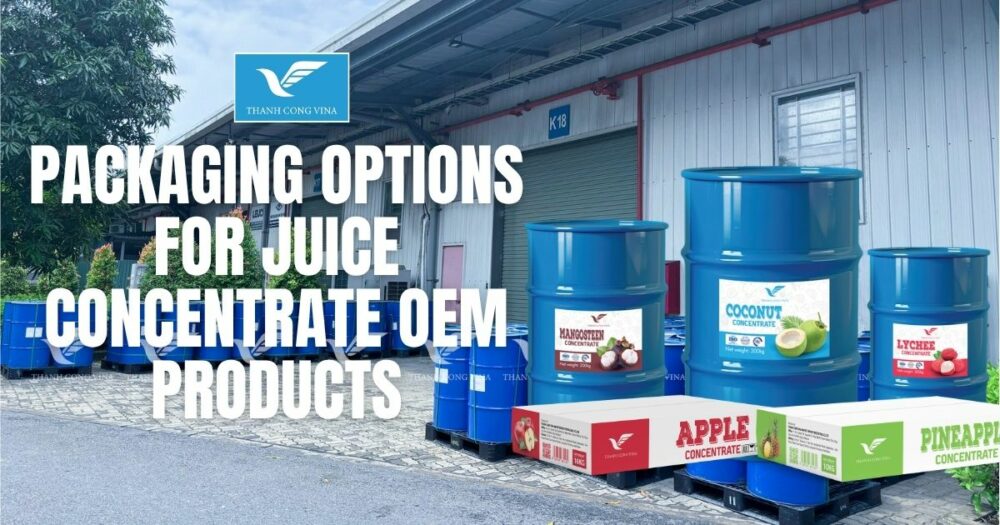
The concentrate generated through industrial Juice Concentrate Production is typically discharged into heavy-duty, multi-layered aseptic bags featuring advanced ethylene-vinyl alcohol (EVOH) or aluminum metallized barrier layers, which offer absolute protection against light transmission and oxygen permeation. These high-barrier bags are subsequently housed within reinforced steel industrial drums or high-capacity intermediate bulk containers (IBCs), providing a rugged, standardized packaging format designed to withstand the physical demands of long-distance global transport after leaving the Juice Concentrate Production facility.
Comprehensive Cold-Chain Warehousing and Shipping Infrastructure
Post-packaging, the industrial drums containing the rewards of Juice Concentrate Production are immediately transferred via automated guided vehicles into specialized, temperature-controlled cold storage warehouses. Depending on the specific biological stability of the fruit variety, storage temperatures are rigidly maintained within a narrow band from 0°C for short-term logistics down to -18°C to -25°C for deep-frozen, long-term preservation. This unyielding cold chain is strictly maintained from the factory warehouse, across the maritime shipping container networks, and directly to the destination port, preventing any structural settling or color degradation of the goods derived from Juice Concentrate Production.
7. Global Compliance, Quality Systems, and Analytical Validation
Global Compliance, Quality Systems, and Analytical Validation
The modern Vietnamese food safety ecosystem operates under a strict philosophy of empirical validation and total transparent traceability, reinforcing the worldwide integrity of local Juice Concentrate Production. Top-tier manufacturing facilities in Vietnam house world-class, fully accredited in-house analytical laboratories. These laboratories are staffed by specialized chemical and microbiological analysts and equipped with advanced instrumentation suites, including High-Performance Liquid Chromatography (HPLC) and Gas Chromatography-Mass Spectrometry (GC-MS), all dedicated to auditing the output of Juice Concentrate Production.
These technical capabilities allow for the rigorous screening of every single production lot for an array of quality and safety metrics. The strict adherence to these analytical verification protocols ensures that the final product completely conforms to the complex food safety mandates enforced by demanding international regulatory bodies, such as the US FDA, the European Food Safety Authority (EFSA), and regional regulatory standards globally, opening doors for Vietnamese Juice Concentrate Production across all continents.
Multi-Dimensional Testing Metrics
The table below outlines the core analytical testing parameters required for final product validation in Juice Concentrate Production:
| Analytical Category | Specific Testing Parameters | Industrial Quality Significance in Juice Concentrate Production |
| Physical & Chemical Analysis | Brix, Titratable Acidity, pH, Viscosity | Guarantees precise blending and dilution consistency for the end manufacturer. |
| Sensory Verification | Color Delta-E spectrophotometry, Taste, Aroma profile | Ensures absolute uniformity with the client’s established brand flavor profiles. |
| Microbiological Screening | Total Plate Count (TPC), Yeast, Mold, Coliforms | Verifies the absolute commercial sterility and integrity of the aseptic filling process. |
| Contaminant & Purity Auditing | Heavy metal traces, Multi-residue pesticide screening | Ensures total compliance with international chemical safety and clean-label laws. |
Blockchain-Enabled Digital Traceability Infrastructure
To augment physical testing, leading Vietnamese producers have deployed comprehensive digital ledger and traceability infrastructure across their Juice Concentrate Production networks. Every finished industrial drum is tagged with a unique, encrypted QR code or RFID identifier. This digital passport tracks and records the complete operational history of that specific batch: the exact geographic coordinate of the sourcing farms, the precise farming cooperative harvest logs, the detailed temperature timelines during transport, the factory operator shifts, and the final laboratory chemical clearance sheets. This level of transparency provides international corporate buyers with complete confidence and regulatory peace of mind when investing in Vietnamese Juice Concentrate Production.
Conclusion
The remarkable evolution of Vietnam into an undisputed global cornerstone for Juice Concentrate Production highlights a perfect harmony between natural environmental gifts and industrial manufacturing sophistication. By merging its rich, diverse tropical ecosystems with world-class extraction engineering, rigorous thermal vacuum management, and unyielding aseptic logistics, the nation has proven that it can reliably fulfill the high-volume, premium-quality ingredient demands of the global market. As international food and beverage brands continue to navigate complex supply chain dynamics and seek out sustainable, clean-label raw materials, Vietnam stands out as an unparalleled sourcing destination that delivers exceptional economic and structural advantages through advanced industrial Juice Concentrate Production.
Successfully capitalizing on the vast opportunities within this dynamic market requires an experienced partner with deep local expertise and a relentless commitment to international quality execution. This is precisely where Thanh Cong Vina provides immense value to your corporate supply chain. As a premier industrial sourcing enterprise, Thanh Cong Vina specializes in seamlessly connecting global corporate requirements with the very pinnacle of Vietnam’s advanced agricultural processing capabilities. Our strict focus on rigorous laboratory validation, ethical farm integration, and seamless logistics ensures that your business receives custom-tailored ingredient solutions delivered exactly to your technical specifications. Partner with Thanh Cong Vina today to optimize your ingredient portfolio and bring the exceptional quality of Vietnamese agricultural innovation and our elite Juice Concentrate Production standards to your consumers around the world.