
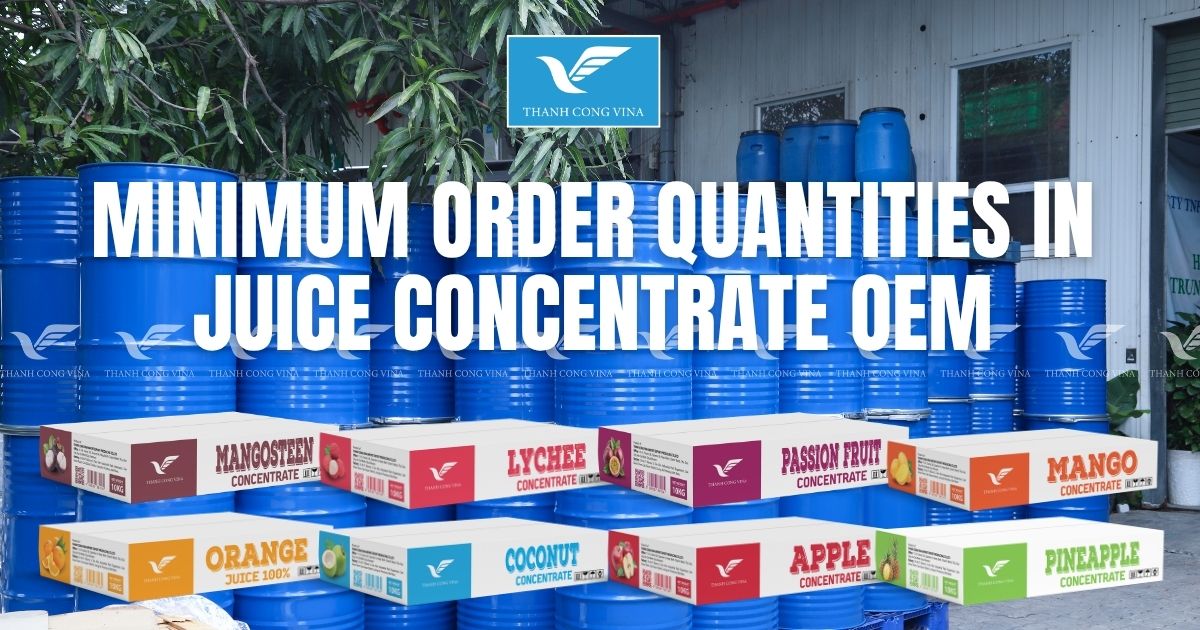
Juice Concentrate OEM is becoming the preferred manufacturing model for beverage brands looking to launch private-label products or expand their existing product portfolios without investing in their own production facilities. One of the first topics discussed between an OEM manufacturer and a customer is the minimum order quantity (MOQ). MOQ directly affects production costs, inventory planning, packaging options, product customization, and overall business profitability. Whether the buyer is a startup, distributor, supermarket chain, or multinational beverage company, understanding MOQ is essential for making informed purchasing decisions.
Different manufacturers establish different MOQ requirements based on production capacity, raw material sourcing, packaging formats, and manufacturing efficiency. Choosing the right MOQ allows companies to balance production costs with market demand while minimizing inventory risks. This article explains how Juice Concentrate OEM manufacturers determine minimum order quantities, what factors influence MOQ, and how beverage brands can negotiate suitable production volumes for long-term business success.
1. Why Minimum Order Quantity Matters in OEM Manufacturing
Why Minimum Order Quantity Matters in OEM Manufacturing
Understanding the Purpose of MOQ
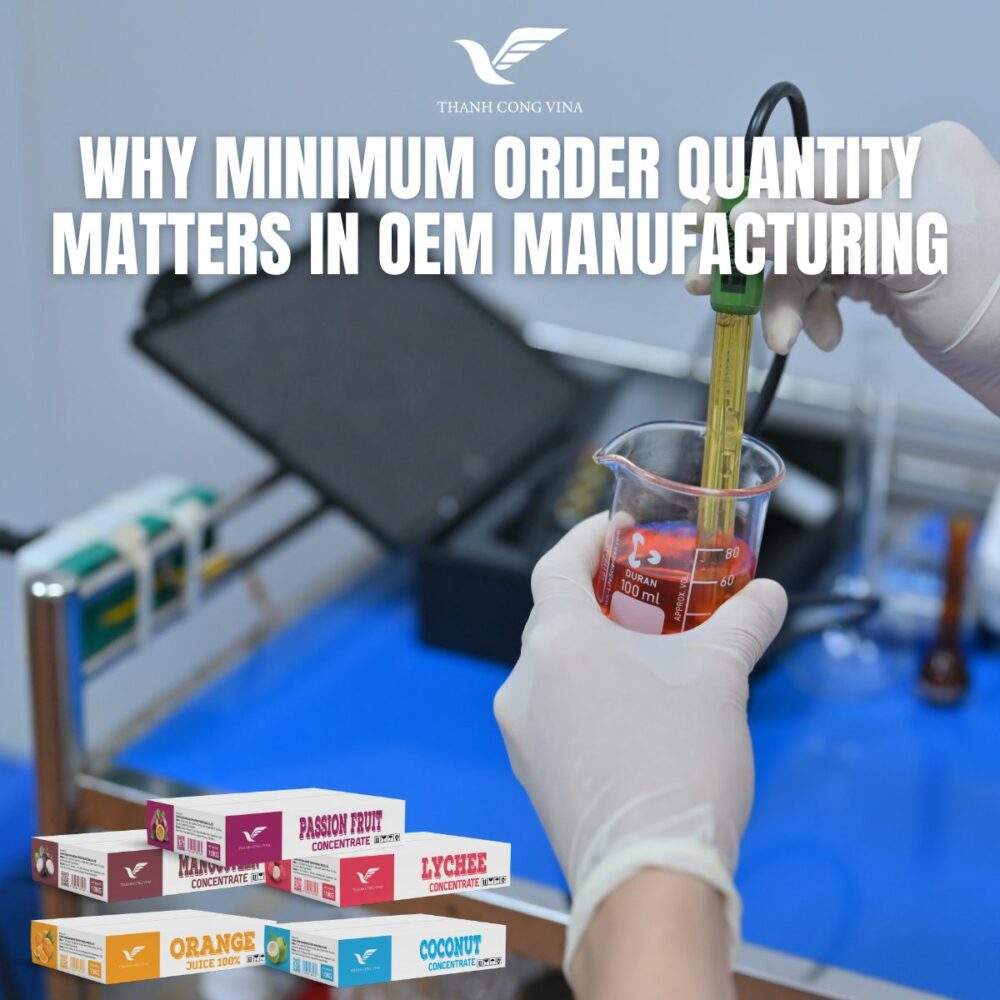
Minimum order quantity exists to ensure efficient production and cost-effective manufacturing. Every production run requires machine setup, equipment cleaning, raw material preparation, laboratory testing, packaging preparation, and quality inspections. These fixed production activities generate costs regardless of whether a manufacturer produces a small or large quantity.
Professional Juice Concentrate OEM manufacturers establish MOQ requirements to distribute these fixed expenses across larger production volumes. As production increases, the cost per unit decreases, benefiting both manufacturers and customers.
MOQ also helps manufacturers optimize production schedules while maximizing equipment utilization.
Well-planned production volumes improve operational efficiency throughout the manufacturing process.
Balancing Manufacturer and Customer Needs
MOQ should benefit both parties.
Reliable Juice Concentrate OEM manufacturers work closely with customers to recommend production quantities that align with budget limitations, expected sales volumes, warehouse capacity, and distribution strategies.
Rather than offering arbitrary production limits, experienced manufacturers evaluate each project individually.
Flexible discussions often lead to mutually beneficial production arrangements.
Long-term partnerships frequently create opportunities for more favorable MOQ conditions.
2. Juice Concentrate OEM Requirements Change with Customization
Formula Development and Product Complexity
One of the biggest factors affecting MOQ is the level of product customization.
Highly customized Juice Concentrate OEM projects typically require larger production quantities because manufacturers invest additional resources in formulation development, laboratory testing, pilot production, ingredient sourcing, and quality validation.
Unique fruit blends, functional ingredients, organic formulations, and specialty nutritional products often require greater production volumes to maintain cost efficiency.
More complex projects generally involve higher development investments.
Manufacturers evaluate technical complexity before determining appropriate MOQ levels.
Packaging Configuration
Packaging significantly influences minimum production quantities.
Professional Juice Concentrate OEM manufacturers offer PET bottles, glass bottles, aluminum cans, aseptic cartons, stand-up pouches, bag-in-box systems, and industrial drums.
Customized bottle molds, printed labels, shrink sleeves, caps, cartons, and promotional packaging frequently require higher MOQs because suppliers themselves maintain minimum production requirements.
Packaging decisions directly influence manufacturing economics.
Selecting standardized packaging often reduces minimum order quantities.
3. Raw Material Availability Influences MOQ
Raw Material Availability Influences MOQ
Seasonal Fruit Supply
Fresh fruit availability changes throughout the year.
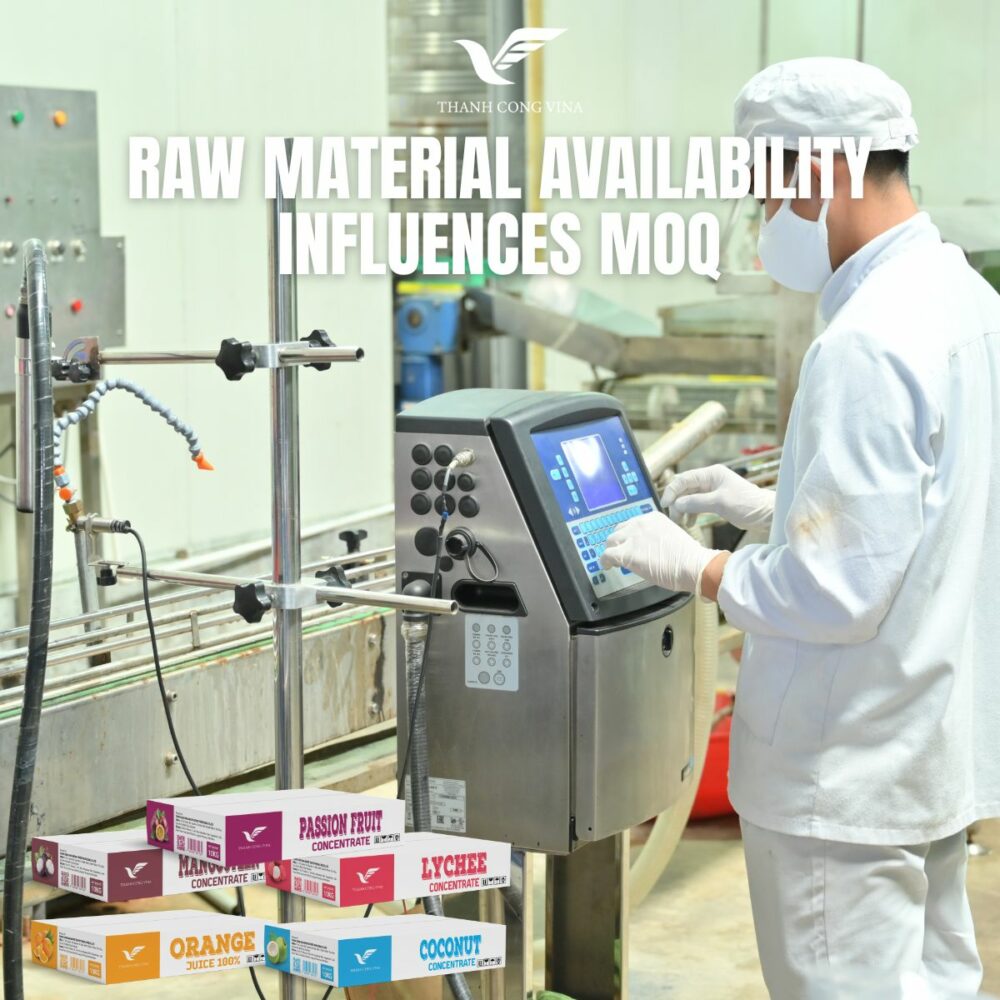
Professional Juice Concentrate OEM manufacturers plan production schedules according to seasonal harvests to ensure stable raw material quality and competitive pricing.
When fruits are abundant, manufacturers may offer greater flexibility in production quantities.
Conversely, limited seasonal availability may require larger purchasing commitments to secure sufficient raw materials.
Strategic procurement planning supports stable manufacturing operations.
Ingredient Sourcing and Procurement
Many specialized ingredients require bulk purchasing from ingredient suppliers.
Experienced Juice Concentrate OEM manufacturers coordinate procurement activities based on customer production forecasts.
Natural extracts, vitamins, minerals, botanical ingredients, sweeteners, flavors, and organic raw materials often involve supplier-imposed minimum purchase quantities.
Efficient procurement planning reduces waste while improving production efficiency.
Ingredient availability directly affects MOQ calculations.
4. Production Efficiency and Manufacturing Costs
Equipment Setup and Operational Efficiency
Every production run requires machine calibration, sanitation procedures, quality inspections, ingredient preparation, and equipment adjustments.
Professional Juice Concentrate OEM manufacturers incur these operational costs regardless of production volume.
Larger production runs distribute fixed manufacturing expenses across more finished units, reducing overall production costs.
Efficient equipment utilization improves profitability for both manufacturers and customers.
Operational planning remains essential for competitive pricing.
Economies of Scale
Higher production volumes generally reduce manufacturing costs.
Reliable Juice Concentrate OEM manufacturers purchase raw materials, packaging components, and production supplies more efficiently when serving larger orders.
Bulk purchasing creates pricing advantages throughout the supply chain.
Lower production costs often translate into more competitive finished product pricing.
Economies of scale remain one of the primary reasons for MOQ implementation.
5. Strategies for Businesses Managing MOQ
Strategies for Businesses Managing MOQ
Forecasting Market Demand
Accurate sales forecasting helps businesses determine appropriate production quantities.
Companies partnering with Juice Concentrate OEM manufacturers should evaluate expected customer demand, product launch schedules, seasonal sales patterns, and inventory turnover before placing orders.
Careful planning minimizes both stock shortages and excessive inventory.
Reliable demand forecasting improves overall supply chain performance.
Long-term planning strengthens purchasing efficiency.
Building Long-Term Manufacturing Partnerships
Many OEM manufacturers offer greater production flexibility to long-term customers.
Professional Juice Concentrate OEM suppliers often adjust MOQ requirements after establishing successful business relationships based on consistent purchasing history.
Long-term cooperation builds trust while improving production planning.
Strategic partnerships frequently generate cost savings and operational advantages.
Mutual growth benefits both manufacturers and beverage brands.
6. International Market Considerations
Export Logistics
Export shipments influence minimum production quantities.
Professional Juice Concentrate OEM manufacturers optimize production according to container utilization, transportation costs, destination markets, and international shipping schedules.
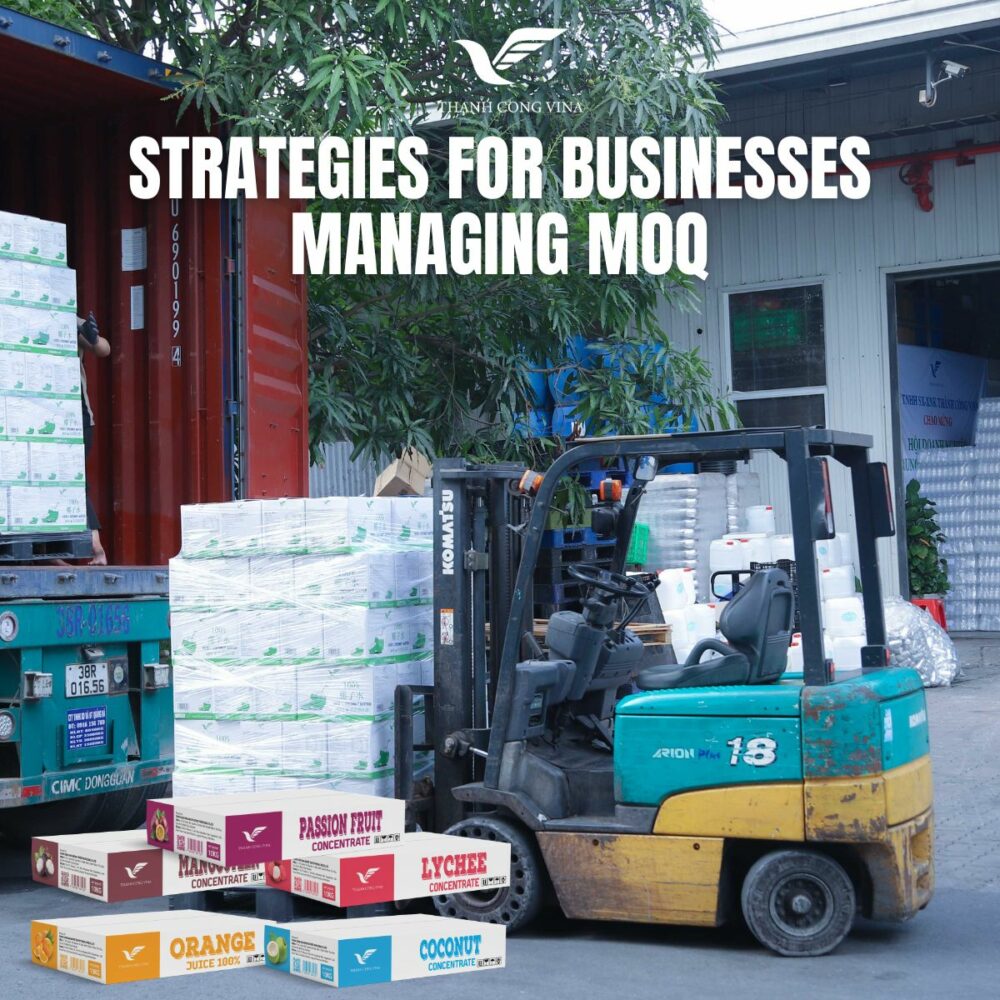
Full-container shipments typically reduce logistics expenses compared with smaller shipments.
Efficient export planning supports competitive international pricing.
Transportation considerations play an important role in MOQ discussions.
Regulatory Compliance
Different countries maintain varying food safety regulations, labeling requirements, and documentation standards.
Experienced Juice Concentrate OEM manufacturers may establish specific production quantities for customized export products requiring additional certifications or specialized packaging.
Regulatory compliance contributes to production planning and manufacturing efficiency.
International experience simplifies global distribution.
7. Future Trends in MOQ Flexibility
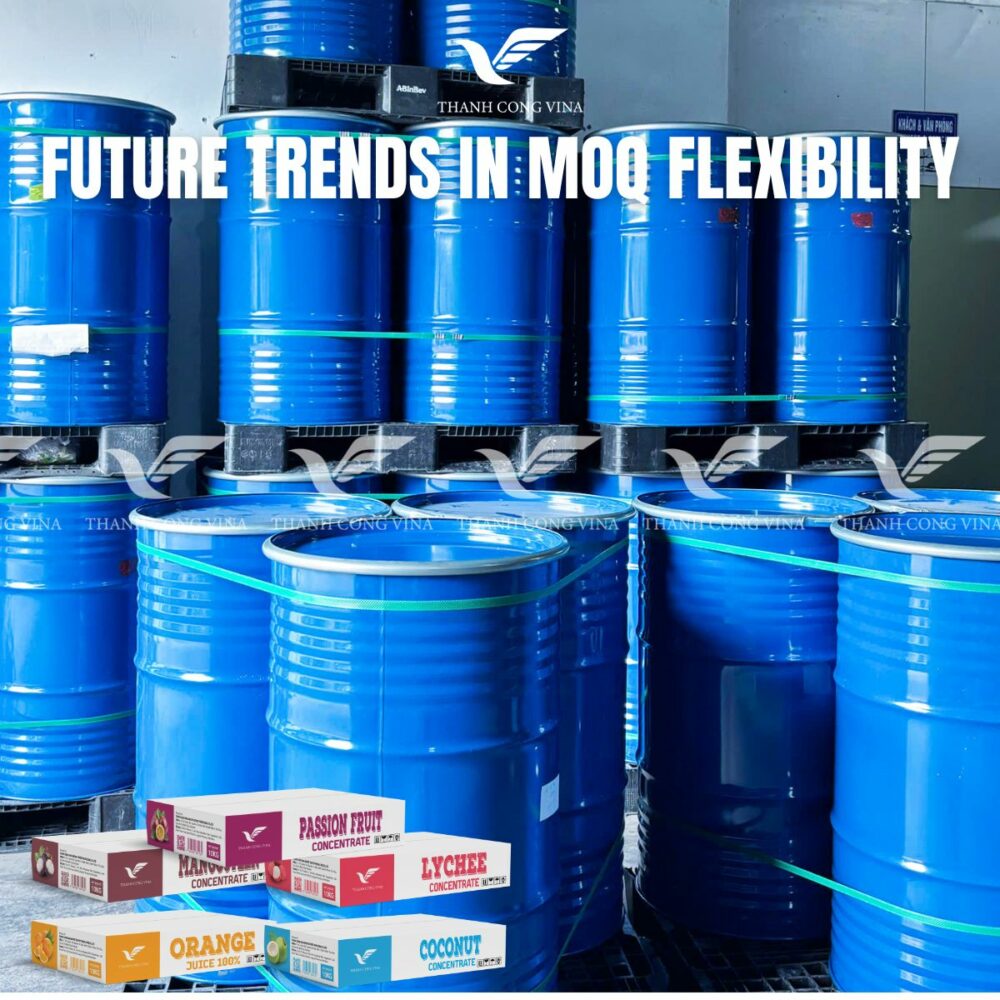
Future Trends in MOQ Flexibility
Digital Manufacturing and Production Innovation
Modern automation technologies are improving manufacturing flexibility.
Professional Juice Concentrate OEM manufacturers increasingly utilize intelligent production systems that reduce setup times and improve operational efficiency.
These technological improvements may gradually reduce minimum production quantities without significantly increasing manufacturing costs.
Flexible production supports product innovation.
Technology continues transforming beverage manufacturing.
Growing Support for Startup Beverage Brands
The rapid growth of startup beverage companies has encouraged manufacturers to develop more flexible production programs.
Many Juice Concentrate OEM suppliers now offer pilot production, trial batches, and scalable manufacturing solutions that allow brands to enter the market with manageable investment levels.
Flexible production strategies encourage innovation while supporting business growth.
The future beverage industry will likely offer increasingly customized manufacturing options.
Conclusion
Minimum order quantity plays a vital role in successful Juice Concentrate OEM manufacturing because it directly affects production efficiency, pricing, customization opportunities, inventory management, and long-term profitability. Understanding the factors that influence MOQ—including raw material sourcing, packaging choices, production complexity, manufacturing costs, and export logistics—helps beverage brands make informed purchasing decisions and build stronger supplier relationships.
Working with an experienced OEM manufacturer allows businesses to optimize production volumes while maintaining product quality, operational efficiency, and competitive pricing. A collaborative approach often results in flexible manufacturing solutions that support sustainable growth.
Thanh Cong Vina provides comprehensive OEM manufacturing services supported by advanced production technology, internationally recognized quality management systems, and extensive export experience. By offering customized beverage development, professional technical support, efficient production planning, and customer-focused manufacturing solutions, Thanh Cong Vina helps beverage companies achieve successful product launches with optimized production strategies. Businesses seeking dependable OEM partnerships can confidently rely on Thanh Cong Vina for premium Juice Concentrate OEM solutions and long-term success through professional Juice Concentrate OEM manufacturing.