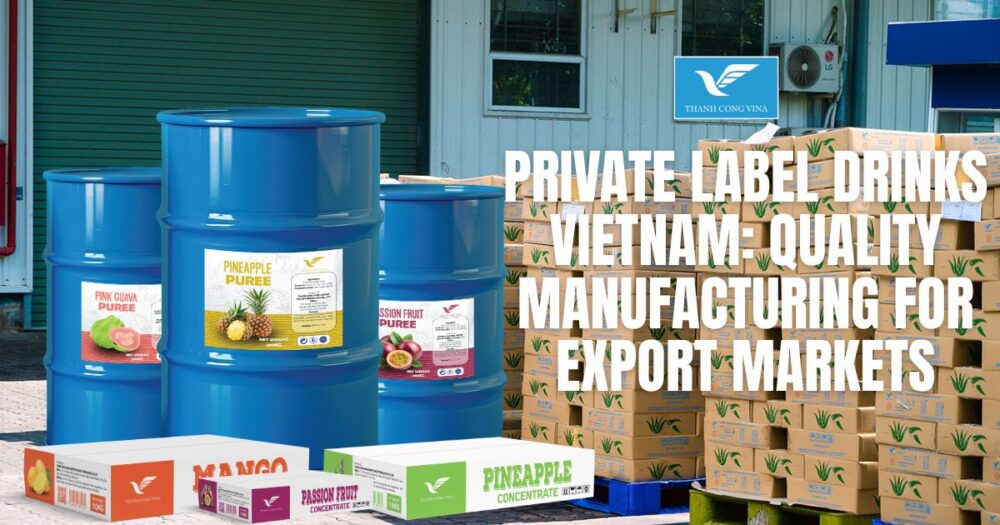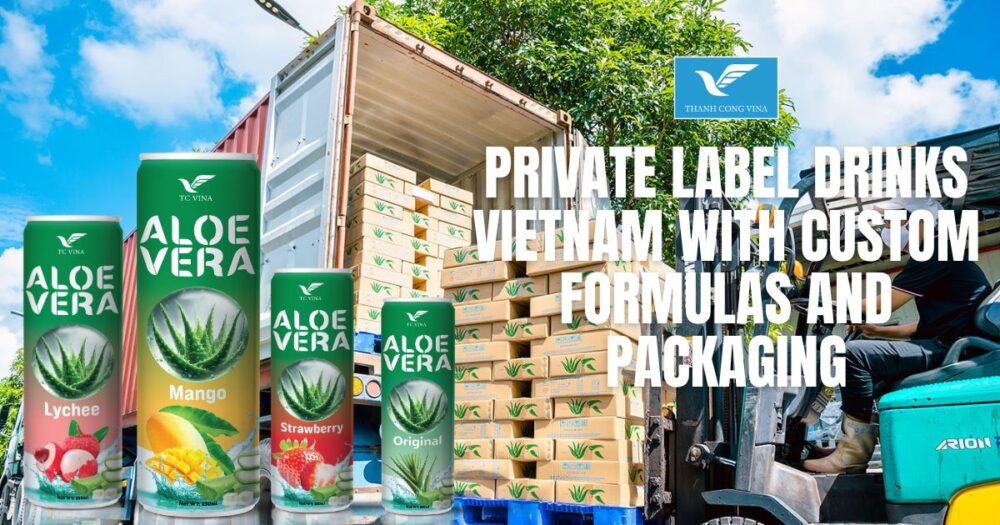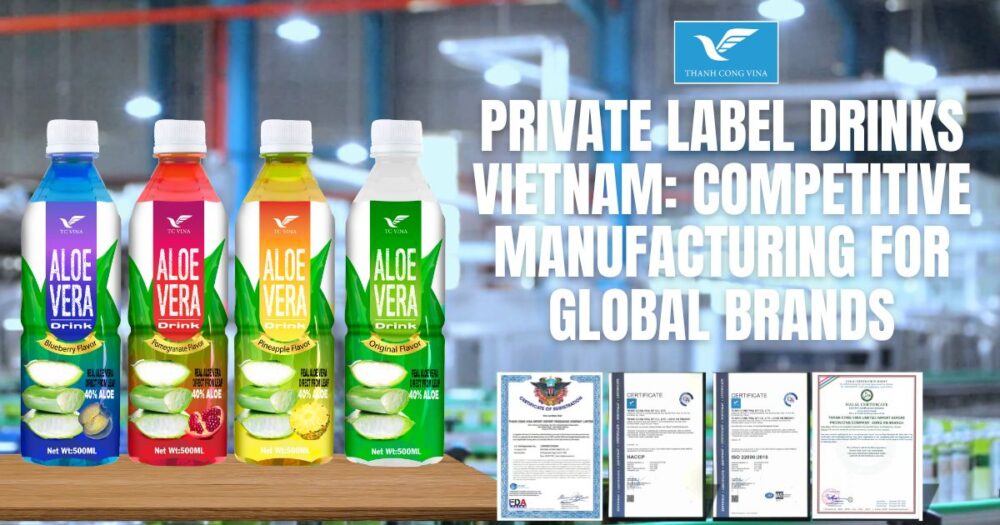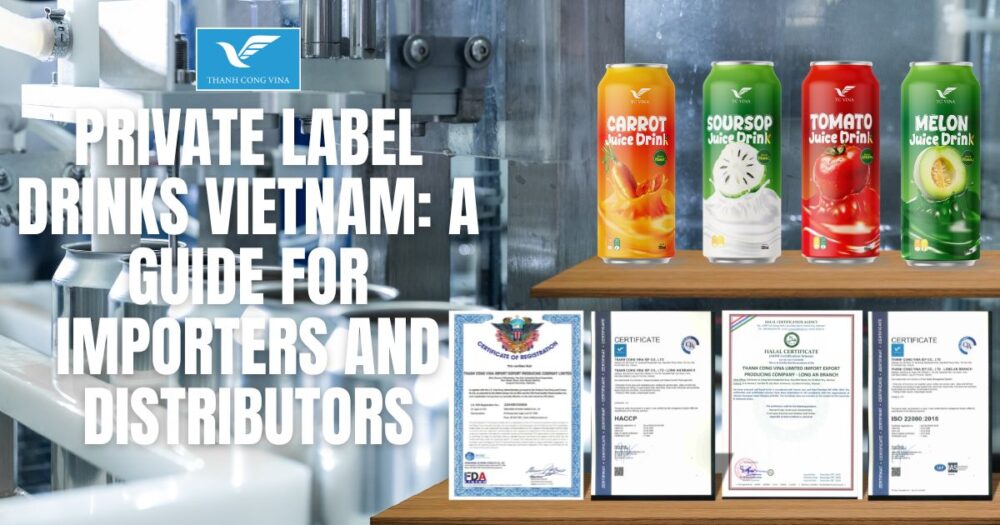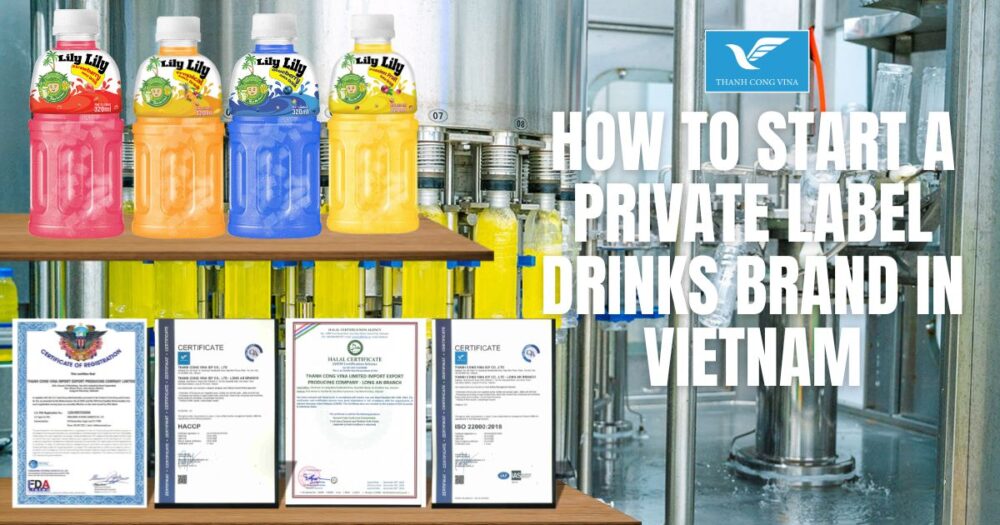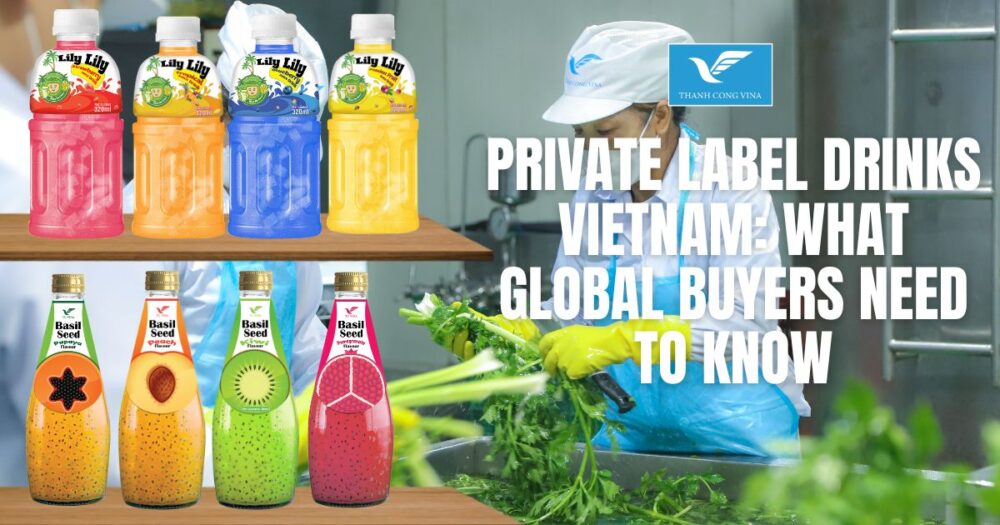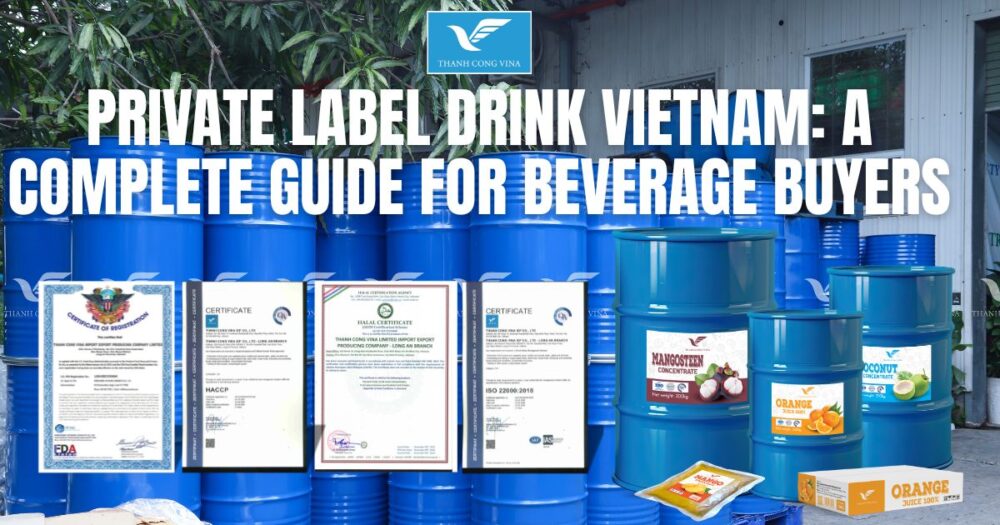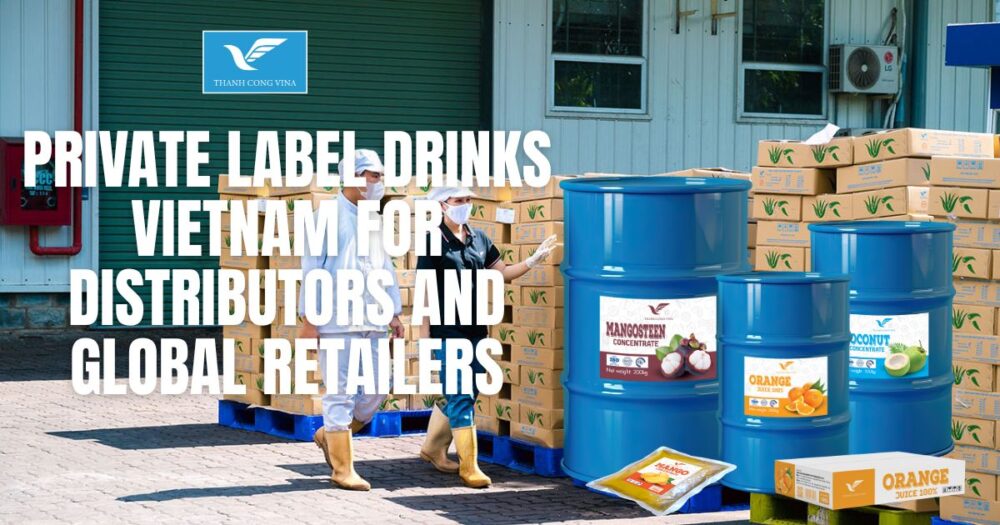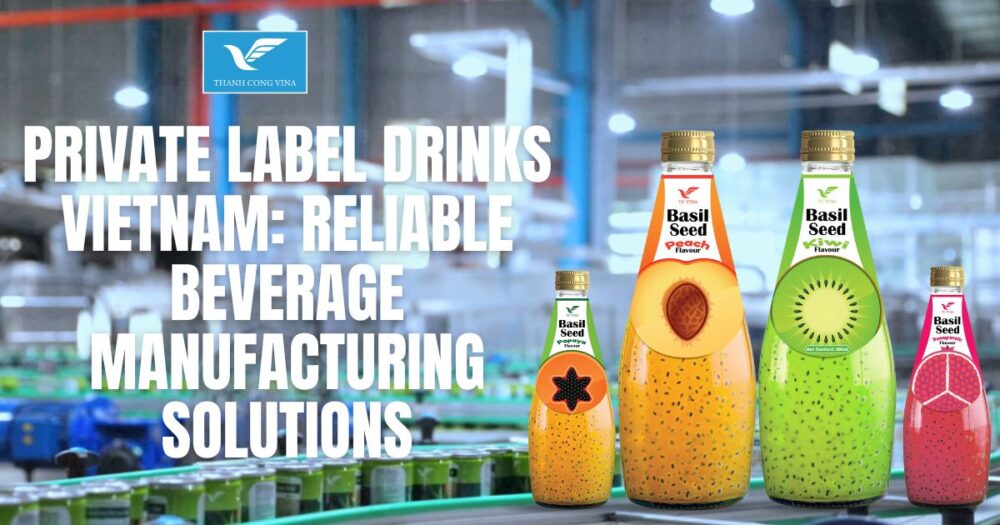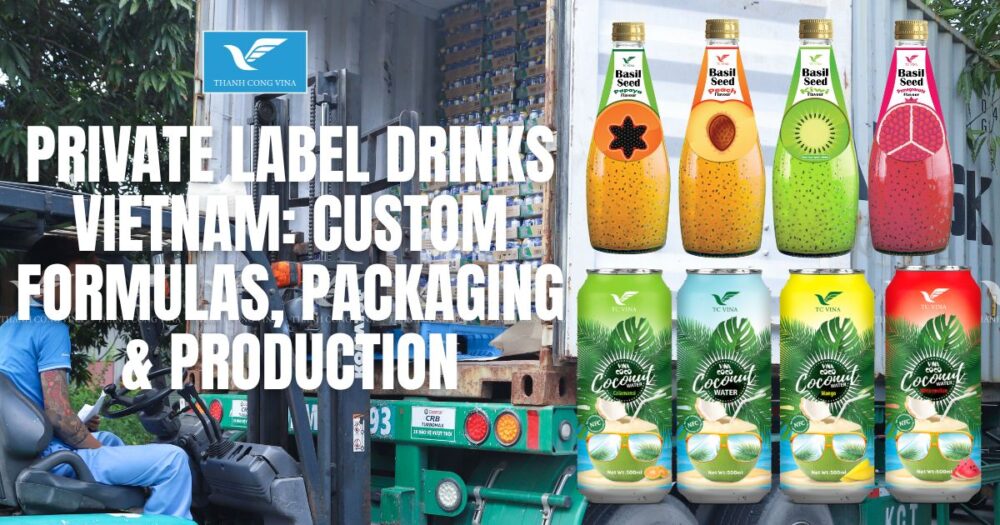

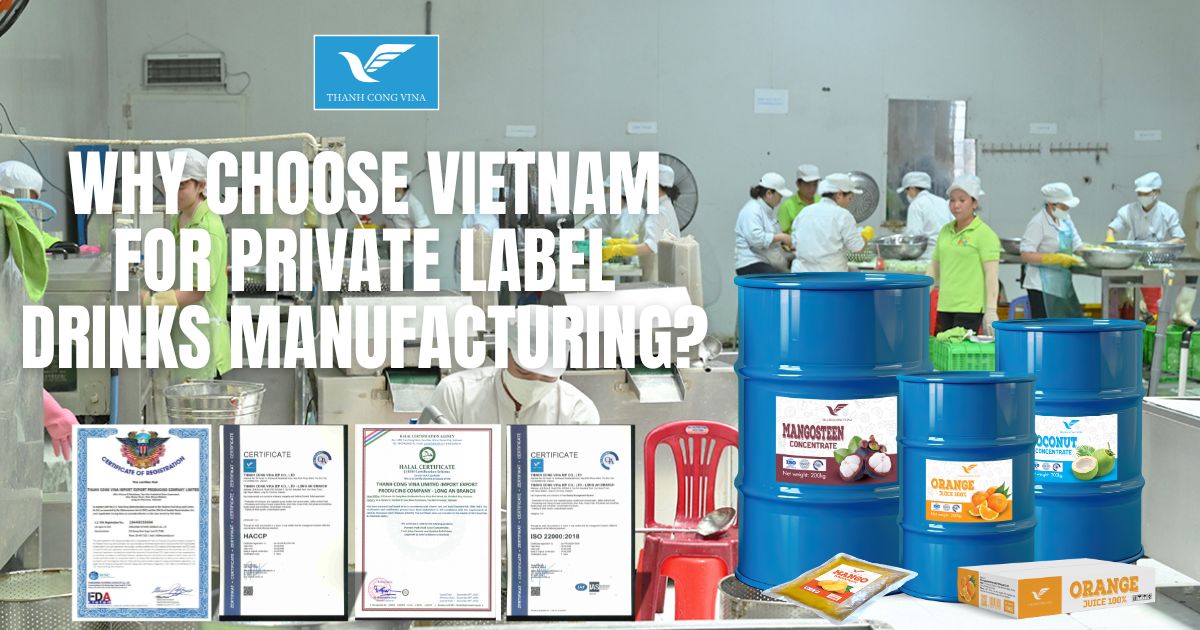
For importers, distributors, retailers, startups, and international beverage brands, Private Label Drinks Manufacturing provides an effective way to develop branded beverages without investing in an independent production facility. Among emerging manufacturing destinations, Vietnam has become an attractive sourcing market thanks to its agricultural resources, growing food-processing sector, skilled workforce, and expanding export capabilities.
Vietnam is particularly well positioned for beverage production because of its abundant tropical fruits and established supply chains for ingredients such as mango, passion fruit, pineapple, coconut, orange, guava, lychee, and other agricultural products. This creates opportunities for international buyers to develop differentiated fruit beverages, coconut water, aloe vera drinks, nata de coco beverages, ready-to-drink coffee, and customized beverage products.
However, the decision to manufacture in Vietnam should not be based solely on production costs. Buyers should also consider manufacturing technology, product development capabilities, quality systems, certifications, packaging, minimum order quantities, lead times, and export support. This article explores why Vietnam is becoming an increasingly relevant destination for Private Label Drinks Manufacturing and what international brands should consider when choosing a Vietnamese beverage manufacturer.
1. Vietnam’s Growing Position in Private Label Drinks Manufacturing
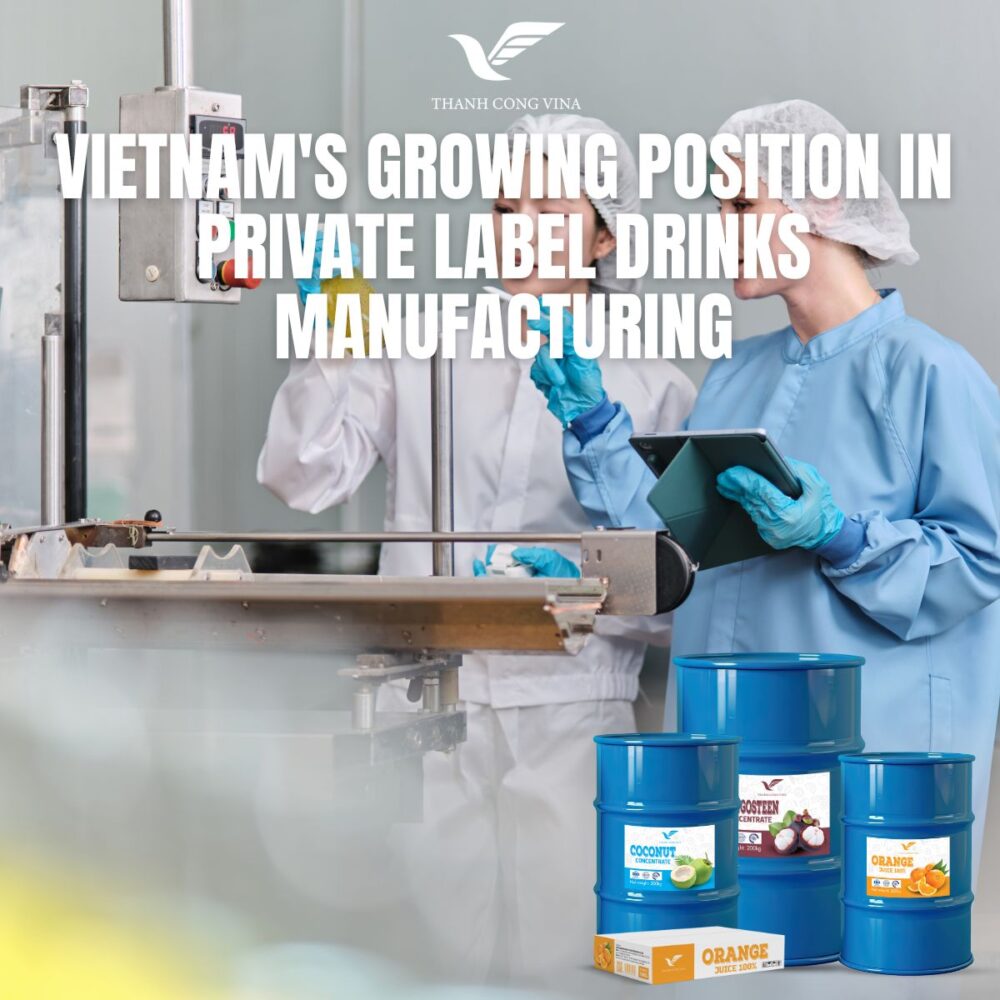
Vietnam’s Growing Position in Private Label Drinks Manufacturing
Vietnam has developed a strong food and beverage processing industry supported by agricultural production and increasing manufacturing capabilities.
A Strong Agricultural Foundation
One of Vietnam’s biggest advantages is its access to tropical agricultural ingredients.
The country produces a wide range of fruits and crops that can be used in beverage manufacturing, including:
- Mango
- Passion fruit
- Pineapple
- Orange
- Pink guava
- Peach
- Lychee
- Soursop
- Coconut
- Dragon fruit
This agricultural diversity gives beverage manufacturers opportunities to develop products with distinctive tropical profiles.
For international brands, local ingredient availability can support the development of beverages that emphasize fruit-based positioning and regional sourcing.
Expanding Food Processing Capabilities
Vietnam’s food-processing sector has continued to develop around modern production facilities, technical expertise, and export-oriented manufacturing.
A professional beverage factory can provide:
- Beverage processing systems
- Mixing and blending equipment
- Filling lines
- Packaging machinery
- Quality-control facilities
- Warehousing
- Production management
For brands using Private Label Drinks Manufacturing, access to existing infrastructure can significantly reduce the investment required to launch a new beverage line.
Strategic Location in Southeast Asia
Vietnam’s geographical position provides convenient access to important Asian markets while maintaining connections with global shipping routes.
Vietnamese beverage products can be exported to markets across:
- Asia
- Europe
- North America
- The Middle East
- Africa
- Oceania
Actual delivery time and logistics costs depend on the destination, shipping route, order quantity, port, and commercial terms.
2. Cost Efficiency Without Sacrificing Customization
Cost efficiency is an important reason why international buyers consider Vietnam for beverage manufacturing. However, competitive pricing becomes more valuable when it is combined with flexible product development and reliable production.
Lower Infrastructure Investment for Brands
Building an independent beverage factory requires substantial investment in:
- Land and buildings
- Processing equipment
- Filling systems
- Packaging machinery
- Laboratories
- Warehouses
- Utilities
- Production personnel
- Quality management
With Private Label Drinks Manufacturing, brands can outsource these activities to an established manufacturer.
This allows companies to allocate more resources toward:
- Branding
- Marketing
- Distribution
- Sales
- Consumer research
- Market expansion
Flexible Production for Different Business Sizes
Private label manufacturing is not limited to multinational companies.
It can also support:
- Beverage startups
- Importers
- Distributors
- Supermarket chains
- Foodservice companies
- Established beverage brands
A suitable manufacturer should be able to discuss MOQ and production requirements based on the product category, packaging format, customization level, and order volume.
Total Landed Cost Matters
Buyers should not select a supplier simply because it offers the lowest factory price.
The actual cost of importing beverages may include:
- Product manufacturing
- Packaging
- International freight
- Insurance
- Import duties
- Customs expenses
- Warehousing
- Local distribution
Therefore, buyers should compare the total landed cost and expected product quality rather than evaluating only the quoted unit price.
3. Custom Product Development for Global Beverage Brands
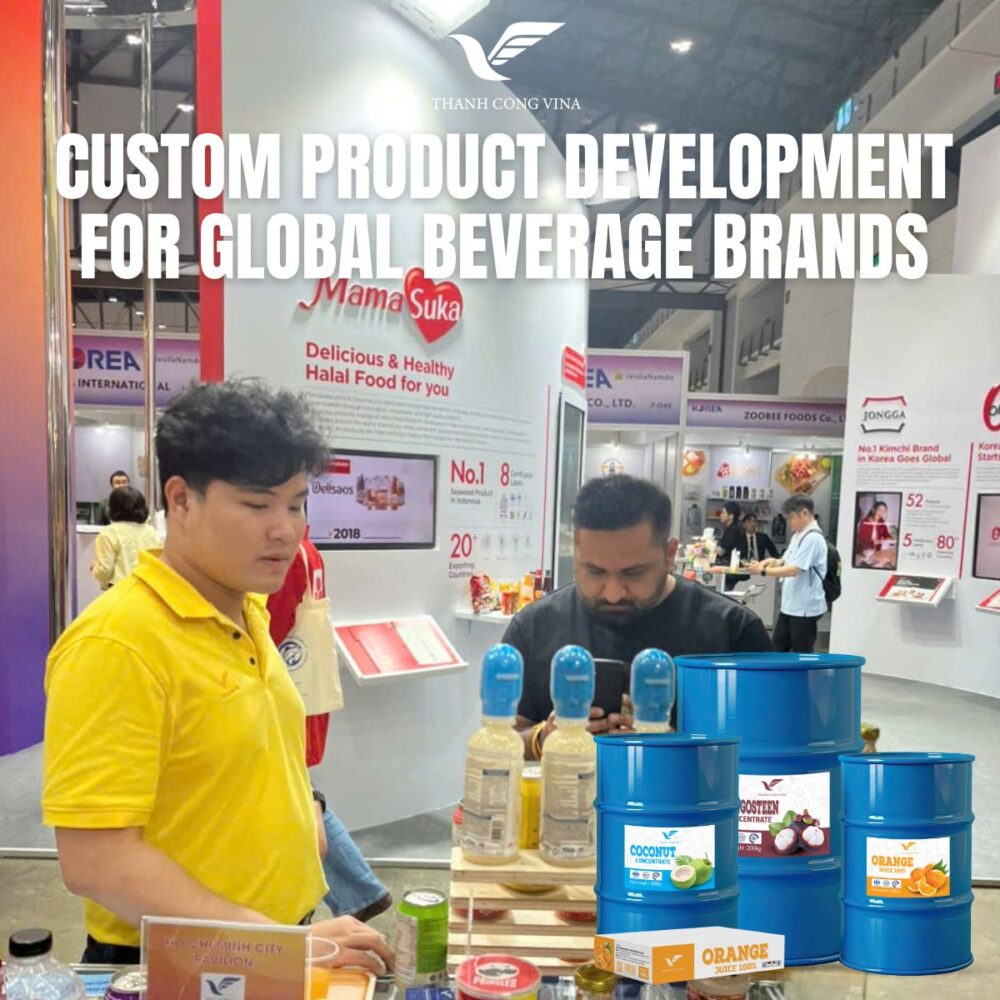
Custom Product Development for Global Beverage Brands
One of the strongest advantages of Private Label Drinks Manufacturing is the ability to create products tailored to a specific brand and market.
Customized Beverage Formulation
A private label beverage can be developed according to a customer’s product requirements.
Potential formulation parameters include:
- Fruit content
- Sweetness
- Acidity
- Flavor intensity
- Aroma
- Color
- Mouthfeel
- Texture
Different consumer markets can have different preferences. A beverage intended for one region may require a different flavor profile from a similar product sold elsewhere.
A capable Vietnamese manufacturer should therefore offer formulation flexibility rather than simply supplying standardized products.
From Concept to Sample
A structured development process may include:
- Customer submits a product brief
- Manufacturer reviews requirements
- R&D develops an initial formula
- Samples are produced
- Customer evaluates the samples
- Feedback is incorporated
- Formula is finalized
- Commercial production begins
This process allows the buyer to participate actively in product development.
Commercial Scalability
A good sample is only the beginning.
The final formula should also be suitable for consistent large-scale production.
During commercialization, manufacturers need to maintain appropriate controls over:
- Ingredient quantities
- Processing conditions
- Filling
- Packaging
- Batch consistency
- Finished product quality
This is particularly important when a private label brand begins expanding into multiple markets.
4. Beverage Categories Available for Private Label Manufacturing in Vietnam
Vietnam’s agricultural resources and beverage production capabilities allow manufacturers to support a wide range of beverage categories.
Fruit Juice and Fruit Drinks
Fruit beverages are among the most suitable products for private label development.
Potential categories include:
- Mango juice
- Passion fruit beverages
- Pineapple juice
- Orange drinks
- Pink guava juice
- Peach beverages
- Lychee drinks
- Soursop beverages
Products can be customized according to the target market’s flavor preferences, packaging requirements, and brand positioning.
Coconut Water
Coconut water is another important tropical beverage category.
It can be developed in packaging formats such as:
- Aluminum cans
- Slim cans
- PET bottles
- Glass bottles
- Cartons
Different package sizes can target different channels, including convenience stores, supermarkets, foodservice, and on-the-go consumption.
Aloe Vera and Nata de Coco Drinks
Aloe vera and nata de coco products offer additional opportunities for brands seeking differentiated beverage concepts.
Aloe vera beverages can be combined with different fruit flavors, while nata de coco can provide a distinctive chewy texture.
These products can help distributors create broader and more diverse beverage portfolios.
Ready-to-Drink Coffee
Vietnam is also well known internationally for its coffee culture, creating opportunities for ready-to-drink coffee products.
Potential private label products include:
- Black coffee
- Milk coffee
- Latte
- Cappuccino
- Vietnamese-style coffee
This category can complement fruit-based products within a broader beverage portfolio.
5. Packaging Advantages for Private Label Drinks Manufacturing
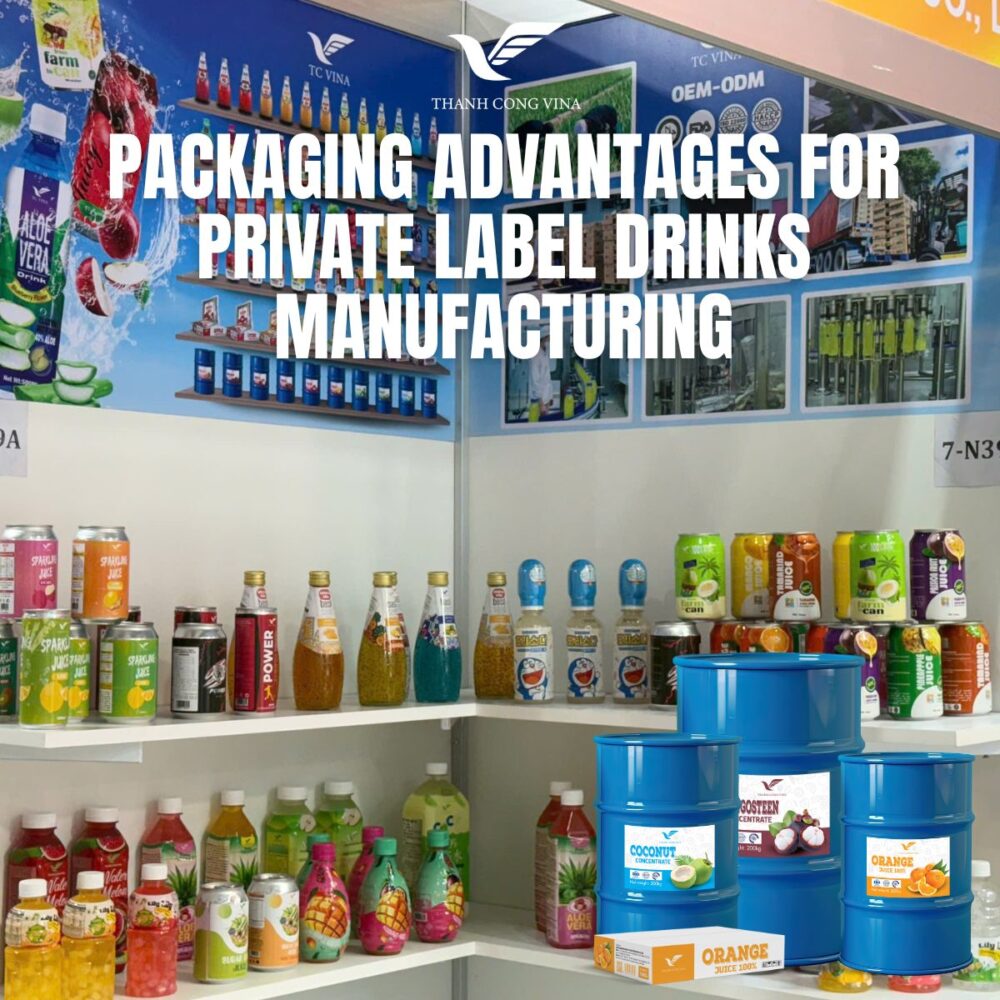
Packaging Advantages for Private Label Drinks Manufacturing
Packaging plays a major role in private label beverage development because it affects brand recognition, convenience, product protection, and logistics.
Multiple Packaging Formats
Depending on the manufacturer and beverage category, available formats may include:
- Aluminum cans
- PET bottles
- Glass bottles
- Cartons
- Slim cans
Common beverage sizes can include:
- 250ml
- 320ml
- 330ml
- 500ml
The most suitable format depends on the product, target consumer, retail environment, and desired positioning.
Customized Brand Packaging
Private label customers can develop packaging around their own brand identity.
A package may contain:
- Brand logo
- Product name
- Flavor
- Fruit graphics
- Ingredient information
- Nutrition information
- Barcode
- Product claims
- Manufacturer information
For international markets, packaging artwork should be reviewed carefully against the applicable destination-market regulations.
Packaging for International Transportation
Export beverages need packaging that can withstand handling throughout the supply chain.
Manufacturers should consider:
- Carton strength
- Stacking
- Pallet configuration
- Container loading
- Product protection
- Warehouse handling
Efficient packaging design can also help maximize container utilization.
6. Quality Control and Certifications in Vietnam
For international beverage brands, quality assurance is one of the most important aspects of Private Label Drinks Manufacturing.
Raw Material Control
Quality management begins with incoming ingredients.
Depending on the product, raw materials may be assessed for:
- Appearance
- Color
- Aroma
- Taste
- Physical characteristics
- Microbiological requirements
- Supplier documentation
Agricultural ingredients may naturally vary between harvests, making supplier qualification and raw material specifications important.
Production Quality Management
Quality control should continue throughout the manufacturing process.
Typical stages include:
- Ingredient preparation
- Weighing
- Mixing
- Processing
- Filling
- Sealing
- Labeling
- Carton packing
Production parameters should be monitored according to the approved product specifications.
Finished Product Testing
Finished beverages may be checked for relevant characteristics, including:
- Appearance
- Taste
- Aroma
- Product consistency
- Packaging integrity
- Microbiological parameters
- Label information
The testing program should be established according to the beverage category and buyer requirements.
Food Safety Certifications
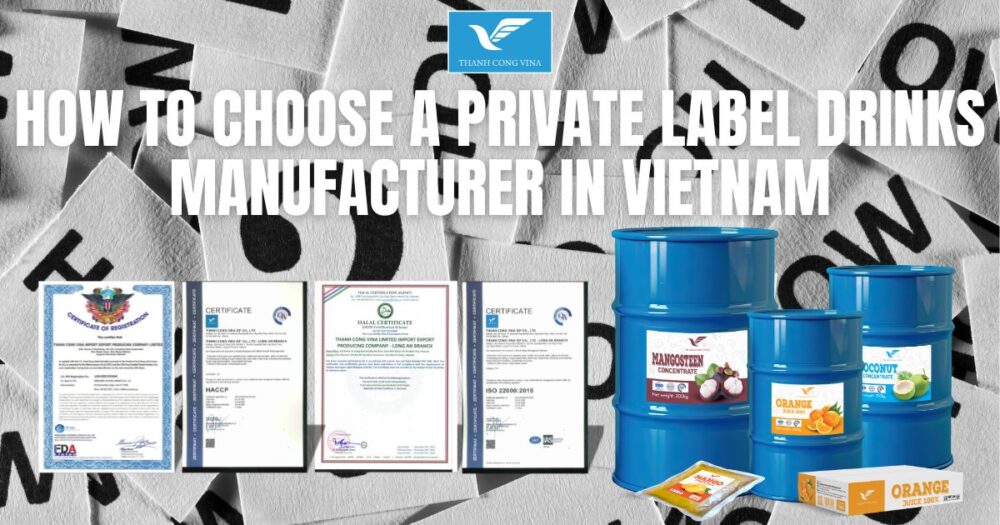
International buyers may require certifications or standards such as:
- HACCP
- ISO
- HALAL
- FDA-related requirements
Certification requirements depend on the target market and product. Buyers should verify the manufacturer’s current certificates and applicable scope before entering a commercial agreement.
7. How to Choose a Private Label Beverage Manufacturer in Vietnam
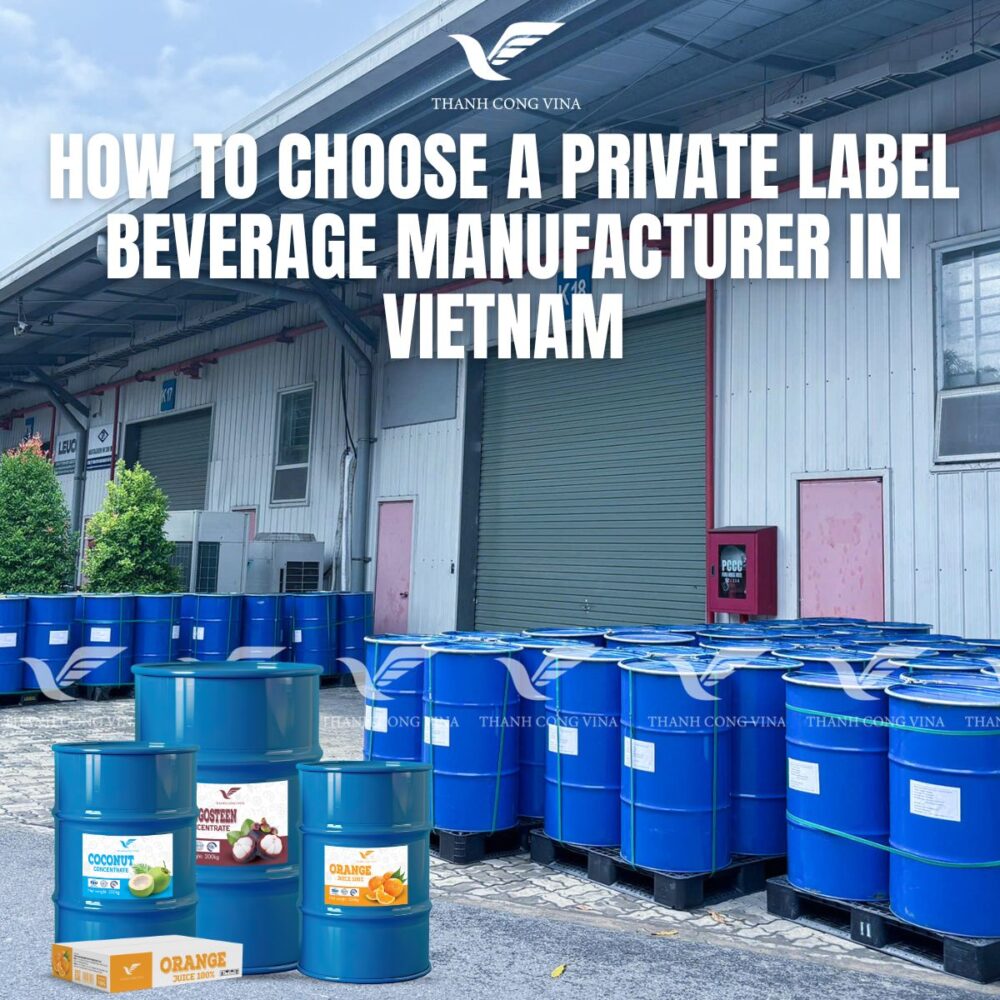
How to Choose a Private Label Beverage Manufacturer in Vietnam
Not every factory is equally suitable for international private label projects.
Evaluate Manufacturing Capabilities
Buyers should review:
- Beverage categories
- Production capacity
- Processing technology
- Filling systems
- Packaging options
- R&D capabilities
- Quality-control systems
- Certifications
The factory should be able to meet both current requirements and anticipated future demand.
Evaluate Communication
International manufacturing involves many technical and commercial details.
A reliable supplier should communicate clearly regarding:
- Product specifications
- Formula development
- MOQ
- Pricing
- Packaging
- Production schedules
- Quality requirements
- Export documentation
Clear communication can significantly reduce misunderstandings during product development.
Think Beyond the First Order
The best manufacturing relationship is designed for long-term growth.
A buyer may begin with one SKU and later require:
- More flavors
- Additional package sizes
- Higher production volumes
- New beverage categories
- New export destinations
Selecting a scalable manufacturing partner from the beginning can simplify future expansion.
8. Why Choose Thanh Cong Vina for Private Label Drinks Manufacturing?
For international companies looking for reliable Private Label Drinks Manufacturing in Vietnam, Thanh Cong Vina provides OEM, ODM, and customized beverage manufacturing solutions for global B2B customers.
End-to-End Product Development
Thanh Cong Vina can support customers through multiple stages of the beverage manufacturing process, including:
- Product consultation
- Formula development
- Sample production
- Packaging
- Commercial production
- Quality control
- Export preparation
This integrated approach allows customers to coordinate their beverage project through one manufacturing partner.
Diverse Beverage Portfolio
Thanh Cong Vina supports a broad range of beverage categories, including:
- Fruit juices
- Fruit drinks
- Coconut water
- Aloe vera beverages
- Nata de coco drinks
- Ready-to-drink coffee
- Fruit juice concentrates
This diversity enables importers, distributors, and retailers to develop multiple products within one supply relationship.
Export-Oriented Manufacturing
For international customers, manufacturing capability must be combined with quality management and export readiness.
Thanh Cong Vina focuses on B2B beverage manufacturing and customized solutions designed around customer specifications and international market requirements.
Conclusion
Vietnam offers compelling advantages for international brands exploring Private Label Drinks Manufacturing. Its agricultural resources provide access to a broad range of tropical ingredients, while its developing food-processing industry offers increasingly sophisticated beverage production capabilities. Combined with competitive manufacturing conditions, flexible product development, diverse packaging options, and established export infrastructure, Vietnam can be an effective sourcing destination for beverage brands seeking to expand internationally.
However, selecting the right manufacturing partner remains essential. Buyers should evaluate R&D capabilities, production capacity, customization, packaging, quality control, certifications, MOQ, lead times, documentation, logistics, and communication before committing to a supplier.
Thanh Cong Vina Beverage provides OEM, ODM, and private label beverage manufacturing solutions for importers, distributors, retailers, and international beverage brands. Thanh Cong Vina supports customers from product concept and formulation through sampling, packaging, commercial production, quality control, and export preparation. With a diverse portfolio covering fruit beverages, coconut water, aloe vera drinks, nata de coco, ready-to-drink coffee, and fruit juice concentrates, Thanh Cong Vina can support brands developing multiple beverage categories through one manufacturing relationship. For businesses looking for a reliable Vietnamese manufacturing partner, the right approach to Private Label Drinks Manufacturing combines product innovation, quality management, production efficiency, and export capability to build a scalable international beverage business.