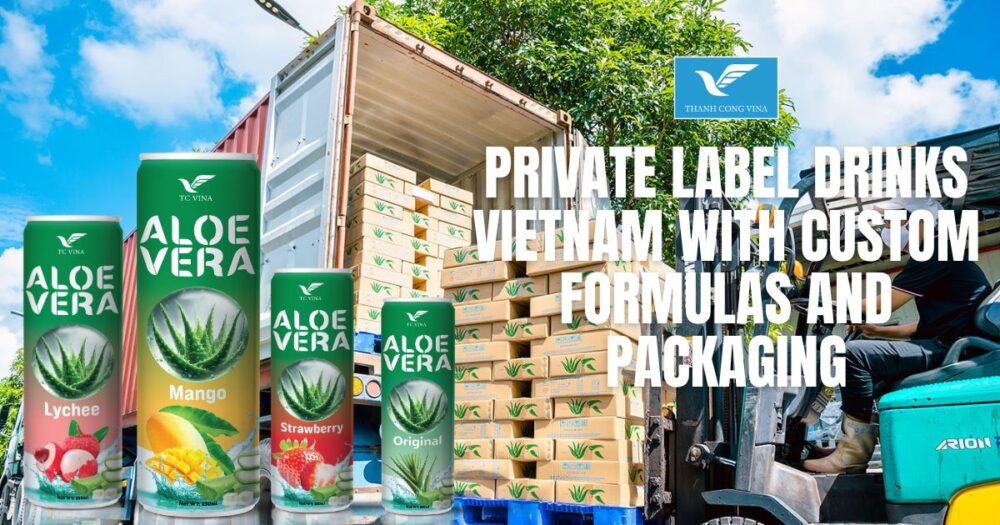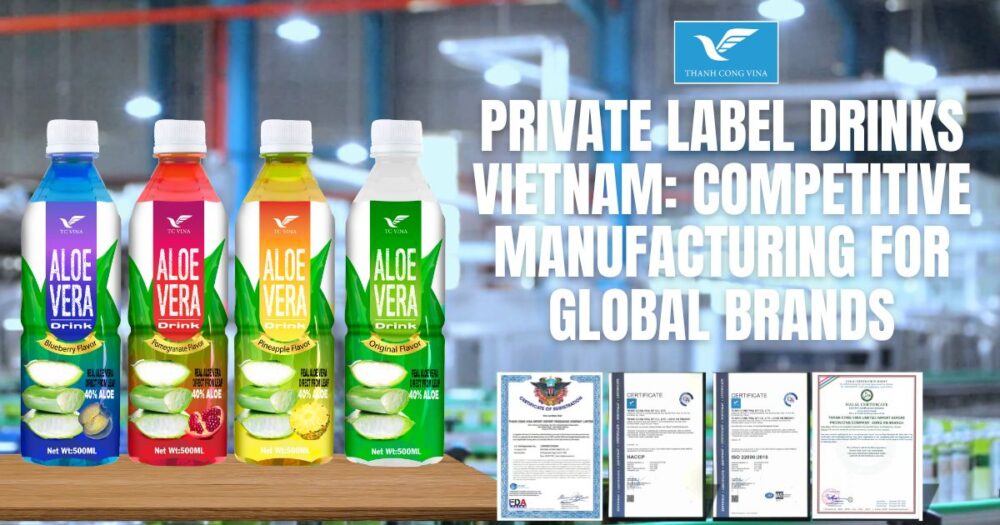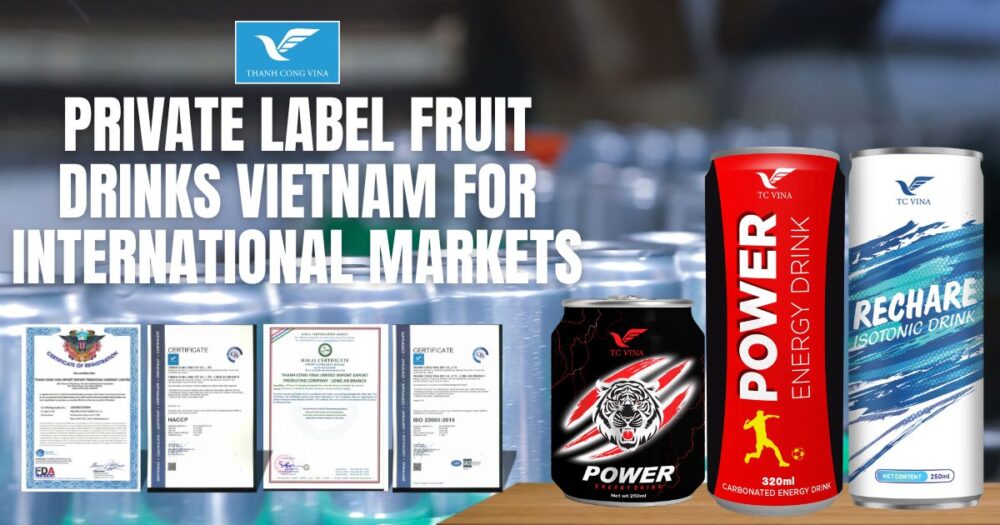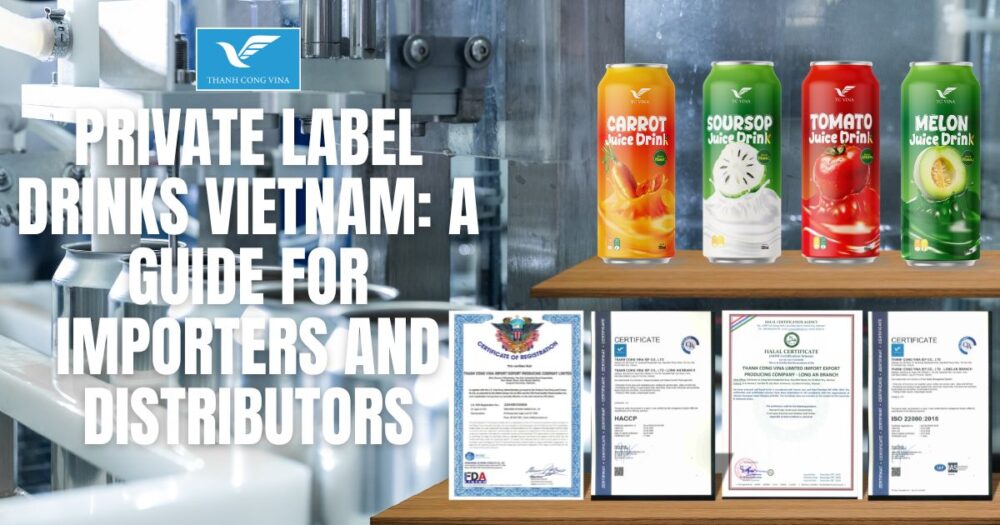

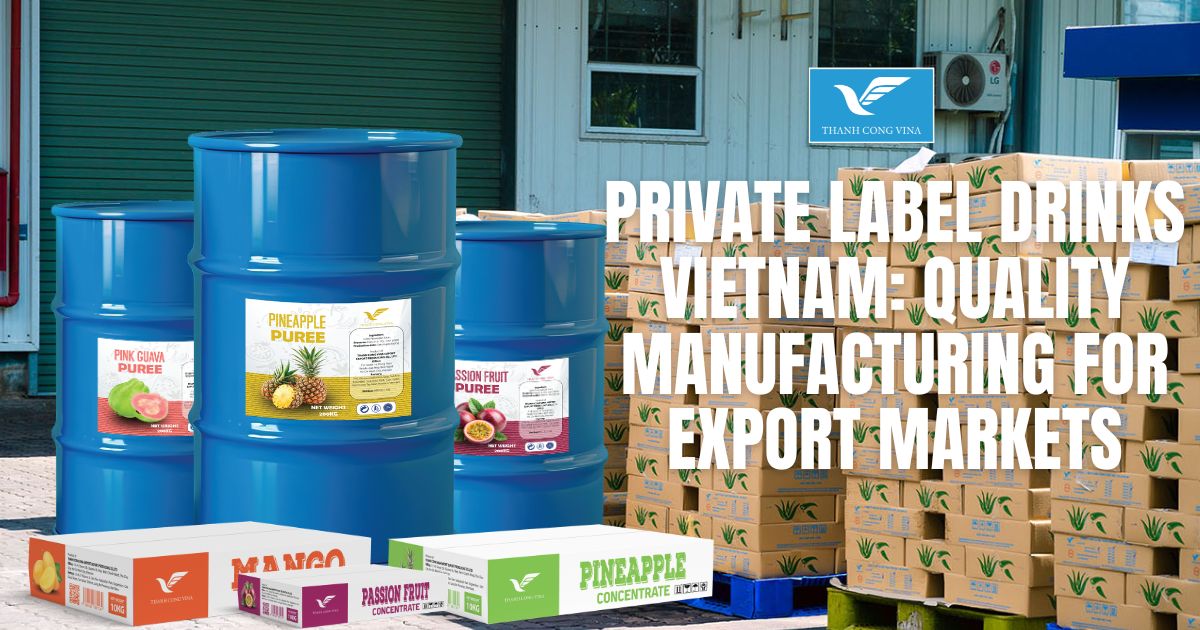
The international beverage market is changing rapidly as consumers become more interested in convenient, distinctive, and market-specific drink products. At the same time, importers, distributors, retailers, and emerging beverage brands are looking for manufacturing partners that can provide consistent quality, flexible production, customized products, and reliable export support. This has increased the demand for Private Label beverage manufacturing in Vietnam.
Vietnam offers strong advantages for beverage production, including access to tropical fruit ingredients, established food processing capabilities, competitive manufacturing resources, and growing experience in international export markets. For companies that want to launch their own beverage brands, working with a Vietnamese manufacturer can provide an efficient alternative to building and operating their own production facilities.
A professional Private Label manufacturing model allows brands to develop beverages under their own names while working with an experienced factory on product development, production, packaging, quality control, and shipment preparation. This approach gives international businesses greater flexibility when developing products for specific consumers and export destinations.
1. Why Private Label Drinks Vietnam Are Attractive for Export Markets
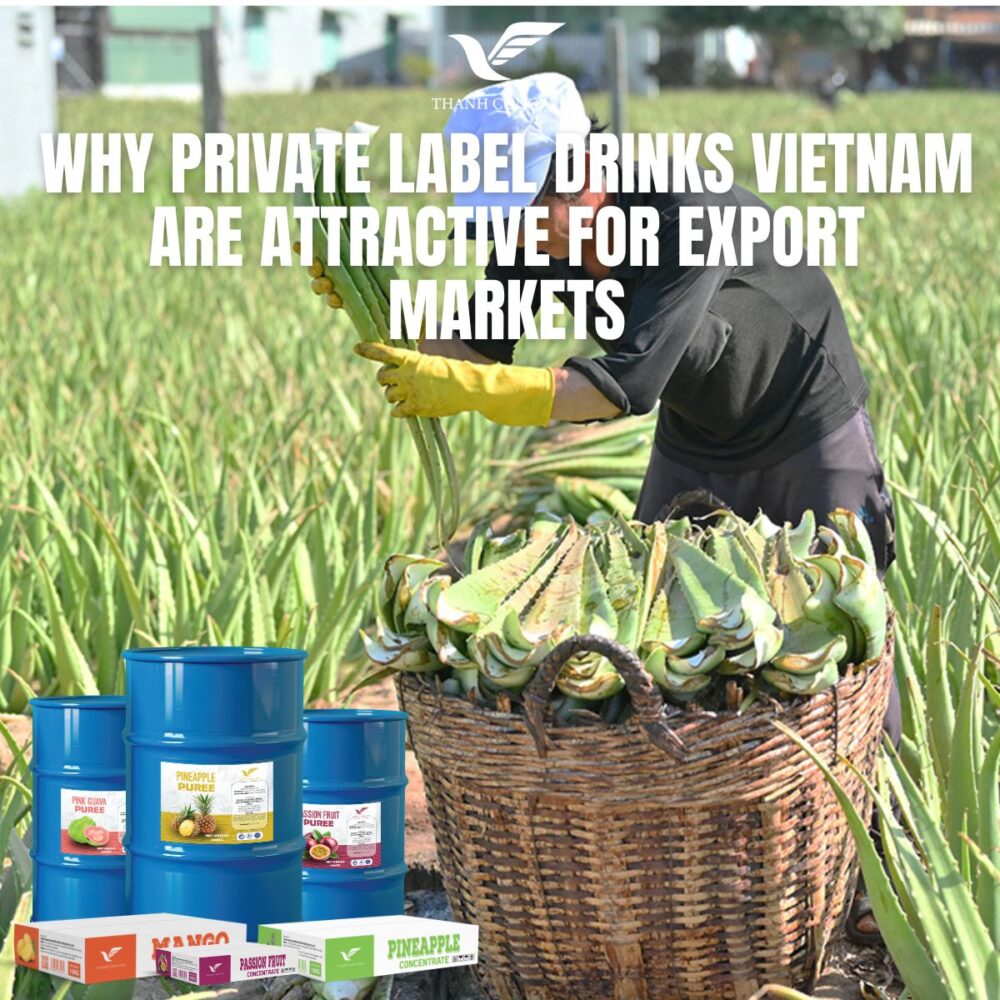
Why Private Label Drinks Vietnam Are Attractive for Export Markets
The success of an international beverage brand depends on more than product availability. Buyers need products that can meet market expectations in terms of flavor, quality, packaging, pricing, supply reliability, and regulatory requirements. This is where Private Label Drinks Vietnam can provide a strong manufacturing option.
Access to Diverse Beverage Ingredients
Vietnam has a well-developed agricultural sector with a wide range of tropical fruits and agricultural raw materials. Mango, coconut, pineapple, passion fruit, guava, lychee, strawberry, orange, peach, red grape, and other ingredients can be used in different beverage applications.
This ingredient diversity creates opportunities for brands to develop products that are differentiated from conventional beverage offerings.
For Private Label customers, ingredient availability can also support the development of multiple flavors under one brand. Instead of depending on a single beverage category, companies can build a broader portfolio designed for different consumer preferences.
Competitive Manufacturing Environment
Manufacturing cost is an important consideration for importers and distributors. Vietnam provides access to established food and beverage production infrastructure while maintaining a competitive manufacturing environment.
For international brands, outsourcing production to Vietnam can reduce the capital required to establish their own beverage facility. The brand can instead allocate resources toward marketing, sales, distribution, packaging development, and market expansion.
Export-Oriented Production
International beverage production requires more than simply manufacturing a drink. Products need to be prepared according to agreed specifications and export requirements.
An experienced Vietnamese beverage manufacturer can coordinate production planning, packaging, quality control, carton specifications, palletization, container loading, and shipment preparation.
This makes the Private Label model particularly suitable for companies purchasing beverages for international distribution.
2. Private Label Beverage Manufacturing for Customized Products
The core advantage of Private Label manufacturing is the ability to create a beverage product around the requirements of the brand rather than simply purchasing an existing product.
Custom Product Concepts
A beverage project can begin with a specific market opportunity. The customer may identify a target consumer group, desired flavor profile, package size, price positioning, and distribution channel.
The manufacturer can then evaluate the product requirements and develop a suitable manufacturing approach.
For example, a distributor targeting convenience stores may prefer compact beverage formats, while a supermarket brand may require a wider range of flavors and larger production volumes.
This flexibility allows Private Label beverages to be developed around commercial objectives rather than a one-size-fits-all product model.
Customized Beverage Formulas
Formula development is an important part of beverage manufacturing. The final product can be developed according to requirements relating to taste, sweetness, acidity, aroma, color, texture, fruit ingredients, and other product characteristics.
A customized formula gives the brand greater control over the consumer experience.
During development, product samples can be reviewed before commercial production. Feedback from the customer can then be incorporated into the development process until the product reaches the desired specifications.
Multiple Beverage Categories
A single Private Label manufacturer can potentially support several beverage categories, allowing brands to expand their product portfolio.
These may include:
- Fruit juice drinks
- Tropical fruit beverages
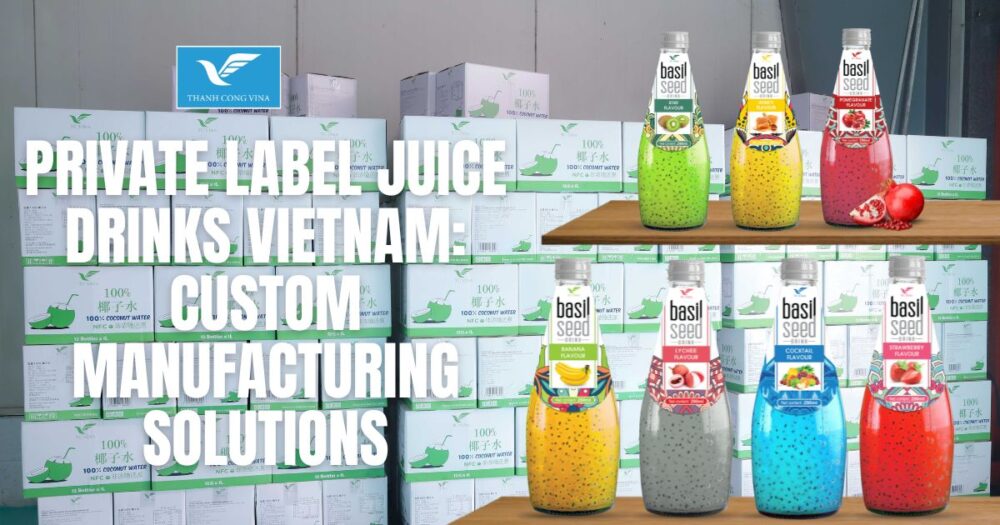
- 100% coconut water
- Coconut water with fruit juice
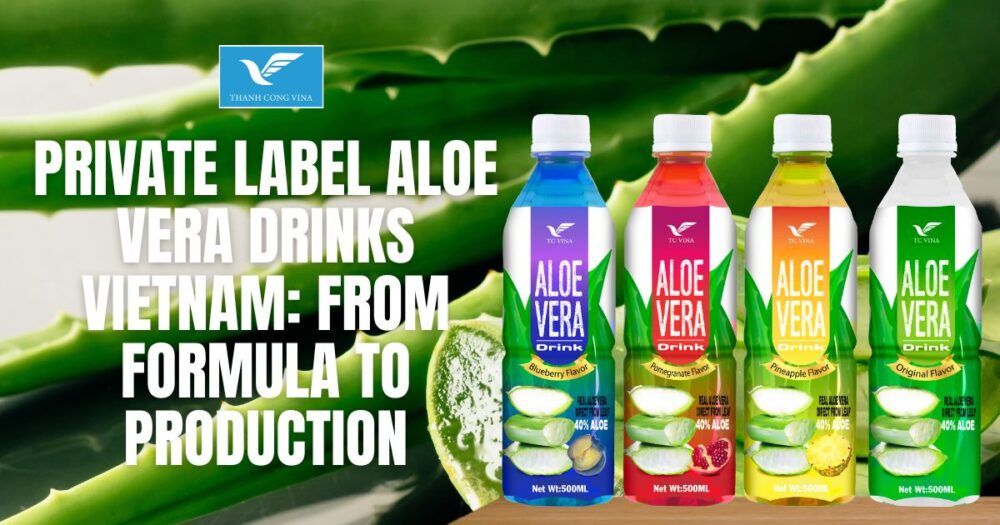
- Aloe vera drinks
- Ready-to-drink coffee
- Isotonic beverages
- Energy drinks
- Functional beverage concepts
The ability to develop multiple categories can help international companies build a more comprehensive beverage brand.
3. Quality Manufacturing Standards for Export Beverage Products
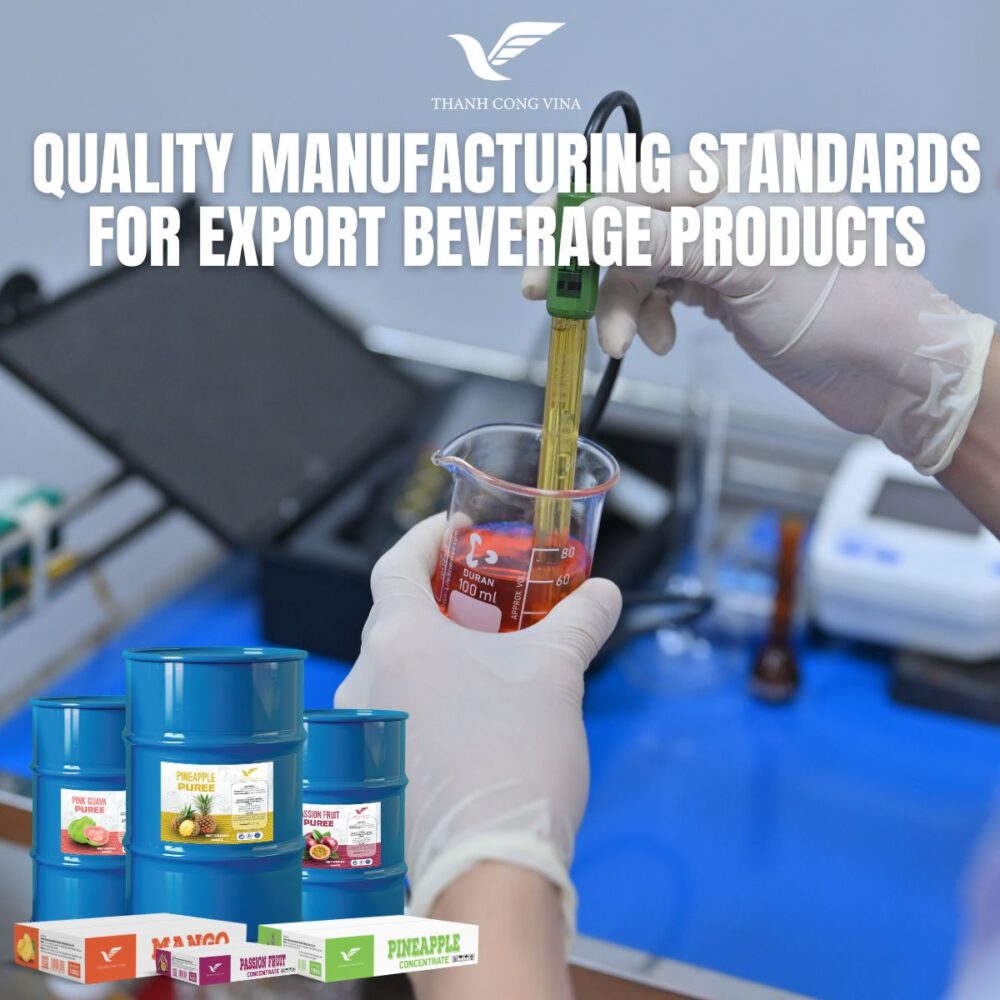
Quality Manufacturing Standards for Export Beverage Products
Quality is one of the most important considerations when selecting a Private Label manufacturing partner. International buyers need confidence that products can be manufactured consistently and according to agreed specifications.
Raw Material Control
Raw materials are an important starting point for beverage quality. Ingredient specifications should be established before production to ensure that the materials used are suitable for the intended beverage.
For fruit-based products, manufacturers need to consider characteristics such as flavor, color, consistency, and overall ingredient quality.
Proper raw material management can help reduce variations between production batches and support consistent finished products.
Controlled Production Processes
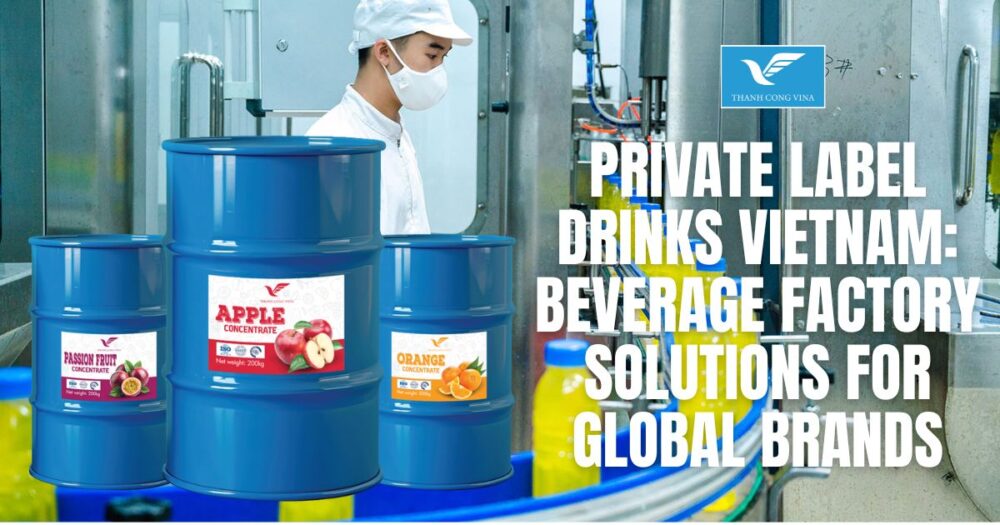
A modern beverage factory typically manages multiple production stages, from ingredient preparation and blending through processing, filling, sealing, labeling, coding, and final packing.
Each stage needs to follow established procedures and quality controls.
For Private Label customers, clearly documented product specifications can provide a reference for production teams and help maintain consistency across repeated orders.
Finished Product Inspection
Before shipment, finished products should be evaluated according to the agreed specifications. Quality checks can include packaging appearance, product condition, filling, sealing, labeling, coding, and carton condition.
For export orders, attention to packaging integrity is particularly important because products may travel long distances before reaching the final customer.
A consistent inspection process helps ensure that products leaving the factory are prepared for international distribution.
4. Packaging Solutions for Private Label Export Brands
Packaging is an essential part of a beverage’s commercial identity. It protects the product while also communicating information about the brand to consumers.
Flexible Packaging Formats
Different beverage categories may require different packaging solutions. Depending on the product concept and market requirements, brands may consider cans, PET bottles, glass bottles, and other formats.
Package sizes can also be selected according to the intended sales channel.
For example, smaller packages may be suitable for convenience stores, vending channels, individual consumption, and on-the-go lifestyles. Larger formats may be more appropriate for supermarkets, foodservice, or family consumption.
Customized Brand Presentation
One of the major advantages of Private Label production is the ability to create a unique brand presentation.
Packaging artwork can include the company’s logo, product name, flavor, nutritional information, ingredient declaration, barcode, manufacturing information, and other required details.
A well-developed packaging concept can help a beverage brand establish a recognizable identity across different products.
Packaging for International Transportation
Export beverages may experience handling, stacking, loading, unloading, and long-distance transportation. Therefore, packaging should be considered not only from a marketing perspective but also from a logistics perspective.
Carton design, pallet arrangement, container loading, and product protection can influence the efficiency and safety of international shipments.
For this reason, packaging decisions should be discussed with the manufacturer early in the development process.
5. Private Label Production Process from Concept to Export
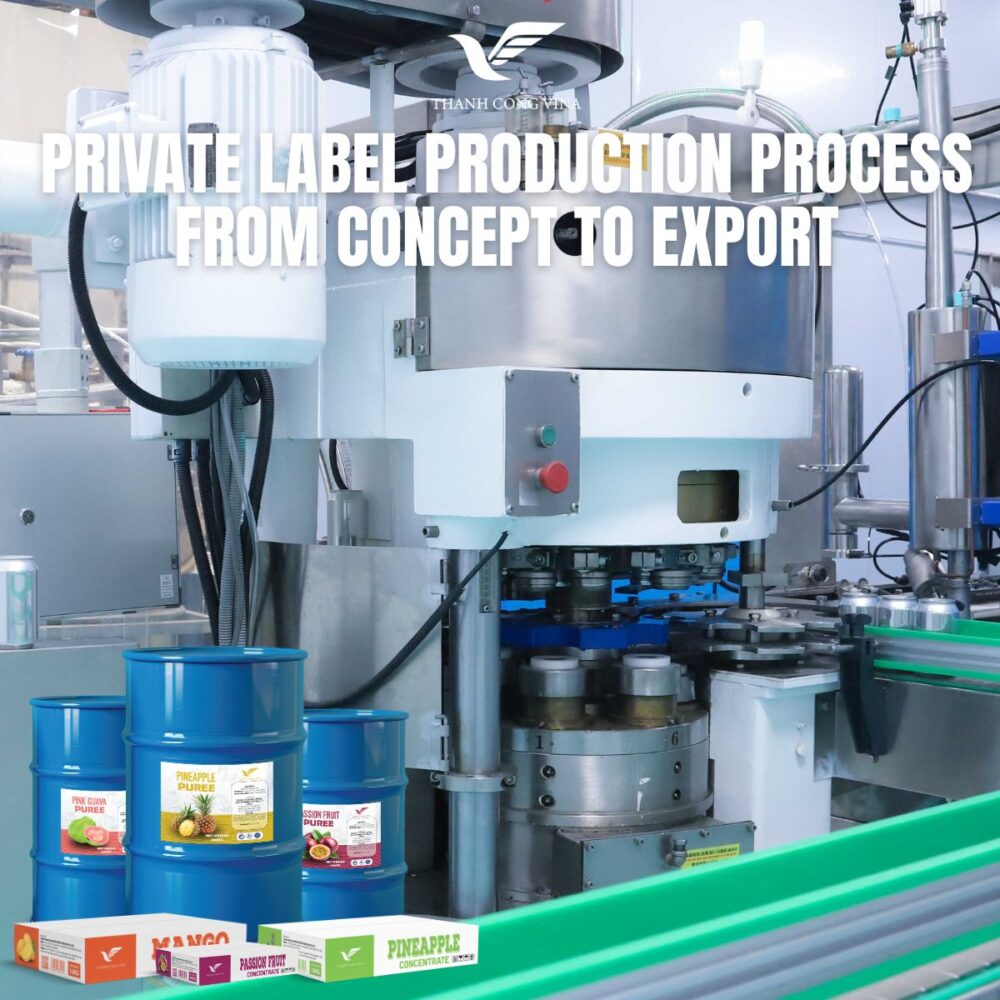
Private Label Production Process from Concept to Export
A structured production process helps international buyers manage product development and commercial manufacturing more efficiently.
Step 1: Product Requirements
The customer provides information about the beverage concept, target market, preferred flavor, packaging format, expected volume, and branding requirements.
The clearer the initial requirements, the easier it is for the manufacturer to understand the project.
Step 2: Formula Development and Samples
The manufacturer develops product samples based on the agreed requirements. The customer evaluates the samples and provides feedback.
This stage can involve adjustments to taste, sweetness, aroma, appearance, or other product characteristics.
Step 3: Packaging and Artwork Approval
After the beverage formula is confirmed, packaging specifications and artwork can be finalized.
The brand should carefully review product information, packaging dimensions, labeling details, and other requirements before approving the final artwork.
Step 4: Production Planning
Once the product specifications are approved, the manufacturer prepares the production schedule and coordinates raw materials, packaging materials, production resources, and quality procedures.
Step 5: Commercial Production
The beverage is manufactured according to the approved formula and specifications. Quality checks are conducted throughout the production process.
Step 6: Final Inspection and Export Preparation
Finished goods are inspected, packed, palletized, and prepared for shipment.
The manufacturer and buyer can coordinate shipment schedules and container loading requirements based on the agreed order.
This structured workflow allows Private Label customers to move from an initial beverage concept toward commercial export production in a controlled manner.
6. Benefits of Choosing Vietnam for Private Label Beverage Manufacturing
Vietnam can offer several advantages for companies searching for an international beverage manufacturing partner.
Reduced Infrastructure Investment
Establishing an independent beverage factory requires significant investment in land, buildings, processing equipment, filling lines, laboratory systems, employees, maintenance, and food safety management.
With Private Label manufacturing, brands can access established production capabilities without making the same level of infrastructure investment.
Product Portfolio Expansion
Brands can expand their product range without establishing separate production facilities for every beverage category.
A company may begin with fruit juice and later add coconut water, aloe vera beverages, coffee drinks, or functional beverages.
This provides a practical path for portfolio expansion.
Greater Focus on Brand Development
Outsourcing beverage manufacturing allows the brand owner to focus on activities that directly support market growth, including branding, sales, distribution, customer relationships, digital marketing, and market research.
The manufacturing partner handles the production side while the brand maintains ownership of its market positioning.
Support for International Buyers
For importers and distributors, working directly with a Vietnamese manufacturer can simplify sourcing.
Instead of coordinating multiple suppliers for different beverage categories, buyers may be able to consolidate several products through one manufacturing partner.
This can improve purchasing efficiency and support a more organized supply chain.
7. Choosing the Right Private Label Beverage Manufacturer
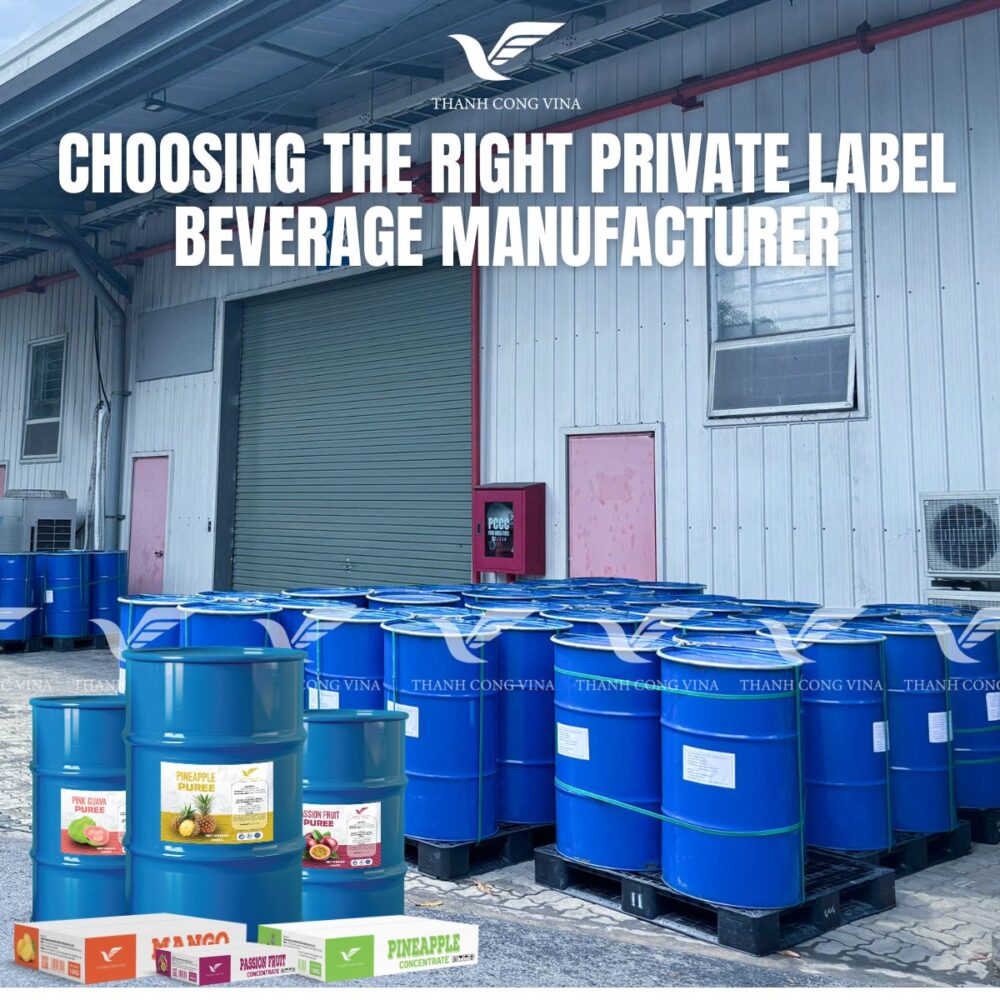
Choosing the Right Private Label Beverage Manufacturer
Not every beverage factory is suitable for every international project. Buyers should evaluate several factors before selecting a long-term manufacturing partner.
Manufacturing Capability
The factory should have production capabilities that match the desired beverage categories, packaging formats, and expected order volumes.
Quality Management
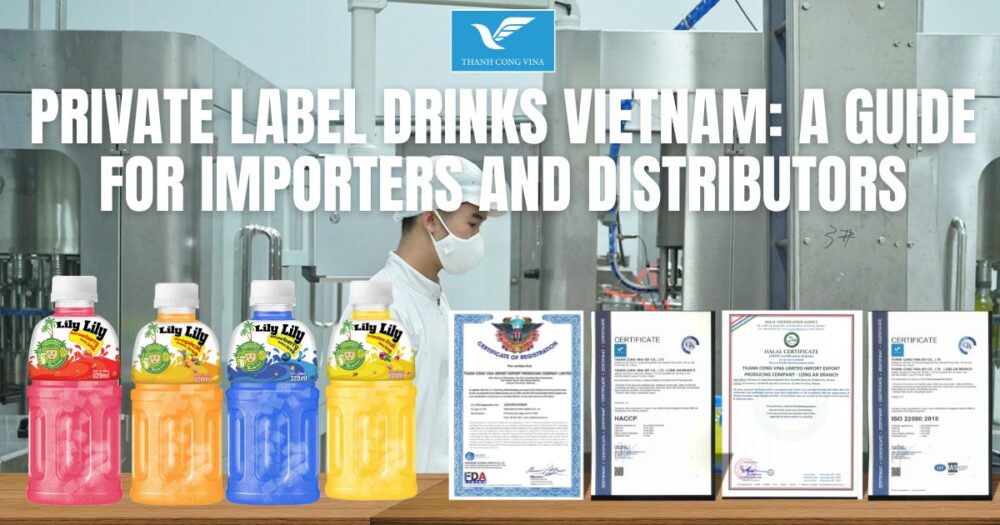
Buyers should understand the manufacturer’s food safety systems, quality control procedures, raw material management, and finished product inspection process.
Product Development Support
A capable Private Label partner should be able to support product development rather than simply manufacture an existing formula.
Formula customization, sample development, packaging coordination, and product specification management can be important for brands creating differentiated products.
Communication and Export Experience
International projects involve communication across different time zones, documentation, specifications, artwork, production schedules, and logistics.
A manufacturer experienced in working with international customers can make these processes more efficient.
Long-Term Production Reliability
For a growing beverage brand, the manufacturing relationship should be considered beyond the first order.
Consistent quality, production planning, communication, and supply capability are important for maintaining product availability as sales increase.
8. Why Choose Thanh Cong Vina for Private Label Drinks?
Thanh Cong Vina provides beverage manufacturing solutions for international brands, importers, distributors, retailers, and F&B businesses looking for customized beverage production in Vietnam.
The company supports a diverse range of beverage categories, including fruit juice drinks, coconut water, coconut water with fruit juice, aloe vera beverages, ready-to-drink coffee, isotonic drinks, energy beverages, and other customized beverage products.
The Private Label approach enables customers to develop beverages according to their own product concepts, brand identity, formula requirements, packaging specifications, and target markets.
By combining product development, manufacturing, quality control, packaging coordination, and export-oriented production, Thanh Cong Vina can support customers throughout different stages of their beverage sourcing projects.
For businesses seeking to establish a new beverage brand or expand an existing product portfolio, working with an experienced Vietnamese manufacturer can provide the flexibility needed to respond to changing market opportunities.
Conclusion
The international beverage market continues to create opportunities for brands that can offer distinctive products, reliable quality, attractive packaging, and competitive positioning. Private Label manufacturing provides a practical solution for companies that want to build their own beverage brands while avoiding the substantial investment required to establish an independent production facility. Vietnam offers access to tropical ingredients, beverage manufacturing capabilities, customized product development, and export-oriented production.
For international buyers, the right manufacturing partner can support everything from formula development and packaging customization to quality management, commercial production, and export preparation. This integrated approach allows brands to focus on sales, marketing, and market development while maintaining control over their product identity.
Thanh Cong Vina supports international customers with flexible beverage manufacturing solutions designed for different markets and business models. With Thanh Cong Vina, brands can develop customized beverages and build scalable product portfolios for international distribution. For companies seeking reliable Private Label manufacturing in Vietnam, Thanh Cong Vina provides a practical foundation for turning beverage concepts into export-ready products.