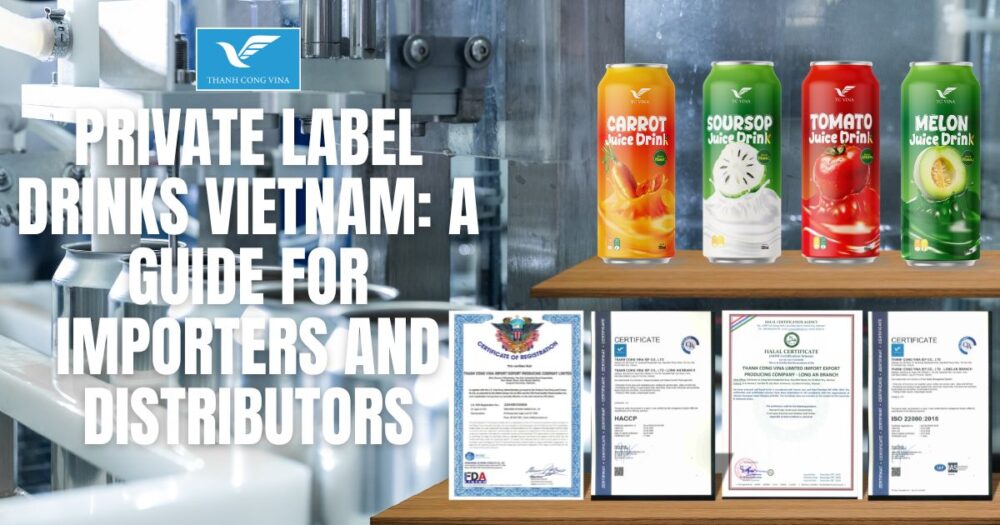

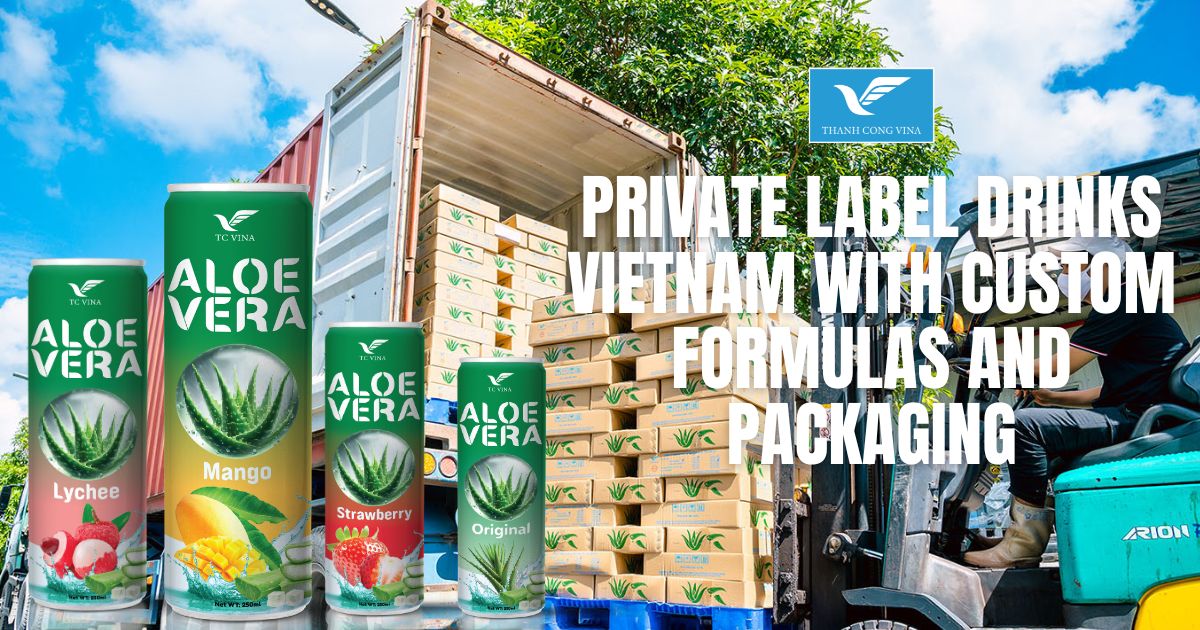
Vietnam has become an attractive sourcing destination for companies looking for flexible beverage manufacturing capabilities, competitive production costs, and access to a wide range of tropical ingredients. Through Private Label manufacturing, international brands can create customized beverages based on their own formulas, packaging concepts, target markets, and brand identity without building their own factory.
For importers, distributors, retailers, and beverage brands, working with an experienced Vietnamese manufacturer can simplify the process from product formulation and packaging development to production and export. With customized solutions, brands can develop beverages that are designed specifically for their customers and market positioning.
1. Why Choose Private Label Drinks Vietnam for Your Beverage Brand?
Why Choose Private Label Drinks Vietnam for Your Beverage Brand?
Choosing Private Label Drinks Vietnam allows brands to access professional beverage manufacturing while maintaining control over product positioning and branding. Instead of investing heavily in a dedicated production facility, companies can work with an experienced manufacturer to develop and produce beverages under their own brand name.
Flexible Beverage Manufacturing
One of the key advantages of Private Label production is flexibility. Different markets have different consumer preferences, price points, packaging requirements, and flavor trends. A manufacturer can support brands in creating products that are adapted to specific commercial objectives.
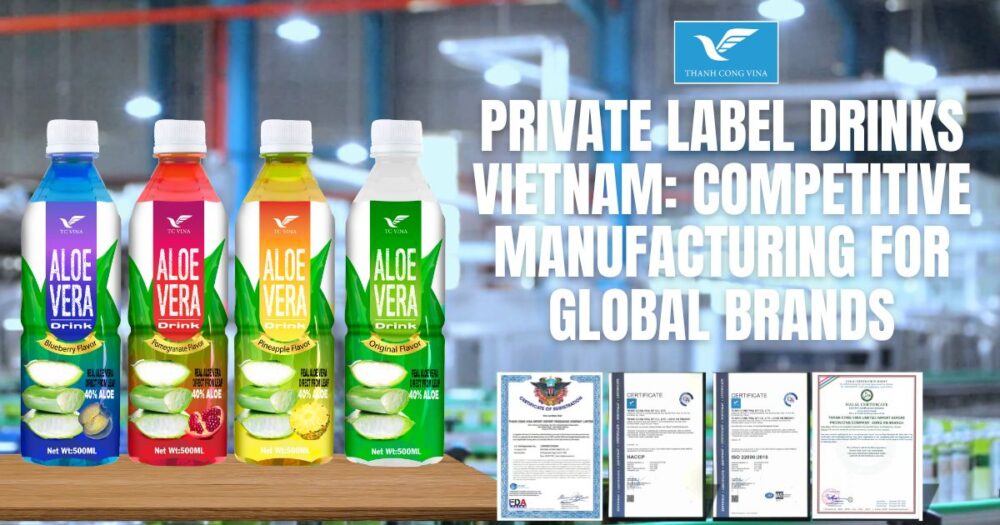
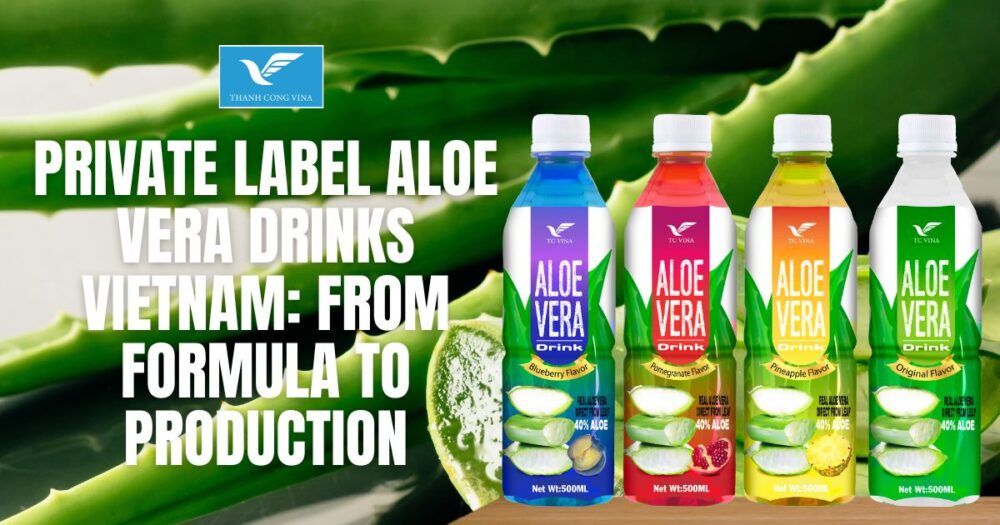
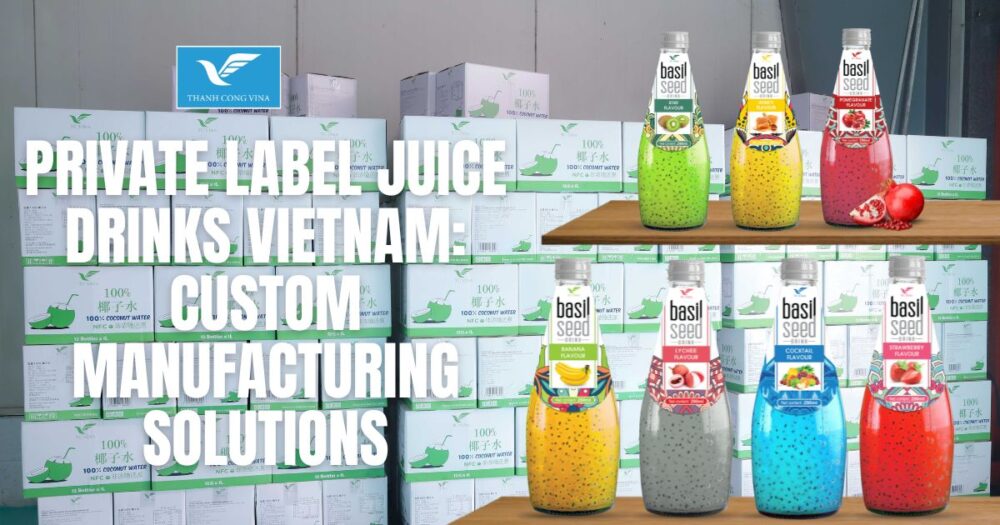
Depending on the project, beverage brands can explore fruit juice drinks, coconut water, aloe vera beverages, ready-to-drink coffee, isotonic drinks, energy beverages, and other customized beverage concepts.
This flexibility allows importers and distributors to build a product portfolio that fits their existing distribution channels rather than relying only on standard products.
Access to Vietnamese Ingredients
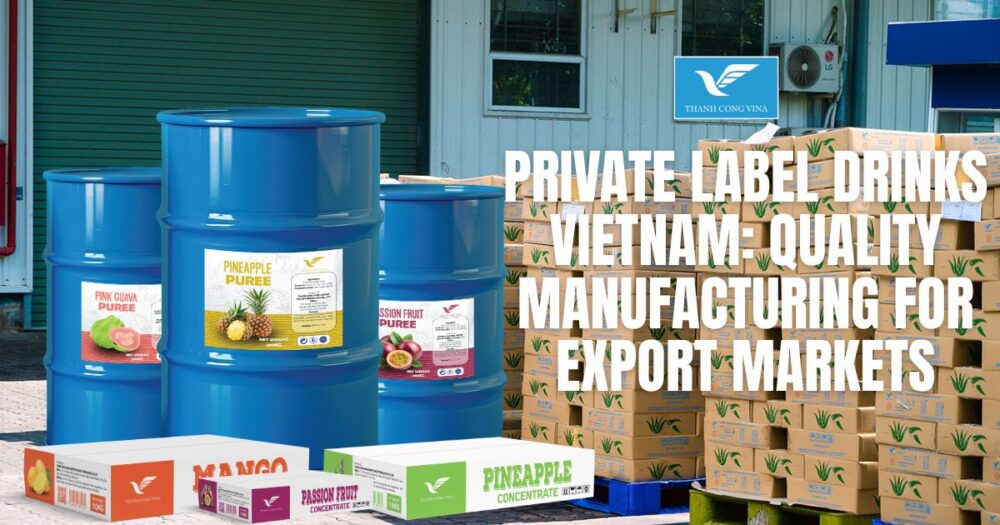
Vietnam has a strong agricultural sector with access to tropical fruits and other beverage ingredients. Mango, coconut, pineapple, passion fruit, strawberry, orange, peach, guava, lychee, red grape, and other fruit ingredients can be used across different beverage applications.
For brands developing Private Label beverages, access to diverse ingredients can create opportunities for differentiated flavor combinations and product concepts.
Export-Oriented Production
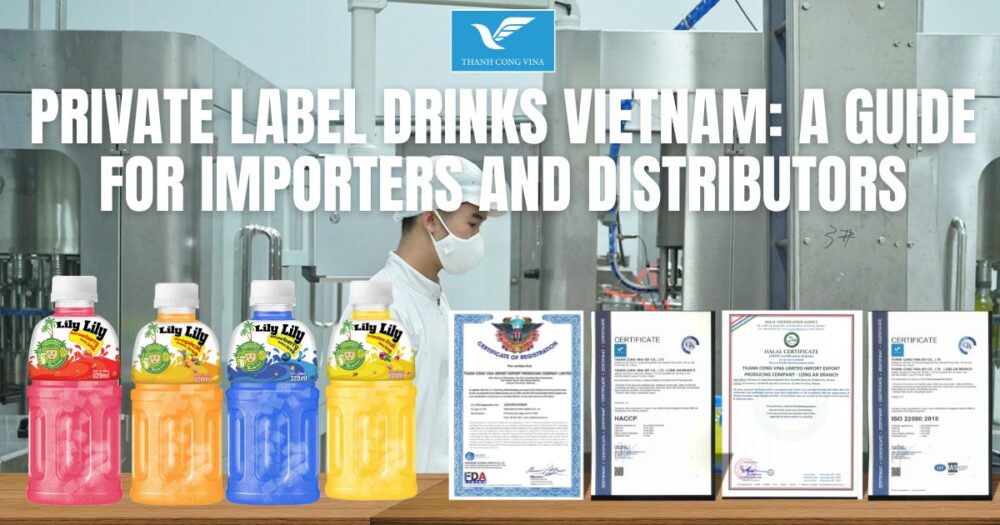
Vietnamese beverage manufacturers serving international customers generally need to understand export documentation, packaging specifications, product requirements, and international logistics. This is particularly important for brands selling beverages across multiple markets.
A suitable Private Label manufacturing partner can coordinate production requirements with export preparation, helping international buyers streamline the sourcing process.
2. Custom Beverage Formulas for Private Label Products
A successful Private Label beverage is not simply a product with a different label. Formula development plays an important role in determining taste, appearance, texture, ingredient positioning, and overall consumer experience.
Developing Formulas Based on Market Requirements
Different countries may have different consumer expectations. Some markets may prefer sweeter fruit beverages, while others may prioritize natural fruit flavors, lower sugar content, functional ingredients, or refreshing profiles.
Custom formulation allows beverage brands to communicate their intended product characteristics to the manufacturer. The development process can consider flavor profile, sweetness, acidity, fruit content, color, texture, ingredients, and packaging format.
This approach is especially useful for companies that want to create a distinctive beverage rather than compete solely on an existing standard formula.
Flavor Development and Product Testing
Before commercial production, formula development may involve samples and testing. Brands can review the beverage characteristics and provide feedback regarding flavor intensity, sweetness, aroma, color, and mouthfeel.
Through several development stages, the manufacturer and brand can work toward a formula that meets the intended product positioning.
For Private Label brands, this development process creates greater control over the final product and helps ensure that the beverage is aligned with the brand concept.
Beverage Categories for Custom Formulation
Custom formulas can be developed for different beverage categories, including:
- Fruit juice drinks
- Coconut water
- Coconut water with fruit juice
- Aloe vera drinks
- Ready-to-drink coffee
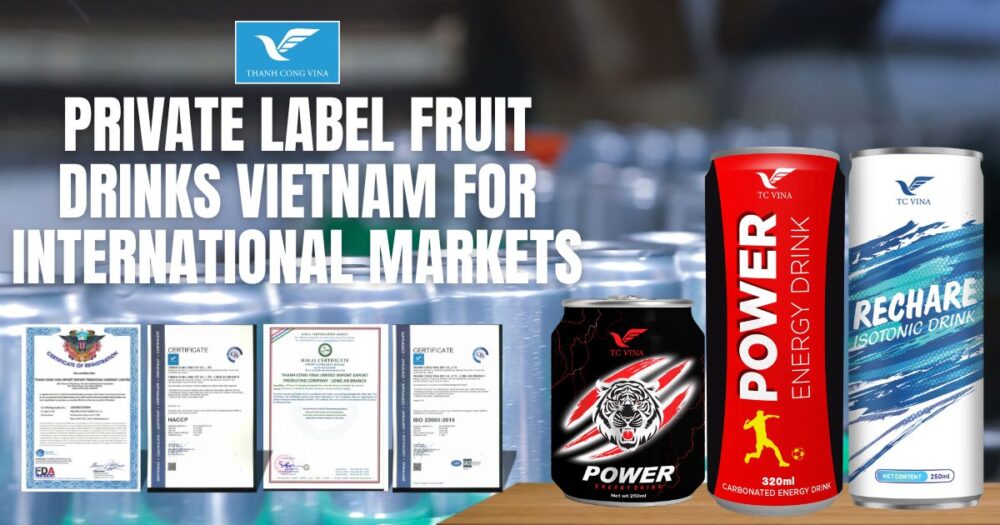
- Isotonic beverages
- Energy drinks
- Functional beverages
- Tropical fruit beverages
- Other customized beverage concepts
This product flexibility enables brands to develop multiple SKUs under one Private Label portfolio.
3. Custom Packaging Solutions for Private Label Drinks
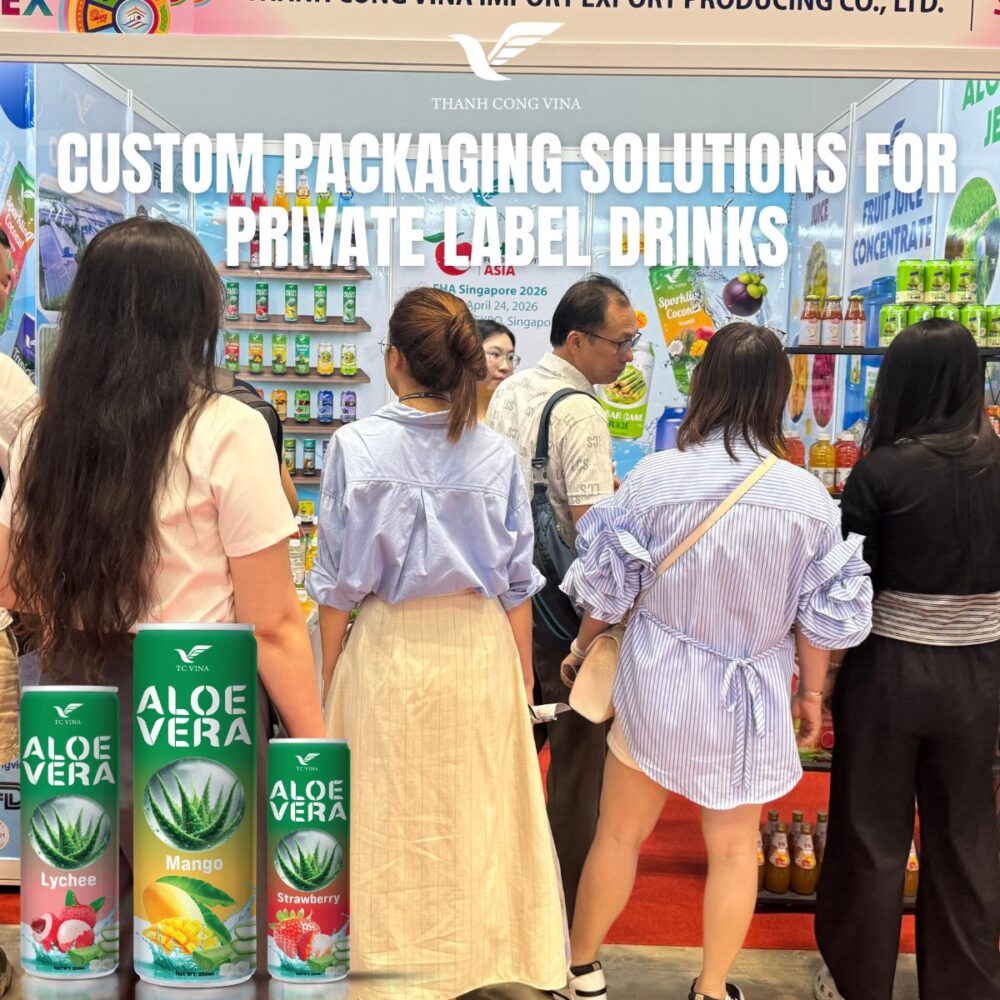
Custom Packaging Solutions for Private Label Drinks
Packaging is one of the most visible elements of a beverage brand. A well-developed packaging concept can communicate product identity, target consumer, flavor, positioning, and brand values before the customer even opens the bottle or can.
Different Beverage Packaging Formats
Depending on the product and market, Private Label beverages can be produced in different packaging formats and sizes.
Common options may include cans, PET bottles, glass bottles, and other beverage packaging solutions. Product sizes can also be customized according to distribution channels and consumer preferences.
For example, a smaller package may be suitable for convenience stores, vending channels, and individual consumption, while larger formats can target family consumption or foodservice applications.
Customized Labels and Brand Identity
Private labeling gives brands the opportunity to create their own visual identity. Packaging artwork can incorporate brand logos, colors, product information, nutritional information, ingredients, barcodes, and market-specific regulatory details.
The objective is to create packaging that represents the brand rather than simply using generic manufacturer branding.
For international customers, packaging information may also need to be prepared according to the requirements of the destination market. Proper coordination between the brand and manufacturer is therefore important during artwork approval.
Export Packaging Considerations
Beverages are often transported over long distances, making packaging durability and shipping preparation important considerations. Export packaging should be designed to protect products during handling, loading, transportation, and storage.
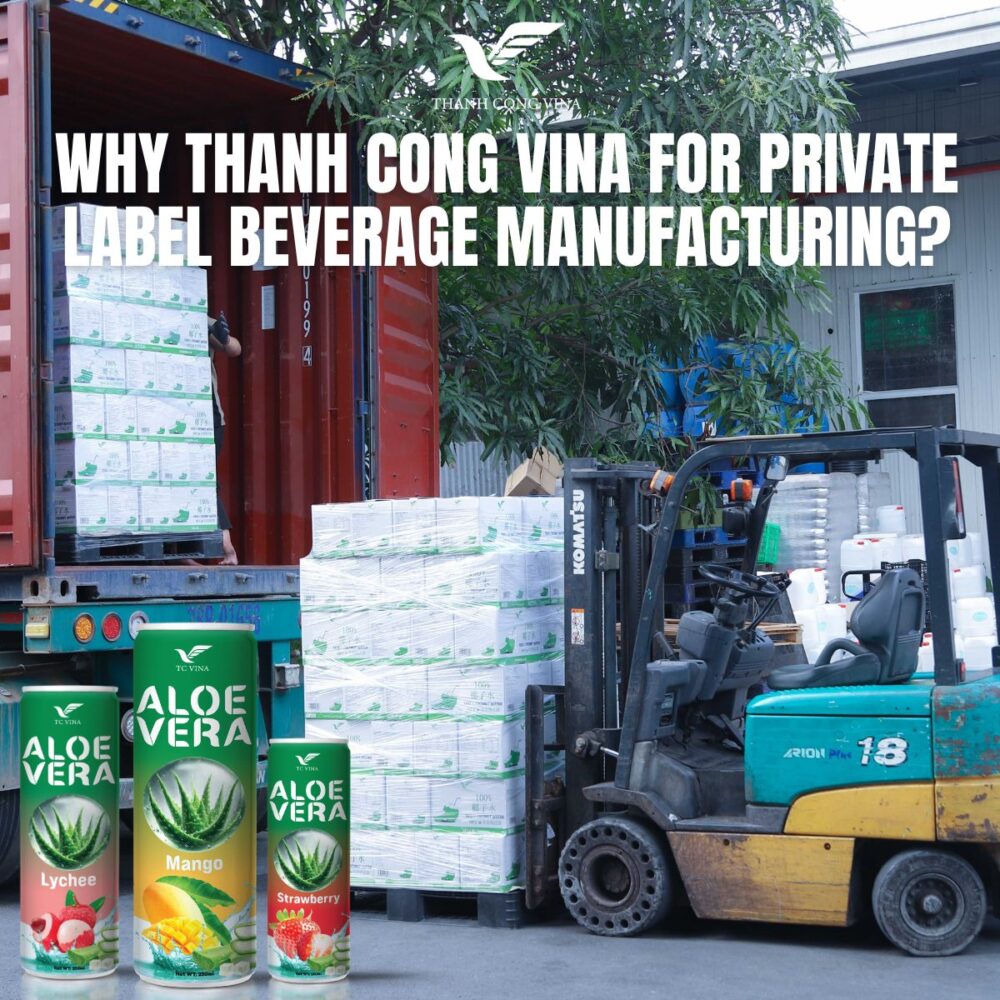
Carton specifications, pallet configuration, container loading, product arrangement, and labeling can all be considered during production planning.
A professional Private Label manufacturer can coordinate these elements with the buyer’s logistics requirements.
4. Quality Control in Private Label Beverage Manufacturing
Quality consistency is essential when developing a long-term beverage brand. Customers expect the same taste, appearance, packaging quality, and product specifications from one production batch to another.
Raw Material Quality
The quality of ingredients can directly affect the final beverage. Raw materials should be evaluated and managed according to established specifications before entering production.
For fruit-based beverages, factors such as ingredient quality, flavor characteristics, color, and consistency are important considerations.
Production Process Control
Modern beverage production requires control at multiple stages. Depending on the product, manufacturing may include ingredient preparation, blending, processing, filling, sealing, labeling, coding, inspection, and packing.
Maintaining controlled production conditions helps manufacturers achieve consistent product specifications.
Finished Product Inspection
Finished beverages can be checked against agreed specifications before shipment. Product appearance, packaging integrity, labeling, coding, and other quality requirements should be reviewed as part of the production process.
For Private Label customers, maintaining documented product specifications can also help establish consistency across future orders.
5. From Beverage Concept to Commercial Production
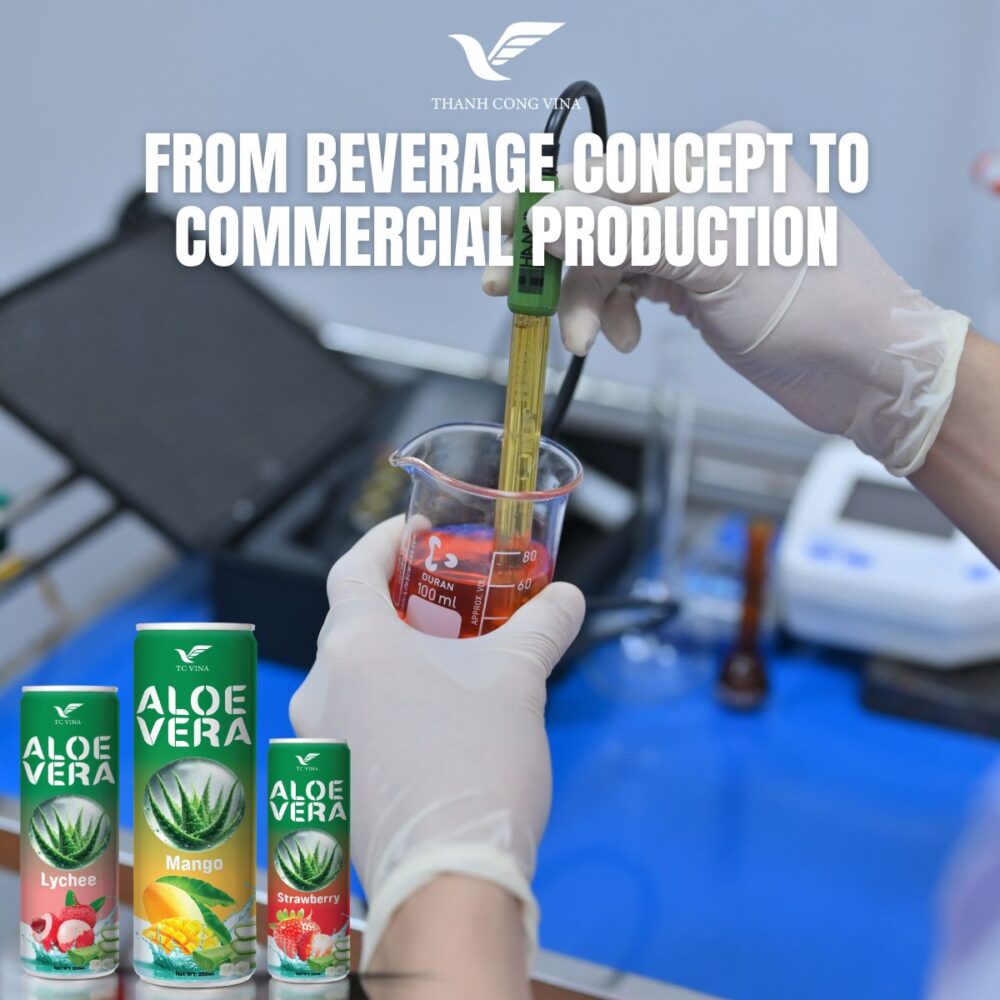
From Beverage Concept to Commercial Production
A successful Private Label project usually involves several stages rather than moving directly from an idea to mass production.
Product Concept
The process begins with the brand concept. The buyer identifies the target market, beverage category, flavor direction, packaging format, estimated volume, and desired positioning.
Clear product requirements help the manufacturer understand the project and recommend suitable production solutions.
Formula and Sample Development
The next stage involves formula development and product sampling. The manufacturer works with the customer to refine the beverage characteristics according to the agreed requirements.
Samples allow the brand to evaluate the product before approving the final formula.
Packaging and Artwork
Once the beverage formula is confirmed, packaging specifications and artwork can be developed or finalized. Product information should be reviewed carefully before production approval.
Commercial Production
After formula, packaging, specifications, and production details are approved, the manufacturer can proceed with commercial manufacturing according to the agreed production plan.
This structured approach allows Private Label beverage brands to manage development more efficiently while reducing unnecessary production risks.
6. Benefits of Working with a Vietnam Private Label Beverage Manufacturer
Working with a Vietnamese beverage manufacturer can provide international companies with access to manufacturing capabilities without requiring them to establish their own production infrastructure.
Lower Manufacturing Investment
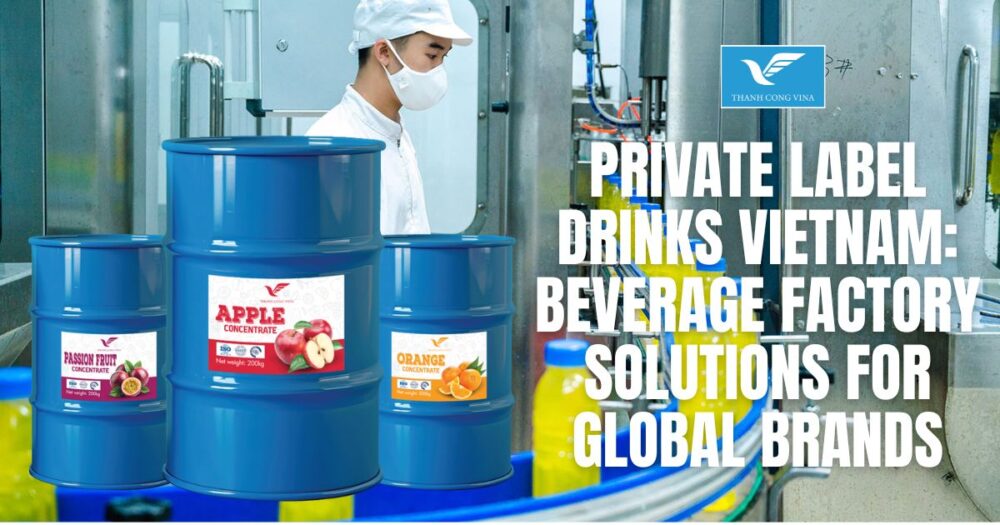
Building a beverage factory requires substantial investment in equipment, facilities, personnel, maintenance, quality systems, and production management. Private Label manufacturing provides an alternative for brands that want to focus their resources on marketing, distribution, and brand development.
Faster Portfolio Expansion
Brands can introduce different beverage categories through an established manufacturing partner. This can make it easier to expand from one product into a broader beverage portfolio.
For example, a brand may start with fruit juice before introducing coconut water, aloe vera beverages, RTD coffee, or functional drinks.
Greater Brand Control
Although production is outsourced, the brand can maintain control over product concept, formula requirements, packaging, branding, and market positioning.
This balance between outsourced manufacturing and brand ownership is one of the main reasons companies choose Private Label solutions.
Support for International Distribution
For importers and distributors, an export-oriented manufacturer can help coordinate production and shipment requirements. This can simplify the sourcing process for companies purchasing beverages from Vietnam for international markets.
7. Why Thanh Cong Vina for Private Label Beverage Manufacturing?
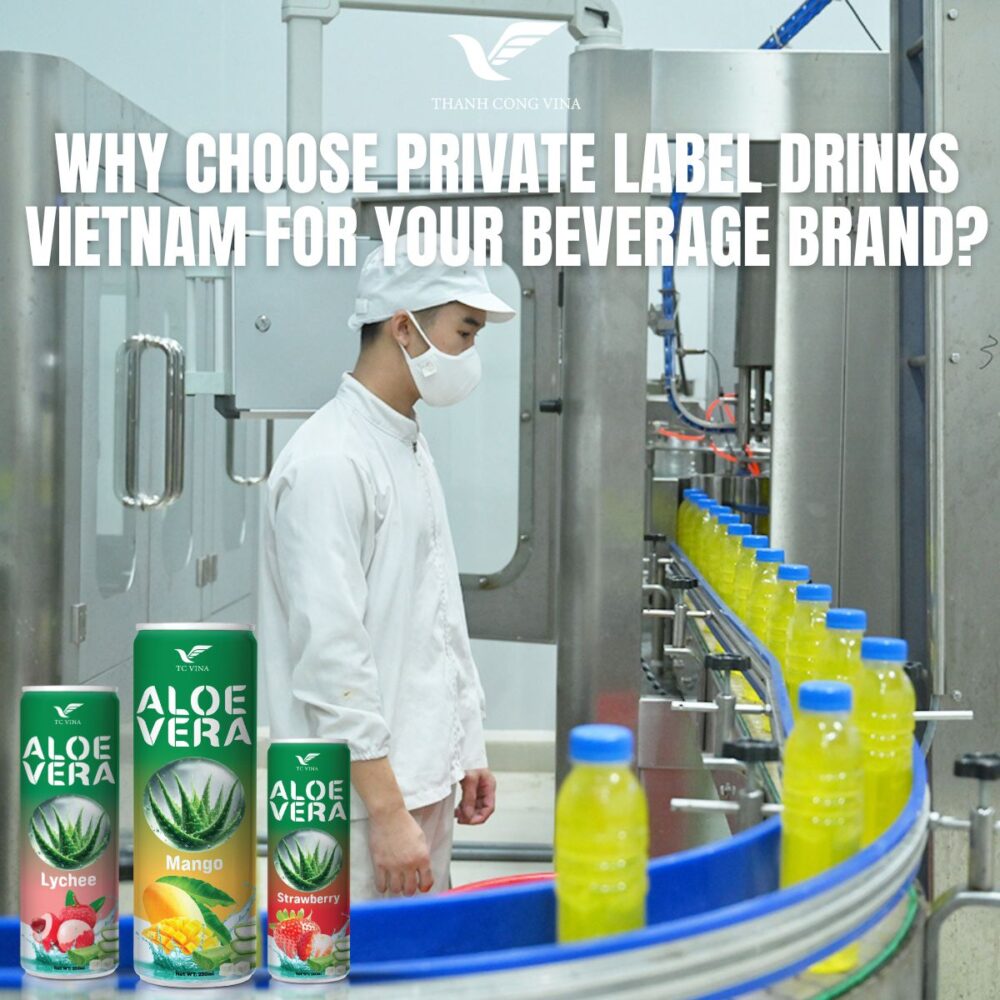
Why Thanh Cong Vina for Private Label Beverage Manufacturing?
Thanh Cong Vina provides beverage manufacturing solutions for international customers seeking customized products and export-oriented production. The company can support different beverage categories, including fruit juice drinks, coconut water, coconut water with fruit juice, aloe vera beverages, ready-to-drink coffee, isotonic beverages, energy drinks, and other beverage concepts.
The Private Label manufacturing approach allows customers to develop products according to their own brand identity, formula requirements, packaging concepts, and target market.
Thanh Cong Vina can work with importers, distributors, retailers, F&B companies, beverage brands, and other international buyers looking for customized beverage production in Vietnam.
By combining product development, beverage manufacturing, packaging coordination, quality management, and export support, the company can provide an integrated approach for brands that want to develop and scale their beverage portfolios.
Conclusion
The demand for customized beverages continues to create opportunities for brands looking to differentiate themselves in competitive international markets. Private Label manufacturing provides a practical way to develop branded beverages without investing in an independent production facility. From custom formulas and flavor development to packaging design, quality control, and export preparation, the right manufacturing partner can support multiple stages of the beverage development process.
Vietnam offers access to diverse agricultural ingredients, established beverage production capabilities, and export-oriented manufacturing solutions. For international importers, distributors, retailers, and beverage companies, these advantages can create opportunities to develop products tailored to specific markets and consumer preferences.
With experience in customized beverage production, Thanh Cong Vina supports international customers seeking flexible and professional manufacturing solutions. Through Thanh Cong Vina, brands can develop customized beverage concepts, packaging formats, and product portfolios designed for their target markets. For companies exploring Private Label opportunities, Vietnam can provide a practical foundation for developing and expanding an international beverage brand.