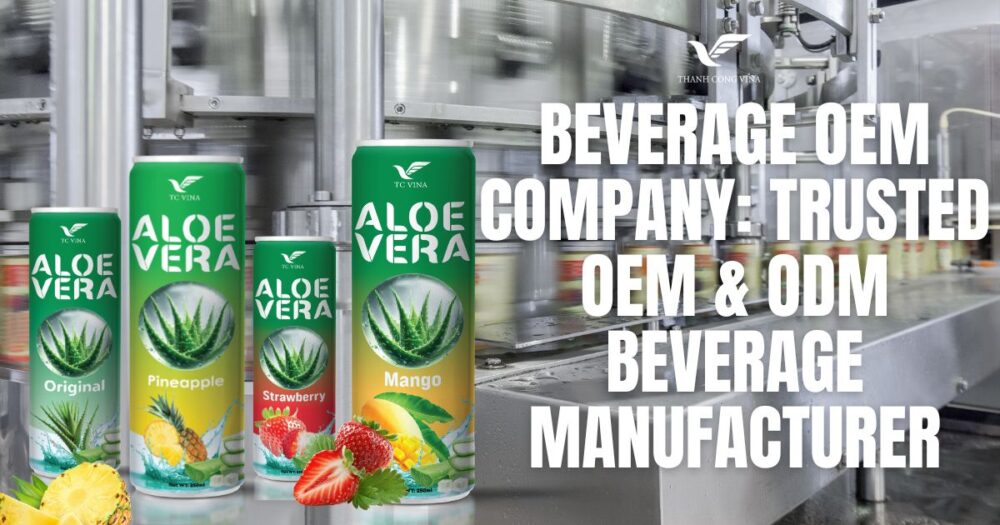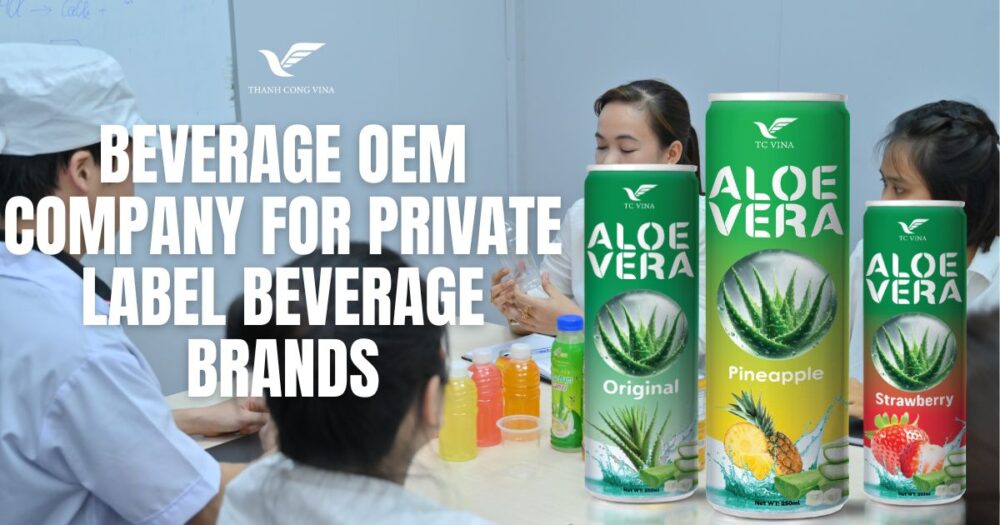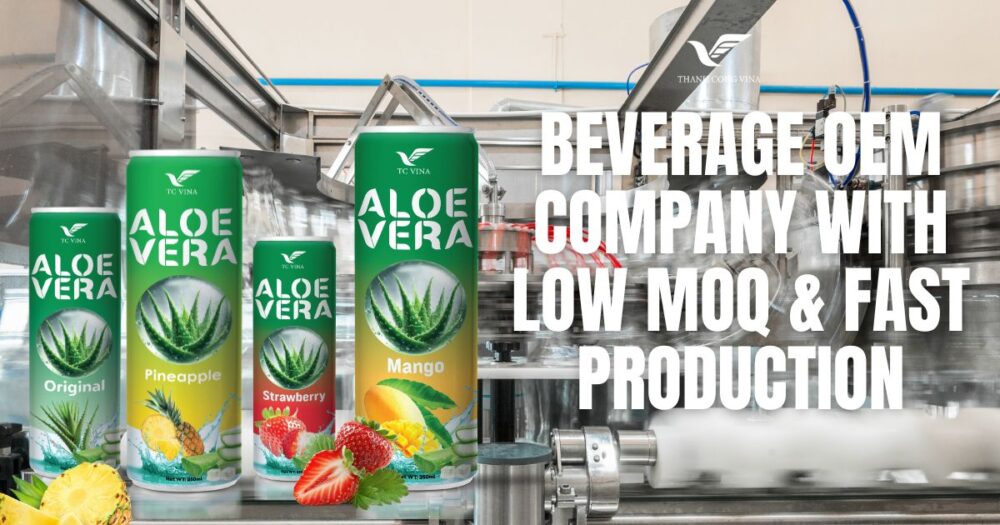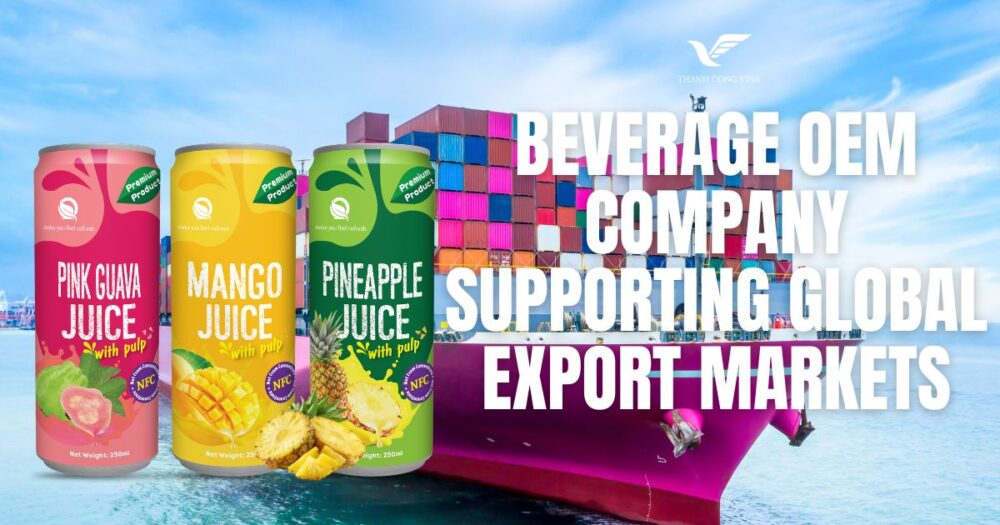

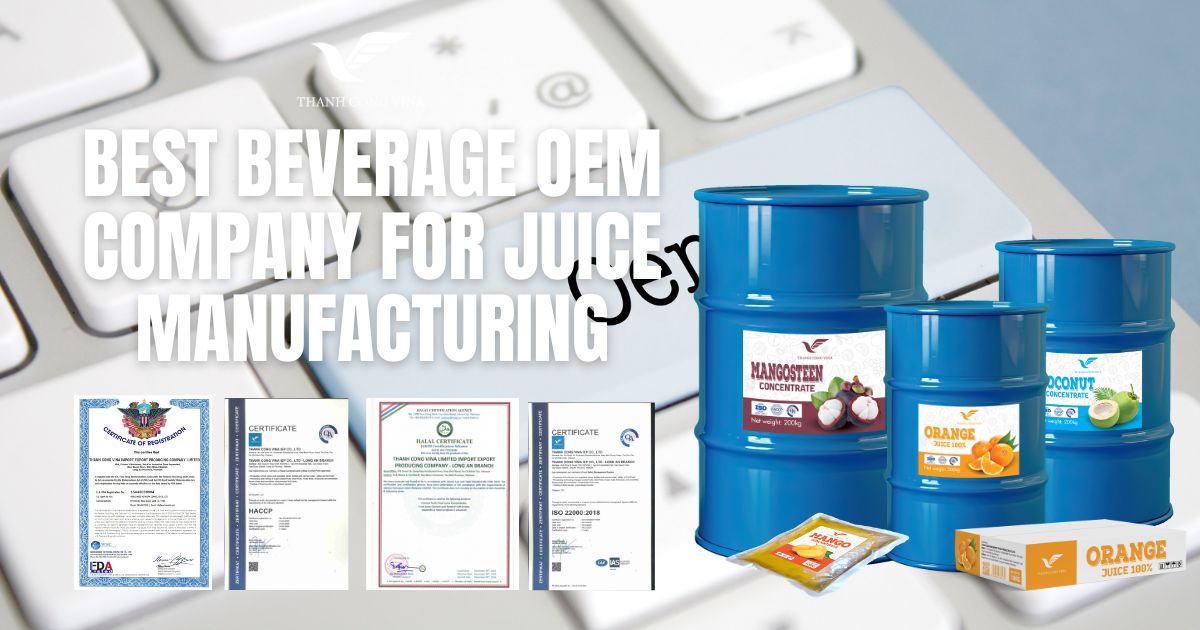
Choosing the right Beverage OEM Company is one of the most important decisions for businesses planning to launch or expand a juice brand. From fruit selection and formulation development to processing, packaging, quality control, and export logistics, the manufacturing partner has a direct impact on product quality, production efficiency, cost structure, and long-term brand growth.
For beverage brands, retailers, distributors, importers, startups, and FMCG companies, working with an experienced OEM manufacturer can significantly reduce the complexity of establishing an independent production operation. Instead of investing in factories, processing equipment, laboratories, skilled employees, and food safety systems, brands can access established manufacturing infrastructure and technical expertise.
Vietnam has become an attractive destination for juice manufacturing because of its tropical agricultural resources, expanding food-processing industry, competitive production environment, and access to international markets. A professional Vietnamese manufacturer can produce a wide range of beverages, including fruit juices, juice drinks, concentrated juices, coconut water, aloe vera beverages, and other ready-to-drink products.
The right partner can therefore become more than a manufacturer. It can become a strategic extension of the brand’s product development, supply chain, and international growth strategy.
1. Why Choose a Beverage OEM Company for Juice Manufacturing?
Why Choose a Beverage OEM Company for Juice Manufacturing?
Juice manufacturing involves significantly more than simply processing fruit and filling it into containers. Successful commercial production requires specialized equipment, controlled processing conditions, formulation expertise, food safety systems, packaging knowledge, and supply chain management.
Reduce Investment in Manufacturing Infrastructure
Building an independent juice factory requires substantial capital. Companies need processing lines, extraction equipment, blending tanks, filtration systems, pasteurization or sterilization technology, filling machines, packaging equipment, warehouses, laboratories, utilities, and quality control facilities.
A Beverage OEM Company allows brands to access these resources without making the same level of upfront investment.
This approach can be especially beneficial for startups and emerging beverage brands. Instead of allocating capital toward factory construction, companies can focus investment on brand development, market research, distribution, sales, and marketing.
The OEM model also provides greater flexibility when market demand is uncertain. Brands can develop a product, test it in selected markets, analyze consumer response, and scale production according to actual demand.
Access Specialized Juice Manufacturing Expertise
Fruit processing requires technical knowledge because different fruits behave differently during manufacturing.
Mango, pineapple, passion fruit, guava, orange, peach, lychee, and other fruits have different acidity, viscosity, fiber levels, natural sugars, aroma profiles, and processing requirements.
An experienced manufacturer understands these differences and can adjust processing parameters accordingly.
Technical expertise is particularly important when developing products that must remain stable throughout their shelf life. Issues such as sedimentation, separation, color changes, flavor degradation, and texture variation can affect consumer acceptance.
A capable manufacturing partner can identify these challenges during product development and recommend appropriate solutions.
Improve Production Efficiency
An established manufacturing facility already has trained production teams, standardized processes, established supplier relationships, and operational systems.
This can improve production efficiency compared with building a new manufacturing operation from scratch.
For brands with multiple SKUs, an experienced partner can also help coordinate production schedules, packaging materials, raw ingredients, and inventory planning.
Scale Production as Demand Grows
A beverage brand may begin with a relatively modest order but eventually require significantly higher production volumes.
The ideal OEM partner should therefore have scalable production capabilities.
A scalable manufacturing relationship allows a brand to move from initial market testing to regional distribution and eventually international expansion without immediately changing manufacturers.
2. Product Development and Custom Juice Formulation
One of the biggest advantages of working with an experienced Beverage OEM Company is access to product development expertise.
A successful juice product needs to satisfy both technical and commercial requirements. It must taste appealing, remain stable, meet food safety requirements, fit the target price range, and communicate a clear value proposition to consumers.
Understanding the Brand Concept
Product development normally begins with a detailed understanding of the brand’s objectives.
The manufacturer may evaluate:
- Target market
- Consumer demographics
- Beverage category
- Desired fruit profile
- Product positioning
- Target price
- Packaging format
- Desired shelf life
- Nutritional requirements
- Export destination
- Regulatory requirements
This information helps the R&D team determine an appropriate development strategy.
A premium fruit juice brand may prioritize fruit intensity, clean-label positioning, and premium packaging, while a mass-market beverage may prioritize affordability, consistency, and high-volume production.
Selecting the Right Fruit Ingredients
Ingredient selection has a direct impact on the finished product.
Vietnam is particularly attractive for juice manufacturing because of its access to tropical agricultural ingredients. Depending on seasonality and product requirements, manufacturers can work with ingredients such as mango, pineapple, passion fruit, coconut, guava, dragon fruit, lychee, orange, soursop, aloe vera, and other fruits.
The selection process should consider more than flavor.
Important factors include:
- Raw material quality
- Fruit maturity
- Brix level
- Acidity
- Aroma
- Color
- Processing characteristics
- Availability
- Seasonal fluctuations
- Food safety
- Cost
An experienced OEM partner can help identify suitable ingredients for the desired formulation and market position.
Customized Formulation Development
Private label brands often need products that are different from existing market offerings.
A professional R&D team can adjust parameters such as fruit content, sweetness, acidity, mouthfeel, aroma, color, and nutritional characteristics.
Multiple samples may be created before the final formula is approved.
The process should be collaborative. The brand owner provides commercial direction, while the manufacturer contributes technical knowledge and manufacturing expertise.
Pilot Production and Commercial Validation
Laboratory samples do not always behave exactly the same way during commercial production.
Pilot production helps identify potential manufacturing issues before large-scale production.
The pilot stage can evaluate mixing, thermal processing, filling performance, packaging compatibility, product stability, and sensory characteristics.
This additional step reduces the risk of unexpected problems during the first commercial batch.
3. Advanced Juice Processing and Manufacturing Capabilities
Advanced Juice Processing and Manufacturing Capabilities
The technical capabilities of a Beverage OEM Company directly influence the quality, stability, and scalability of the final product.
Fruit Preparation and Processing
Fruit processing generally begins with inspection and preparation of raw materials.
Depending on the product, the fruit may undergo washing, sorting, trimming, peeling, crushing, pulping, pressing, extraction, or other preparation stages.
Proper preparation helps maintain product consistency while minimizing contamination risks.
Blending and Formulation Control
After fruit ingredients are prepared, they may be blended with water, sweeteners, acids, natural flavors, stabilizers, or other approved ingredients depending on the product specification.
Accurate dosing is critical.
Small differences in ingredient ratios can influence Brix, acidity, viscosity, flavor, and overall sensory performance.
Automated or controlled dosing systems can improve batch-to-batch consistency.
Pasteurization and Sterilization
Thermal processing plays an important role in beverage safety and shelf-life management.
The appropriate process depends on the product formulation, packaging format, acidity, desired shelf life, and distribution conditions.
The manufacturer must carefully control time and temperature parameters to achieve the required food safety objectives while protecting product quality.
Filling and Sealing
After processing, the beverage is transferred to the appropriate filling system.
Modern filling equipment can help maintain accurate fill volumes and reduce contamination risks.
The container must then be properly sealed to protect the product during storage and transportation.
Packaging integrity is particularly important for products intended for export because beverages may experience extended shipping times and different environmental conditions.
Quality Testing
A professional manufacturer should maintain quality control throughout the production process.
Testing may cover parameters such as:
- Brix
- pH
- Acidity
- Microbiological quality
- Sensory characteristics
- Fill volume
- Packaging integrity
- Product appearance
- Shelf-life stability
Testing requirements vary according to product specifications and target markets.
4. Quality Control and Food Safety Standards
For international beverage brands, quality assurance is one of the most important factors when choosing a manufacturing partner.
A Beverage OEM Company should have structured systems that protect product quality from raw material sourcing through finished-product release.
Raw Material Quality Control
Quality control begins before ingredients enter the production line.
Suppliers should be evaluated according to appropriate specifications, while incoming materials may be inspected and tested before being approved for production.
For fruit ingredients, quality factors may include maturity, appearance, Brix, acidity, microbial condition, and other relevant specifications.
Strong raw material controls create a more stable foundation for the final beverage.
Process Control
Production parameters should be documented and monitored.
Depending on the product, process controls may cover temperature, processing time, pressure, mixing ratios, Brix, pH, filling conditions, and packaging integrity.
Standard operating procedures help production teams follow consistent processes from batch to batch.
HACCP-Based Food Safety Management
HACCP principles are widely used in food and beverage manufacturing to identify and control potential hazards.
A systematic food safety approach can help manufacturers evaluate biological, chemical, and physical risks throughout the production process.
This is particularly important for brands exporting products to international markets.
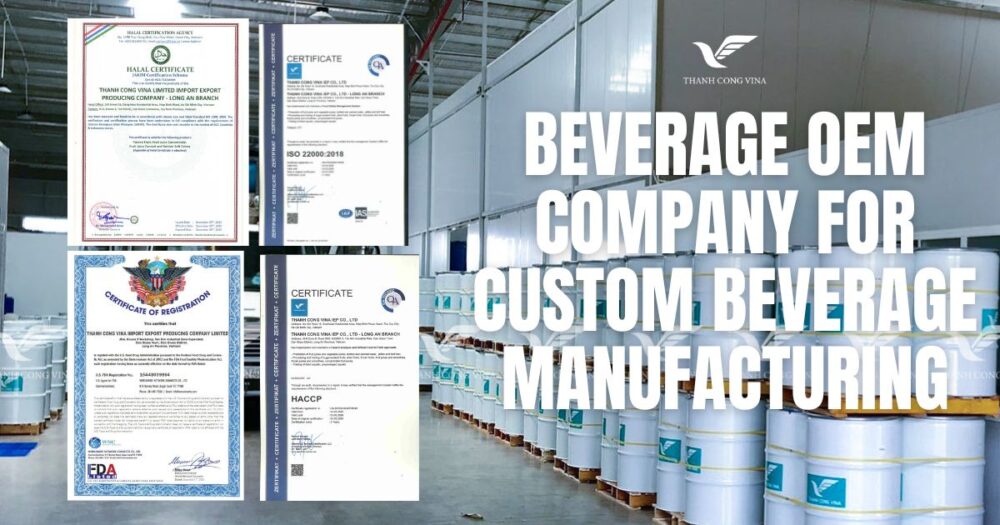
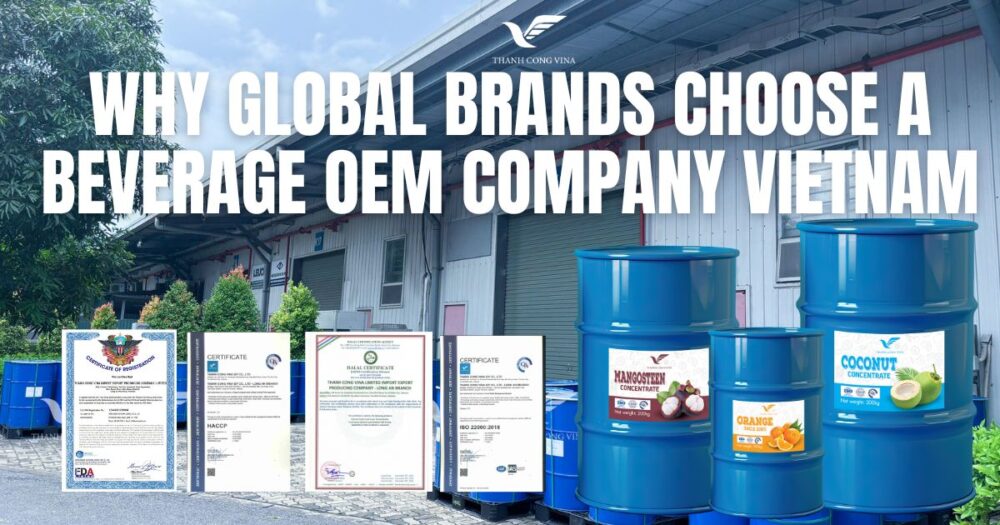
International Certifications
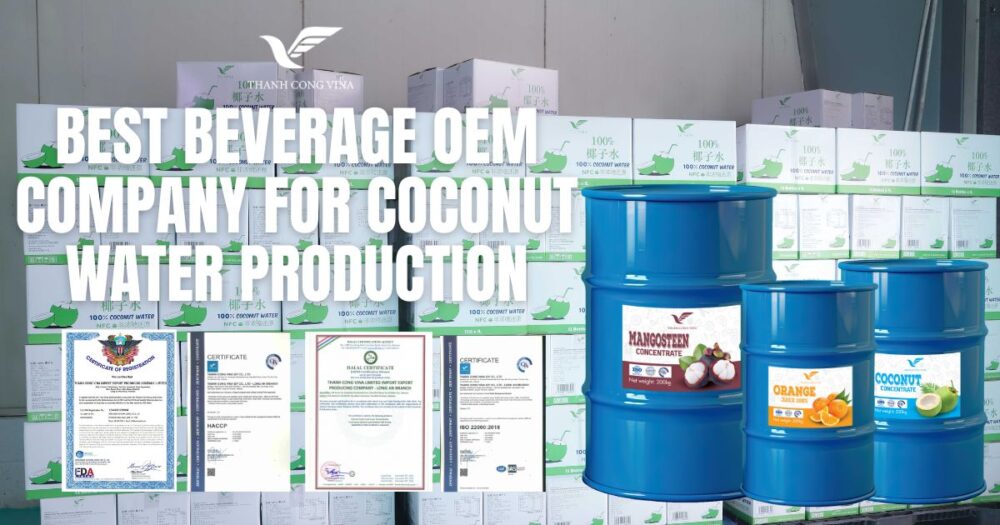
Depending on the customer’s market and product requirements, certifications and management systems may include HACCP, GMP, ISO 22000, FSSC 22000, HALAL, and other applicable standards.
Certifications alone do not guarantee product quality, but they provide useful evidence that a manufacturer operates under recognized food safety and quality management frameworks.
Traceability and Batch Management
Traceability enables manufacturers to identify relevant raw materials, packaging materials, production records, and finished product batches.
This system supports quality investigations, inventory control, customer communication, and regulatory compliance.
For international private label brands, strong traceability can provide additional confidence throughout the supply chain.
5. Private Label Juice Packaging and Custom Branding
Private Label Juice Packaging and Custom Branding
The packaging selected for a juice product affects not only appearance but also transportation, shelf life, production cost, and consumer convenience.
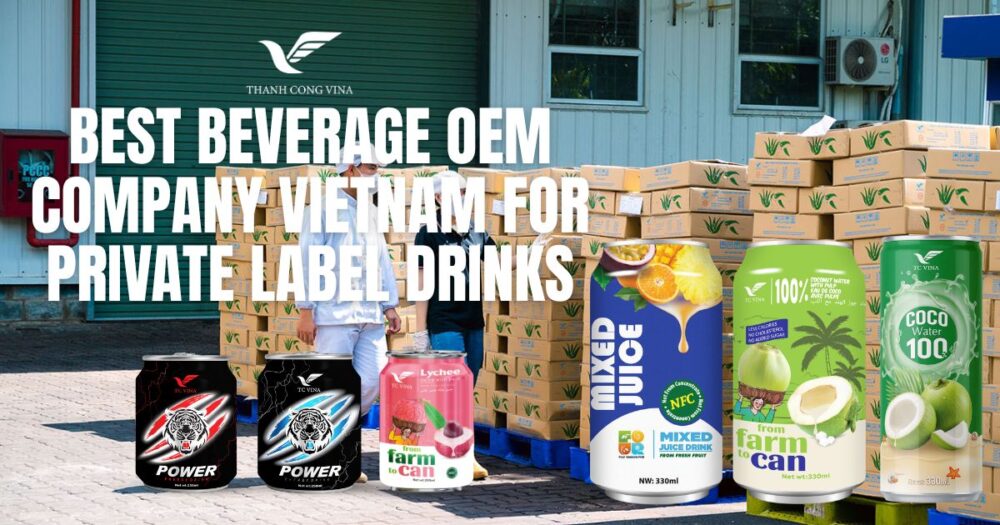
An experienced Beverage OEM Company should be able to support different packaging requirements based on the brand’s target market.
PET Bottles
PET bottles are widely used for juice drinks because they are lightweight, practical, and suitable for many retail channels.
They can be produced in different sizes and shapes, making them suitable for convenience stores, supermarkets, foodservice, and other distribution channels.
Aluminum Cans
Cans provide a modern appearance and are convenient for single-serve beverages.
They can also support efficient transportation and strong shelf presentation.
For brands targeting younger consumers or convenience-oriented channels, cans may provide an attractive packaging option.
Glass Bottles
Glass can support premium product positioning.
It is particularly suitable for brands that want to emphasize quality, natural ingredients, or upscale presentation.
However, businesses should also consider transportation weight and logistics costs when selecting glass packaging for export markets.
Custom Labeling and Brand Identity
Private label production enables brands to control their own visual identity.
Packaging can include customized logos, colors, product names, nutritional information, ingredient declarations, certifications, barcodes, manufacturing information, and other required details.
The manufacturer should work closely with the brand to ensure packaging specifications are compatible with production capabilities and target-market regulations.
Packaging for Export
Export packaging must be designed with transportation conditions in mind.
Products may spend weeks in containers, warehouses, distribution centers, and retail facilities.
Carton strength, pallet configuration, packaging integrity, container loading, and storage conditions should therefore be evaluated before commercial production.
6. Export-Ready Juice Manufacturing for Global Markets
A strong manufacturing partner should understand that international juice production involves more than producing the beverage.
Export customers require reliable documentation, consistent product specifications, efficient logistics, and compliance with destination-market regulations.
Market-Specific Requirements
Different countries may have different requirements for ingredients, additives, labeling, nutrition declarations, claims, packaging, and food safety.
The formulation and packaging should therefore be reviewed according to the destination market before final approval.
This is especially important for brands planning to sell across multiple regions.
Export Documentation
Depending on the destination and transaction, documentation may include:
- Commercial invoice
- Packing list
- Certificate of origin
- Product specifications
- Ingredient declaration
- Laboratory reports
- Health-related documentation
- Shipping documents
- Certification documents
A reliable manufacturer should be able to coordinate documentation requirements with the buyer and logistics partners.
Efficient Container Loading
Juice beverages are relatively heavy products, making transportation efficiency important.
Carton dimensions, pallet configuration, bottle sizes, packaging materials, and loading plans can influence the number of units shipped per container.
Optimizing container utilization can help reduce logistics costs per unit and improve overall competitiveness.
Reliable Production Scheduling
International beverage brands often operate around product launches, promotional campaigns, seasonal demand, and retailer commitments.
Production delays can therefore affect the entire commercial plan.
A capable manufacturer should provide realistic production schedules and maintain effective communication throughout the manufacturing process.
Supporting International Growth
The ideal manufacturing partner should be capable of supporting increasing demand.
A brand may start with one juice SKU and later expand into multiple flavors, sizes, packaging formats, or countries.
Working with a scalable OEM partner makes this expansion easier because the manufacturing relationship can develop alongside the brand.
7. How to Choose the Best Beverage OEM Company for Juice Manufacturing
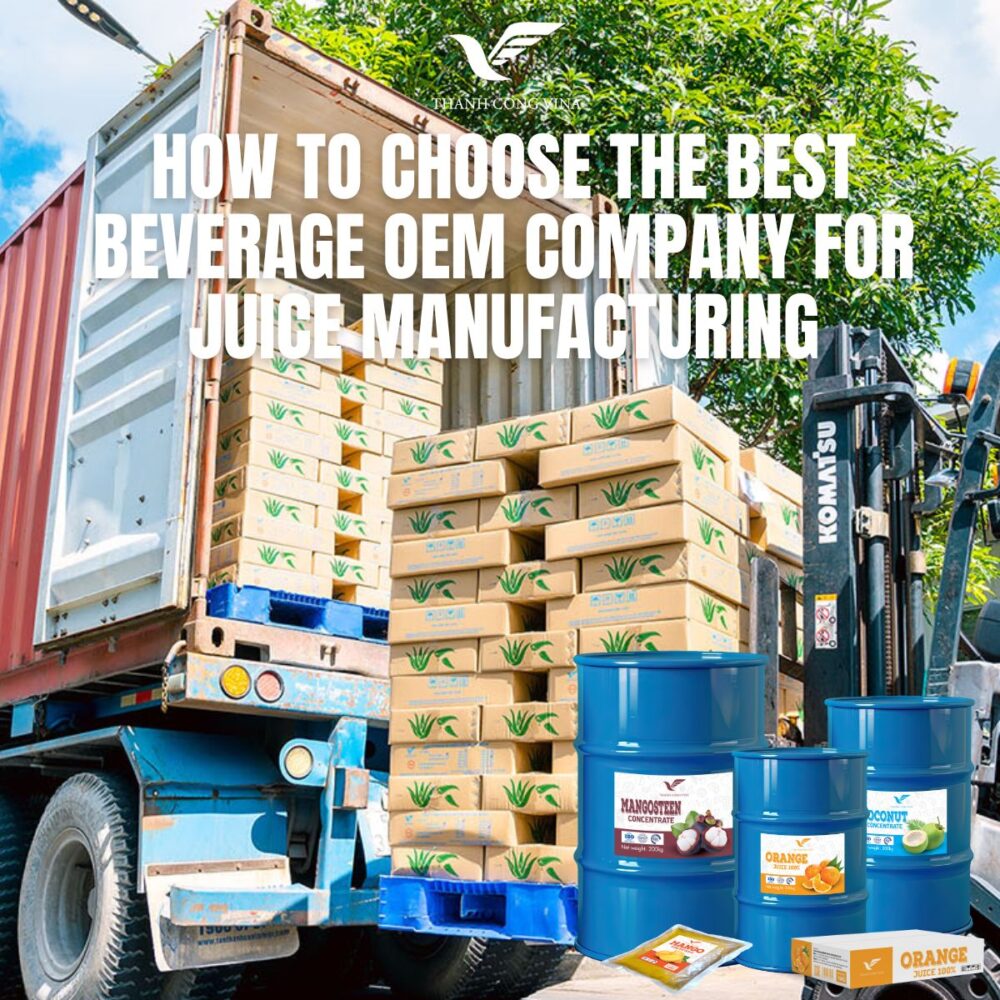
How to Choose the Best Beverage OEM Company for Juice Manufacturing
Choosing a manufacturer should involve a comprehensive evaluation rather than focusing solely on unit price.
Evaluate Juice Manufacturing Experience
First, examine the manufacturer’s experience with juice and fruit-based beverages.
Relevant experience should include knowledge of fruit ingredients, formulation, processing, thermal treatment, filling, packaging, shelf-life management, and quality control.
A manufacturer with category-specific expertise can identify technical issues earlier and provide more practical recommendations.
Assess R&D Capabilities
R&D capability is particularly important for private label projects.
Ask whether the manufacturer can develop customized formulas, conduct laboratory testing, produce samples, run pilot batches, and modify formulations according to customer feedback.
A strong R&D team can turn a basic product concept into a commercially differentiated beverage.
Examine Production Capacity
Manufacturing capacity should match both current and future business requirements.
Consider production lines, filling capabilities, packaging formats, warehouse space, raw material availability, and the manufacturer’s ability to accommodate increased orders.
A factory that can only support initial volumes may become a limitation as the brand grows.
Review Quality Systems
Quality should be evaluated across the entire production process.
Ask about raw material controls, laboratory facilities, production monitoring, microbiological testing, finished-product release, traceability, sanitation procedures, and quality documentation.
These factors are more meaningful than simply reviewing a list of certifications.
Consider MOQ and Cost Structure
Minimum order quantity can influence the feasibility of a private label project.
A reasonable MOQ allows brands to balance manufacturing efficiency with inventory risk.
When comparing quotations, businesses should evaluate the total cost rather than focusing only on the factory price.
Important cost components may include ingredients, packaging, tooling, formulation, testing, production, storage, and logistics.
Evaluate Communication
International OEM manufacturing requires clear communication.
The manufacturer should respond professionally to questions regarding formulation, packaging, specifications, production schedules, documentation, quality requirements, and shipping.
Good communication reduces misunderstandings and helps projects move forward efficiently.
Look for Long-Term Partnership
The best OEM relationship is not necessarily the cheapest one-time transaction.
A strategic manufacturing partner can help a brand develop new products, improve formulations, optimize packaging, scale production, and enter additional markets.
Long-term cooperation can create greater value than continually changing suppliers based only on short-term pricing.
8. Cost Factors in Juice OEM Manufacturing
Understanding the factors that influence production cost is essential when selecting a Beverage OEM Company.
Fruit and Ingredient Costs
The cost of fruit ingredients varies according to type, quality, seasonality, origin, processing requirements, and supply conditions.
Premium ingredients or higher fruit content may increase product cost but can also support stronger product positioning.
Packaging Costs
Packaging can represent a significant portion of the final manufacturing cost.
Bottle or can type, material, size, label, carton, closure, printing, and minimum packaging order quantities all influence the total cost.
Production Volume
Larger production volumes can improve manufacturing efficiency because fixed setup and operational costs may be distributed across more units.
However, brands must balance volume discounts against inventory requirements and cash-flow considerations.
Formulation Complexity
A simple juice drink may have a different cost structure from a highly customized functional beverage with multiple ingredients and specialized processing requirements.
The more complex the formulation and processing requirements, the more important it becomes to evaluate technical feasibility and production efficiency.
Logistics and Export Costs
Manufacturing cost is only one component of the final landed cost.
Businesses should also consider inland transportation, port charges, freight, insurance, customs-related costs, warehousing, and destination-market expenses.
An experienced OEM partner can help brands identify potential logistics efficiencies during the planning stage.
9. Why Vietnam Is an Attractive Destination for Juice Manufacturing
Vietnam offers several structural advantages for international beverage companies.
Abundant Tropical Fruit Resources
Vietnam’s agricultural environment supports the cultivation of many tropical fruits suitable for beverage manufacturing.
This creates opportunities for brands seeking authentic tropical flavors and competitive ingredient sourcing.
Growing Food Processing Industry
The country’s food and beverage sector has developed significantly, with increasing investment in modern processing technologies and export-oriented manufacturing.
This development creates a stronger ecosystem for private label beverage production.
Competitive Manufacturing Environment
Vietnam offers a competitive combination of labor, production infrastructure, agricultural resources, and manufacturing expertise.
For international buyers, this can support attractive cost structures without necessarily compromising product quality when the appropriate manufacturing partner is selected.
Strategic Export Location
Vietnam’s position in Southeast Asia provides access to major Asian markets while also supporting international export activities.
This geographical advantage can be valuable for brands seeking diversified sourcing and regional expansion.
Increasing Demand for Private Label Products
Retailers, distributors, and emerging beverage brands increasingly use private label manufacturing to develop differentiated products without building their own factories.
Vietnamese manufacturers are well positioned to support this model through flexible production, customized formulations, and export-oriented services.
Conclusion
The best Beverage OEM Company for juice manufacturing should offer much more than production capacity. A strong partner should combine fruit-processing expertise, customized R&D, modern manufacturing infrastructure, reliable quality systems, flexible packaging solutions, international compliance knowledge, and export support.
For beverage brands, the right OEM relationship can significantly reduce investment requirements while accelerating product development and market entry. It can also provide the flexibility needed to test new concepts, launch multiple SKUs, adjust formulations, optimize packaging, and scale production as demand increases.
Vietnam is increasingly attractive for this type of partnership because of its tropical fruit resources, food-processing capabilities, skilled workforce, competitive manufacturing environment, and strategic location in Asia. However, selecting the right factory remains critical. Buyers should evaluate technical expertise, certifications, R&D capabilities, production capacity, MOQ, quality assurance, packaging options, communication, and long-term scalability before making a decision.
For international beverage brands looking for a reliable partner, Thanh Cong Vina Beverage provides integrated OEM and ODM beverage manufacturing solutions covering product development, ingredient sourcing, juice processing, customized formulation, packaging, quality control, and export production. With experience in fruit-based beverages and a focus on consistent quality, flexible manufacturing, and international B2B cooperation, Thanh Cong Vina is positioned to support brands from initial concept to commercial production. For companies seeking a dependable Beverage OEM Company for juice manufacturing, Thanh Cong Vina can provide a scalable foundation for private label development and global beverage expansion.