
Launching a new beverage brand requires much more than creating an attractive product concept. Businesses must manage formulation, ingredient sourcing, production, quality control, packaging, certifications, logistics, and market compliance. For startups, retailers, distributors, and established beverage brands, managing all these processes independently can require significant investment and technical expertise. This is where a professional Beverage OEM Company can provide a practical and scalable solution.
Working with an experienced OEM manufacturer allows beverage brands to transform product concepts into commercial products without building and operating their own factory. Depending on the manufacturer’s capabilities, businesses can receive support across formulation development, OEM and ODM manufacturing, packaging, quality assurance, and export preparation.
The benefits extend beyond cost savings. A capable Beverage OEM Company can help brands shorten development timelines, improve product consistency, access advanced manufacturing capabilities, and scale production more efficiently. This is especially valuable for businesses entering competitive categories such as fruit juice, coconut water, coffee beverages, functional drinks, energy drinks, aloe vera drinks, and other ready-to-drink products.
For international buyers, choosing the right manufacturing partner can also simplify the process of sourcing beverages from Vietnam and developing products for global markets.
1. Reduce Investment in Beverage Manufacturing Infrastructure
Reduce Investment in Beverage Manufacturing Infrastructure
One of the biggest benefits of partnering with a Beverage OEM Company is the ability to access professional manufacturing infrastructure without building a factory from the ground up.
Avoid the High Cost of Building a Factory
Establishing an independent beverage manufacturing facility requires substantial capital investment. Businesses may need to purchase processing systems, filling equipment, packaging machinery, water treatment systems, laboratory equipment, storage facilities, utilities, and production management systems.
Beyond the initial investment, there are ongoing expenses related to equipment maintenance, employee training, factory management, sanitation, quality control, energy consumption, and regulatory compliance.
For many beverage brands, especially startups and companies testing a new market, this investment may not be commercially practical.
An established Beverage OEM Company already has the necessary production infrastructure. The brand can therefore focus its investment on product development, packaging design, marketing, distribution, sales, and customer acquisition.
Access Professional Equipment Without Ownership
OEM manufacturing allows brands to benefit from industrial-scale production technology without owning the equipment.
Depending on the manufacturer, production capabilities may include:
- Beverage blending systems
- Water treatment systems
- Pasteurization or sterilization technology
- Filling and sealing equipment
- Bottle and can packaging systems
- Labeling equipment
- Cartoning and palletizing systems
- Quality testing laboratories
- Cold or ambient storage facilities
This creates a more flexible business model.
Instead of investing heavily in fixed assets, brands can purchase finished beverages according to their production requirements.
Better Capital Allocation
Capital efficiency is particularly important for emerging beverage companies.
Rather than spending millions on manufacturing infrastructure, businesses can allocate resources toward developing a strong brand identity, creating effective packaging, building distribution networks, launching digital marketing campaigns, and expanding into new markets.
The Beverage OEM Company effectively becomes an extension of the brand’s manufacturing operation.
This allows the brand owner to concentrate on commercial growth while the manufacturer manages production.
Lower Operational Complexity
Owning a factory means managing employees, equipment, maintenance, utilities, raw materials, sanitation, production planning, and quality systems every day.
OEM manufacturing reduces this operational burden.
The brand still needs to provide clear product specifications and manage supplier relationships, but much of the physical manufacturing responsibility is handled by the OEM partner.
For businesses that want to enter the beverage sector without becoming factory operators, this can be one of the most important advantages of OEM production.
2. Access Professional Product Development and Custom Formulation
A major advantage of choosing a capable Beverage OEM Company is access to technical expertise that can help transform a product concept into a commercially viable beverage.
From Concept to Formula
Many beverage brands begin with a basic idea.
For example, a company may want to launch a coconut water, fruit juice, aloe vera drink, coffee beverage, energy drink, or functional beverage.
However, an idea is not yet a production-ready formula.
The product must be developed around factors such as flavor, sweetness, acidity, texture, ingredient compatibility, stability, processing conditions, packaging, and target cost.
A professional OEM manufacturer can work with the brand to translate these requirements into a technical product specification.
Custom Flavor Development
Taste is a major factor influencing repeat purchase.
A beverage can have excellent packaging and marketing but still struggle commercially if the sensory experience does not meet consumer expectations.
An experienced Beverage OEM Company can support the development of flavor profiles according to the buyer’s target market.
Potential concepts may include:
- Mango juice
- Passion fruit juice
- Pineapple juice
- Pink guava juice
- Orange juice
- Coconut water
- Aloe vera beverages
- Milk coffee
- Black coffee
- Cappuccino beverages
- Latte drinks
- Energy beverages
- Functional drinks
The formulation can be adjusted according to sweetness, acidity, aroma, color, mouthfeel, and ingredient preferences.
Formula Optimization
Product development is not only about creating a good-tasting beverage.
The formula must also be suitable for industrial production.
An OEM manufacturer can evaluate whether the formulation performs consistently during processing and storage.
Potential issues such as sedimentation, separation, color changes, flavor deterioration, or ingredient incompatibility need to be addressed before commercial production.
Product Sampling
Sampling is an important part of the OEM development process.
The brand can review prototypes and provide feedback.
The manufacturer can then adjust the formula until the product reaches the desired specification.
This collaborative process reduces the risk of launching a product that does not meet consumer expectations.
Development for Different Markets
A beverage designed for one market may not necessarily be suitable for another.
Consumer preferences, sweetness levels, packaging sizes, labeling requirements, and regulatory standards can vary by country.
A globally oriented Beverage OEM Company can help brands consider these differences during product development.
This provides international brands with greater flexibility when building products for Asia, Europe, the Middle East, North America, or other export markets.
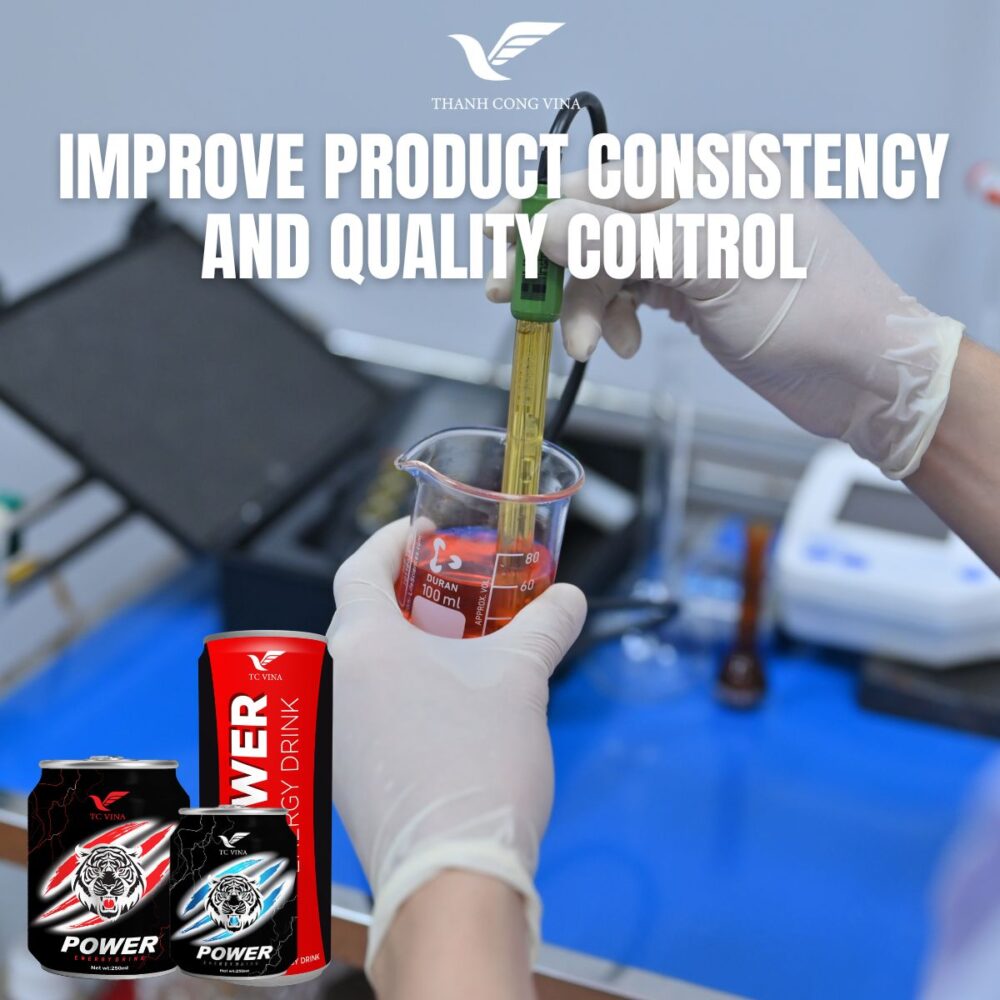
3. Improve Product Consistency and Quality Control
Improve Product Consistency and Quality Control
Consistency is essential for any successful beverage brand.
Consumers expect every bottle, can, or carton to deliver the same taste and product experience. A reliable Beverage OEM Company can help brands achieve this consistency through standardized production systems and quality controls.
Standardized Manufacturing Procedures
Professional beverage manufacturing relies on documented procedures.
Raw materials, formulas, processing conditions, filling parameters, packaging specifications, and finished-product requirements should be controlled according to approved standards.
This helps minimize batch-to-batch variation.
Instead of producing beverages based on informal instructions, the manufacturer operates according to documented specifications.
Raw Material Control
Ingredient quality has a direct effect on beverage quality.
A professional manufacturer should have procedures for receiving, identifying, storing, and approving raw materials.
Depending on the ingredient, checks may involve specifications, documentation, supplier approval, physical inspection, or laboratory testing.
This is particularly important for fruit-based products where raw material characteristics can naturally vary.
In-Process Quality Control
Quality control should not only happen after production.
The Beverage OEM Company should monitor relevant production parameters throughout the manufacturing process.
Depending on the beverage, these may include:
- Brix
- pH
- Acidity
- Fill volume
- Temperature
- Mixing conditions
- Product appearance
- Packaging integrity
- Microbiological parameters
Monitoring production at different stages helps identify potential problems before the finished product is released.
Finished Product Inspection
Before shipment, finished products should be evaluated against established specifications.
Quality checks may include sensory characteristics, physical parameters, microbiological testing, packaging inspection, labeling verification, and batch traceability.
A structured release process helps provide greater confidence to international buyers.
Traceability
Traceability is another important benefit of working with an established manufacturer.
Each production batch should be linked to relevant raw materials, production records, packaging materials, quality-control results, and shipment information.
If a quality issue occurs, traceability can help identify the affected batch and investigate the root cause efficiently.
4. Lower Production Costs Through Economies of Scale
Cost efficiency is one of the most commonly cited benefits of working with a Beverage OEM Company, especially for brands that do not have their own production infrastructure.
Economies of Scale
Large beverage manufacturers can purchase ingredients and packaging materials in significant volumes.
This may create purchasing advantages that smaller companies cannot achieve independently.
The benefits can extend to production efficiency, labor utilization, equipment performance, packaging procurement, and logistics planning.
Lower Fixed Costs
An independent beverage factory has significant fixed expenses.
These may include:
- Factory rent or depreciation
- Equipment investment
- Labor
- Maintenance
- Utilities
- Quality laboratories
- Warehousing
- Sanitation
- Administrative costs
OEM production allows the brand to avoid many of these expenses.
Instead, production costs are generally incorporated into the manufacturer’s quotation.
Efficient Production Planning
An experienced Beverage OEM Company can coordinate manufacturing schedules based on production demand.
Efficient planning helps reduce unnecessary downtime and improve resource utilization.
This can be particularly valuable when a beverage brand has predictable recurring orders.
Packaging Cost Optimization
Packaging can represent a significant percentage of beverage production costs.
The manufacturer can help evaluate different options, including bottle formats, can specifications, labels, cartons, closures, and secondary packaging.
The goal is to achieve a balance between visual appeal, product protection, minimum order quantities, logistics, and target cost.
Total Cost Rather Than Factory Price
Brands should not evaluate OEM suppliers solely according to the lowest quotation.
The real cost should include product quality, rejection risk, lead time, packaging efficiency, logistics, product development, certifications, and supply reliability.
A slightly higher unit price from a reliable Beverage OEM Company can sometimes provide better overall value than a cheaper supplier with inconsistent quality or unreliable delivery.
5. Accelerate Time to Market
Accelerate Time to Market
Speed is increasingly important in the beverage industry.
Consumer trends can change quickly, and brands need to respond to new opportunities without unnecessary delays. Working with a Beverage OEM Company can shorten the path from product concept to commercial launch.
Ready Manufacturing Infrastructure
The manufacturer already has production lines, personnel, technical teams, suppliers, and quality systems in place.
This eliminates the long process of building manufacturing infrastructure.
The brand can therefore concentrate on product development and commercialization.
Faster Product Development
Experienced OEM manufacturers often have established development procedures.
The process can move through:
- Initial product concept
- Technical consultation
- Formula development
- Sample production
- Sensory evaluation
- Formula adjustment
- Packaging development
- Pilot production
- Quality approval
- Commercial production
A structured process helps reduce unnecessary delays.
Faster Packaging Coordination
Packaging development can happen alongside formulation development.
This means labels, bottles, cans, cartons, artwork, barcodes, and regulatory information can be coordinated with the product specification.
This integrated approach can shorten the overall development timeline.
Faster Market Testing
OEM manufacturing also allows brands to test new concepts without committing to major factory investments.
A company may launch a new beverage in a selected market, monitor consumer response, and then scale production if demand is strong.
This reduces the risk associated with large-scale investment before product-market fit has been established.
Faster Brand Expansion
Once a brand has successfully launched one product, it may want to add new flavors, formats, or beverage categories.
A capable Beverage OEM Company can support this expansion by using an existing manufacturing relationship.
The brand does not necessarily need to identify a new factory for every new product.
6. Access Flexible OEM, ODM, and Private Label Solutions
Another important benefit is flexibility.
Different beverage businesses require different levels of manufacturing support. A professional Beverage OEM Company can provide solutions ranging from basic contract manufacturing to complete product development.
OEM Manufacturing
In a traditional OEM model, the customer may provide the formula, specifications, or detailed product requirements.
The manufacturer then produces the beverage according to the approved specifications.
This approach is suitable for companies that already have technical product knowledge.
ODM Manufacturing
With ODM services, the manufacturer can provide greater support in formulation and product development.
This is particularly useful for businesses that have a commercial concept but do not have an internal beverage R&D team.
The manufacturer can help transform the concept into a production-ready product.
Private Label Manufacturing
Private label beverage manufacturing allows retailers, distributors, importers, and entrepreneurs to sell products under their own brand identity.
The manufacturer produces the beverage while the customer controls branding and commercialization.
Private label is especially attractive for businesses seeking to create differentiated products without owning production facilities.
Custom Packaging
A strong Beverage OEM Company can support multiple packaging formats.
Depending on production capabilities, options may include PET bottles, cans, glass bottles, cartons, and other formats.
Packaging can be customized according to target consumers, market positioning, retail channels, and logistics requirements.
Flexible Product Portfolio
OEM manufacturing is not limited to one beverage category.
A brand may work with the same partner for fruit juices, coconut water, coffee beverages, aloe vera drinks, energy drinks, functional beverages, and other ready-to-drink products.
This can simplify supplier management and support long-term portfolio expansion.
7. Simplify International Production and Export
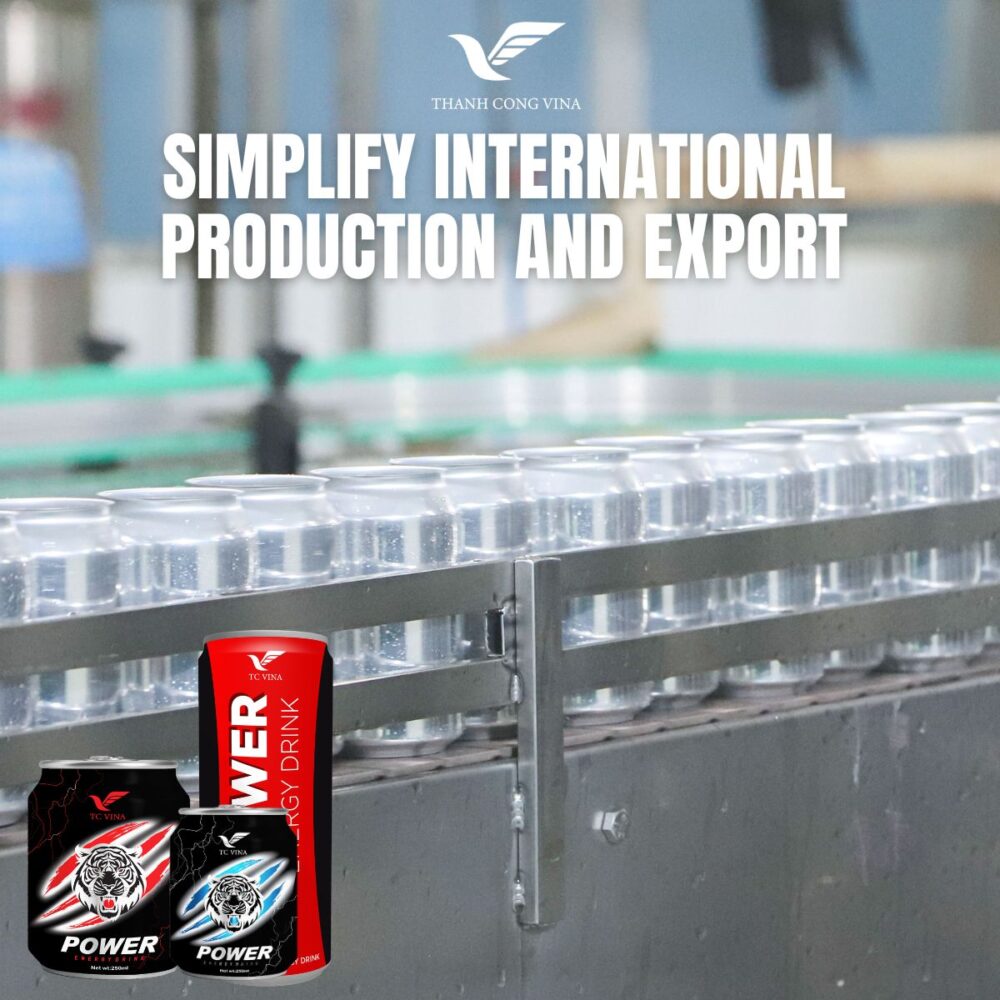
Simplify International Production and Export
For global beverage brands, international supply-chain management is another important consideration.
A Vietnam-based Beverage OEM Company with export experience can support businesses throughout the production and shipment process.
Export-Oriented Manufacturing
International manufacturing requires attention to documentation, packaging, quality standards, labeling, logistics, and destination-market requirements.
A manufacturer experienced in export production is more likely to understand these operational requirements.
International Food Safety Standards
Global buyers often evaluate manufacturing partners based on food safety systems and certifications.
Depending on the customer’s requirements and destination market, relevant systems may include HACCP, GMP, ISO, FSSC 22000, HALAL, and other applicable standards.
Businesses should always verify the actual certification scope and validity before placing an order.
Documentation Support
Export beverage shipments may require commercial and product documentation.
Depending on the destination, documentation may include product specifications, certificates, packing lists, invoices, certificates of origin, laboratory reports, and other relevant records.
A professional manufacturer can coordinate the documentation required for the production and shipment process.
Logistics Coordination
The manufacturing relationship can also simplify logistics coordination.
The OEM partner can coordinate production completion, carton packing, palletization, container loading, and shipment preparation.
This creates a more streamlined supply chain for international buyers.
Vietnam as a Manufacturing Base
Vietnam is increasingly attractive for international beverage sourcing due to its food-processing capabilities, agricultural resources, manufacturing workforce, strategic location in Asia, and expanding export ecosystem.
For brands looking for competitive Asian beverage production, a Vietnamese Beverage OEM Company can provide an efficient alternative to establishing independent manufacturing operations.
8. Support Long-Term Beverage Brand Growth
The benefits of OEM manufacturing are not limited to launching a single product.
The right Beverage OEM Company can become a long-term manufacturing partner that supports a brand as it grows.
Scaling Production Volume
A beverage business may start with a small or medium production order.
If the product succeeds, demand can increase significantly.
A scalable OEM manufacturer can support higher volumes through production planning, raw material procurement, packaging coordination, and manufacturing capacity.
Expanding Product Lines
Once one beverage becomes successful, brands often seek to expand their portfolio.
For example, a company may begin with coconut water and later add fruit juice, aloe vera beverages, coffee drinks, or energy beverages.
Using one experienced manufacturing partner can simplify product development and supplier management.
Developing New Flavors
Consumer preferences evolve continuously.
Brands may introduce seasonal flavors, limited editions, regional formulations, or new product concepts.
An OEM manufacturer’s R&D capabilities can support ongoing innovation.
Entering New Markets
International expansion may require modifications to packaging, labeling, formulation, or product specifications.
A manufacturer experienced in export production can help brands adapt their manufacturing process to different commercial requirements.
Building a Strategic Supplier Relationship
The best OEM relationship is not simply transactional.
A long-term partnership allows the manufacturer to understand the brand’s product portfolio, quality expectations, packaging standards, forecast patterns, and future development plans.
Over time, this can improve communication and production efficiency.
How to Choose the Right Beverage OEM Company
Not every manufacturer offers the same level of service, quality, or technical capability. Businesses should therefore conduct a structured supplier evaluation before selecting a partner.
Evaluate Manufacturing Experience
Look for experience with the specific beverage category you plan to launch.
A manufacturer with relevant experience is more likely to understand the technical and operational challenges associated with the product.
Check Production Capabilities
Review production lines, filling formats, capacity, storage facilities, quality laboratories, and packaging capabilities.
The manufacturer should be able to support both your current requirements and expected future growth.
Review Certifications
Ask for current certification documents and verify their scope.
Relevant certifications may include HACCP, GMP, ISO, FSSC 22000, HALAL, and other standards depending on the market.
Evaluate R&D Support
If you need custom formulation, confirm that the manufacturer has qualified R&D personnel and product development capabilities.
Ask about sampling procedures, formula ownership, development timelines, and product testing.
Compare MOQ and Commercial Terms
Minimum order quantities can significantly affect the feasibility of a project.
Compare MOQ, pricing, payment terms, lead times, packaging requirements, development costs, and shipping conditions.
Assess Communication
Communication is particularly important for international OEM projects.
The supplier should provide clear technical information, transparent quotations, timely updates, and professional responses.
Consider Long-Term Compatibility
The best manufacturer should be able to grow with your business.
Instead of asking only, “Who offers the cheapest price?”, brands should ask:
“Which Beverage OEM Company can consistently support our quality, volume, innovation, and export requirements over the long term?”
This broader perspective can lead to a more reliable manufacturing partnership.
Conclusion
Working with a professional Beverage OEM Company provides beverage brands with a practical route to product development, manufacturing, private label production, and international expansion without the heavy investment required to establish an independent factory. The advantages include lower infrastructure costs, access to specialized formulation expertise, consistent quality control, flexible production, faster market entry, and scalable manufacturing capacity.
For startups, retailers, importers, distributors, and established beverage companies, OEM manufacturing can create a more efficient business model. Instead of managing every manufacturing function internally, brands can focus their resources on product strategy, branding, marketing, sales, and market expansion while their manufacturing partner manages production.
For international businesses seeking a reliable manufacturing partner in Vietnam, Thanh Cong Vina offers an export-oriented approach to beverage production with capabilities designed to support OEM, ODM, and private label projects. Thanh Cong Vina can help beverage brands move from product concept and formulation to manufacturing, quality control, packaging, and commercial supply.
Ultimately, the value of a Beverage OEM Company is not simply measured by production capacity. The strongest partner combines technical expertise, quality management, manufacturing flexibility, communication, scalability, and long-term commitment. For brands seeking to launch efficiently and compete in international beverage markets, selecting the right Beverage OEM Company can become a significant foundation for sustainable growth.