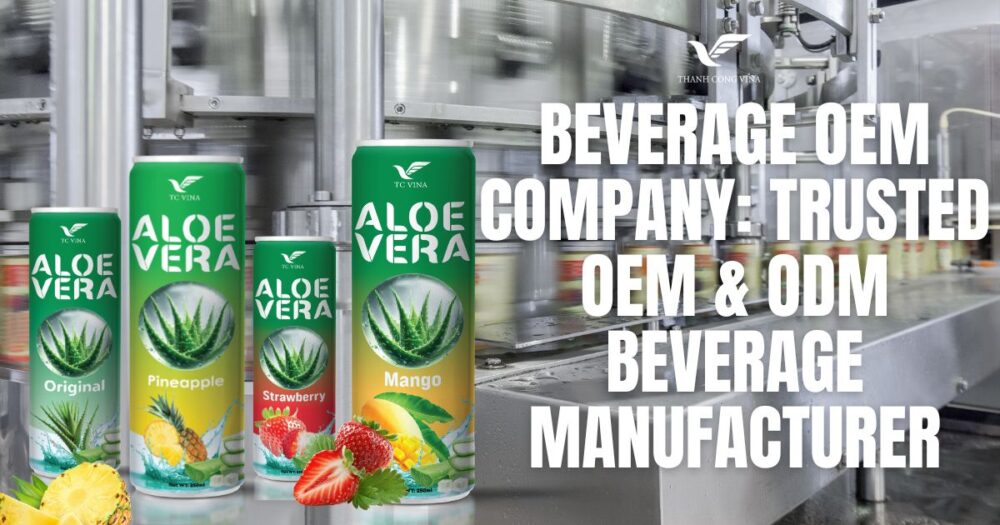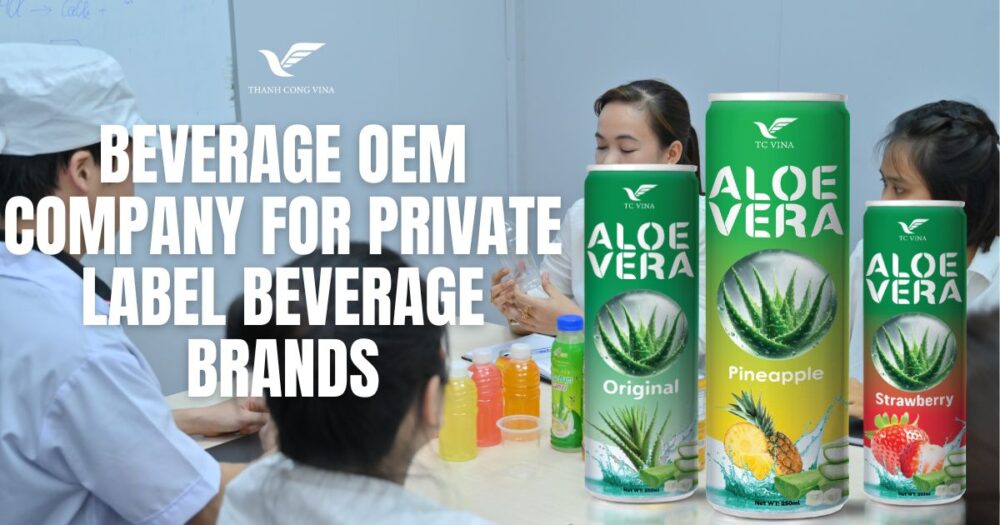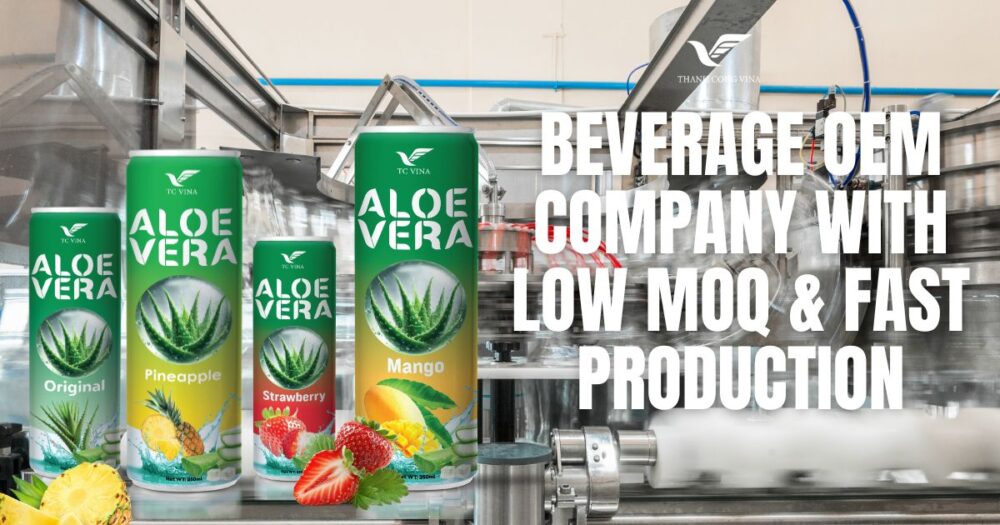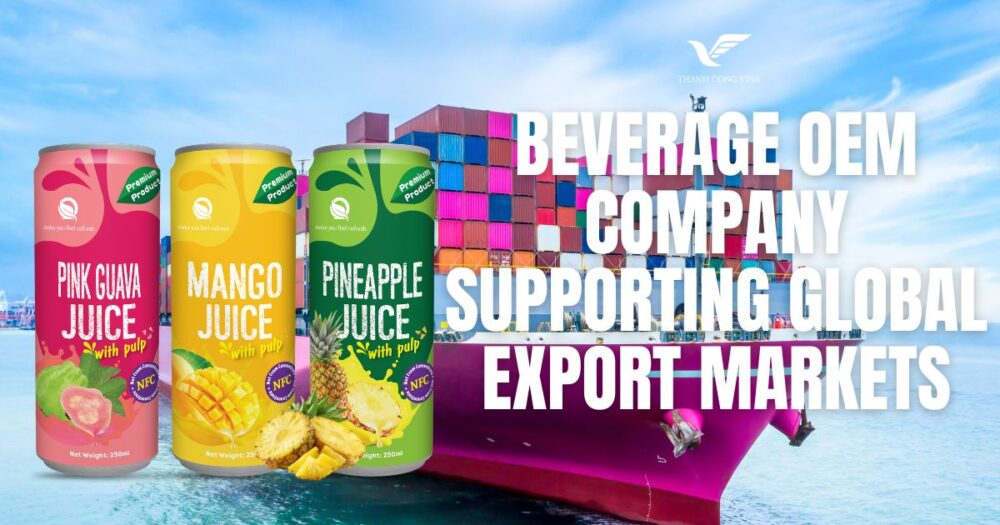

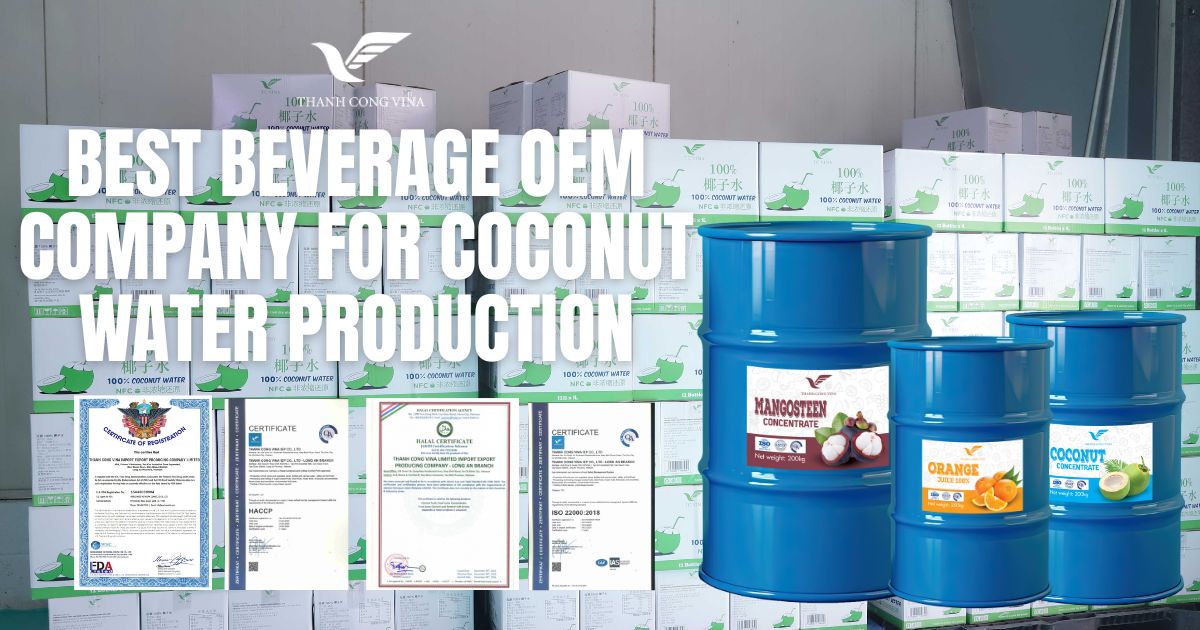
The global demand for coconut water continues to expand as consumers increasingly look for natural, refreshing, and convenient beverages with a clean-label positioning. For beverage brands, retailers, importers, and distributors, partnering with the right Beverage OEM Company can provide an efficient way to develop and scale coconut water products without investing in a dedicated manufacturing facility.
A professional OEM manufacturer can support the entire production journey, from coconut sourcing and product formulation to processing, filling, packaging, quality control, and export preparation. This integrated approach allows brands to focus on marketing, sales, distribution, and brand development while relying on an experienced manufacturing partner for production.
Vietnam is particularly attractive for coconut water manufacturing because of its tropical climate, established coconut-growing regions, expanding food-processing industry, and strategic location in Asia. However, selecting the best manufacturing partner requires more than comparing prices. Buyers should evaluate raw material quality, processing technology, production capacity, certifications, packaging options, quality assurance, minimum order quantities, and international export experience.
For brands planning to enter the coconut water category, choosing an experienced OEM partner can make the difference between a product that simply reaches the market and one that is prepared for sustainable long-term growth.
1. Why Coconut Water Is an Attractive Product for Beverage Brands
Why Coconut Water Is an Attractive Product for Beverage Brands
Coconut water has evolved from a niche tropical beverage into a globally recognized product category. Its natural origin and refreshing taste make it suitable for multiple consumer segments and sales channels.
Growing Demand for Natural Beverages
Consumers are increasingly interested in beverages associated with natural ingredients and simple product positioning. Coconut water fits this trend because it is naturally derived from coconuts and can be positioned as a refreshing alternative to conventional soft drinks.
For beverage brands, this creates opportunities to develop products with different market positions. Depending on the formulation and destination market, coconut water can be marketed as a tropical refreshment, natural beverage, hydration-oriented drink, or premium fruit beverage.
The product’s versatility makes it suitable for supermarkets, convenience stores, restaurants, hotels, cafés, gyms, online retailers, and foodservice businesses.
Convenient Ready-to-Drink Formats
Modern consumers often prioritize convenience. Ready-to-drink coconut water eliminates preparation requirements and allows consumers to enjoy a tropical beverage immediately.
Packaging therefore plays an important role in product success. Bottles, cans, cartons, and other formats can be selected according to target consumers, retail channels, logistics requirements, and brand positioning.
A capable manufacturer should be able to advise brands on the relationship between packaging format, shelf life, transportation, storage, and product positioning.
Opportunities for Product Differentiation
Coconut water does not have to be limited to one standard formulation.
Brands may explore different product concepts based on market requirements, such as:
- Natural coconut water
- Coconut water with fruit flavors
- Coconut water with pulp
- Coconut water blends
- Premium coconut beverages
- Functional beverage concepts
- Private label coconut water
This flexibility creates opportunities for brands to develop differentiated product portfolios.
Strong Potential in International Markets
Coconut water has broad appeal across multiple regions. Asian markets can provide geographical advantages, while Europe, North America, the Middle East, and other international markets offer opportunities for tropical beverage products.
For businesses seeking global expansion, working with a Vietnamese manufacturer can provide access to a production environment close to major coconut-growing areas.
2. Why Choose a Beverage OEM Company for Coconut Water Production?
Working with a Beverage OEM Company allows beverage brands to outsource manufacturing while maintaining control over their product specifications, packaging, and brand identity.
Reduced Investment in Manufacturing Infrastructure
Building a beverage factory requires substantial investment in land, processing equipment, filling lines, laboratories, warehouses, utilities, quality systems, employees, maintenance, and regulatory compliance.
OEM production allows brands to use an existing manufacturing infrastructure instead.
This can be especially beneficial for startups and emerging beverage companies that want to test market demand before committing significant capital to their own production facilities.
Established brands can also use OEM manufacturing when launching new product categories or entering new geographical markets.
Access to Technical Expertise
A professional manufacturer brings technical knowledge accumulated through repeated production projects.
This expertise can cover ingredient sourcing, formulation, processing, filling, packaging, quality control, shelf-life evaluation, and production optimization.
For coconut water, technical expertise is particularly important because the product’s flavor, appearance, stability, and quality can be influenced by raw material characteristics and processing conditions.
Flexible OEM and ODM Models
OEM and ODM services can provide different levels of support.
With OEM manufacturing, the brand may provide an existing formula or detailed product specification. The factory then manufactures the beverage according to approved requirements.
With ODM manufacturing, the factory can provide greater assistance with product development. This may include formulation, ingredient selection, sample development, packaging recommendations, and production trials.
This flexibility allows brands to choose the manufacturing model that best matches their internal capabilities.
Scalable Production
A strong manufacturing partner should be able to support a product as it grows.
A brand may initially require smaller commercial quantities for market testing before increasing production volumes as sales develop.
An experienced OEM partner can help manage this transition through production planning, procurement, capacity allocation, and packaging coordination.
3. Key Factors to Consider When Selecting a Coconut Water OEM Manufacturer
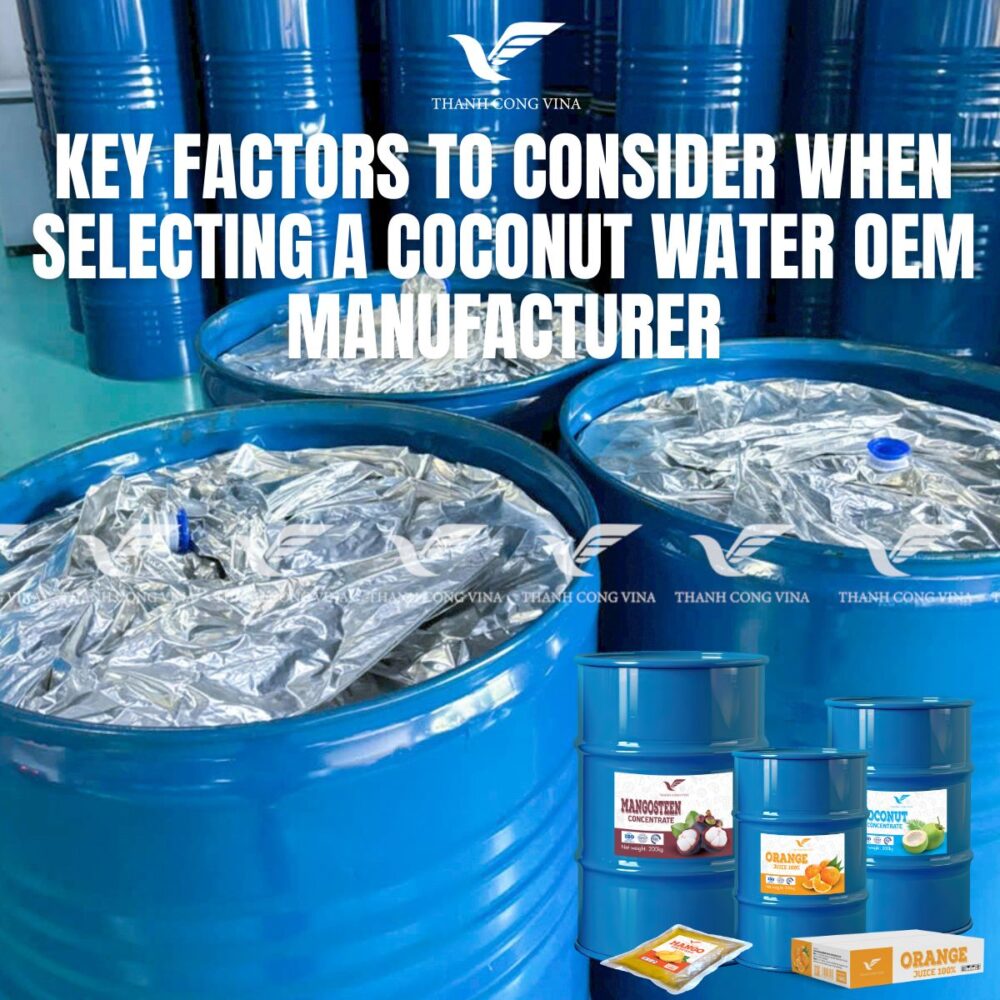
Key Factors to Consider When Selecting a Coconut Water OEM Manufacturer
Choosing the right Beverage OEM Company requires a systematic evaluation of both technical and commercial capabilities.
Coconut Raw Material Sourcing
Raw material quality is one of the most important factors in coconut water production.
The manufacturer should have reliable access to suitable coconuts and an established sourcing system.
Important considerations can include coconut variety, maturity, growing region, seasonal availability, transportation, storage, and supplier management.
For international brands, consistent sourcing is essential because significant variations in raw materials can affect taste, aroma, color, and overall product quality.
Production Technology
Coconut water requires appropriate processing technology to maintain desirable product characteristics while meeting food safety requirements.
Potential production stages may include coconut selection, preparation, extraction, filtration, formulation, thermal processing, filling, sealing, and packaging.
The exact process should be selected according to the product specification, packaging format, shelf-life objective, and destination market.
Production Capacity
Capacity is another important consideration.
A manufacturer may have excellent product development capabilities but insufficient capacity for a rapidly growing international brand.
Brands should therefore evaluate:
- Production line capacity
- Filling formats
- Warehouse capacity
- Production scheduling
- Raw material availability
- Packaging supply
- Expansion capability
The ideal partner should be able to support both current requirements and potential future growth.
Quality Assurance
Quality assurance should operate throughout the production process rather than only at the final inspection stage.
A professional manufacturer should establish procedures for raw material inspection, production monitoring, finished-product testing, sanitation, traceability, and corrective action.
This creates a structured system for maintaining product consistency from batch to batch.
Export Experience
International experience can significantly simplify the sourcing process.
Export-oriented manufacturers should understand documentation, packaging specifications, shipping conditions, destination-market requirements, and international customer expectations.
This is particularly valuable for businesses purchasing coconut water for distribution across multiple countries.
4. Coconut Water Production Process at a Professional Beverage OEM Company
Understanding the manufacturing process can help buyers evaluate the technical capabilities of a potential supplier.
Raw Material Inspection
The production process begins with raw material selection.
Coconuts are assessed according to predetermined specifications. Depending on the manufacturer’s quality system, inspections may consider maturity, physical condition, freshness, appearance, and other relevant parameters.
Raw materials that fail to meet specifications should be rejected or segregated according to established procedures.
Coconut Preparation and Extraction
After receiving and inspecting the coconuts, appropriate preparation steps are performed before the coconut water is collected.
The extraction process must be managed hygienically to minimize contamination risks.
Production teams should follow documented procedures for equipment sanitation, handling, and processing.
Filtration and Product Preparation
Depending on the final product specification, coconut water may undergo filtration or other preparation processes.
The objective is to create a consistent beverage suitable for subsequent processing and filling.
If the product includes additional ingredients, these should be added according to the approved formulation and controlled dosing procedures.
Thermal Processing
Thermal processing is an important stage in commercial beverage manufacturing.
The appropriate process depends on factors such as acidity, formulation, packaging, and desired shelf life.
The manufacturer should validate processing parameters and monitor critical conditions throughout production.
Proper thermal treatment helps control microorganisms while maintaining the desired sensory properties of the product.
Filling and Sealing
Once the beverage has been processed, it is transferred to the filling system.
The filling process should be controlled to achieve consistent fill volumes and maintain hygienic conditions.
Packaging is then sealed according to established procedures.
The integrity of the seal is critical because packaging failure can compromise product safety and shelf life.
Finished Product Inspection
Finished coconut water products should undergo appropriate quality checks before release.
Depending on product requirements, these may include:
- Sensory evaluation
- Appearance inspection
- Brix measurement
- pH measurement
- Microbiological testing
- Fill-volume verification
- Packaging inspection
- Batch traceability
Only products that meet agreed specifications should be released for shipment.
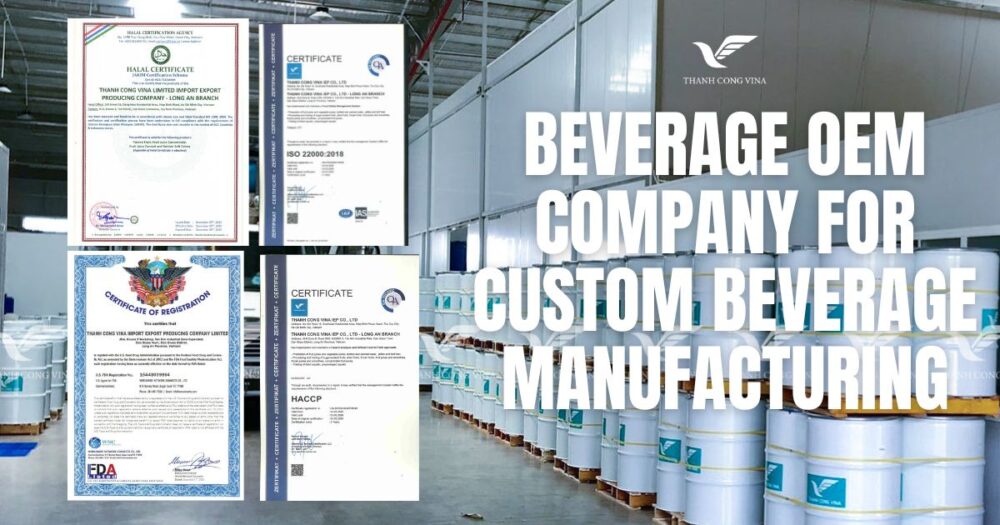
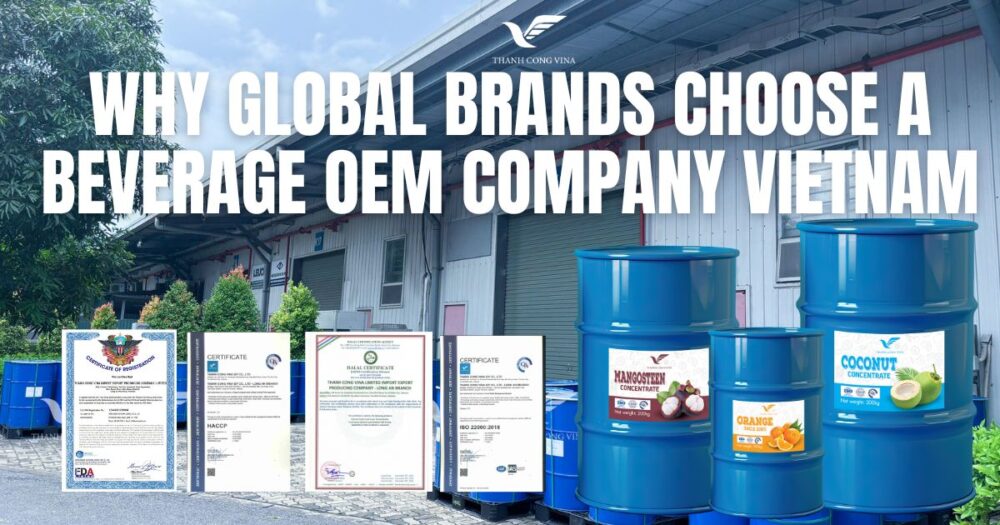
5. Certifications and Quality Standards for Coconut Water OEM Production
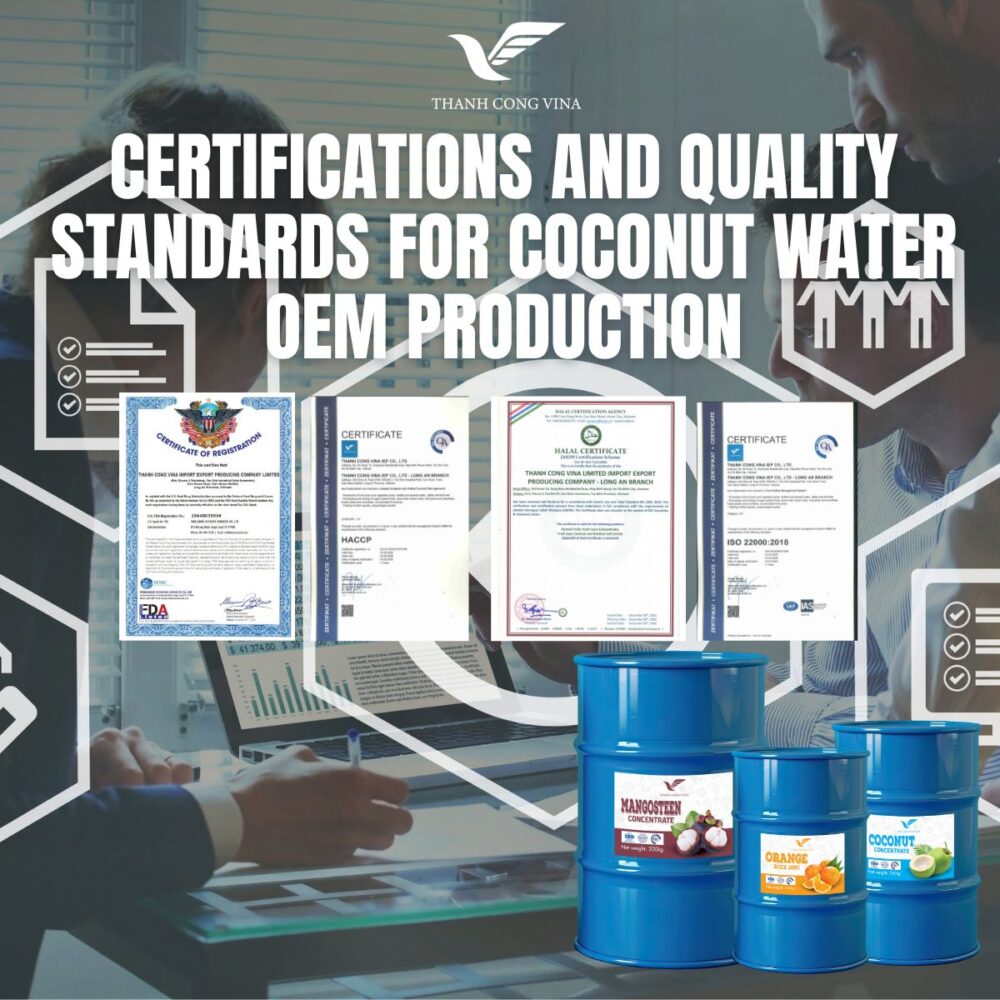
Certifications and Quality Standards for Coconut Water OEM Production
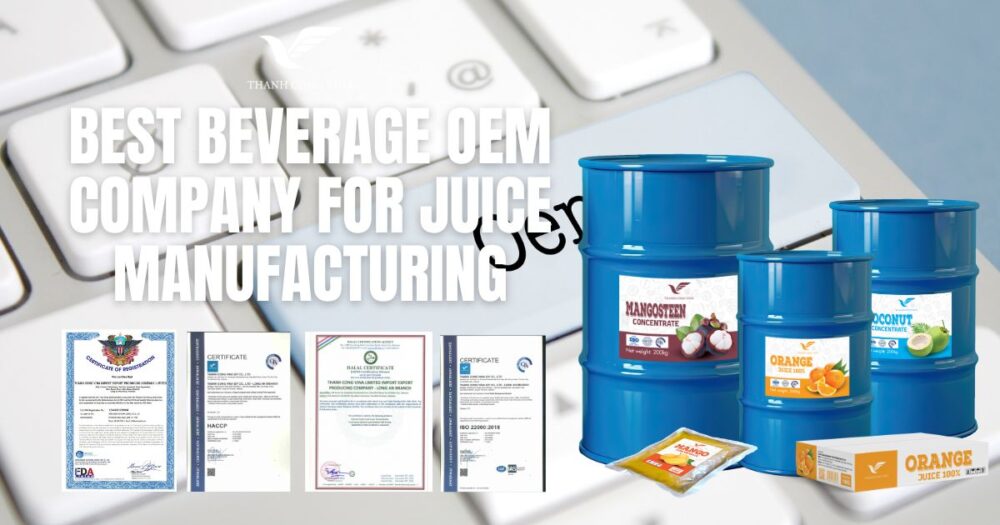
International beverage buyers often require manufacturers to demonstrate compliance with recognized food safety and quality systems.
HACCP
HACCP provides a systematic approach to identifying and controlling potential food safety hazards.
For coconut water production, HACCP principles can be applied throughout raw material receiving, processing, thermal treatment, filling, packaging, storage, and distribution.
This proactive approach helps manufacturers control risks at critical points rather than relying exclusively on finished-product testing.
GMP
Good Manufacturing Practices provide a foundation for hygienic and controlled production.
GMP principles can address employee hygiene, facility cleanliness, equipment maintenance, production procedures, sanitation, storage, and documentation.
For international brands, a strong GMP system can provide additional confidence in the manufacturer’s daily operations.
ISO and Food Safety Management Systems
ISO-based management systems can support structured approaches to quality, food safety, documentation, monitoring, and continuous improvement.
The exact certification requirements vary depending on the manufacturer’s scope and target markets.
HALAL
For coconut water intended for Muslim-majority markets, halal compliance may be an important consideration.
A manufacturer with suitable halal certification can help brands address customer and market requirements.
However, businesses should always verify the specific certification scope and requirements for the destination market.
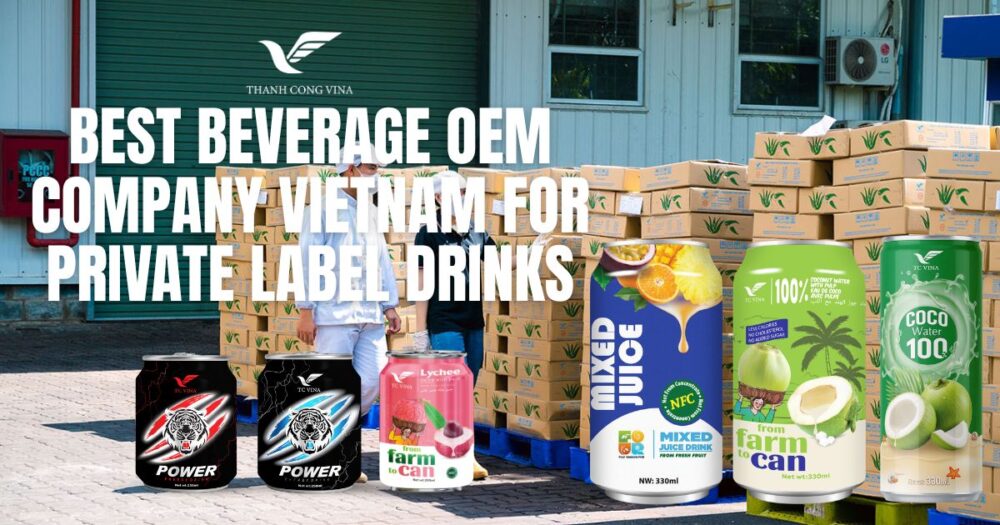
6. Packaging Options for Coconut Water Private Label Products
Packaging is not simply a visual element. It influences transportation, shelf life, consumer perception, storage, and retail positioning.
PET Bottles
PET bottles are widely used for ready-to-drink beverages because they are lightweight and practical.
They can be suitable for supermarkets, convenience stores, foodservice, and export distribution.
For private label brands, PET packaging also offers opportunities for custom labeling and brand communication.
Cans
Cans can provide a premium and modern appearance while offering practical stacking and transportation characteristics.
They can be suitable for retail shelves, convenience channels, cafés, and foodservice.
Cans may also help brands create distinctive visual identities through printed or customized packaging.
Carton Packaging
Carton packaging can support different product positioning and may be attractive to brands seeking an alternative to conventional bottles and cans.
For international distribution, packaging selection should be evaluated together with shipping conditions, storage requirements, production capabilities, and destination-market preferences.
Custom Labeling
Private label customers can develop packaging based on their own brand identity.
Important elements may include:
- Brand name
- Product name
- Ingredients
- Nutrition information
- Net volume
- Origin
- Storage instructions
- Batch information
- Barcode
- Regulatory statements
Packaging artwork should be reviewed carefully before mass production to avoid costly errors.
Packaging and Export Logistics
Export packaging must withstand transportation, handling, warehousing, and distribution.
The manufacturer should consider carton strength, pallet configuration, container loading, product protection, and shipping conditions.
A well-designed packaging system can reduce damage and improve supply-chain efficiency.
7. How a Beverage OEM Company Supports Global Coconut Water Brands
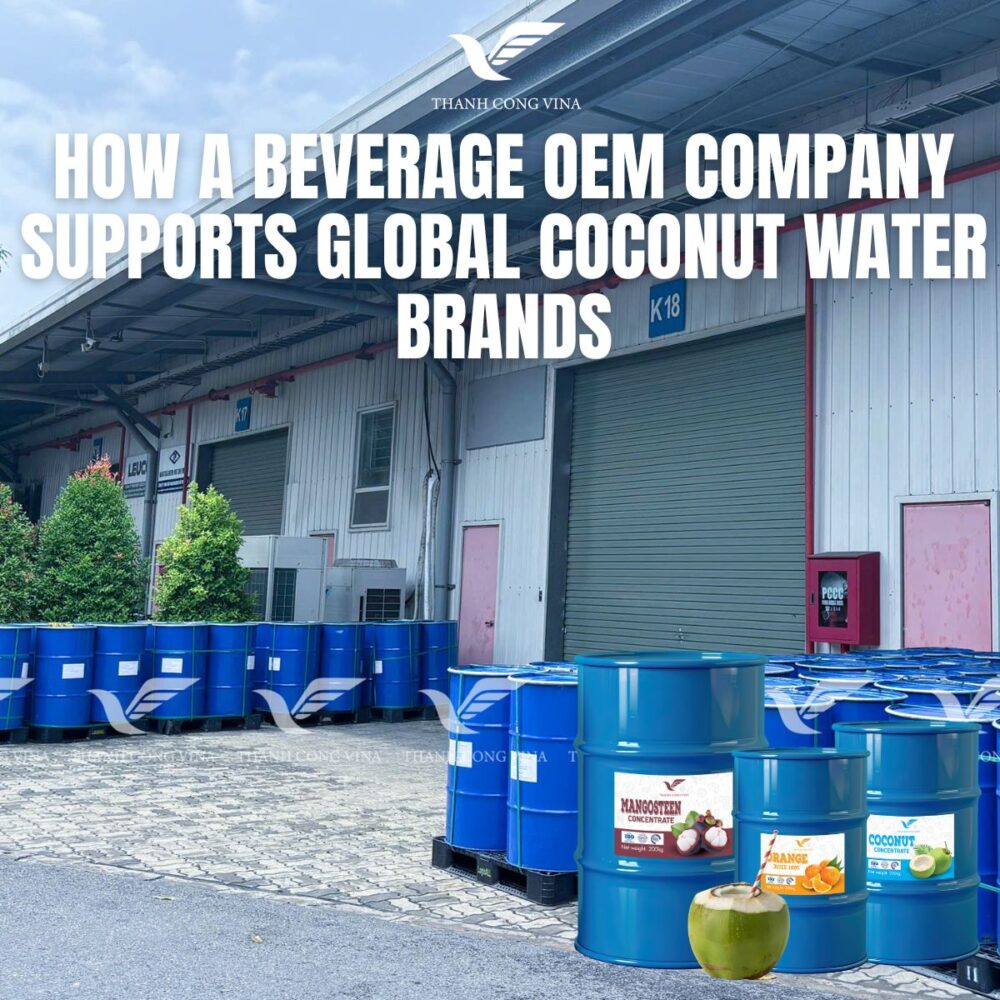
How a Beverage OEM Company Supports Global Coconut Water Brands
A capable Beverage OEM Company can become an extension of a brand’s supply chain rather than simply a production contractor.
Product Development
Manufacturers can work with brands to develop coconut water concepts based on target consumer profiles and market requirements.
The development process may include sample preparation, formula adjustment, sensory testing, and production trials.
Ingredient and Supplier Management
OEM manufacturers can coordinate raw material sourcing and packaging procurement according to agreed product specifications.
This reduces the operational workload for brands that do not have established sourcing teams in Vietnam.
Commercial Production
Once a formula is approved, the manufacturer can manage production according to agreed specifications.
This includes production scheduling, raw material preparation, processing, filling, packaging, quality control, and batch documentation.
Quality Documentation
International buyers may require detailed technical documentation.
A professional manufacturer can support documents such as:
- Product specifications
- Ingredient information
- Laboratory test reports
- Certificates
- Packaging specifications
- Shelf-life information
- Batch records
- Export documentation
Logistics Coordination
The manufacturer’s role may also extend to shipment preparation.
Products must be packed, palletized, documented, and prepared for transportation according to agreed requirements.
Close coordination between the manufacturer, buyer, freight forwarder, and importer can help reduce shipment delays.
8. Cost Factors When Working with a Coconut Water OEM Manufacturer
Price is naturally an important factor when selecting a manufacturing partner, but buyers should evaluate total value rather than focusing exclusively on the lowest quotation.
Raw Material Costs
Coconut prices can vary according to season, origin, quality, availability, and market conditions.
The manufacturer’s sourcing strategy can therefore influence the final product cost.
Formula and Ingredient Requirements
A basic coconut water formulation may have a different cost structure from a premium product with additional ingredients or specialized processing requirements.
Custom formulations may also require additional R&D work.
Packaging Costs
Bottle, can, carton, cap, label, carton box, pallet, and other packaging components all contribute to the final cost.
Custom packaging can increase initial investment but may provide stronger brand differentiation.
Production Volume
Larger production quantities can sometimes improve manufacturing efficiency and packaging economics.
Minimum order quantities should therefore be discussed early in the project.
Shipping and Export Costs
For international buyers, the final landed cost includes more than the factory price.
Businesses should consider:
- Inland transportation
- Port handling
- Freight
- Insurance
- Customs-related expenses
- Import duties
- Destination charges
A comprehensive cost analysis is more useful than comparing factory prices alone.
9. Why Vietnam Is a Strategic Location for Coconut Water OEM Manufacturing
Vietnam has several characteristics that support its role as a coconut beverage manufacturing destination.
Access to Coconut-Growing Areas
Vietnam has established coconut-growing regions that provide access to locally sourced raw materials.
This proximity can help manufacturers build efficient sourcing networks.
Developing Food Processing Industry
The country’s food-processing sector has developed capabilities across fruit processing, beverages, agricultural products, and packaged foods.
This creates a broader ecosystem of ingredient suppliers, packaging companies, logistics providers, and technical services.
Strategic Position in Asia
Vietnam’s location provides access to major Asian markets and international shipping routes.
For beverage brands, this can support supply-chain diversification and regional expansion.
Competitive Manufacturing Environment
Vietnam can offer competitive manufacturing economics while supporting increasingly sophisticated production and quality requirements.
This combination is particularly attractive to brands seeking private label and OEM solutions.
Export-Oriented Manufacturing
Many Vietnamese food and beverage manufacturers have developed experience serving overseas customers.
Export-oriented operations can provide familiarity with international documentation, packaging standards, quality expectations, and customer communication.
Conclusion
Selecting the best Beverage OEM Company for coconut water production requires a comprehensive assessment of manufacturing capabilities, raw material sourcing, food safety systems, product development expertise, packaging flexibility, quality assurance, production capacity, and export experience. Coconut water is a highly versatile beverage category with opportunities across retail, foodservice, private label, and international distribution channels.
Vietnam offers an attractive environment for coconut water manufacturing due to its access to coconut resources, growing food-processing capabilities, strategic location, and competitive production ecosystem. However, the right supplier should be selected based on long-term reliability rather than price alone.
Thanh Cong Vina provides beverage OEM and ODM manufacturing solutions designed for international brands, importers, distributors, and private label businesses. The company’s beverage portfolio includes coconut water, fruit juices, aloe vera beverages, coffee drinks, and other customized beverage products. With capabilities covering product development, manufacturing, quality management, packaging, and export-oriented production, Thanh Cong Vina supports brands seeking reliable supply and scalable production.
For companies looking for a trusted Beverage OEM Company capable of developing high-quality coconut water products for international markets, Thanh Cong Vina offers an integrated manufacturing partnership focused on consistency, flexibility, food safety, and long-term business growth.