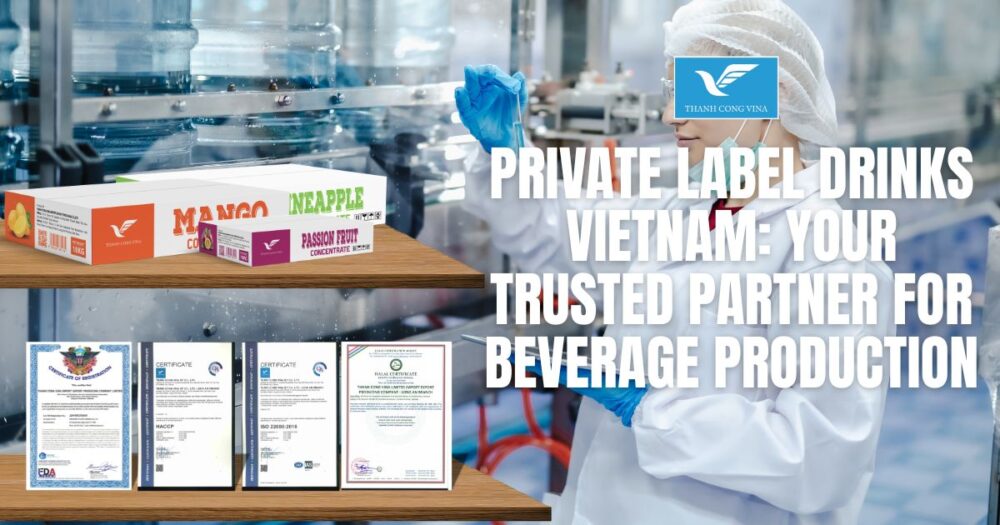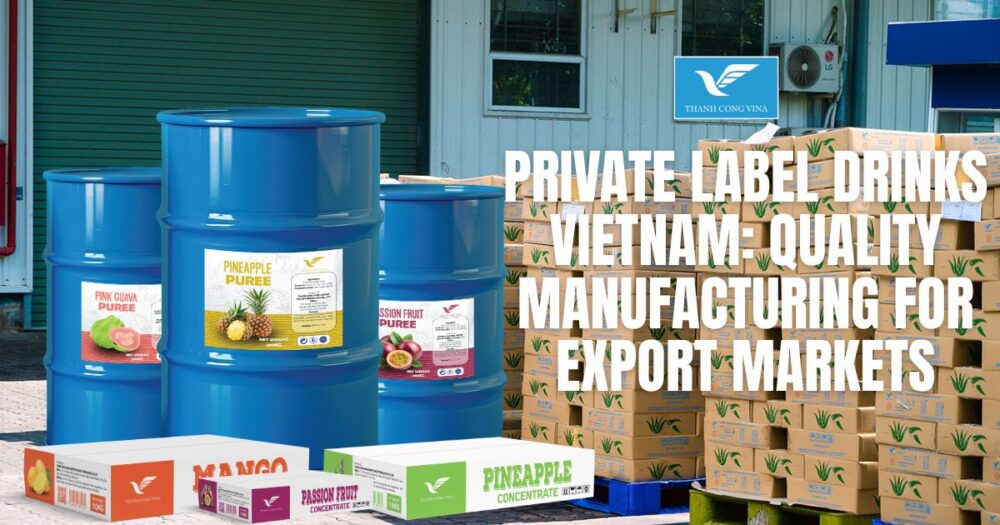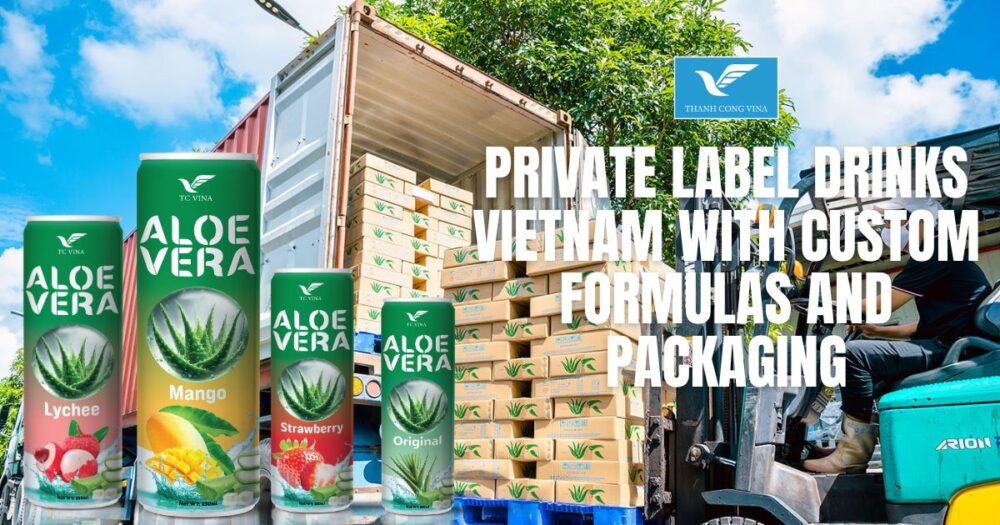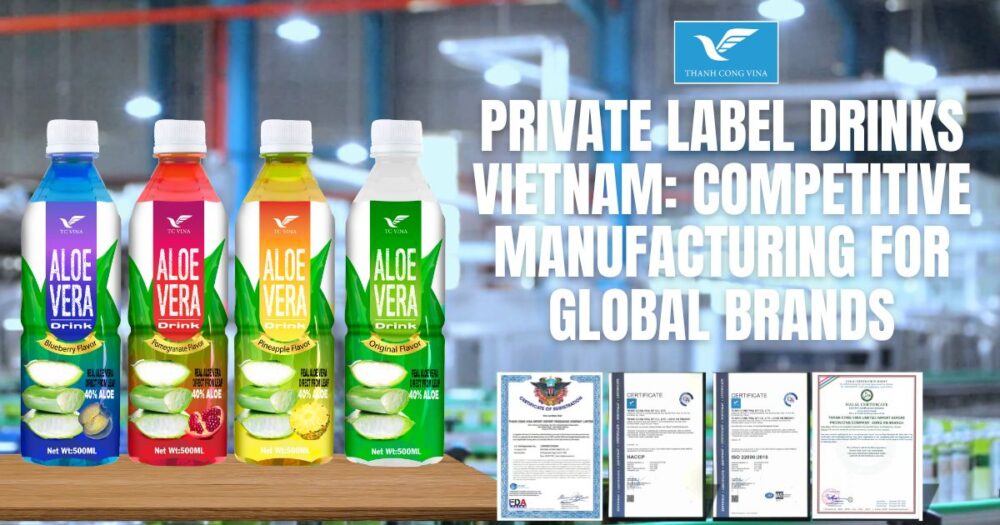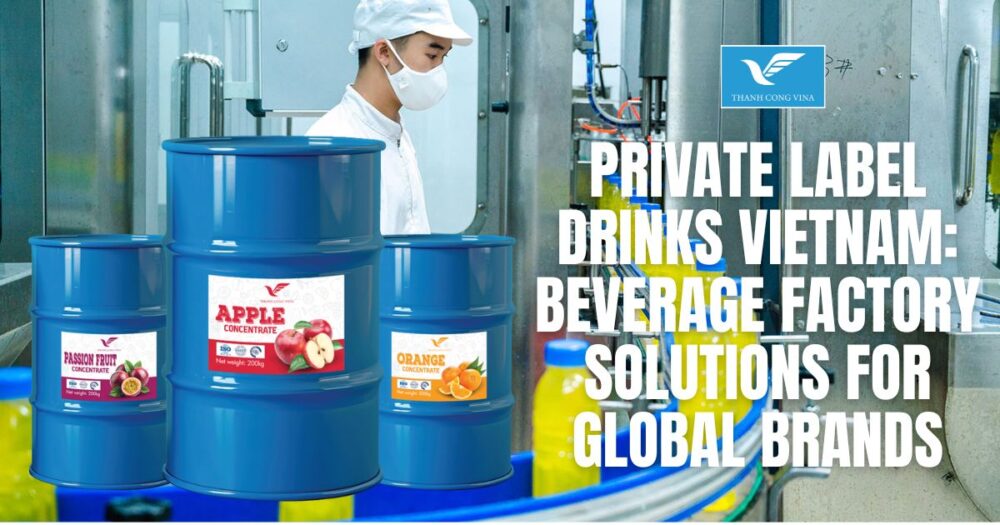

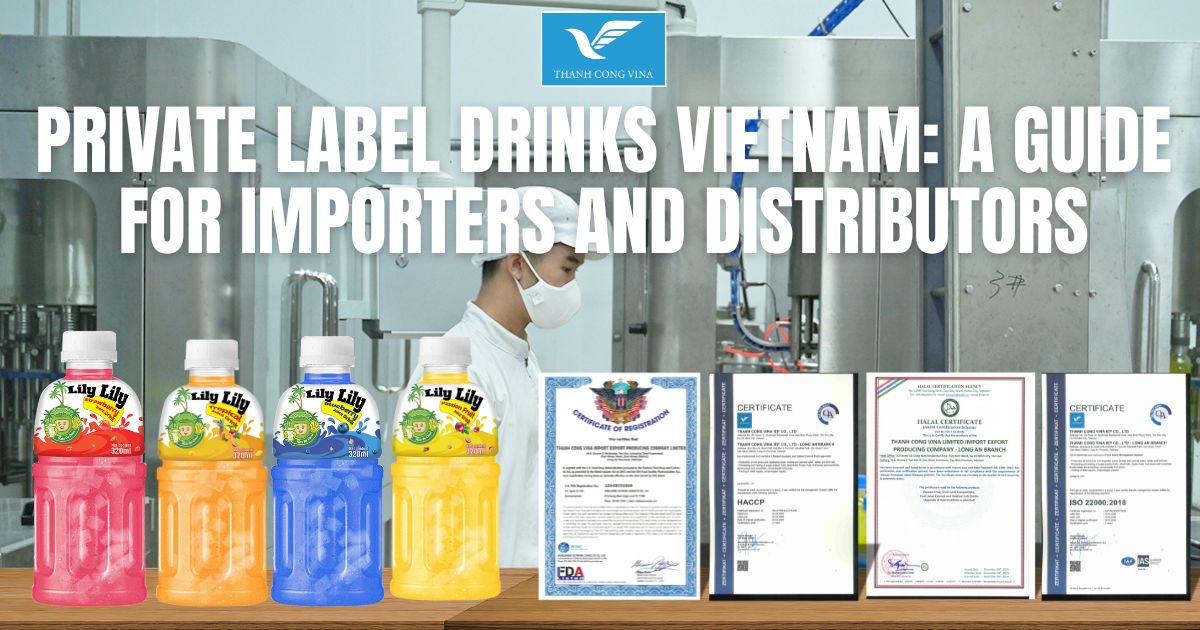
Instead of investing in their own factories, many businesses choose a Private Label manufacturing model that allows them to create beverages under their own brand while relying on an experienced manufacturer for production. Vietnam has become an attractive sourcing destination thanks to its abundant agricultural resources, tropical fruit supply, developing food-processing industry, and export-oriented manufacturing capabilities. From fruit juice and coconut water to aloe vera drinks, ready-to-drink coffee, and customized beverage formulations, Vietnamese manufacturers can support different product concepts and market requirements.
However, successful beverage manufacturing requires a clearly structured process. Understanding every stage, from product development and raw material selection to formulation, packaging, quality control, production, and export preparation, helps international buyers make better decisions and reduce unnecessary risks when developing Private Label Drinks Vietnam products.
What Is the Private Label Beverage Manufacturing Model?
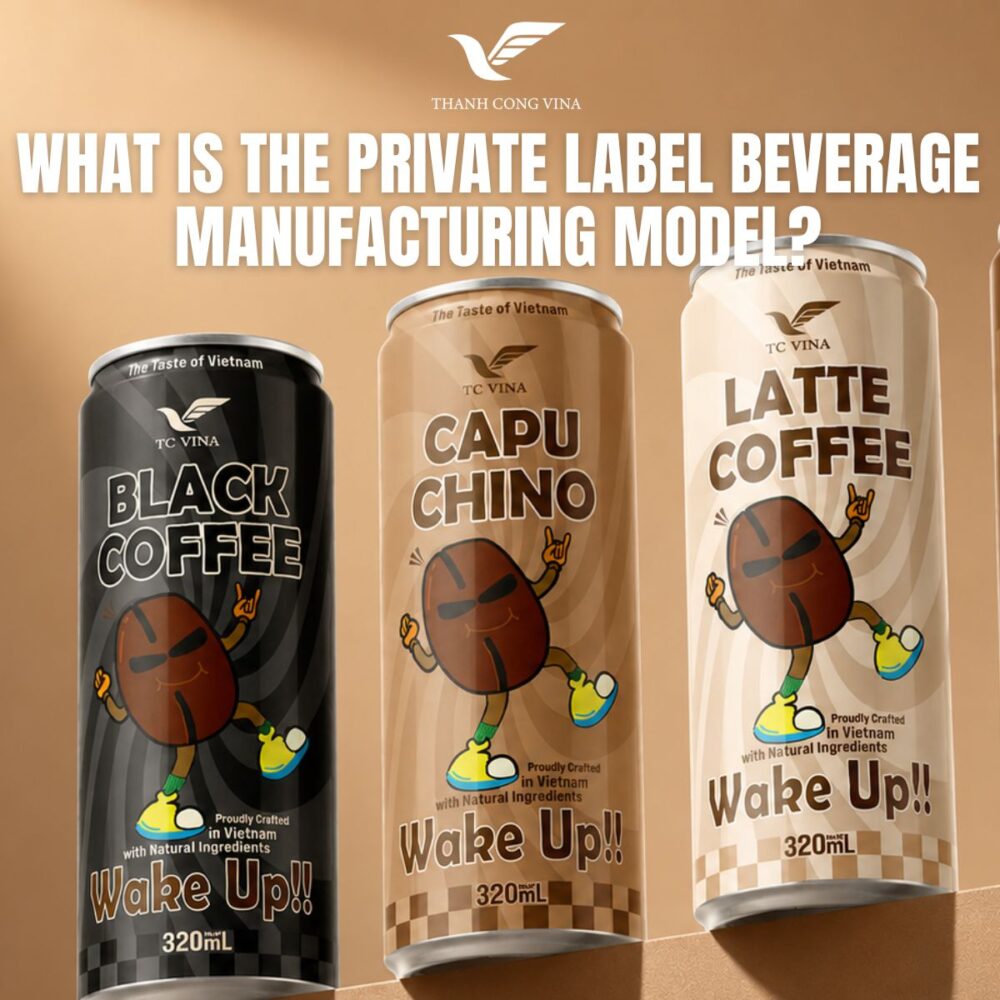
What Is the Private Label Beverage Manufacturing Model?
The Private Label model allows a company to sell beverages under its own brand while a specialized manufacturer handles the production process. This approach is widely used by retailers, distributors, importers, foodservice companies, and emerging beverage businesses.
Instead of constructing a production facility, the brand owner works with a beverage manufacturer that already has the necessary equipment, production lines, technical personnel, quality systems, and supply-chain infrastructure.
How Private Label Manufacturing Works
A typical project follows several stages:
- Product concept development
- Market and consumer analysis
- Formula development
- Ingredient sourcing
- Product sampling
- Packaging development
- Artwork approval
- Commercial production
- Quality inspection
- Finished-product packaging
- Export documentation
- Shipment and distribution
Each stage contributes to the final quality and commercial performance of the beverage.
For international buyers, having one experienced manufacturing partner coordinate multiple stages can simplify communication and reduce the complexity of managing different suppliers.
Benefits for International Beverage Brands
A Private Label approach can provide businesses with greater control over their brand identity while avoiding the capital investment associated with independent manufacturing.
Brands can determine their preferred product positioning, flavor profile, packaging design, product size, and target market.
The manufacturer focuses on turning those requirements into a consistent commercial product.
Step 1: Product Concept and Market Research
The beverage manufacturing process begins long before production starts. A clear understanding of the target market is essential for creating a commercially viable product.
Identify the Target Consumer
Brands should define who they want to serve before developing the formulation.
Important considerations include:
- Consumer age
- Lifestyle
- Purchasing behavior
- Preferred flavors
- Consumption occasions
- Income level
- Retail environment
- Geographic market
- Price expectations
For example, a beverage intended for convenience stores may require a different packaging size and price point from a premium drink sold through specialty retailers.
Select the Beverage Category
Vietnamese beverage manufacturers can support a wide range of product categories.
Popular options include:
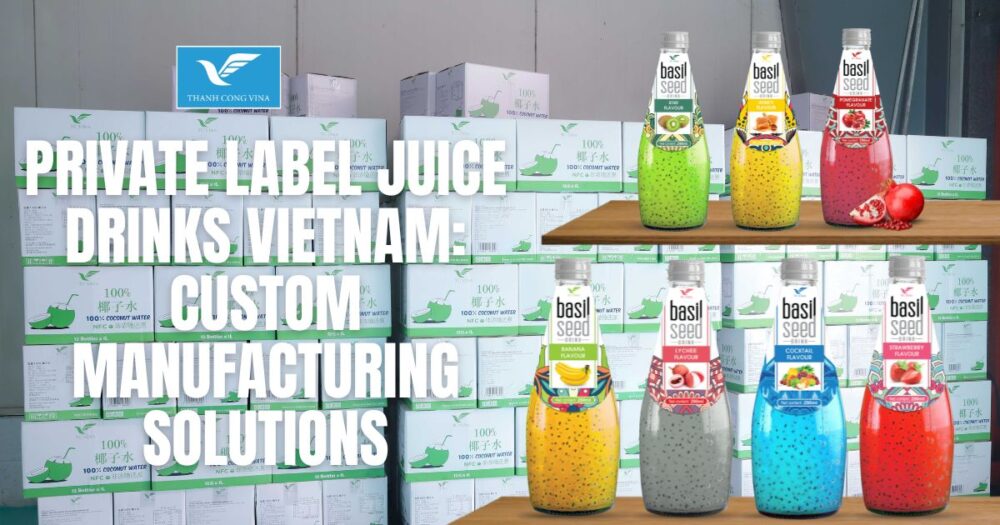
- Fruit juice drinks
- Coconut water
- Coconut water with real fruit juice
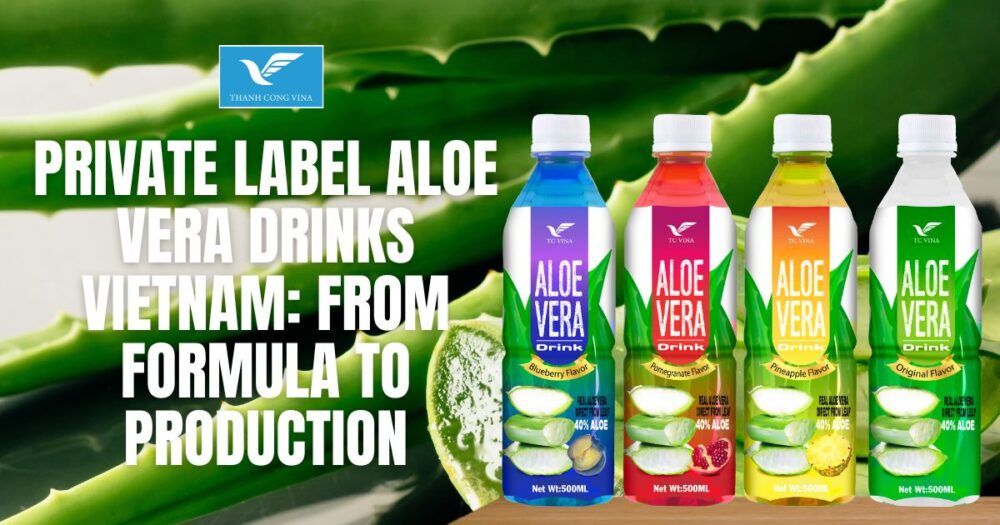
- Aloe vera beverages
- Ready-to-drink coffee
- Fruit-based drinks
- Juice concentrates
- Customized beverage products
Selecting the right category helps determine the appropriate ingredients, processing technology, packaging format, and production requirements.
Establish Product Specifications
Once the concept is defined, the buyer should prepare a product brief.
This may include desired flavor, fruit content, sweetness, acidity, texture, color, serving size, packaging format, shelf life, and nutritional objectives.
A detailed specification provides a clear technical direction for the manufacturer and helps minimize misunderstandings during product development.
Step 2: Formula Development and Ingredient Selection
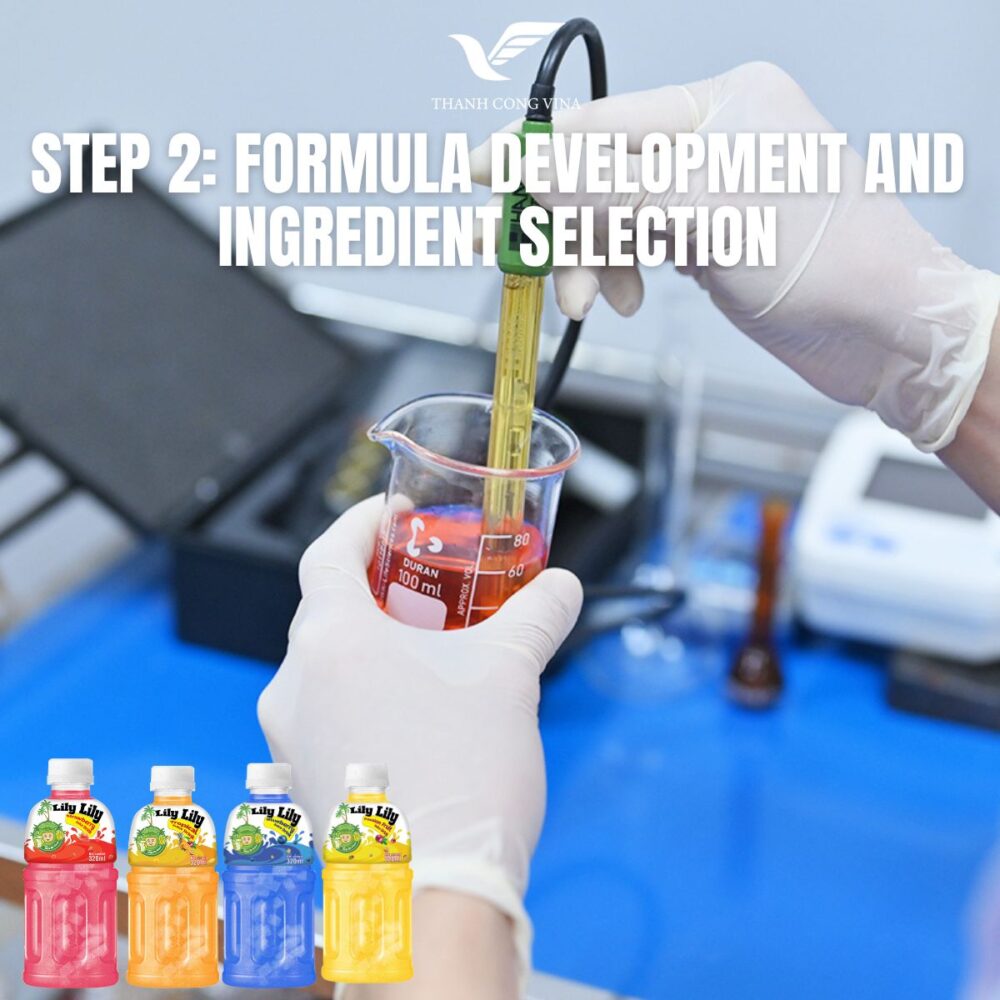
Formula Development and Ingredient Selection
Formula development is one of the most technically important stages of beverage manufacturing. A good formulation must deliver the desired consumer experience while remaining stable and suitable for commercial production.
Developing the Beverage Formula
The manufacturer may adjust various parameters according to the buyer’s requirements.
These can include:
- Fruit juice concentration
- Sweetness
- Acidity
- Flavor intensity
- Pulp level
- Texture
- Color
- Ingredient ratios
- Nutritional composition
For fruit-based beverages, the balance between fruit characteristics and other ingredients is especially important.
The final formulation should provide a consistent sensory profile while meeting the technical specifications agreed upon by the buyer.
Sourcing Quality Ingredients
Ingredient quality directly affects the final beverage.
Vietnam offers access to a broad range of tropical agricultural products, including coconut, mango, pineapple, passion fruit, guava, lychee, dragon fruit, and other fruits.
Manufacturers should establish appropriate procedures for receiving, inspecting, storing, and handling ingredients.
Raw materials need to meet the required specifications before entering production.
Sample Development
After an initial formula is created, samples are prepared for buyer evaluation.
The buyer may assess:
- Taste
- Aroma
- Color
- Texture
- Sweetness
- Acidity
- Appearance
- Overall product experience
Several sample revisions may be necessary before the final formula is approved.
This stage is important because changing a product after mass production begins can be significantly more costly than refining it during development.
Step 3: Packaging Development and Brand Artwork
Once the formula has been approved, packaging becomes the next major focus.
Packaging protects the beverage while also communicating the brand’s identity to consumers.
Choosing the Right Packaging
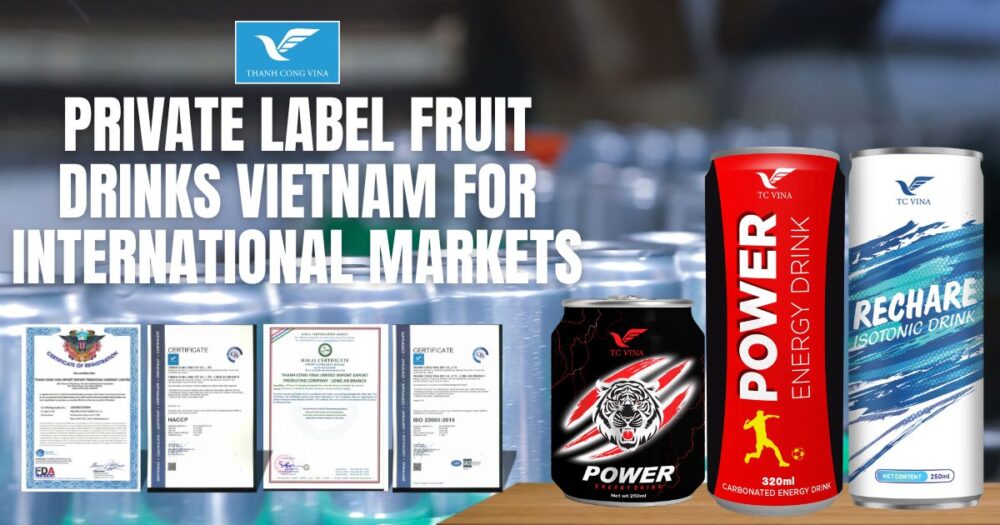
Depending on the product and target market, manufacturers may support different formats such as PET bottles, cans, cartons, glass bottles, and other suitable solutions.
The selection should consider:
- Product characteristics
- Shelf-life requirements
- Retail environment
- Consumer convenience
- Transportation
- Storage conditions
- Manufacturing capabilities
- Target selling price
Packaging weight and dimensions can also influence logistics costs, especially for international shipments.
Designing the Product Artwork
A strong packaging design should communicate essential information clearly.
Depending on the destination market, artwork may contain:
- Brand name
- Product name
- Flavor
- Net volume
- Ingredients
- Nutrition information
- Manufacturer details
- Country of origin
- Barcode
- Storage instructions
- Date coding
- Relevant certifications
International buyers should verify destination-market labeling requirements before approving final artwork.
Packaging Testing and Approval
Before mass production, packaging materials should be checked for compatibility with the product and manufacturing process.
The buyer should also approve the final artwork, dimensions, printing specifications, and carton configuration.
Once approved, changes should be carefully controlled to prevent inconsistencies between production batches.
Step 4: Commercial Beverage Production
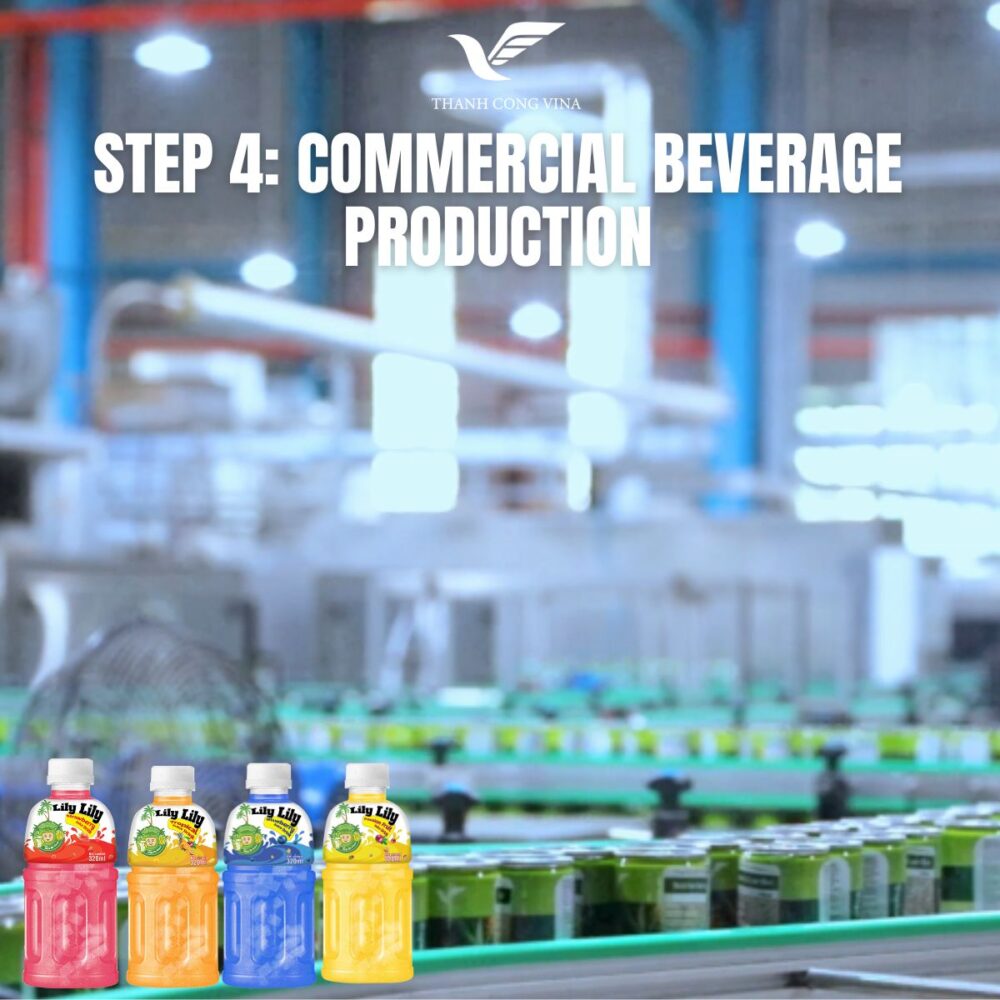
Commercial Beverage Production
After the formulation and packaging have been approved, the project moves into commercial production.
This is the stage where the manufacturer’s production capabilities become especially important.
Preparation and Processing
Depending on the beverage category, the manufacturing process can include ingredient preparation, blending, filtration, processing, filling, sealing, and other controlled production steps.
The exact process depends on the formulation and packaging system.
Production parameters should be established based on the approved technical specification.
Filling and Packaging
The finished beverage is transferred to the selected packaging format.
Filling and sealing need to be carefully controlled to protect product quality and maintain packaging integrity.
After filling, products may proceed through labeling, coding, carton packing, palletization, and finished-product inspection.
Production Batch Control
Every commercial batch should be traceable through appropriate production records.
Batch information can help manufacturers and buyers identify production dates, raw material lots, packaging materials, and other relevant details.
Traceability becomes particularly important when products are distributed across multiple markets.
Step 5: Quality Control and Food Safety
Quality control is not a single inspection at the end of production. It should be integrated throughout the entire manufacturing process.
Raw Material Quality Control
Ingredients and packaging materials should be inspected before entering production.
The purpose is to ensure that incoming materials meet the required specifications.
This can include checks related to appearance, quality parameters, packaging condition, documentation, and other applicable criteria.
In-Process Quality Monitoring
During production, key parameters should be monitored according to the beverage specification.
Depending on the product, quality checks may involve physical, chemical, microbiological, and sensory characteristics.
Consistent monitoring helps identify potential deviations before the finished product is released.
Finished Product Inspection
Before shipment, finished beverages should undergo appropriate quality checks.
International buyers may request product specifications, Certificates of Analysis, testing reports, or other documentation depending on the destination market.
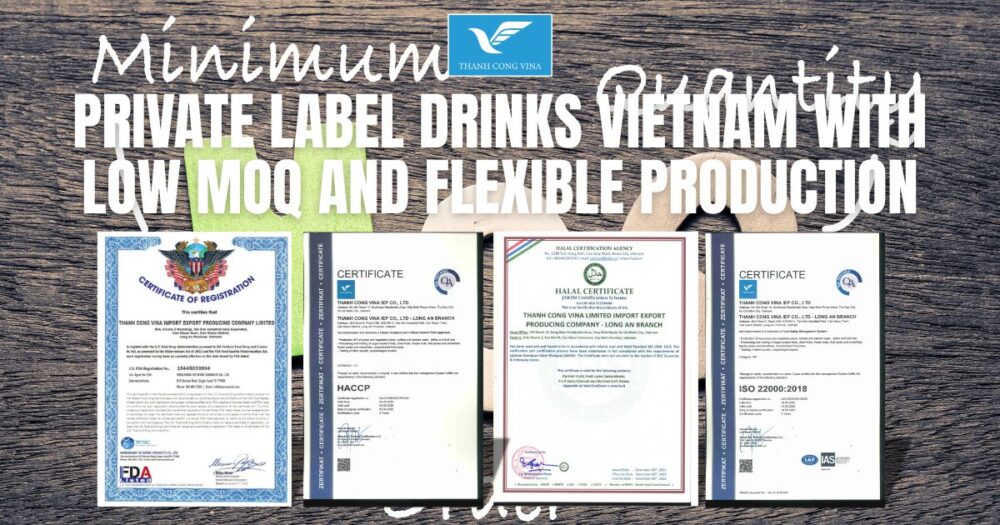
Food safety systems and certifications such as HACCP, ISO, GMP, HALAL, and FSSC 22000 may also be relevant depending on the manufacturer’s scope and the requirements of the importing country.
Step 6: MOQ, Production Planning, and Cost Management
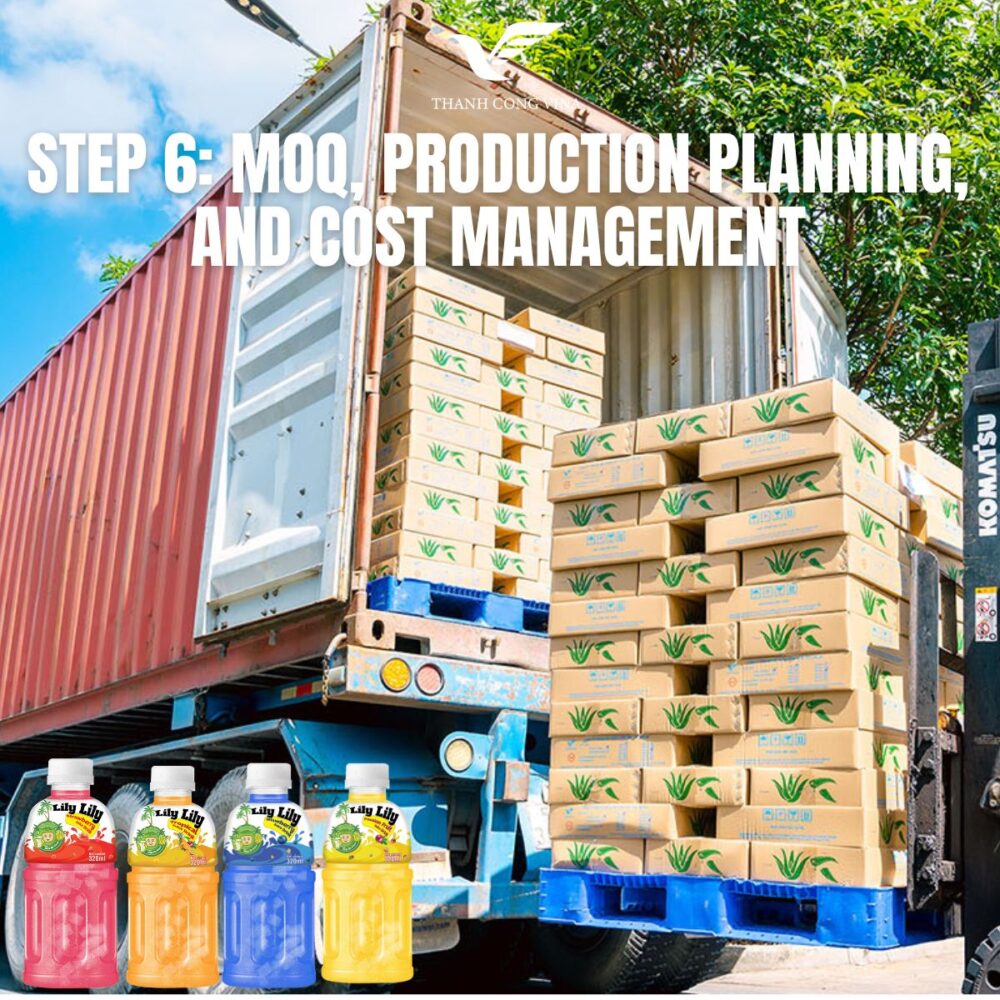
MOQ, Production Planning, and Cost Management
Understanding commercial manufacturing requirements is essential for businesses launching a new beverage.
Minimum Order Quantity
MOQ can vary according to beverage category, packaging type, ingredients, printing requirements, and production technology.
Before approving a formula, buyers should confirm the manufacturer’s minimum order requirements.
For startups and smaller distributors, selecting a manageable number of products can help reduce inventory risk.
A focused initial portfolio also makes it easier to test consumer response before expanding production.
Understanding Manufacturing Costs
The final product cost can include several components beyond the beverage itself.
Buyers should consider:
- Ingredients
- Processing
- Packaging
- Labels
- Cartons
- Testing
- Product development
- Documentation
- Palletization
- Transportation
- Export costs
Understanding the complete cost structure allows businesses to establish realistic wholesale and retail pricing.
Production Lead Time
Lead time depends on factors such as formula approval, packaging production, raw material availability, factory scheduling, and order volume.
International buyers should provide forecasts and expected shipment dates as early as possible.
Proper planning helps manufacturers allocate production capacity and reduces the possibility of delays.
Step 7: Export Preparation and International Distribution
For Private Label Drinks Vietnam, manufacturing is only one part of the international sourcing process. Export preparation must also be carefully coordinated.
Preparing Export Documentation
Depending on the importing country, buyers may require documents such as:
- Commercial invoice
- Packing list
- Certificate of Origin
- Certificate of Analysis
- Product specification
- Ingredient declaration
- Food safety documentation
- Other market-specific certificates
Requirements vary by destination, so importers should confirm the necessary documents before production and shipment.
Container Loading and Logistics
Beverages are often shipped in large quantities, making efficient container utilization important.
Carton dimensions, units per carton, pallet configuration, product weight, and loading methods can influence freight costs.
Manufacturers and buyers should coordinate packaging and loading specifications to maximize available shipping space.
Maintaining Product Quality During Distribution
Once the products leave the factory, proper storage and transportation remain important.
The buyer should understand the recommended storage conditions and communicate them throughout the distribution chain.
Warehouses, distributors, retailers, and other partners should follow appropriate handling procedures to preserve product quality until the beverage reaches consumers.
Building a Long-Term Private Label Beverage Portfolio
A successful first product can become the foundation for a larger beverage portfolio.
Expand Through New Flavors
Once the original product gains market acceptance, brands can introduce additional flavors.
For example, a coconut water range can be expanded with mango, strawberry, calamansi, or kiwi. A fruit juice brand can introduce additional tropical fruit varieties or blended flavors.
This strategy allows companies to increase their product offering while maintaining a recognizable brand identity.
Introduce Different Package Sizes
Different sales channels may require different package sizes.
Smaller packages can target convenience consumption, while larger formats may be appropriate for families, foodservice, or other consumption occasions.
A flexible manufacturer can help brands evaluate packaging options as their distribution strategy develops.
Create a Scalable Manufacturing Relationship
Long-term cooperation can improve efficiency because the manufacturer becomes familiar with the brand’s technical specifications, packaging standards, quality expectations, and production schedules.
As demand increases, a scalable manufacturing partner can support larger orders and additional product development.
This creates a stronger foundation for sustainable business growth.
Why Choose Thanh Cong Vina for Private Label Beverage Manufacturing?
Thanh Cong Vina provides OEM and ODM beverage manufacturing solutions for businesses looking to develop customized products for domestic and international markets.
Broad Beverage Product Capabilities
The company supports multiple beverage categories, including fruit juice drinks, coconut water, coconut water with real fruit juice, aloe vera beverages, ready-to-drink coffee, juice concentrates, and other customized beverage concepts.
This broad portfolio gives buyers the flexibility to develop different products within one manufacturing partnership.
Customized OEM and ODM Solutions
Every brand has different commercial requirements.
Thanh Cong Vina can support product development based on requirements related to formulation, flavor, packaging format, serving size, product positioning, and target market.
This allows businesses to develop products that align with their own brand strategy rather than relying exclusively on standardized products.
Integrated Manufacturing Support
A successful beverage project requires coordination between formulation, ingredients, packaging, production, quality control, documentation, and logistics.
Thanh Cong Vina can support these stages through an integrated manufacturing approach designed for international buyers.
This helps importers, distributors, and beverage brands simplify supplier management while developing products that are suitable for their intended markets.
Conclusion
The complete beverage manufacturing process involves much more than filling a drink into a bottle or can. From the first product concept to formula development, ingredient sourcing, sampling, packaging design, commercial production, quality control, and export preparation, every stage contributes to the final success of a Private Label beverage. Vietnam offers an attractive manufacturing environment for businesses seeking tropical ingredients, customized product development, competitive production capabilities, and export-oriented supply solutions.
However, choosing the right manufacturing partner remains essential. Buyers should evaluate technical expertise, quality systems, certifications, production capacity, MOQ, packaging capabilities, lead times, documentation, and communication before starting a project. Thanh Cong Vina IEP CO., LTD provides OEM and ODM beverage manufacturing solutions across multiple product categories, supporting businesses from initial product development to commercial production and export preparation. By working with Thanh Cong Vina, international brands can build customized beverage portfolios while establishing a reliable and scalable manufacturing foundation for long-term growth in global markets.