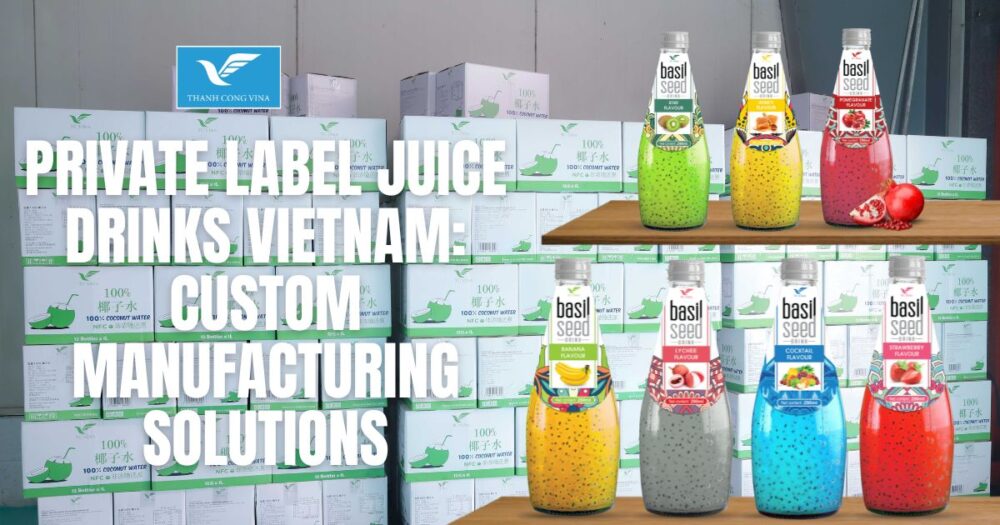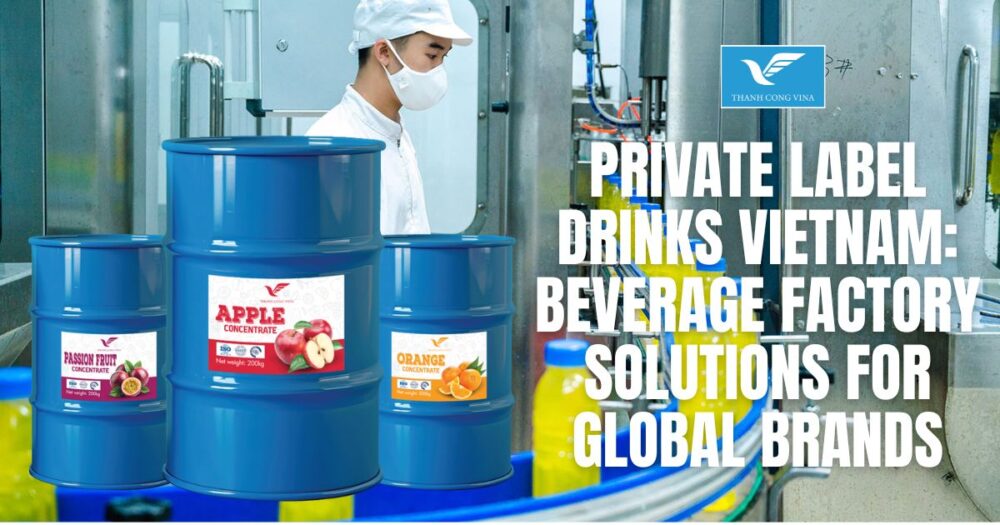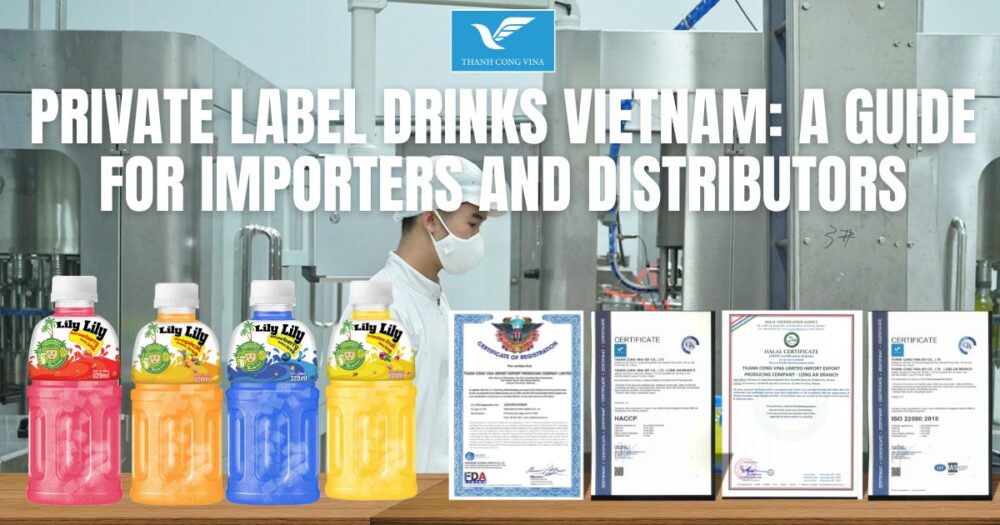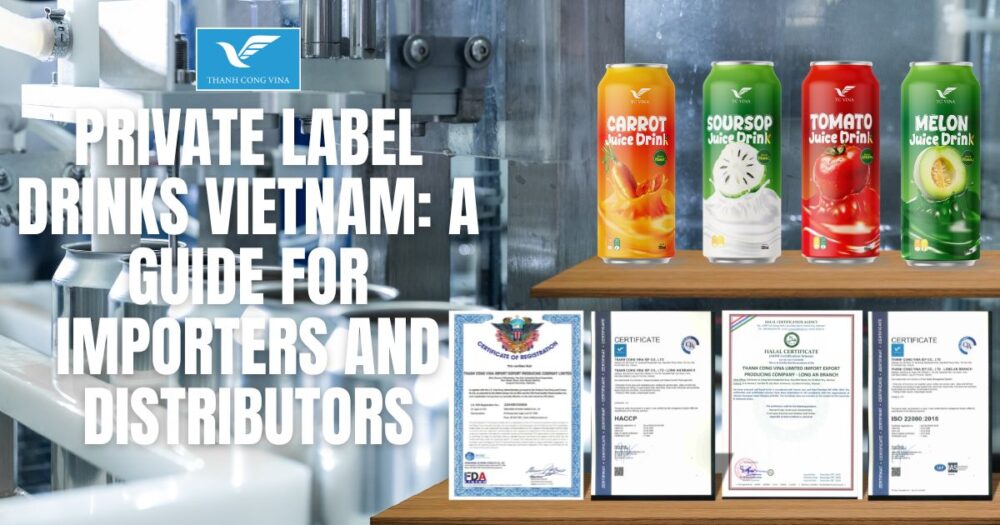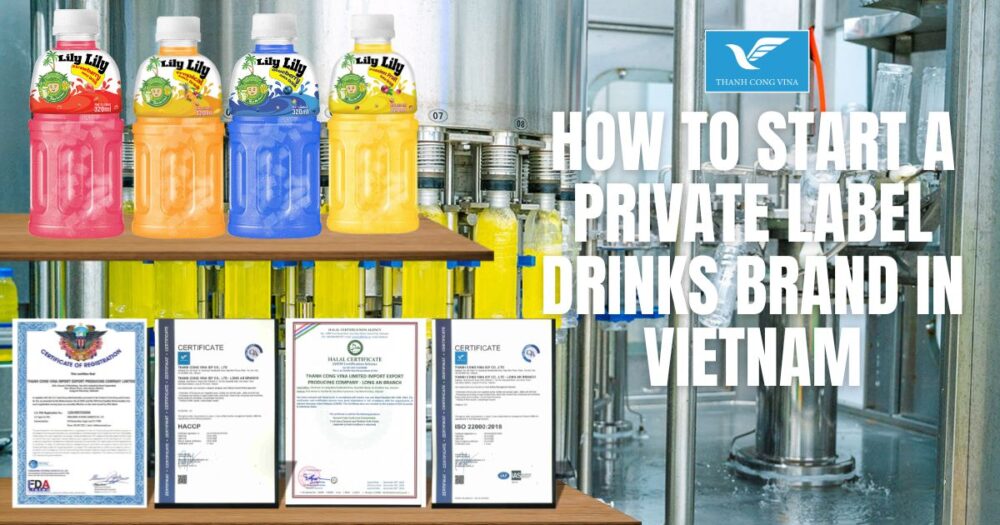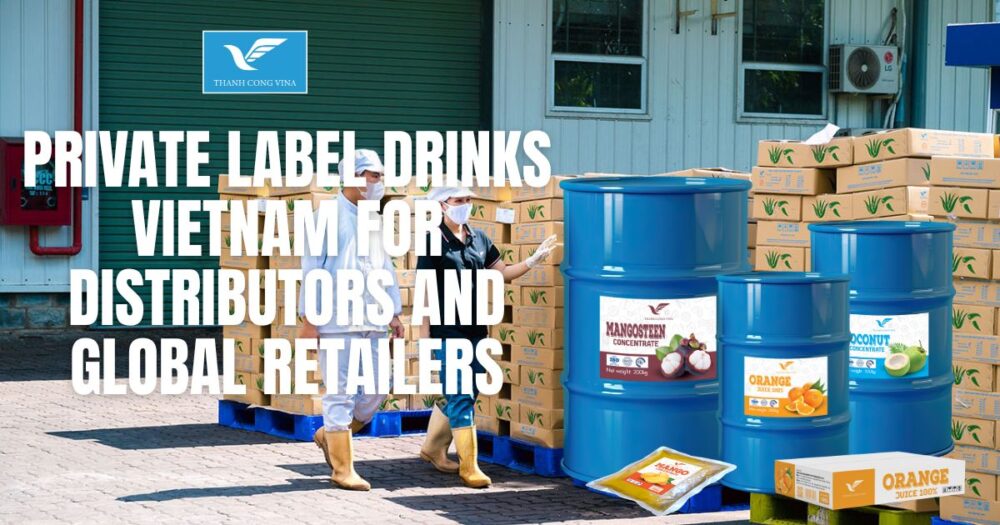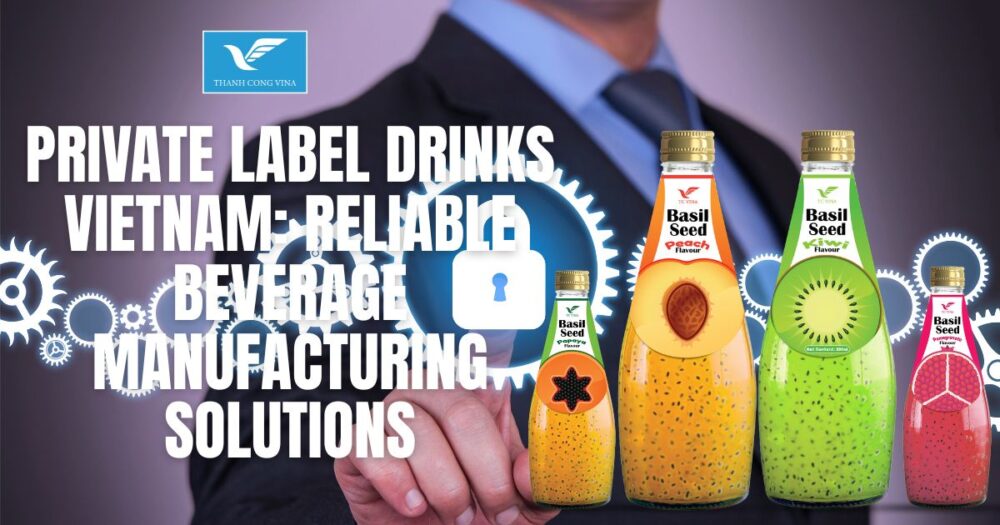

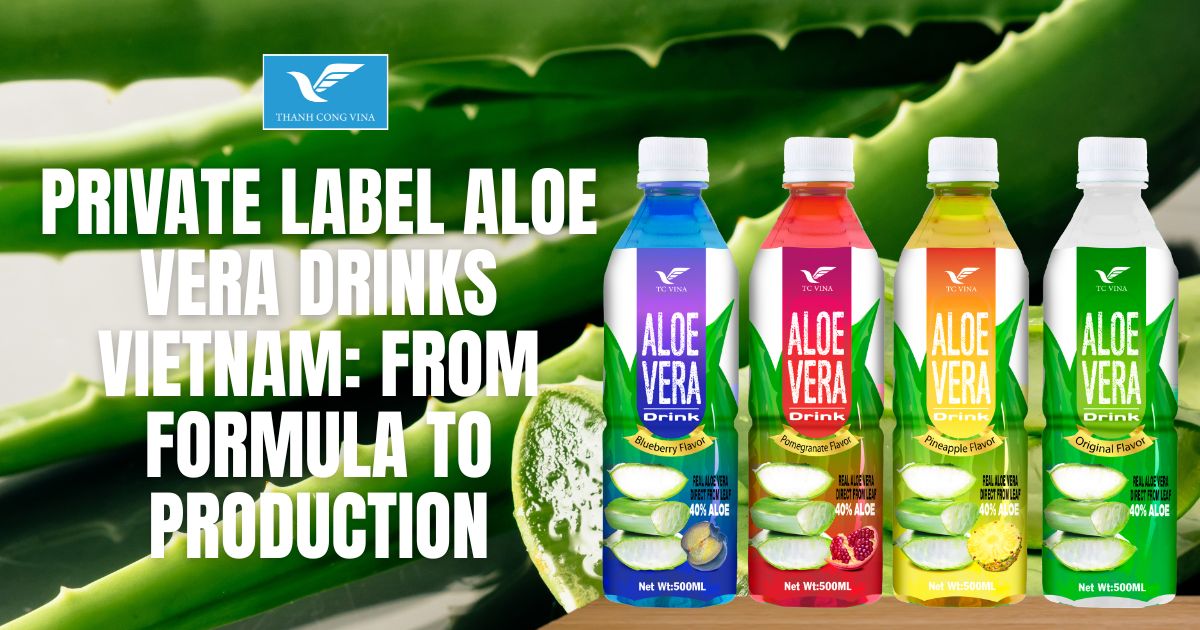
For importers, distributors, retailers, startups, and established beverage companies, Private Label aloe vera drinks provide an opportunity to develop customized products without investing in their own manufacturing facilities. Vietnam offers a practical production environment for this category due to its established food-processing industry, access to tropical fruit ingredients, and growing OEM and ODM beverage capabilities. From the initial product concept and formula development to ingredient preparation, aloe vera processing, blending, filling, packaging, quality control, and export preparation, an experienced manufacturer can coordinate the complete production process. By working with a professional beverage factory, international buyers can create aloe vera drinks according to their desired flavor, texture, packaging format, brand identity, and target-market requirements.
1. Why Choose Vietnam for Private Label Aloe Vera Drinks?
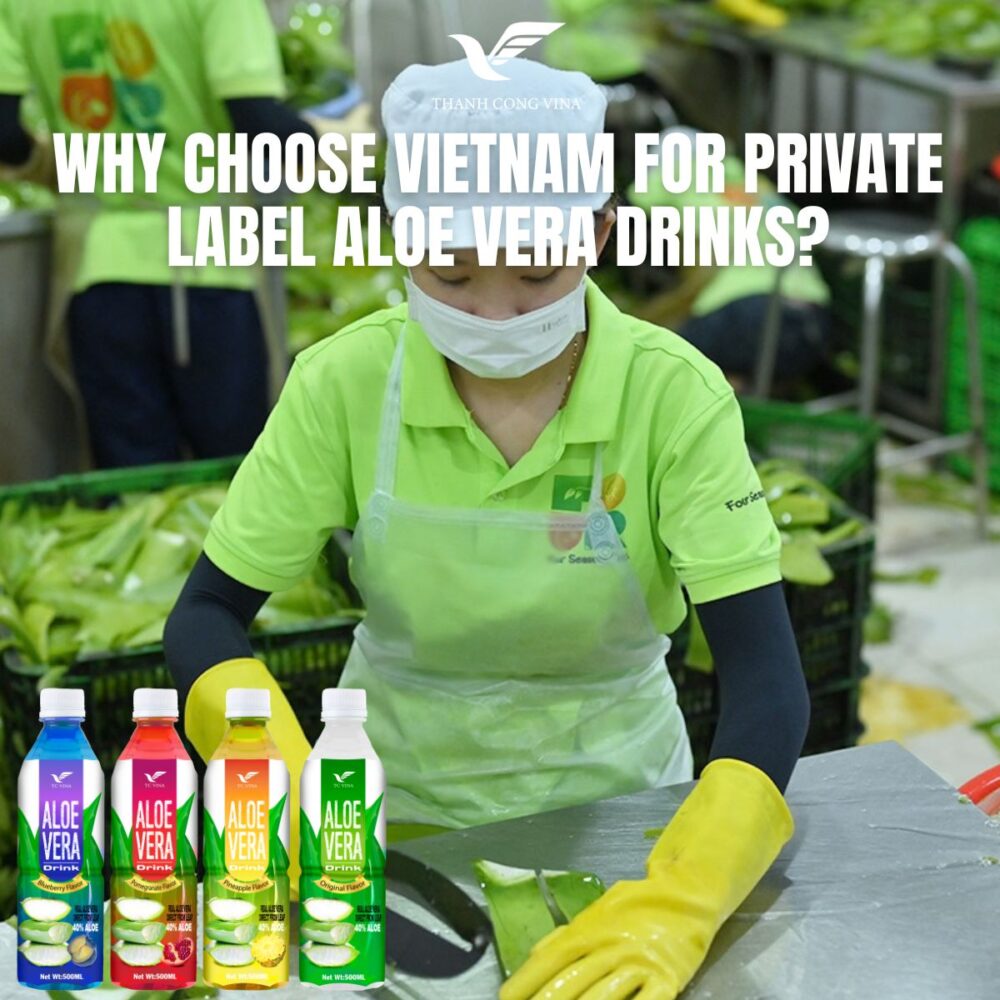
Why Choose Vietnam for Private Label Aloe Vera Drinks?
Vietnam has developed a strong food and beverage manufacturing sector serving both domestic consumers and international markets. For companies looking to develop customized aloe vera beverages, several factors make Vietnam an attractive production destination.
Access to Tropical Ingredients
Vietnam’s tropical agricultural environment provides access to a broad range of fruits and plant-based ingredients that can complement aloe vera beverages.
Aloe vera can be combined with flavors such as mango, blueberry, lychee, peach, and other fruit profiles to create differentiated products. This gives beverage brands the flexibility to develop several SKUs under one product line.
The availability of complementary fruit ingredients also supports product innovation. Instead of launching a single original aloe vera beverage, a brand can develop a collection of flavors designed for different consumer preferences.
Established Food Processing Industry
Vietnam has a growing network of food and beverage manufacturers with capabilities covering processing, filling, packaging, and quality control.
For international buyers, this means product development can be coordinated with commercial production rather than requiring separate suppliers for every stage.
An experienced OEM beverage manufacturer can help transform an initial product concept into a commercially viable beverage by coordinating formula development, samples, packaging, production, and quality requirements.
Export-Oriented Manufacturing Environment
Vietnam’s beverage industry increasingly serves international customers. Manufacturers working with overseas buyers need to consider product specifications, packaging requirements, labeling, documentation, and shipping arrangements.
This export-oriented environment can benefit brands that want to develop aloe vera drinks for supermarkets, convenience stores, distributors, foodservice businesses, and other international channels.
2. Private Label Aloe Vera Drinks: From Concept to Formula
The formula is one of the most important elements of a customized beverage. A successful Private Label aloe vera product should reflect the brand’s desired taste, appearance, texture, and market positioning.
Defining the Product Concept
Before formulation begins, the buyer and manufacturer need to establish the product concept.
Important considerations may include:
- Aloe vera beverage type
- Preferred fruit flavor
- Desired sweetness
- Texture and aloe vera pieces
- Product size
- Packaging format
- Target consumers
- Destination market
- Brand positioning
A clear product brief helps the manufacturer understand the commercial objectives before technical development begins.
For example, a brand may want a refreshing aloe vera drink with lychee flavor for convenience retail. Another company may prefer a mango aloe vera beverage aimed at supermarkets or foodservice channels.
Developing the Beverage Formula
Formula development involves balancing the different components of the beverage to achieve the desired sensory characteristics.
The formulation may consider aloe vera content, fruit flavor, sweetness, acidity, texture, and other permitted ingredients according to the product concept and applicable requirements.
The manufacturer needs to ensure that the formula is not only appealing in terms of taste but also suitable for consistent large-scale production.
Sample Development and Approval
Samples provide buyers with an opportunity to evaluate the proposed formula before commercial manufacturing.
During the sampling stage, buyers can assess flavor, aroma, color, texture, aloe vera pieces, sweetness, and overall drinking experience.
If adjustments are necessary, the formula can be modified and another sample prepared.
Once the buyer approves the final sample, the agreed specifications become an important reference for commercial production.
3. Aloe Vera Beverage Production Process
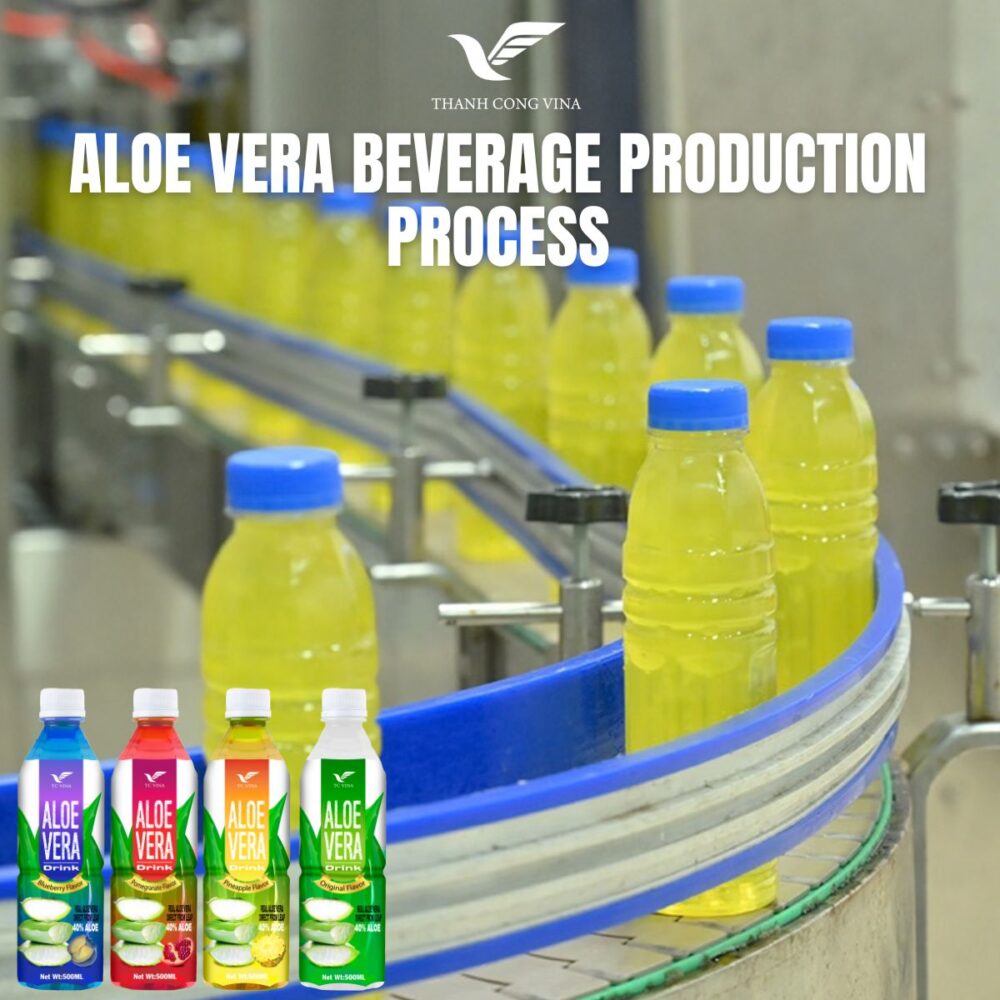
Aloe Vera Beverage Production Process
After formula approval, the product moves from development into manufacturing. A structured production process is essential for maintaining consistency and food safety.
Aloe Vera Ingredient Preparation
Aloe vera ingredients need to be prepared according to the approved product specification. Depending on the product concept, aloe vera may be incorporated into the beverage as suitable pieces or processed components.
Ingredient handling must be carefully controlled to maintain the desired appearance and texture in the finished beverage.
The quality and consistency of aloe vera ingredients can have a direct impact on the consumer experience.
Blending and Beverage Processing
Once the ingredients are prepared, the beverage is blended according to the approved formulation.
Fruit flavor and other components are combined with the aloe vera base under controlled production conditions.
Consistent blending is important because each commercial batch should maintain the same general taste, appearance, and texture as the approved sample.
Filling and Packaging
After processing, the beverage is transferred to the filling system.
The selected packaging format should be compatible with the product and target market. Aloe vera drinks can be produced in convenient formats such as 500ml bottles, depending on buyer requirements.
Filling, sealing, coding, labeling, and secondary packaging are coordinated according to the approved specifications.
Finished Product Preparation
After filling and packaging, finished products are prepared for storage and shipment.
Cartons and pallets should be arranged to provide adequate protection during transportation. For export orders, packaging configuration should also be considered in relation to container loading and logistics requirements.
4. Customized Flavors and Packaging for Private Label Aloe Vera Beverages
A major advantage of private label production is the ability to customize the product according to a brand’s commercial strategy.
Popular Aloe Vera Flavor Concepts
Aloe vera can serve as a flexible base for multiple flavor concepts. Depending on the target market, brands can explore:
- Mango aloe vera
- Lychee aloe vera
- Peach aloe vera
- Blueberry aloe vera
- Original aloe vera
- Other customized fruit combinations
Different flavors can be organized into a product portfolio with a consistent visual identity.
This approach allows brands to offer consumers variety while maintaining a recognizable product family.
Selecting the Right Package Size
Package size can influence both consumer convenience and distribution strategy.
A 500ml bottle can be suitable for consumers looking for a larger refreshing beverage, while smaller formats may be considered for convenience-oriented consumption.
The final package should be selected based on the product characteristics, target audience, retail channel, transportation requirements, and commercial positioning.
Creating Custom Brand Packaging
Private label beverages require packaging that communicates the identity of the brand.
Custom packaging can include the company logo, product name, flavor description, nutritional information, ingredient declaration, barcode, storage instructions, and other market-specific information.
Packaging artwork should be reviewed against the manufacturer’s technical specifications before printing to ensure compatibility with the selected container.
5. Quality Control for Private Label Aloe Vera Drinks
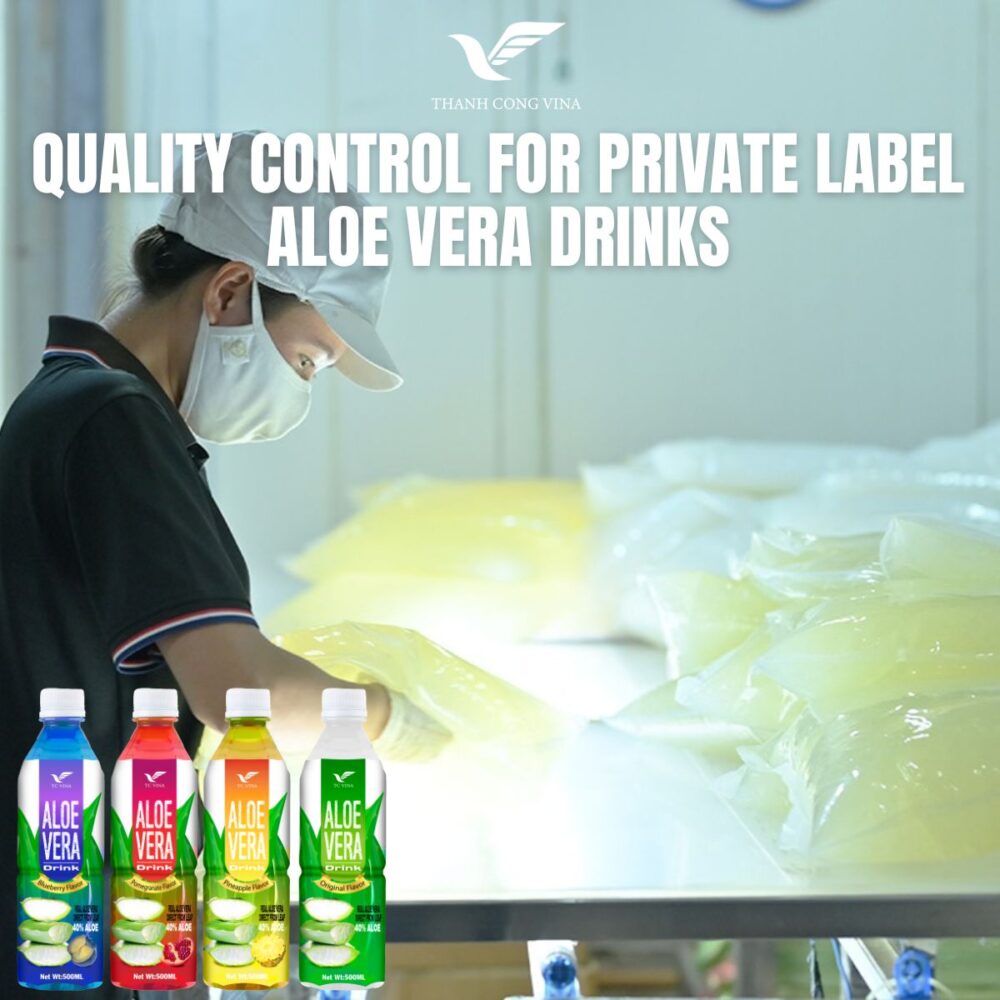
Quality Control for Private Label Aloe Vera Drinks
Quality consistency is essential for brands selling beverages across multiple markets. A professional manufacturing system should include controls from raw materials through finished products.
Raw Material Inspection
Ingredients should be evaluated according to established specifications before production.
This may include checks related to documentation, condition, storage, and other relevant parameters.
For aloe vera beverages, both the aloe vera ingredient and other components such as fruit flavors should meet the agreed product specifications.
Production Process Control
During manufacturing, production stages should be monitored according to established procedures.
Blending, processing, filling, sealing, and packaging need to be coordinated to maintain product consistency.
A controlled process helps minimize differences between production batches and provides greater confidence when the product is manufactured repeatedly.
Finished Product Inspection
Finished products may be inspected before shipment according to the buyer’s specifications.
Quality checks can include appearance, taste, texture, package condition, coding, quantity, and other relevant requirements.
For export orders, traceability and production documentation can also support supply-chain management and communication between the manufacturer and buyer.
6. Commercial Benefits of Private Label Aloe Vera Beverage Manufacturing
Private label production offers businesses a flexible alternative to establishing their own beverage production facility.
Reduced Factory Investment
Building an independent beverage factory requires substantial investment in production equipment, processing systems, packaging machinery, quality-control infrastructure, personnel, maintenance, and regulatory compliance.
With an OEM manufacturing model, businesses can work with an established factory instead.
This allows brands to focus more of their resources on marketing, distribution, sales, product positioning, and customer development.
Flexible Product Portfolio
Aloe vera drinks can become a starting point for developing a broader beverage portfolio.
A brand may initially launch an original aloe vera drink and later introduce mango, lychee, peach, blueberry, or other flavor variations.
The same manufacturing relationship can potentially support additional categories such as fruit juice, coconut water, concentrated juice, or ready-to-drink coffee.
Scalable Production
As market demand develops, brands may need to increase production quantities or introduce additional SKUs.
A capable manufacturing partner can support larger commercial orders and product expansion according to production capacity and agreed requirements.
This scalability is valuable for companies moving from an initial market test toward broader retail or distribution networks.
7. Export Solutions for International Aloe Vera Beverage Brands
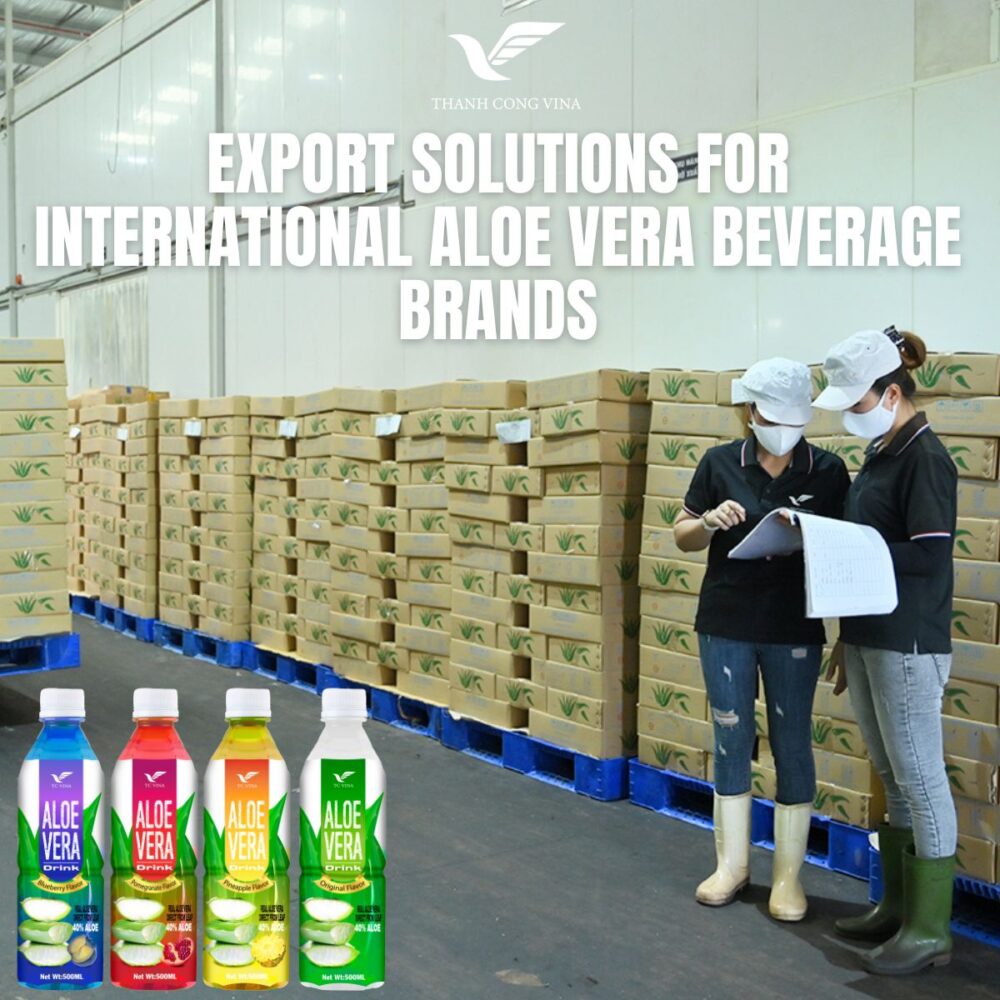
Export Solutions for International Aloe Vera Beverage Brands
For international brands, manufacturing is only one part of the supply chain. Products must also be prepared for transportation, import procedures, and distribution.
Destination Market Requirements
Different countries can have different requirements concerning ingredients, food labeling, packaging, product information, and import documentation.
Buyers should communicate their target-market requirements before finalizing the product.
The manufacturer can then coordinate the relevant product specifications and packaging information according to the project.
Export Documentation
International shipments may require product specifications, certificates, commercial documents, and other information depending on the destination and purchasing arrangement.
Clear documentation supports communication between the manufacturer, importer, logistics provider, and distributor.
Shipping and Container Planning
Aloe vera beverages are commonly transported in commercial quantities, making shipment planning important.
Carton dimensions, product quantity, pallet configuration, total weight, and container capacity should be considered when preparing an export order.
Early coordination between the buyer and manufacturer can help create a more organized shipping process.
8. How to Select a Private Label Aloe Vera Drinks Manufacturer in Vietnam
Choosing a suitable manufacturing partner can directly affect product quality, development speed, and long-term supply stability.
Review Aloe Vera Beverage Capabilities
The first step is to determine whether the manufacturer has experience producing aloe vera beverages and related products.
A factory with multiple beverage capabilities can offer greater flexibility if the brand later expands into fruit juice, coconut water, or other categories.
Evaluate Formula Development Support
Not every buyer has an internal beverage development team.
For this reason, formula development and sampling support can be important when evaluating a supplier.
The manufacturer should be able to discuss flavor concepts, ingredient specifications, texture, packaging, and commercial production requirements.
Check Quality Management
International buyers should review the manufacturer’s applicable certifications and quality systems.
Depending on the project, standards and certifications may include HACCP, ISO, HALAL, FDA-related requirements, GMP, FSSC 22000, or other applicable market requirements.
The specific requirements should always be confirmed according to the product and destination country.
Assess Production and Export Support
A reliable manufacturing partner should be able to communicate clearly throughout the entire project.
This includes product development, sample approval, packaging artwork, MOQ, production scheduling, quality inspection, documentation, and shipment preparation.
Clear communication helps reduce misunderstandings and creates a more structured production process.
Conclusion
Aloe vera beverages offer international brands an opportunity to develop differentiated products based on refreshing flavors, distinctive texture, and convenient packaging. Vietnam provides a suitable manufacturing environment for businesses seeking customized beverage production because of its food-processing capabilities, tropical ingredient resources, and growing export-oriented manufacturing sector. Private Label production allows importers, distributors, retailers, and beverage brands to develop products according to their own specifications without establishing a complete production facility.
From formula development and sample approval to aloe vera processing, blending, filling, packaging, quality control, and export preparation, every stage can be coordinated with an experienced manufacturing partner. Thanh Cong Vina supports customized beverage development across aloe vera drinks, fruit juice beverages, coconut water, concentrated juices, and ready-to-drink coffee. With flexible OEM and ODM solutions, Thanh Cong Vina can help international businesses turn beverage concepts into commercial products prepared for different markets. For companies seeking professional Private Label aloe vera beverage manufacturing in Vietnam, a customized production model provides a practical path toward product development and long-term portfolio expansion.