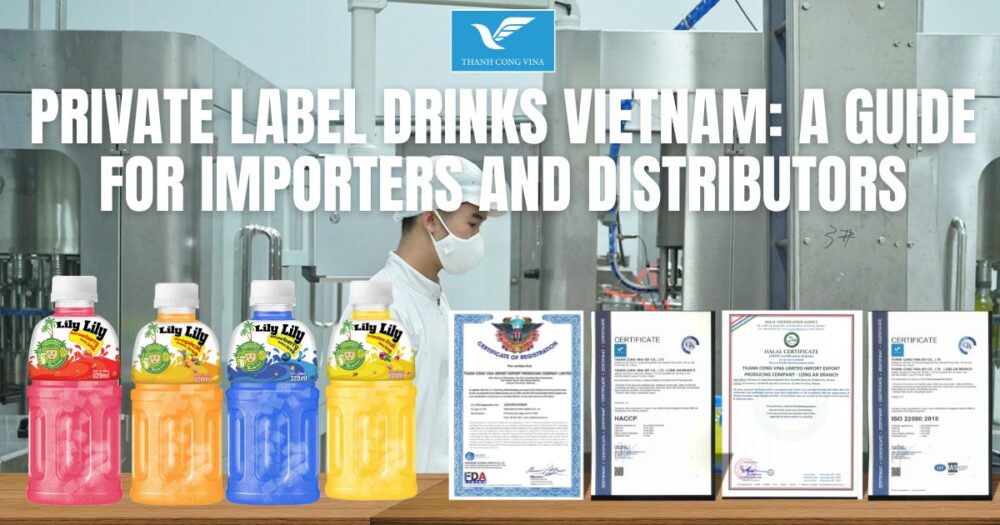

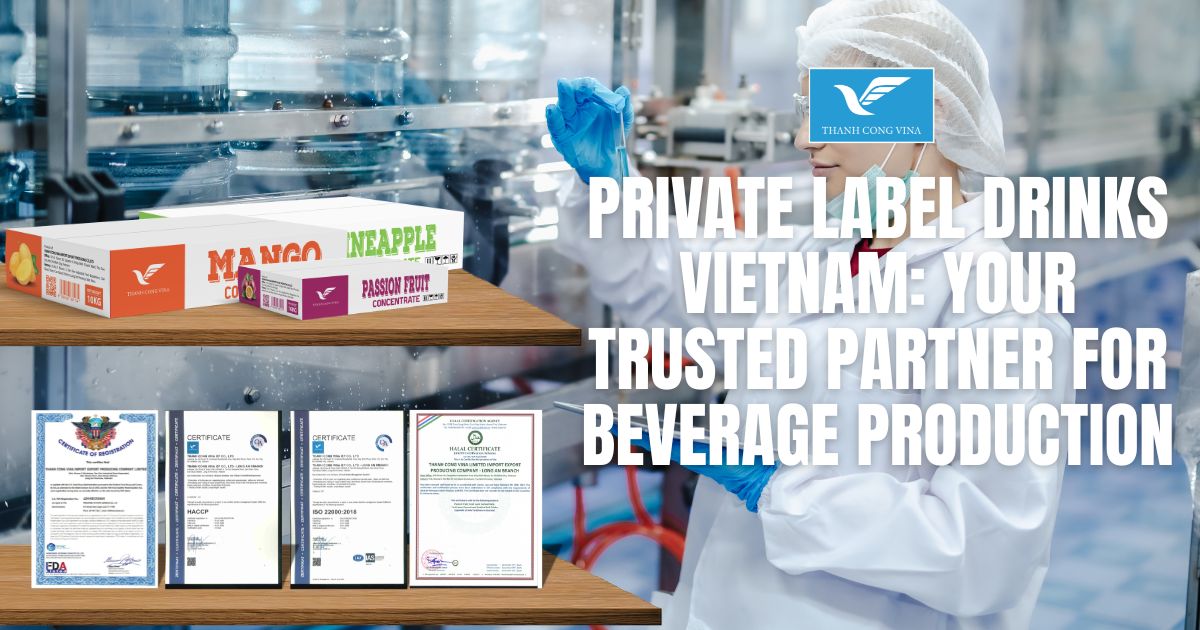
Building a successful beverage brand requires more than an attractive product concept. International brands, importers, distributors, retailers, and foodservice companies also need reliable production capacity, consistent quality, flexible product development, suitable packaging, and dependable supply. For businesses entering new markets or expanding an existing beverage portfolio, Private Label manufacturing offers an efficient way to access professional production without establishing an independent factory.
Vietnam has become an increasingly attractive destination for beverage sourcing because of its agricultural resources, tropical fruit availability, manufacturing capabilities, and experience serving international markets. A professional Vietnamese beverage manufacturer can support customers throughout the development process, from product concept and formula customization to packaging, quality control, production, and export preparation.
Choosing the right Private Label partner is therefore not simply a purchasing decision. It is a strategic decision that can influence product consistency, supply chain efficiency, market expansion, and the long-term growth of a beverage brand.
1. Why Private Label Drinks Vietnam Are a Smart Choice for Beverage Brands
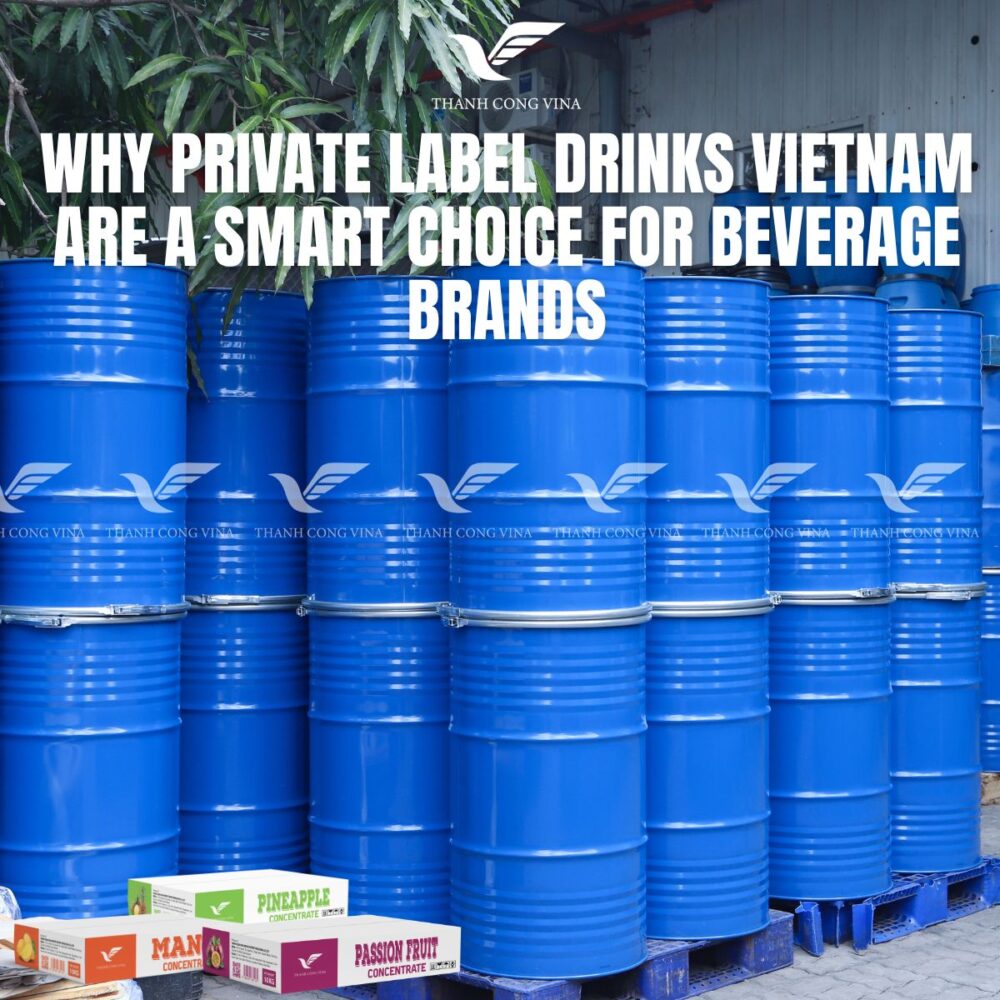
Why Private Label Drinks Vietnam Are a Smart Choice for Beverage Brands
The international beverage industry is highly competitive. Consumers have access to thousands of products, while retailers and distributors constantly search for new products that can create differentiation. For this reason, brands need manufacturing solutions that combine flexibility with commercial efficiency.
Private Label Drinks Vietnam provide an opportunity to develop branded beverages while outsourcing production to an experienced manufacturer.
Access to Established Beverage Production
Building an independent beverage factory requires substantial capital. Companies need production lines, processing equipment, filling systems, laboratories, storage areas, quality management systems, skilled employees, and ongoing maintenance.
Private Label manufacturing provides another option. Instead of establishing their own infrastructure, brands can work with an established beverage manufacturer and concentrate their investment on product development, branding, marketing, sales, and distribution.
This model can be particularly attractive for startups, retailers, importers, and companies testing new beverage concepts.
Flexible Product Development
One of the strongest advantages of Private Label manufacturing is flexibility. A product can be developed around the customer’s commercial objectives rather than being limited to a manufacturer’s existing standard portfolio.
Brands can define requirements for:
- Beverage category
- Flavor profile
- Product positioning
- Packaging format
- Package size
- Brand identity
- Target market
- Expected production volume
This flexibility allows businesses to develop products that are better aligned with their customers.
A Practical Model for International Expansion
For companies entering a new country, launching a new beverage can involve significant uncertainty. Private Label manufacturing can reduce the infrastructure requirements associated with market entry.
A company can develop selected products, test market response, and gradually expand its portfolio as demand increases.
This creates a more scalable approach to international beverage development.
2. Private Label Beverage Development from Concept to Finished Product
A trusted Private Label manufacturer should be able to participate in more than the final production stage. Product development can involve several important steps before commercial manufacturing begins.
Understanding the Product Concept
Every beverage project starts with an idea. The customer may have a specific flavor, consumer group, price range, packaging concept, or market opportunity in mind.
The manufacturer needs to understand these requirements before recommending a suitable production approach.
For example, a beverage intended for supermarkets may have different packaging and positioning requirements from a product designed for convenience stores or foodservice.
Understanding the commercial objective helps create a more relevant product.
Formula Development and Product Samples
Formula development is one of the most important parts of the Private Label process.
The beverage formula can be developed according to requirements such as sweetness, acidity, flavor intensity, aroma, color, texture, fruit ingredients, and other product characteristics.
Samples allow the customer to evaluate the product before approving commercial production. Feedback can be used to adjust the formula until the desired product specifications are reached.
This process provides greater control over the final consumer experience.
Final Product Specification
Once the formula is approved, the product specifications should be clearly defined.
Specifications may include ingredients, product characteristics, packaging format, package size, labeling requirements, carton configuration, and other relevant production details.
A clear specification provides a reference for future manufacturing and helps maintain consistency between production batches.
3. Beverage Categories Available for Private Label Manufacturing
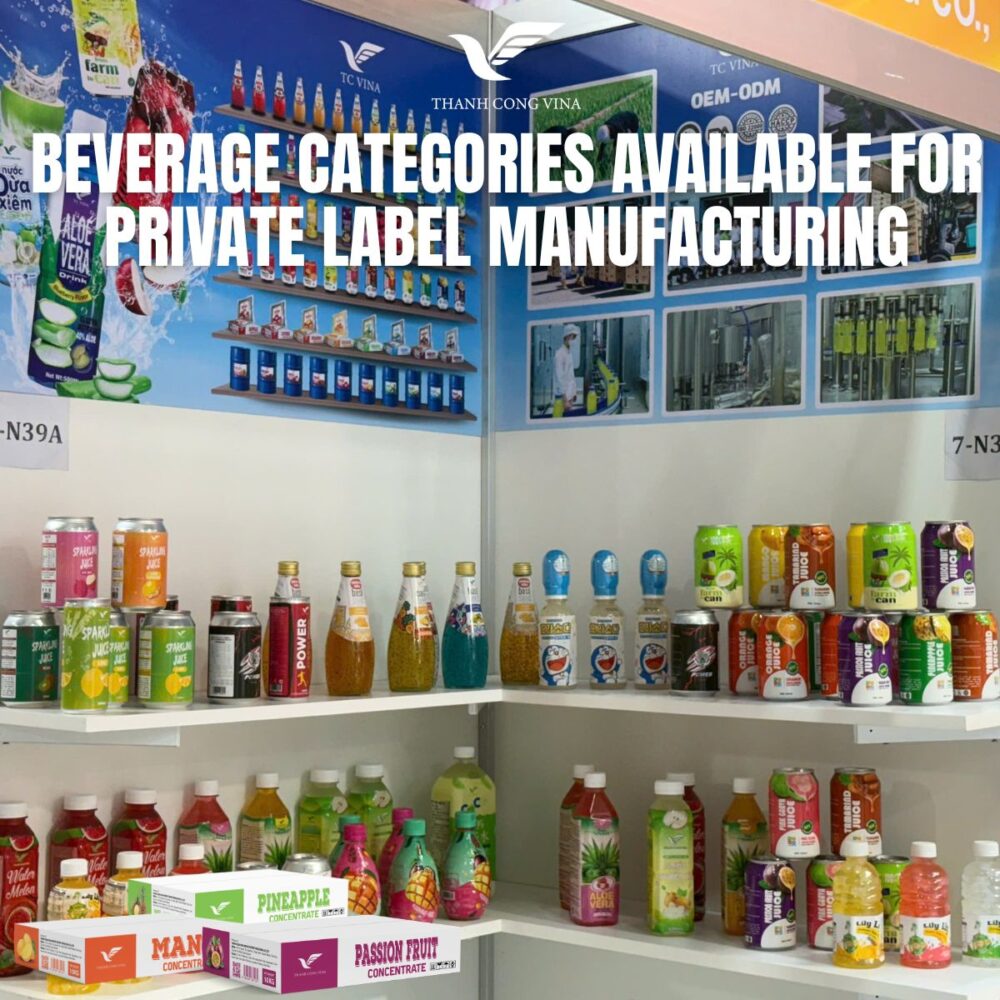
Beverage Categories Available for Private Label Manufacturing
A reliable Private Label partner can support several beverage categories, allowing customers to build a complete portfolio instead of sourcing each product from a different manufacturer.
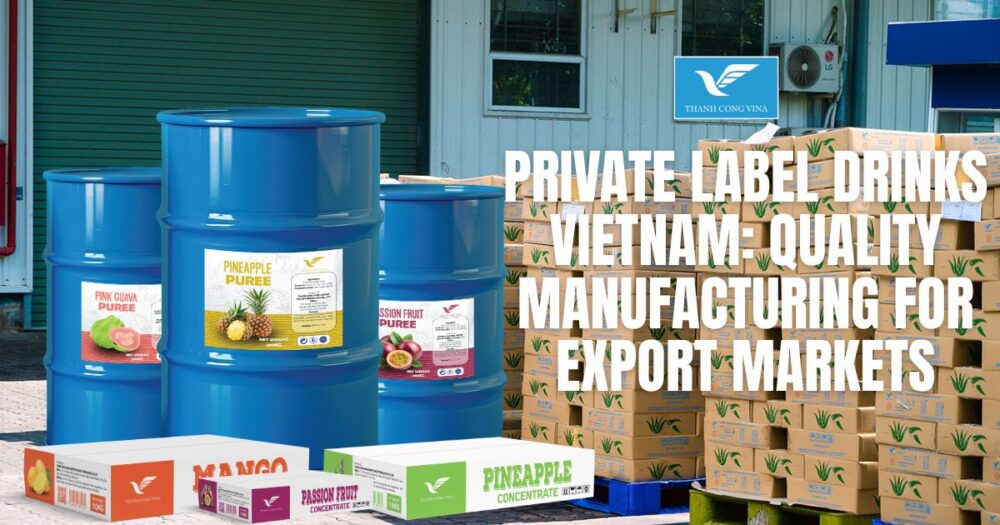
Fruit Juice and Fruit-Based Drinks
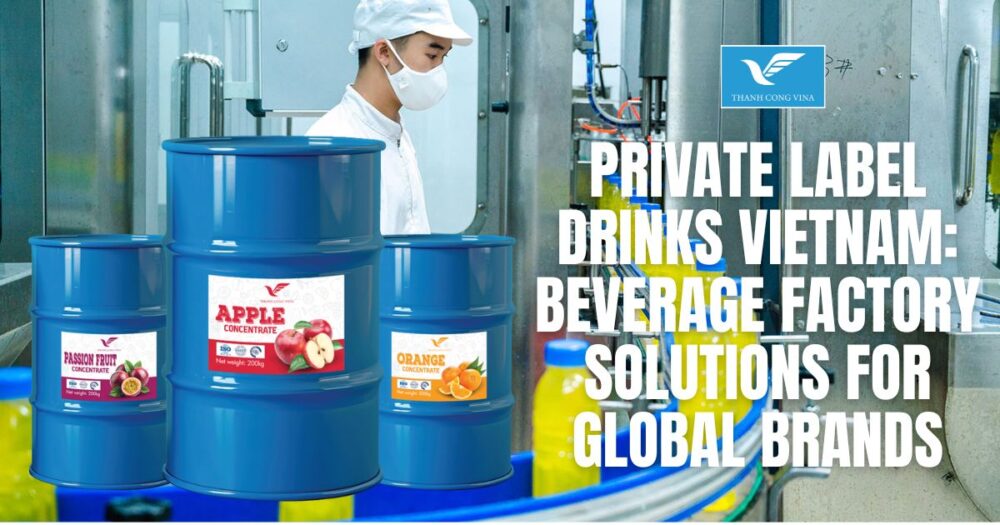
Fruit juice beverages remain an important category in international retail markets. Vietnam’s agricultural resources provide access to a wide range of fruit ingredients suitable for beverage development.
Potential flavors include:
- Mango
- Orange
- Strawberry
- Lychee
- Red grape
- Pineapple
- Passion fruit
- Peach
- Guava
- Soursop
- Tomato
- Carrot
- Melon
Brands can select individual flavors or create a broader portfolio depending on their target market.
Coconut Water and Coconut-Based Beverages
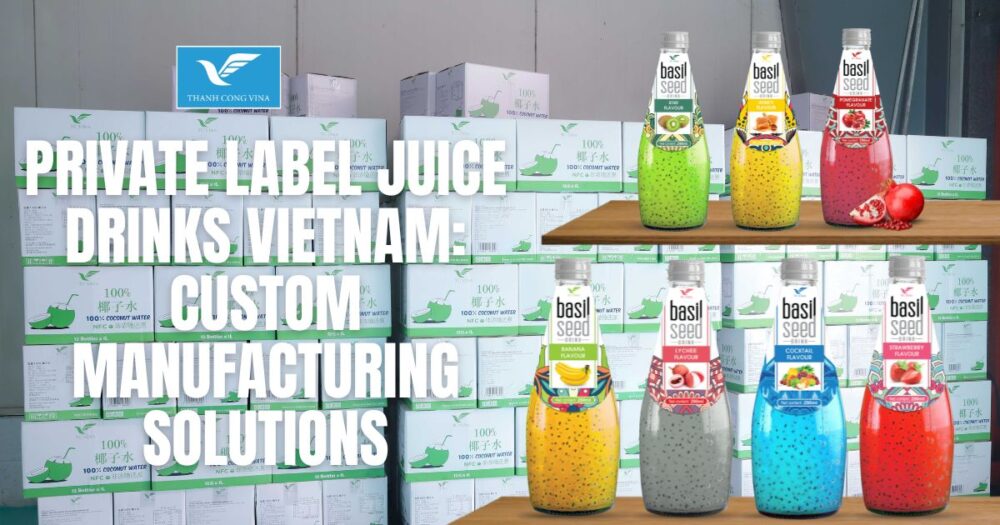
Coconut water is another important category for tropical beverage brands. Products may include 100% coconut water as well as coconut water combined with fruit juice.
Fruit combinations can help create differentiated products for consumers looking for refreshing and tropical beverage options.
For companies already selling fruit beverages, adding coconut water can provide an opportunity to expand their product range.
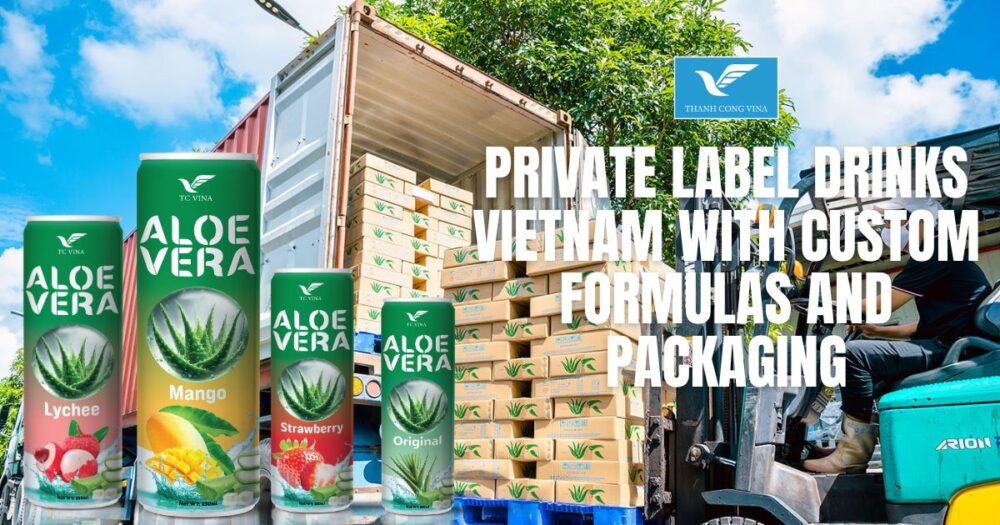
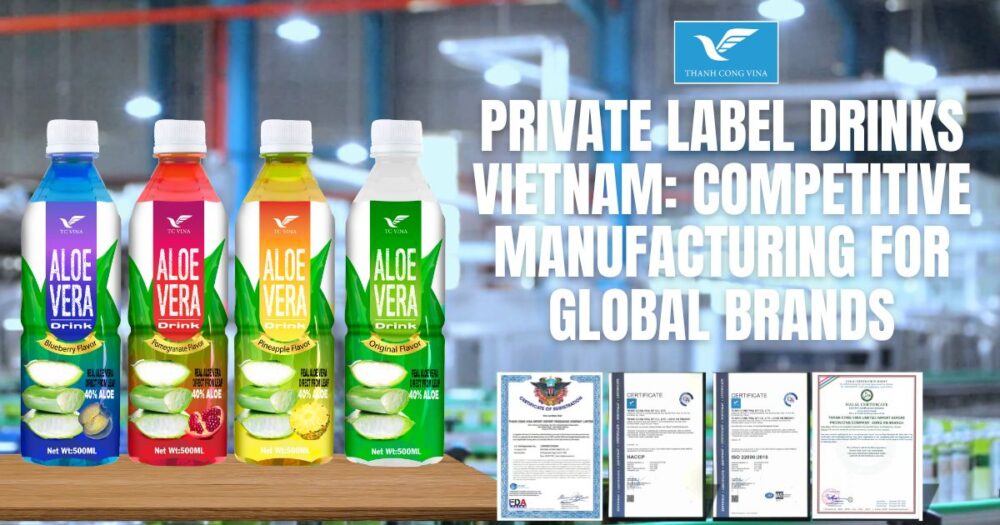
Aloe Vera Beverages
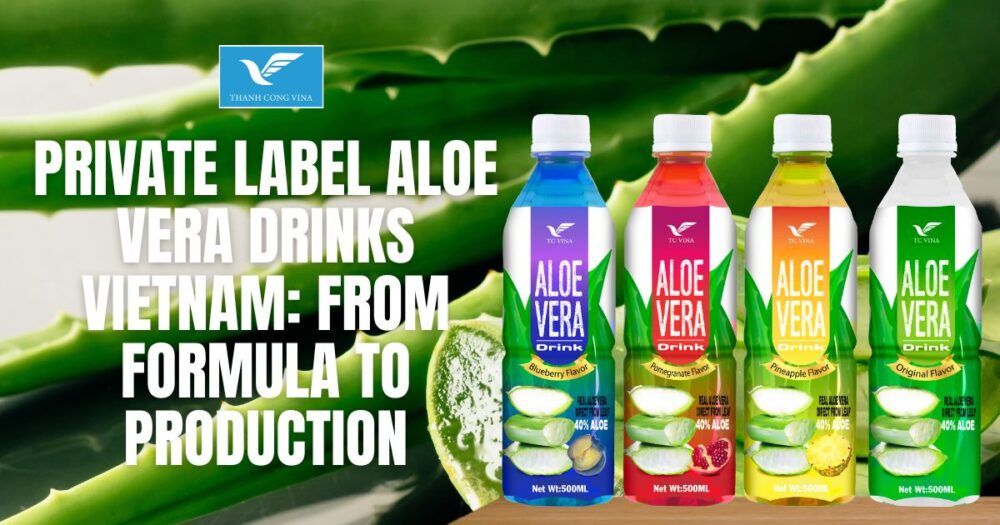
Aloe vera drinks can add another category to a beverage portfolio. Different flavor concepts can be developed, including mango, blueberry, lychee, peach, and original.
This allows brands to offer products with different taste profiles while maintaining a consistent brand identity.
Ready-to-Drink Coffee and Functional Beverages
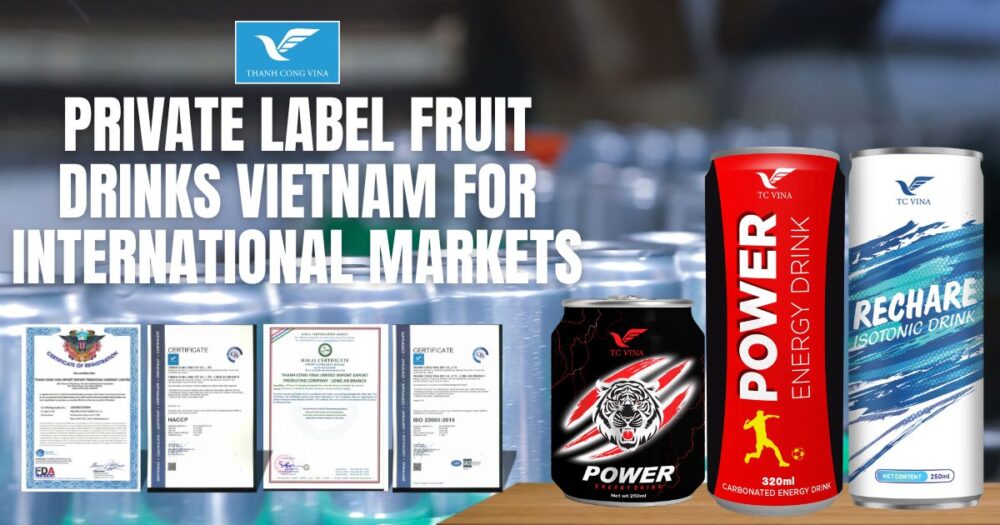
The Private Label model can also be applied to ready-to-drink coffee, isotonic beverages, energy drinks, and other functional beverage concepts.
By working with a manufacturer capable of producing multiple categories, businesses can simplify their sourcing structure and potentially develop a wider portfolio through one manufacturing relationship.
4. Quality Management for Reliable Private Label Production
Product quality is central to any long-term beverage brand. A customer may try a product because of its packaging, but repeat purchases depend heavily on consistent product performance.
Raw Material Management
Raw materials should be controlled according to defined specifications before entering production.
For fruit-based beverages, ingredients can influence flavor, aroma, color, texture, and overall product consistency.
Effective raw material management helps reduce variations and provides a stable foundation for finished beverage quality.
Production Process Control
Beverage production can involve several stages, including ingredient preparation, blending, processing, filling, sealing, labeling, coding, inspection, and packing.
Each stage needs appropriate procedures and controls.
For Private Label customers, consistency is particularly important because consumers expect the same product characteristics each time they purchase the beverage.
Finished Product Inspection
Before products are released for shipment, finished goods can be evaluated against agreed specifications.
Inspection can cover product appearance, packaging condition, filling, sealing, labeling, coding, carton condition, and other relevant requirements.
For export products, packaging integrity is especially important because beverages may be transported over long distances and handled at several stages of the supply chain.
5. Custom Packaging for Stronger Brand Positioning
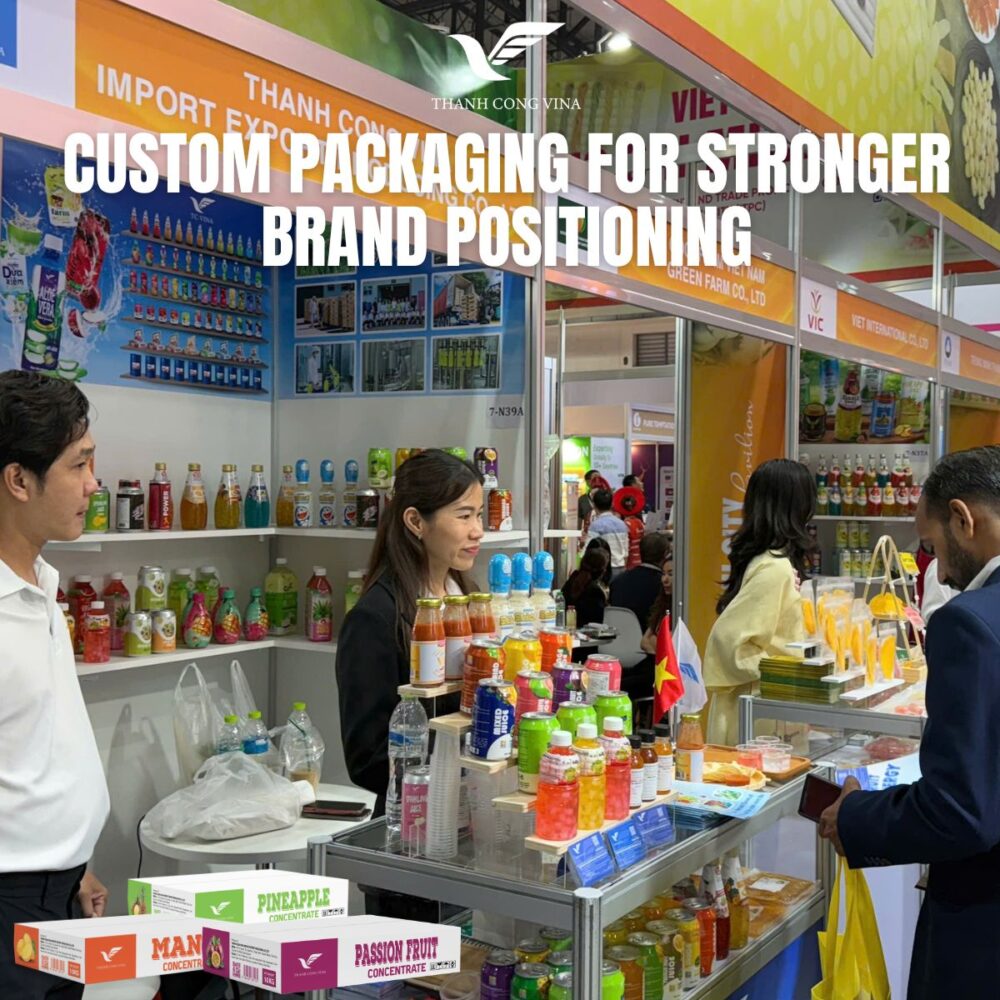
Custom Packaging for Stronger Brand Positioning
Packaging is one of the first elements consumers notice. For a Private Label product, packaging also represents the identity of the brand.
Choosing the Right Packaging Format
Different beverage products and sales channels may require different packaging solutions.
Depending on the product and market, brands may consider cans, PET bottles, glass bottles, and other suitable formats.
Package size can also be selected according to consumption occasions. Smaller formats can be suitable for individual consumption and convenience channels, while larger formats may target supermarkets, families, or foodservice.
Creating a Consistent Brand Identity
Private Label packaging can incorporate the customer’s logo, colors, product name, flavor, nutritional information, barcode, and other required details.
When multiple beverages are sold under the same brand, a consistent visual system can help consumers recognize the product family.
A strong packaging strategy should therefore consider the entire product portfolio rather than only one SKU.
Export Packaging and Logistics
Packaging also needs to be practical for transportation. Export beverages may be stored, stacked, loaded, unloaded, and transported across long distances.
Carton specifications, pallet arrangement, container loading, and product protection should be considered during production planning.
Early coordination between the buyer and manufacturer can help reduce packaging and logistics problems later in the supply chain.
6. Private Label Manufacturing for Different Business Models
One reason Private Label production has become popular is its ability to serve different types of businesses.
Beverage Startups
Startups can use Private Label manufacturing to enter the market without investing in a complete beverage factory.
This allows entrepreneurs to concentrate on branding, marketing, customer acquisition, and distribution while using an established production infrastructure.
Importers and Distributors
Importers and distributors can create exclusive beverage products for their sales networks.
Instead of distributing only third-party brands, they can develop their own branded products and build stronger long-term relationships with retailers and customers.
Retail Chains
Supermarkets and retail chains can use Private Label beverages to create exclusive product lines.
A retailer-controlled beverage brand can be developed around specific price points, consumer preferences, and merchandising strategies.
Established Beverage Brands
Existing brands can use Private Label manufacturing to expand production capacity, introduce new categories, or enter new geographic markets.
Outsourcing selected products can also provide additional manufacturing flexibility when internal production capacity is limited.
7. Building a Long-Term Partnership with a Private Label Manufacturer
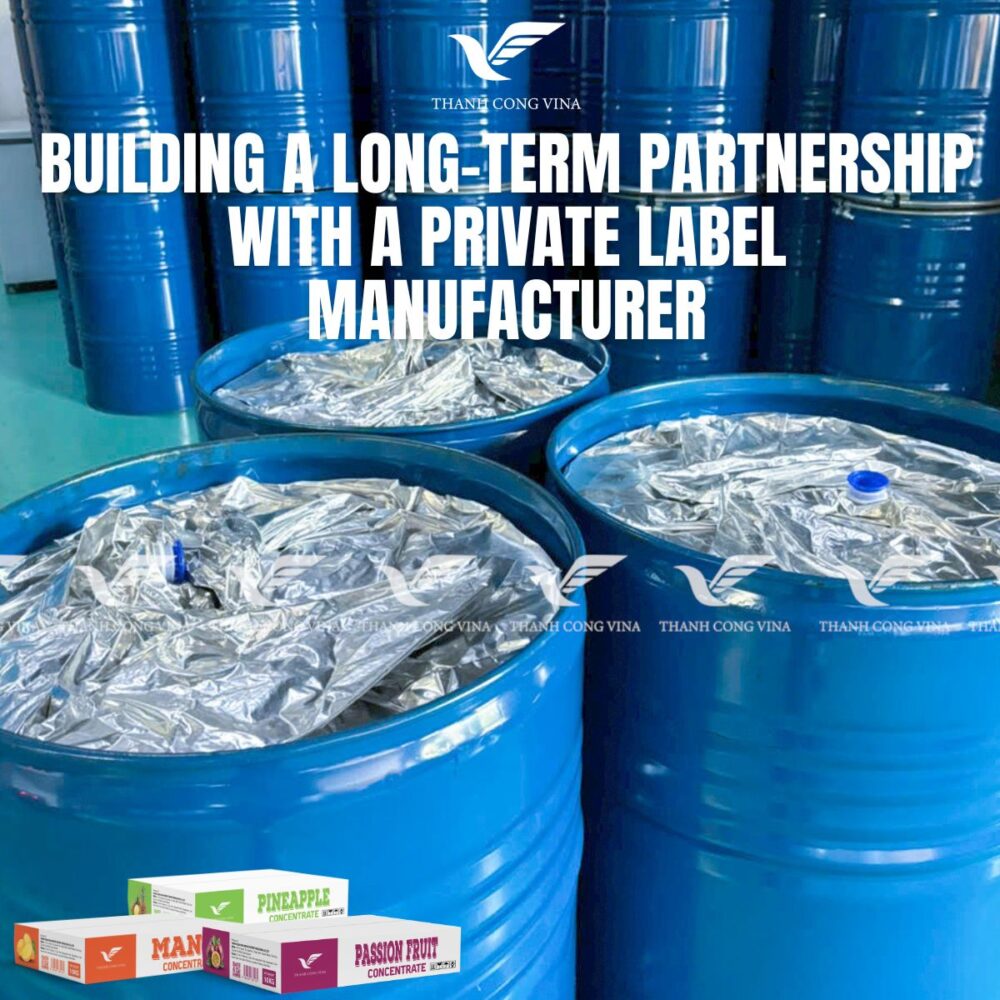
Building a Long-Term Partnership with a Private Label Manufacturer
A successful manufacturing relationship should extend beyond the first purchase order. Long-term cooperation requires communication, consistency, planning, and mutual understanding.
Clear Communication
International beverage projects often involve product specifications, samples, artwork, packaging requirements, production schedules, and shipment arrangements.
Clear communication between the buyer and manufacturer can reduce misunderstandings and improve project efficiency.
Consistent Specifications
Once a product is approved, its specifications should be maintained for future production.
Consistency helps brands protect their product identity and provides consumers with a predictable experience.
Scalable Production
A beverage brand may start with a limited number of products and gradually increase its sales volume.
The manufacturing partner should be capable of supporting this growth through appropriate production planning and supply coordination.
Continuous Product Development
Markets change over time. New flavors, packaging formats, consumer trends, and product categories can create opportunities for portfolio expansion.
A manufacturer capable of supporting ongoing development can become a valuable strategic partner rather than simply a production vendor.
8. Why Choose Thanh Cong Vina as Your Private Label Partner?
Thanh Cong Vina provides beverage manufacturing solutions for international brands, importers, distributors, retailers, and F&B companies seeking customized production in Vietnam.
The company supports a diverse range of beverage categories, including fruit juice drinks, coconut water, coconut water with fruit juice, aloe vera beverages, ready-to-drink coffee, isotonic drinks, energy beverages, and other customized products.
With an export-oriented manufacturing approach, Thanh Cong Vina can support customers across different stages of beverage development, including product concepts, formula requirements, packaging coordination, production, quality management, and shipment preparation.
For customers developing a new beverage brand, the Private Label model provides an opportunity to maintain control over product identity while using established manufacturing capabilities.
For established companies, Private Label production can also provide additional flexibility for portfolio expansion and international sourcing.
Conclusion
The right manufacturing partner can play an important role in the success of an international beverage brand. Private Label production allows companies to develop customized beverages without building their own production infrastructure, while providing flexibility in formulas, flavors, packaging, product categories, and market positioning. Vietnam offers an attractive manufacturing environment supported by agricultural resources, beverage production capabilities, and export-oriented supply solutions.
From the first product concept to formula development, packaging, quality control, commercial production, and shipment preparation, a professional manufacturer can help simplify the beverage sourcing process. For startups, importers, distributors, retailers, and established beverage companies, this approach creates opportunities to develop products that are aligned with specific commercial strategies.
Thanh Cong Vina works with international customers seeking customized and reliable beverage manufacturing solutions in Vietnam. Through Thanh Cong Vina, brands can develop and expand beverage portfolios while maintaining control over their product identity and market positioning. For companies looking for a dependable Private Label manufacturing partner, Thanh Cong Vina provides the production capabilities and flexibility needed to support long-term beverage development and international market growth.