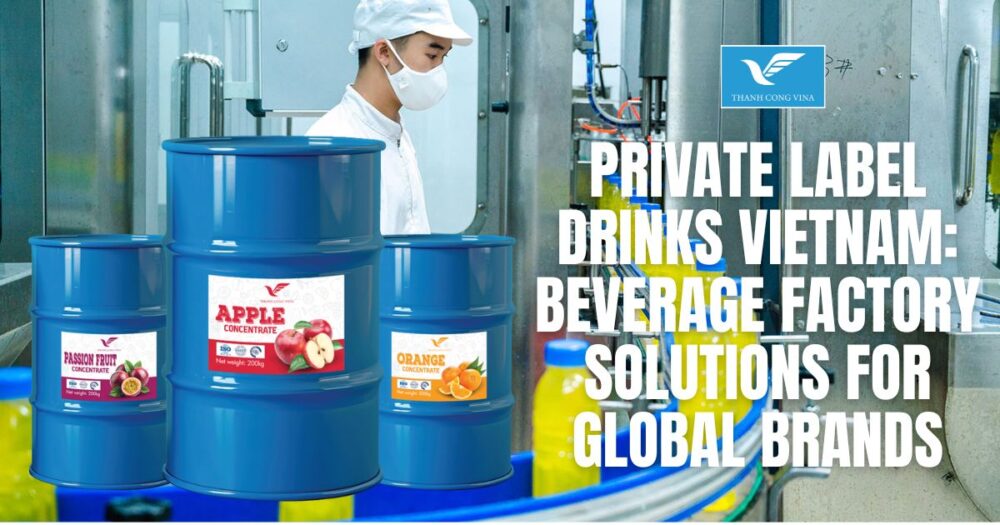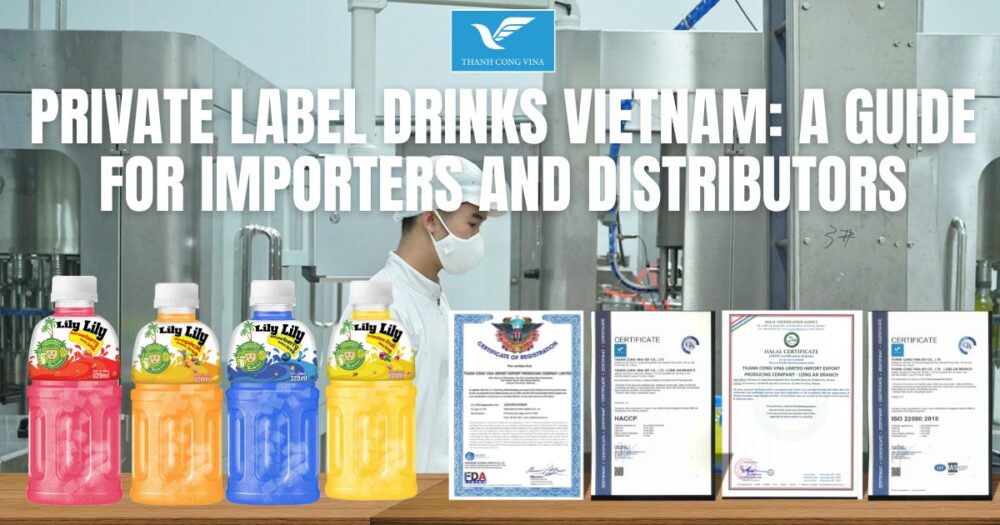

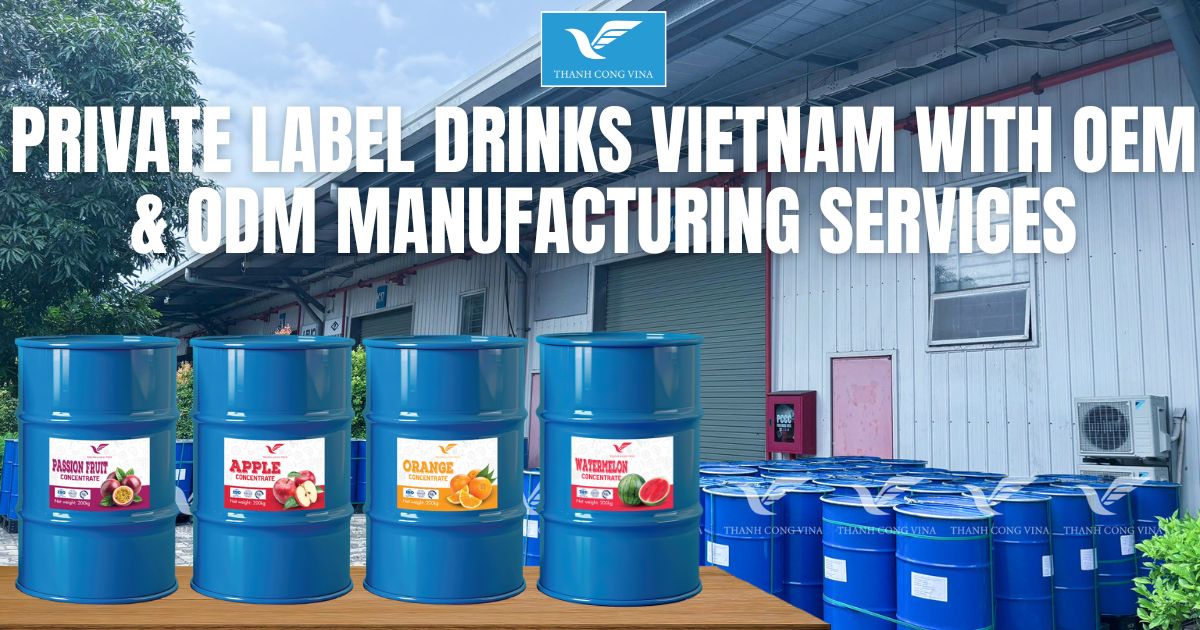
Private Label manufacturing provides a practical way for businesses to create branded beverages while working with an experienced production partner. Vietnam has emerged as an attractive destination for beverage sourcing due to its abundant agricultural resources, tropical fruit supply, competitive manufacturing environment, and growing expertise in international food and beverage production. Through OEM and ODM services, Vietnamese beverage manufacturers can support customers from initial product concepts and formulation development to packaging, commercial production, quality control, and export preparation.
For companies looking to enter new markets or expand an existing portfolio, choosing the right manufacturing partner is essential. A reliable supplier can help transform a product idea into a commercially viable beverage while maintaining consistent quality and production efficiency. This article explains how Private Label Drinks Vietnam works, how OEM and ODM manufacturing differ, and why these services can help international brands develop scalable beverage products.
1. Private Label Drinks Vietnam: A Flexible Model for Modern Beverage Brands
A Flexible Model for Modern Beverage Brands
Private Label manufacturing allows a company to sell beverages under its own brand without owning the manufacturing facility. The manufacturer produces the beverage according to agreed specifications, while the brand owner manages branding, sales, distribution, and market development.
This model has become increasingly attractive to businesses that want to enter the beverage industry with lower infrastructure investment.
What Is Private Label Beverage Manufacturing?
Private Label beverage manufacturing means that a manufacturer produces a beverage for another company, which then sells the finished product under its own brand name.
The buyer may provide its own formula, request modifications to an existing product, or work with the manufacturer to create a new formulation.
The process can cover:
- Product concept development
- Beverage formulation
- Ingredient sourcing
- Sample production
- Packaging selection
- Label development
- Commercial manufacturing
- Quality control
- Product testing
- Carton packing
- Export preparation
This creates a complete manufacturing pathway for businesses that want to focus on building their brand rather than managing a factory.
Who Can Benefit from Private Label Drinks?
Private Label solutions are suitable for a wide range of customers, including:
- Beverage startups
- Importers
- Distributors
- Supermarket chains
- Retailers
- Foodservice companies
- Hotels and hospitality businesses
- E-commerce brands
- F&B companies
- Established beverage companies
For new businesses, private-label production can shorten the path from concept to market. For established companies, it can provide additional production capacity and opportunities to introduce new beverage categories.
2. OEM Beverage Manufacturing for Customized Products
OEM manufacturing is particularly useful for businesses that already have a clear product concept or technical specification.
How OEM Beverage Manufacturing Works
Under an OEM model, the customer generally provides detailed product requirements. These specifications may include the beverage formula, ingredients, flavor profile, nutritional targets, packaging format, bottle size, and labeling requirements.
The manufacturer then uses its production infrastructure to manufacture the product according to the agreed specifications.
An OEM project may follow this process:
- Customer submits product requirements.
- Manufacturer reviews technical specifications.
- Ingredients and packaging are confirmed.
- Samples are developed or evaluated.
- Customer approves the final product.
- Production specifications are finalized.
- Commercial manufacturing begins.
- Finished products undergo quality control.
- Products are packed and prepared for shipment.
OEM manufacturing gives brands greater control over the product they want to bring to market.
Benefits of Choosing OEM Production
OEM production can be especially valuable when a brand has its own established formula or a clearly defined product identity.
Major benefits include:
Product control: The customer can establish specific requirements for the final beverage.
Brand consistency: Products can be manufactured according to predetermined specifications.
Manufacturing efficiency: The brand can use existing production infrastructure instead of building its own facility.
Scalability: Production volumes can increase as market demand grows.
Market flexibility: Different flavors, package sizes, and product variations can be developed according to customer requirements.
For international beverage businesses, this model can create a more efficient connection between brand strategy and manufacturing execution.
3. ODM Beverage Manufacturing for New Product Development
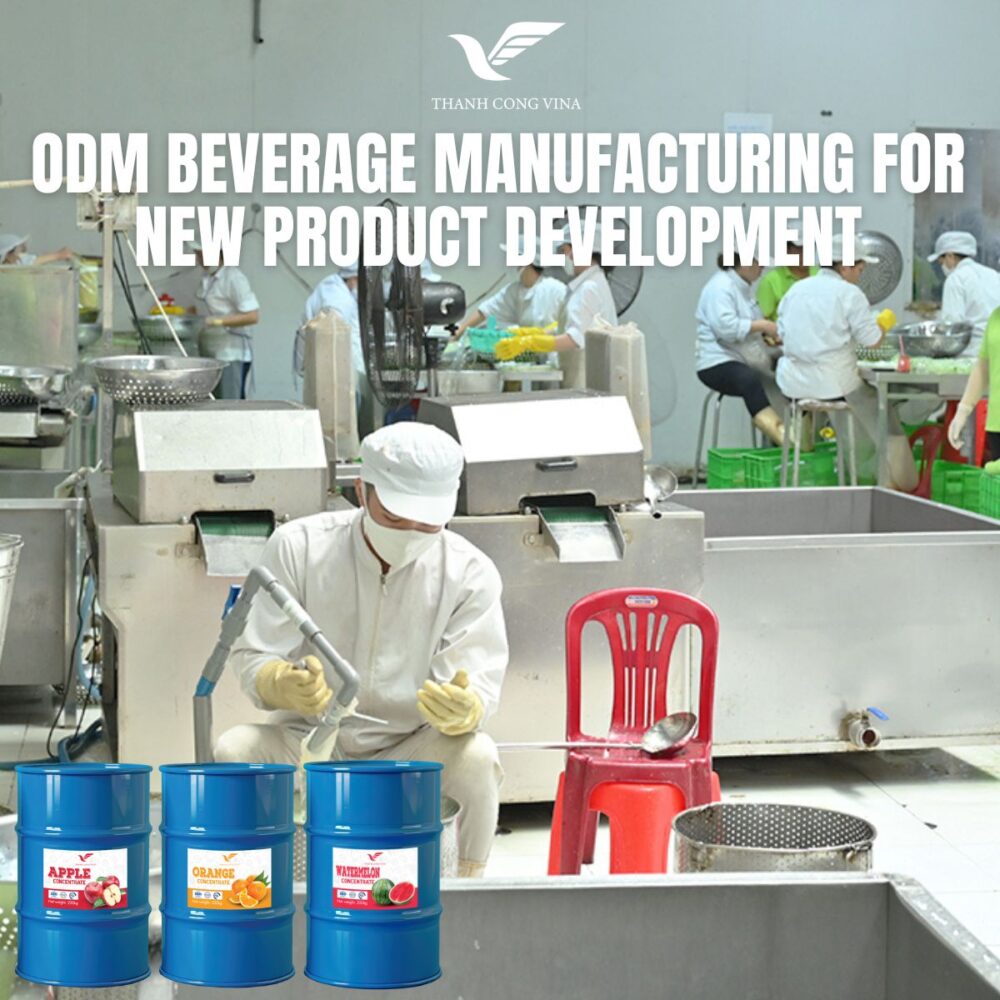
ODM Beverage Manufacturing for New Product Development
ODM manufacturing provides another approach for companies that have a product idea but do not yet have a finalized formula.
What Is ODM Beverage Manufacturing?
ODM stands for Original Design Manufacturing. In beverage production, the manufacturer contributes more directly to product development.
Instead of arriving with a complete formulation, the customer may provide a general concept such as:
- A tropical fruit beverage
- A coconut water drink
- A low-sugar fruit drink
- An aloe vera beverage
- A coffee-based ready-to-drink product
- A functional beverage
- A premium juice product
The manufacturer can then use its technical and product-development capabilities to create samples and refine the beverage.
From Beverage Idea to Commercial Formula
ODM development typically involves several stages.
The manufacturer first evaluates the product concept and target market. It then considers ingredients, flavor characteristics, processing requirements, packaging options, and commercial feasibility.
After the initial formulation is developed, samples can be produced for customer evaluation.
The formula may then be adjusted based on feedback regarding sweetness, acidity, aroma, texture, color, fruit content, or overall taste.
This process continues until both parties approve the final commercial specification.
Why ODM Is Useful for Beverage Startups
ODM can be particularly valuable for entrepreneurs and brands without an internal product-development team.
Instead of investing heavily in food technologists, laboratories, production equipment, and testing infrastructure, the business can collaborate with an experienced manufacturer.
This allows the brand owner to focus on:
- Market research
- Branding
- Sales
- Distribution
- Marketing
- Customer acquisition
- Business development
The manufacturing partner handles much of the technical development required to transform the concept into a production-ready beverage.
4. Beverage Categories Available for Private Label Production
One of the major advantages of working with an experienced beverage manufacturer is the ability to develop different product categories under one brand portfolio.
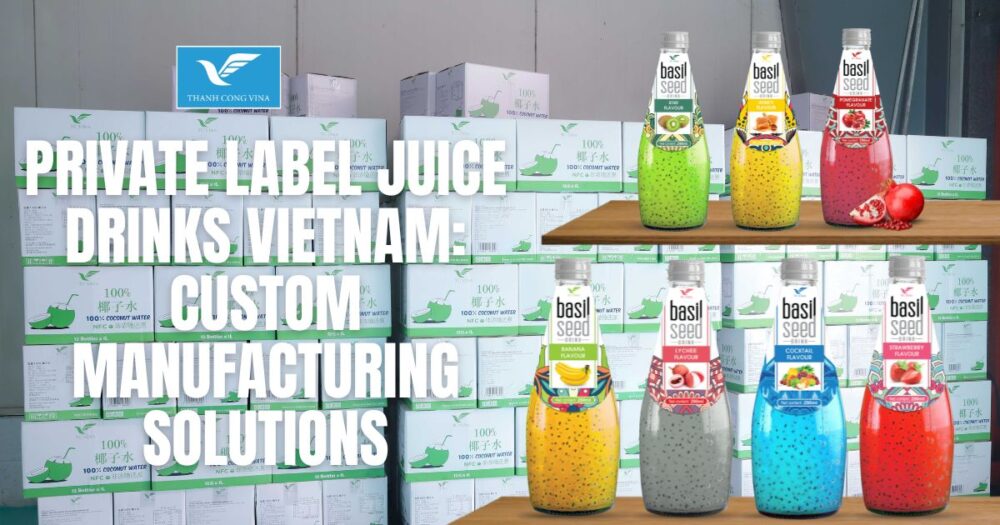
Fruit Juice and Fruit Juice Drinks
Fruit beverages remain one of the most accessible categories for international consumers.
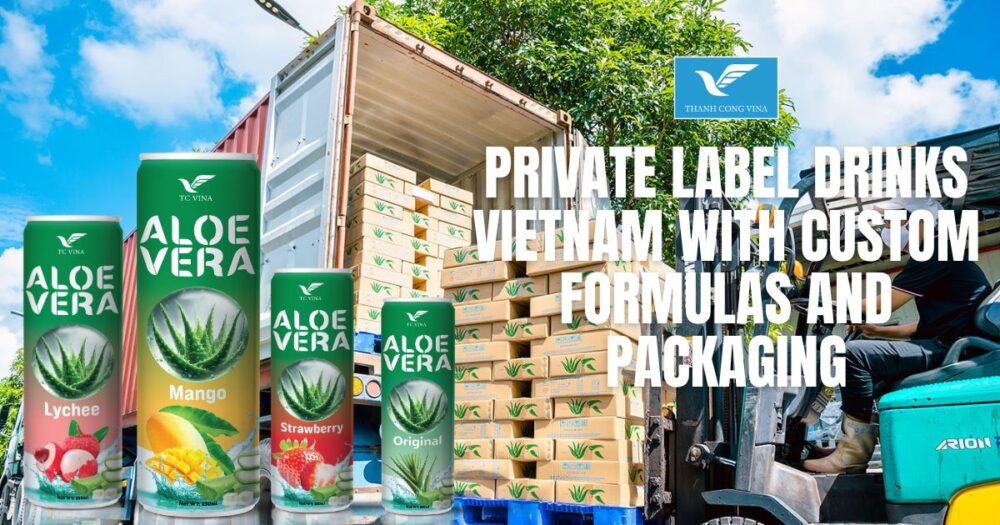
Potential flavors include mango, strawberry, orange, lychee, red grape, pineapple, peach, and other fruit combinations.
Brands can develop different formulations according to their target market, positioning, and price segment.
Packaging can also range from convenient individual-serving formats to larger family-oriented sizes.
Coconut Water and Coconut-Based Beverages
Coconut water has gained international popularity as consumers increasingly explore refreshing beverages associated with natural ingredients and tropical lifestyles.
Private Label brands can develop coconut water products in different formats, including bottles and cans.
Coconut water can also be combined with fruit flavors such as mango, strawberry, calamansi, kiwi, and other combinations to create a broader product portfolio.
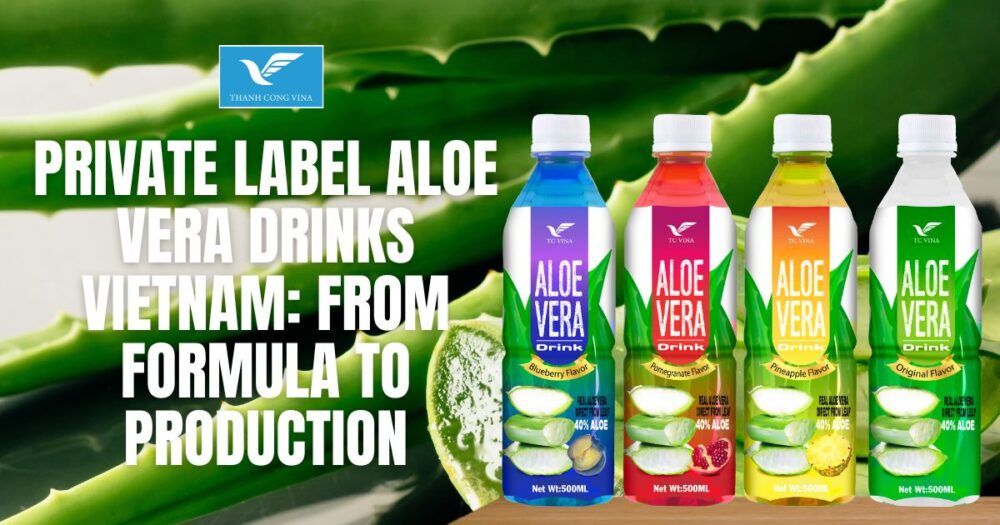
Aloe Vera and Nata de Coco Beverages
Aloe vera drinks and nata de coco beverages provide additional opportunities for brands seeking differentiated textures and tropical positioning.
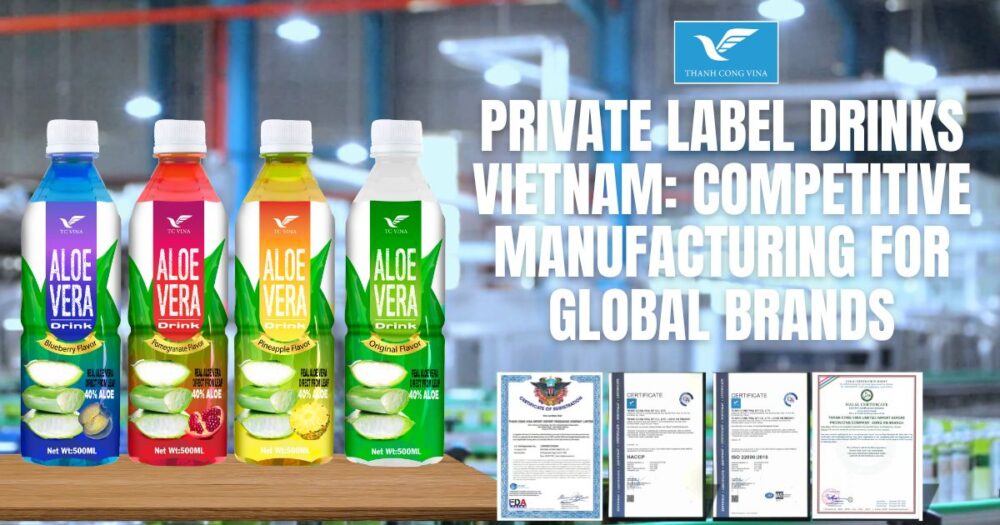
These products can be developed with different fruit flavors and packaging formats depending on the target market.
Ready-to-Drink Coffee
Ready-to-drink coffee is another important category for Private Label development.
Possible products include black coffee, cappuccino, latte, and milk coffee beverages.
These products can be positioned toward consumers seeking convenient coffee solutions for work, travel, retail, and on-the-go consumption.
Juice Concentrates and Industrial Ingredients
Not every beverage customer sells finished retail drinks. Some international buyers require ingredients for their own production facilities.
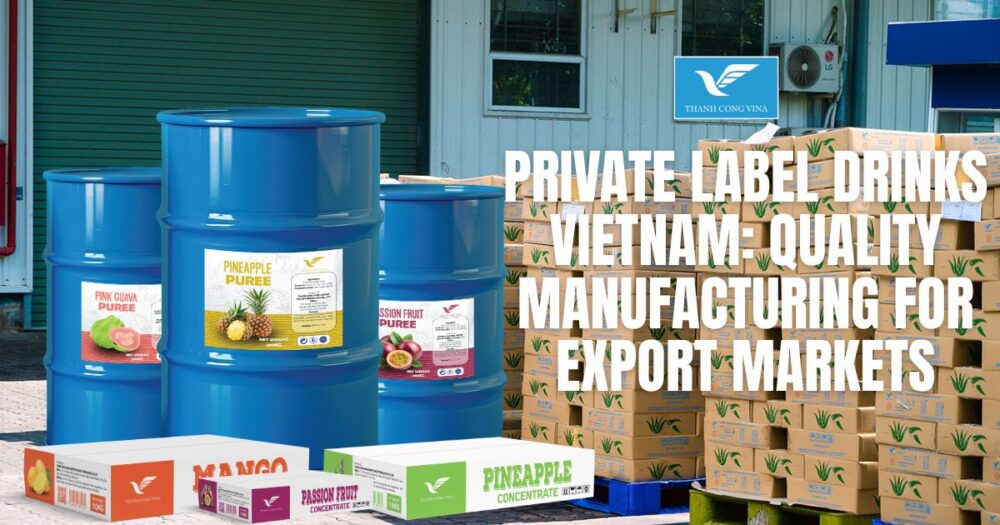
Juice concentrates and other beverage ingredients can therefore be developed for industrial customers, beverage manufacturers, distributors, and food-processing companies.
This creates opportunities for B2B customers that require larger-volume ingredient supply rather than consumer-ready products.
5. Product Development and Quality Control for Private Label Beverages
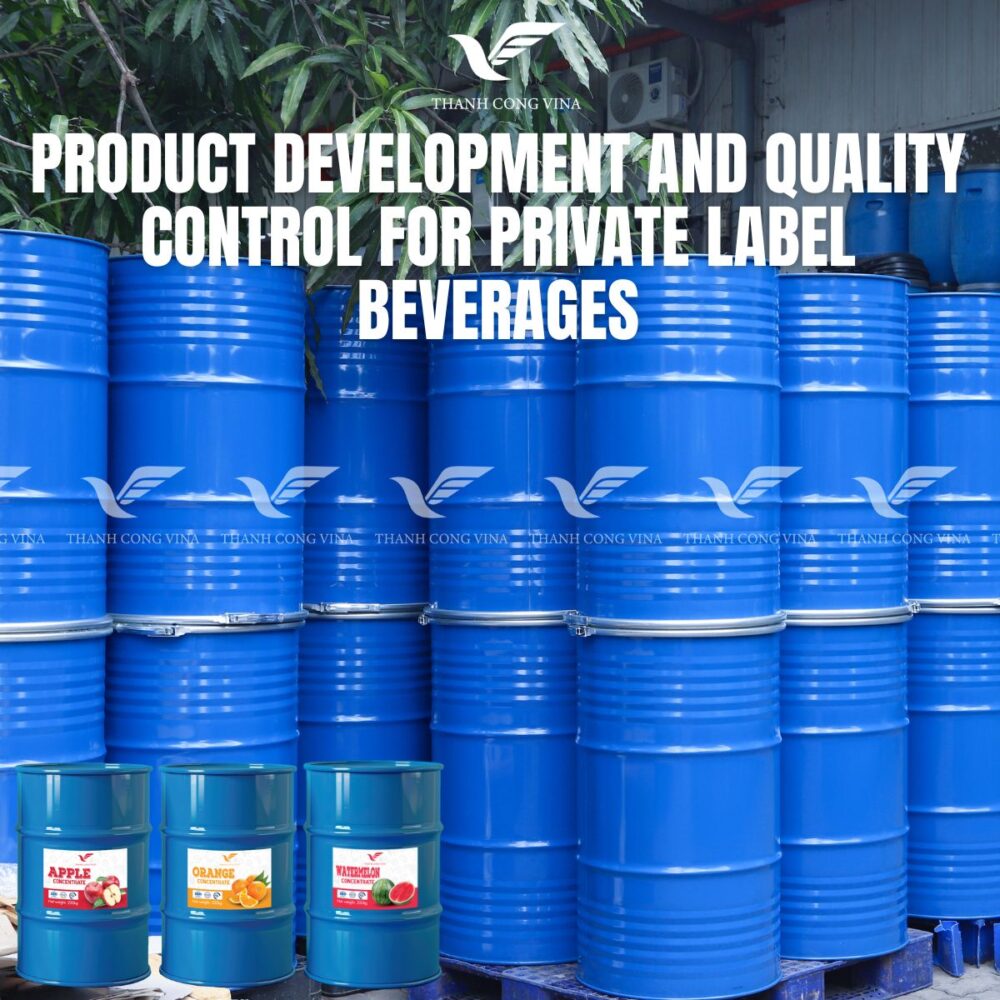
Product Development and Quality Control for Private Label Beverages
A successful Private Label product depends on more than an attractive brand name. The beverage itself must deliver consistent quality.
Formulation Development
The formulation should be developed around the target consumer and market.
Important considerations may include:
- Flavor
- Sweetness
- Acidity
- Aroma
- Fruit content
- Texture
- Color
- Nutritional profile
- Processing requirements
- Shelf-life expectations
The right balance depends on the product category and consumer preferences.
Sample Testing
Sampling allows customers to evaluate the product before committing to commercial production.
A structured sampling process can help identify issues early and reduce the risk of producing large quantities of an unsuitable formula.
Customer feedback can be used to adjust the beverage until the final product meets the agreed expectations.
Food Safety and Quality Management
International beverage buyers typically require reliable food-safety procedures.
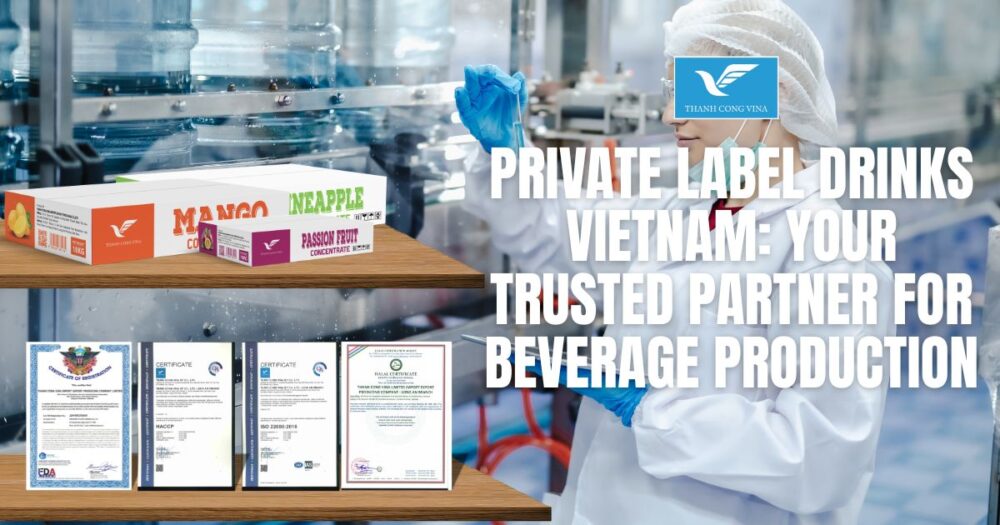
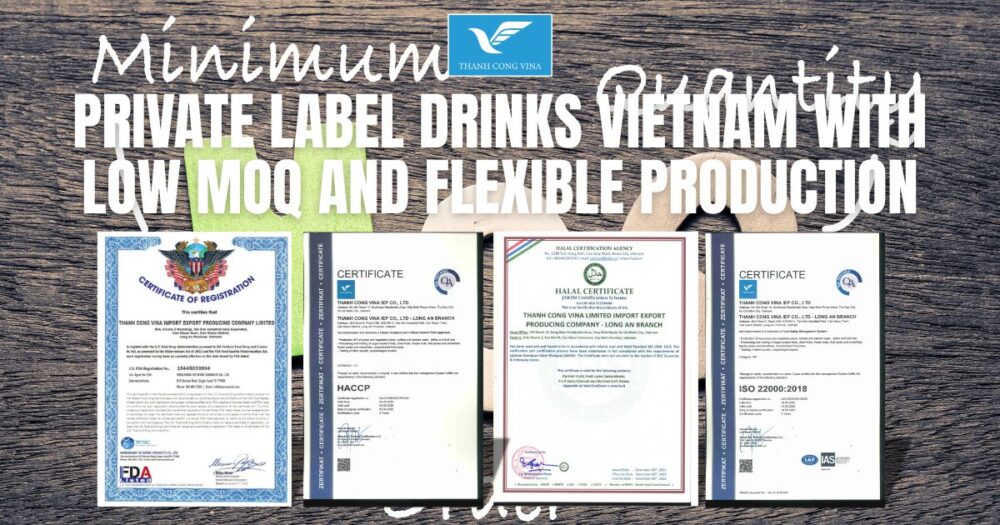
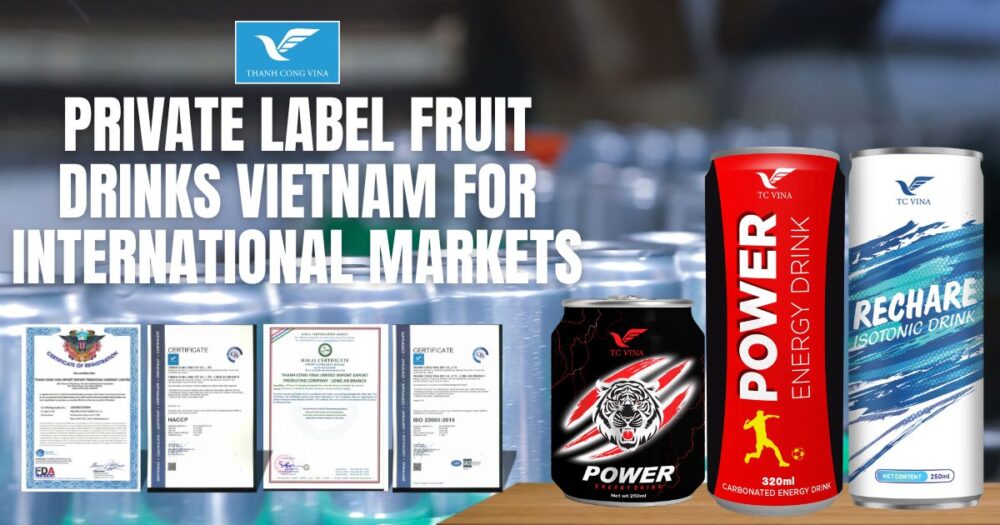
Depending on the destination market and product requirements, manufacturers may work with systems and certifications such as HACCP, ISO-related standards, HALAL, FDA-related requirements, and other applicable regulations.
Quality management should cover the complete manufacturing process, from raw-material inspection through finished-product evaluation.
Batch Consistency
Consistency is essential for building consumer trust.
If a customer purchases the same beverage several months apart, the flavor, appearance, packaging, and overall product experience should remain consistent.
Manufacturing specifications, production controls, testing procedures, and traceability systems all contribute to maintaining this consistency.
6. Packaging and Branding for Private Label Drinks
A successful beverage must perform well both inside and outside the package. Packaging is the first physical interaction many consumers have with a product.
Choosing the Right Package
Packaging options may include PET bottles, glass bottles, aluminum cans, and other formats.
The appropriate package depends on:
- Product characteristics
- Target consumers
- Retail channel
- Transportation requirements
- Price positioning
- Brand identity
- Target market
Serving size should also be considered carefully. Formats such as 250ml, 320ml, 330ml, and 500ml can serve different consumption occasions.
Creating a Strong Brand Identity
Private Label products allow businesses to build their own visual identity.
The packaging design should clearly communicate:
- Brand name
- Product category
- Flavor
- Key product attributes
- Net volume
- Required regulatory information
A consistent design system across different flavors can make the portfolio easier for consumers to recognize.
Export Label Requirements
International products may need to comply with destination-market labeling regulations.
Depending on the country, requirements may involve ingredient declarations, nutrition information, country of origin, importer information, product claims, expiration dates, batch codes, barcodes, and other mandatory information.
Brands should confirm these requirements before final artwork approval and commercial production.
7. Why Choose Vietnam for Private Label Beverage Manufacturing?
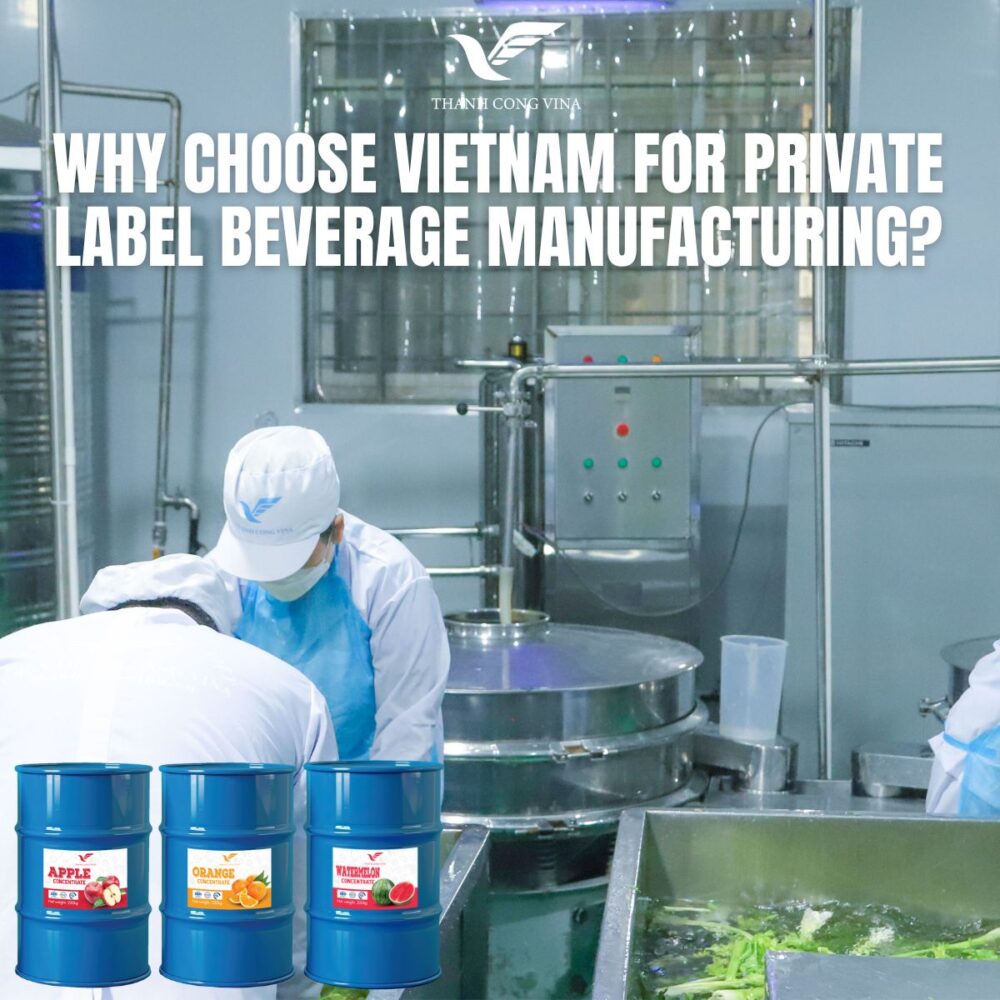
Why Choose Vietnam for Private Label Beverage Manufacturing?
Vietnam provides several advantages for companies searching for a reliable beverage sourcing location.
Abundant Agricultural Resources
Vietnam is well known for its agricultural production and tropical climate. The availability of fruits, coconuts, coffee, aloe vera, and other ingredients creates opportunities for beverage manufacturers to develop products with diverse flavor profiles.
This local resource base can support both traditional beverage concepts and innovative tropical combinations.
Competitive Manufacturing
Cost efficiency is an important consideration for importers and distributors.
Vietnam offers a competitive manufacturing environment that can help brands manage production costs while accessing established food-processing infrastructure.
However, the lowest production price should not be the only selection criterion. Product quality, manufacturing capabilities, communication, lead time, certifications, and export experience are equally important.
Export-Oriented Production
For international buyers, export experience is a major advantage.
A manufacturer familiar with international orders understands the importance of production schedules, packaging specifications, documentation, container loading, and communication with overseas customers.
This can make the transition from domestic manufacturing to international distribution more efficient.
8. How to Select the Right Private Label Beverage Manufacturer
The manufacturer you choose can directly influence your product quality, costs, launch timeline, and long-term growth.
Evaluate Manufacturing Capabilities
Before selecting a supplier, review its production capabilities and product portfolio.
Ask whether the manufacturer can produce your desired beverage category, packaging format, order volume, and target specifications.
It is also useful to understand the factory’s development process and whether it can support future product expansion.
Review Quality and Certification
Request information about food-safety systems, certifications, quality-control procedures, product testing, and traceability.
A manufacturer should be able to explain how quality is managed from raw materials to finished products.
Consider MOQ and Production Capacity
Minimum order quantity is particularly important for new brands.
A startup may need smaller initial quantities to test the market, while an established retailer may require large commercial volumes.
The ideal manufacturer should provide a production model that matches the brand’s current requirements while offering room for future growth.
Evaluate Communication and Long-Term Support
A good manufacturing relationship depends on communication.
The manufacturer should respond clearly to questions regarding formulation, packaging, pricing, production schedules, documentation, and shipping.
Long-term support is equally important because beverage brands often introduce new flavors and formats as their businesses develop.
Conclusion
The beverage industry offers significant opportunities for businesses that can combine strong product concepts with efficient manufacturing and effective market positioning. Private Label production provides an accessible pathway for retailers, importers, distributors, startups, and established brands to launch beverages without investing in their own manufacturing infrastructure.
OEM manufacturing is suitable for businesses with established product specifications, while ODM manufacturing provides greater development support for companies starting with an idea rather than a finalized formula. Both models can support a wide range of products, including fruit juice drinks, coconut water, aloe vera beverages, nata de coco drinks, ready-to-drink coffee, and juice concentrates.
For international buyers, Vietnam offers an attractive combination of agricultural resources, beverage manufacturing expertise, competitive production, and export-oriented capabilities. Choosing the right partner requires careful evaluation of quality systems, certifications, product-development capabilities, packaging options, MOQ, production capacity, and communication.
Thanh Cong Vina provides beverage manufacturing solutions for international customers seeking reliable OEM, ODM, and Private Label production. By combining product development, manufacturing expertise, quality-focused processes, diverse beverage categories, and export support, Thanh Cong Vina can help brands move efficiently from product concept to commercial production and international distribution. For businesses looking for a long-term beverage manufacturing partner, working with an experienced Vietnamese manufacturer can create a practical foundation for building, expanding, and scaling a successful global beverage brand.