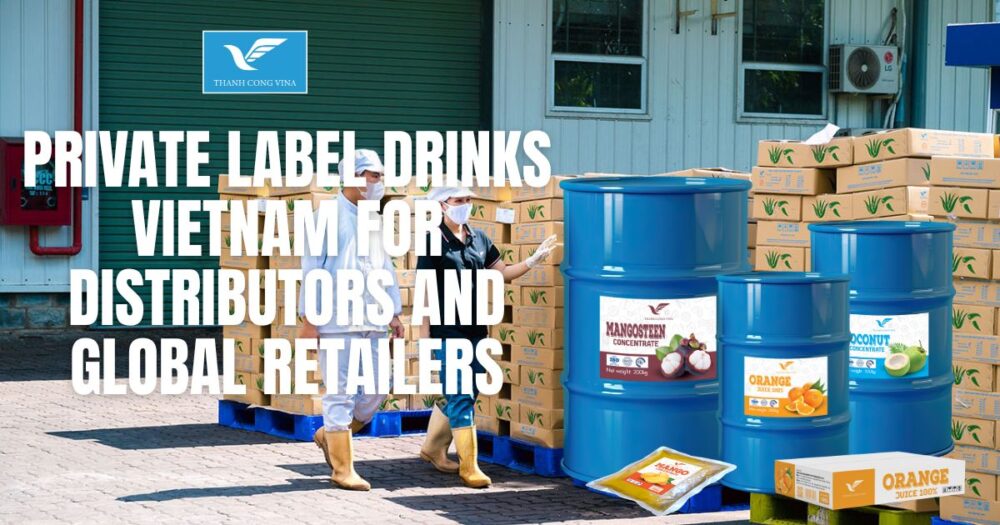

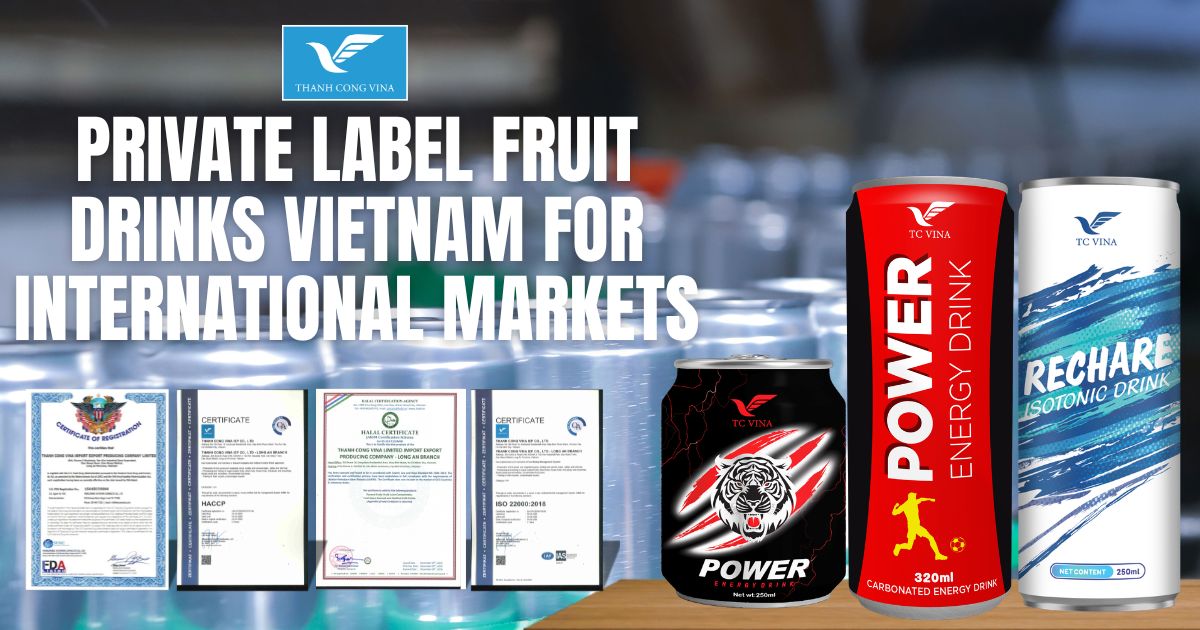
Private Label fruit drinks provide an effective solution for importers, distributors, retailers, supermarkets, foodservice companies, and emerging beverage brands that want to develop products under their own brand identity. Vietnam has become an attractive destination for customized beverage manufacturing due to its tropical fruit resources, established food processing industry, modern production capabilities, and growing export infrastructure.
For international businesses, developing a fruit drink involves more than selecting a flavor. Formula development, ingredient sourcing, packaging, quality control, labeling, production volume, and export requirements all need to be considered. Working with an experienced Vietnamese beverage manufacturer allows brands to coordinate these stages through one production partner. With OEM and ODM capabilities, Thanh Cong Vina supports customized fruit beverage development for customers targeting different international markets and consumer preferences.
1. Why Vietnam Is a Strategic Destination for Private Label Fruit Drinks
Why Vietnam Is a Strategic Destination for Private Label Fruit Drinks
Vietnam has a strong connection with tropical agriculture, making the country a suitable production base for fruit-based beverages. The availability of local agricultural resources combined with an established food processing industry creates opportunities for businesses developing customized beverage products.
Abundant Tropical Fruit Resources
Vietnam is known for producing a wide range of tropical and subtropical fruits. Mango, pineapple, passion fruit, guava, lychee, strawberry, orange, red grape, peach, soursop, and other fruit varieties can be used in beverage development.
For international brands, access to diverse fruit ingredients allows manufacturers to create multiple product concepts rather than relying on a single flavor category. A distributor may develop a tropical fruit series, while a supermarket brand may introduce several flavors under one product line.
The availability of different fruit ingredients also supports seasonal product development and portfolio expansion.
Established Beverage Processing Industry
Vietnam has developed beverage production capabilities covering fruit juice drinks, coconut water, aloe vera beverages, ready-to-drink coffee, concentrates, functional beverages, and other ready-to-drink products.
This manufacturing environment provides international buyers with access to production facilities capable of handling different beverage formats and commercial production requirements.
For brands that do not own a beverage factory, outsourcing production can reduce the infrastructure investment required to launch a new product. Instead of building production lines, brands can focus on product positioning, distribution, sales, and marketing.
Export-Oriented Manufacturing
International beverage production requires attention to more than the product itself. Packaging specifications, product documentation, labeling, quality requirements, shipment preparation, and destination-market regulations can all affect the export process.
An export-oriented manufacturer can coordinate these requirements during product development and production, helping international buyers establish a more structured supply chain.
2. Private Label Fruit Drinks for International Markets
Developing Private Label fruit drinks for international markets requires a clear understanding of the target consumer, distribution channel, and product positioning. The same fruit beverage may need different characteristics depending on the country and sales channel.
Understanding the Target Market
Before developing a formula, brands should define where the product will be sold and who will purchase it.
Important considerations can include:
- Target country or region
- Consumer preferences
- Preferred fruit flavors
- Product size
- Packaging format
- Retail positioning
- Price segment
- Distribution channel
- Shelf-life expectations
- Import requirements
For example, a distributor may require a mainstream fruit drink designed for supermarkets, while a premium retailer may seek a more specialized fruit concept with distinctive packaging and positioning.
A clear market strategy allows the manufacturer to better understand the technical and commercial requirements of the project.
Developing Suitable Fruit Flavors
Flavor selection is an important part of private label beverage development. Fruit drinks can be produced using individual fruit flavors or combinations of different fruits.
Popular concepts can include:
- Mango juice drink
- Orange fruit drink
- Strawberry beverage
- Lychee drink
- Red grape beverage
- Pineapple fruit drink
- Passion fruit beverage
- Peach drink
- Guava fruit drink
- Tropical mixed-fruit beverage
Fruit combinations can also create more distinctive product profiles. For example, brands can explore tropical blends or pair complementary fruit flavors to create a recognizable product identity.
The objective is not simply to select a popular fruit but to develop a product that fits the intended consumer and market position.
3. OEM and ODM Manufacturing for Customized Fruit Beverages
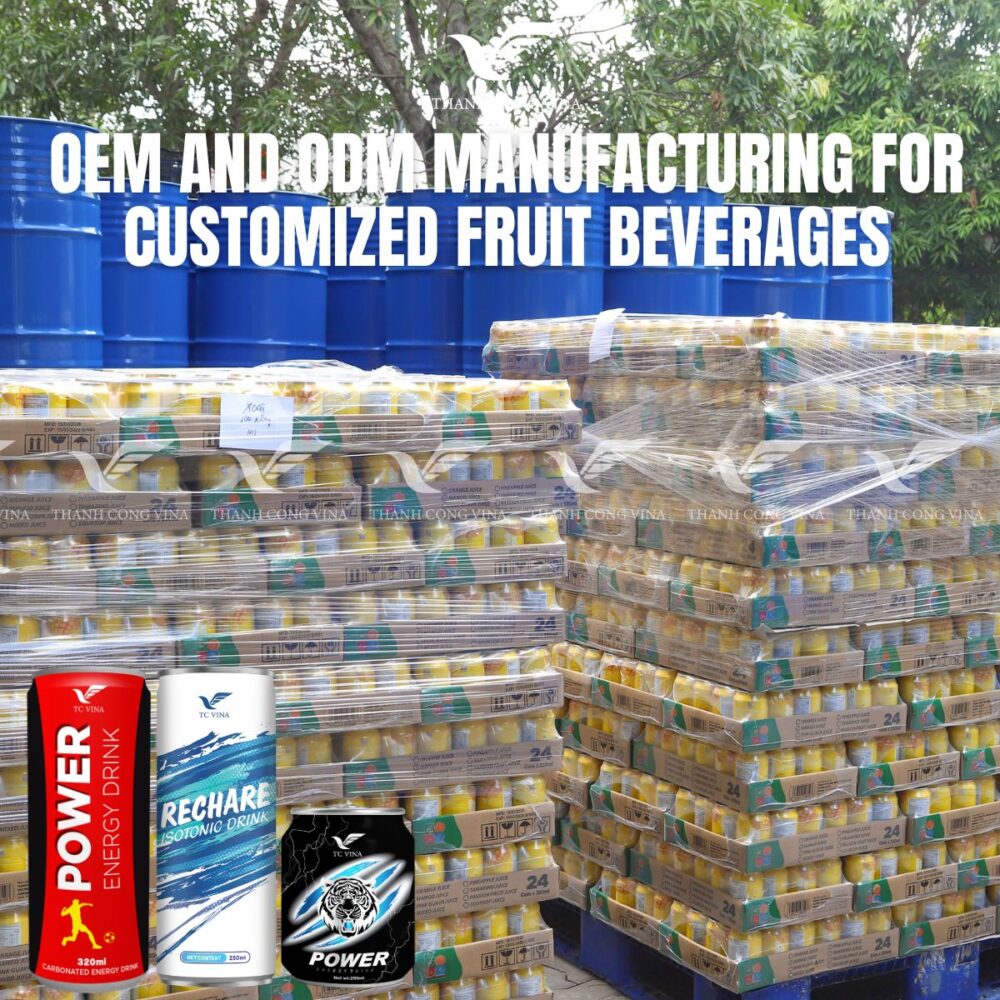
OEM and ODM Manufacturing for Customized Fruit Beverages
OEM and ODM services allow businesses to choose the level of support they require during product development.
OEM Private Label Beverage Production
OEM production is suitable for brands that already have clear product specifications. The customer may provide a formula, product concept, packaging requirements, or technical specifications, while the manufacturer handles commercial production.
The process may include:
- Product specification review
- Raw material sourcing
- Sample confirmation
- Packaging preparation
- Production planning
- Quality control
- Filling and packaging
- Finished product inspection
- Export preparation
This model allows established brands and importers to outsource production while maintaining control over their product specifications and branding.
ODM Fruit Drink Development
ODM services provide broader support for businesses that do not have a finalized beverage formula.
The manufacturer can assist with product concept development, flavor selection, formulation, sampling, packaging recommendations, and production planning.
ODM can be particularly useful for startups, retailers, distributors, trading companies, and businesses entering the beverage industry for the first time.
Instead of starting with a complete technical specification, the buyer can begin with a commercial concept and develop the finished beverage through a structured sampling process.
4. Product Customization Options for Private Label Fruit Drinks
One of the main advantages of Private Label manufacturing is the ability to customize the product around the brand’s requirements.
Formula and Flavor Customization
Fruit beverage formulas can be developed around different taste profiles, sweetness levels, fruit characteristics, and product concepts.
A brand may want a refreshing citrus beverage, a tropical fruit drink, a berry-inspired product, or a mixed-fruit formulation.
During the sampling stage, manufacturers and buyers can evaluate flavor, aroma, appearance, mouthfeel, and overall product performance before commercial production.
This process allows the final beverage to become more closely aligned with the brand’s expectations.
Packaging Customization
Packaging is a major component of a private label beverage strategy. Consumers often encounter the package before they taste the product, making visual presentation important for retail positioning.
Depending on the product and market, brands can explore different packaging formats and serving sizes, including cans, PET bottles, glass bottles, and other suitable formats.
Packaging customization may include:
- Brand logo
- Product name
- Label artwork
- Product information
- Nutrition information
- Barcode
- Batch coding
- Carton design
- Export packaging
The packaging specification should be confirmed before mass production to ensure compatibility with the manufacturing process.
Brand and Product Portfolio Development
Private label production allows companies to build a complete beverage portfolio rather than launching a single product.
For example, a retailer can introduce several fruit flavors under one brand. A distributor can develop different product sizes for different channels. An international beverage company can also use customized manufacturing to test new concepts before expanding production.
This flexibility can help businesses gradually develop their beverage portfolio according to market demand.
5. Quality Control and Food Safety in Fruit Beverage Manufacturing
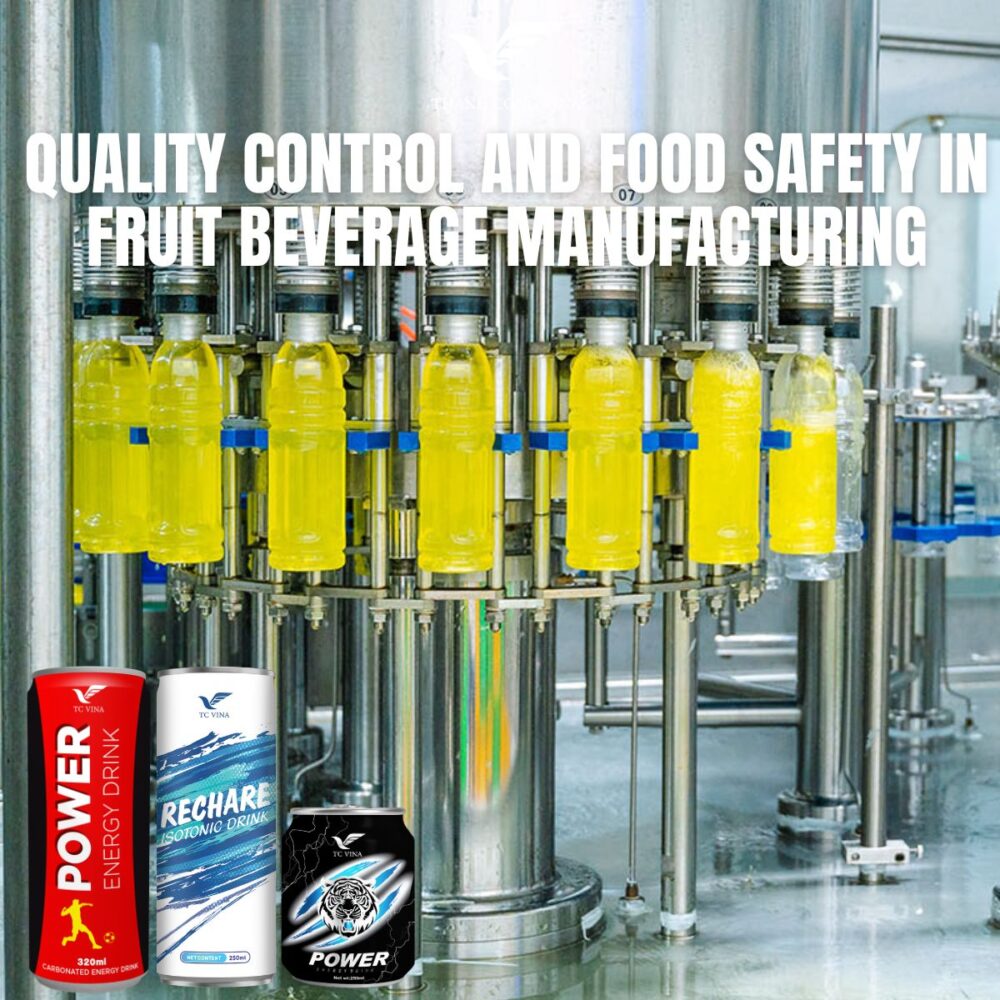
Quality Control and Food Safety in Fruit Beverage Manufacturing
Quality control plays an important role in producing consistent fruit beverages for international distribution. Each production stage can influence the final product’s quality and stability.
Raw Material Control
Raw materials should be managed according to established specifications before entering production. Fruit ingredients, flavors, sweeteners, packaging materials, and other components can affect the final beverage.
Consistent raw material management helps manufacturers maintain similar characteristics between production batches.
Controlled Beverage Processing
Modern beverage manufacturing uses controlled processing systems to support product consistency and food safety.
Depending on the beverage type, production may involve ingredient preparation, blending, processing, filling, sealing, coding, inspection, and secondary packaging.
A structured production workflow allows quality checks to be performed throughout the manufacturing process rather than relying only on final inspection.
Finished Product Inspection
Before shipment, finished products can be checked according to established specifications. Packaging condition, product appearance, coding, labeling, and other relevant parameters may be reviewed.
For international orders, documentation and product information should also be prepared according to the buyer’s requirements and destination market.
Thanh Cong Vina supports an export-oriented manufacturing process designed to help international customers coordinate product development, production, packaging, quality control, and shipment preparation.
6. Fruit Beverage Formats for International Distribution
Different markets require different packaging formats and serving sizes. Product format should therefore be considered alongside the target distribution channel.
Single-Serve Fruit Drinks
Single-serve products are suitable for convenience stores, supermarkets, foodservice channels, schools, offices, and on-the-go consumption.
Common commercial formats can include 250ml and 500ml products, depending on the brand’s requirements.
These formats allow consumers to purchase a convenient portion while giving brands opportunities to create visually distinctive packaging.
Family-Size Fruit Beverages
Larger formats can be suitable for household consumption and retail distribution. These products can be positioned around family use, shared consumption, or home storage.
The appropriate format depends on consumer behavior, retail channel, transportation considerations, and pricing strategy.
Export Packaging and Shipment Preparation
International shipment requires attention to secondary packaging and container loading. Carton strength, palletization, product arrangement, and protection during transportation should be considered when preparing export orders.
A manufacturer with export experience can coordinate these details with the buyer to create a more efficient production-to-shipment workflow.
7. Benefits of Working with a Vietnamese Private Label Beverage Manufacturer
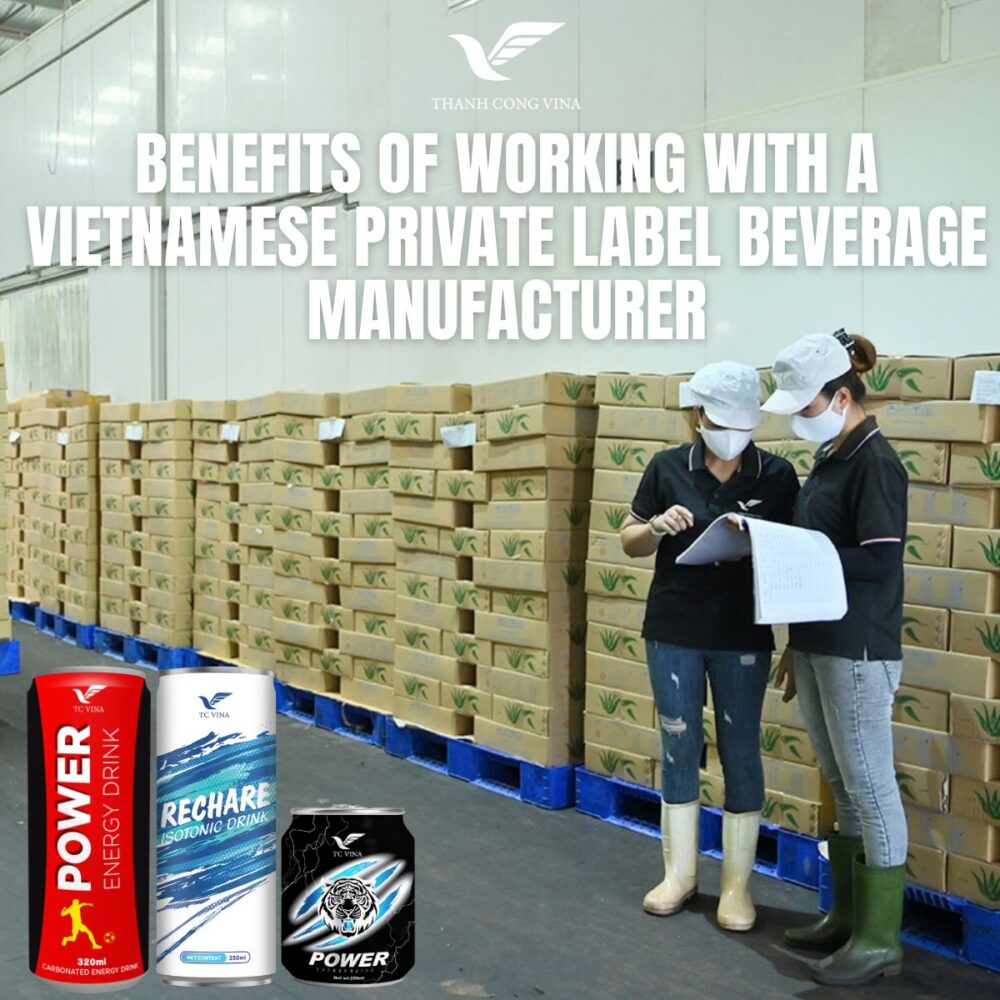
Benefits of Working with a Vietnamese Private Label Beverage Manufacturer
Partnering with a Vietnamese beverage manufacturer can provide several operational advantages for international businesses.
Lower Infrastructure Investment
Building a beverage factory requires significant investment in production equipment, food safety systems, warehouses, utilities, labor, maintenance, and quality management.
Private label manufacturing allows brands to access established production infrastructure without owning the entire manufacturing operation.
This model can be particularly valuable for startups and companies testing new products in international markets.
Faster Product Portfolio Expansion
Working with an established manufacturer can make it easier for a brand to introduce additional flavors, sizes, or beverage categories.
Instead of developing every product internally, the brand can collaborate with the manufacturer to expand its portfolio according to commercial opportunities.
Scalable Production
Private label production can support different business stages, from initial product launches to larger commercial orders.
As market demand develops, brands can increase production volumes and expand product ranges based on their distribution strategy.
Focus on Sales and Brand Development
Outsourcing manufacturing allows businesses to concentrate on the areas where they may have stronger capabilities, including marketing, distribution, retail relationships, customer development, and brand management.
The manufacturer manages the production side while the brand focuses on building demand in its target market.
8. Why Choose Thanh Cong Vina for Private Label Fruit Drinks?
Thanh Cong Vina provides OEM, ODM, and Private Label beverage manufacturing solutions for international customers. The company supports customized beverage projects from product development through commercial production and export preparation.
Its beverage portfolio includes fruit juice drinks, coconut water, coconut water with fruit juice, aloe vera beverages, juice concentrates, NFC juice, ready-to-drink coffee, and other customized beverage products.
For fruit drink projects, international customers can discuss flavor concepts, packaging formats, product specifications, and target-market requirements with the manufacturing team. This approach enables the production process to be structured around the customer’s commercial objectives rather than relying on a standardized product alone.
Thanh Cong Vina also provides an opportunity for buyers to develop multiple products through one manufacturing relationship. A distributor, retailer, or beverage brand can create several fruit flavors and gradually expand into other beverage categories.
For international businesses searching for a Vietnamese manufacturing partner, this integrated approach can simplify product development and supply chain coordination while providing access to customized beverage production.
Conclusion
The international market for fruit-based beverages continues to provide opportunities for importers, distributors, retailers, and beverage brands seeking customized products with distinctive flavors and professional packaging. Private Label manufacturing gives businesses the flexibility to create beverages under their own brand while utilizing established production infrastructure in Vietnam. From fruit selection and formula development to packaging, quality control, commercial production, and export preparation, each stage can be organized according to the requirements of the target market.
Vietnam’s agricultural resources and growing beverage manufacturing capabilities make it a practical production destination for customized fruit beverages. With OEM and ODM services, Thanh Cong Vina IEP CO., LTD supports international customers in developing products that match their brand and market requirements. By combining customized manufacturing with export-oriented production, Thanh Cong Vina can support businesses looking to build and expand their fruit beverage portfolio for international markets.