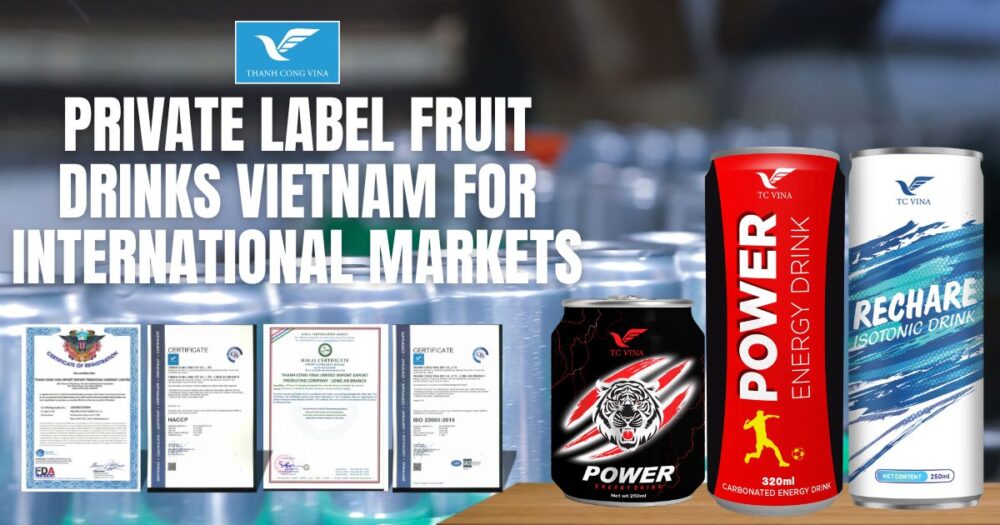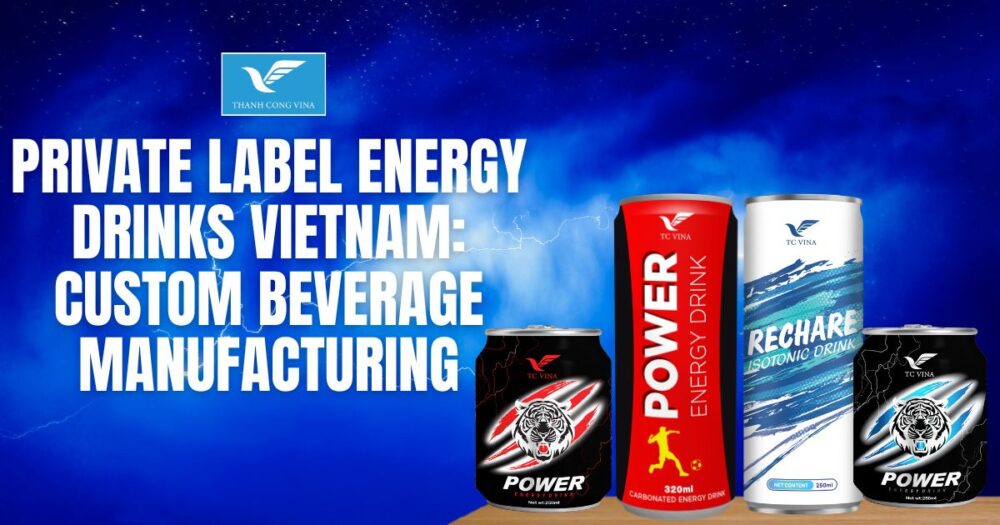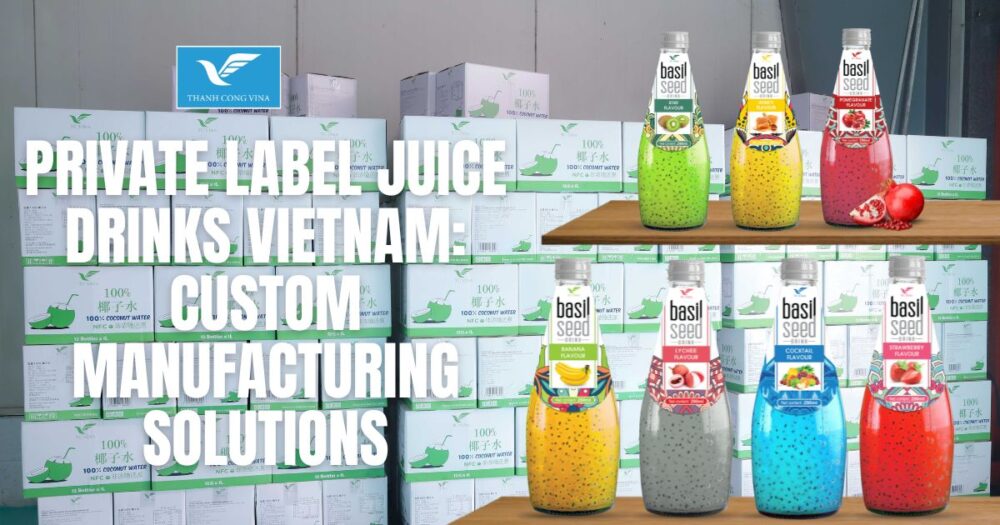

Private Label beverage manufacturing provides a practical way to develop products under a company’s own brand while working with an experienced manufacturer in Vietnam. Vietnam offers a competitive environment for customized beverage production, supported by abundant agricultural resources, an established food processing sector, modern beverage manufacturing capabilities, and growing export experience. Flexible production is particularly valuable for businesses that want to test new products, introduce several flavors, or gradually increase order volumes according to market demand.
With OEM and ODM capabilities, Thanh Cong Vina provides customized beverage manufacturing solutions designed around product specifications, packaging requirements, target markets, and production plans. The combination of flexible manufacturing and low MOQ-oriented solutions can help international buyers develop their beverage portfolios with greater control over production and market expansion.
1. Why Choose Private Label Drinks Vietnam for Flexible Production?
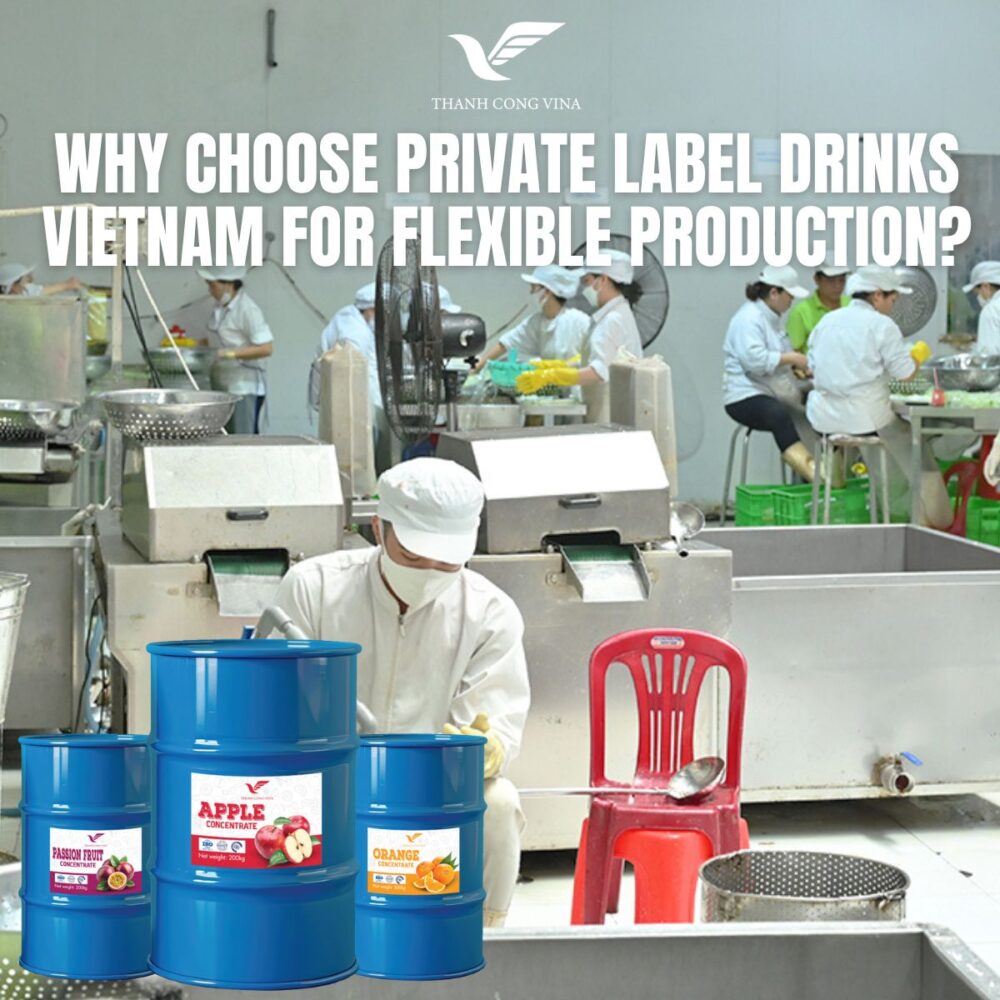
Why Choose Private Label Drinks Vietnam for Flexible Production?
Vietnam has become an attractive sourcing destination for companies searching for customized beverage production. Its combination of agricultural resources, manufacturing capabilities, and export infrastructure creates opportunities for businesses that want to develop branded beverages without establishing their own production facilities.
Access to Diverse Beverage Ingredients
Vietnam has a strong agricultural sector with a wide variety of tropical fruits and agricultural ingredients. Mango, pineapple, passion fruit, orange, strawberry, lychee, guava, red grape, peach, soursop, coconut, aloe vera, and other ingredients can be incorporated into different beverage concepts.
This variety gives brands more options when creating customized products. Instead of launching only one standard beverage, buyers can develop a product family with multiple flavors under the same brand.
For example, an importer may start with mango and orange drinks and later introduce strawberry, lychee, or passion fruit products after evaluating market demand.
Established Beverage Manufacturing Infrastructure
A professional beverage manufacturer can provide production infrastructure that would otherwise require substantial investment from a brand.
Manufacturing capabilities can include beverage processing, blending, filling, sealing, labeling, coding, carton packing, quality inspection, and export preparation.
For companies entering the beverage market, this model allows them to focus more resources on branding, distribution, sales, and customer development rather than building and maintaining their own production facility.
Export-Oriented Production
International beverage projects require careful coordination between production and export requirements. Packaging specifications, product information, documentation, shelf-life expectations, and shipment preparation may vary depending on the destination market.
Working with a manufacturer experienced in international orders can help buyers organize these requirements during the development stage rather than addressing them after production has already started.
2. Private Label Beverage Manufacturing with Low MOQ
One of the important considerations for startups and growing brands is the minimum order quantity. Large production requirements can create challenges for companies that are still testing a new product or entering an unfamiliar market.
A flexible Private Label manufacturing model can provide a more practical approach by allowing businesses to discuss production quantities according to the product, packaging format, formula, and manufacturing requirements.
Why Low MOQ Matters for New Beverage Brands
A new beverage brand may not know exactly how consumers will respond to its first product. Producing an extremely large quantity before validating the market can increase inventory pressure and financial exposure.
A lower or flexible MOQ approach can help businesses introduce a product in a controlled way. After receiving market feedback, the company can adjust its production strategy and increase order quantities when demand develops.
This approach is particularly relevant for:
- Beverage startups
- New importers
- Regional distributors
- Independent retailers
- E-commerce beverage brands
- Foodservice businesses
- Private-label supermarket products
- Companies testing new flavors
Low MOQ does not simply mean producing fewer units. It is also about creating a production strategy that matches the company’s current stage of development.
Balancing MOQ and Production Efficiency
The appropriate MOQ depends on multiple factors. Formula complexity, packaging type, filling technology, label requirements, raw material availability, and production scheduling can all influence the practical minimum quantity.
For this reason, international buyers should discuss their expected volume with the manufacturer at the beginning of the project.
A professional manufacturer can help identify the relationship between order quantity, packaging requirements, production efficiency, and overall product cost.
3. Flexible Production for Different Beverage Categories
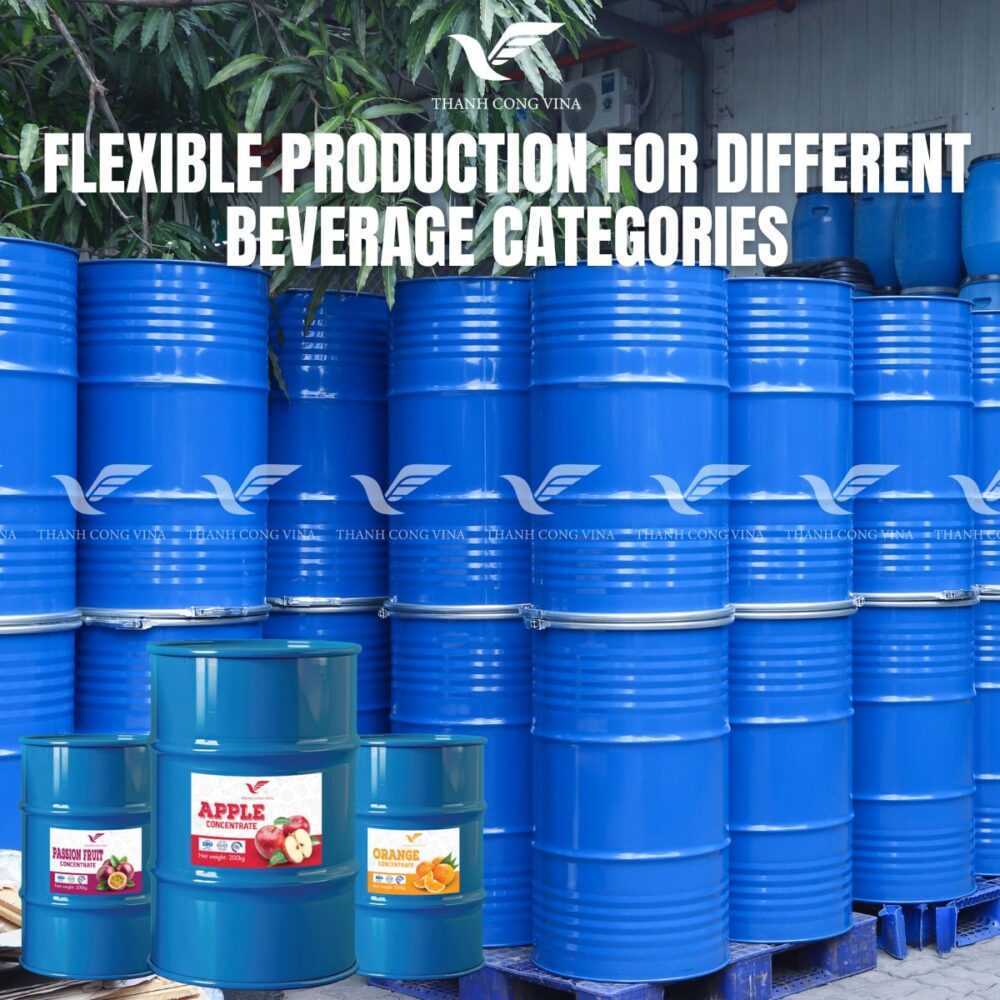
Flexible Production for Different Beverage Categories
Flexible manufacturing is valuable because international buyers may have different product concepts and market requirements. A beverage manufacturer should be capable of supporting more than one category and adapting production plans accordingly.
Fruit Juice and Fruit-Based Drinks
Fruit drinks are among the most flexible categories for private label development. Brands can choose individual fruit flavors or develop mixed-fruit concepts.
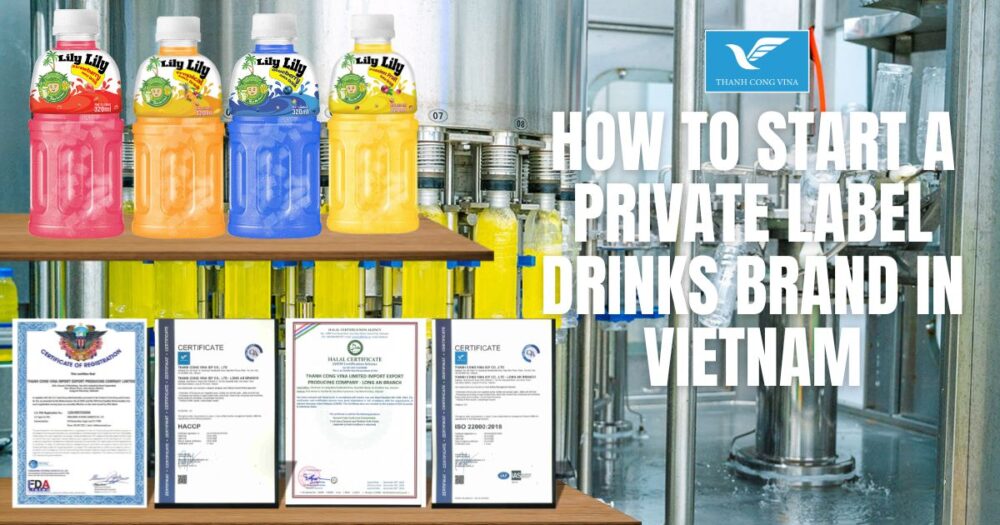
Possible product directions include mango, orange, strawberry, lychee, red grape, pineapple, passion fruit, peach, guava, and other tropical fruit combinations.
Different packaging sizes can also be considered depending on the target market and distribution channel.
Coconut Water and Coconut-Based Beverages
Coconut water is another beverage category suitable for customized development. Vietnam’s tropical agricultural environment provides access to coconut resources, while consumer interest in natural and refreshing beverages creates opportunities for coconut-based products.
Brands can explore 100% coconut water or coconut water combined with fruit juice, depending on their product concept.
Packaging, serving size, flavor profile, and positioning can be adapted to the target market.
Aloe Vera and Functional Beverage Concepts
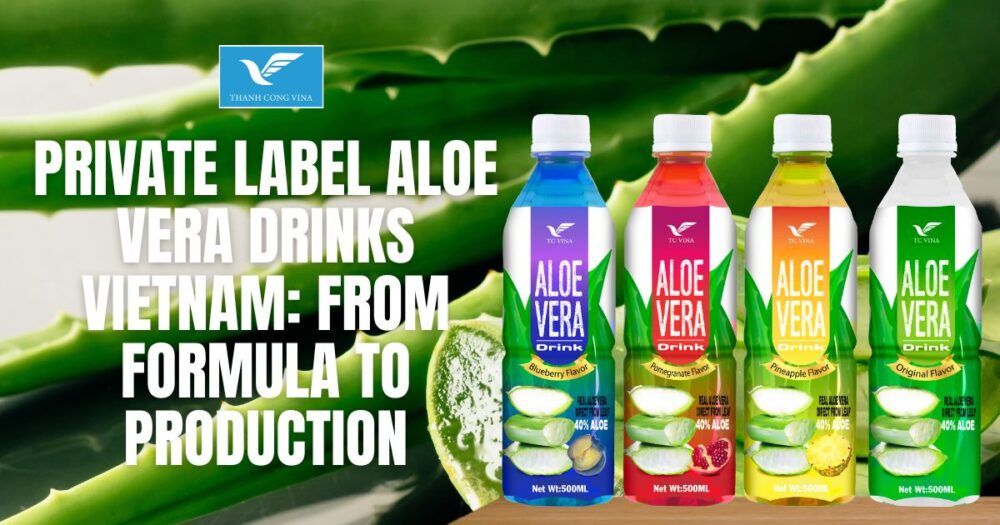
Aloe vera drinks can provide another opportunity for companies seeking differentiated beverage products. Different fruit flavors can be developed around an aloe vera beverage base, including mango, lychee, peach, blueberry, or original profiles.
This type of product can complement a broader beverage portfolio and provide retailers or distributors with additional options.
Ready-to-Drink Coffee
Flexible beverage manufacturing can also extend beyond fruit-based products. Ready-to-drink coffee can be developed in different formats and flavor profiles, including black coffee, cappuccino, latte, and milk coffee.
For distributors managing multiple beverage categories, working with one manufacturing partner can simplify sourcing and portfolio management.
4. OEM and ODM Solutions for Private Label Brands
OEM and ODM manufacturing provide different approaches to customized beverage production. The appropriate model depends on how much development work the buyer has already completed.
OEM Beverage Manufacturing
OEM production is suitable when the customer already has a defined product specification.
The buyer may provide a formula, flavor requirements, packaging concept, product volume, or technical specifications. The manufacturer then produces the beverage according to the approved requirements.
A typical OEM workflow can include:
- Product requirement discussion
- Formula and specification review
- Raw material preparation
- Sample confirmation
- Packaging artwork approval
- Production scheduling
- Commercial manufacturing
- Quality inspection
- Packing and shipment preparation
This model is particularly useful for established brands and distributors with their own product specifications.
ODM Beverage Development
ODM manufacturing provides broader development assistance. Instead of arriving with a complete formula, the buyer can start with a product concept.
The manufacturer may assist with flavor selection, formulation development, sampling, packaging recommendations, and production planning.
This approach can be useful for businesses that have strong market knowledge but limited technical beverage development resources.
A startup, for example, may know that it wants to launch a tropical fruit drink for the Middle Eastern market but may not yet have a finalized formula. An ODM manufacturer can help transform the commercial concept into a manufacturable beverage.
5. Custom Packaging and Brand Development
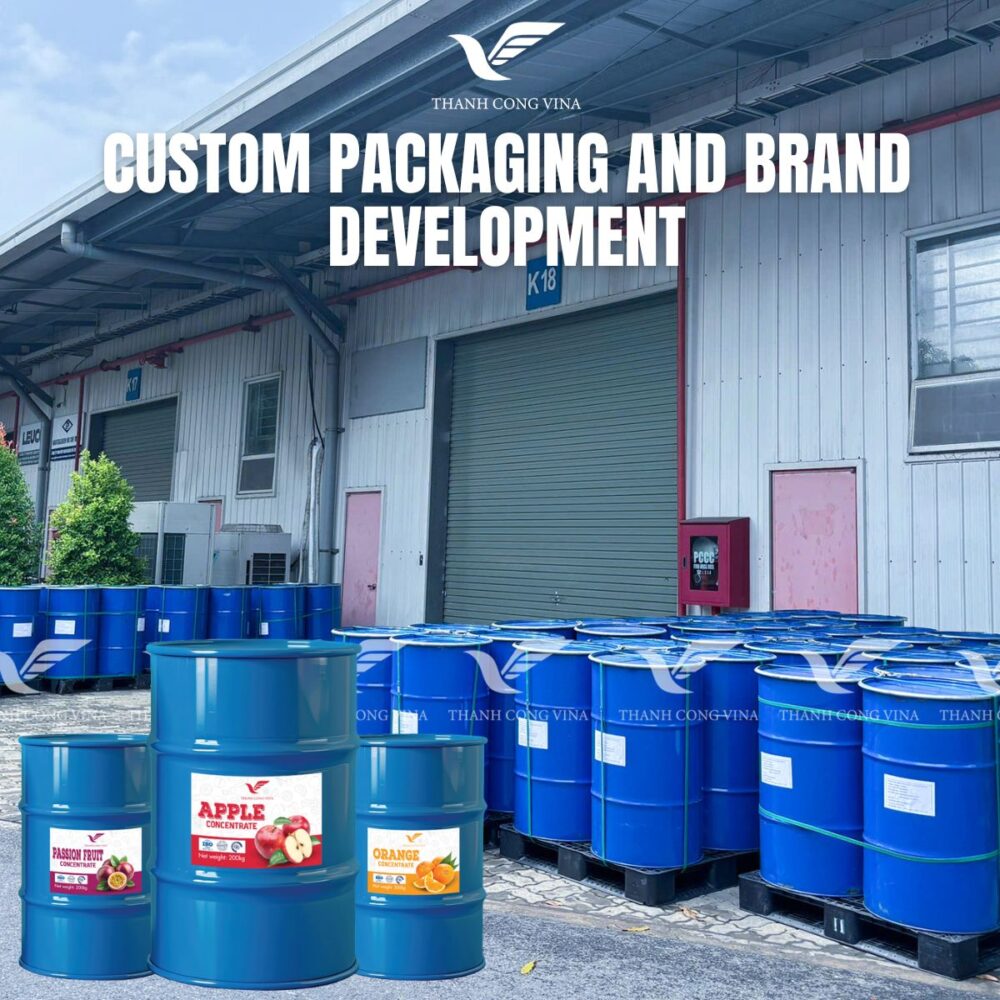
Custom Packaging and Brand Development
The product itself is only one component of a successful Private Label beverage. Packaging plays an important role in communicating brand identity and positioning the product in retail environments.
Flexible Packaging Formats
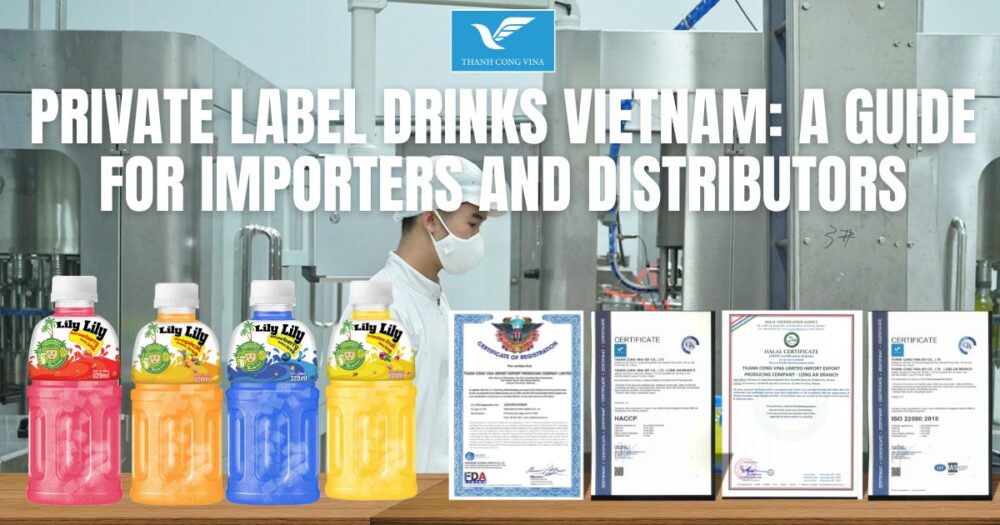
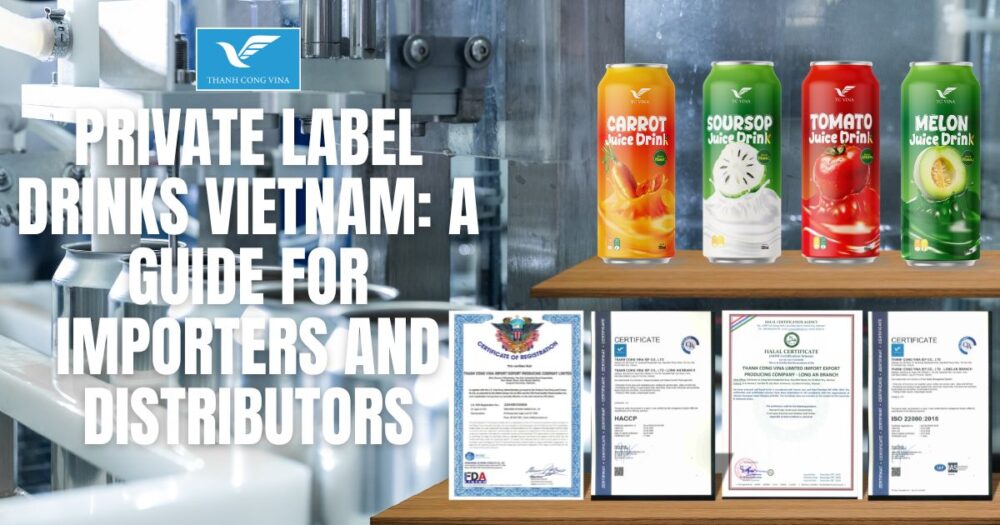
Depending on the beverage category and production requirements, brands may consider different packaging formats such as cans, PET bottles, glass bottles, or other suitable containers.
Serving sizes can also be selected according to the target market. Smaller formats can be suitable for convenience and on-the-go consumption, while larger formats may target household or shared consumption.
The packaging format should be considered alongside transportation, storage, retail positioning, and production efficiency.
Customized Label and Artwork
Private label production allows businesses to use their own brand name, logo, visual identity, product information, and marketing message.
Packaging artwork normally needs to be reviewed before mass production to ensure that the design is compatible with the manufacturing and labeling requirements.
Important packaging information can include:
- Brand name
- Product name
- Ingredients
- Nutrition information
- Net volume
- Manufacturer information
- Barcode
- Batch number
- Production date
- Expiry information
- Storage instructions
International products should also be prepared according to the requirements of the destination market.
Building a Multi-Product Beverage Portfolio
Flexible production allows brands to expand gradually.
Instead of launching ten products simultaneously, a business can begin with two or three products, evaluate market performance, and then introduce additional flavors or beverage categories.
This staged approach can help businesses manage inventory while creating a more structured product development strategy.
6. Quality Control for Flexible Beverage Production
Flexibility should not come at the expense of product consistency. Quality control remains an essential component of customized beverage manufacturing, regardless of order size.
Raw Material Quality
Raw materials should be controlled according to established specifications before entering production. Ingredients can directly influence flavor, color, aroma, texture, and product stability.
A consistent raw material management process helps reduce variations between different production batches.
Production Process Control
Manufacturing parameters should be monitored throughout the production process. Depending on the beverage, production may include ingredient preparation, blending, processing, filling, sealing, coding, inspection, and packaging.
A controlled production workflow supports consistency and food safety across commercial orders.
Finished Product Inspection
Before shipment, finished beverages can be inspected according to the approved product specifications.
Packaging condition, labeling, coding, appearance, and other relevant characteristics can be reviewed before products are prepared for export.
For international buyers, quality control should be integrated into the entire manufacturing process rather than treated as a final-stage activity only.
7. How Flexible Production Supports International Market Expansion
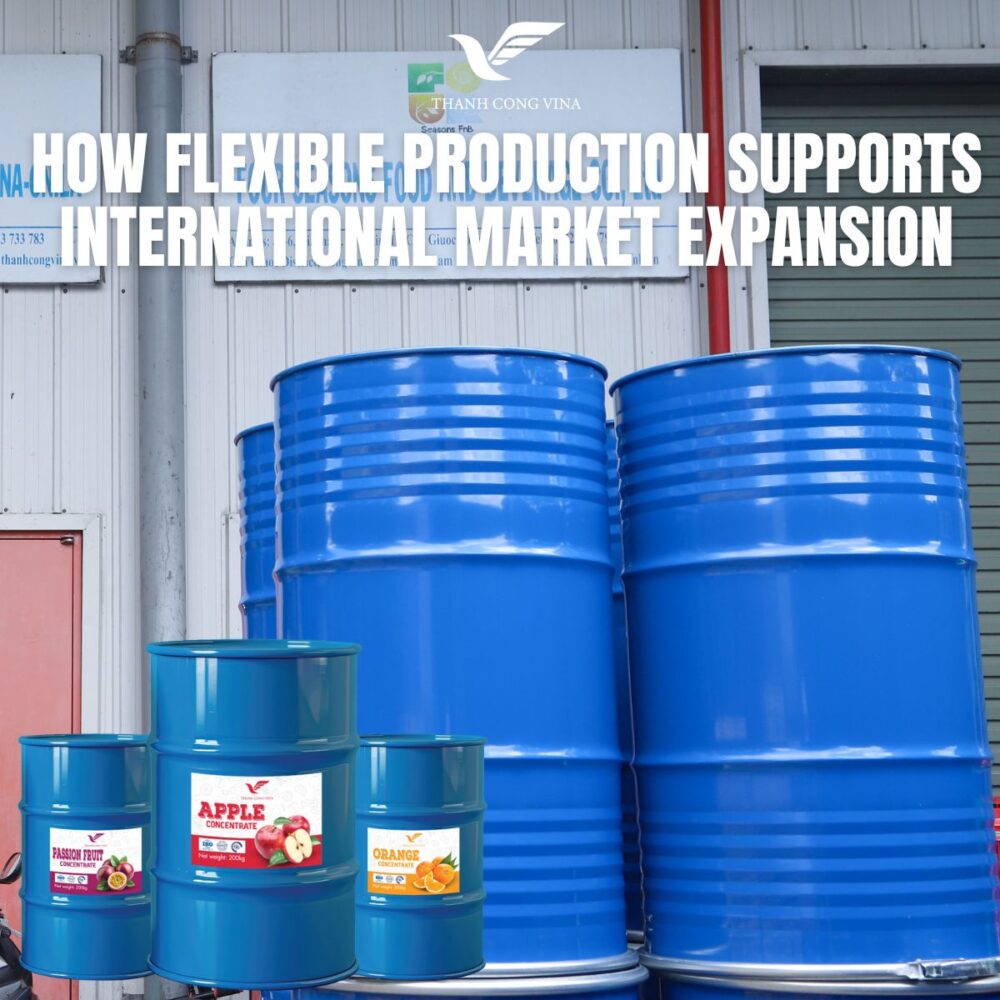
How Flexible Production Supports International Market Expansion
The ability to adjust production can be particularly valuable for businesses operating across multiple markets.
Market Testing
Before committing to large-scale production, a company may want to test a new beverage in a specific region.
A flexible production strategy can allow the brand to evaluate consumer response, retailer feedback, pricing, and distribution performance before expanding the product.
Seasonal Product Development
Some beverage concepts may be connected to seasonal demand, promotional campaigns, or specific retail periods.
Flexible manufacturing can help businesses plan product launches around commercial opportunities while reducing the need to maintain excessive inventory throughout the year.
Expanding Successful Products
Once a product demonstrates market demand, the business can increase production volume and potentially introduce additional flavors, sizes, or packaging formats.
This creates a scalable pathway from initial product testing to larger commercial distribution.
8. Why Choose Thanh Cong Vina for Private Label Beverage Production?
Thanh Cong Vina provides OEM, ODM, and Private Label beverage manufacturing solutions for international customers seeking customized production from Vietnam.
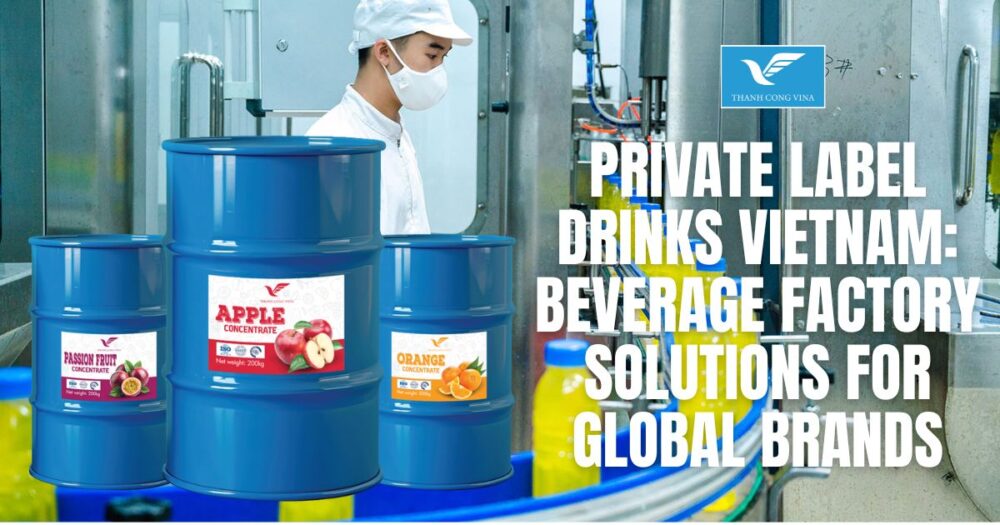
The company supports a broad range of beverage categories, including fruit juice drinks, coconut water, coconut water with fruit juice, aloe vera drinks, juice concentrates, NFC juice, ready-to-drink coffee, energy drinks, and other customized beverage products.
For businesses with specific production requirements, the manufacturing process can be organized around product specifications, packaging formats, target volumes, and market requirements.
Thanh Cong Vina can support customers through different stages of the beverage development process, including concept discussion, formulation, sampling, packaging preparation, commercial production, quality control, and export preparation.
The flexible approach is particularly relevant for companies that do not want to immediately commit to very large production volumes. Startups can develop an initial product, distributors can test new flavors, and established brands can expand their portfolios through customized manufacturing.
For international buyers, the objective is not simply to find a factory that can produce beverages. The right manufacturing relationship should also provide communication, product development support, quality management, packaging coordination, and export-oriented production.
Conclusion
The growing demand for customized beverages has created new opportunities for importers, distributors, retailers, startups, and established consumer brands. Private Label manufacturing allows businesses to create products under their own brand while accessing established beverage production capabilities without building their own factory. Flexible production and low MOQ-oriented solutions can be especially valuable for companies testing new markets, launching new flavors, managing inventory, or gradually expanding their product portfolio.
Vietnam provides a practical manufacturing environment supported by agricultural resources, beverage processing capabilities, and international export experience. From fruit drinks and coconut water to aloe vera beverages, coffee, concentrates, and functional beverage concepts, buyers can explore multiple categories through customized OEM and ODM production. With its export-oriented approach and broad beverage capabilities, Thanh Cong Vina supports international customers from product development to commercial production. By combining customized manufacturing, flexible production planning, and Private Label solutions, Thanh Cong Vina Beverage helps businesses develop beverage products aligned with their brand and international market requirements.