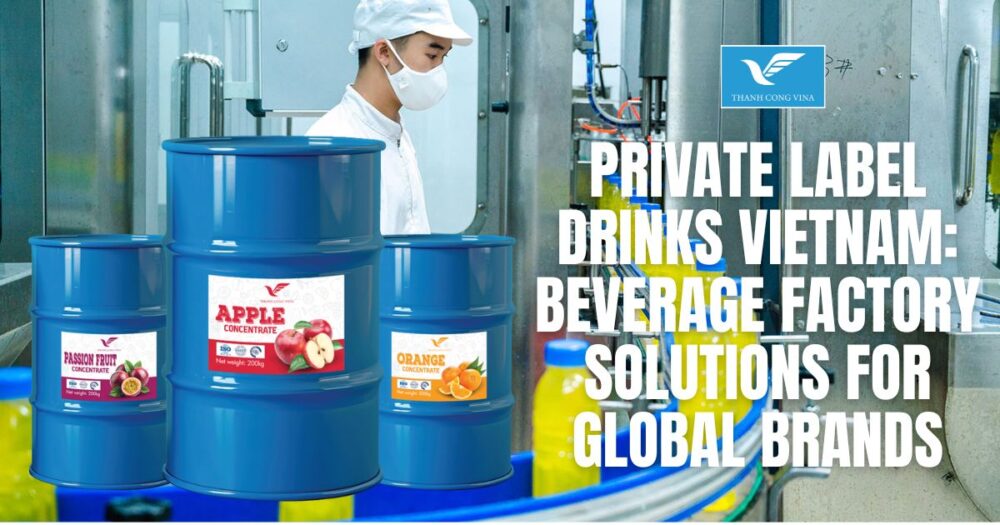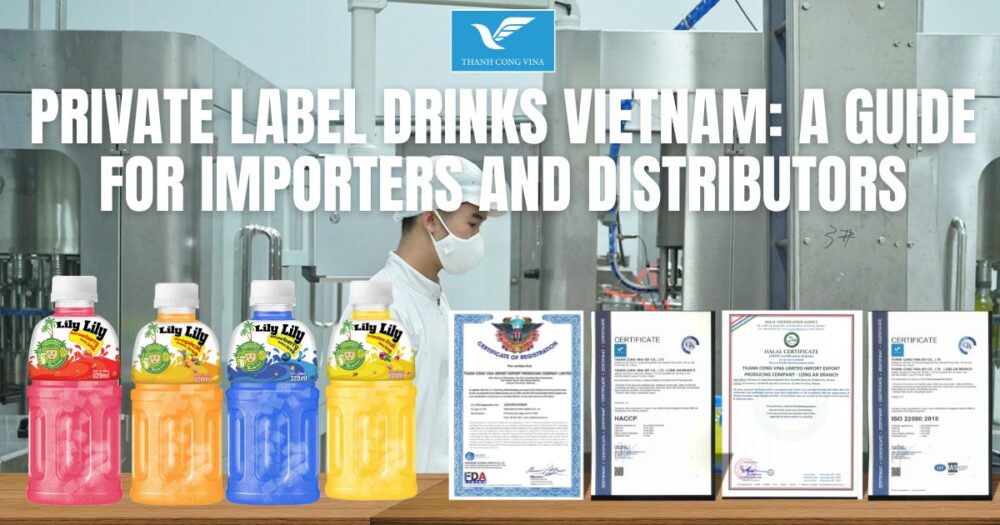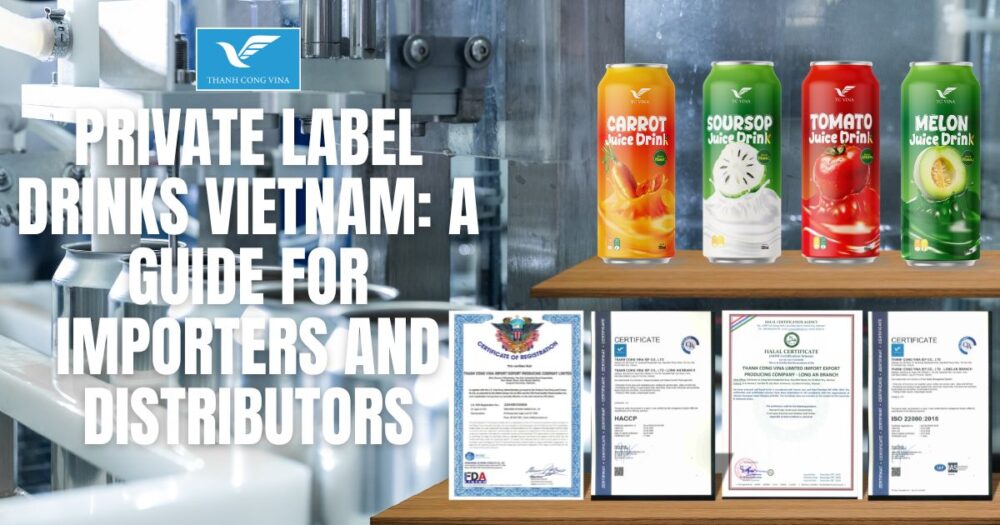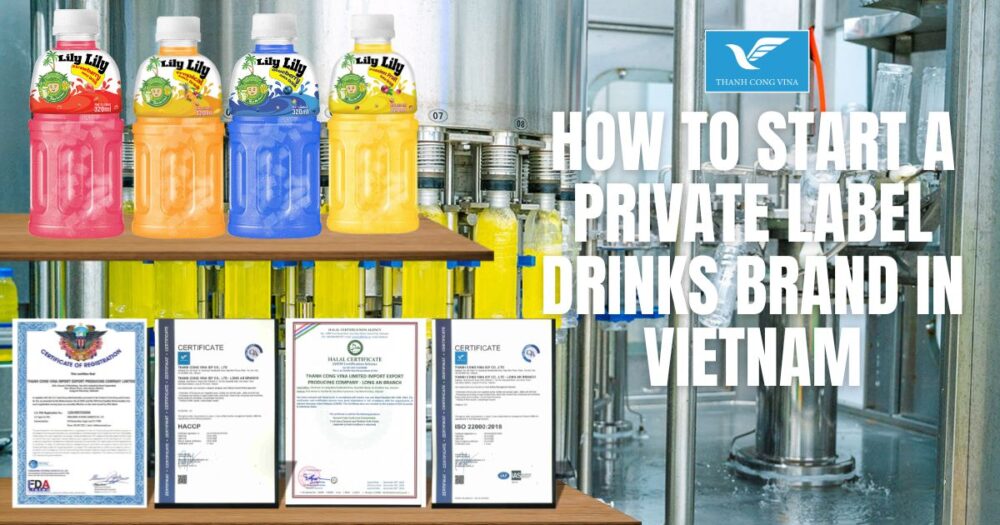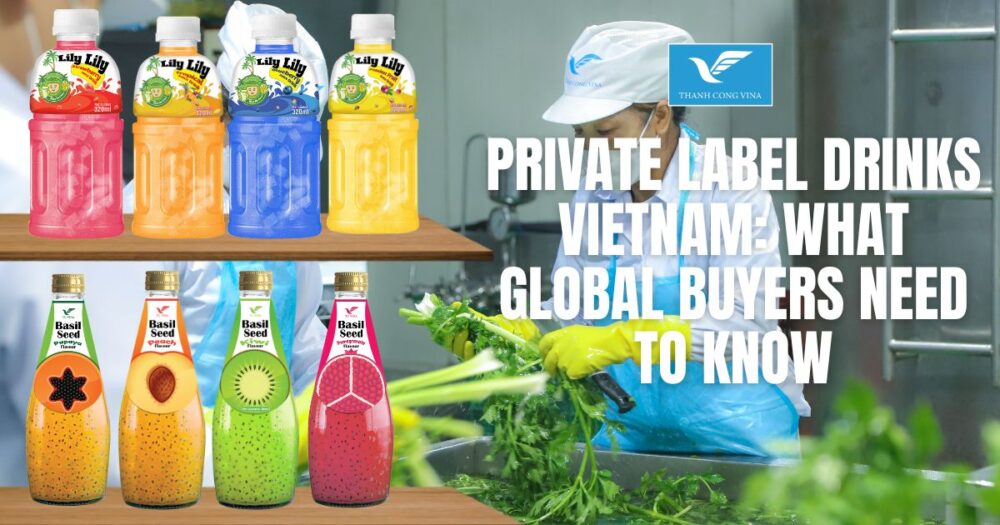

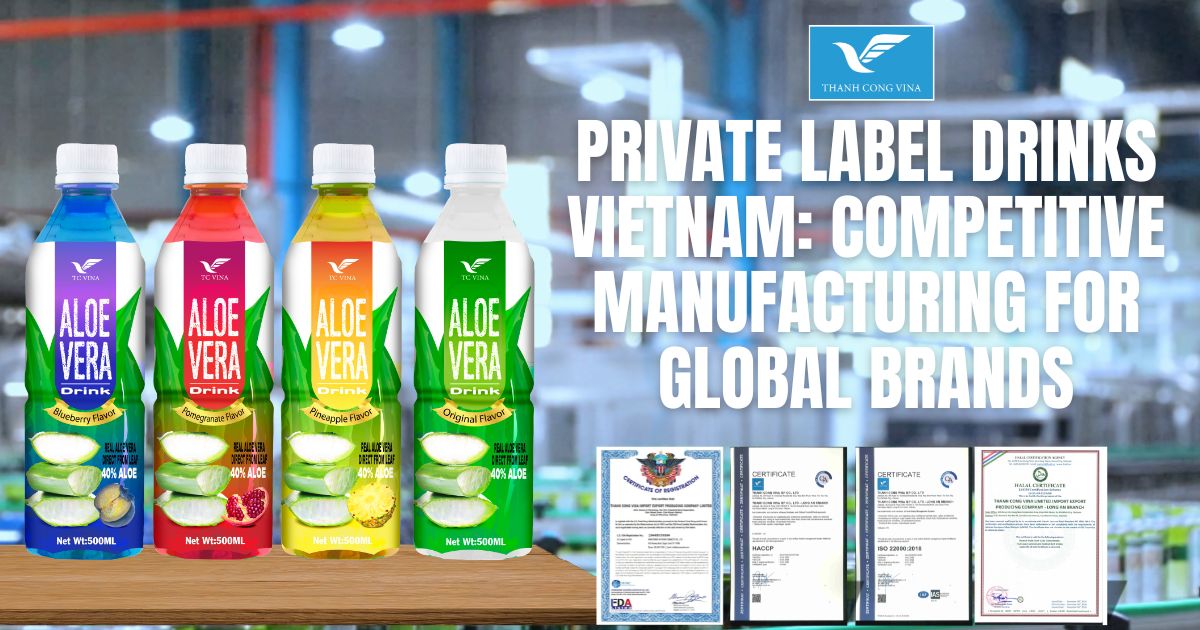
For international brands, importers, distributors, retailers, and emerging beverage companies, Private Label manufacturing offers a practical way to develop branded drinks without establishing and operating their own production facilities. Vietnam has emerged as an attractive sourcing destination because of its agricultural resources, growing beverage manufacturing capabilities, skilled production workforce, and established export infrastructure.
For global brands, competitive manufacturing is not simply about production cost. Product quality, formulation flexibility, packaging options, food safety, production capacity, supply chain coordination, and export support all contribute to the overall value of a manufacturing partnership. A capable Vietnamese beverage manufacturer can help transform a product concept into a commercially ready beverage while allowing brands to maintain control over their identity and market positioning.
With OEM and ODM capabilities, Thanh Cong Vina supports international customers in developing customized beverages across multiple categories. From fruit drinks and coconut water to aloe vera beverages, ready-to-drink coffee, energy drinks, and juice ingredients, the company provides production solutions designed for international business requirements.
1. Why Vietnam Is Competitive for Private Label Beverage Manufacturing
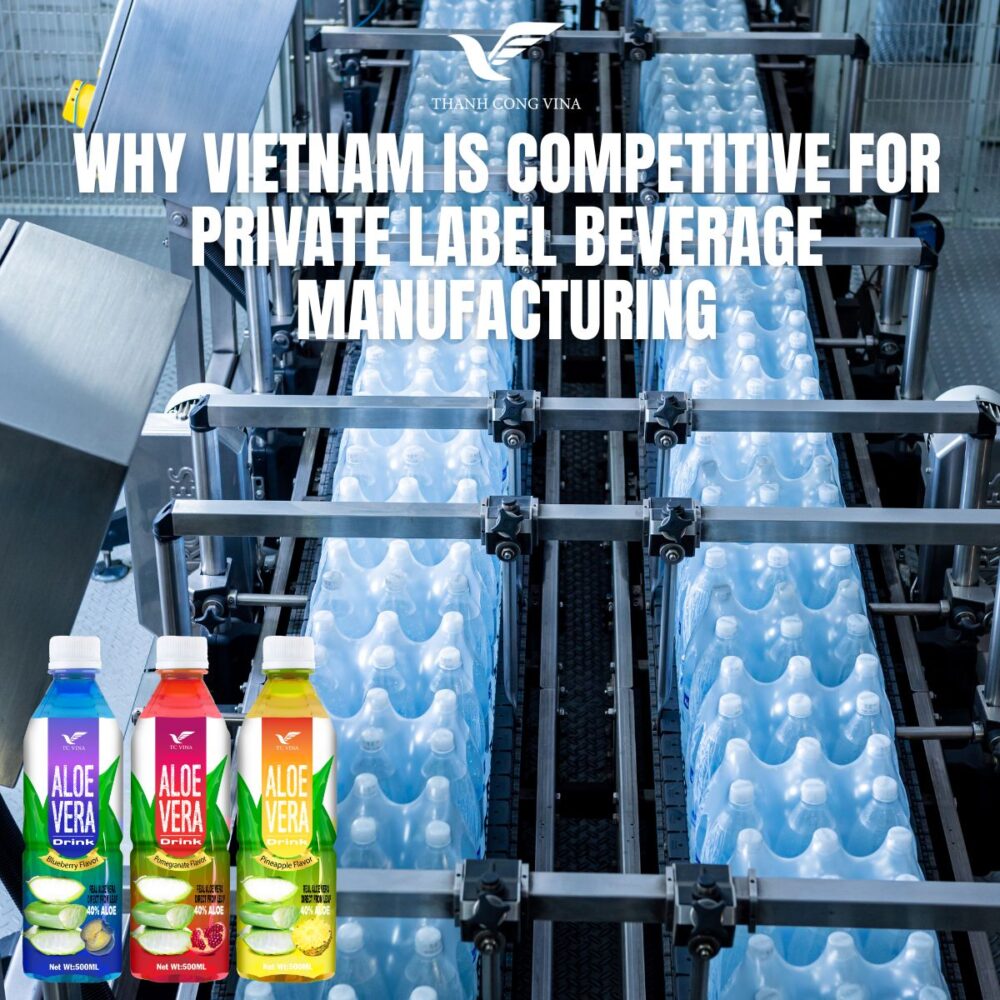
Why Vietnam Is Competitive for Private Label Beverage Manufacturing
Vietnam offers several factors that make it a practical production destination for international beverage companies. The country’s agricultural base, food processing sector, manufacturing infrastructure, and geographic position in Asia contribute to an increasingly connected beverage supply chain.
Access to Tropical Fruit and Agricultural Ingredients
Vietnam has a diverse agricultural industry that provides access to many fruits and plant-based ingredients used in beverage manufacturing.
Mango, pineapple, passion fruit, orange, strawberry, lychee, guava, red grape, peach, coconut, aloe vera, and other ingredients can be incorporated into different beverage concepts.
This diversity allows international brands to develop multiple products through a single manufacturing relationship. Instead of relying on a generic beverage formula, brands can explore different fruit profiles and create products suited to specific consumer preferences.
For example, an importer may develop a tropical fruit beverage series containing mango, pineapple, and passion fruit, while another company may prefer refreshing citrus or berry-oriented flavors.
Established Beverage Production Capabilities
Vietnam has a growing beverage manufacturing sector covering a wide range of product categories. These include fruit juice drinks, coconut water, aloe vera drinks, ready-to-drink coffee, energy beverages, juice concentrates, and other customized products.
For international businesses, access to established manufacturing infrastructure can reduce the need for major capital investment.
Instead of building a factory, purchasing production equipment, recruiting technical teams, and developing food safety systems from the beginning, a brand can cooperate with an experienced manufacturer and allocate more resources to marketing, distribution, sales, and customer acquisition.
Strategic Location for International Trade
Vietnam’s position in Southeast Asia provides access to important regional trade routes and international markets.
For global brands, this can support sourcing strategies across Asia and other regions. Export-oriented beverage manufacturers can coordinate production with packaging, documentation, container loading, and shipment preparation.
The result is a more integrated approach to beverage sourcing that connects product development with international distribution.
2. Private Label Manufacturing for Global Beverage Brands
Global brands often have different product strategies depending on their market, consumer group, and distribution channel. Private Label manufacturing provides flexibility because the product can be developed around the brand’s specific requirements rather than following a standardized retail product.
Developing Products Around Brand Positioning
Before production begins, the manufacturer and customer can define the product’s commercial direction.
Important considerations may include:
- Target consumer
- Destination market
- Beverage category
- Flavor profile
- Product size
- Packaging format
- Price positioning
- Shelf-life expectations
- Production quantity
- Labeling requirements
For example, a supermarket brand may require an affordable fruit drink in a convenient single-serve format, while a premium beverage company may seek a specialized fruit combination with distinctive packaging.
A clear product concept allows the manufacturer to better align formulation, packaging, and production with the customer’s commercial objectives.
Creating Exclusive Beverage Products
One of the key advantages of Private Label manufacturing is brand ownership. Instead of competing primarily through an existing manufacturer’s brand, the buyer can develop a beverage under its own name.
This allows businesses to establish their own visual identity, product portfolio, packaging system, and market positioning.
Retailers can use private label products to expand their beverage assortment, while distributors can develop exclusive products for specific territories.
For emerging beverage companies, customized manufacturing also provides an opportunity to enter the market without investing in their own production facility.
3. OEM and ODM Solutions for Competitive Beverage Production
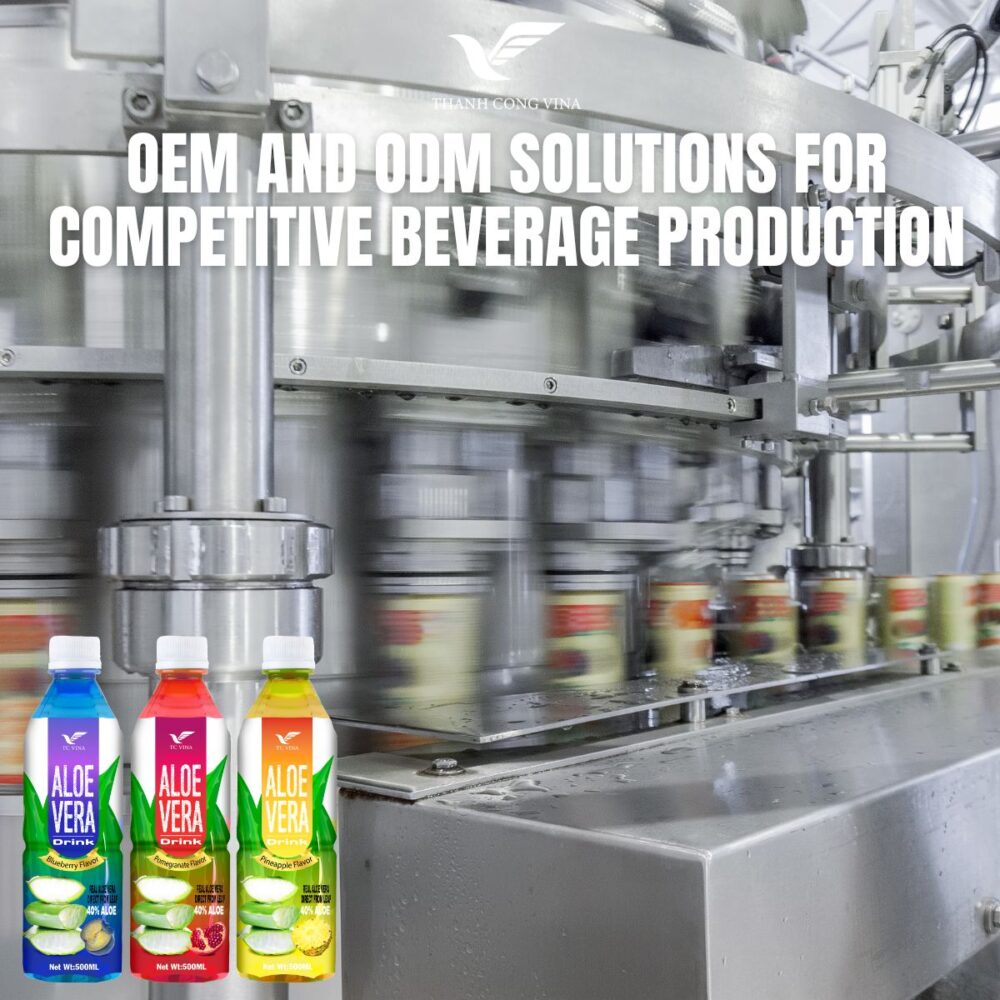
OEM and ODM Solutions for Competitive Beverage Production
OEM and ODM services allow brands to choose how much responsibility they want to retain during product development.
OEM Beverage Manufacturing
OEM production is suitable for customers that already have a defined product concept or technical specification.
The buyer may provide the formula, product requirements, flavor specifications, packaging design, or other technical information. The manufacturer then produces the beverage according to the approved specifications.
An OEM workflow can include:
- Product requirement review
- Formula and ingredient confirmation
- Sample development
- Packaging specification
- Artwork approval
- Production scheduling
- Commercial manufacturing
- Quality inspection
- Packing and export preparation
This approach is suitable for established beverage brands and distributors with existing product specifications.
ODM Beverage Development
ODM manufacturing offers a broader development service for customers that have a market concept but do not have a finalized product formula.
The manufacturer may support:
- Product concept development
- Flavor selection
- Formula development
- Sample production
- Packaging recommendations
- Product adjustment
- Commercial manufacturing
ODM is particularly useful for companies entering the beverage market for the first time.
A distributor, for example, may know that consumers in its target market prefer tropical fruit beverages but may not have the technical resources to develop a complete formulation. An ODM manufacturer can help turn that commercial idea into a manufacturable beverage.
4. Beverage Categories Available for Private Label Production
A diverse product portfolio allows global brands to develop different beverage concepts according to market opportunities.
Fruit Juice and Fruit-Based Drinks
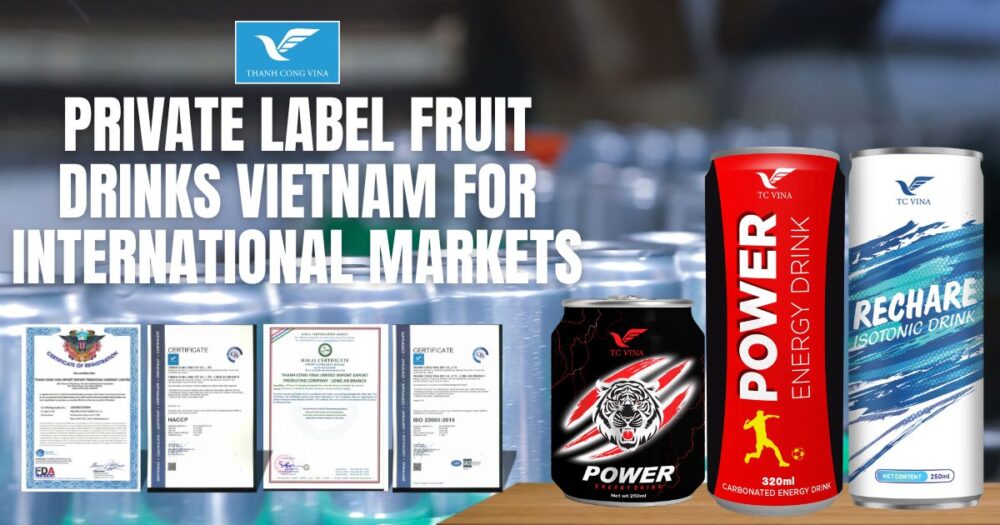
Fruit beverages remain an important category for international markets. Brands can develop individual flavors or create product series around different fruit combinations.
Potential concepts include mango, orange, strawberry, lychee, red grape, pineapple, passion fruit, peach, guava, and other tropical fruit drinks.
Product sizes and packaging formats can be adapted according to the intended sales channel.
Coconut Water and Coconut-Based Beverages
Coconut water is another category that can benefit from Vietnam’s agricultural resources.
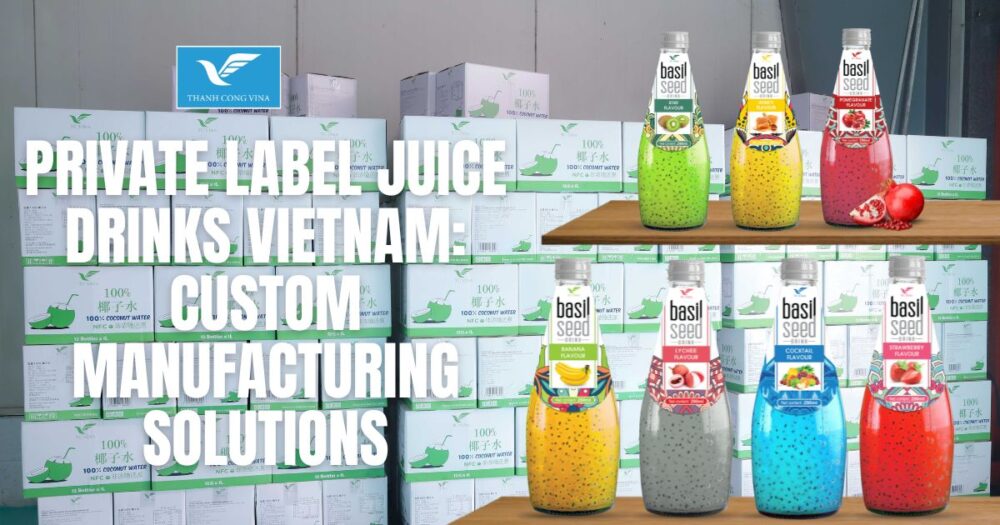
Brands can develop 100% coconut water or coconut water combined with fruit juice. Different flavor combinations can be considered based on the target market.
Coconut-based products can be positioned for consumers seeking refreshing beverage options and can be developed for different retail and distribution channels.
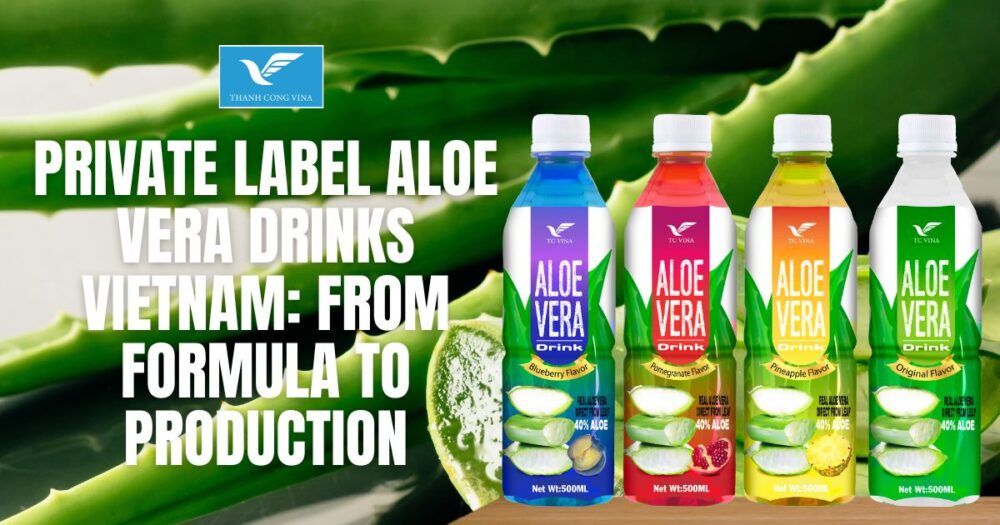
Aloe Vera Drinks
Aloe vera beverages provide an additional opportunity for brands looking for differentiated products.
Potential flavor profiles can include mango, blueberry, lychee, peach, or original aloe vera.
Aloe vera products can also complement a broader fruit beverage portfolio and give retailers or distributors additional choices within the same brand family.
Ready-to-Drink Coffee
Vietnam’s strong coffee industry also supports the development of ready-to-drink coffee products.
Commercial concepts may include black coffee, cappuccino, latte, and milk coffee.
For distributors serving multiple beverage categories, adding RTD coffee to a fruit beverage portfolio can create opportunities to reach different consumption occasions.
Energy and Functional Beverages
Energy drinks and functional beverage concepts can also be developed through OEM and ODM manufacturing.
Brands can define their preferred flavor profile, packaging, serving size, product concept, and target consumer group.
This flexibility allows global companies to develop beverages according to local market opportunities rather than relying entirely on standardized products.
5. Cost-Efficient Production Without Compromising Quality
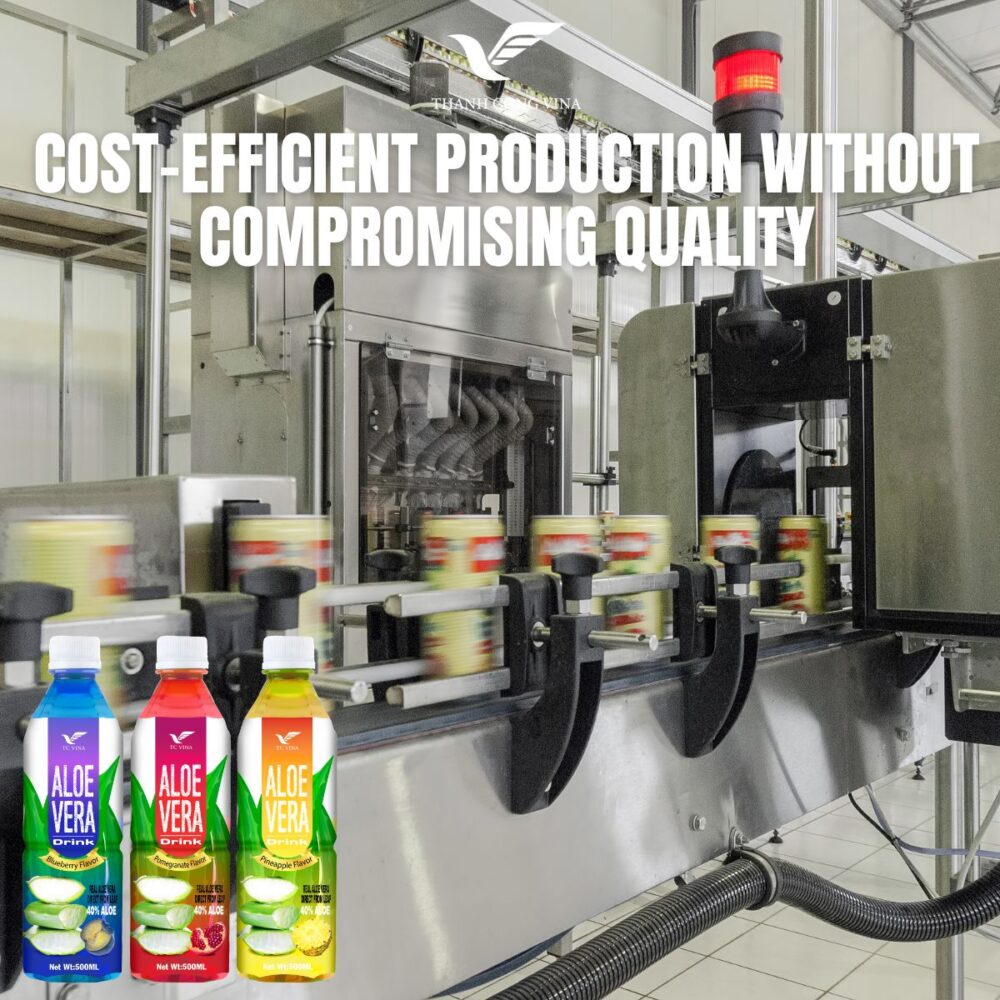
Cost-Efficient Production Without Compromising Quality
Competitive manufacturing should not be evaluated solely through the factory price. The overall cost of a beverage project also includes raw materials, packaging, production efficiency, logistics, inventory, product development, and supply chain management.
Optimizing Raw Material Sourcing
Efficient access to agricultural ingredients can support competitive beverage development. Local sourcing of suitable ingredients can reduce unnecessary supply chain complexity for certain products.
At the same time, raw materials should be selected according to established quality and product specifications.
A balance between cost and quality is essential for maintaining a commercially viable beverage.
Efficient Production Planning
Production planning can influence manufacturing efficiency. Appropriate production volumes, packaging specifications, production schedules, and raw material planning can help reduce unnecessary production interruptions.
For international brands, coordinating these elements in advance can improve supply chain predictability.
Flexible Product Development
Not every customer needs the same production model. Startups may require smaller initial quantities, while established distributors may order larger commercial volumes.
A flexible manufacturing partner can help businesses structure production around their current market position and gradually increase volumes as demand develops.
6. Quality Control and Food Safety for Global Markets
Competitive production only creates long-term value when it is supported by consistent quality and food safety management.
Raw Material Inspection
Ingredients and packaging materials should be controlled according to established specifications before entering production.
This process helps maintain consistency in the final beverage and reduces the possibility of unsuitable materials entering the manufacturing line.
In-Process Monitoring
Production should be monitored throughout key stages. Depending on the product, this can include ingredient preparation, blending, processing, filling, sealing, coding, and packaging.
A systematic quality control process helps identify deviations and maintain consistency between batches.
Finished Product Inspection
Finished products can be checked according to the approved specifications before shipment.
Inspection may cover packaging condition, labeling, coding, appearance, and other relevant product characteristics.
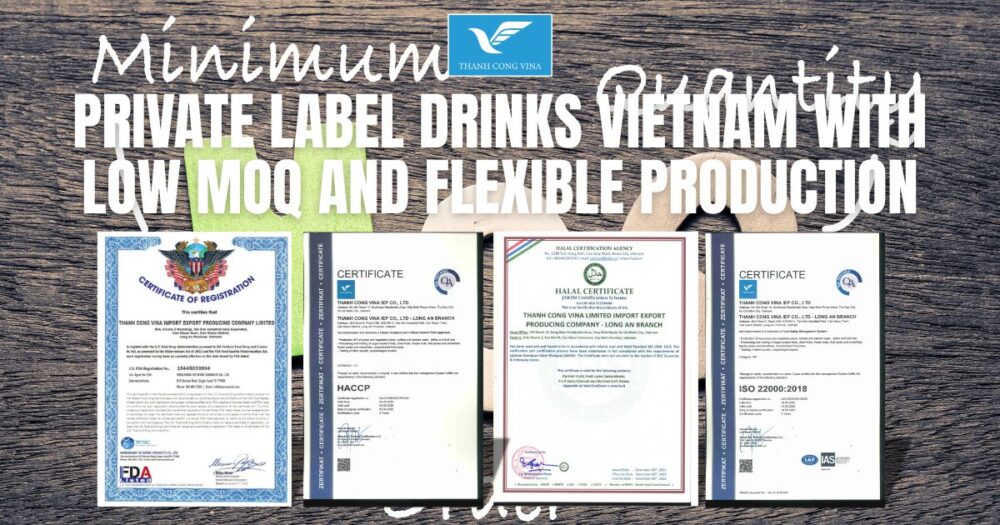
For export customers, product documentation can also be prepared according to the agreed requirements.
7. Packaging and Brand Customization
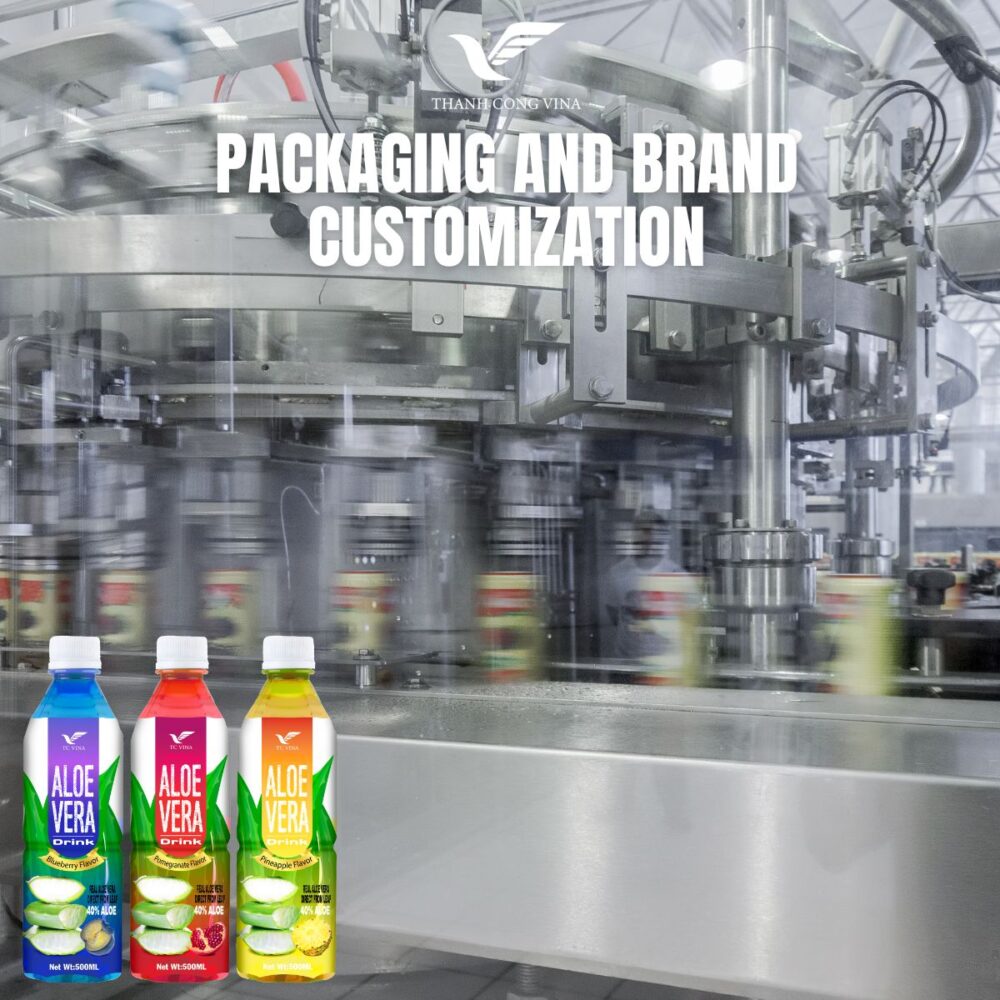
Packaging and Brand Customization
Packaging is one of the most visible elements of a Private Label beverage. It communicates the brand’s identity and provides consumers with information about the product.
Choosing the Right Packaging Format
Depending on the product category and market, brands can consider cans, PET bottles, glass bottles, and other suitable formats.
Serving sizes can also vary according to the intended consumption occasion.
Single-serve formats may be suitable for convenience stores and on-the-go consumption, while larger formats may target household use.
Customized Artwork and Labeling
Private label packaging can include the customer’s own logo, product name, visual identity, ingredients, nutritional information, barcode, manufacturer information, and other required details.
Artwork should be reviewed carefully before mass production to ensure compatibility with the selected packaging and destination-market requirements.
Export Packaging
International shipments require packaging that can withstand transportation, handling, storage, and distribution.
Carton specifications, palletization, container loading, and product arrangement should therefore be considered during production planning.
8. Why Choose Thanh Cong Vina for Private Label Beverage Manufacturing?
Thanh Cong Vina provides OEM, ODM, and Private Label beverage manufacturing solutions for international brands, importers, distributors, retailers, and other beverage businesses.
The company’s product capabilities include fruit juice drinks, coconut water, coconut water with fruit juice, aloe vera beverages, juice concentrates, NFC juice, ready-to-drink coffee, energy drinks, and other customized beverage products.
For global brands, the manufacturing process can be organized around specific requirements such as flavor, formula, packaging, serving size, production volume, target market, and export documentation.
Thanh Cong Vina can support customers throughout different stages of a beverage project, including product concept development, formula preparation, sampling, packaging coordination, commercial production, quality control, and shipment preparation.
This integrated approach can help international customers simplify their sourcing process by working with one manufacturing partner for multiple beverage categories.
For brands seeking to expand their portfolio, the partnership can also provide opportunities to introduce new flavors and product formats over time. A company can begin with a focused product range and expand after gaining market feedback.
The objective is to provide a manufacturing solution that supports both immediate production requirements and longer-term brand development.
Conclusion
The global beverage industry continues to create opportunities for brands seeking customized products, efficient supply chains, and flexible manufacturing partnerships. Private Label production allows international businesses to develop beverages under their own brand while accessing established manufacturing infrastructure in Vietnam. Competitive production involves more than price; it requires a combination of ingredient sourcing, formulation expertise, production efficiency, packaging flexibility, quality control, and export support.
Vietnam provides an increasingly attractive environment for global beverage sourcing because of its agricultural resources, beverage processing capabilities, and international trade connections. With OEM and ODM services, Thanh Cong Vina supports customers across fruit drinks, coconut water, aloe vera beverages, ready-to-drink coffee, energy drinks, concentrates, and other customized products. For global brands seeking a flexible manufacturing partner, Thanh Cong Vina provides a structured approach to product development and commercial production. By combining customized solutions with export-oriented manufacturing, businesses can use Private Label production to build differentiated beverage portfolios for international markets.