
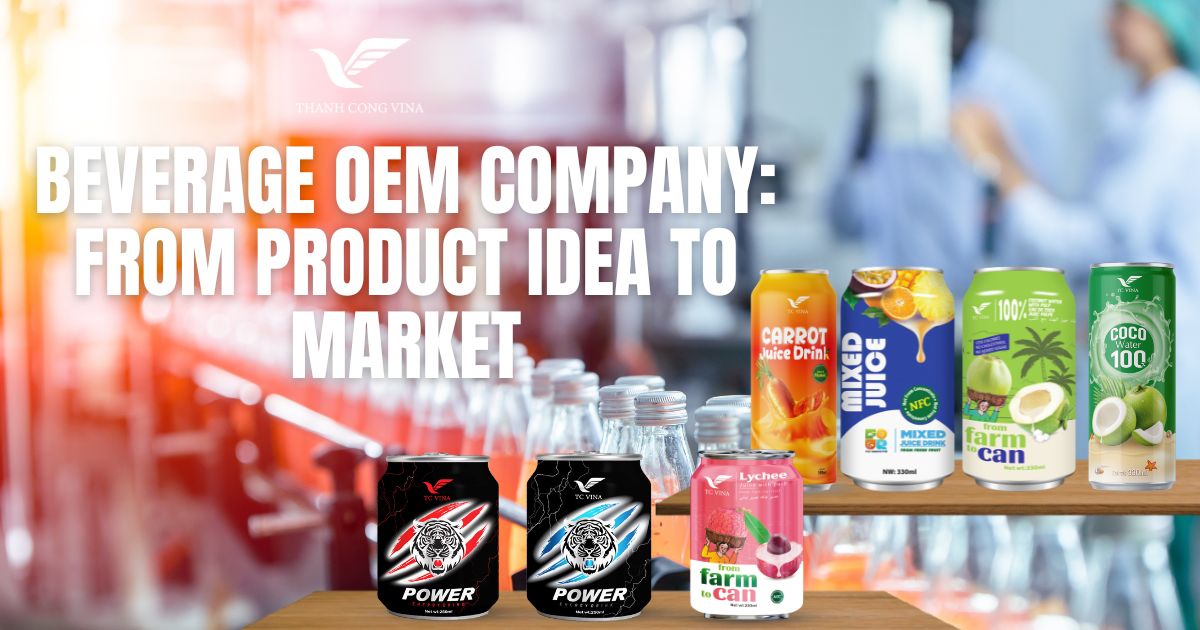
Launching a beverage brand requires much more than creating an attractive product concept. Businesses must develop a commercially viable formula, select reliable ingredients, comply with food safety regulations, choose suitable packaging, manage production costs, and establish a dependable supply chain. For startups, retailers, distributors, and established beverage companies, managing every stage internally can require significant investment and technical expertise. This is where a professional Beverage OEM Company can provide substantial value.
An experienced OEM manufacturer transforms an initial beverage idea into a market-ready product through an integrated development and production process. From formulation and ingredient sourcing to quality control, packaging, commercial manufacturing, and export logistics, OEM services allow brands to focus on marketing and business growth while their manufacturing partner manages production complexity. Vietnam has increasingly become an attractive destination for beverage OEM production due to its tropical agricultural resources, modern processing capabilities, competitive manufacturing costs, and growing international export network.
1. Turning Product Ideas into Commercial Opportunities
Turning Product Ideas into Commercial Opportunities
The journey from a beverage concept to a successful product begins with understanding the business idea behind the product. A beverage may be designed to target health-conscious consumers, introduce a tropical flavor, serve a specific demographic, or fill a gap in a particular market. However, an attractive idea must be transformed into a technically feasible and commercially competitive product.
Understanding the Brand Concept
A professional Beverage OEM Company starts by understanding the customer’s business objectives. This includes identifying the target market, consumer profile, desired product category, expected retail positioning, packaging format, price range, ingredient preferences, and distribution strategy.
For example, a brand targeting premium consumers may prioritize natural ingredients, sophisticated packaging, and a clean-label positioning. A mass-market beverage may instead focus on cost efficiency, scalable production, convenient packaging, and competitive pricing.
Understanding these factors helps the manufacturer establish a clear product development direction.
Defining Product Specifications
Once the concept has been established, the next stage is defining the technical specifications. These may include flavor profile, sweetness level, fruit content, nutritional values, color, texture, acidity, serving size, shelf life, packaging format, and storage requirements.
A reliable manufacturing partner translates commercial objectives into measurable production specifications. This is especially important for brands entering international markets because product requirements can vary significantly between countries.
Evaluating Market Trends
Market research also plays an important role in product development. Current consumer trends include demand for natural fruit beverages, reduced-sugar products, functional drinks, plant-based options, coconut water, aloe vera beverages, ready-to-drink coffee, and convenient single-serve packaging.
An experienced manufacturer can provide technical input based on existing production capabilities and ingredient availability. This helps brands avoid developing products that are difficult to manufacture or excessively expensive to produce.
From Concept to Development Brief
The final outcome of this stage is a detailed product development brief. It provides a clear framework for research and development teams to begin formulation work.
By combining commercial objectives with technical requirements, an OEM partner creates a practical bridge between an initial idea and a manufacturable beverage product.
2. Beverage Formulation and Research & Development
Once a product concept has been defined, formulation becomes one of the most important stages in the OEM manufacturing process. A successful beverage must deliver consistent taste, appearance, stability, safety, and cost efficiency while meeting the expectations of the target market.
Customized Beverage Formulation
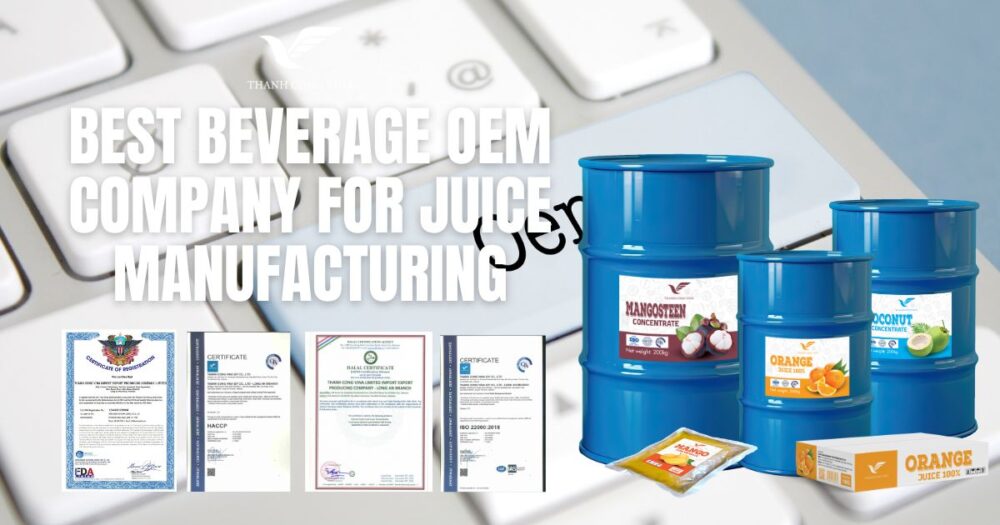
A professional Beverage OEM Company develops formulas according to the customer’s specifications rather than relying exclusively on standard recipes. Depending on the product category, formulation may involve fruit juice, juice concentrate, coconut water, natural extracts, sweeteners, vitamins, minerals, stabilizers, acids, flavors, or other food-grade ingredients.
The objective is to create a balanced formula that performs consistently during processing and storage.
Ingredient Selection
Ingredient quality directly influences the finished product. For fruit beverages, factors such as fruit variety, maturity, origin, processing method, flavor intensity, and natural color can affect the final result.
Vietnam offers access to a broad range of tropical agricultural ingredients, including mango, pineapple, passion fruit, coconut, dragon fruit, guava, lychee, orange, pomelo, and aloe vera.
A strong ingredient sourcing system allows manufacturers to identify suitable raw materials according to quality, availability, price, and target market requirements.
Laboratory Testing
After an initial formula is created, laboratory testing evaluates its physical, chemical, microbiological, and sensory characteristics. Depending on the beverage, testing may include pH, acidity, soluble solids, microbiological safety, nutritional composition, color, viscosity, and stability.
Sensory testing is equally important. A technically stable product may still require adjustments to taste, aroma, sweetness, or mouthfeel before it meets commercial expectations.
Pilot Production
Pilot production provides an important transition between laboratory development and large-scale manufacturing. The product is produced using production-relevant equipment and processes to determine whether the formula performs consistently under commercial conditions.
This stage can identify potential issues involving separation, sedimentation, filling, heating, cooling, packaging compatibility, or shelf-life performance.
A structured R&D process reduces production risks and gives brands greater confidence before committing to commercial volumes.
3. Ingredient Sourcing and Supply Chain Management
Ingredient Sourcing and Supply Chain Management
The quality of a beverage is closely connected to the quality and consistency of its raw materials. For this reason, ingredient sourcing is a fundamental part of the OEM manufacturing process.
Sourcing Tropical Ingredients from Vietnam
Vietnam has a strong agricultural base that provides manufacturers with access to numerous tropical fruits and agricultural ingredients. Local sourcing can provide advantages in terms of availability, transportation efficiency, freshness, and cost management.
For fruit-based beverages, manufacturers may source mango, pineapple, coconut, passion fruit, guava, dragon fruit, lychee, orange, and other ingredients according to product requirements.
Supplier Qualification
A professional Beverage OEM Company should evaluate suppliers before incorporating their ingredients into production. Supplier assessment can involve documentation review, quality specifications, sampling, laboratory testing, production audits, and traceability requirements.
Reliable supplier qualification helps maintain consistent raw material standards throughout the manufacturing process.
Seasonal Supply Planning
Agricultural products naturally experience seasonal variations. Weather, harvest conditions, agricultural practices, and market demand can influence both availability and pricing.
OEM manufacturers can address these challenges through production planning, supplier diversification, inventory management, and appropriate ingredient processing strategies.
For brands with year-round production requirements, these capabilities are particularly important.
Traceability and Quality Control
Traceability enables manufacturers to track ingredients from suppliers through production and into finished goods. This creates greater transparency and allows quality teams to investigate potential issues more efficiently.
Effective supply chain management also supports international buyers that require detailed information about ingredients, origins, specifications, and production batches.
Building a Stable Supply Chain
The strongest OEM partnerships extend beyond simple manufacturing. They involve long-term cooperation between brands, manufacturers, ingredient suppliers, packaging providers, and logistics partners.
A stable supply chain improves production planning, reduces unexpected interruptions, supports consistent product quality, and helps brands scale their business as demand increases.
4. Commercial Manufacturing, Quality Control, and Food Safety
After formulation and pilot production have been successfully completed, the beverage moves into commercial manufacturing. This stage requires advanced equipment, trained personnel, strict process control, and comprehensive quality assurance.
Preparing the Production Line
Before manufacturing begins, production teams verify raw materials, packaging materials, equipment conditions, production specifications, sanitation requirements, and production schedules.
A professional Beverage OEM Company establishes documented procedures for each manufacturing stage. This helps ensure that production follows the approved product specification.
Beverage Processing
Depending on the beverage category, production may involve ingredient preparation, fruit processing, blending, filtration, homogenization, pasteurization, UHT treatment, or other processing techniques.
The selected process must protect product quality while achieving the required food safety and shelf-life objectives.
Filling and Packaging
After processing, the beverage is transferred to the appropriate filling system. Packaging options may include PET bottles, glass bottles, aluminum cans, cartons, pouches, or other formats.
The packaging system must maintain product integrity and protect the beverage during transportation and storage.
Quality Assurance
Quality control is not limited to the finished product. It begins with incoming raw materials and continues throughout processing, filling, packaging, storage, and shipment.
Manufacturers may monitor parameters such as temperature, pressure, filling volume, pH, Brix, acidity, microbiological status, packaging integrity, and finished-product specifications.
International Certifications
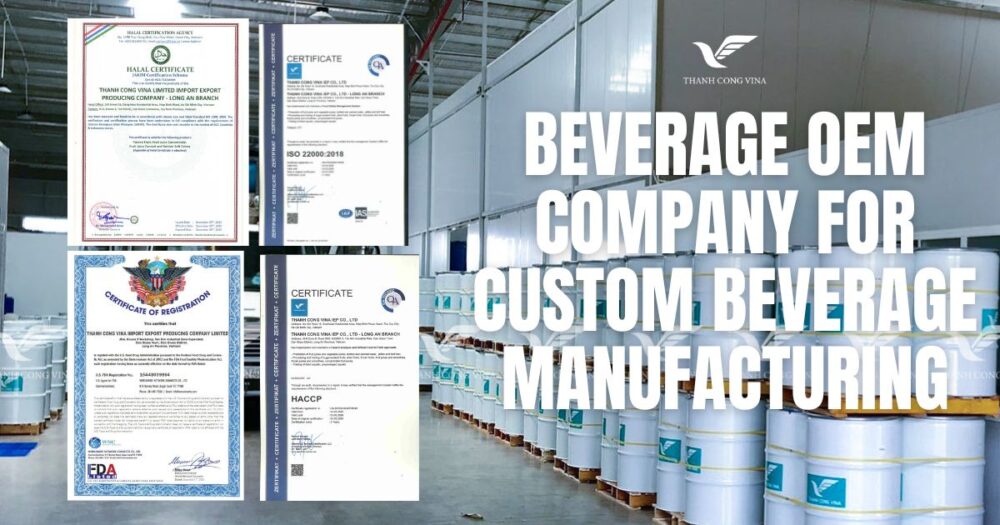
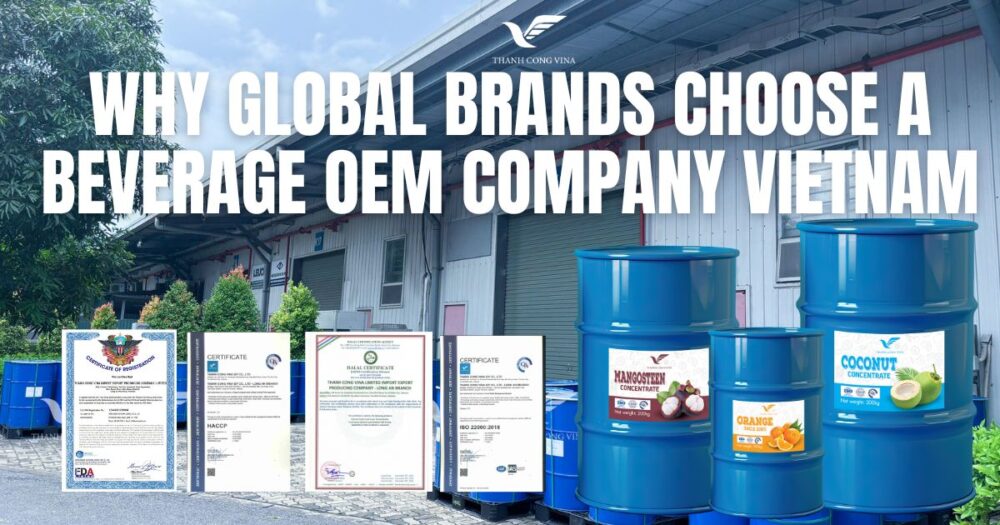
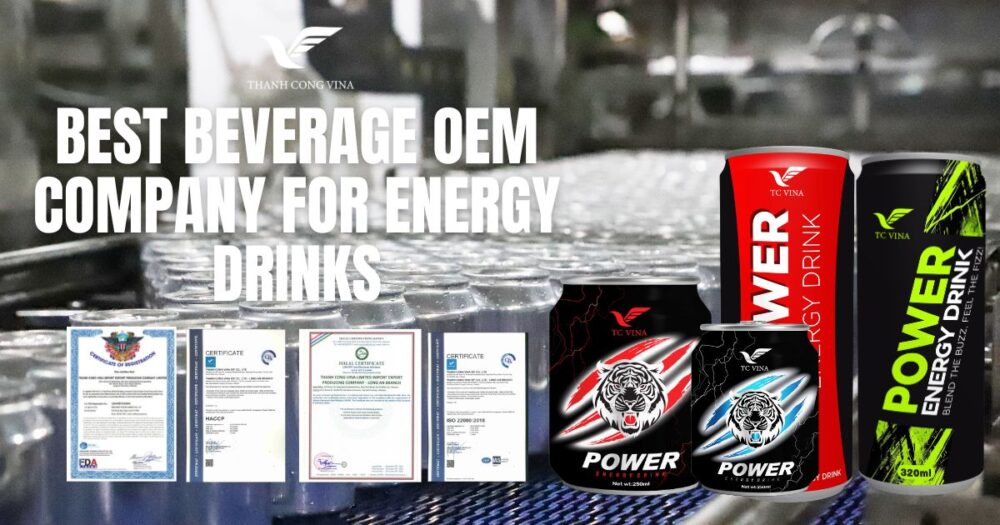
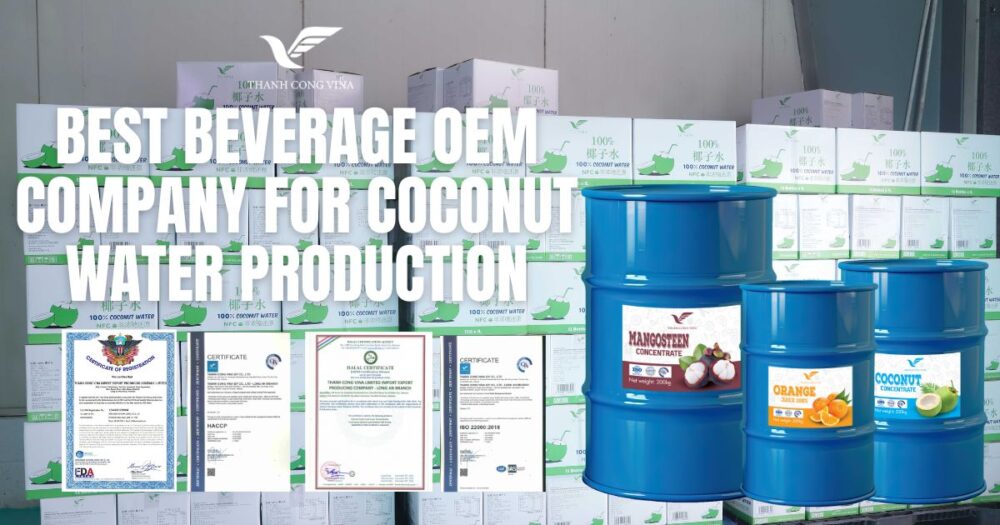
Global beverage brands often require manufacturing facilities to operate according to recognized food safety systems. Depending on market and customer requirements, these may include HACCP, GMP, ISO 22000, FSSC 22000, HALAL, FDA registration, and other applicable standards.
Certifications help demonstrate that manufacturing processes are managed systematically and provide greater confidence to international buyers.
Consistency Across Production Batches
One of the greatest benefits of working with an experienced OEM manufacturer is production consistency.
Consumers expect a beverage purchased today to taste and perform like the same beverage purchased months later. Standardized formulations, controlled production parameters, trained personnel, laboratory testing, and documented procedures help maintain this consistency.
5. Packaging, Private Label, and Brand Development
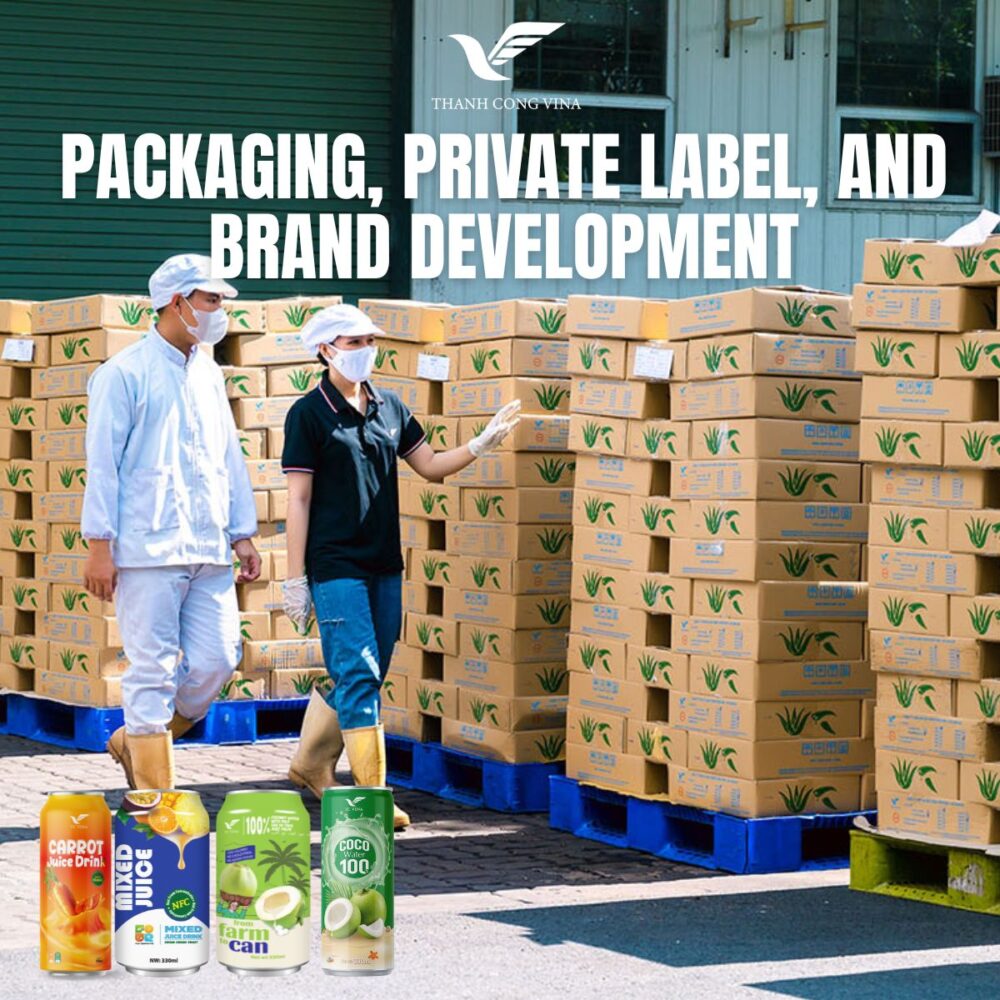
Packaging, Private Label, and Brand Development
A beverage can have an excellent formula but still struggle commercially if its packaging does not communicate the product’s value. Packaging is therefore an important component of the journey from manufacturing to market.
Selecting the Right Packaging Format
A Beverage OEM Company can help brands evaluate packaging according to product characteristics, target consumers, distribution channels, budget, and market positioning.
PET bottles may be suitable for convenient everyday beverages, while cans can provide strong shelf visibility and portability. Glass bottles may support premium positioning, whereas cartons can provide efficient packaging for certain beverage categories.
Private Label Manufacturing
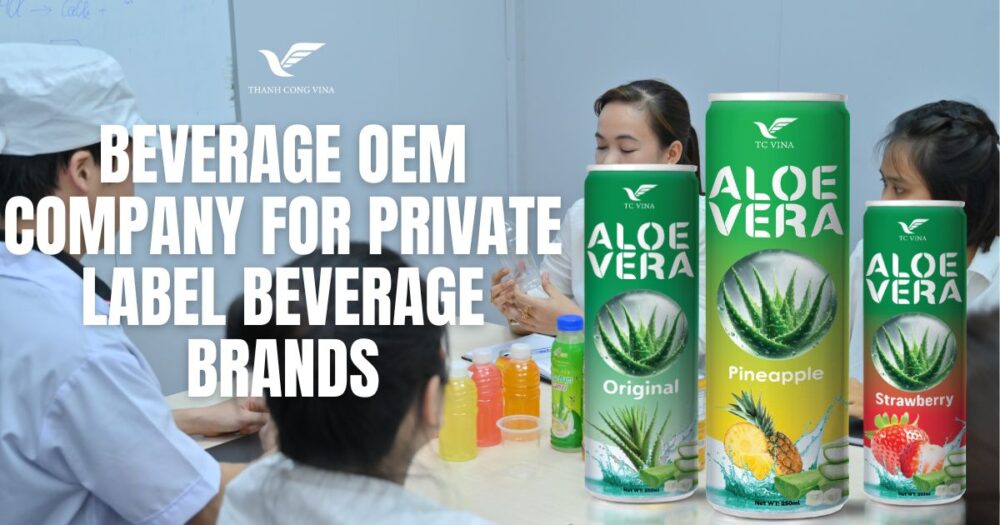
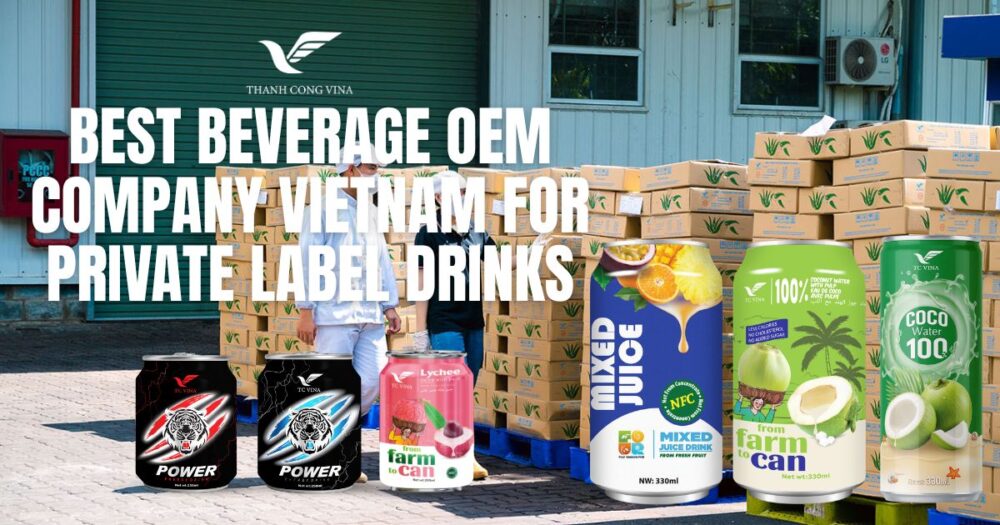
Private label production enables companies to launch beverages under their own brands without establishing a manufacturing facility.
The OEM manufacturer produces the beverage according to agreed specifications while the brand owner manages its own identity, marketing, distribution, and sales strategy.
This model is particularly valuable for supermarkets, distributors, hospitality businesses, entrepreneurs, and companies expanding their product portfolios.
Customized Labels and Artwork
Packaging design must communicate essential product information while complying with market regulations.
Labels may include product names, ingredient declarations, nutrition information, net volume, storage instructions, manufacturer information, batch identification, expiration dates, barcodes, certifications, and other legally required details.
For export products, multilingual packaging may be necessary.
Packaging Sustainability
Sustainability is increasingly influencing packaging decisions. Global brands are evaluating recyclable materials, lightweight packaging, efficient transportation, and reduced material usage.
OEM manufacturers that understand these priorities can help brands develop packaging strategies that balance environmental objectives, product protection, consumer expectations, and commercial feasibility.
Building Brand Recognition
Consistent packaging across a product portfolio can strengthen brand recognition. A professional OEM partner can support multiple SKUs, flavors, sizes, and packaging formats while maintaining consistent production standards.
This enables brands to expand their portfolios without creating separate manufacturing systems for every product.
6. From Factory to Global Market: Export and Logistics
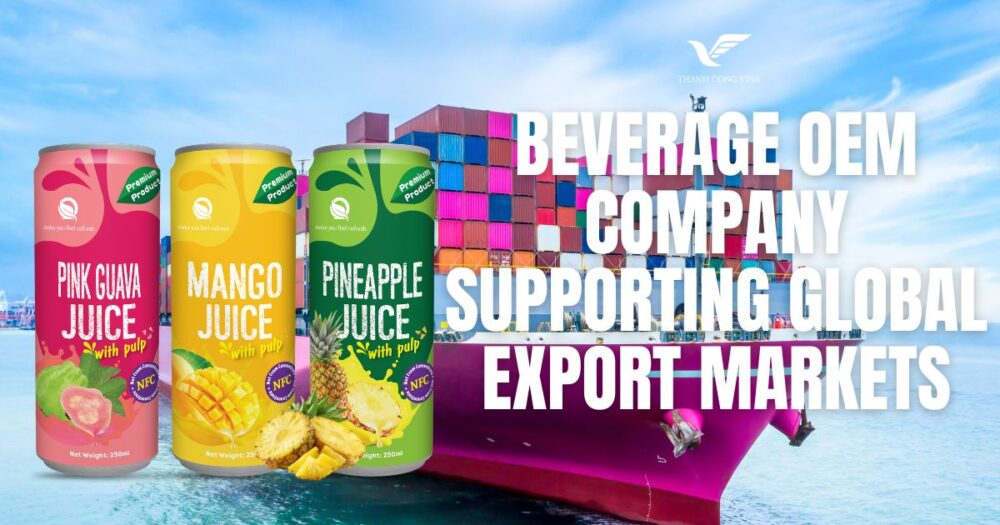
Manufacturing a beverage is only one part of the process. Once production is complete, the product must be prepared for distribution and delivered to the intended market efficiently.
Export Documentation
International beverage shipments often require detailed documentation. Depending on the destination market, this may include commercial invoices, packing lists, certificates of origin, health certificates, laboratory reports, product specifications, nutritional information, and other regulatory documents.
An experienced Beverage OEM Company can coordinate these requirements with the buyer and relevant logistics partners.
Regulatory Market Requirements
Different countries may apply different rules regarding ingredients, labeling, nutrition claims, additives, packaging, and food safety.
Brands should therefore confirm market requirements before finalizing a formula and packaging design.
Early regulatory planning prevents costly reformulation or relabeling after production.
Container Loading and Transportation
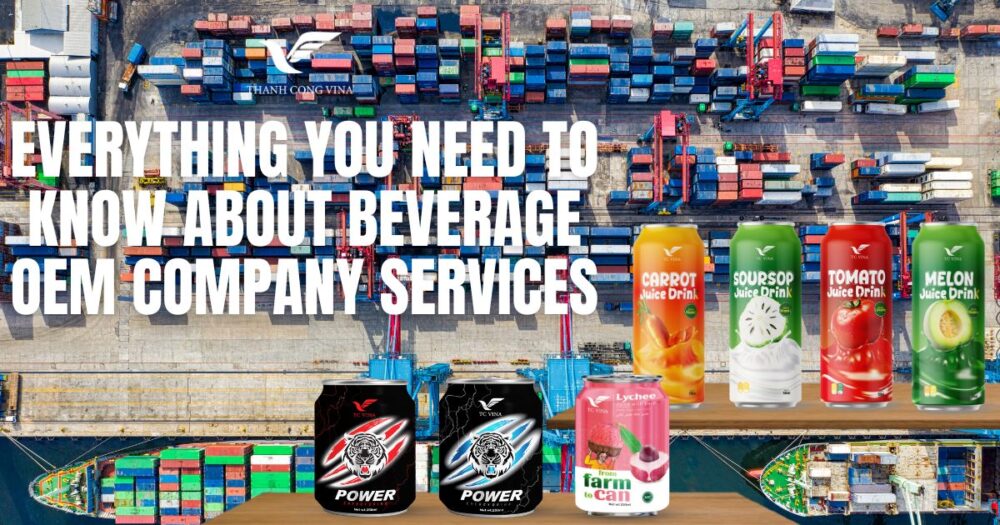
Beverages must be loaded carefully to minimize packaging damage during transportation. Production planning should consider container capacity, pallet configuration, carton dimensions, product weight, shipping conditions, and destination requirements.
Efficient container planning can improve freight utilization and contribute to overall cost management.
Supply Chain Coordination
An effective OEM partnership coordinates manufacturing schedules with shipping schedules. This is particularly important for international buyers that operate retail launches, promotional campaigns, seasonal programs, or fixed delivery windows.
Good communication between the manufacturer, buyer, freight forwarder, and logistics provider helps minimize delays.
Scaling for International Demand
As a beverage brand gains traction, production requirements may increase significantly. An experienced OEM partner should be capable of supporting additional production volumes without compromising product quality.
Scalable manufacturing allows brands to test new products with manageable initial volumes and increase production as market demand becomes more predictable.
7. Choosing the Right Beverage OEM Company for Long-Term Growth
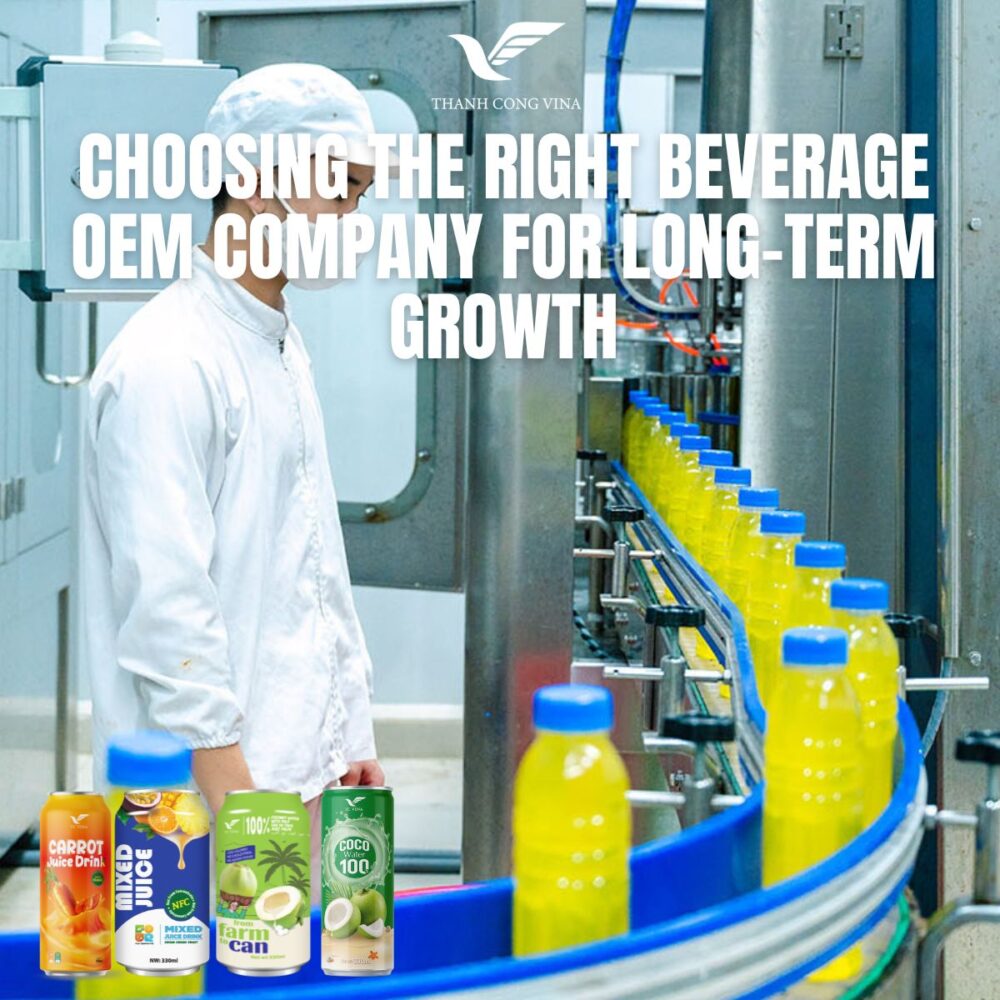
Choosing the Right Beverage OEM Company for Long-Term Growth
Selecting an OEM manufacturer should be viewed as a strategic business decision rather than simply a purchasing decision. The right partner can influence product quality, cost structure, launch speed, customer satisfaction, and long-term brand development.
Evaluate Manufacturing Capabilities
Businesses should examine production lines, beverage categories, packaging formats, manufacturing capacity, R&D capabilities, quality systems, certifications, and export experience.
A factory that already specializes in the required beverage category may offer a smoother development process than a manufacturer with limited experience.
Assess Communication and Technical Support
Effective communication is essential throughout product development. Buyers should evaluate how clearly the manufacturer explains formulation options, production requirements, testing procedures, packaging specifications, minimum order quantities, and timelines.
Technical support becomes particularly important when developing customized products.
Review Quality Management Systems
Quality should be assessed through more than certifications. Businesses should understand how raw materials are inspected, how production parameters are monitored, how finished products are tested, and how traceability is maintained.
A strong quality management system protects both the manufacturer and the brand owner.
Consider Cost Beyond the Factory Price
The lowest quotation does not always represent the lowest total cost.
Brands should consider formulation development, ingredients, packaging, testing, tooling, documentation, logistics, storage, quality assurance, and potential production adjustments when evaluating an OEM proposal.
A transparent cost structure supports better business planning.
Think About Long-Term Scalability
A manufacturing partner should be capable of supporting the brand beyond its first production order.
As demand grows, businesses may need additional flavors, packaging formats, larger production volumes, new markets, or new beverage categories.
An OEM partner with broad technical and manufacturing capabilities can support this evolution more effectively.
Conclusion
The journey from a beverage idea to a successful market product involves many interconnected stages, including market research, product planning, customized formulation, ingredient sourcing, laboratory testing, pilot production, commercial manufacturing, quality assurance, packaging, regulatory compliance, and international logistics. Working with an experienced Beverage OEM Company allows businesses to integrate these processes through a single professional manufacturing partner rather than building every capability internally.
Vietnam offers significant advantages for international beverage brands seeking OEM production. Its rich agricultural resources provide access to tropical fruits and natural ingredients, while modern manufacturing facilities, competitive costs, skilled production teams, and export infrastructure create a strong foundation for international beverage manufacturing. With the right partner, businesses can transform innovative product ideas into scalable commercial products while maintaining quality, flexibility, and cost efficiency.
For global beverage brands, Thanh Cong Vina Beverage provides an integrated path from product concept to finished beverage. The company combines product development, customized formulations, ingredient sourcing, advanced manufacturing, quality assurance, private label packaging, and export support to help customers bring new beverages to market efficiently. By emphasizing consistency, innovation, food safety, and long-term cooperation, Thanh Cong Vina supports beverage brands at every stage of development. For companies seeking a reliable Beverage OEM Company, Thanh Cong Vina offers the expertise and manufacturing capabilities needed to turn beverage ideas into market-ready products and sustainable international business opportunities.