
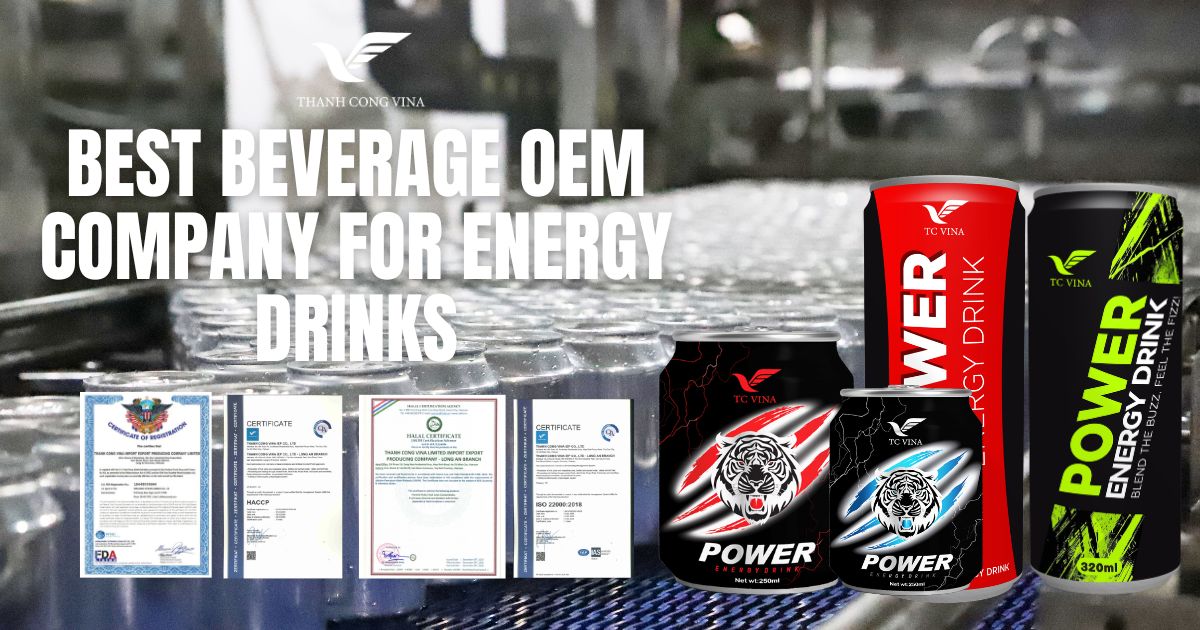
The global energy drinks market continues to evolve as consumers seek convenient beverages that support active lifestyles, productivity, and everyday performance. For beverage brands, retailers, distributors, and importers, entering this category can create significant commercial opportunities. However, developing and manufacturing energy drinks requires specialized formulation, food safety controls, packaging expertise, and reliable production capacity. This is why choosing the right Beverage OEM Company is a critical step for businesses planning to launch or expand an energy drink portfolio.
Vietnam has become an increasingly attractive destination for beverage manufacturing due to its competitive production environment, food-processing capabilities, agricultural resources, and strategic position in Asia. For international beverage companies, working with a Vietnamese manufacturer can provide an efficient pathway to develop private label energy drinks for domestic and global markets.
This guide explains what businesses should look for when selecting the best Beverage OEM Company for energy drink manufacturing and how the right partner can support product development, quality, packaging, cost control, and international expansion.
1. Why Energy Drinks Are an Attractive Category for Beverage Brands
Why Energy Drinks Are an Attractive Category for Beverage Brands
Energy drinks have developed into a broad beverage category serving consumers with different lifestyles, preferences, and consumption occasions. The category is no longer limited to traditional high-energy formulations. Modern brands can explore different concepts, flavors, packaging formats, and positioning strategies.
Growing Consumer Demand for Convenient Beverages
Convenience remains one of the most important drivers of packaged beverage consumption. Consumers want products that are easy to carry, store, and consume throughout the day.
Energy drinks fit naturally into this environment. They can be consumed at work, during travel, before physical activities, while studying, or during busy daily schedules.
For beverage companies, this versatility creates opportunities to develop products for different target audiences. A brand can position an energy drink around productivity, active lifestyles, convenience, refreshment, or modern urban consumption.
Product Differentiation Through Formulation
The energy drink category provides significant flexibility for product development.
Depending on the destination market and regulatory requirements, brands may consider different formulations involving caffeine, vitamins, minerals, flavors, sweetening systems, fruit components, or other permitted ingredients.
The key is to develop a formulation that is technically stable, commercially attractive, and compliant with the regulations of the target market.
A capable Beverage OEM Company can help brands transform a basic product idea into a manufacturable beverage specification.
Multiple Market Opportunities
Energy drinks can be sold through supermarkets, convenience stores, cafés, gyms, restaurants, online platforms, vending channels, and foodservice distributors.
This allows businesses to develop multiple distribution strategies.
For international brands, the product can also be adapted to regional consumer preferences. Flavor profiles, sweetness, packaging size, labeling, and positioning can be adjusted according to market requirements.
Private Label Potential
Private label energy drinks are particularly attractive for retailers, wholesalers, distributors, and established businesses seeking to introduce proprietary products.
Instead of competing only by distributing existing brands, companies can build their own product identity.
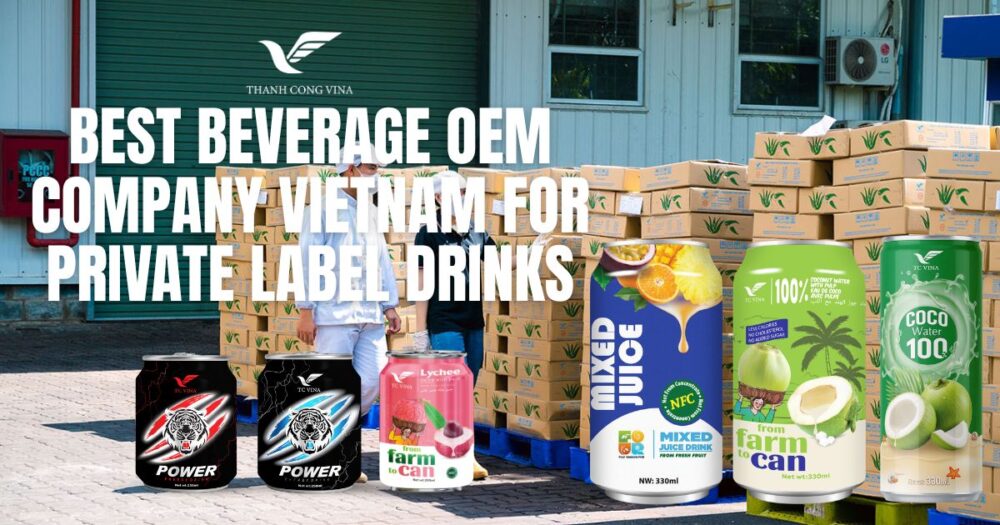
A reliable OEM partner can manufacture products under the buyer’s brand name while supporting formulation, packaging, and commercial production.
2. Why Choose a Beverage OEM Company for Energy Drink Manufacturing?
Selecting a professional Beverage OEM Company can reduce the complexity of entering the energy drink market.
Lower Capital Requirements
Establishing an independent beverage production facility requires significant investment.
Businesses need processing equipment, filling machines, laboratories, warehouses, utilities, quality systems, production staff, maintenance programs, and regulatory infrastructure.
OEM manufacturing provides an alternative.
Instead of purchasing and operating a factory, the brand can use the production capacity of an established manufacturer. This allows businesses to allocate more resources to product development, marketing, sales, and distribution.
This model can be especially useful for startups and emerging brands that want to test market demand before investing heavily in manufacturing infrastructure.
Technical and Formulation Expertise
Energy drinks require more technical consideration than many conventional beverages.
The manufacturer must understand ingredient compatibility, dosage, processing conditions, flavor balance, product stability, packaging, and regulatory requirements.
An experienced OEM partner can support formulation development and manufacturing trials.
The brand can provide a product concept while the technical team evaluates how to convert that concept into a commercially viable formulation.
Flexible Production Models
OEM manufacturing can support different business models.
Some customers may already have a finished formula and only require production. Others may need complete formulation development.
A flexible manufacturer can offer:
- OEM production
- ODM development
- Private label manufacturing
- Custom formulation
- Custom packaging
- Product sampling
- Pilot production
- Commercial-scale manufacturing
This flexibility allows businesses to choose the appropriate level of support.
Scalable Manufacturing
An energy drink brand may begin with a limited quantity for market testing and gradually increase its order volume.
A capable manufacturing partner should be able to support this growth.
Scalability depends on production capacity, ingredient sourcing, packaging availability, workforce planning, quality control, and supply-chain coordination.
The best partner is not simply the company that can produce today’s order but the manufacturer that can support tomorrow’s expansion.
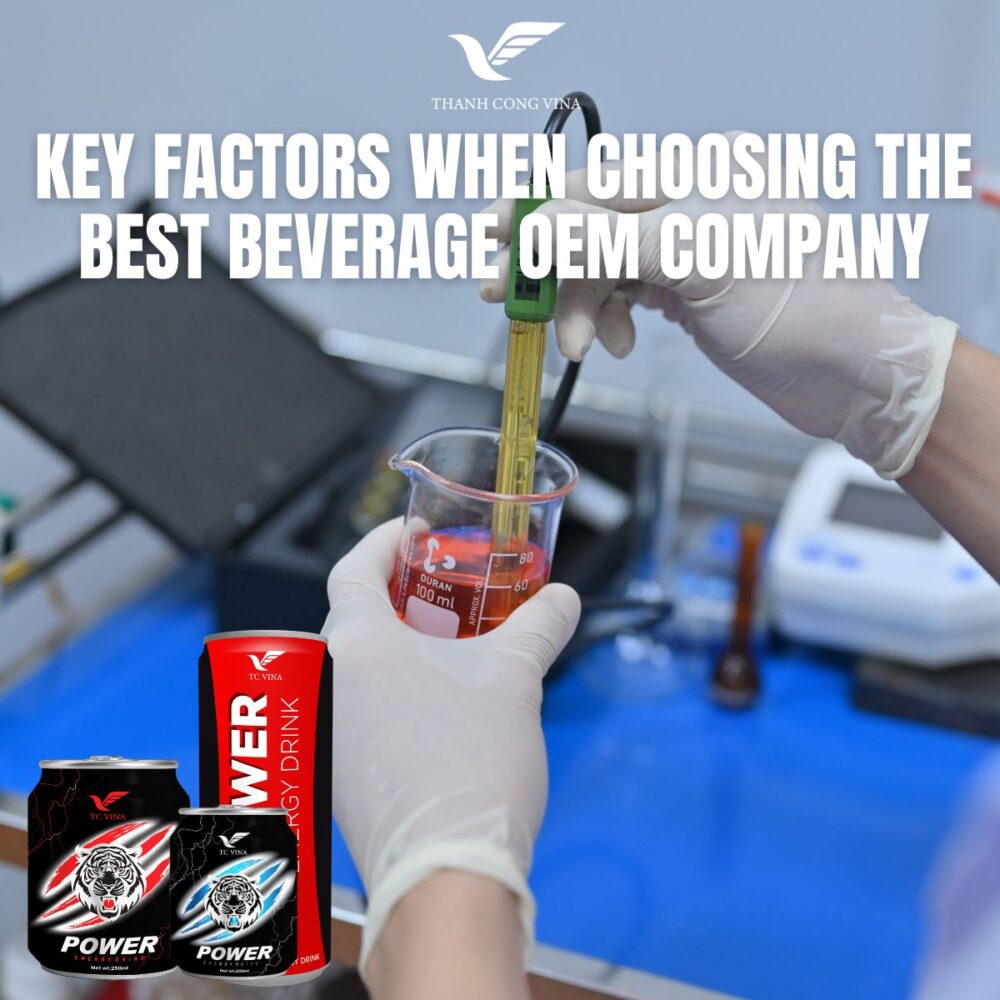
3. Key Factors When Choosing the Best Beverage OEM Company
Key Factors When Choosing the Best Beverage OEM Company
Choosing an OEM manufacturer should be based on a combination of technical, commercial, and operational factors.
Experience in Energy Drink Manufacturing
Not every beverage manufacturer has the same technical capabilities.
Businesses should determine whether the manufacturer has experience with energy drinks or similar functional beverage categories.
Relevant experience may include formulation, caffeine-containing products, vitamin beverages, carbonated or non-carbonated drinks, thermal processing, filling, and shelf-life management.
Manufacturing experience can help reduce development risks and shorten the path from concept to commercial production.
Product Development Capabilities
A strong R&D department can be a major advantage.
The manufacturer should be able to discuss:
- Desired flavor profile
- Sweetness level
- Functional ingredients
- Ingredient compatibility
- Product appearance
- Target consumer
- Packaging format
- Shelf-life expectations
- Destination-market requirements
The development process should include sample evaluation and formulation refinement before mass production.
Production Capacity
Capacity should match the buyer’s current and future requirements.
Important factors include production lines, filling capabilities, working schedules, storage facilities, packaging capacity, and raw material procurement.
Businesses should also ask how the manufacturer handles sudden increases in demand.
Quality Control System
Quality control must cover the entire production process.
This includes incoming ingredients, water quality, formulation, processing, filling, packaging, finished products, and storage.
A professional quality system should include documented procedures and traceability.
For international buyers, consistent quality is particularly important because product deviations can create customer complaints, rejected shipments, or regulatory problems.
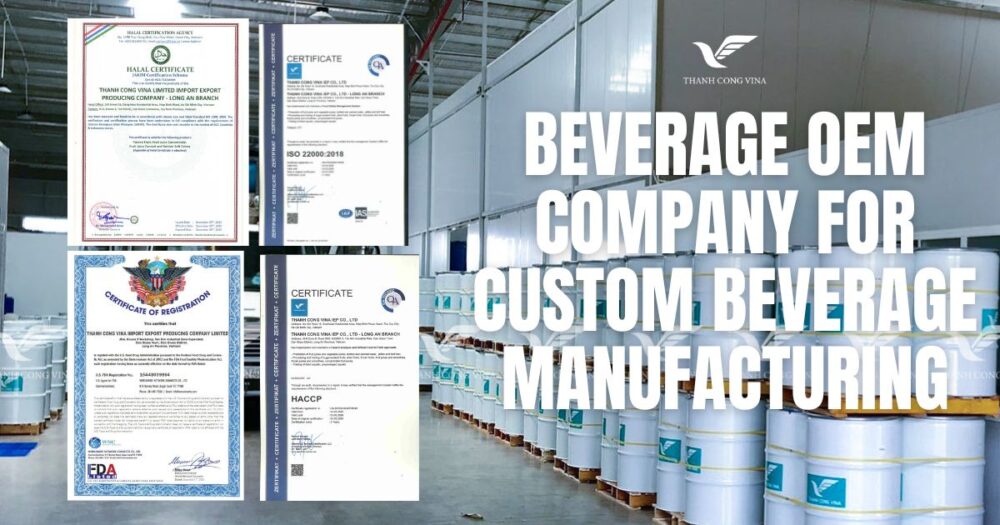
International Certifications
Certifications can help demonstrate the manufacturer’s commitment to food safety and quality management.
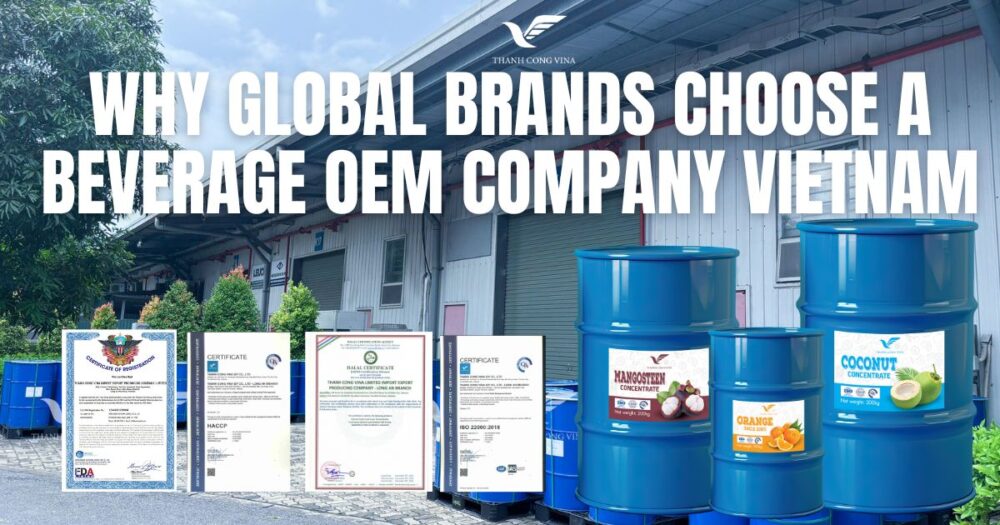
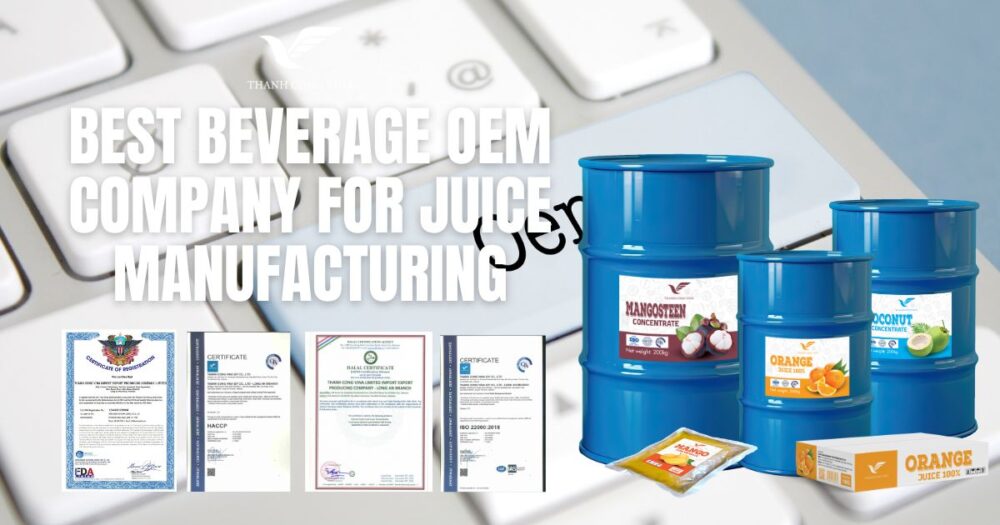
Depending on the market and product, buyers may evaluate certifications and systems such as HACCP, GMP, ISO, FSSC 22000, HALAL, and relevant export or regulatory requirements.
However, buyers should verify the exact scope and validity of certifications instead of relying solely on certification names.
4. Energy Drink Formulation and Ingredient Selection
Formulation is one of the most important stages of developing a successful energy beverage.
Caffeine and Functional Components
Many traditional energy drinks use caffeine as a central functional ingredient.
However, caffeine levels and labeling requirements can differ across markets. Therefore, brands must ensure that formulations comply with the regulations of each destination country.
Other permitted ingredients may also be considered depending on the product concept.
The formulation should balance functionality, flavor, stability, consumer expectations, and regulatory compliance.
Flavor Development
Flavor is a major factor in repeat purchase.
Energy drinks can be developed using profiles such as citrus, berry, tropical fruit, apple, grape, or other flavor combinations.
A professional OEM manufacturer can help brands evaluate flavor intensity, sweetness, acidity, aroma, and aftertaste.
The goal is not simply to create a strong flavor but to develop a balanced sensory profile suitable for the intended consumer.
Sweetening Systems
Brands may have different preferences regarding sweetness.
Some products may target a conventional sweet profile, while others may focus on reduced-sugar or alternative formulations.
The choice of sweetening system can influence taste, texture, stability, labeling, and production costs.
This makes formulation testing essential before commercial production.
Ingredient Compatibility
Ingredients must remain stable throughout processing and storage.
Potential issues can include precipitation, color changes, flavor deterioration, sedimentation, or interactions between components.
The R&D team should evaluate formulation stability under relevant storage conditions.
Regulatory Considerations
Energy drink formulations require careful regulatory review.
The requirements for caffeine, vitamins, claims, nutritional information, warning statements, additives, and labeling can vary significantly between countries.
An experienced manufacturer can help identify technical considerations, but the brand and importer should also verify the final legal requirements applicable to the destination market.
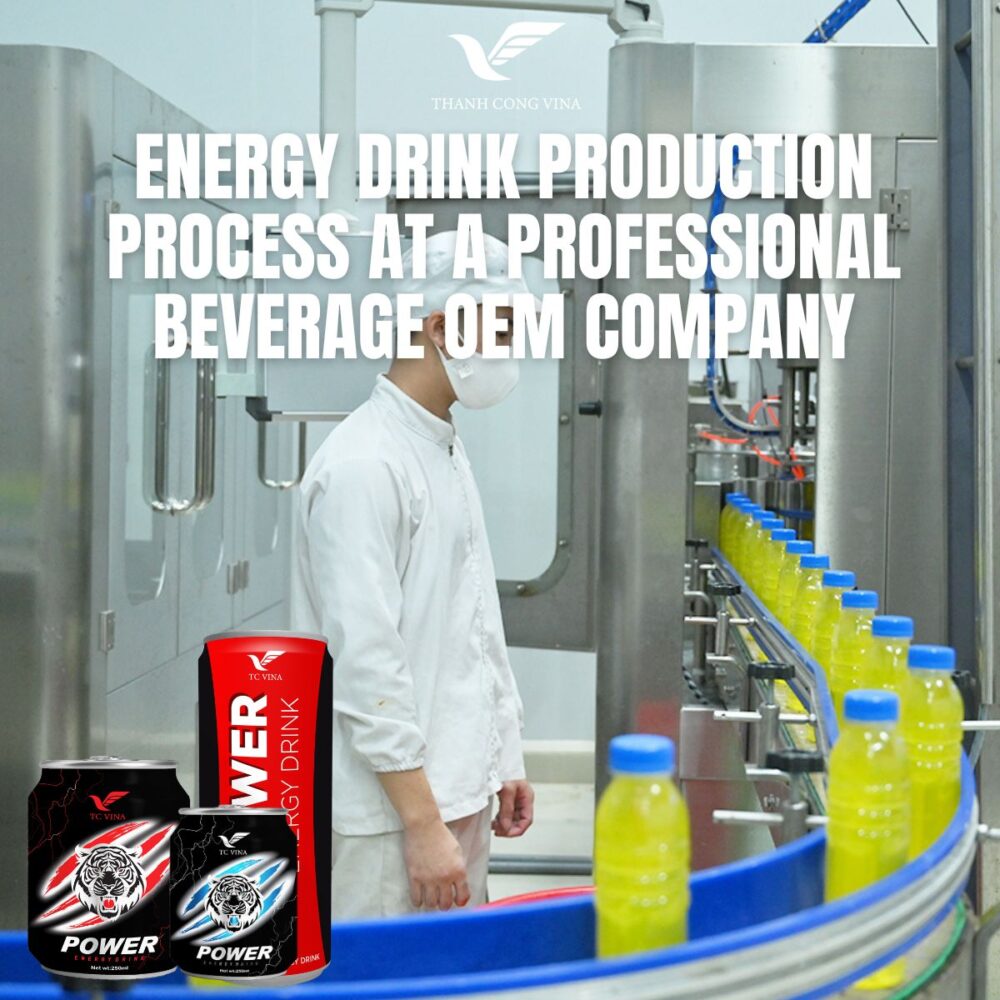
5. Energy Drink Production Process at a Professional Beverage OEM Company
Energy Drink Production Process at a Professional Beverage OEM Company
A professional manufacturing process should be systematic, documented, and controlled from raw materials through finished goods.
Raw Material Inspection
The process starts with approved ingredients and packaging materials.
Incoming materials should be checked against established specifications.
Depending on the ingredient, inspection may include documentation review, physical evaluation, laboratory testing, supplier verification, and batch identification.
Only approved materials should enter production.
Water Treatment and Preparation
Water is a major component of most beverages.
The manufacturer should maintain an appropriate water treatment system and monitor water quality according to established specifications.
Consistent water quality contributes to product consistency and helps maintain the desired taste profile.
Ingredient Mixing
Ingredients are weighed and added according to the approved formulation.
Controlled dosing is essential because deviations can influence taste, functionality, stability, and regulatory compliance.
The mixing system should be designed to achieve uniform distribution of ingredients throughout the batch.
Processing and Stabilization
Depending on the formulation and packaging format, the beverage may undergo appropriate processing designed to ensure microbiological safety and product stability.
Processing parameters should be established and monitored according to validated manufacturing procedures.
The exact technology will depend on the formulation, acidity, packaging, and required shelf life.
Filling and Packaging
The finished beverage is transferred to the filling line.
Accurate filling ensures consistent net volume, while hygienic conditions help protect product quality.
After filling, containers are sealed and inspected.
Packaging integrity is essential for maintaining product quality during transportation and storage.
Finished Product Testing
Before release, finished products should undergo appropriate quality checks.
These may include:
- Sensory evaluation
- pH testing
- Brix testing
- Caffeine verification where applicable
- Microbiological testing
- Fill-volume inspection
- Packaging inspection
- Label verification
- Batch traceability
A documented release process provides greater confidence for international buyers.
6. Packaging Solutions for Private Label Energy Drinks
Packaging plays an important role in both product protection and brand positioning.
Aluminum Cans
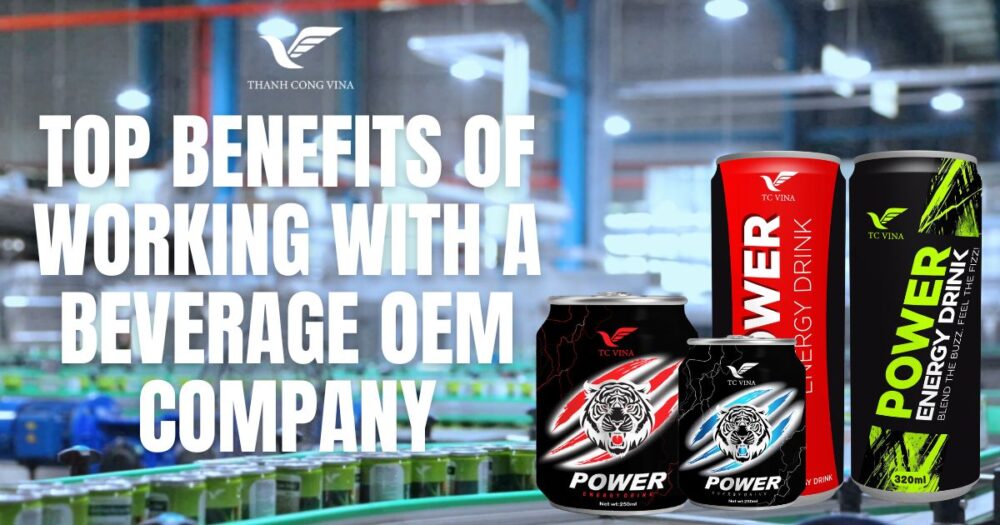
Aluminum cans are widely associated with energy drinks and can provide a strong, modern appearance.
They are suitable for convenience stores, supermarkets, vending channels, gyms, events, and many other retail environments.
Cans also offer extensive opportunities for graphic design and brand differentiation.
PET Bottles
PET bottles can provide flexibility in product size and convenience.
They can be suitable for brands targeting larger serving formats or markets where bottled beverages are more common.
PET packaging can also support private label branding through custom labels and packaging designs.
Packaging Size
Different markets may prefer different serving sizes.
Common considerations include single-serving products, larger formats, multipacks, and foodservice-oriented packaging.
The ideal size depends on consumer behavior, retail channel, pricing strategy, and logistics.
Custom Label Design
Private label products require packaging that communicates the brand’s identity clearly.
The design should incorporate:
- Brand identity
- Product name
- Ingredient information
- Nutrition information
- Net volume
- Manufacturer details
- Country of origin
- Storage information
- Barcode
- Regulatory statements
All packaging content should be carefully reviewed before printing.
Export Packaging
Energy drinks may travel long distances before reaching consumers.
Packaging must therefore withstand handling, stacking, warehousing, container loading, and transportation.
Carton configuration and palletization should be optimized to improve logistics efficiency while protecting the finished products.
7. Certifications and Quality Assurance for Energy Drink OEM Manufacturing
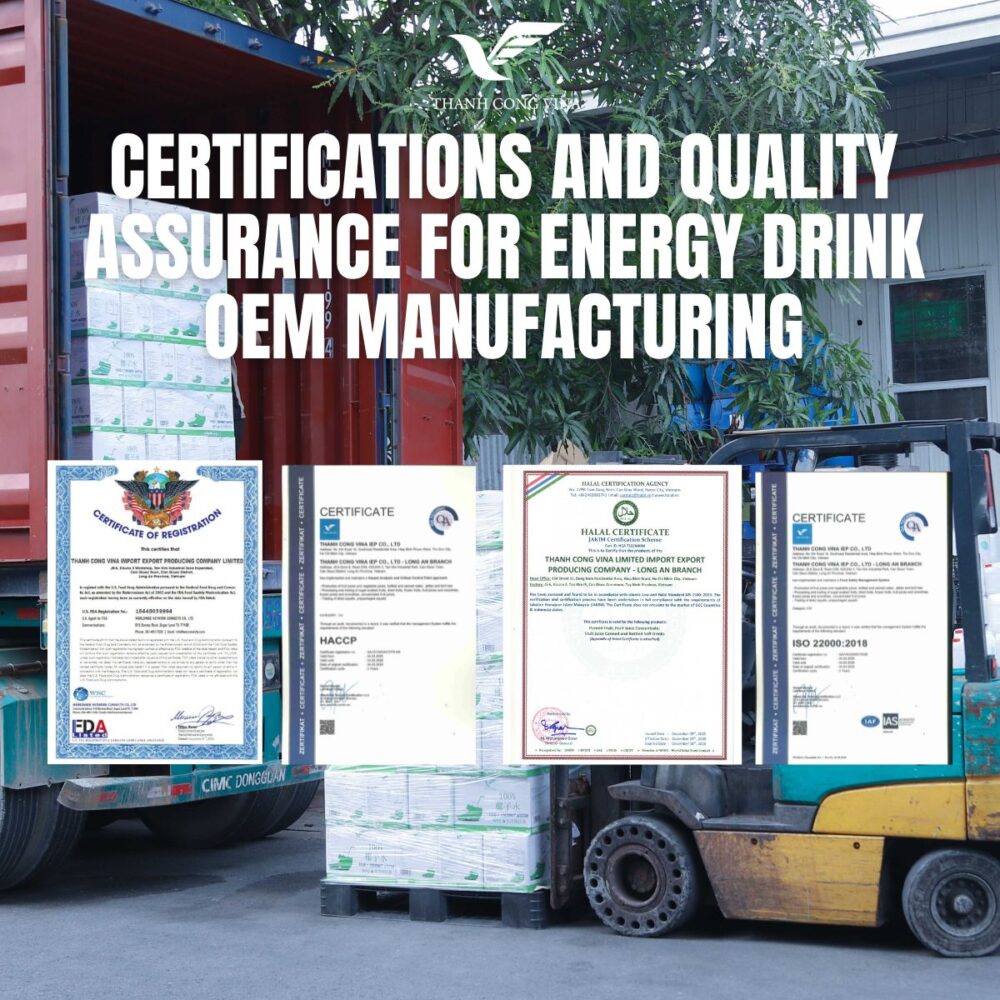
Certifications and Quality Assurance for Energy Drink OEM Manufacturing
For international beverage businesses, food safety should be one of the most important supplier-selection criteria.
HACCP-Based Food Safety Management
HACCP provides a preventive approach to food safety.
It identifies potential hazards and establishes controls at relevant points throughout the manufacturing process.
A structured HACCP system can help manage risks associated with ingredients, processing, sanitation, filling, packaging, and storage.
ISO
Internationally recognized food safety management systems can provide additional assurance for global buyers.
For brands supplying supermarkets, distributors, or large retail organizations, documented food safety systems can be an important part of supplier qualification.
HALAL Certification
HALAL certification may be relevant for brands targeting Muslim-majority markets.
Energy drink manufacturers should ensure that ingredients, processing procedures, and certification scope are appropriate for the intended destination.
Quality Traceability
Traceability allows manufacturers to identify the source and production history of a specific batch.
This is important for quality management, complaint investigation, recalls, and supply-chain transparency.
A strong traceability system should connect raw materials, production records, finished products, and shipment information.
8. Cost Factors When Working with an Energy Drink OEM Manufacturer
The lowest factory quotation is not always the most economical solution.
A proper cost evaluation should consider the complete production and supply-chain structure.
Ingredients
The formulation directly affects manufacturing costs.
Premium ingredients, specialized functional components, imported materials, and complex formulations can increase costs.
Brands should therefore establish clear priorities between product positioning and target price.
Packaging
Packaging is another major cost component.
Can specifications, bottle type, labels, cartons, closures, printing, and secondary packaging can all influence the final unit cost.
Custom packaging may require higher minimum quantities, particularly for printed cans or specialized packaging components.
Production Volume
Higher production volumes can improve manufacturing efficiency in some cases.
However, brands should avoid ordering more inventory than they can sell.
The ideal production volume balances manufacturing economics with inventory turnover and market demand.
Product Development
Custom formulation projects may involve R&D expenses, laboratory work, sample development, and pilot production.
Brands should clarify development costs before beginning a project.
Logistics
For export projects, logistics can represent a substantial portion of total landed cost.
Businesses should evaluate factory pricing together with transportation, freight, insurance, duties, customs, warehousing, and destination charges.
A comprehensive cost model provides a more accurate view of profitability.
9. Why Vietnam Is an Attractive Location for Energy Drink OEM Manufacturing
Vietnam has developed a strong food and beverage manufacturing ecosystem that can support international brands.
Competitive Manufacturing Environment
Vietnam provides access to a broad manufacturing workforce, food-processing infrastructure, packaging suppliers, logistics services, and agricultural resources.
These factors can contribute to competitive production economics.
Strategic Asian Location
Vietnam is strategically positioned within Asia and has access to important regional and international trade routes.
For brands serving Asian markets, this geographical position can support efficient regional supply chains.
Developing Beverage Industry
Vietnam’s beverage sector includes fruit beverages, coffee drinks, coconut water, functional beverages, and other ready-to-drink products.
This creates an ecosystem of technical knowledge and supporting suppliers.
Access to Export Markets
Vietnamese manufacturers increasingly serve overseas customers.
For international brands, an export-oriented partner may already understand the documentation, packaging, quality, and communication requirements involved in international trade.
Flexible Product Development
The combination of manufacturing expertise and access to agricultural ingredients can create opportunities for innovative energy drink concepts, including fruit-flavored and tropical beverage formulations.
Conclusion
Choosing the best Beverage OEM Company for energy drink manufacturing is a strategic decision that can influence product quality, launch speed, production costs, supply reliability, and long-term brand growth. A capable manufacturing partner should offer more than production capacity. It should provide technical expertise, formulation support, quality assurance, packaging solutions, scalable manufacturing, and international supply-chain experience.
Thanh Cong Vina Beverage is positioned to support beverage brands seeking professional OEM and ODM manufacturing solutions for energy drinks and other ready-to-drink beverages. With capabilities across product development, beverage manufacturing, quality control, packaging, and export-oriented production, the company can help international customers move from product concept to commercial production with greater efficiency.
For brands seeking a reliable manufacturing partner, choosing the right Beverage OEM Company can create a strong foundation for consistent quality, flexible product development, competitive production, and sustainable international expansion. With the right partnership, energy drinks can become not simply another product line, but a scalable part of a broader beverage brand strategy built for global markets.