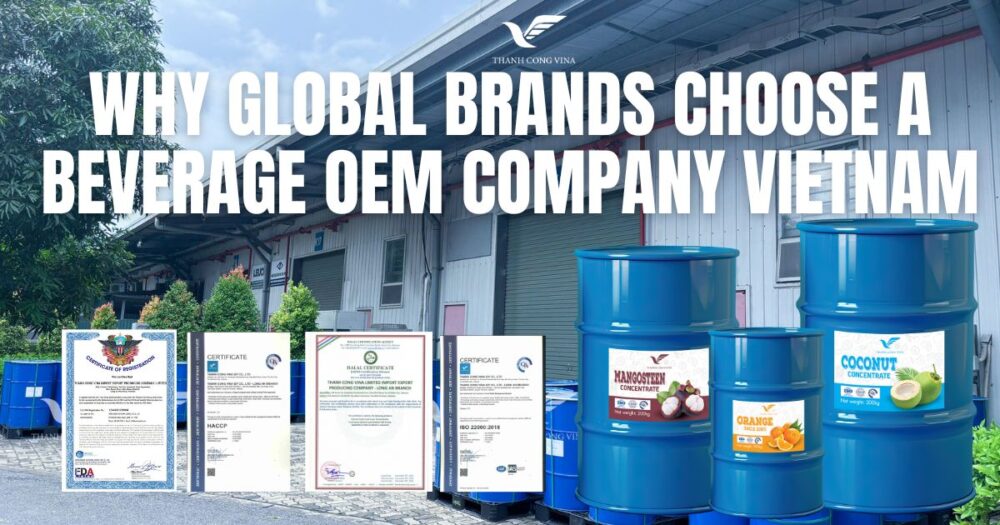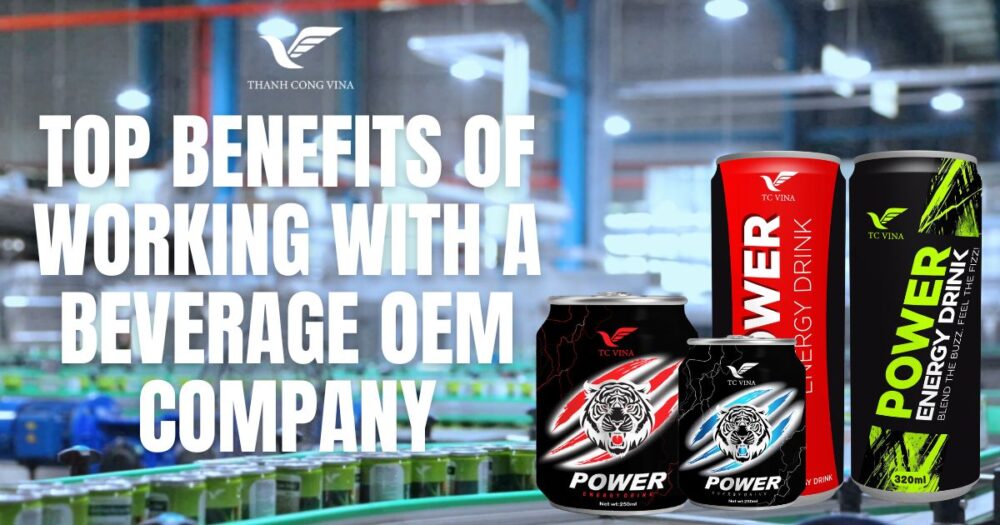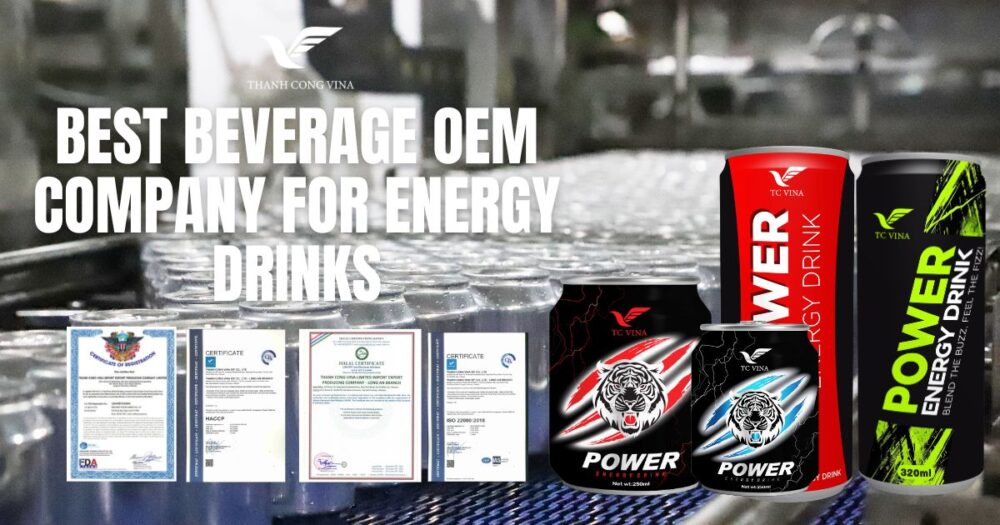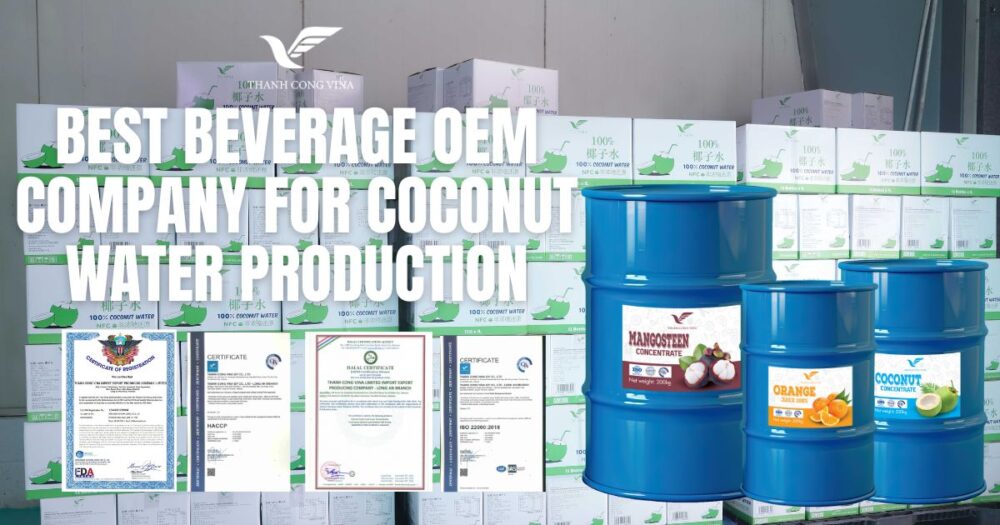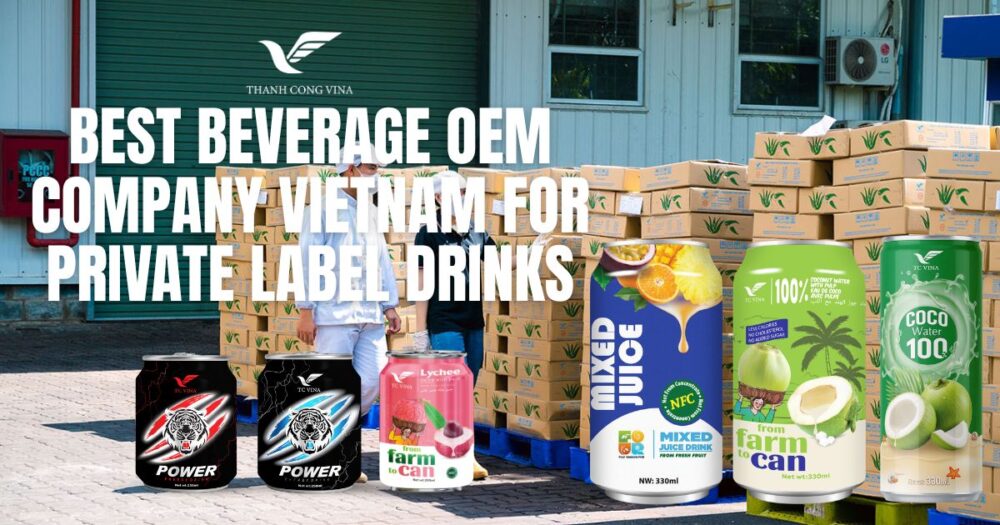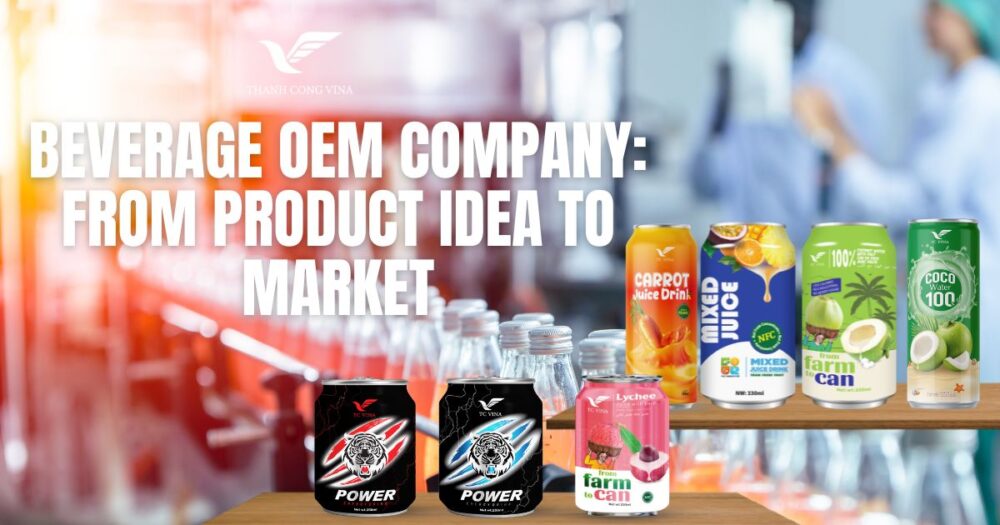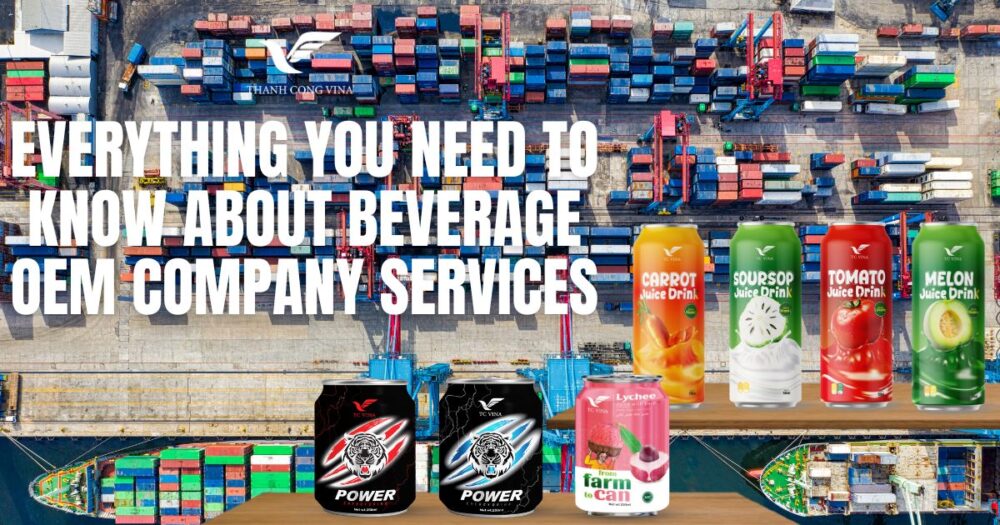

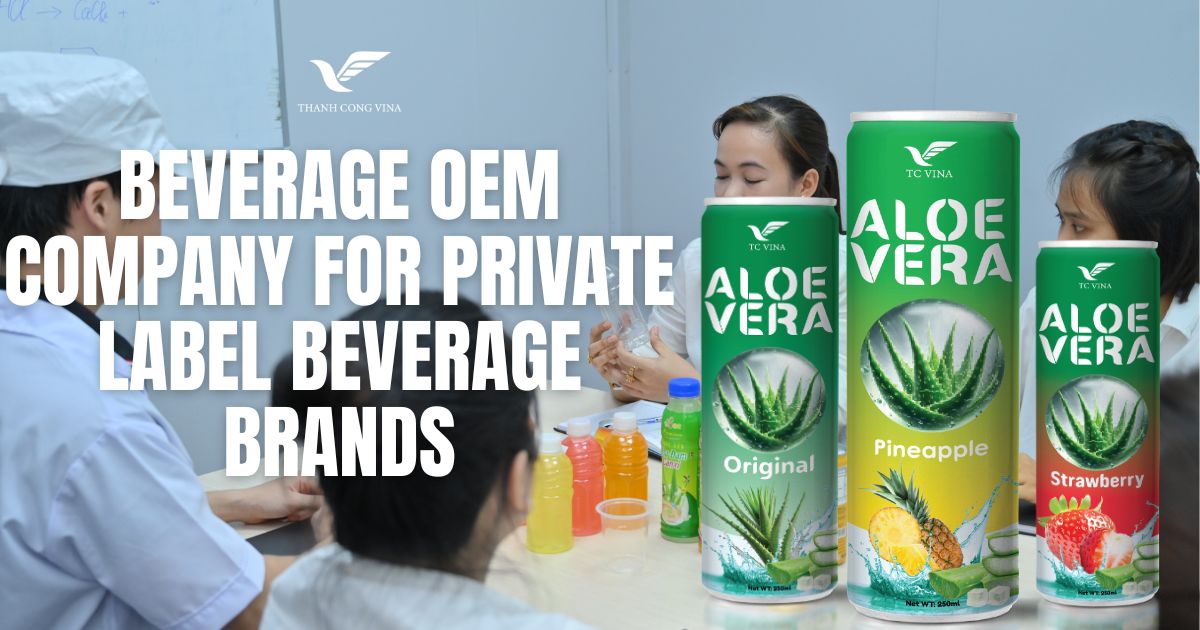
For businesses looking to launch a beverage under their own brand, choosing the right Beverage OEM Company is a critical step toward building a successful private label product. Instead of investing in a factory, production equipment, laboratories, technical teams, and complex supply chains, brands can work with an experienced manufacturing partner to develop customized beverages according to their market requirements. This approach gives importers, distributors, retailers, startups, and established companies greater flexibility while reducing the complexity of beverage production.
Private label beverage manufacturing has become increasingly attractive as consumers seek new flavors, convenient formats, functional ingredients, and differentiated products. Brands need more than a generic drink with a new label. They need customized formulas, attractive packaging, reliable quality, consistent supply, and manufacturing partners capable of supporting long-term growth.
A professional Beverage OEM Company can provide an integrated solution covering product development, ingredient sourcing, formulation, sampling, manufacturing, packaging, quality control, private labeling, and export preparation. With the right partner, businesses can transform an initial beverage concept into a commercially ready product designed for specific consumers and international markets.
1. What Is a Private Label Beverage Brand?
What Is a Private Label Beverage Brand?
Private label beverages are products manufactured by one company and sold under another company’s brand name. The brand owner controls the market positioning, packaging, pricing, and distribution, while an OEM manufacturer manages the technical and production aspects.
This model has become increasingly popular among retailers, distributors, wholesalers, foodservice companies, and emerging beverage brands.
How Private Label Beverage Manufacturing Works
The process generally begins with a product concept.
The buyer may already have a formula or may simply have an idea for a new beverage. The Beverage OEM Company then evaluates the concept and determines the appropriate ingredients, processing method, packaging format, and production requirements.
The process can include:
- Product consultation
- Formula development
- Ingredient sourcing
- Sample preparation
- Sensory evaluation
- Packaging development
- Product approval
- Commercial manufacturing
- Quality inspection
- Export preparation
This structured process allows the brand owner to remain focused on business development while the manufacturing partner manages the technical production process.
OEM vs. Standard Private Label Products
Private label does not always mean completely customized production.
Some manufacturers offer existing formulas that can be packaged under a customer’s brand. Other OEM manufacturers provide deeper customization, allowing buyers to modify ingredients, flavors, fruit content, sweetness, packaging, and nutritional characteristics.
For brands seeking differentiation, a customized OEM solution can provide greater control over the final product.
2. Beverage OEM Company for Private Label Beverage Brands
A professional Beverage OEM Company can support private label brands throughout the entire product lifecycle, from the first concept to commercial distribution.
Customized Beverage Formulation
Formula customization is one of the most important advantages of OEM manufacturing.
Consumer preferences vary considerably between countries and market segments. Some consumers prefer naturally refreshing beverages, while others prioritize low sugar, functional ingredients, energy, convenience, or indulgent flavors.
A manufacturer can customize:
- Flavor profile
- Fruit content
- Sweetness
- Acidity
- Color
- Aroma
- Texture
- Nutritional composition
- Functional ingredients
For example, a private label brand may request a tropical fruit beverage with a specific fruit percentage and reduced sweetness for one market, while developing a richer and sweeter version for another market.
This flexibility enables brands to create products that align with their target consumers instead of relying on one standardized formula.
R&D and Product Innovation
A capable Beverage OEM Company should have an experienced research and development team.
R&D specialists can help evaluate:
- Ingredient compatibility
- Product stability
- Flavor balance
- Processing requirements
- Shelf-life considerations
- Packaging compatibility
- Commercial production feasibility
This technical support is especially valuable for companies that have strong branding and marketing capabilities but limited beverage manufacturing expertise.
Product Sampling and Approval
Sampling is a crucial stage before mass production.
The manufacturer develops samples according to the customer’s specifications. The buyer then evaluates taste, appearance, texture, aroma, packaging, and overall product performance.
Formula adjustments can be made until the final product meets the agreed specifications.
This reduces the risk of producing a large quantity of a beverage before the brand has approved its sensory and technical characteristics.
3. Beverage Categories for Private Label Manufacturing
Beverage Categories for Private Label Manufacturing
An experienced Beverage OEM Company should be able to support multiple beverage categories. This allows private label brands to develop diverse portfolios and expand into new product segments.
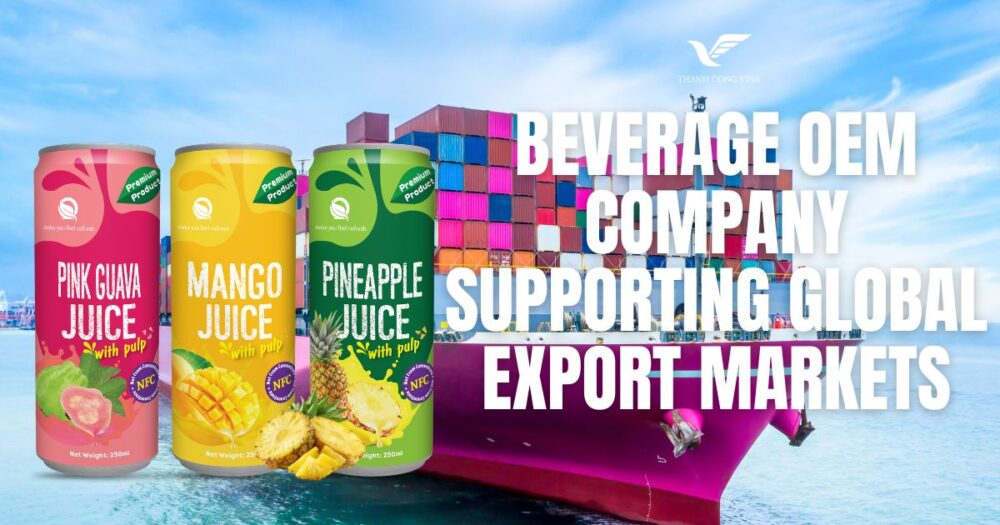
Fruit Juice and Fruit-Based Beverages
Fruit beverages remain an important category for private label businesses.
Vietnam provides access to a wide variety of tropical fruits that can be used in customized beverages, including:
- Mango
- Passion fruit
- Pineapple
- Orange
- Pink guava
- Peach
- Lychee
- Soursop
- Dragon fruit
- Melon
Fruit drinks can be customized according to fruit content, flavor intensity, sweetness, acidity, and packaging requirements.
For retailers and distributors, a diversified fruit beverage portfolio can provide opportunities to target different consumer preferences.
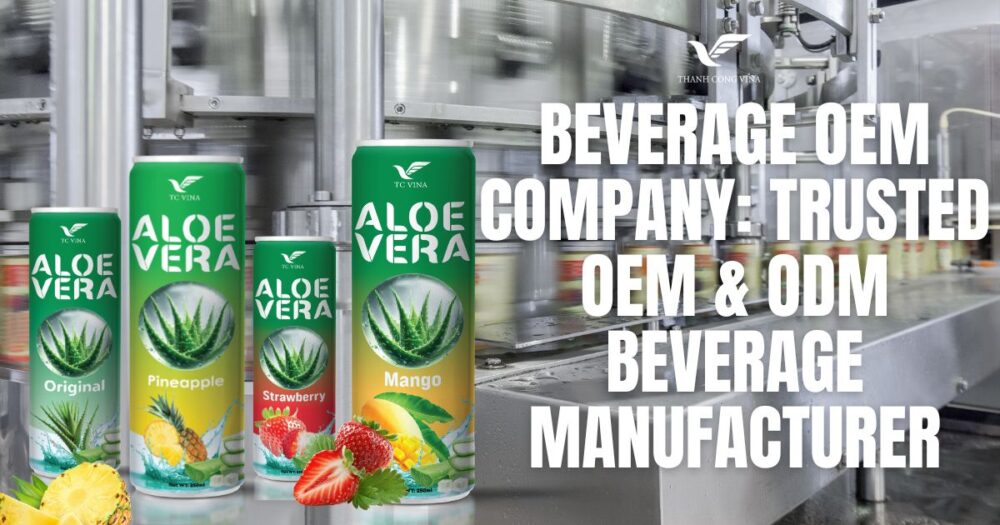
Coconut Water and Aloe Vera Drinks
Coconut water is another attractive category for private label beverage brands.
Vietnam’s coconut-producing regions provide a strong ingredient base for coconut beverage manufacturing. Products can be positioned around refreshment and natural ingredient concepts, depending on the target market.
Aloe vera beverages can also be developed in multiple flavors, including combinations with tropical fruits.
Potential product concepts include:
- Original Aloe Vera Drink
- Mango Aloe Vera
- Lychee Aloe Vera
- Peach Aloe Vera
- Blueberry Aloe Vera
These products provide private label brands with opportunities to create visually distinctive and flavor-focused beverage lines.
Ready-to-Drink Coffee
Ready-to-drink coffee is particularly suitable for brands targeting convenience-oriented consumers.
Private label coffee products can include:
- Black Coffee
- Milk Coffee
- Latte
- Cappuccino
- Flavored Coffee
Aluminum cans and other convenient formats make these products suitable for supermarkets, convenience stores, vending channels, foodservice, and international distribution.
4. Private Label Packaging and Brand Customization
A private label beverage is not complete without packaging that clearly communicates the brand identity. Packaging influences shelf visibility, consumer perception, transportation efficiency, and product protection.
Flexible Packaging Formats
A professional Beverage OEM Company can offer different packaging formats according to the product and target market.
Potential options include:
- Aluminum cans
- PET bottles
- Glass bottles
- Cartons
- Slim cans
Common beverage sizes may include:
- 250ml
- 320ml
- 330ml
- 500ml
- 1 Liter
The right format depends on the product category, target consumer, distribution channel, price positioning, and logistics requirements.
Customized Brand Identity
Private label manufacturing allows the buyer to control the visual identity of the final product.
Customization can include:
- Brand name
- Logo
- Label artwork
- Product name
- Product description
- Nutrition information
- Barcode
- Carton printing
- Packaging language
A consistent visual identity helps private label beverages build recognition across retail shelves and digital sales channels.
Packaging for Export Markets
International transportation requires packaging that can withstand handling, stacking, vibration, and extended shipping periods.
An experienced manufacturing partner can advise buyers on suitable primary and secondary packaging for export shipments.
This can help reduce packaging-related damage and improve product integrity throughout the distribution process.
5. Quality Control for Private Label Beverage Manufacturing
Quality Control for Private Label Beverage Manufacturing
Brand owners are responsible for their market reputation, which means product quality must remain consistent across every production batch.
A reliable Beverage OEM Company should therefore maintain comprehensive quality control procedures.
Raw Material Quality
Quality begins with ingredient sourcing.
Raw materials should be evaluated according to predefined specifications before entering production.
Depending on the beverage, inspection can cover:
- Appearance
- Aroma
- Taste
- Color
- Physical characteristics
- Microbiological parameters
- Supplier documentation
For fruit-based products, raw material consistency is particularly important because seasonal differences can affect flavor, color, acidity, and product characteristics.
Production Quality Control
During production, quality teams monitor critical manufacturing stages.
These may include:
- Ingredient weighing
- Mixing
- Processing
- Heat treatment
- Filling
- Sealing
- Packaging
- Finished product inspection
The objective is to ensure that the finished product matches the approved specifications.
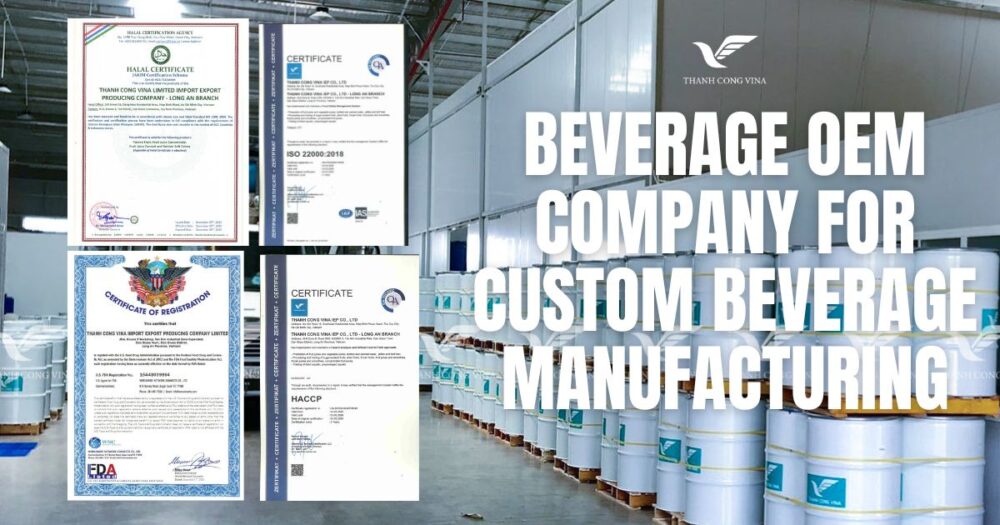
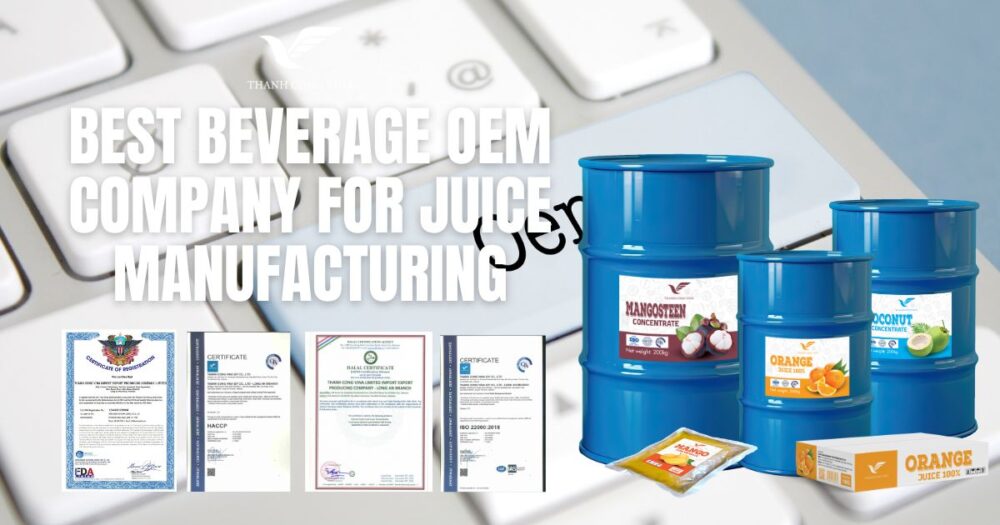
Food Safety Certifications
International private label buyers often evaluate a manufacturer’s food safety management system before establishing cooperation.
Depending on the factory and destination market, relevant standards and certifications may include:
- HACCP
- ISO 22000
- FSSC 22000
- GMP
- HALAL
- FDA-related requirements
The exact requirements depend on the product, market, and applicable regulations.
6. Benefits of Choosing an OEM Partner for Private Label Beverages
Private label manufacturing provides several strategic advantages for businesses that want to enter the beverage industry without building their own factory.
Lower Infrastructure Investment
Building an independent beverage factory requires significant investment in production equipment, processing systems, laboratories, warehouses, technical staff, and quality management.
Working with a Beverage OEM Company allows brands to access established manufacturing infrastructure without making the same capital investment.
This can free up resources for:
- Marketing
- Brand development
- Distribution
- Sales
- Market research
- Customer acquisition
Faster Market Entry
An established manufacturer already has production systems and technical resources.
This can reduce the time required to move from product concept to commercial production.
A structured OEM process can help brands respond quickly to:
- New consumer trends
- Seasonal opportunities
- Retail contracts
- New market launches
- Promotional campaigns
Faster development can provide an important advantage in competitive beverage categories.
Flexible Production Volumes
Private label brands can have very different production requirements.
A startup may need smaller quantities for initial market testing, while a major retailer may require large-scale commercial production.
An experienced Beverage OEM Company should be able to support different production volumes and provide a pathway for scaling as demand increases.
7. Export Support for Private Label Beverage Brands
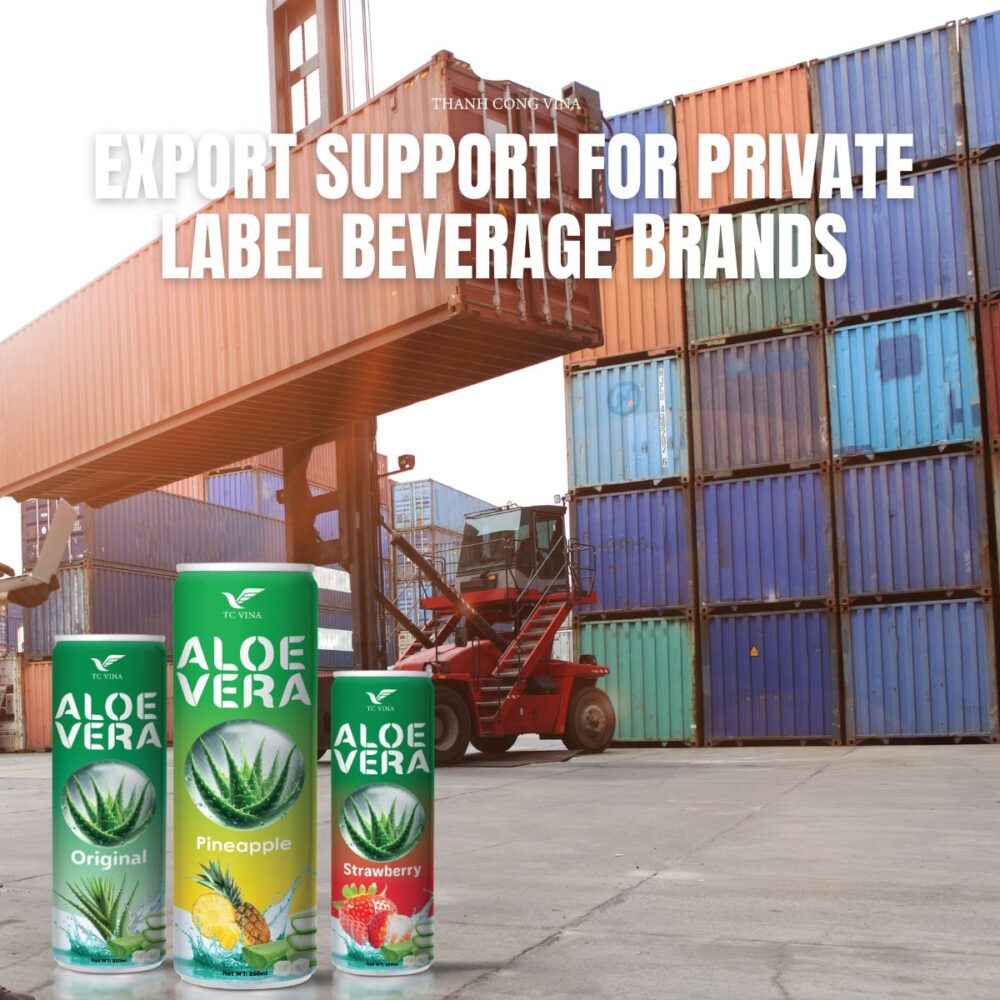
Export Support for Private Label Beverage Brands
For companies targeting international markets, manufacturing is only one part of the process. Export support can significantly simplify international purchasing.
Export Documentation
Depending on the destination country, buyers may require:
- Commercial Invoice
- Packing List
- Certificate of Origin
- Product Specifications
- Certificate of Analysis
- Food Safety Documentation
- Shipping Documentation
An experienced manufacturer can coordinate with buyers and logistics partners to help ensure that export documentation is prepared accurately.
International Market Requirements
Different markets can have different requirements for:
- Ingredients
- Labeling
- Nutrition information
- Packaging
- Product claims
- Product registration
- Food safety documentation
An export-oriented OEM partner should understand the importance of adapting product specifications to the requirements of the intended market.
Global Distribution
Private label beverages may be distributed through:
- Supermarkets
- Convenience stores
- Importers
- Wholesalers
- Distributors
- Hotels
- Restaurants
- Cafés
- E-commerce platforms
- Foodservice channels
A scalable manufacturing partner can help brands maintain consistent supply as their distribution network expands.
8. How to Choose the Right Beverage OEM Company
Selecting an OEM partner should involve a comprehensive evaluation rather than focusing only on price.
Evaluate Manufacturing Capabilities
Review the factory’s:
- Production capacity
- Product categories
- Packaging formats
- R&D facilities
- Quality laboratories
- Warehouse systems
- Export experience
The facility should be suitable for the specific product and market requirements.
Evaluate Communication and Service
Clear communication is critical during private label development.
A reliable partner should provide transparent information about:
- MOQ
- Product development
- Samples
- Lead times
- Packaging
- Production schedules
- Quality standards
- Export documentation
Good communication reduces misunderstandings and improves project efficiency.
Consider Long-Term Scalability
The ideal OEM partner should be able to support the brand beyond the initial product launch.
As sales grow, the brand may require:
- Larger production quantities
- Additional flavors
- New packaging sizes
- New beverage categories
- New international markets
A scalable Beverage OEM Company can support these developments while maintaining consistent product standards.
Conclusion
Private label beverage manufacturing provides an effective way for companies to enter the beverage industry without investing in their own production infrastructure. By partnering with a professional Beverage OEM Company, brands can access customized formulation, R&D expertise, flexible packaging, quality control, private labeling, scalable production, and export support through an integrated manufacturing process.
The strongest OEM partnerships are built around more than production capacity. They depend on communication, innovation, consistent quality, technical expertise, reliable supply chains, and the ability to adapt products to changing market requirements. For importers, distributors, retailers, startups, and established brands, these capabilities can significantly reduce the complexity of developing and scaling private label beverages.
Thanh Cong Vina provides OEM and private label beverage manufacturing solutions for international businesses seeking customized products and reliable production support. From fruit juice drinks, coconut water, and aloe vera beverages to ready-to-drink coffee and other beverage categories, Thanh Cong Vina combines R&D, manufacturing, quality management, packaging customization, and export capabilities to support different B2B requirements. For brands looking for an experienced Beverage OEM Company, Thanh Cong Vina can provide a flexible manufacturing foundation for developing differentiated products, expanding product portfolios, and building successful private label beverage brands in global markets.